How To Cut Bok Choy
Key Takeaways
- Rinse bok choy well and dry it before cutting to remove grit and keep cuts clean.
- Trim the base, then separate the white stalks from the green leaves, since they cook at different speeds.
- Match the cut to the dish: thin ribbons for stir-fries, larger pieces for soups.
- Store whole heads in the fridge and cut bok choy only as close to cooking time as you can.
Introduction
Learning how to cut bok choy is one of the simplest kitchen skills you can build. This leafy green appears in many Asian-style dishes and is easy to prepare once you know the basic steps. This article covers what the vegetable is, which tools to use, and how to cut it neatly.
In this article
No prior cooking experience is needed. Simple answers to common questions appear at the end.
What Is Bok Choy and Why Cut It Properly
Bok choy is a type of Chinese cabbage with thick, pale stalks and soft, dark green leaves. Its mild, slightly sweet flavor suits many recipes. Because stalks and leaves behave differently in heat, the way you cut it affects the final dish.
Even pieces cook at the same rate, so none stays raw while another turns mushy. Clean cuts also look neater on the plate.
Common Types of Bok Choy
Shanghai bok choy has pale green stalks and a short, compact shape. Baby bok choy is smaller and more tender, so it often needs less trimming. Full-size bok choy has wide white stalks and sturdy leaves.
All of these types use the same basic method. Smaller heads may be cut whole or halved, while larger heads need more separating and slicing.
Why Cutting Technique Matters for Texture
The stalks are thick and crisp, while the leaves are thin and tender. If you cut and cook them together, the leaves often soften before the stalks are done. Separating the two parts solves this problem.
Thin slices cook quickly and stay crisp. Thicker pieces hold their shape in soups and braises. Picking the right size gives you better control over texture.
Tools You Need Before You Start
You do not need special equipment to cut bok choy. A good knife and a stable cutting board are enough. Having everything ready before you begin makes the job faster and safer.
The Best Knife for Leafy Vegetables
A chef’s knife or a sturdy santoku knife works well for bok choy. The blade should be sharp so it slices through the stalks without crushing them. A dull knife can bruise the leaves.
A paring knife helps with small trimming at the base. Use whichever knife feels comfortable in your hand.
Cutting Board Setup and Safety Basics
Place your cutting board on a flat, non-slip surface. A damp towel under the board keeps it from sliding. Use a board large enough to hold the whole head.
Keep your fingers curled under while you hold the vegetable. This claw grip protects your fingertips. Wash the board and knife before and after use.
How to Prepare Bok Choy Before Cutting
Washing and drying the greens first removes dirt and water that could affect your cuts.
Rinsing Away Sand and Grit
Bok choy grows close to the soil, so sand often collects between the leaves and at the base. Separate the leaves and rinse them under cool running water. Pay extra attention where the stalks meet the base, since grit often hides there.
Drying Leaves for Cleaner Cuts
Wet leaves slip under the knife and are harder to control. Pat the bok choy dry with a clean towel or spin it in a salad spinner. Dry leaves give you more precise cuts and less splashing on the board.
Drying also matters for stir-frying. Excess water can steam the vegetables instead of letting them sear.
Step-by-Step: How to Cut Bok Choy
Once the bok choy is clean and dry, the cutting follows a simple sequence. Work slowly at first. Speed comes with practice.
Trimming the Base
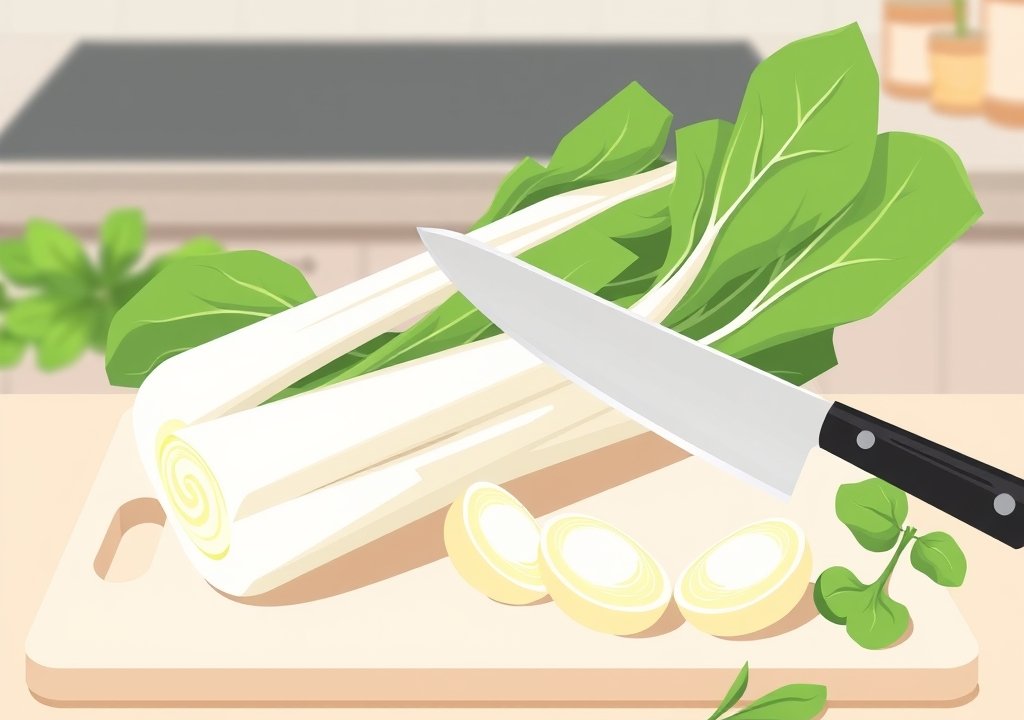
Place the bok choy on the board with the base facing you. Slice off about a centimeter from the bottom to remove the dried or discolored end. Keep the base intact so the stalks stay attached.
If the stalks look browned, trim a little more. Remove any damaged outer leaves.
Separating the Stalks and Leaves
Gently pull the stalks apart from the center of the head. Cut each stalk away from the leaf where the white part meets the green.
Keep the stalks and leaves in separate piles. Add the stalks to the pan first, since they need more time to become tender.
Cutting Halves, Quarters and Bite-Size Pieces
For smaller heads, cut the whole bok choy lengthwise into halves or quarters. This keeps the leaves attached and works well for braises and soups. Then cut the pieces crosswise into bite-size lengths.
For larger heads, cut the separated stalks into pieces about five centimeters long. Cut the leaves into broad strips or leave small ones whole. Even sizes help everything cook at the same pace.
Slicing Thin Ribbons for Stir-Fry
To make thin ribbons, stack a few stalks and slice them crosswise into thin strips. Thin pieces cook quickly and stay crisp. Roll the leaves loosely and slice them into ribbons as well.
Use a sharp knife and steady motions. Let the blade do the cutting instead of pressing down hard.
Cutting Bok Choy for Different Dishes
The right cut depends on how you plan to cook the vegetable. Consider heat and cooking time before you start.
Stir-Fries and Quick Sautés
Quick cooking calls for thin, even pieces. Slice the stalks thinly and keep the leaves in broad strips. Add the stalks to the hot pan first, then toss in the leaves for the last minute.
Soups, Noodles and Braises
Longer cooking allows larger pieces. Halves or thick chunks hold their shape in broth. Add the leaves near the end so they stay tender.
Raw Salads and Slaws
Raw bok choy needs very thin slices for a pleasant bite. Shred the stalks finely and cut the leaves into narrow strips. Chilling the cut pieces in cold water for a few minutes can make them crisper.
Common Mistakes Beginners Make
Most cutting problems come from a few common habits. Small adjustments usually fix them.
Cutting Too Thick or Unevenly
Thick, uneven pieces cook at different rates. Some bites stay crunchy while others turn soft. Aim for consistent sizes across the batch.
Leaving Grit in the Stalks
Sand often hides where the stalks meet the base. Gritty bites can ruin an otherwise good dish. Separate the stalks and rinse each one before cutting.
Overcooking Chopped Pieces
Bok choy softens quickly in heat. Overcooking turns the stalks limp and dulls the color. Add the greens last, and cook just until the stalks are tender and the leaves wilt.
Storing Bok Choy Before and After Cutting
Proper storage keeps bok choy crisp until you need it. Whole heads last longer than cut pieces.
Keeping Whole Heads Fresh
Store whole bok choy in the refrigerator. Wrap it loosely in a paper towel and place it in a plastic bag or crisper drawer. The towel absorbs extra moisture and slows wilting.
Storing Cut Bok Choy Safely
Cut pieces dry out faster because more surface is exposed. Store them in an airtight container lined with a dry paper towel. Use them within a day or two for the best texture.
Bok Choy Cutting Compared With Other Asian Greens
Several leafy vegetables are cut in similar ways. Comparing them shows what makes bok choy unique.
Bok Choy Versus Napa Cabbage
Napa cabbage has a looser head with broad, crinkled leaves and wide white ribs. Bok choy has firmer, upright stalks and a clearer split between stalk and leaf. It often needs less shredding.
Bok Choy Versus Choy Sum
Choy sum has long, slender stems and small flowers that are often eaten too. Its stems are thinner than bok choy stalks, so it cooks faster. Trim the tough ends and cut it into shorter lengths for stir-fries.
Frequently Asked Questions
Do I need to cut off the base of bok choy?
Trimming a thin slice from the base removes dirt and browned spots. Leave more of the base attached if you want the stalks to hold together while cooking.
Can I eat the stalks and leaves together?
Yes, both parts are edible. Because they cook at different speeds, add the stalks to the pan first and the leaves later.
Should I cut bok choy before or after washing it?
Wash the whole head first, then cut it. Rinsing before cutting removes sand near the base and between the leaves. Cutting first can trap grit inside the pieces.
How long does cut bok choy last in the fridge?
Cut bok choy is best used within a day or two. Store it in an airtight container with a dry paper towel, and check for slimy or dark spots before cooking.
Can I cut bok choy ahead of time for meal prep?
You can prepare it a short time ahead, but cutting it just before cooking gives the crispest results. Keep the pieces dry and chilled.
Conclusion
Cutting bok choy is straightforward once you know the basic steps. Rinse and dry the greens, trim the base, and separate the stalks from the leaves.
With a sharp knife and a little practice, you can prepare bok choy for stir-fries, soups and salads with confidence.

Hi, I’m Mary, the founder of GardenCure.com. I’m passionate about creating healthy, beautiful gardens and well-kept lawns. I share practical experience and trusted advice on garden and lawn gear that truly works. With the support of my dedicated research team, our writers produce honest, in-depth reviews using reliable, authentic sources—helping you choose the right tools with confidence for your outdoor space.