How To Grow Rose Bush Cuttings
Growing new roses from cuttings is a rewarding, low-cost way to expand a garden. A cutting is a piece of healthy stem that is encouraged to grow its own roots. The basic steps are simple, though patience is needed.
In this article
This guide explains what rose cuttings are, why gardeners use them, and what supplies you need. It also covers taking, planting, and caring for cuttings, plus common mistakes.
Key Takeaways
- Rose cuttings produce plants that are genetically identical to the parent plant.
- Semi-hardwood stems taken in late summer or early autumn often root well.
- Good drainage, steady moisture, and humidity help cuttings form roots.
- Rot caused by overwatering is one of the most common reasons cuttings fail.
- Young plants need gradual hardening off before they move outdoors.
What Are Rose Bush Cuttings and Why Grow Them?
Rose Cuttings as a Form of Plant Propagation
Propagation means creating new plants from an existing one. A gardener removes a section of stem and encourages it to form roots, which then supports a new plant.
The new plant grows from the parent’s own tissue, so it usually keeps the same flower color, scent, and growth habit. Seed-grown roses can look quite different from their parents.
Benefits of Growing Roses From Cuttings
Cuttings are an affordable way to add roses to a garden and to share a favorite variety with friends. They also help replace a lost rose or fill a gap in a border.
The method needs very few supplies. Success depends on timing and care, so beginners should expect some failures.
How Rose Cuttings Root and Grow
The Science Behind Callus Formation and Root Development
When a stem is cut, the plant begins to heal the wound. Cells at the cut end form a soft, pale mass called a callus. Roots often develop from this area or from nodes along the stem.
The cutting cannot take in much water through its roots yet, so it relies on the moisture and humidity around it. Good conditions help it focus energy on forming roots.
Why Some Rose Varieties Root More Easily Than Others
Not every rose roots at the same rate. Many old garden roses and shrub roses are generally considered easier to root. Some modern hybrid tea roses can be more difficult, and results vary.
Plant health, stem maturity, and the time of year also affect rooting. Beginners may want to start with a hardy, vigorous variety, though success is never guaranteed.
What You Need Before You Start
Tools and Supplies for Taking Rose Cuttings
You need only a few basic items. A clean, sharp pair of pruners or a knife works well. Keep the blade clean to reduce the chance of spreading disease between plants.
You will also need small pots or trays, a clear plastic bag or dome, and a label for each pot. Note the variety and the date you took each cutting.
Rooting Mediums: Water, Soil, and Perlite
A rooting medium holds the cutting while roots form. Common options include water, soil mix, and perlite. Perlite is a light, white volcanic material that holds air and moisture.
Water rooting lets you watch roots develop, but those roots may need adjusting when moved to soil. A well-draining potting mix is often used. Good drainage matters more than the exact recipe.
Rooting Hormone and When to Use It
Rooting hormone is a powder or gel that encourages root growth. Many roses root without it, but it can help some varieties root more reliably.
If you use it, dip the cut end into a small amount of powder and tap off the excess. Keep the lid closed to avoid contaminating the rest of the product.
How to Take Rose Cuttings Step by Step
Picking the Best Time to Cut Rose Stems
Many gardeners take rose cuttings in late summer or early autumn. At this time, stems are often semi-hardwood, partly firm and partly flexible, and they often root well.
Timing can vary with climate and variety. Aim for stems that hold their shape but are still green.
Picking Healthy Stems and Making the Right Cut
Choose a healthy, disease-free stem about the thickness of a pencil. Look for several nodes, the small bumps where leaves grow. A cutting around 15 to 20 centimeters long is a common size.
Cut just below a node at a slight angle. The angle exposes more surface area for roots to form. Make the cut cleanly so the stem is not crushed.
Preparing the Cutting by Removing Leaves and Thorns
Remove the lower leaves so no foliage sits below the soil or water line, since buried leaves can rot. Keep two or three leaves at the top to support the cutting.
Gently strip the thorns from the lower stem. This makes planting easier and prevents snagging. Handle the stem carefully so the bark is not torn.
How to Plant and Root Rose Cuttings
Planting Cuttings in Soil or a Potting Mix
Fill a small pot with moist, well-draining mix. Make a hole with a pencil and insert the cutting about two-thirds of its length. Firm the mix gently so the stem stands upright.
Label each pot with the variety and date. Water lightly so the mix stays damp but not soggy, and place the pot in bright, indirect light.
Rooting Rose Cuttings in Water
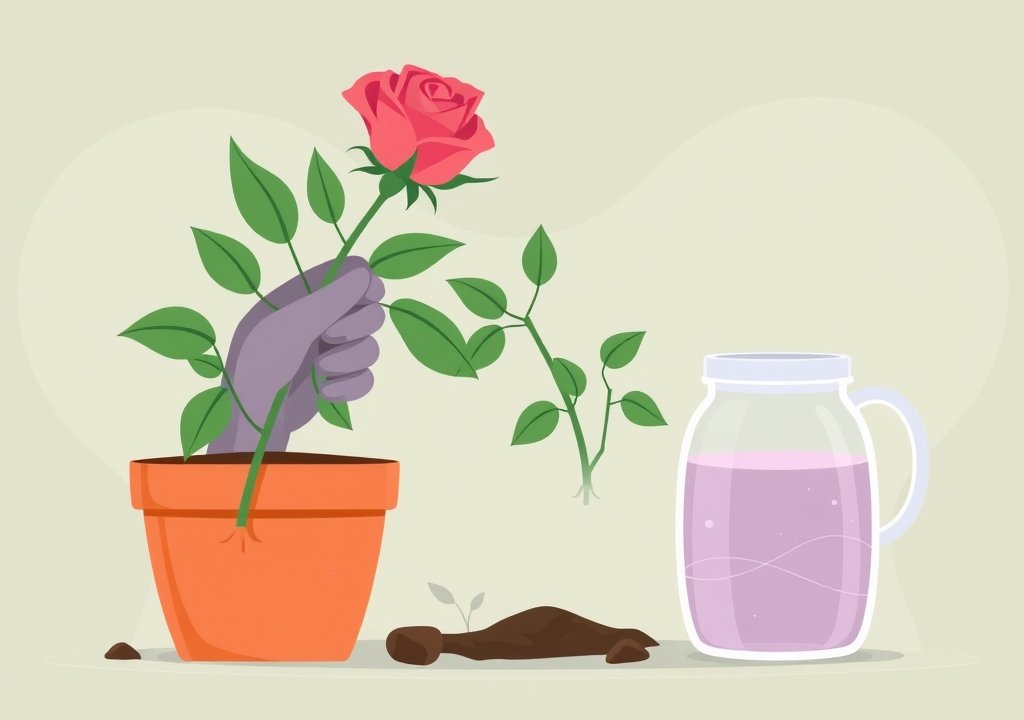
Place the cut end in a clean jar of water so the lower nodes sit below the surface. Change the water every few days and keep the jar out of direct sun.
Once roots are a few centimeters long, pot the cutting into soil. Water-grown roots are fragile, so handle them carefully.
Creating Humidity With a Bag or Cloche
Cuttings in soil often benefit from humidity. Place a clear plastic bag or cloche over the pot, propped up so it does not touch the leaves.
Open the cover briefly each day to let fresh air in. This helps prevent mold while keeping the air moist.
Caring for Rose Cuttings While They Root
Light, Temperature, and Watering Needs
Rose cuttings need bright light but not harsh direct sun, which can dry them out. A spot with filtered light or morning sun often works well, and moderate, steady temperatures help roots form.
Water when the top of the mix feels slightly dry, keeping it evenly damp but never soggy. Steady moisture works better than frequent heavy watering.
Signs That Roots Are Forming
Roots take time, and the cutting may look unchanged for weeks. A gentle tug that meets resistance suggests roots have started to anchor the stem, and new leaf growth is another sign the cutting is alive. Avoid pulling too often, since this can break fragile roots.
Hardening Off and Transplanting Young Rose Plants
Hardening off means slowly getting a young plant used to outdoor conditions. Start with a few hours outside in a sheltered spot, then increase the time over a week or two.
Once the plant is well rooted and growing strongly, transplant it into a larger pot or the garden and water it well. Protect it from strong wind and harsh sun for the first few weeks.
Common Mistakes and Problems to Avoid
Rot, Mold, and Overwatering
Overwatering is one of the most common reasons cuttings fail. Soggy mix cuts off air to the stem and invites rot. Good drainage and careful watering prevent most of these problems.
Mold can appear on the soil surface or on the stem. Open the bag or cloche briefly each day to improve airflow. Remove dead leaves promptly.
Why Cuttings Wilt or Fail to Root
Wilting often means the cutting loses water faster than it can take it in. Heat, bright sun, or low humidity can cause this. Adding humidity and shading the cutting usually helps.
Some cuttings simply do not root. Difficult varieties, weak stems, or poor timing can all be the cause. Taking several cuttings at once improves your chances.
Comparing Rose Cuttings to Other Propagation Methods
Rose Cuttings Versus Layering and Grafting
Layering involves bending a stem to the ground and covering part of it with soil while it stays attached to the parent. The stem often roots while still connected, which can be less stressful for the plant. It needs no special tools but takes a long time.
Grafting joins a rose variety onto a rootstock from another plant. It is more skilled work and is common in commercial nurseries. Cuttings are simpler for beginners because they need fewer tools and steps.
Rose Cuttings Versus Buying Nursery Plants
Buying a young plant from a nursery is the fastest way to get a rose. The plant is already established and often comes with a clear variety name. The cost is usually higher than making cuttings.
Cuttings take longer to become mature plants and may fail. However, they cost very little and let you multiply plants you already enjoy. The right choice depends on your time, budget, and patience.
Frequently Asked Questions
What is the best time of year to take rose cuttings?
Late summer and early autumn are often good times for semi-hardwood cuttings. Timing varies with climate and variety. Firm but still green stems usually give the best results.
How long does it take for rose cuttings to root?
Rooting time varies widely and can take several weeks or more, especially in cooler conditions. Check gently for resistance before assuming roots have formed.
Do rose cuttings need rooting hormone?
Not always. Many roses root without it, though rooting hormone can help some varieties root more reliably. It is optional.
Can I grow roses from cuttings bought at a store?
Sometimes, but results are uncertain. Store-bought roses may be treated or not grown for cuttings. Cuttings from a plant you can inspect and trust are usually safer.
Why are my rose cuttings turning black or mushy?
Black or mushy stems usually point to rot, often from overwatering or poor drainage. Remove affected cuttings quickly, and keep the mix damp, not soggy, when you try again.
Conclusion
Growing rose bush cuttings is a practical way for beginners to multiply plants they already love. Success depends on healthy semi-hardwood stems, good drainage, and steady humidity while roots form. Patience matters, since rooting can take weeks. Watch for rot, and harden young plants gradually before moving them outdoors.

Hi, I’m Mary, the founder of GardenCure.com. I’m passionate about creating healthy, beautiful gardens and well-kept lawns. I share practical experience and trusted advice on garden and lawn gear that truly works. With the support of my dedicated research team, our writers produce honest, in-depth reviews using reliable, authentic sources—helping you choose the right tools with confidence for your outdoor space.