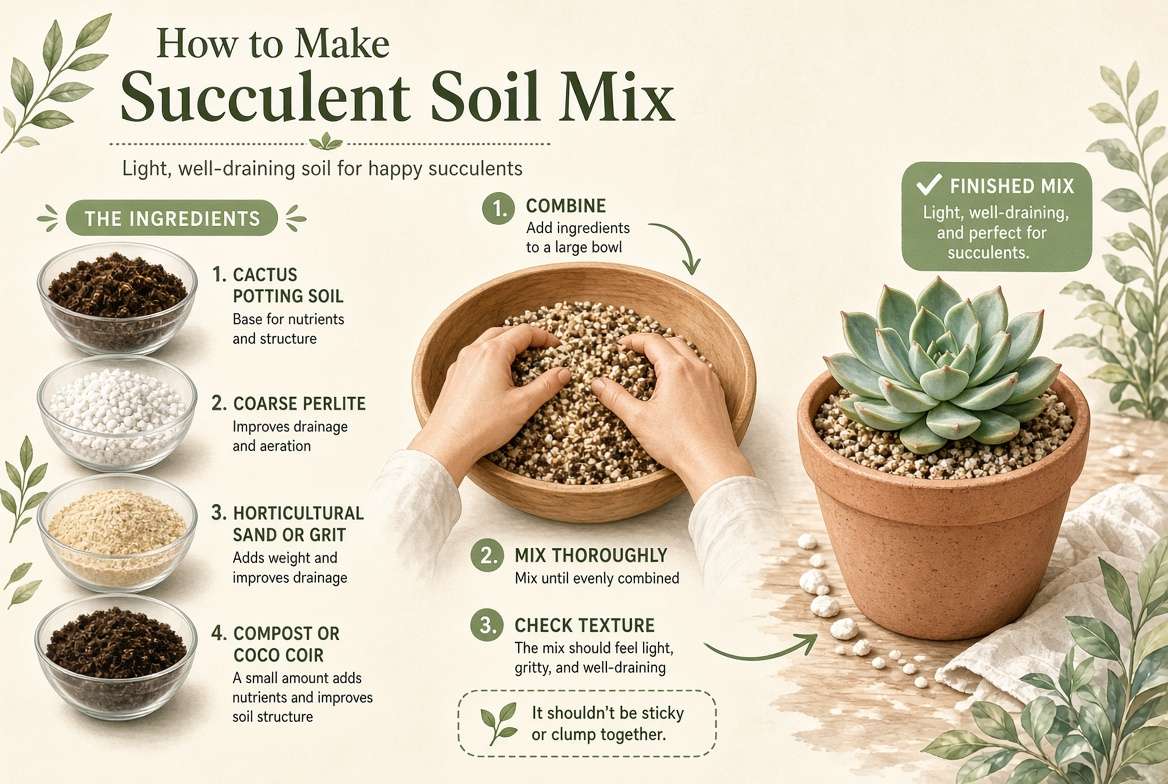
How to Make Succulent Soil Mix?
If your succulents keep turning mushy, yellow, or sad-looking, the soil is often the real problem. Succulents store water in their leaves and stems, so they hate sitting in soggy dirt. Regular potting soil holds too much water for too long, and that’s a fast track to root rot. The good news is that making your own succulent soil mix is easy, cheap, and only takes a few minutes once you have the right ingredients on hand.
In this article
In this guide, we’ll walk through why soil matters so much for succulents, what ingredients to use, the best ratios to mix, and how to test your soil before you commit a plant to it. By the end, you’ll know exactly how to build a mix that drains fast, breathes well, and keeps your succulents happy for the long haul.
Why Regular Potting Soil Doesn’t Work for Succulents
Most bagged potting soil is made for leafy plants like ferns, tomatoes, or herbs. Those plants like moisture. They want soil that holds water for days so their roots stay hydrated. Succulents are the opposite. In their natural habitat, they grow in dry, rocky, sandy ground where water drains away almost as soon as it falls.
When you plant a succulent in heavy, water-retaining soil, the roots stay wet for far too long. Wet roots plus low oxygen equals rot. Once root rot sets in, the plant can’t take up water or nutrients anymore, even though it looks like it’s sitting in plenty of moisture. This is why so many new plant owners think they’re doing everything right, yet their succulent still dies. The soil, not the watering schedule, is usually the hidden culprit.
A good succulent soil mix solves this by draining water quickly, letting air reach the roots, and drying out fast between waterings. That’s the whole secret. Once you get the soil right, growing succulents becomes almost foolproof.
The Main Goals of a Great Succulent Soil Mix
Before we get into ingredients, it helps to know what you’re actually trying to achieve. A solid succulent and cactus soil mix should:
- Drain water within seconds, not minutes
- Let air flow freely around the roots
- Dry out completely between waterings
- Still hold onto just enough moisture and nutrients to feed the plant
- Stay loose and gritty instead of compacting into a dense clump
Keep these goals in mind as you build your mix, and you’ll never go wrong, even if you swap ingredients based on what’s available near you.
Key Ingredients for a Succulent Soil Mix
You don’t need anything fancy. Most of these items are available at garden centers, hardware stores, or online. Here’s a breakdown of the most common building blocks.
1. Potting Soil (The Base)
Plain potting soil acts as the base of your mix. It holds a small amount of moisture and gives roots something to anchor into. Skip soil that already has added water-retaining crystals or heavy amounts of compost, since those work against drainage. A basic, all-purpose potting mix without extra fertilizer boosters works best as your starting point.
2. Coarse Sand
Coarse sand adds weight and grit to the mix, helping water move through faster. Make sure it’s coarse, builder’s-grade sand, not fine play sand. Fine sand packs together tightly and can actually make drainage worse instead of better, almost like adding cement to your mix.
3. Perlite
Perlite is that light, white, popcorn-looking material you often see in potting soil already. It’s made from volcanic glass that’s been heated until it puffs up, kind of like popcorn. Perlite creates tiny air pockets in the soil, so water drains out and oxygen can reach the roots. It’s cheap, lightweight, and one of the easiest ways to boost drainage fast.
4. Pumice
Pumice is another volcanic material, but it’s denser than perlite and doesn’t float to the top of the pot the way perlite sometimes does. Many experienced growers actually prefer pumice because it holds its shape over time and keeps the soil structure loose for years. If you can find it locally, it’s worth adding to your mix or using in place of some of the perlite.
5. Small Gravel or Grit
A layer of small gravel, chicken grit, or crushed granite adds extra drainage and weight low in the pot. This keeps the soil from getting too light and fluffy, and it also gives roots something firm to grip onto as the plant grows larger.
6. Coco Coir or Peat Moss (Optional, Use Sparingly)
A small amount of coco coir or peat moss can help the mix hold just a touch of moisture without becoming soggy. Go easy here. Too much of either ingredient brings back the same drainage problems you’re trying to avoid.
The Best Succulent Soil Mix Ratio
There’s no single perfect recipe, since it depends a bit on your climate, the container you’re using, and the type of succulent. That said, here are some tried-and-true ratios that work well for most beginners.
Basic Beginner Recipe
- 2 parts potting soil
- 1 part coarse sand
- 1 part perlite
This simple three-ingredient mix is a great starting point. It’s easy to make, budget-friendly, and drains far better than plain potting soil on its own.
Improved Recipe With Pumice
- 3 parts potting soil
- 2 parts pumice
- 1 part coarse sand
- 1 part perlite
Adding pumice to the mix gives you long-lasting structure. This blend holds up well over months of watering and doesn’t compact as quickly as the basic recipe.
Fast-Draining Recipe for Humid Climates
If you live somewhere humid or rainy, your succulents need even faster drainage. Try this:
- 2 parts potting soil
- 2 parts pumice
- 1 part perlite
- 1 part coarse sand
- A handful of small gravel mixed in
This heavier ratio of grit to soil helps prevent water from lingering, which matters a lot in a climate where the air itself stays damp.
Water-Retentive Recipe for Dry, Arid Climates
Growers in very dry, hot regions can afford to add a touch more organic matter, since water evaporates fast anyway:
- 3 parts potting soil
- 1 part perlite
- 1 part coarse sand
- A small scoop of coco coir
This still drains well but holds on to a bit more moisture, so you’re not watering every single day.
Step-by-Step: How to Make Your Own Succulent Soil Mix
Now let’s put it all together. Here’s the simple process from start to finish.
Step 1: Gather Your Ingredients
Pull together potting soil, coarse sand, perlite, and pumice or gravel if you have them. You don’t need every single ingredient listed above. Start with what’s easy to find, and adjust later once you see how your plants respond.
Step 2: Measure Out Your Ratios
Use a scoop, cup, or small bucket as your measuring unit. It doesn’t need to be exact, but sticking to a rough ratio keeps your mix consistent every time you make a new batch.
Step 3: Mix Everything in a Large Container
Dump all your ingredients into a big bucket, tub, or tray. Use your hands or a small trowel to fully combine everything. Break up any large clumps of soil as you go, since dense clumps trap water and defeat the purpose of the mix.
Step 4: Do a Quick Drainage Test
Grab a handful of your finished mix and add a splash of water. Squeeze it gently. If water runs straight through and the mix falls apart loosely, you’re on the right track. If it clumps together and holds its shape like a mud ball, add more sand, perlite, or pumice and test again.
Step 5: Fill Your Pots
Add your mix to a pot that has a drainage hole at the bottom. This step matters just as much as the soil itself. Even the best soil recipe can’t save a plant sitting in a pot with no way for water to escape.
Step 6: Plant and Water Lightly
Once your succulent is nestled into the new mix, give it a light watering to help the roots settle in. After that, let the soil dry out completely before you water again.
Store-Bought vs Homemade Succulent Soil
Bagged succulent and cactus soil from a garden center can work fine, especially for beginners who want something quick and simple. It’s convenient, and quality has gotten better over the years as more brands cater to succulent lovers. Still, homemade mix has some clear perks:
- You control exactly what goes into it
- It’s usually cheaper per pot, especially if you’re filling several containers
- You can adjust the ratio for your specific climate or plant type
- It tends to drain better than many mass-produced bags, which often lean too heavy on peat moss
A lot of experienced growers actually take a hybrid approach. They buy a bag of cactus soil as the base, then boost it with extra perlite, pumice, or sand to dial in the drainage exactly how they want it.
Common Mistakes to Avoid
Using Too Much Organic Material
Compost, peat moss, and regular topsoil all hold water for a long time. A little goes a long way. Too much organic matter is one of the most common reasons succulent soil ends up too dense and wet.
Skipping the Drainage Hole
Even a perfect soil mix can’t save a pot without a hole. Water needs somewhere to go. If you love a pot without drainage, use it as a decorative outer cover and keep the actual plant in a plastic nursery pot with holes, tucked inside.
Packing the Soil Too Tightly
After filling a pot, resist the urge to press the soil down firmly. Loose, airy soil is exactly what succulent roots want. Packing it tight squeezes out the air pockets you worked so hard to create.
Reusing Old, Compacted Soil
Over time, soil breaks down and compacts, losing its gritty structure. If you’re repotting a succulent, don’t just reuse the old dirt straight from the previous pot. Refresh it with new perlite, sand, or a fresh batch of mix.
Ignoring Your Container Material
Terra cotta pots breathe and let extra moisture evaporate, which pairs nicely with succulents. Glazed ceramic or plastic pots hold moisture longer, so if you’re using one of those, lean toward a grittier soil mix with more sand and perlite to balance things out.
Adjusting Your Mix for Different Succulent Types
Not every succulent needs the exact same soil. A few tweaks can make a real difference depending on what you’re growing.
Cacti love extra grit. Bump up the sand, pumice, or gravel even more than a standard succulent mix, since cacti in the wild often grow in nearly pure sand or rocky soil.
Echeveria and rosette-shaped succulents do well with a balanced mix, since their leaves are tightly packed and can trap water near the crown if the soil around them stays too damp.
String of pearls, string of hearts, and trailing succulents tend to like a slightly lighter mix with a touch more organic content, since their thinner roots can dry out fast in an overly gritty blend.
Aloe and haworthia appreciate a gritty mix similar to cacti, with strong drainage, since they’re prone to rot if left in wet soil for even a short stretch.
How to Store Extra Soil Mix
If you make a big batch, store the leftover mix in a sealed bucket or bag in a dry spot. Keep it away from rain or sprinklers, since a soggy storage container defeats the purpose before you even get to planting. Give it a quick stir before using it again, since ingredients can settle and separate a bit over time.
Signs Your Soil Mix Needs Adjusting
Even after planting, keep an eye on how your succulent responds. A few signs point to soil trouble:
- Water pools on top instead of soaking in fast
- The pot feels heavy and damp for days after watering
- Leaves turn soft, mushy, or translucent
- Mold or a musty smell shows up on the soil surface
- Roots look dark, black, or mushy instead of firm and white
If you spot any of these, it’s time to repot with a fresh, grittier mix. Gently remove the plant, shake off the old soil, trim away any rotten roots with clean scissors, and let the plant sit out to dry for a day before placing it into new soil.
Final Thoughts
Making your own succulent soil mix isn’t complicated once you know the basic goal: fast drainage and plenty of airflow around the roots. Start with a simple base of potting soil, sand, and perlite, then tweak the ratio based on your climate, your container, and the specific succulents you’re growing. Test your mix with a quick squeeze before you plant, always use a pot with a drainage hole, and resist the urge to pack the soil down tight.
With the right soil under them, succulents become one of the easiest plants to care for. Less fuss, less guesswork, and a lot fewer sad, mushy leaves. Once you nail down a mix that works for your home, you’ll be able to whip up a fresh batch in minutes, ready for every new plant that comes your way.
Hi, I’m Mary, the founder of GardenCure.com. I’m passionate about creating healthy, beautiful gardens and well-kept lawns. I share practical experience and trusted advice on garden and lawn gear that truly works. With the support of my dedicated research team, our writers produce honest, in-depth reviews using reliable, authentic sources—helping you choose the right tools with confidence for your outdoor space.