How To Plant Asparagus
Planting asparagus is a rewarding project for a home gardener. Once established, the plants can produce spears for many years. This guide explains how to plant asparagus in plain terms, from the basics to the first steps of care.
In this article
You will learn what asparagus is, how to pick a suitable site and soil, and when to plant. You will also see how to set crowns, how to start from seed, and which mistakes beginners often make.
Key Takeaways
- Asparagus is a perennial, so it stays in the same bed for many years.
- Choose a sunny, well-drained site and prepare the soil well before planting.
- Crowns planted in spring are the most common choice for beginners.
- Plant crowns in a trench and cover them gradually as the spears grow.
- Let the ferns grow in the first season so the roots can store energy.
What Is Asparagus and Why Grow It at Home
Asparagus is a vegetable that grows from underground roots and shoots. The edible part is the young spear that pushes up through the soil in spring. If left alone, the spear grows into a tall, feathery fern.
Many gardeners grow asparagus because it is long-lived and needs little yearly replanting. Home-grown spears can be picked at the right size and eaten fresh.
Asparagus as a Perennial Vegetable
A perennial plant lives for more than two years and returns each season. Asparagus stays productive in the same bed for many seasons, so good preparation at the start matters.
Because the plants are hard to move later, pick the bed carefully. With steady care, a well-planned bed can stay productive for a long time.
Benefits of Growing Your Own Asparagus
Home-grown spears are often sweeter and more tender than older spears. You also control how the plants are cared for.
Asparagus suits gardeners who plan long term. Once the bed is established, it needs less work than many annual crops.
Asparagus Basics for Beginners
Asparagus can be grown from crowns or from seed. Each route has its own timing and care needs.
Plants are either male or female, and the sex affects how they grow and produce. Varieties are chosen with these differences in mind.
Crowns Versus Seeds
A crown is a one-year-old root clump with buds and roots attached. Crowns are the most common starting point for beginners because they give faster results.
Seeds are cheaper and offer a wider choice of varieties. However, seed-grown plants need two or more years before you can cut spears.
Male and Female Plants
Male plants put their energy into spear production, so they tend to produce thicker spears. Female plants put energy into berries and seeds, which can mean more but thinner spears.
Many modern varieties are all-male, which gives a steady crop. Female plants can self-sow into unwanted areas.
Asparagus Varieties Suited to Home Gardens
Varieties differ in spear colour, size and disease resistance. Some are green, while others are purple or white. Look for varieties described as suitable for home gardens.
Ask your local garden centre or extension service which varieties do well in your area. Local experts know which types handle your soil and weather best.
Picking the Right Site and Soil
Asparagus is a long-term crop, so the site matters. The bed will stay in the same spot for years.
Sun Exposure and Space Needs
Asparagus needs full sun for most of the day. Plants in shade produce weaker and fewer spears. Pick an open spot that gets direct light for at least six to eight hours.
Plants also need room to spread, so leave space between them and away from other large crops.
Soil Type, pH and Drainage
Asparagus grows best in loose, sandy or loamy soil that drains well. Roots in soggy ground can rot. The plant generally prefers slightly acidic to neutral soil, around pH 6.5 to 7.
A simple soil test from a garden centre or extension service can show your pH. If drainage is poor, raised beds are a practical option.
Preparing the Bed Before Planting
Clear the site of weeds and perennial grass roots before planting. Weeds compete with young asparagus for water and food.
Dig the soil deeply and mix in well-rotted compost or manure. Rake the bed level so water spreads evenly.
When to Plant Asparagus
Timing affects how well the roots settle in. Your local climate sets the exact dates.
Best Planting Time by Season
Spring is usually the best time to plant crowns. The soil is warming, so roots can establish before hot weather arrives. Plant once the soil can be worked and is no longer frozen or waterlogged.
Seeds are started indoors several weeks before the last frost. Check local frost dates for your area.
Planting Crowns in Spring Versus Fall
Spring planting is the common choice for beginners. Crowns have time to root during the growing season, which makes spring the more reliable start.
Fall planting carries more risk, since crowns may not establish before cold weather arrives.
Step-by-Step: How to Plant Asparagus Crowns
Planting crowns is the most direct way to begin. Keep the roots moist throughout.
Digging the Trench
Dig a trench about 20 to 30 centimetres deep and wide enough for the roots to spread. Space trenches about 1.2 to 1.5 metres apart.
Add compost to the bottom of the trench and mix it into the soil for a rich start.
Setting the Crowns and Spreading the Roots
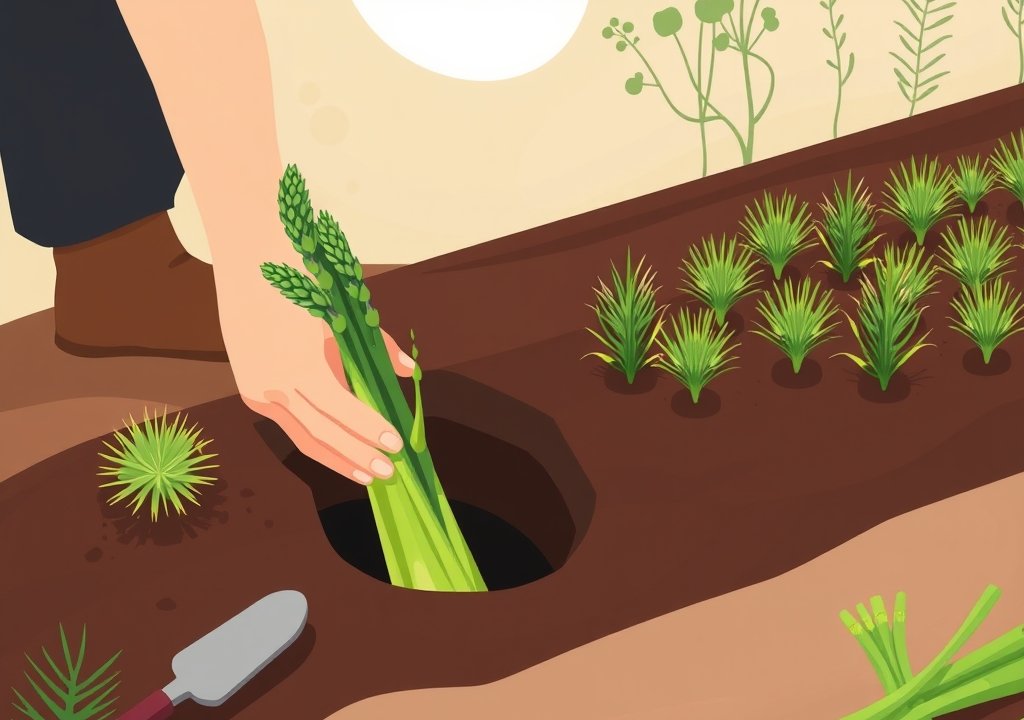
Make a small ridge of soil along the bottom of the trench. Set each crown on top of the ridge with the buds facing up. Space crowns about 30 to 45 centimetres apart.
Spread the roots down the sides of the ridge without bending or breaking them. Cramped or folded roots may grow poorly.
Covering, Watering and Firming the Soil
Cover the crowns with about 5 centimetres of soil. Water well so the soil settles around the roots, then firm it gently by hand to remove large air pockets.
As the spears grow, add more soil gradually over several weeks. This keeps the crowns from rotting and levels the bed by the end.
Mulching and Early Care
A layer of mulch helps keep moisture in and weeds down. Straw or shredded bark is a common choice. Keep mulch a short distance from the emerging spears so they can push through, and check the bed often during the first weeks.
Planting Asparagus From Seed
Growing from seed takes more patience but offers a wider range of varieties. Start seeds indoors in pots or trays, then move seedlings outside once they are sturdy.
Starting Seeds Indoors
Soak seeds in water for a day before sowing. Sow them 1 to 2 centimetres deep in light, well-drained seed compost. Keep the pots warm and evenly moist until shoots appear.
Transplanting Seedlings to the Garden
Harden seedlings off over a week or two, leaving them outside a little longer each day. Plant them out after the last frost, into prepared trenches, and water them in well.
Common Mistakes to Avoid When Planting Asparagus
Most early problems come from a few predictable errors. Each one is easy to prevent with a little care.
Planting Too Shallow or Too Deep
Planting too shallow leaves crowns exposed and dry. Planting too deep delays spear growth and weakens the plant. Follow the depth guidance and fill the trench gradually.
Poor Drainage and Waterlogged Beds
Standing water causes roots to rot. Check how the bed drains after heavy rain. If water pools, improve the soil or use raised beds.
Harvesting Too Early
Picking spears in the first year weakens young plants, which need time to store energy in their roots. Wait until the bed is established, usually after two or more years.
Asparagus Care in the First Growing Season
The first season is about building strong roots. Focus on water, weeds and letting the ferns grow.
Watering and Weed Control
Water young plants during dry spells, keeping the soil moist but not soggy. Remove weeds by hand to avoid disturbing the roots, and use mulch to reduce the work.
Feeding Young Plants
Apply a balanced fertiliser or compost in spring as the plants grow. Follow the product label for amounts, and avoid heavy feeding, which can cause soft growth.
Letting Ferns Grow
Allow spears to grow into tall ferns in the first year. The ferns feed the roots through summer, so do not cut them until they turn yellow and die back.
Asparagus Planting Compared: Crowns, Seeds and Container Options
Each planting method suits different gardeners. The right choice depends on budget, time and available space.
Pros and Cons of Each Method
- Crowns: faster results and a simpler start, but fewer varieties and a higher cost.
- Seeds: cheaper and more varied, but slower to harvest and needing indoor space.
- Containers: flexible and suitable for small spaces, but needing large pots and more frequent watering.
Which Method Suits Small Spaces
Crowns grown in large containers can suit small gardens or patios. Choose deep, wide pots with good drainage, and expect to water and feed container plants regularly.
Frequently Asked Questions
How long does it take for planted asparagus to produce spears?
Crowns usually take two to three years before harvest. Seed-grown plants often take longer. Patience in the early years leads to a stronger, longer-lived bed.
Can I plant asparagus in containers?
Yes, asparagus can grow in large, deep containers with good drainage. Containers need regular watering and feeding. Choose a wide pot so the roots can spread over several seasons.
Do I need more than one asparagus plant?
Asparagus is usually planted in groups, since a single crown gives only a small harvest. Several plants in a row produce a more useful crop. Plan for a bed rather than one plant.
Can asparagus grow in partial shade?
Asparagus prefers full sun and grows best with most of the day in direct light. Partial shade can still produce spears, but they are often thinner and fewer. A sunnier spot usually gives better results.
What should I do with the ferns in autumn?
Leave the ferns standing until they turn yellow and die back. Then cut them to the soil line and remove them from the bed. This helps reduce pests and disease for the next season.
Conclusion
Planting asparagus takes planning, but the steps are straightforward. Choose a sunny, well-drained site, prepare the soil well, and plant in spring. Care for young plants through their first season, and the bed can produce for many years.
Hi, I’m Mary, the founder of GardenCure.com. I’m passionate about creating healthy, beautiful gardens and well-kept lawns. I share practical experience and trusted advice on garden and lawn gear that truly works. With the support of my dedicated research team, our writers produce honest, in-depth reviews using reliable, authentic sources—helping you choose the right tools with confidence for your outdoor space.