
How to Fix a Garden Hose?
Your garden hose is one of those tools you don’t think about until it breaks. One day you’re watering your plants. The next day you’re chasing water squirting out from a hole. Let me show you how easy it is to fix a garden hose yourself. You don’t need to be handy. You don’t need special skills. All you need is a little patience and the right knowledge.
In this article
Why Your Hose Breaks (And Why That’s Okay)
Garden hoses fail for simple reasons. The sun beats down on them every day. The temperature changes hurt them. They get stepped on or bent in weird ways. Sometimes they just age and get tired. The rubber cracks. The connection points weaken. Holes appear from nowhere.
The good news? Most hose problems are fixable. You can save money by doing the work yourself. You can fix your hose in less than an hour. You don’t need to buy a new one unless the damage is really bad.
Signs Your Hose Has a Problem
Before you can fix anything, you need to know what’s wrong. Here are the most common signs that your water hose needs attention.
Water leaks from the middle of the hose. This is the most obvious sign. You’ll see water spraying out as you use the hose. The water goes everywhere except where you want it to go. A small leak wastes water. A big leak wastes a lot of water. Your water bill goes up.
The connection points drip water. Look where the hose attaches to your faucet. Look where it attaches to your sprinkler or nozzle. If water drips there, you have a connection problem. This is one of the easiest issues to fix.
Your hose bursts open. Sometimes the damage is really bad. The hose splits along its length. Water shoots out in multiple places. The hose looks sad and useless.
Cracks and punctures appear. Maybe you ran over it with a lawn mower. Maybe a sharp rock got stuck in it. Maybe the sun damaged it so much that small holes appeared.
The hose feels stiff and brittle. When a hose gets old, it loses its flexibility. It doesn’t bend anymore. It cracks when you try to move it. This usually means the rubber is breaking down.
Water comes out slowly from your spray nozzle. Sometimes the problem isn’t the hose itself. A clog inside the hose blocks water flow. Sediment builds up over time.
Tools and Materials You’ll Need
Let’s talk about what you need to gather before you start fixing. The good news is that the list is short. The better news is that most people already have these items at home.
A clean, dry place to work. You need a flat surface where you can lay out your hose. A driveway or patio works great.
Garden hose repair kit. This is your main tool. A basic kit costs very little money. It includes a coupling, a connector, and clamps. You can find these at any hardware store or garden center.
A sharp knife or hose cutter. You need something to cut the hose cleanly. A utility knife works. A hose cutter works even better. A sharp knife from your kitchen works if it’s clean.
Pliers or an adjustable wrench. You’ll use this to tighten clamps. Make sure it’s clean.
A towel or cloth. You’ll dry the hose with this. Old towels are perfect.
Water bucket. Fill this with clean water to rinse your hose before and after repairs.
Teflon tape (optional). This white tape helps seal threaded connections. It’s cheap and useful to have around.
Sandpaper (fine grit). You might need this to smooth rough edges after cutting.
That’s really it. You don’t need expensive tools. You don’t need professional equipment. Keep this stuff handy, and you’re ready to fix almost any hose problem.
How to Fix a Leaking Connection Point
This is the easiest fix you can do. Leaks at connections cause a lot of problems. The good news is that fixing them takes just a few minutes.
Step 1: Identify the leak. Turn on your faucet and watch where the water is coming from. Is it dripping from the metal coupling where the hose attaches? Is it leaking from the connection to your sprinkler head? Write down the exact spot.
Step 2: Turn off the water. Go back inside your house. Turn off your outdoor faucet or the main water valve. This stops water from flowing.
Step 3: Disconnect the hose. If the leak is where the hose connects to the faucet, unscrew the connection. Twist the coupling counterclockwise. Most connections aren’t tight, so you can do this by hand.
Step 4: Inspect the coupling. Look inside the metal piece. Look at the rubber seal. If it looks worn or flat, it needs to be replaced. If it looks okay but wet, try cleaning it first.
Step 5: Clean the threads. Use your cloth to wipe away any dirt or mineral buildup. Hard water can leave deposits. These prevent good seals.
Step 6: Wrap with Teflon tape. Take your white Teflon tape. Wrap it around the threaded part of the male connector. Wrap it three to five times. This tape helps seal the connection and stops leaks.
Step 7: Reconnect the pieces. Screw the hose back on to the faucet. Hand-tighten it first. Then use your wrench to give it one more quarter turn. Don’t over-tighten. This can damage the seal.
Step 8: Test the connection. Turn the water back on. Check if water still drips. If it does, repeat the process. This time, wrap more Teflon tape.
Sometimes the rubber washer inside the coupling is bad. You can buy replacement washers for just a few dollars. Pull out the old washer. Drop in the new one. Screw the connection back together.
How to Patch a Small Hole in the Hose
Small holes in the middle of your hose can be patched. This is a temporary fix, but it works well if you act fast.
Step 1: Find the hole. Turn on the water and watch for the leak. Mark the spot with a marker or piece of tape. You need to find exactly where the water is coming from.
Step 2: Dry the hose completely. Turn off the water. Use your towel to dry the area around the hole. The hose needs to be dry for the patch to stick properly.
Step 3: Use a rubber patch kit. These kits look like Band-Aids for hoses. They come with a rubber patch and strong adhesive. Cut or trim the patch so it’s slightly bigger than the hole.
Step 4: Clean the surface. Rub the area around the hole with sandpaper. This rough surface helps the patch stick. Don’t rub too hard. You just want to create a texture.
Step 5: Apply the adhesive. Most patches have adhesive on the back. If yours doesn’t, apply the glue that came with the kit. Apply it evenly around the hole.
Step 6: Press the patch firmly. Place the patch over the hole. Press down hard with your hand. Hold it for the time the instructions say. Usually this is 30 to 60 seconds. Make sure there are no air bubbles underneath.
Step 7: Let it cure. Don’t use the hose right away. Wait the full time that the kit instructions recommend. This is usually at least one hour. Some patches need to set for a full day.
Step 8: Test the patch. Turn the water back on slowly. Check if water still leaks. If the patch holds, great! You’ve fixed your hose.
How to Fix a Cut or Split Hose
When your hose develops a cut or split, you have two options. You can patch it, or you can cut it and rejoin it. The rejoin method is permanent and stronger.
Step 1: Cut away the damaged section. Turn off the water. Dry the hose completely. Using your sharp knife or hose cutter, cut out the damaged part. Make clean cuts on both sides. Cut at least two inches on each side of the damage. This makes sure you remove all the bad rubber.
Step 2: Prepare the ends. Look at the cut ends. They should be smooth. Use sandpaper to smooth any rough edges. This helps the connector fit well.
Step 3: Get your repair coupling. A repair coupling is a tube that goes inside the hose. It rejoins the two cut pieces. These come in different sizes. You need the size that matches your hose diameter.
Step 4: Push the coupling into one end. Insert the repair coupling into the first cut end of the hose. Push it in as far as you can. The coupling should feel snug.
Step 5: Attach the hose clamp. Slide a hose clamp over the hose where it meets the coupling. The clamp is like a metal band that tightens around the hose. Position it about one inch from where the coupling starts.
Step 6: Tighten the clamp. Use your wrench or pliers to tighten the screw on the clamp. Turn it clockwise. Tighten until it’s snug but not so tight that it crushes the hose. You should be able to move the clamp slightly, but it shouldn’t slide easily.
Step 7: Join the second piece. Push the other end of the hose onto the other end of the coupling. This is like connecting two pieces of a puzzle. Push it on as far as you can.
Step 8: Add the second clamp. Slide another hose clamp over the second connection point. Tighten it the same way you tightened the first one.
Step 9: Test the connection. Turn the water back on. Check both connection points for leaks. If water drips, tighten the clamps a little more. Don’t crank too hard. Just a quarter turn or two.
This repair should last for years. Many people use this method for their hoses and never have the same problem again.
How to Fix a Clogged Hose
Sometimes your hose works fine, but water flows slowly. The problem might be inside the hose. Sediment builds up over time.
Step 1: Disconnect the hose. Unscrew it from the faucet. Unscrew it from the nozzle or sprinkler.
Step 2: Flush with clean water. Hold the hose over a bucket or drain. Pour clean water through it from the end that connects to the faucet. Let the water run for several minutes. You should see dirty water come out. Keep flushing until the water runs clear.
Step 3: Flush from the other direction. Now hold the hose the other way. Pour water in from the nozzle end. This pushes any remaining sediment out.
Step 4: Use compressed air (optional). If flushing doesn’t work, you can use compressed air. A air compressor blows air through the hose at high pressure. This dislodges stubborn clogs. But most people don’t have a compressor at home.
Step 5: Let it dry. After flushing, let the hose dry completely before using it again.
Step 6: Reconnect and test. Screw the hose back together. Turn on the water. Check if the water flows normally now.
How to Prevent Hose Problems Before They Start
The best fix is a hose that never breaks. Taking care of your hose prevents most problems.
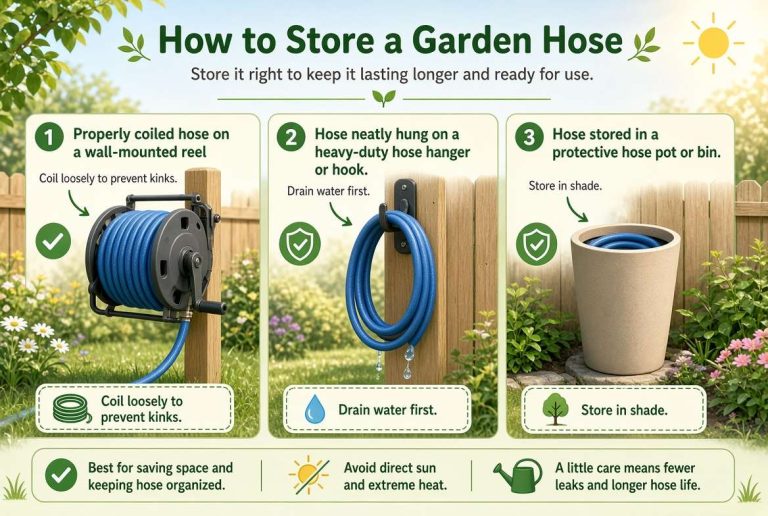
Store it properly. Don’t leave your hose in direct sunlight all the time. UV rays break down rubber. Store it in a shaded spot when you’re not using it. A hose reel keeps it organized and protected. An old trash can works too.
Drain the hose. When winter comes, drain all the water from your hose. Water inside hose expands when it freezes. This can crack the hose. After you’re done watering, turn off the faucet. Hold the hose up and let gravity drain the water. Disconnect it and let it dry.
Use a nozzle with an on-off switch. A spray nozzle lets you control water flow. You don’t have to go back to the faucet to stop the water. This prevents pressure buildup that can damage the hose.
Keep hoses away from sharp objects. Don’t lay your hose across gravel driveways. Don’t leave it near rose bushes or other sharp plants. Don’t let lawn mower wheels run over it.
Inspect regularly. Every few weeks, look at your hose. Check for small cracks or soft spots. Catch problems early before they become big.
Clean the ends. After you finish watering, rinse off the connections. Dirt and sediment can collect there. Clean connections work better and last longer.
Use a hose protector. If you have to run your hose across a driveway, use a hose protector. This is a plastic tube that covers the hose. It prevents damage from foot traffic and rolling wheels.
When to Replace Instead of Fix
Not every hose is worth fixing. Sometimes replacement makes more sense.
Replace your hose if it has multiple holes or splits spread throughout. Patching one spot won’t help if other problems exist nearby.
Replace your hose if it’s very old and stiff. Old hose rubber becomes brittle. It won’t work properly no matter how you fix it.
Replace your hose if the damage is more than one third of the way around the hose’s circumference. Cracks or splits that wrap around the hose won’t hold a patch.
Replace your hose if you’ve already repaired it multiple times. Each fix works, but eventually you reach the limit.
Replace your hose if water leaks from inside the hose material itself. This means the rubber is breaking down everywhere, not just at one spot.
New hoses cost between 15 and 50 dollars depending on length and quality. That’s not expensive for something you use every week.
Choosing the Right Hose for Your Needs
Once you fix your current hose, you’ll want one that lasts longer. Here’s what matters when you pick a hose.
Length matters. Know how far you need to reach. A 50-foot hose is standard for most yards. A 25-foot hose works for small gardens. A 100-foot hose covers large areas but is heavy to drag around.
Diameter affects flow. Most hoses are three-quarter inch in diameter. Larger diameters deliver more water faster. Smaller diameters work fine for light watering.
Material quality counts. Hoses made with reinforced rubber last longer. Vinyl hoses are lighter but break easier. Look for hoses with UV protection built in.
Weight and flexibility. A lighter hose is easier to handle. But heavier hoses often last longer. Find a balance that works for you.
Check the warranty. Good hoses come with warranties of one to two years. This tells you the manufacturer believes in the product.
Common Mistakes People Make
Learning what not to do helps you fix hoses correctly.
Don’t over-tighten clamps. I know I keep saying this, but it’s important. Crushing the hose defeats the purpose of the clamp. Snug is enough.
Don’t repair the same spot multiple times. If a patch fails, the hose is probably too damaged. Try a different repair method or replace the hose.
Don’t use old or damaged couplings. Always replace worn parts. Reusing a bad coupling just creates the same leak again.
Don’t cut the hose with a dull knife. Dull blades create jagged edges that prevent good seals. Use sharp tools.
Don’t skip drying. A wet hose makes it hard for patches and seals to work properly. Always dry the hose completely.
Don’t forget to test. After you repair, always turn on the water slowly. Watch the repair area. Small leaks show up right away.
Special Tips for Different Hose Types
Different hoses need different approaches.
Soaker hoses. These hoses have tiny holes all over for gradual watering. If a hole develops where you don’t want water, you can plug it. Buy a small plug from a garden store. Push it into the hole. If the main hose splits, the repair process is the same as a regular hose.
Flat hoses. Some people use flat hoses that coil up small. These need special couplings. Regular couplings might not fit. Check the size before buying repair kits.
Expandable hoses. These stretch when water flows through them. They shrink back when you turn off the water. Patches work on expandable hoses. Clamp repairs also work. But sometimes the stretching damages patches. If patches keep failing, switch to clamp repairs.
Tools to Keep in Your Garage
Stock these items so you’re ready when problems happen.
- A garden hose repair kit with multiple coupling sizes
- Extra hose clamps in various sizes
- A rubber patch kit
- Teflon tape
- Sharp hose cutter or utility knife
- Adjustable wrench or pliers
- Replacement washers
- Extra hose end caps
These items cost very little. Keeping them on hand saves money and frustration later.
The Bottom Line
Fixing a garden hose is easier than you think. Most repairs take less than one hour. Most repairs cost less than 10 dollars. You can do every repair in this guide without any special skills or training.
Start by identifying what’s wrong with your hose. Then pick the right repair method. Follow the steps carefully. Take your time. Test the repair before you walk away.
A well-maintained hose lasts for years. When problems do happen, you now know how to fix them yourself. You save money. You stay in control. You don’t have to depend on someone else to solve the problem.
Next time your hose springs a leak, smile. You’ve got this. You know exactly what to do. Your garden will be watered, and your wallet will thank you.
Now get out there and fix that hose. Your plants are waiting.

Hi, I’m Mary, the founder of GardenCure.com. I’m passionate about creating healthy, beautiful gardens and well-kept lawns. I share practical experience and trusted advice on garden and lawn gear that truly works. With the support of my dedicated research team, our writers produce honest, in-depth reviews using reliable, authentic sources—helping you choose the right tools with confidence for your outdoor space.