How to Get Rid of Cabbage Worms?
If you grow cabbage at home, you’ve probably noticed something frustrating. Those small green worms show up and start eating your plants. They leave holes in the leaves and make your cabbages look terrible. The worst part? They seem to multiply overnight.
In this article
You’re not alone in this struggle. Cabbage worms are one of the most common garden pests. But here’s the good news: you can get rid of them. You don’t need fancy chemicals or a farming degree.
This guide will show you everything you need to know about cabbage worms. You’ll learn how to spot them. You’ll find out how to remove them. Best of all, you’ll discover ways to stop them before they ruin your crop.
Let’s get started.
What Are Cabbage Worms, Anyway?
Before you can fight cabbage worms, you need to understand what you’re dealing with.
Cabbage worms are small caterpillars. They’re about half an inch to an inch long. Most of them are green or yellow-green. This color helps them hide on your cabbage leaves. That’s why they’re so hard to spot.
These worms come from butterflies. Not just any butterflies. They come from the cabbage white butterfly. This is a small white or pale butterfly. You might see them flying around your garden. When they land on your cabbages, they lay eggs.
The eggs are tiny. They’re so small you might miss them. They’re usually white or cream-colored. They stick to the bottoms of leaves. In a few days, the eggs hatch. Out comes a tiny caterpillar. That caterpillar starts eating right away.
The caterpillar stage is when you have a problem. This is when they do real damage. They eat holes in the leaves. They burrow into the heads of cabbage. Sometimes they tunnel all the way into the center of the plant.
One cabbage can host many worms. Ten, twenty, even more. They all eat at the same time. That’s why the damage spreads so fast.
Signs You Have Cabbage Worms
How do you know if cabbage worms are attacking your plants? Look for these signs.
Holes in the Leaves
This is the first thing you’ll notice. The leaves have small holes. At first, they’re tiny. But as the worms grow, the holes get bigger. The leaves start to look like someone poked them with a tiny stick over and over.
Frass on the Leaves
Frass is just a fancy word for worm droppings. It looks like small dark green or brown grains. You’ll find it on the leaves and between the layers of the cabbage. This is a dead giveaway that worms are feeding.
Tunnels Inside the Head
If you pick a cabbage and cut it open, you might find tunnels. Worms have eaten paths through the cabbage. This ruins the inside of the plant. You can’t eat it. You have to throw it away.
Visible Worms
Sometimes you’ll just see them. Check under the leaves. Look inside the folds of the cabbage head. You might spot a green caterpillar moving around.
Wilting or Yellowing
If enough worms attack a plant, it can look sick. The leaves might turn yellow. The plant might start to wilt. This happens because the worms damage so much of the plant that it can’t function right.
The earlier you spot these signs, the easier the problem is to fix.
Simple Ways to Remove Cabbage Worms
Let’s talk about hands-on removal. This works best when you catch the problem early.
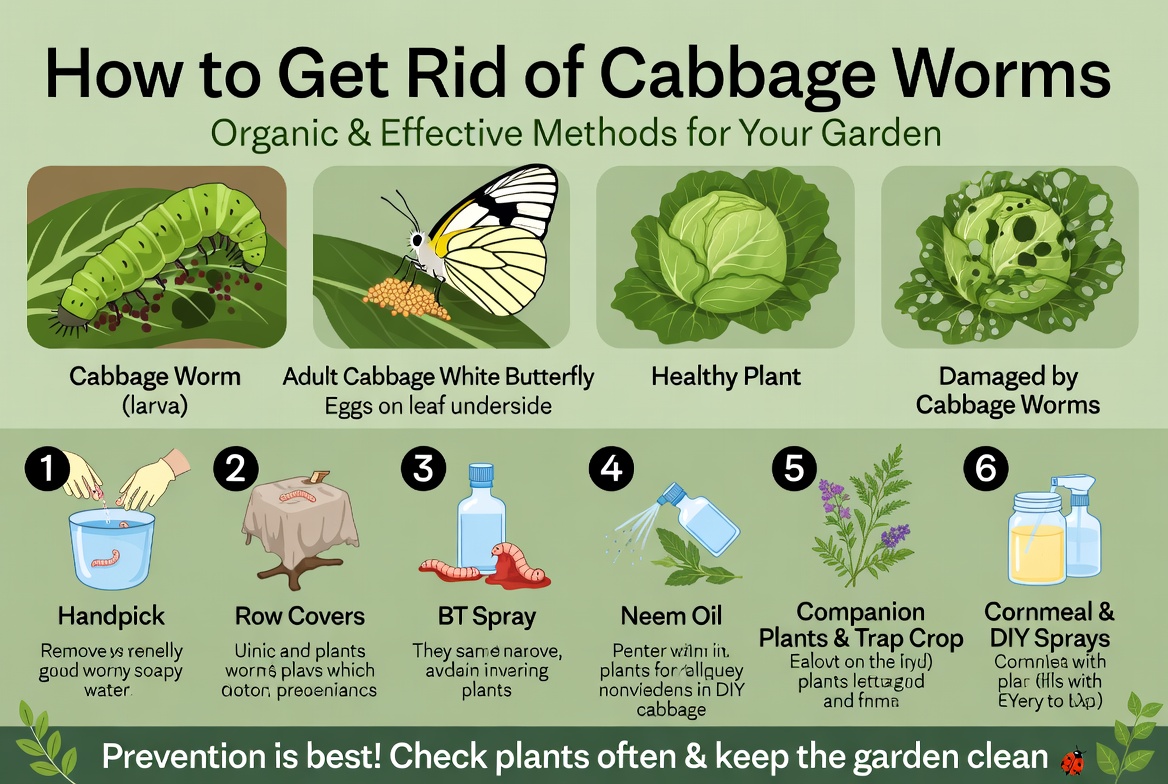
Hand-Picking
This sounds old-fashioned, but it works. Go out to your garden. Look at your cabbage plants. Check under each leaf. Look inside the folds of the head. When you spot a worm, pick it off.
What do you do with it? You have options. You can drop it into a bucket of soapy water. You can step on it (I know, not fun). You can feed it to your chickens if you keep them. You can toss it away from your garden.
Do this every two or three days. You’re looking for both the worms and the eggs. If you see clusters of tiny cream-colored eggs, wipe them off the leaf with your finger.
Hand-picking takes time. But it’s free. It’s safe. And it works.
Inspecting New Plants
If you buy seedlings from a store or nursery, check them before you plant them. Eggs might already be on them. Look under the leaves. If you see eggs or worms, rinse them off with water.
This stops the problem before it starts.
Use Spray Solutions That Actually Work
When hand-picking isn’t enough, you need backup. Sprays can help. The best part? You can make some of them at home.
Bacillus thuringiensis (Bt)
This is a natural bacteria. It sounds complex, but it’s actually simple to use. Bt spray kills caterpillars, including cabbage worms. It doesn’t hurt people or most other insects. Birds are safe. Bees are safe. Good bugs in your soil are safe.
How does it work? When a caterpillar eats a leaf sprayed with Bt, the bacteria enters its stomach. The bacteria damages the caterpillar’s digestive system. The worm stops eating and dies.
You buy Bt as a spray. You dilute it with water. You spray it on your cabbage plants. Focus on the tops and bottoms of the leaves. Do this every seven to ten days. Reapply after rain.
Bt works best on small worms. Once they get bigger, it’s less effective. Start spraying early in the season.
Neem Oil Spray
Neem oil comes from a tree native to India. It’s been used for thousands of years. It works on many garden pests, including cabbage worms.
Neem oil disrupts the insect’s hormones. It also blocks their ability to eat. The worms die off.
You can buy neem oil ready to spray. You can also get the concentrate and mix it yourself. Follow the label directions. Spray in the early morning or late evening. Don’t spray in hot sun. This can burn your leaves.
Spray every seven to ten days. Reapply after rain. Neem oil also helps prevent fungal diseases. That’s a bonus.
Garlic Spray
You probably have garlic in your kitchen right now. It turns out garlic is a powerful pest deterrent.
Make a garlic spray like this: Blend a whole garlic bulb (that’s one whole head) with one quart of water. Let it sit overnight. Strain out the solids. Mix the liquid with a few more quarts of water. Add a squirt of dish soap. This helps the spray stick to the leaves.
Spray this on your cabbages every few days. The smell bothers the worms and the butterflies that lay eggs. It’s also safe for you and your family.
Soap Spray
Insecticidal soap is a real product you can buy. But you can also make something similar at home.
Mix a few tablespoons of liquid dish soap with a gallon of water. Spray this on your plants, focusing on the undersides of leaves. The soap covers the worms and disrupts their outer layer. They dry out and die.
This works best on small worms. Repeat every few days as needed.
Physical Barriers and Prevention
Sometimes the best cure is prevention. Stop the worms before they start.
Row Covers
Row covers are lightweight fabrics. You drape them over your plants. Light gets through. Water gets through. But the cabbage white butterflies can’t.
Install the row covers right after you plant. Secure the edges with soil or stones. When your cabbages start flowering (though you’re eating them before that), you can remove the covers.
This is one of the most effective methods. It stops the butterflies from laying eggs in the first place.
Netting
Fine mesh netting works like row covers. It’s harder to set up and remove, though. Row covers are usually better.
Reflective Surfaces
Some gardeners use reflective tape or aluminum foil. The idea is that the shine confuses the butterflies. It might help a little. But it’s not as reliable as row covers.
Spacing Your Plants
Don’t crowd your cabbages. Leave good space between them. This improves air circulation. It also makes it easier to inspect plants and spot problems early.
Attract Beneficial Insects
Here’s a smart strategy: bring in the worm’s enemies.
Certain insects eat cabbage worms and their eggs. These are your friends.
Parasitic Wasps
Don’t panic at the word “wasp.” These are tiny wasps. They don’t sting people. They lay eggs inside caterpillars. When the eggs hatch, the wasp babies eat the caterpillar from the inside. It sounds gross, but it works.
To attract these wasps, plant flowers they love. Alyssum, marigolds, and yarrow are good choices. Let some weeds grow too. Many beneficial insects like weeds.
Ladybugs
Ladybugs eat tons of insects. They love eating eggs and small caterpillars. Plant plants that ladybugs like. These include dill, fennel, and cilantro.
You can also buy ladybugs to release in your garden. This gives them a head start.
Ground Beetles
These beetles hunt at night. They eat eggs and small caterpillars. They live in mulch and leaf litter. Let some of this stay in your garden. Don’t make it too neat.
Companion Planting Strategies
Some plants repel cabbage worms. Plant these near your cabbages.
Thyme
This herb repels cabbage worms. It also smells great and attracts beneficial insects. Plant it around your cabbage patch.
Mint
Mint grows almost anywhere. It’s a strong plant. The smell bothers cabbage worms. Plant it near (but not in) your cabbage bed. Mint spreads like crazy, so contain it.
Dill
Dill attracts beneficial wasps. It also adds flavor to your meals.
Onions and Garlic
We mentioned garlic spray already. Growing garlic and onions near cabbage helps too. The smell deters the butterflies.
Chamomile
This flower attracts beneficial insects. It also helps repel some pests.
Avoid These Plants
Fennel can slow the growth of nearby cabbages. Keep it away from your brassicas. Mustard plants in the same family as cabbage can attract more pests. Plant them away from your cabbages.
Keep Your Garden Clean
A tidy garden is a healthy garden.
Remove Old Plants
Don’t leave dead cabbage plants sitting around. Clear them away after harvest. Worms can hide in dead material. Remove it and throw it in the trash or compost.
Clean Between Crops
At the end of the season, clean up. Remove all plant debris. Dig in your soil to expose pupae (the stage where worms transform into butterflies). Expose them to birds and cold weather.
Rotate Crops
Don’t plant cabbage in the same spot year after year. Worm pupae live in the soil. If you plant cabbage there again next season, the worms will be waiting.
Move your cabbage to a different part of the garden. Come back to the original spot after two or three seasons.
Keep Grass Cut
Keep grass and weeds trimmed around your garden. This removes hiding spots for butterflies and other pests.
Timing Matters: Planting for Success
The season affects cabbage worms.
Spring Planting
If you plant cabbages early in spring, you’ll have fewer worms. The butterflies aren’t as active yet. By the time they show up, your plants are bigger and stronger.
Summer Planting
Summer is peak cabbage worm season. If you plant then, expect problems. You’ll need to be more aggressive with treatments.
Fall Planting
Fall cabbage misses the worst of the worm season. By the time butterflies get going, weather is cooling down. The worms are less active.
If possible, choose spring or fall for cabbage. You’ll have an easier time.
When to Use Stronger Options
Sometimes the home remedies aren’t enough. You might need to step up.
Spinosad
This is a natural pesticide. It comes from bacteria in the soil. It kills cabbage worms, but it also kills many other insects. Avoid it if you’re trying to protect beneficial bugs.
Use it as a last resort. Apply it according to label directions.
Pyrethrins
These are made from chrysanthemum flowers. They’re natural but strong. They kill many insects, both good and bad.
Again, use this only when other methods aren’t working.
Check Local Regulations
Before using any pesticide, check your local rules. Some areas restrict certain products. Your local agricultural extension office can help.
Organic vs. Conventional: What Works
Organic methods work. They just take more time and attention.
Hand-picking, Bt spray, row covers, and companion planting are all organic. They work. Plenty of gardeners use only these methods.
If you’re willing to be hands-on and patient, organic works fine.
Stronger pesticides work faster. But they’re harsher. They kill more insects. They can harm the environment.
Many gardeners do a mix. They use organic methods first. If things get out of control, they use something stronger.
Choose what fits your values and your situation.
Specific Brassica Crops: Special Considerations
Cabbage worms attack more than just cabbage.
Broccoli
The same methods work for broccoli. Hand-pick worms. Use Bt spray. Use row covers. The worms hide in the florets, so inspect carefully before eating.
Cauliflower
Cauliflower gets the same treatment. The white curds are actually flower clusters. Worms like to hide inside. Check carefully.
Brussels Sprouts
Row covers work great on brussels sprouts. The plants are smaller, so covers are easy to install. Harvest sprouts from the bottom up as they get big enough.
Kale and Other Greens
Kale is tougher than cabbage. The worms still attack, but the plant usually survives. Use the same control methods.
Troubleshooting Common Problems
The Problem Won’t Go Away
If one method isn’t working, switch it up. Pests can get used to treatments. Rotate methods. Use Bt one week, garlic spray the next. Use hand-picking too.
You Keep Missing the Worms
Try this: Go out twice a day. Check plants in the morning and evening. Worms feed at different times. You’ll catch more if you look regularly.
Your Plants Are Already Badly Damaged
If most of the plant is destroyed, pull it out. Compost it or throw it away. Plant something new. It’s better to start fresh than struggle all season.
Weather Is Making It Hard
Rain washes off sprays. You need to reapply. Cold weather slows worms. Take advantage. Hot weather speeds them up. You’ll need to be more aggressive in hot times.
Questions People Ask
How Long Does It Take to Get Rid of Cabbage Worms?
If you catch them early with hand-picking, a few days to a week. If you use Bt spray, about a week. Prevention methods like row covers take a few hours to set up but work all season.
Can You Eat Cabbages with Worms?
You can if the damage is minor. Just cut out the bad spots. But if worms have tunneled inside, throw it out. You can’t eat the parts they’ve damaged.
Are Cabbage Worms Dangerous to Humans?
No. They don’t bite. They don’t carry diseases. They don’t poison you. They’re just annoying.
Will Cabbage Worms Come Back Next Season?
Probably, unless you live somewhere really cold. That’s why prevention next season is important. Clean up this season. Rotate your crops. Use row covers from the start.
What’s the Best Overall Method?
Most gardeners say row covers are the best. They work before you have a problem. They’re easy to use. They’re completely safe.
Your Action Plan Moving Forward
Let’s wrap this up with a simple plan.
Right Now
Check your cabbage plants. Look for worms and eggs. Hand-pick anything you find. Do this every two or three days for the next week.
This Week
Choose one spray method. Bt is a great place to start. Buy it. Mix it according to directions. Spray your plants. Plan to spray again in a week.
This Month
Plant some companion plants. Thyme and garlic near your cabbages are good starts. These help prevent future problems.
Keep up with hand-picking. Check your plants regularly. This stays important even with sprays.
Next Season
Start with row covers. Install them right after planting. This prevents the problem from the start. You can skip row covers later if you want, but they make life so much easier.
Consider fall planting. Fewer worms. Less stress.
Rotate where you plant cabbage. Don’t use the same spot twice in a row.
The Bottom Line
Cabbage worms don’t have to ruin your garden. You have lots of options.
Start simple. Hand-pick the worms. Spray with Bt if needed. Use row covers next season.
The secret is being consistent. Check your plants often. Act fast when you see problems. Don’t wait.
Lots of gardeners grow great cabbages without chemicals. You can too. It takes attention. It takes a little effort. But the reward is fresh, healthy cabbage from your own garden.
You’ve got this. Get out there and protect your cabbages. Your future harvest will thank you.
Happy gardening!

Hi, I’m Mary, the founder of GardenCure.com. I’m passionate about creating healthy, beautiful gardens and well-kept lawns. I share practical experience and trusted advice on garden and lawn gear that truly works. With the support of my dedicated research team, our writers produce honest, in-depth reviews using reliable, authentic sources—helping you choose the right tools with confidence for your outdoor space.