How to Control Aphids?
Aphids are tiny bugs that love to eat your plants. They’re one of the most common garden pests. If you see your plants looking sick or sticky, aphids might be the problem. The good news? You can get rid of them without much fuss.
In this article
This guide will show you everything you need to know about aphid control. You don’t need to be a gardening expert to use these methods. Let’s get started.
What Are Aphids Anyway?
Aphids are small insects. Most are green or black, but they come in many colors. They’re usually 2-3 mm long. That’s tiny. You might need to look close to see them.
These bugs use a special straw-like mouth to suck juice from plants. When they eat, they weaken your plants. The plant starts to look droopy and sick. Leaves curl up or turn yellow. Flowers don’t bloom right. New leaves don’t grow well.
Aphids live in huge groups. One plant might have thousands of them. They move fast and spread to other plants quickly. That’s why you need to act fast when you spot them.
How to Spot Aphids on Your Plants
Catching aphids early makes them easier to control. Here’s what to look for:
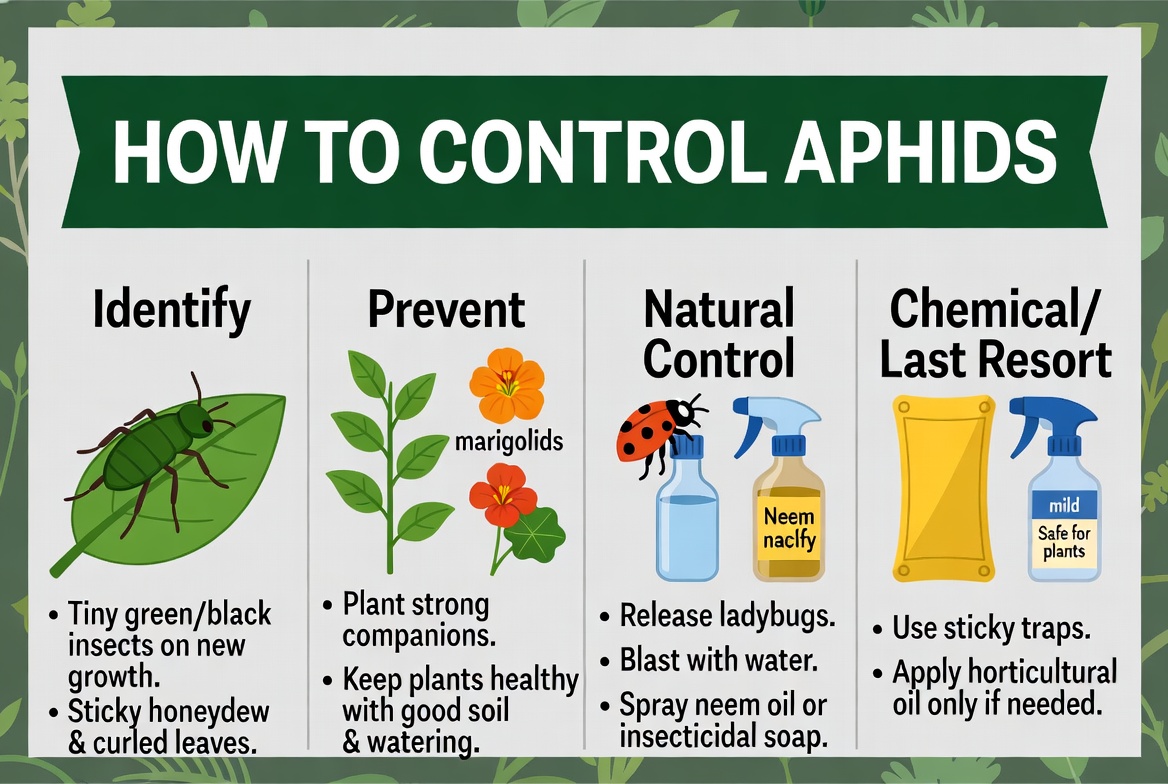
Check the leaves. Aphids love to hang out on the undersides of leaves. Flip some leaves over and look. Do you see tiny bugs clustered together? That’s aphids.
Look for sticky stuff. Aphids leave behind something called honeydew. It’s a sticky, sweet liquid. This gunk collects on leaves and stems. You might notice it on the ground below your plant too.
Watch for curled leaves. When aphids drink plant juice, the leaves often curl up. The edges might turn brown or yellow. The leaf shape gets weird and bumpy.
Look for black mold. The sticky honeydew brings black mold. You’ll see dark, sooty powder on leaves. This is a sign aphids are there.
Check new growth. Aphids go crazy for fresh, tender leaves. Look at the newest growth on your plant first. That’s their favorite spot.
Notice stunted plants. Aphids weaken plants over time. If your plant suddenly stops growing or looks small, check for these bugs.
The easiest way to check is to tap the plant over a white paper. Shake the leaves. The tiny bugs will fall on the paper where you can see them.
Why Aphid Control Matters
You might think a few aphids aren’t a big deal. But they multiply super fast. One aphid can make hundreds of babies in just a few days. Before you know it, your whole garden is covered.
Weak plants get sick easier. They can’t fight off disease. Aphids also spread viruses from plant to plant. Some viruses kill plants. Others ruin your vegetables or flowers.
Aphid control isn’t just about saving one plant. It’s about protecting your whole garden. It stops the spread to your neighbors’ gardens too.
Method 1: Use Water to Wash Aphids Away
The simplest method costs almost nothing. Just use water from your hose.
Here’s what to do:
Take your hose and spray the infected plant with strong water. Aim for the undersides of leaves. Spray every part of the plant. Make sure the water is strong enough to knock the bugs off but not so strong it breaks your plant.
Do this early in the morning. Morning is best because it gives the plant all day to dry. Wet plants overnight can get fungal problems.
Why this works: The force of the water knocks aphids off the plant. They can’t crawl back up very fast. Many fall to the ground and don’t return.
This method works best when you have just a few aphids. Do it every three to four days. Keep doing it until the aphids are gone.
The downside: This method takes time and effort. Your arms might get tired spraying large plants. It also works better on plants with tough leaves. Soft, delicate plants might get hurt.
Method 2: Try Neem Oil Spray
Neem oil comes from a neem tree. It’s natural. It kills many garden pests including aphids. You can buy neem oil at any garden store.
How to use neem oil:
Mix neem oil with water. Follow the directions on the bottle. Most neem oils mix about one ounce of oil with one gallon of water. You might need to add a drop of dish soap too. This helps the oil stick to the plant.
Pour the mix into a spray bottle. Spray your plants in the early morning or late evening. Coat the tops and bottoms of all leaves. Spray the stems too.
Do this every seven to ten days. Keep spraying until you don’t see any aphids for two weeks.
Why neem oil works: Neem oil blocks pores on the aphids’ bodies. It also messes with their eating and reproduction. Aphids die from the oil.
Things to know: Neem oil is safe for most plants. It doesn’t hurt pets or people when used right. However, don’t spray during the hottest part of the day. It can burn your plant leaves. Never spray when bees are visiting.
Method 3: Spray with Insecticidal Soap
Insecticidal soap is made to kill soft-bodied insects like aphids. You can buy it at garden centers. It’s safe to use around kids and pets when applied correctly.
How to apply insecticidal soap:
Mix the soap per the bottle directions. Fill a spray bottle. Spray the plant thoroughly. Hit the tops and bottoms of every leaf. Spray the stems. Spray until the soap drips off.
Apply every seven to ten days. You might need three or four applications. Stop spraying once aphids are gone.
Why it works: The soap damages the aphid’s protective coating. They lose water and die. It only works on the bugs it touches, so complete coverage is key.
Important tips: Apply in cool weather. Don’t spray in direct sun. Don’t spray flowers because it might hurt bees. Spray in early morning or evening.
Method 4: Spray Your Plants with Vinegar
Vinegar is cheap and you probably have some at home. Make a simple spray to kill aphids.
The easy recipe:
Mix one part vinegar with three parts water. Add a drop of dish soap. The soap helps it stick to the plants.
Spray the affected areas. Do this every three days until aphids disappear.
Why this works: Vinegar is acidic. It burns the outer layer of aphids and kills them. It also makes plants taste bad to the bugs.
What to know: Vinegar spray can damage plant leaves if you use too much. Always test it on a small part first. Wait a day and see if the leaf gets burned. If it looks okay, then spray the whole plant.
Method 5: Make a Soap Spray at Home
You don’t need to buy expensive products. Make your own spray with dish soap.
Simple soap spray recipe:
Mix one tablespoon of dish soap with one quart of water. That’s it. Pour into a spray bottle.
Spray your plants the same way as insecticidal soap. Coat everything well. Repeat every five to seven days.
How it helps: Dish soap breaks down the waxy coating on aphids. This coating protects them. Without it, they dry out and die.
Be careful: Don’t use too much soap. Too much can hurt your plants. Always test first on a small leaf. Use plain dish soap, not antibacterial or scented types.
Method 6: Bring in Natural Predators
Some insects eat aphids. Letting them into your garden does the work for you.
Bugs that eat aphids:
Ladybugs are the most famous. These cute beetles love eating aphids. One ladybug eats hundreds of aphids in its lifetime.
Lacewings are another great helper. Green lacewings eat soft-bodied insects. Their larvae eat even more than the adults.
Parasitic wasps are tiny and harmless to people. They lay eggs in aphids. When the eggs hatch, they eat the aphid from the inside.
Hoverflies eat aphids too. They look like tiny bees but they’re actually flies.
How to attract them:
Plant flowers that bring these bugs. Nectar flowers are best. Alyssum, yarrow, and marigolds work great. Let some plants go to seed. Bugs love the seeds.
You can also buy beneficial insects. Many online shops sell ladybugs and lacewings. Release them in your garden. They’ll eat the aphids.
Time needed: Natural predators take longer than sprays. But once they’re established, they keep eating aphids all season long.
Method 7: Use Diatomaceous Earth
Diatomaceous earth (DE) is a powder made from dead algae. It’s harmless to humans and pets. It kills many garden pests.
How to apply DE:
Buy food-grade diatomaceous earth. Don’t use pool-grade. Mix per the directions. Most need about two tablespoons per gallon of water.
Spray on your plants. Coat everything. Reapply after rain. Also reapply every seven to ten days.
Why it works: DE has tiny sharp edges. They cut the waxy coating on aphids. The bugs dry out and die.
Important things to know: Only use food-grade DE. Wear a mask when applying because breathing the powder isn’t good. Don’t spray when bees are around.
Method 8: Plant Garlic and Chili Near Your Plants
Garlic and chili peppers repel aphids. Their strong smell keeps aphids away.
How to use them:
Plant garlic cloves around your garden. Plant chili peppers near plants that get aphids. The smell keeps aphids from landing there.
You can also make a spray. Crush garlic cloves. Soak them in water for a few days. Strain out the chunks. Mix with water and spray on plants.
Why this works: Aphids hate strong smells. The garlic and chili scent makes them go eat someone else’s plants.
The good part: These plants are edible too. You get food and pest control at the same time.
Method 9: Keep Your Garden Clean
A tidy garden has fewer aphids. Aphids love hiding in dead leaves and plant debris.
What to do:
Remove dead leaves from the ground. Don’t leave fallen plant bits lying around. Pull off dead flowers and leaves from plants. Clean up dead stems and branches.
Throw away infected plant parts. Don’t leave them in the garden. Put them in the trash, not your compost pile.
Why it matters: Removing hiding spots forces aphids out into the open. Predators find them easier. Aphids also hide in weeds. Pull weeds regularly.
Method 10: Water Your Plants Right
Healthy plants fight aphids better. Proper watering keeps plants strong.
Good watering tips:
Water at the roots, not the leaves. Water in the morning. This lets leaves dry fast. Wet leaves attract fungus.
Give plants deep watering less often. This builds strong roots. Shallow watering every day makes weak plants.
Different plants need different amounts. Know what your plants want. Stressed plants get aphids easier than healthy ones.
Why this matters: Strong plants with lots of juice attract more aphids. But strong roots help the plant survive even with aphids eating. The plant fights back better.
Method 11: Prune Infected Branches
Sometimes cutting off the problem is the answer.
When to prune:
If only a few branches have aphids, cut them off. Use clean pruning shears. Cut at least six inches below the damaged area.
Put the cut branches in a trash bag. Seal it. Don’t put them in compost.
Why this works: You remove the aphids fast. The plant redirects energy to new growth. New leaves are often less attractive to aphids.
When not to prune: Don’t prune too much at once. You can stress the plant. Prune only what you need to.
Method 12: Apply Horticultural Oil
Horticultural oil smothers aphids. It blocks their breathing. You can buy it at any garden store.
How to use it:
Mix per the bottle directions. Spray on all plant parts. Make sure everything is wet.
Apply in early morning or late evening. Don’t spray in direct sun. Reapply every seven to ten days.
Important notes: Horticultural oil can hurt plants in extreme heat. Check the label for temperature limits. Don’t spray during flower time if bees visit.
Combining Methods Works Best
One method alone might not be enough. Mix methods together for better results.
Start with water spray. This removes many aphids right away. Then apply neem oil or soap spray. Finally, bring in ladybugs. This three-part attack works great.
Spray every five to seven days. Keep going for at least two weeks after you stop seeing aphids. This prevents them from coming back.
Preventing Aphids from Coming Back
Once you beat the aphids, keep them away.
Good prevention habits:
Check plants weekly. Look for early signs. Catch problems when they’re small.
Water plants deeply and regularly. Strong plants resist aphids.
Remove dead plant material. Keep the garden tidy.
Plant flowers for beneficial insects. Keep natural predators around.
Avoid too much nitrogen fertilizer. Nitrogen makes soft, tender growth that aphids love.
Use row covers on young plants. These lightweight cloths keep bugs off without hurting the plant.
Keep an eye on new plants before bringing them home. Don’t bring aphids into your garden from the store.
Space plants properly. Good air flow stops many pest problems.
When to Call for Help
Most aphids you can handle yourself. But sometimes you need professional help.
Call a pro if:
The problem covers your whole garden.
Your plants are large trees and you can’t reach high areas.
You’ve tried everything and aphids won’t go away.
You have lots of delicate plants that need special care.
A professional knows tricks you might not. They have tools and products for big problems.
Common Mistakes to Avoid
Learn from others’ mistakes. Don’t repeat them.
Don’t ignore small problems. One aphid becomes a thousand fast. Act early.
Don’t spray in the sun. Heat makes spray burn leaves. Always spray morning or evening.
Don’t use one method forever. Aphids get used to things. Switch between spray types.
Don’t spray too strong. Strong sprays can hurt your plant as much as aphids. Use gentle pressure.
Don’t forget the undersides. Aphids hide under leaves. You must spray there.
Don’t skip the waiting period. Give spray time to work. Most need three to five days between applications.
Don’t spray flowering plants. Wait until flowers drop. Spray hurts bees and flowers.
Don’t use harsh chemicals on edibles. Stick with natural methods on vegetables and fruits. Harsh chemicals can leave residue you’ll eat.
Aphid Control on Specific Plants
Different plants need different care.
On vegetables:
Use water spray and soap spray. These are safe for food crops. Prune infected leaves. Spray often until harvest.
On flowers:
Spray early morning or evening. Avoid flower buds. Use neem oil or insecticidal soap. These don’t hurt bees as much as harsh chemicals.
On trees:
Water spray works but might be hard. Use horticultural oil or neem spray. You might need a pump sprayer for tall trees. Consider bringing in natural predators.
On indoor plants:
Water spray works best indoors. No bees to worry about. Isolate infected plants away from others. Spray every three days until gone.
Understanding Your Garden’s Ecosystem
Your garden is a living community. Aphids are part of it. So are their predators.
When you use harsh chemicals, you kill both aphids and their predators. This leaves room for aphids to come back fast and strong.
Using natural methods keeps the balance. Beneficial insects stick around. They keep eating aphids even after the problem is gone.
This is why many experts say natural methods work better long-term. They take a little longer. But the results last.
Key Takeaways
Aphids are common but controllable. You have many options.
Start simple with water spray. Add soap or neem oil if needed. Bring in natural predators. Keep your garden clean and healthy.
Most aphid problems go away in two to four weeks with regular treatment.
Be patient and consistent. Don’t spray once and expect them gone. Treat your plant regularly. Check progress weekly.
Mix different methods. One approach might not work for everything. Use what works best for your situation.
Prevention is easier than cure. Check plants often. Keep your garden tidy. Grow healthy plants. This stops most aphids before they start.
Final Thoughts
Aphids don’t mean you’re a bad gardener. They happen to everyone. The plants that grow best in your area might be the most common food sources for aphids.
The important thing is acting fast when you see them. Don’t let them spread. Use the methods in this guide. Most work well and keep your plants safe.
Your garden can be healthy and full of life. Aphids are just one small challenge. With the right knowledge and tools, you can handle them. Now go out there and take back your garden.
Have you dealt with aphids before? Share your best tips in the comments. Help other gardeners protect their plants.
Hi, I’m Mary, the founder of GardenCure.com. I’m passionate about creating healthy, beautiful gardens and well-kept lawns. I share practical experience and trusted advice on garden and lawn gear that truly works. With the support of my dedicated research team, our writers produce honest, in-depth reviews using reliable, authentic sources—helping you choose the right tools with confidence for your outdoor space.