How To Overseed A Lawn
Overseeding is one of the simplest ways to thicken a tired lawn. This guide explains how to overseed in plain steps. It covers what overseeding is, how to pick seed, when to do the work, and how to care for new grass.
In this article
Most of the job is about timing and preparation. Good seed on bare, compacted soil often gives poor results, but a little prep makes a big difference.
Key Takeaways
- Overseeding adds new grass seed to an existing lawn to fill in thin and bare spots.
- Match the grass type to your climate, sunlight and foot traffic.
- Timing matters. Cool-season grasses usually do best in early fall, and warm-season grasses in late spring.
- Mow low, loosen the soil and keep the seedbed moist until the new grass is established.
What Is Overseeding and Why Do It?
What Overseeding Means for a Lawn
Overseeding means spreading grass seed over a lawn that already exists. The seed goes on top of the current grass rather than replacing it. The goal is to add new plants that fill gaps and make the turf denser.
This differs from a full renovation, which removes the old lawn. Overseeding keeps the existing grass in place and is usually a lighter, less costly job.
Signs Your Lawn Needs Overseeding
Common signs include bare patches, thin areas where soil shows through, and weeds filling gaps. Pale or slow-growing grass can also point to a thinning stand.
If you can see soil between the blades in many spots, overseeding is likely to help.
Benefits of Overseeding Compared to Starting From Scratch
Overseeding is usually faster and cheaper than planting a new lawn. You keep the grass you already have, so the yard never looks fully bare.
Starting from scratch gives more control over the soil but costs more and takes longer. For a mostly healthy but thin lawn, overseeding is often the practical choice.
Picking the Right Grass Seed
Cool-Season and Warm-Season Grass Types
Grass falls into two main groups. Cool-season grasses grow best in mild temperatures and are common in northern regions. Warm-season grasses grow most actively in heat and are more common in southern regions.
Using the wrong type can lead to weak results. Check which group suits your area before you shop.
Matching Grass Seed to Sun, Shade and Foot Traffic
Different grasses handle light and wear in different ways. Some varieties tolerate shade, while others need full sun. Note how much daily light each part of the yard gets.
Play areas and paths need tougher grass that recovers quickly. Ornamental areas with little use can suit softer, finer types.
How to Read a Seed Label
The label lists the grass types in the blend and their share by weight. It also shows the percentage of inert matter, which is material that is not seed, and the amount of weed seed. Look for a clean, fresh product from a reputable seller.
Labels often name the intended use, such as sun, shade, or high traffic. Pick a blend that matches your yard’s conditions.
Best Time to Overseed a Lawn
Overseeding in Spring Versus Fall
Timing strongly affects how well new seed grows. Cool-season grasses usually do best when seeded in early fall, when soil is still warm, nights are cooler, and rain is more regular.
Warm-season grasses tend to germinate best in late spring, once the soil has warmed. Spring seeding of cool-season grass can struggle once summer heat arrives, and weeds compete hard in spring.
Working Around Local Weather and Temperature
Local weather should guide your schedule. Seed needs regular moisture and mild temperatures to sprout, and very hot, dry or freezing periods make germination slow or unreliable.
Check your regional extension service or local garden center for timing advice. Plan the job for a window with a few weeks of mild weather ahead so young grass can establish.
Preparing Your Lawn Before Overseeding
Mowing Low and Removing Debris
Mow the lawn a bit shorter than usual so seed can reach the soil. Do not scalp the turf, since cutting too low stresses the existing grass.
Rake up leaves, clippings and other debris. A clear surface helps seed make contact with the soil and lets light reach the seedlings.
Testing and Improving Soil Health
A soil test shows the pH and nutrient levels in your lawn. Many local extension offices and garden centers offer testing, and the results guide which amendments to use.
Compacted or nutrient-poor soil holds back new grass. Adding compost or a suitable amendment can improve structure over time. Follow the test advice rather than guessing.
Dethatching and Core Aeration Basics
Thatch is a layer of dead grass stems and roots between the soil and the green blades. A thick layer can block seed from reaching the soil, so dethatching removes some of it.
Core aeration pulls small plugs of soil from the lawn, loosening compacted ground and giving seed a place to settle. Many people aerate first and overseed right after.
Step-by-Step Guide to Overseeding
Spreading Seed Evenly With a Broadcast or Drop Spreader
A broadcast spreader throws seed in a wide arc, while a drop spreader releases it in a narrow band. For most home lawns, a broadcast spreader is simple to use. Set the rate shown on the seed bag and make overlapping passes.
Walk at a steady pace and overlap each pass slightly. Spread half the seed in one direction, then the rest crosswise to avoid bare stripes.
Overseeding Thin Patches by Hand
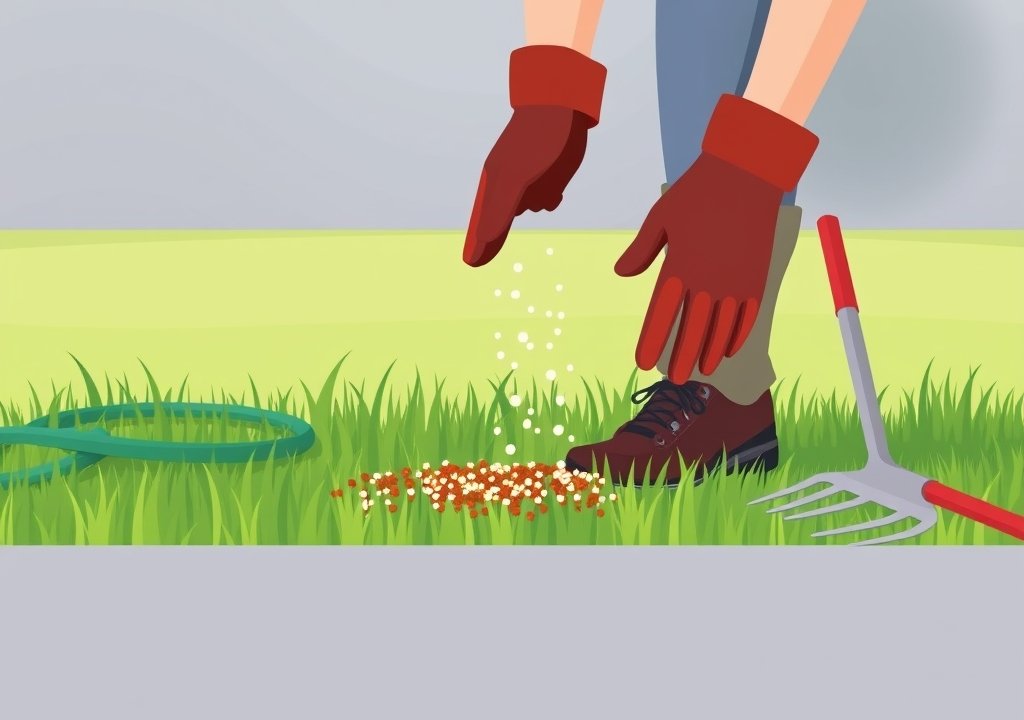
For small bare spots, spreading seed by hand works well. Rake the bare soil lightly, scatter the seed evenly and press it gently into the soil.
Avoid piling seed in one spot. Thick clumps sprout unevenly and can smother each other, so a light, even layer gives the best coverage.
Adding Topdressing and Mulch to Protect Seed
Topdressing is a thin layer of compost, soil or a seed-friendly mix spread over the seeded area. It keeps seed in contact with the ground and helps hold moisture. Spread it lightly so grass blades can still poke through.
A thin layer of weed-free straw can also serve as mulch. It shades the soil and reduces drying, and it should stay thin so new grass can reach light.
Watering Schedule for New Grass Seed
Seed must stay moist to sprout. Water lightly once or twice a day during the first weeks, keeping the surface damp without making the soil soggy. A heavy soak can wash seed away.
As the seedlings grow, gradually water less often but more deeply.
Caring for Your Lawn After Overseeding
Germination Timeline and What to Expect
Many grass seeds sprout within one to three weeks, depending on type and conditions. Growth may look uneven at first. Keep foot traffic off the area until the grass is well rooted.
When to Mow and Fertilize the New Grass
Wait until new seedlings reach about the height of a finger before the first mowing. Use a sharp blade and set the mower high. Fertilizer can support young growth, but follow label directions to avoid burning tender roots.
Avoiding Foot Traffic and Weed Control Mistakes
Keep kids, pets and tools off new grass for several weeks. Many common weed killers can injure young seedlings, so check labels first. Pulling weeds by hand is often the safer option during establishment.
Common Overseeding Mistakes Beginners Make
Seeding at the Wrong Time of Year
Seeding during extreme heat or deep cold is a frequent error. Seed may fail to sprout or die soon after. Plan the work for a mild window.
Burying Seed Too Deep or Using Too Little
Seed needs good soil contact but should not be buried deeply. Too little seed leaves gaps, so follow the rate on the bag.
Overwatering and Underwatering Seeded Areas
Soggy soil can rot seed, while dry soil stops germination. Aim for consistently damp surface soil. Check by pressing a finger into the top layer each day.
Overseeding Versus Other Lawn Repair Options
Overseeding Compared to Sod and Plugs
Sod gives an instant lawn but costs more and needs careful watering. Plugs are small grass sections that spread over time. Overseeding is usually the least expensive option, though it takes longer to fill in.
When Renovation Is a Better Choice Than Overseeding
If the lawn is mostly weeds, very compacted, or severely diseased, overseeding may not help much. In those cases, a full renovation or new lawn is often the better path. A soil test can help you decide.
Frequently Asked Questions
How often should I overseed my lawn?
Many lawns benefit from overseeding once a year in the right season. Thin or heavily used areas may need it more often. Watch how the grass responds before repeating the job.
Can I overseed without aerating first?
Yes, though aeration often improves results on compacted soil. Light raking helps seed contact the soil on looser lawns.
How long does it take for overseeded grass to grow?
Most seed sprouts within one to three weeks. Full coverage can take several months, depending on grass type and weather. Steady moisture and mild temperatures speed the process.
Can I overseed a lawn that has weeds?
You can, but weeds compete with new seedlings for light and water. Mow and hand-pull weeds before seeding. Avoid weed killers that can harm young grass unless the label says they are safe.
Do I need to stop using fertilizer or weed killer before overseeding?
Many products can affect germination, so check the labels. Some weed killers need a waiting period before seeding. Ask a local garden center if you are unsure about timing.
Conclusion
Overseeding is a practical way to thicken a thin lawn. Success depends on the right grass, timing, and soil preparation. Consistent moisture and patient care after seeding complete the job.

Hi, I’m Mary, the founder of GardenCure.com. I’m passionate about creating healthy, beautiful gardens and well-kept lawns. I share practical experience and trusted advice on garden and lawn gear that truly works. With the support of my dedicated research team, our writers produce honest, in-depth reviews using reliable, authentic sources—helping you choose the right tools with confidence for your outdoor space.