How Much Is a Sprinkler System?
If you’ve ever stood in your yard with a hose in hand, you’ve probably wondered how much a sprinkler system costs. It’s a fair question. A good sprinkler system saves time, keeps your grass green, and can even lower your water bill.
In this article
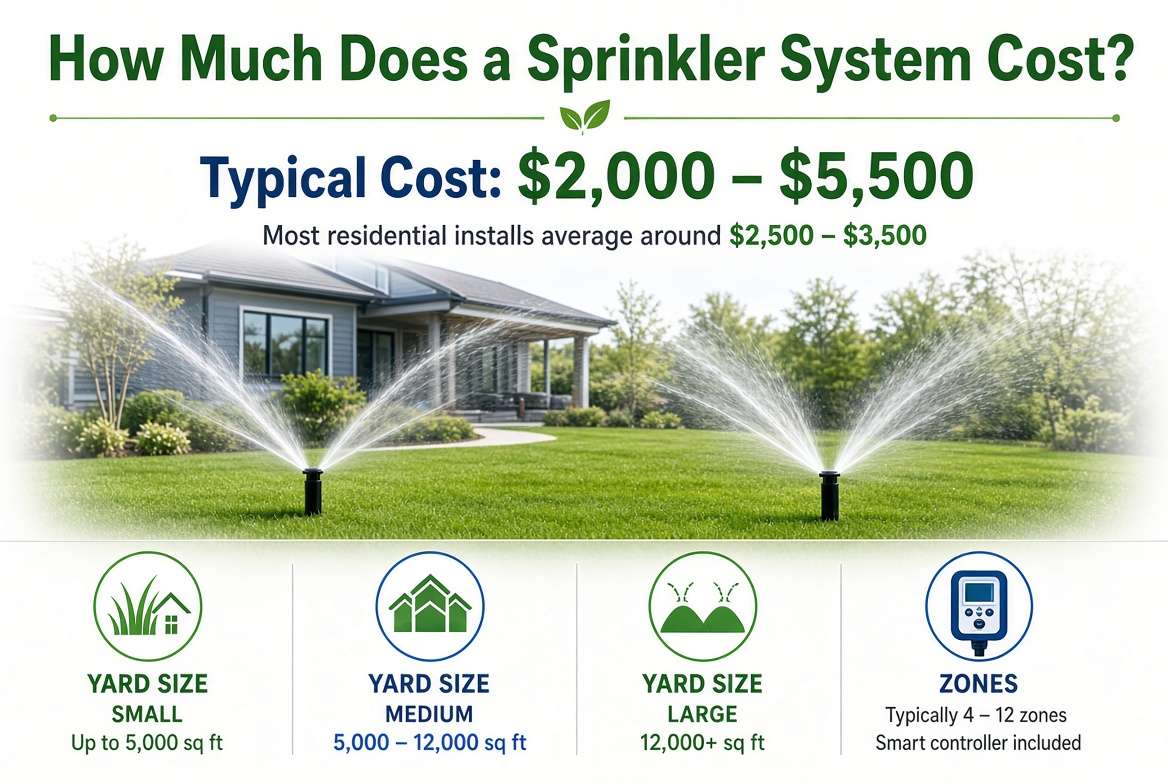
The short answer is that most homeowners pay between $2,000 and $5,000 to have a full in-ground sprinkler system installed. Some pay less, and some pay a lot more. The final number depends on your yard size, your soil, the type of system, and who does the work.
In this guide, I’ll break down every cost in plain words. You’ll see average prices, hidden fees, DIY savings, and ways to keep your budget in check. By the end, you’ll know what to expect before you call a single contractor.
The Average Cost of a Sprinkler System at a Glance
Let’s start with the big picture. Here are the typical price ranges for a standard residential system.
| Type of Project | Typical Cost Range |
|---|---|
| Professional install (average yard) | $2,000 – $5,000 |
| DIY install (average yard) | $500 – $1,800 |
| Small yard (under 5,000 sq. ft.) | $1,200 – $2,500 |
| Large yard (half an acre or more) | $4,500 – $8,000+ |
| Drip irrigation for garden beds | $500 – $2,500 |
| Smart controller upgrade | $150 – $450 |
These numbers are based on common U.S. pricing. Your local prices might be higher or lower. Big cities and areas with hard soil usually cost more.
Most pros also quote by the zone. A zone is one section of your yard that waters at the same time. Expect to pay about $500 to $1,000 per zone for a full install.
What Affects the Price of a Sprinkler System?
Not every yard is the same. Because of that, two neighbors can get very different quotes. Here are the main things that move the price up or down.
Yard Size
Bigger yards need more pipes, more heads, and more zones. That means more parts and more labor.
As a rule of thumb, you’ll pay roughly $0.30 to $0.75 per square foot for installation. A small lawn costs far less than a big one, but the cost per square foot often drops a little as the yard gets larger.
Number of Zones
Your water pressure can only run so many heads at once. So, installers split your yard into zones.
A small yard might need three or four zones. A larger yard might need eight or more. Each zone needs its own valve, wiring, and pipe run. More zones mean a higher bill.
Type of Sprinkler Heads
Not all heads are the same. Each type fits a different kind of space.
- Spray heads: Best for small lawns and tight spots. They cost about $2 to $10 each for the part.
- Rotor heads: Best for big, open grass areas. They shoot water farther and cost about $8 to $25 each.
- Drip emitters: Best for flower beds, shrubs, and gardens. They use less water and cost just a few dollars each.
When you add labor, the cost per installed head usually lands between $50 and $150.
Soil Type
Soil matters more than most people think. Soft, sandy soil is easy to dig. Rocky or clay-heavy soil is slow and hard.
If your pro hits lots of rocks or roots, labor costs go up. Some contractors add a fee for tough digging.
Water Source and Pressure
Your water pressure decides how many heads can run at once. Low pressure might mean extra zones or a booster pump.
If you use a well instead of city water, you could need a pump. A well pump setup can add $500 to $2,000 to the project.
Local Labor Rates
Labor is often half the total cost. Pros in big cities charge more per hour than pros in small towns. Rates usually run between $50 and $100 per hour per worker.
Cost Breakdown: Where Does the Money Go?
Let’s look inside a typical quote. Knowing each piece helps you spot a fair deal.
Sprinkler Controller (Timer)
The controller is the brain of the system. It tells each zone when to turn on and for how long.
- Basic timer: $50 to $200
- Smart controller: $150 to $450
Smart controllers connect to Wi-Fi. They check the weather and skip watering when it rains. Many homeowners say these pay for themselves in water savings.
Valves and Valve Boxes
Each zone needs a valve. Valves cost about $15 to $50 each for the part. Pros usually group them in a plastic box buried in the ground.
Pipes and Fittings
Most systems use PVC or polyethylene pipe. The pipe itself is cheap, but you need a lot of it. Fittings, glue, and connectors add up fast.
Plan on $200 to $600 for pipes and fittings in an average yard.
Backflow Preventer
This part keeps dirty yard water from flowing back into your drinking water. Most towns require one by law.
- Part cost: $35 to $150
- Installed cost: $150 to $450
Rain Sensor
A rain sensor tells your system to stay off when the ground is already wet. It costs $25 to $100 for the part. Some areas even require one.
Labor
Labor is the biggest piece of the puzzle. A pro crew trenches the yard, lays pipe, sets heads, and tests every zone. Most jobs take one to three days.
Labor usually makes up 40% to 60% of the total price.
Permits and Inspections
Many towns ask for a permit before you dig. Permit fees run about $50 to $300. Some places also need an inspection after the work is done.
Your installer often handles the paperwork. Just ask if the fee is already in the quote.
Sprinkler System Cost by Yard Size
Here’s a simple chart to help you guess your own price. These are rough numbers for professional installation.
| Yard Size | Number of Zones | Estimated Cost |
|---|---|---|
| 2,500 sq. ft. | 2 – 3 | $1,000 – $2,000 |
| 5,000 sq. ft. | 3 – 5 | $1,800 – $3,200 |
| 10,000 sq. ft. (about ¼ acre) | 5 – 7 | $2,800 – $5,000 |
| 20,000 sq. ft. (about ½ acre) | 8 – 12 | $4,500 – $8,000 |
| 43,560 sq. ft. (1 acre) | 12 – 20 | $8,000 – $15,000+ |
Keep in mind that your lawn is only part of the picture. Garden beds, slopes, and trees can change the design.
DIY vs. Professional Installation
Now for the big question. Should you do it yourself or hire someone? Both options have good and bad sides.
DIY Sprinkler System Cost
If you’re handy, you can save a lot of money. A DIY system for an average yard usually costs $500 to $1,800 in parts.
You’ll buy pipes, heads, valves, a timer, and basic tools. You might also need to rent a trenching machine. A trencher rental runs about $100 to $250 per day.
Pros of DIY:
- You save on labor costs.
- You control every part of the design.
- You learn how your system works, so repairs feel easier later.
Cons of DIY:
- It takes a lot of time. Most people need a few weekends.
- Mistakes can be costly. A bad layout leaves dry spots or soggy patches.
- You might hit a buried gas, power, or water line if you don’t call before you dig.
- Some towns want a licensed pro for the backflow part.
Hiring a Pro
A pro brings experience, tools, and speed. They design the layout, handle permits, and test the system. Most also give you a warranty.
Pros of hiring:
- The job gets done fast, often in a day or two.
- The layout is planned for even coverage.
- You get a warranty on parts and labor.
Cons of hiring:
- It costs more up front.
- Quality can vary from one company to another.
Here’s the honest take. If you have a small, simple yard and some DIY skills, you can handle it. For a big or tricky yard, a pro is usually worth the money.
Types of Sprinkler Systems and Their Costs
Not every yard needs the same setup. Here are the most common types and what they cost.
In-Ground (Underground) Sprinkler Systems
This is the classic choice. Pipes sit under the lawn, and heads pop up when the water turns on. They look clean, run on a timer, and work well for most lawns.
Cost: $2,000 to $5,000 for an average yard.
Drip Irrigation Systems
Drip systems send water slowly to the roots of plants. They’re great for gardens, flower beds, and shrubs. They also waste less water than spray heads.
Cost: $500 to $2,500, depending on the size of your beds.
Above-Ground Sprinkler Systems
These use hoses and portable sprinklers. You set them up by hand and move them around. They’re cheap, but they take more effort.
Cost: $20 to $300 for most setups.
Smart Sprinkler Systems
Smart systems use Wi-Fi controllers, soil sensors, and weather data. They water only when your yard needs it. Over time, they can cut your water use by a good amount.
Cost: Add $150 to $450 to the base price of any in-ground system.
Lawn Sprinkler vs. Garden Irrigation
Lawns and garden beds need different watering styles. Grass likes a wide spray. Vegetables and flowers like slow, steady drips at the base.
Many homeowners mix both. They use rotors for the lawn and drip lines for the beds. This combo costs a bit more, but it gives each plant just what it needs.
Hidden Costs You Should Know About
Some costs don’t show up in the first quote. Here are a few to watch for.
Water Meter or Tap Fees
Some towns charge a fee to add a new water line or tap. This can run $100 to $1,000 or more.
Landscape Repair
Trenching leaves messy lines in the grass. Most pros fix this, but some charge extra. Ask if sod repair or reseeding is included.
Tree Roots and Obstacles
Big roots, rocks, and old pipes slow the work down. Extra digging time adds to the bill.
Extra Zones
Sometimes the first design isn’t enough. If your pressure is low, you might need more zones than expected. Ask your pro to explain the zone count.
Pump or Pressure Booster
Low pressure is a common problem. A booster pump costs $300 to $1,500 with installation.
Ongoing Costs: What You’ll Pay After Install
The install is only the start. A sprinkler system also has yearly costs. Here’s what to plan for.
Water Bills
Your water bill will go up when you start watering the lawn. The exact amount depends on your climate and your local water rates.
A smart controller helps here. It cuts waste by skipping rainy days and adjusting for the weather.
Winterization
If you live where the ground freezes, you must clear water from the pipes before the cold arrives. Frozen water can crack pipes and heads.
A pro blow-out service costs about $75 to $200 each year. Some homeowners do it themselves with an air compressor.
Spring Start-Up
In the spring, you need to turn the system back on and check every zone. A pro start-up visit costs about $50 to $150.
Repairs and Maintenance
Heads break. Pipes leak. Lawn mowers hit things. Here are some common repair costs:
- Replace a broken head: $50 to $150
- Fix a leaking valve: $100 to $300
- Repair a broken pipe: $150 to $400
- Replace a controller: $150 to $500
A yearly check-up costs about $100 to $250. It’s a small price that can save you from bigger repairs later.
How Much Does It Cost to Run a Sprinkler System?
Many people forget about running costs. Let’s break it down in simple terms.
An average home sprinkler uses about 1,000 to 3,000 gallons per watering cycle, depending on your yard size. Water rates vary a lot. So your monthly cost might be anywhere from $30 to $150 during the watering season.
You can lower this number with a few easy habits:
- Water early in the morning. Less water evaporates in the cool air.
- Water deep, but not often. This builds strong roots and uses less water.
- Use a rain sensor. It stops the system when the ground is already wet.
- Check for leaks. A small leak can waste hundreds of gallons.
- Adjust heads. Make sure water lands on the grass, not on the sidewalk.
Ways to Save Money on a Sprinkler System
A new system is a big spend, but you can trim the cost in smart ways.
Get Multiple Quotes
Call at least three local companies. Prices can differ by hundreds of dollars for the same job. Ask each one for a written, itemized quote.
Do Part of the Work Yourself
You don’t have to do all or nothing. Some homeowners dig the trenches and let a pro handle the connections. Others handle the cleanup and sod repair. Ask your contractor if they allow this.
Install During the Off-Season
Busy seasons raise prices. If you book in the slower months, you might get a better deal. Many companies offer discounts when work is light.
Start Small
You can build your system in phases. Start with the front lawn this year and add the backyard later. This spreads the cost over time.
Use Efficient Parts
Good heads and a smart controller cost more up front. But they save water, and that lowers your bills for years.
Check for Rebates
Some water companies and cities offer rebates for smart controllers and efficient heads. A quick call to your local water office can save you real money.
How to Pick the Right Sprinkler Contractor
A great install starts with a great pro. Here’s what to look for.
- License and insurance: Ask to see both. This protects you if something goes wrong.
- Local reviews: Read what neighbors say online. Look for steady praise on quality and cleanup.
- A clear design plan: A good pro walks your yard and explains the zones.
- A written warranty: Most good companies back their work for at least one year.
- An itemized quote: You should see the cost of parts and labor in separate lines.
Watch out for red flags too. Be careful with anyone who asks for full payment up front. Also be wary of quotes that are far lower than the others. A very low price often means cut corners.
Is a Sprinkler System Worth the Money?
This is the question most people ask in the end. Here’s a simple way to think about it.
A sprinkler system is worth it if:
- You have a medium or large lawn.
- You travel a lot and can’t water by hand.
- You want a greener, healthier yard with less effort.
- You plan to sell your home. A nice landscape can add curb appeal.
It might not be worth it if:
- Your yard is tiny, and a hose does the job.
- You live in a very rainy area where watering is rarely needed.
- You plan to move soon and won’t enjoy the system for long.
For many homeowners, the biggest win is time. You don’t need to drag hoses around or remember to water. The system does it for you, right on schedule.
Simple Tips for a Smart Sprinkler Budget
Before you sign anything, run through this quick checklist.
- Measure your yard so you can compare quotes fairly.
- Decide which areas need a sprinkler and which need drip lines.
- Ask each pro how many zones they plan to use, and why.
- Make sure the quote covers permits, backflow, and cleanup.
- Ask about warranty terms in writing.
- Set aside a small fund for yearly care.
A little planning goes a long way. It keeps surprises away and helps you get the best value.
Frequently Asked Questions
How much does a basic sprinkler system cost?
A basic system for a small yard usually costs $1,200 to $2,500 when a pro does the work. A DIY version can cost as little as $500 to $900 in parts.
How much does it cost to install a sprinkler system per square foot?
Most pros charge about $0.30 to $0.75 per square foot. Your final price depends on zones, soil, and the type of heads.
How much is a sprinkler system for a half-acre lawn?
A half-acre lawn often runs between $4,500 and $8,000. It needs more zones, more pipe, and more labor.
How long does a sprinkler system last?
Most systems last 15 to 25 years with good care. Controllers and heads might need to be replaced sooner. Pipes and valves usually last longer.
Can I install a sprinkler system myself?
Yes, many people do. It takes time, planning, and some basic tools. Just call your local utility line service before digging, and check your town’s rules on backflow devices.
Do sprinkler systems raise home value?
A well-kept system can boost curb appeal. A green, healthy lawn helps a home look cared for. It might not add a fixed dollar amount, but buyers often like it.
What is the cheapest way to water a lawn?
Hose-end sprinklers are the cheapest at first. But they take your time and effort. An in-ground system costs more up front, yet it saves time and water in the long run.
Is a smart sprinkler controller worth it?
For most homes, yes. It adjusts to the weather, skips rainy days, and trims water waste. Many owners earn back the cost over time through lower water bills.
Final Thoughts
So, how much is a sprinkler system? For most homes, the answer sits between $2,000 and $5,000. Small yards can cost less, and large yards can cost much more.
Your yard size, number of zones, soil type, and local labor rates all play a part. DIY can save you money, but a pro gives you speed, skill, and a warranty.
Remember the extra costs too. Think about water bills, winter care, and yearly repairs. When you plan for those, you’ll never feel caught off guard.
Start by measuring your yard and sketching out the areas you want to water. Then call a few local pros and compare their quotes. With a bit of homework, you’ll land a system that keeps your lawn lush and your wallet happy.
Happy watering!
Hi, I’m Mary, the founder of GardenCure.com. I’m passionate about creating healthy, beautiful gardens and well-kept lawns. I share practical experience and trusted advice on garden and lawn gear that truly works. With the support of my dedicated research team, our writers produce honest, in-depth reviews using reliable, authentic sources—helping you choose the right tools with confidence for your outdoor space.