How Do You Plant Ginger Root?
You can grow ginger at home, even if you have never planted anything before. All you need is a piece of fresh ginger root, a pot or a garden spot, and a little patience. The plant does most of the work on its own.
In this article
Store-bought ginger is fine for planting. It costs little, it grows well, and it gives you a fresh supply of spicy, fragrant roots for your kitchen. This guide walks you through every step in plain words.
By the end, you will know how to pick a good piece, wake it up, plant it, care for it, and harvest it. You will also learn how to fix the most common problems.
What Is Ginger Root, Really?
Ginger root is not a true root. It is a thick underground stem called a rhizome. Rhizomes store food and send up new shoots and real roots.
That is why one small piece of ginger can turn into a big, knobby clump. Each piece has little bumps called eyes or growth buds. These eyes are where new green shoots come out.
Ginger comes from warm, tropical places. It loves heat, moisture, and soft, rich soil. If you give it those things, it grows fast and looks great. The leaves are tall and green, and they smell lovely when you brush against them.
Why Grow Your Own Ginger?
Fresh, home-grown ginger tastes stronger and brighter than the dry pieces in the store. It also costs almost nothing once you get started.
Here are a few good reasons to try it:
- You get fresh ginger for tea, soups, stir-fries, and baked treats.
- You skip the chemicals that some store-bought ginger carries.
- You can harvest “baby ginger,” which is soft, mild, and hard to find in shops.
- The plant looks pretty in a pot, on a porch, or in a shady garden bed.
- It makes a fun project for kids and first-time gardeners.
When Is the Best Time to Plant Ginger?
Ginger needs warmth to wake up. The best time to plant is in early spring, after the last frost has passed. The soil should feel warm, and the air should stay above 60°F (about 15°C) at night.
If you live in a cool place, you still have options. Start your ginger indoors a few weeks early. Then move the pot outside when the weather warms up.
If you live in a warm, tropical place, you can plant almost any time. Just avoid the hottest, driest days.
Ginger grows best outdoors in USDA zones 7 through 12. In colder zones, grow it in a container and bring it inside before the cold arrives.
What You Need Before You Start
Gather your supplies first. It makes the job smooth and quick.
- Fresh ginger root (organic if you can find it)
- A clean, sharp knife
- A wide, shallow pot with drainage holes, or a garden bed
- Rich, loose potting mix or compost-rich garden soil
- A bowl of warm water
- Mulch such as straw, leaves, or wood chips
- A watering can or gentle hose
- Balanced, organic fertilizer or compost
That is all. You do not need fancy tools.
Step 1: Pick the Right Ginger Root
Your plant is only as good as the piece you start with. So take a minute to pick a healthy one.
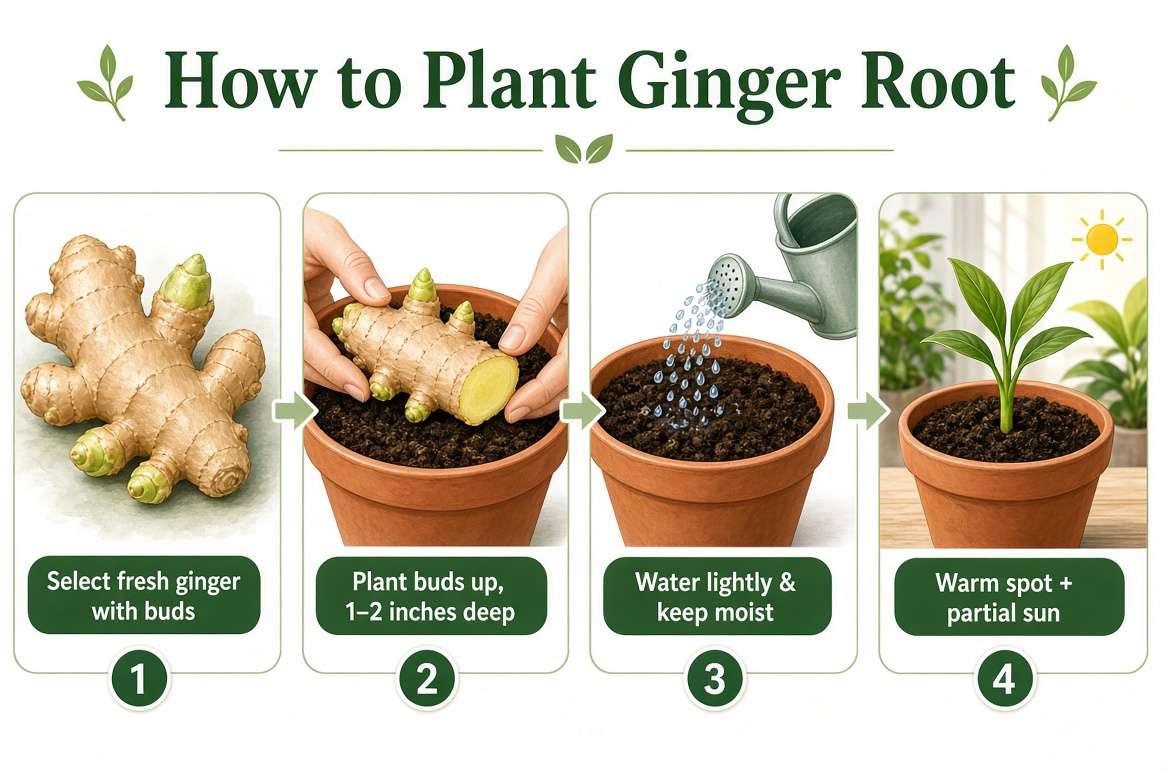
Look for ginger that is plump, firm, and heavy for its size. The skin should look smooth and tight. Small bumps at the tips are a great sign. Those are the eyes, and they might look like tiny horns.
Organic ginger is your best bet. Stores often treat regular ginger with a growth blocker so it does not sprout on the shelf. That blocker can slow your plant down. Organic ginger usually skips this treatment.
Skip any piece that looks dry, wrinkled, soft, or moldy. If it smells sour or feels mushy, put it back.
You can also buy ginger from a local farmers’ market or a garden center. Those pieces are often raised for planting, and they sprout fast.
Step 2: Wake Up Your Ginger
Sometimes ginger sits in a store for a long time. It can get sleepy. A quick soak helps it wake up and clears away the growth blocker.
Here is how to do it:
- Fill a bowl with warm water.
- Drop your ginger in.
- Let it soak for 8 to 12 hours, or overnight.
- Take it out and pat it dry.
This simple step can speed up sprouting by a lot. It also gives you a cleaner start.
If your ginger already has green tips, you can skip the soak. The plant is already awake.
Step 3: Cut the Ginger Into Pieces
You do not need to plant the whole root. In fact, cutting it into smaller pieces gives you more plants.
Use a clean, sharp knife. Cut your ginger into chunks about 1 to 2 inches long. Make sure each chunk has at least one or two eyes. More eyes mean more shoots.
A clean knife matters. Dirty tools can spread rot and disease. Wipe the blade with rubbing alcohol before you start.
If your ginger is small, you can plant it whole. A small piece with several eyes grows well on its own.
Step 4: Let the Cut Ends Dry
This step sounds odd, but it protects your plant. Fresh cuts can soak up water and rot in damp soil. A dry, hard layer over the cut keeps rot out.
Set your pieces on a plate or paper towel. Keep them in a dry spot, away from direct sun. Leave them for one to two days.
The cut ends will feel dry and a bit rough. That layer is called a callus. Once it forms, your pieces are ready for soil.
Step 5: Prepare the Soil
Ginger loves soft, loose, rich soil that drains well. Heavy, soggy soil is its worst enemy. It makes the rhizomes rot before they can grow.
Here is what you want in your soil:
- Loose and crumbly, so the rhizomes can spread
- Rich in organic matter, such as compost or aged manure
- Well-draining, so water never sits around the roots
- Slightly acidic to neutral, with a pH between 5.5 and 6.5
If you plant in the ground, loosen the soil about 8 to 10 inches deep. Mix in a few scoops of compost. Pull out rocks, weeds, and old roots.
If you plant in a pot, use a good potting mix. Add some compost and a handful of perlite or coarse sand. This helps water drain.
Step 6: Find the Right Spot
Ginger likes warm, shady places. It does not love harsh, all-day sun. Strong afternoon rays can scorch the leaves.
Look for a spot with partial shade. Morning sun and afternoon shade work great. A place under a tall tree or beside a fence is perfect.
Ginger also hates wind and cold. Pick a sheltered area where the air stays warm and moist. Try to keep the temperature between 70°F and 85°F (21°C to 29°C).
Step 7: Plant the Ginger
Now comes the fun part. Planting ginger is simple.
- Dig a shallow hole or trench about 2 to 4 inches deep.
- Place each piece with the eyes facing up. If you cannot see the eyes, lay the piece on its side.
- Space the pieces about 8 inches apart so they have room to grow.
- Cover them with 1 to 2 inches of soil.
- Pat the soil down gently.
- Water well, but do not drown the soil.
If you plant in a pot, one or two pieces fit in a 12-inch pot. A larger, wide container can hold more. Ginger grows sideways, so a wide pot works better than a deep one.
After planting, add a thin layer of mulch. It keeps the soil warm and moist, and it blocks weeds.
Step 8: Wait for Sprouts
Ginger is slow, so do not worry if nothing happens right away. Sprouts usually appear in two to eight weeks. Warm soil speeds things up. Cool soil slows them down.
Keep the soil damp during this time. It should feel like a wrung-out sponge. Never let it dry out, and never let it get soggy.
Do not dig up the ginger to check on it. That can break the new shoots. Just wait, and give it time.
Soon you will see small green spikes poke up through the soil. That is your ginger waking up. It is a great moment.
How to Water Ginger the Right Way
Water is the key to happy ginger. Too little makes the plant dry and weak. Too much makes the rhizomes rot.
Here are some simple tips:
- Water when the top inch of soil feels dry.
- Water deeply, then let the extra drain out.
- Water less in cool weather and more in hot weather.
- Use a gentle spray so you do not wash away the soil.
- Never leave your pot sitting in a dish of water.
In the first few weeks, check the soil often. Once the plant grows big, it can handle a bit more water. Just keep the soil lightly moist.
How Much Light and Heat Does Ginger Need?
Ginger enjoys warm, bright shade. Think of the forest floor in a tropical place. Light filters through the trees, and the air stays humid and warm.
Indoors, set your pot near a bright window. An east-facing window works well. If you only have a sunny south window, hang a thin curtain to soften the light.
Outdoors, move your pot if the leaves look pale, brown, or crispy. That usually means too much sun.
Ginger stops growing in cold weather. Frost can kill the leaves. If a cold night is coming, cover your plants or bring the pots inside.
Feeding Your Ginger Plant
Ginger is a hungry plant. It grows for months and builds big rhizomes, so it needs steady food.
Start feeding about a month after the sprouts appear. Use a balanced organic fertilizer or a fish emulsion. You can also top-dress with compost.
Feed your plant every four to six weeks during the growing season. Follow the label on the bottle so you do not give too much.
Too much nitrogen gives you tall, leafy plants with small roots. If you want big rhizomes, pick a fertilizer with a bit more potassium and phosphorus.
Mulch and Weed Control
Mulch is your friend. A 2-inch layer of straw, shredded leaves, or wood chips does a lot of good.
It keeps the soil cool and damp. It stops weeds from stealing water and food. It also breaks down over time and feeds the soil.
Pull weeds by hand, and be gentle. Ginger roots stay shallow, so a hoe can damage them. Keep the mulch a little away from the base of the stems to prevent rot.
Common Problems and Easy Fixes
Ginger is tough, but it can still run into trouble. Most problems are simple to fix when you catch them early.
Yellow Leaves
Yellow leaves often mean too much water or poor drainage. Let the soil dry a bit. Move the pot to a spot where water drains freely. Old leaves also turn yellow near the end of the season, and that is normal.
Brown, Crispy Leaf Tips
This usually means dry air or too much sun. Move the plant into more shade. Mist the leaves or set the pot on a tray of damp pebbles.
Rotting Rhizomes
Rot comes from soggy soil. If your rhizome feels soft or smells bad, remove it right away. Cut away the bad parts and replant the healthy ones in fresh, dry soil.
Slow or No Sprouting
Cool soil is the most common cause. Try moving your pot to a warmer spot. A heat mat under the pot can help a lot. Also, check that your ginger piece was fresh and had good eyes.
Pests
Ginger has few pests. Still, you might spot spider mites, aphids, or fungus gnats. A blast of water knocks most bugs off the leaves. For stubborn ones, spray with insecticidal soap or neem oil.
Can You Grow Ginger Indoors?
Yes, you can. In fact, many people grow ginger on a sunny windowsill all year long. It is a great choice if you live in a cold place.
Use a wide pot with good drainage holes. Fill it with rich potting mix. Place it near a bright window, but away from cold drafts.
Keep the room warm, around 70°F or more. Water when the top of the soil feels dry. Mist the leaves now and then, since indoor air can be dry.
Indoor ginger grows a little slower than outdoor ginger. Even so, you will get a healthy plant and a fine harvest.
How to Grow Ginger in a Container
Pots are perfect for ginger. They give you full control over soil, water, and light. You can also move them around as the weather changes.
Pick a pot that is at least 12 inches wide and 10 inches deep. Wider is better. Fabric grow bags work great too, since they let extra water drain away.
Fill the pot with a rich, airy mix. Plant your pieces 2 inches deep. Water well, and set the pot in a warm, shady place.
Check the pot often. Containers dry out faster than garden beds. In hot weather, you might need to water every day.
When Can You Harvest Ginger?
Patience pays off with ginger. The plant needs time to grow big, fat rhizomes.
You can harvest in two ways:
Baby Ginger
Baby ginger is ready about three to four months after planting. It has thin, pale skin and a mild, juicy flavor. You do not even need to peel it. It is wonderful in salads, pickles, and teas.
Mature Ginger
Mature ginger needs eight to ten months to grow. It has thick skin and a sharp, spicy kick. This is the type you see in stores.
The best sign that it is ready is the leaves. When they turn yellow and start to fall over, the plant is winding down. That is your cue to dig.
How to Harvest Ginger Step by Step
Harvesting is easy and a lot of fun.
- Water the soil a day before. It makes digging easier.
- Use a garden fork and dig a few inches away from the stem.
- Lift the clump gently out of the soil.
- Shake off the extra dirt.
- Break off the pieces you want to use.
- Rinse the ginger with cool water.
Take care not to cut or bruise the rhizomes. Damaged ginger does not store well.
If you only need a little, you can try “sneak harvesting.” Just dig around the edge of the plant and snap off a piece. The rest keeps growing.
Save Some Ginger to Replant
Here is a great tip. Keep a few of your best pieces for the next round. Pick plump ones with healthy eyes.
Let them dry for a day or two. Store them in a cool, dry place until planting time. Then repeat the steps in this guide.
This way, you never need to buy ginger again. Your garden keeps giving.
How to Store Fresh Ginger
Fresh ginger stays good for a while if you store it right.
- In the fridge: Wrap it in a paper towel and place it in a bag. It lasts several weeks.
- In the freezer: Freeze whole pieces or grate them first. It keeps for many months.
- Dried: Slice it thin and dry it in a low oven or a dehydrator. Grind it into powder.
- In a jar: Cover peeled slices with sherry or vinegar. Keep it in the fridge.
Frozen ginger is easy to grate, and it saves a lot of time in the kitchen.
Easy Ways to Use Your Home-Grown Ginger
Now that you have fresh ginger, put it to work. Here are some simple ideas:
- Brew a warm cup of ginger tea with honey and lemon.
- Add grated ginger to stir-fries and soups.
- Bake it into cookies, cakes, and bread.
- Blend it into smoothies and juices.
- Pickle thin slices to serve with rice or noodles.
Fresh ginger tastes much brighter than the old, dry stuff. You will notice the difference right away.
Quick Tips for Better Ginger
Here are a few extra tricks that make a big difference:
- Always plant with the eyes facing up.
- Use organic ginger when you can.
- Keep the soil warm and lightly damp.
- Give the plant partial shade, not full sun.
- Feed it often during the growing season.
- Be patient, since ginger grows slowly.
Common Mistakes to Avoid
Even good gardeners slip up now and then. Watch out for these:
- Planting too deep. Deep planting slows sprouting. Keep it at 2 to 4 inches.
- Overwatering. Soggy soil is the top killer of ginger.
- Too much sun. Harsh rays burn the leaves.
- Planting in cold soil. Wait until the weather is warm.
- Using a tiny pot. Ginger spreads wide, so give it space.
- Digging too soon. Mature ginger needs many months to grow.
Frequently Asked Questions
Can I plant ginger from the grocery store?
Yes. Just pick fresh, plump, organic pieces with visible eyes. Soak them overnight to help them sprout.
How long does ginger take to grow?
Sprouts show up in two to eight weeks. Baby ginger is ready in three to four months. Mature ginger takes eight to ten months.
Does ginger need full sun?
No. Ginger prefers partial shade. Too much direct sun can burn the leaves.
How deep should I plant ginger root?
Plant it about 2 to 4 inches deep, with the eyes pointing up.
Can I grow ginger in water?
You can start sprouting ginger in water, but it will not grow well for long. Move it to soil once you see shoots.
Why is my ginger not sprouting?
The soil may be too cold, too wet, or too dry. The ginger might also be old or treated with a growth blocker. Try warm soil and a fresh, organic piece.
Will ginger come back every year?
In warm zones, ginger grows back each season. In cold zones, dig it up before frost or grow it in a pot indoors.
How many pieces can I get from one root?
A single root can give you several pieces. Each piece needs at least one or two eyes.
Final Thoughts
Learning how to plant ginger root is easier than most people think. You start with a fresh piece, wake it up with a soak, and let the cut ends dry. Then you plant it in rich, loose soil, eyes up, and give it warmth, shade, and water.
After that, you wait. Ginger takes its time, but it rewards you with a big, spicy harvest. You get fresh roots for tea, meals, and baking. You can even save a few pieces to start the cycle again.
So grab a piece of ginger from your kitchen and give it a try. All you need is a pot, some soil, and a bit of patience. Happy planting!
Hi, I’m Mary, the founder of GardenCure.com. I’m passionate about creating healthy, beautiful gardens and well-kept lawns. I share practical experience and trusted advice on garden and lawn gear that truly works. With the support of my dedicated research team, our writers produce honest, in-depth reviews using reliable, authentic sources—helping you choose the right tools with confidence for your outdoor space.