How to Grow Strawberries?
Growing strawberries is one of the easiest and most rewarding gardening projects you can start. Whether you have a sprawling backyard, a cozy patio, or just a windowsill, you can grow these delicious red fruits yourself. The best part? You don’t need to be an expert gardener to succeed. Let me walk you through everything you need to know about strawberry gardening from start to finish.
In this article
Why You Should Grow Your Own Strawberries
Fresh strawberries taste nothing like the ones sitting on store shelves for weeks. When you grow them yourself, you can pick them at peak ripeness and eat them within hours. That’s when they’re sweetest and most nutritious.
Growing strawberries also saves you money. A single strawberry plant produces fruit for years, and one pack of seedlings costs far less than buying berries all season long. You’ll have so many strawberries that you might find yourself making jam or sharing with neighbors.
The confidence boost matters too. Watching your first ripe strawberry turn red on the vine is genuinely exciting. It makes you want to grow more plants and try new things in your garden.
Types of Strawberry Plants to Grow
Not all strawberries are created equal. You have three main types to know about, and each one grows differently.
June-bearing Strawberries
June-bearing plants produce one big harvest each year, usually in late spring or early summer. You get tons of berries all at once, which is perfect if you want to make jam or share with family. These plants only fruit for a few weeks, so they’re not ideal if you want strawberries all summer long.
June-bearing varieties tend to produce the largest, sweetest berries. Popular kinds include Jewel, Earliglow, and Honeoye. If you’re just starting out and want a simple project, these are a great choice.
Ever-bearing Strawberries
Ever-bearing plants give you two harvests per year: one in early summer and another in fall. You get fewer berries from each plant compared to June-bearing types, but the fruit keeps coming throughout the season. This is perfect if you want a steady supply of fresh strawberries without a huge glut all at once.
Try varieties like Ozark Beauty or Fort Laramie if you want to experiment with ever-bearing plants.
Day-neutral Strawberries
Day-neutral strawberries are the ultimate choice for continuous harvesting. These plants keep making flowers and fruit all season long, right up until the first frost. You won’t get a massive harvest at any one time, but you’ll have fresh berries to pick regularly.
Albion and San Andreas are solid day-neutral varieties that handle most growing conditions well.
For your first attempt, June-bearing plants are foolproof. They’re forgiving, produce abundantly, and let you enjoy a big harvest.
Getting Your Strawberry Growing Space Ready
Before you plant anything, you need to set up the right growing space. Strawberries aren’t fussy, but they do have a few basic needs.
Location and Sunlight
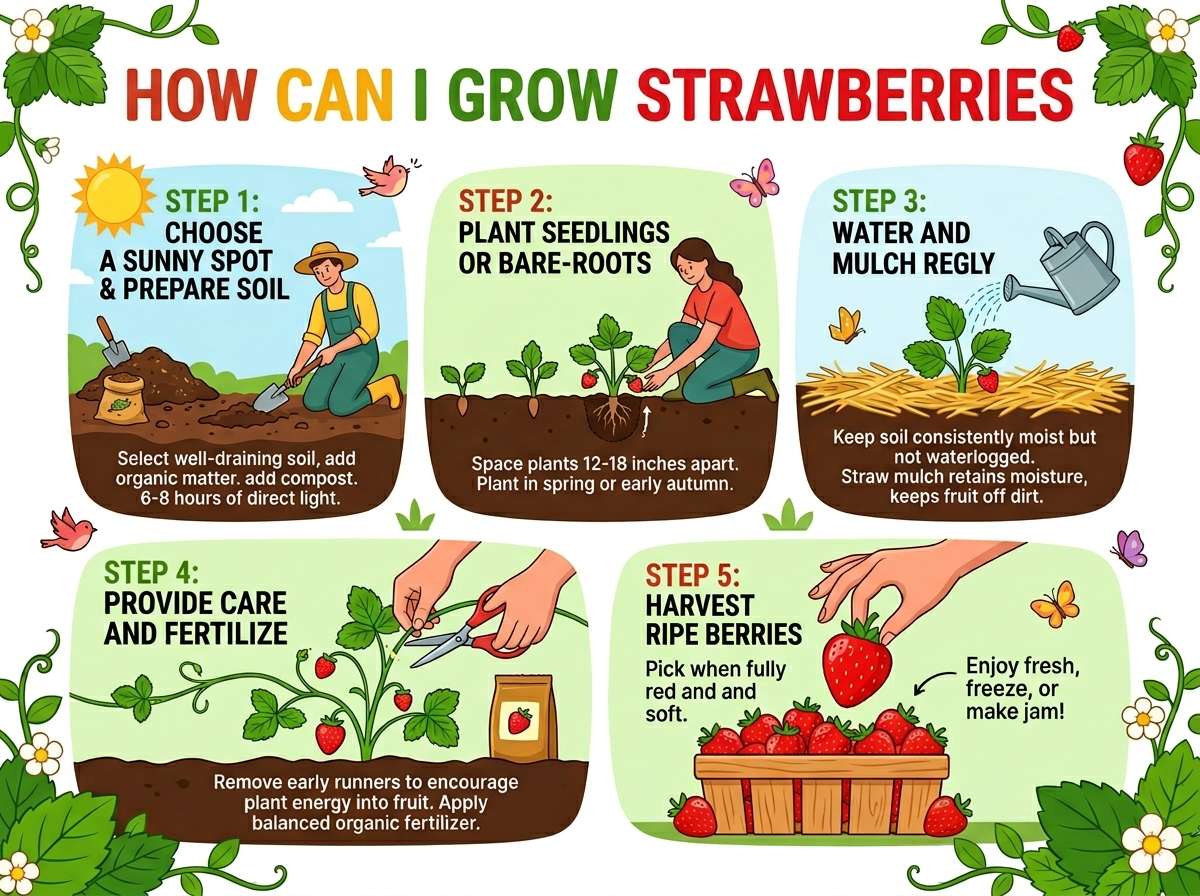
Strawberries want sun—lots of it. Plant them where they get at least six to eight hours of direct sunlight every day. More sun means more flowers, which means more berries. Plants in shadier spots still produce fruit, but the harvest will be smaller and less sweet.
If you live somewhere extremely hot, afternoon shade helps prevent the plants from getting stressed. Most places, though, full sun is your friend.
Soil Quality Matters
Strawberry plants aren’t demanding about soil, but they do like it loose and well-draining. Heavy clay soil that stays wet causes root rot, which kills plants fast. If your soil is compacted clay, add compost or peat moss before planting to improve drainage.
Get a soil test done if you can. You want soil that’s slightly acidic, with a pH between 6.0 and 6.8. If your soil is too alkaline, add sulfur. If it’s too acidic, add lime. Your local garden center can help you figure this out.
Soil that’s rich in organic matter holds moisture without staying soggy. Mix in a few inches of compost before you plant, and your strawberries will thank you.
Growing Containers vs. Garden Beds
You can grow strawberries in the ground, raised beds, containers, or hanging baskets. Each method works fine—it just depends on your space and what you prefer.
Garden beds are the most traditional approach. Just make sure you prepare the soil well and space plants properly.
Raised beds keep your back from bending so much and let you control the soil quality perfectly. They also look nice and keep deer and slugs at a distance.
Containers work great on patios or balconies. Use pots at least six inches deep, and fill them with quality potting soil. You can grow three to four plants in a ten-inch pot.
Hanging baskets and strawberry towers are trendy and save space. Just know that containers dry out faster than garden beds, so you’ll need to water more often.
Planting Your Strawberry Plants
The timing of planting matters, but it’s forgiving. Spring is the ideal time to plant strawberry crowns or runners in most places. However, you can also plant in fall in some regions.
Spacing Your Plants
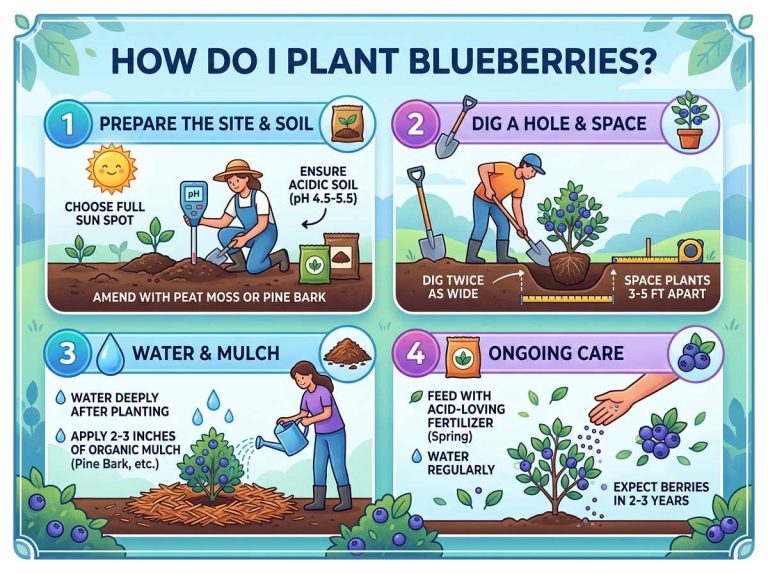
Space strawberry plants about twelve to eighteen inches apart. They need room for air to flow around them, which keeps disease away. If you plant them too close, they’ll compete for water and nutrients.
For June-bearing plants, you can either plant them in rows or in a matted row system where the runners spread out. Day-neutral and ever-bearing varieties grow better when you remove most runners and keep plants spaced out.
Planting Depth Matters
This is crucial: the crown of the plant (where the leaves come out) should sit right at soil level. If you plant too deep and cover the crown, it rots. If you plant too shallow and the crown sits above the soil, it dries out. Get it at soil level, and you’re golden.
Dig a hole slightly deeper than your plant’s root ball. Make a little mound in the middle, sit the plant on it, and spread the roots around the mound. Fill in with soil and press gently. Water well after planting.
Watering Your Strawberry Plants
Water is essential, but getting it right is about finding balance. Strawberries need consistent moisture without staying waterlogged.
Water your plants deeply once or twice a week, depending on how hot it is and how much rain you get. The soil should stay moist but not soggy. Stick your finger in the soil—if it feels dry past the first knuckle, it’s time to water.
Drip irrigation or soaker hoses work best because they deliver water right to the roots and keep the leaves dry. Wet leaves invite fungal diseases. If you hand-water with a regular hose, water early in the morning and focus on the soil, not the plants themselves.
During hot stretches, you might need to water every day. In cooler weather or after rain, you might go several days without watering. Pay attention to your specific weather and adjust accordingly.
Feeding Your Strawberry Plants
Strawberries are light feeders and don’t need much fertilizer. If you put rich compost in your soil before planting, you might not need to feed them at all.
If you want to give them a boost, use a balanced fertilizer like 10-10-10 once or twice during the growing season. Follow the package directions and don’t over-fertilize, which can lead to lots of leaves and fewer berries.
Nitrogen makes plants produce leaves, not fruit. Too much nitrogen and you’ll have a leafy plant with almost no strawberries. Potassium and phosphorus help with fruit production, so a balanced or slightly lower-nitrogen fertilizer is better.
If you prefer organic growing, use compost tea, fish emulsion, or seaweed extract every few weeks. These natural options feed your plants gently without the risk of over-fertilizing.
Managing Runners and Keeping Plants Healthy
Strawberry runners are the long, creeping stems that send out new baby plants. How you manage runners completely changes how your plants perform.
For June-bearing Plants
June-bearing varieties benefit from the matted row system. Let the runners spread out and root wherever they touch soil. They fill in the space between plants and create a dense mat. The plants in the mat are smaller and produce fewer berries, but the overall yield is often higher. After harvest, you can thin the mat if it gets too crowded.
For Day-neutral and Ever-bearing Plants
These types perform better if you remove most runners. As soon as runners appear, pinch them off or cut them with scissors. This keeps the mother plant’s energy focused on producing fruit instead of making babies. You’ll get more and bigger berries this way.
You might want to keep just one or two runners per plant to replace older plants next year, but remove the rest.
Dealing with Pests and Diseases
Strawberries attract a few common pests and can get certain diseases. The good news is that most problems are easy to prevent and handle.
Common Pests
Slugs and snails love strawberries. They chew holes in the fruit and can destroy your harvest fast. Handpick them in the early morning, remove debris where they hide, and use beer traps or copper barriers if the problem gets bad.
Spider mites appear in hot, dry weather. They’re tiny and hard to see, but you’ll notice yellowing leaves and fine webbing. Spray plants with water to wash them off, or use neem oil if the problem persists.
Aphids occasionally show up but rarely cause serious damage. A spray of water usually solves it. If you have a lot, use an organic insecticide.
Strawberry root weevils are serious but not common in most places. Their larvae eat roots and larvae hide in soil. If you spot the adults (small brown beetles), spray plants with neem oil. Good soil drainage and removing old plant debris helps prevent them.
Common Diseases
Powdery mildew causes white coating on leaves in cool, humid weather. Space plants properly for air flow, water at the soil level only, and remove affected leaves. In severe cases, use sulfur dust or a fungicide.
Gray mold or botrytis attacks fruit, especially in wet weather. Good air circulation is your best defense. Remove any damaged fruit immediately. Mulching keeps fruit off wet soil. If it’s severe, use a fungicide labeled for strawberries.
Leaf spot causes brown patches on leaves. It’s usually not serious. Remove affected leaves and improve air circulation.
The best pest and disease prevention is cleanliness. Remove old leaves and fruit, avoid overhead watering, and space plants well. Healthy plants handle most problems fine.
Harvesting Your Strawberries
This is the fun part. Strawberries are ready to pick when they’re fully red all over. They don’t continue to ripen after picking, so don’t harvest pink berries hoping they’ll turn red.
Pick berries in the early morning when they’re cool and firm. Hold the stem and twist gently, or use scissors to cut the stem. Berries with stems attached stay fresh longer.
Pick every other day during peak season. Leaving ripe berries on the plant attracts pests and wastes energy that could go to new flowers. Plus, pulling berries off makes it easier for new ones to develop.
Fresh-picked strawberries taste incredible. You can eat them right off the plant if you want. Store them in the fridge unwashed until you’re ready to eat them. Washing them right before you enjoy them keeps them from getting moldy.
Keeping Your Plants Going Year After Year
Strawberry plants produce well for three to five years, but they gradually get less productive. Many gardeners replace plants every other year to keep yields high.
After you harvest, cut off the old leaves about an inch above the crown. This removes disease spores and pests that hide in the leaves. New, fresh leaves will grow back. This is called renovation, and it keeps plants vigorous.
Pull out any diseased or weak plants entirely. Overcrowded plants should be thinned out to give remaining plants room to grow.
If you want new plants for next year, let a few runners from your healthiest plants grow and root. Pin them down to soil with a small wire or rock. Once they develop roots, cut them free from the mother plant and either pot them up or plant them directly in their new spot.
In cold climates, apply mulch over winter to protect plants. Use straw or leaves after the ground freezes. Remove the mulch in spring when new growth appears.
Growing Strawberries in Containers
Container growing is perfect if you don’t have much space or want more control over soil and watering.
Use containers at least six inches deep with drainage holes. Fill with quality potting soil mixed with compost. Plant one strawberry plant per six-inch pot, or three to four in a larger ten-inch pot.
Containers dry out faster than ground beds, especially in warm weather. Check soil moisture every day and water when the top inch feels dry. This might mean watering daily in hot summers.
Fertilize every two to three weeks because regular watering leaches nutrients from containers. Use diluted liquid fertilizer so you don’t burn roots.
Bring containers inside or wrap them heavily if temperatures drop below freezing. Container soil freezes solid much faster than ground soil, which can kill plants.
Vertical Growing Systems
Strawberry towers and hanging baskets let you grow strawberries in small spaces while looking pretty.
Strawberry towers are tall containers with pockets or holes where you stick plants. They’re great for small patios and look nice. The downside is that top plants often dry out faster than bottom ones, so watering takes careful attention.
Hanging baskets work similarly. Make sure they have good drainage, use quality potting soil, and water regularly since they dry out quickly.
Both systems work fine as long as you don’t let them dry out. The payoff is beautiful vertical gardens that produce strawberries all season.
Troubleshooting Common Growing Problems
Your plants look yellowed, weak, or aren’t producing fruit? Here are the most common issues and how to fix them.
Not enough fruit: This usually means too much shade, overcrowding, or plants that need replacing. Move containers to sunnier spots, thin out overcrowded plants, and replace plants over three years old.
Yellow leaves: Usually nitrogen deficiency or poor drainage. Add compost or apply a balanced fertilizer. Check that water drains well—if soil stays soggy, improve drainage.
Wilting despite wet soil: This often means root rot from wet conditions. Improve drainage and remove severely damaged plants.
Deformed berries: Incomplete pollination causes this. Strawberries need bees and other pollinators. Grow flowers nearby to attract them, and don’t use pesticides that kill pollinators.
Pink berries that won’t turn red: This is a natural ripeness indicator issue or a variety trait. The berries are still developing. Wait longer, or try a different variety next year.
Extending Your Strawberry Season
Once you start growing strawberries, you might want them to last longer. Here are ways to spread out your harvest.
Plant June-bearing, ever-bearing, and day-neutral varieties together. You’ll get early, mid, and late-season harvests. It’s a nice way to enjoy strawberries across multiple months.
Use row covers in spring to protect early flowers from frost and warm up the soil. This gets harvests started earlier.
Plant some strawberries in containers that you can move to shadier spots as heat builds. Plants in shade produce later because cooler soil slows down ripening.
In fall, save some berries and their runners to plant in containers indoors near a sunny window. You can harvest fresh strawberries during cooler months.
Final Thoughts on Growing Strawberries
Growing strawberries is genuinely one of the most satisfying gardening projects. The learning curve is short, success comes quickly, and the reward is delicious fruit that tastes infinitely better than anything at the store.
Start simple with June-bearing plants in a sunny spot, water them consistently, and remove runners. That’s it. You’ll have fresh strawberries next season.
Once you get comfortable with the basics, experiment with other varieties, try container growing, or build a vertical tower. Each method teaches you something new about how plants grow.
The strawberry patch you build this year will keep producing for years to come. That first harvest makes the small effort completely worth it. Get some plants in the ground or in containers, and before you know it, you’ll be picking sweet, juicy berries you grew yourself.
Hi, I’m Mary, the founder of GardenCure.com. I’m passionate about creating healthy, beautiful gardens and well-kept lawns. I share practical experience and trusted advice on garden and lawn gear that truly works. With the support of my dedicated research team, our writers produce honest, in-depth reviews using reliable, authentic sources—helping you choose the right tools with confidence for your outdoor space.