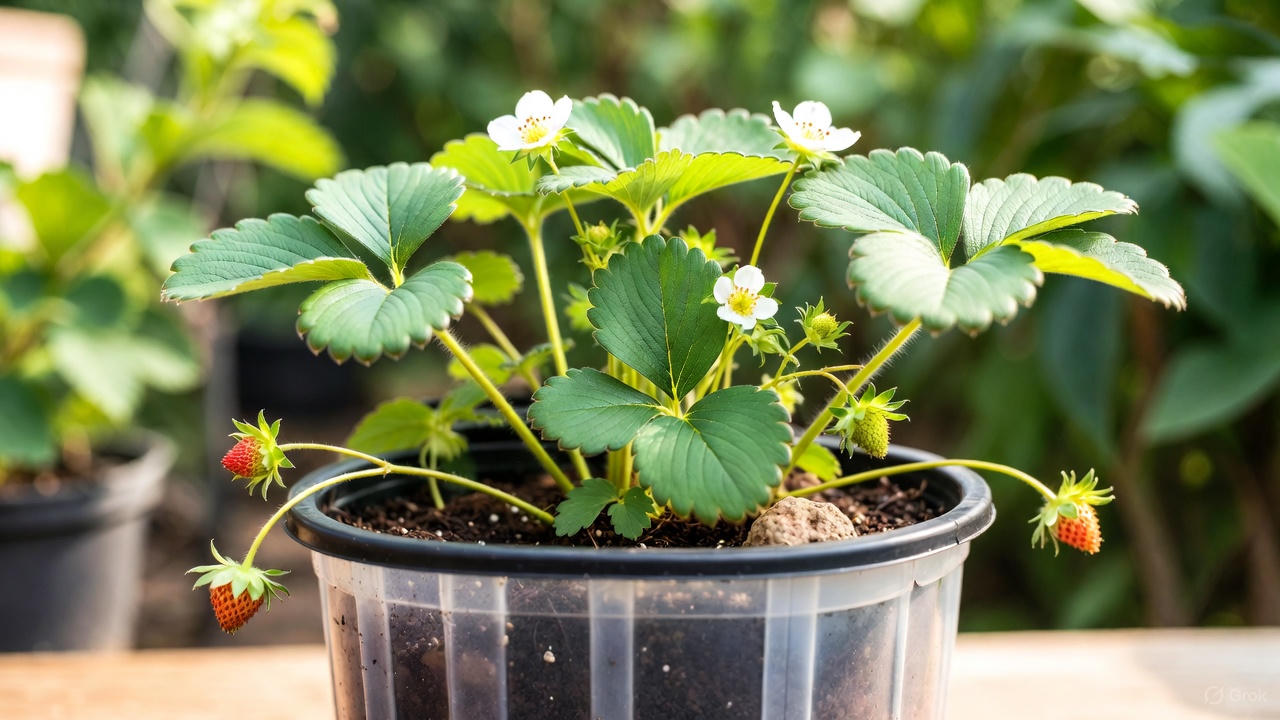
5 Best Containers to Grow Strawberries In 2026
Growing strawberries at home has never been easier than it is today. With the right container, you can enjoy fresh, juicy berries right from your patio, balcony, or even windowsill. The market offers countless options for strawberry planters, each designed to maximize your harvest while saving space. This comprehensive guide examines five top-rated containers that make strawberry cultivation accessible for everyone, from beginners to experienced gardeners.
In this article
Why Container Gardening Works Perfectly for Strawberries
Strawberries naturally thrive in containers because of their shallow root systems. These plants don’t need deep soil like tomatoes or carrots. Instead, they spread outward and produce runners that can be controlled easily in contained spaces. Container gardening offers several advantages over traditional ground planting.
Containers keep your berries elevated above ground level, protecting them from soil-dwelling pests like slugs and snails. You’ll spend less time dealing with damaged fruit. The drainage in containers prevents waterlogged roots, which often plague in-ground plantings during heavy rains. You can move containers to follow sunlight throughout the day, giving plants optimal light exposure. During extreme weather, portable containers can be relocated to sheltered areas.
Temperature control becomes manageable with containers. The soil warms up faster in spring, leading to earlier harvests. In hot summers, you can position containers in partial shade to prevent heat stress. For those living in apartments or homes without yard space, containers transform any sunny spot into a productive berry patch.
Key Features to Look for in Strawberry Containers
Before diving into specific products, understanding essential container features helps you make informed decisions. The right container combines several critical elements that promote healthy plant growth and abundant fruit production.
Depth matters, but not as much as you might think. Strawberries need only 8 to 12 inches of soil depth since their roots remain shallow. Width proves more important than depth, as roots spread horizontally. Containers measuring at least 12 inches across work well for growing multiple plants together.
Drainage stands as the most crucial feature. Without proper drainage holes, excess water accumulates and causes root rot. Look for containers with multiple drainage openings at the bottom. Some advanced designs include water filtration systems that distribute moisture evenly throughout all planting levels.
Material selection affects longevity and plant health. Fabric grow bags provide excellent air circulation and naturally prune roots through a process called air-pruning. Plastic containers offer durability and retain moisture longer but may heat up quickly in direct sunlight. Choose food-safe materials when growing edibles.
Space efficiency becomes vital for urban gardeners. Vertical stackable designs maximize growing area without requiring more floor space. Hanging options work perfectly for balconies and small patios where ground space is limited.
The Best Containers for Growing Strawberries
After extensive research and analysis of customer feedback, these five containers stand out as top choices for strawberry cultivation. Each offers unique benefits suited to different growing situations and gardener preferences.
1. 3 Pack 3 Gallon Hanging Strawberry Planter Bags with 12 Holes
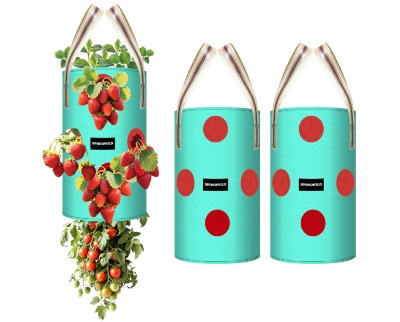
These hanging planter bags revolutionize vertical strawberry growing. Made from durable PE material, each bag measures approximately 20 x 35 cm and includes 12 strategically placed planting holes around the sides.
Product Description:
The hanging design features reinforced handles that support the weight of soil and mature plants without tearing or stretching. Unlike traditional pots, these bags can be hung from hooks, rails, or fence posts, making them ideal for maximizing vertical space. Each bag holds 3 gallons of growing medium, providing adequate room for root development.
The 12 planting holes allow you to grow multiple strawberry plants in one bag. Plants inserted through side holes cascade downward, creating an attractive display while making berry harvesting incredibly easy. Bottom drainage prevents waterlogging and ensures roots receive proper oxygen.
The green color blends naturally with outdoor settings. These bags fold flat when not in use, simplifying storage during off-seasons. The PE construction resists UV degradation, maintaining structural integrity through multiple growing seasons.
Pros:
- Saves valuable ground space through vertical hanging design
- 12 planting holes accommodate multiple strawberry plants
- Bottom drainage system prevents root rot effectively
- Lightweight construction makes repositioning simple
- Reusable material lasts several seasons
- Affordable option for budget-conscious gardeners
- Easy to clean and store when empty
Cons:
- PE material may not provide as much air circulation as fabric alternatives
- Bags require frequent watering as they dry out faster than ground plantings
- Side holes can be challenging to fill with soil initially
- May need support structures to prevent swaying in wind
- Some gardeners report difficulty keeping upper holes adequately moist
Best For: Apartment dwellers, balcony gardeners, and anyone with limited ground space who wants to grow multiple strawberry plants vertically.
2. VIVOSUN 5 Tier Vertical Gardening Stackable Planter (Ivory)
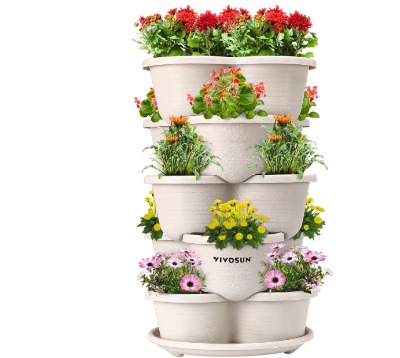
This popular stackable planter system transforms any small space into a productive strawberry tower. The VIVOSUN 5-tier design offers flexibility and efficiency for serious home gardeners.
Product Description:
Constructed from thick, high-quality polypropylene (PP) materials, this planter resists fading and cracking even under intense summer heat. The ivory color stays cool in direct sunlight, preventing soil from overheating. Each tier stacks securely on the one below, creating a stable vertical growing structure.
The innovative flow-through watering system represents the standout feature. Water poured into the top tier filters down through all levels, ensuring every plant receives moisture. This design saves time and conserves water compared to watering each level individually. A bottom tray catches excess water, protecting floors and patios from stains.
You can configure this system with 2, 3, 4, or all 5 tiers depending on your space and plant quantity. The planter works as a freestanding tower or can be hung using included chains. A cylindrical rod option provides additional support for taller configurations. Each tier includes multiple planting pockets, with the complete 5-tier system accommodating up to 20 strawberry plants.
Pros:
- Durable PP construction withstands outdoor elements for years
- Water filtration system simplifies maintenance and conserves water
- Flexible stacking options adapt to available space
- Can be used freestanding or suspended
- Bottom tray prevents water damage to surfaces
- Accommodates 20+ plants in minimal floor space
- Suitable for indoor or outdoor use
- Easy to assemble without special tools
Cons:
- Assembly required, though relatively straightforward
- Upper tiers may dry out faster and need extra attention
- Plastic material doesn’t breathe as well as fabric options
- Heavier when filled with soil, limiting portability
- Price point higher than simple hanging bags
Best For: Gardeners who want a professional-looking, long-lasting vertical growing system with efficient watering capabilities.
3. Hourleey Strawberry Planter, 5 Tier Stackable Garden Tower
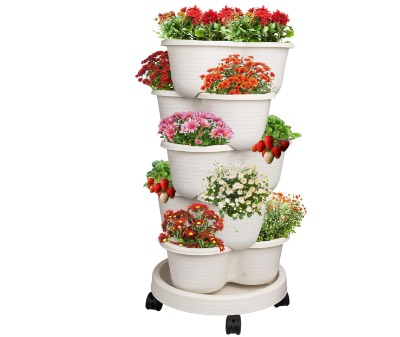
The Hourleey stackable tower brings premium quality to vertical strawberry gardening. This system balances functionality with attractive design, making it suitable for both decorative and practical purposes.
Product Description:
Made from premium polypropylene material, the Hourleey planter resists weather-related wear including fading and cracking. Each pod measures 13 x 5.1 inches, providing ample space for plant growth. The complete 5-tier configuration reaches 2.52 feet in height, creating an impressive vertical garden without overwhelming small spaces.
The planter features a sophisticated water filtration mechanism that works from top to bottom. This system efficiently conserves water while maintaining consistent soil moisture levels. A 12-inch filter tray at the base catches runoff and can be used to check if plants need watering.
Versatility defines this product. You can stack 2, 3, or 4 tiers according to your needs. The included 37.5-inch iron chain allows for hanging installations. Alternatively, it works as a freestanding tower on a cylindrical pole. Some versions include removable wheels, making it easy to move the tower to follow sunlight or protect plants from harsh weather.
Pros:
- Premium polypropylene construction ensures longevity
- Top-down water filtration conserves moisture effectively
- Multiple configuration options for different spaces
- Removable wheels on some models enhance portability
- Attractive design complements outdoor decor
- Holds 20 strawberry plants at full capacity
- Suitable for various plant types beyond strawberries
- Iron chain included for hanging option
Cons:
- May wobble when empty; requires level surface
- Upper tiers need more frequent watering
- Assembly takes time and attention to detail
- Without wheels, filled tower becomes difficult to move
- Higher price point than basic options
Best For: Home gardeners who value both functionality and aesthetics, especially those who might want to relocate their tower periodically.
4. VIVOSUN 5-Pack 15 Gallon Plant Grow Bags
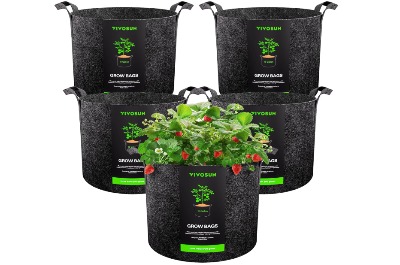
These heavy-duty fabric grow bags represent the traditional approach to container strawberry growing. While not specifically designed for strawberries, their size and construction make them excellent choices for growing multiple plants per bag.
Product Description:
Each bag holds 15 gallons of growing medium, measuring 19.9 x 19.9 x 11.9 inches. Constructed from 300 grams of thickened nonwoven polyester fabric, these bags deliver professional-quality performance. The material is BPA-free and moderately permeable, balancing water retention with drainage.
The nonwoven fabric naturally aerates soil, allowing roots to breathe while preventing circling root structures common in plastic pots. This air-pruning effect encourages the development of healthy, fibrous root systems. When roots reach the fabric edge, air exposure causes them to branch rather than circle, creating stronger plants.
VIVOSUN reinforces the handles with serger stitches rather than using simple fabric strips. This design allows you to safely lift and move full bags weighing 50 pounds or more. The handles maintain their integrity season after season, unlike cheaper alternatives that tear at attachment points.
These bags prevent overwatering naturally. Excess water drains through the fabric weave, while the material retains adequate moisture for healthy growth. Plants stay cool in summer and warmer in winter compared to plastic containers. The bags fold flat for compact storage during off-seasons.
Pros:
- Extra-large 15-gallon capacity accommodates 3-5 strawberry plants per bag
- Heavy-duty fabric construction lasts multiple growing seasons
- Air-pruning promotes superior root development
- Excellent drainage prevents root rot
- Reinforced handles support full bag weight without failing
- Temperature regulation keeps roots healthier
- Folds flat for easy storage
- Versatile enough for various plant types
- Five-pack offers excellent value
Cons:
- Large size may be excessive for small-space gardeners
- Fabric requires more frequent watering than plastic
- Not designed specifically for strawberries (no side planting pockets)
- Bags need sturdy placement since they can’t hang
- May need saucers underneath to prevent water staining surfaces
- Heavier to move when filled with soil
Best For: Gardeners with adequate space who want to grow multiple strawberry plants per container with professional-grade results.
5. Back to The Roots Organic Strawberry Grow Kit
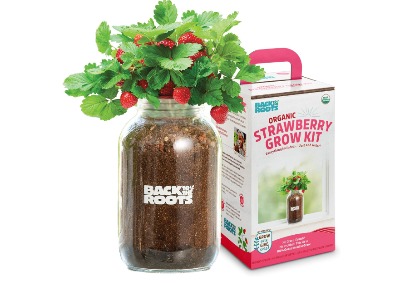
This complete starter kit takes a different approach by providing everything needed for indoor strawberry cultivation. Perfect for beginners and those interested in year-round growing, it simplifies the entire process.
Product Description:
The kit includes organic wild strawberry seeds (Fragaria), a large 64-ounce glass mason jar, a custom organic soil blend, and two organic fertilizer spikes. The biochar-infused soil mixture represents a key innovation. Biochar regulates moisture levels automatically, making it nearly impossible to overwater or underwater your plants.
Wild strawberries differ from standard varieties. They produce smaller fruits but offer sweeter, more aromatic flavor profiles. These compact plants thrive in the confined space of the mason jar, requiring no transplanting. The clear glass allows you to watch root development, turning gardening into an educational experience.
The custom soil blend contains all nutrients strawberry plants need to thrive. When flowers appear, you insert the included fertilizer spikes to boost fruit production. The system works indoors under natural sunlight or grow lights, enabling year-round cultivation regardless of outdoor temperatures.
Back to The Roots guarantees growth. If your kit doesn’t produce as described, the company replaces it free of charge. The kit supports the #GrowOneGiveOne program – when you share a photo of your growing plants, the company donates a kit and STEM curriculum to an elementary school classroom.
Pros:
- Complete kit includes everything needed to start growing
- Organic and non-GMO certified materials
- Biochar soil prevents common watering mistakes
- Works year-round indoors
- Educational design shows root development through glass
- Wild strawberries offer superior flavor
- Perfect for beginners with no gardening experience
- Made in USA with quality components
- Satisfaction guarantee protects your investment
- Supports educational initiatives through photo sharing
Cons:
- Limited to single plant in the jar
- Wild strawberries produce smaller fruits than commercial varieties
- Germination takes approximately 4 weeks
- Requires 6-8 hours of daily light (may need grow light)
- Glass jar limits portability and outdoor use
- Not expandable like stackable systems
- Higher cost per plant compared to bulk options
Best For: Beginners, children learning about gardening, indoor gardeners, and anyone wanting a foolproof introduction to growing strawberries.
Soil and Growing Medium Considerations
Container success depends heavily on using the right growing medium. Never use garden soil straight from the ground – it compacts in containers, restricts drainage, and often contains weed seeds or pathogens.
Quality potting mixes designed for containers provide the ideal foundation. Look for blends containing peat moss or coconut coir for moisture retention, perlite or vermiculite for drainage, and compost for nutrients. Strawberries prefer slightly acidic soil with a pH between 5.5 and 6.5.
The growing medium should feel light and fluffy when dry, not heavy and dense. When squeezed after watering, it should form a ball that easily crumbles when touched. This texture ensures adequate air circulation around roots while retaining enough moisture for healthy growth.
For fabric grow bags, consider mixing extra perlite into your potting soil. The increased drainage compensates for the bags’ high breathability. Vertical stackable systems benefit from potting mixes with good moisture retention since upper levels dry out faster.
Organic matter improves any container medium. Work in compost, aged manure, or worm castings before planting. These amendments feed beneficial microorganisms while providing slow-release nutrients. Avoid mushroom compost for strawberries, as it often contains lime that raises pH levels.
Watering Techniques for Container Strawberries
Watering represents the most critical aspect of container strawberry care. Containers dry out much faster than ground plantings, especially in hot weather or windy conditions. Strawberries need consistent moisture but despise waterlogged roots.
Check soil moisture daily by inserting your finger two inches deep. If it feels dry, water thoroughly until liquid drains from the bottom. Fabric bags may require watering twice daily during peak summer. Morning watering proves best, allowing foliage to dry before nightfall and reducing disease risk.
Vertical systems need special attention. Upper tiers dry out faster than lower ones due to heat rising and increased wind exposure. Even with flow-through designs, manually water all levels to ensure even moisture distribution. The top tier often needs supplemental watering between regular sessions.
Hanging bags present unique challenges. Water runs quickly through side holes, sometimes before soil absorbs it. Water slowly and pause between sessions, allowing moisture to penetrate completely. Consider adding water-retaining crystals to the growing medium if bags dry out too quickly.
Avoid overhead watering when fruits develop. Wet berries rot easily, especially if foliage prevents air circulation. Water at the soil level, keeping leaves and fruits dry. Drip irrigation or soaker hoses work perfectly for large container collections.
Sunlight Requirements and Placement
Strawberries demand abundant sunlight to produce sweet, flavorful berries. Plan for at least 6 to 8 hours of direct sun daily. South-facing locations in the Northern Hemisphere receive optimal light. West-facing spots work well too, though afternoon heat may stress plants during summer peaks.
Morning sun benefits plants most. It warms soil and dries dew from foliage, reducing disease pressure. If forced to choose between morning and afternoon sun, select morning exposure. Plants tolerate partial shade during hot afternoons better than they tolerate shaded mornings.
Container mobility offers a major advantage. Track sun patterns throughout the day and season. As shadows shift, relocate containers to maintain optimal light levels. This flexibility allows you to maximize production in ways impossible with in-ground plantings.
Indoor growing requires artificial lighting for adequate photosynthesis. Position grow lights 6 to 12 inches above plants, maintaining a 12 to 16 hour daily light cycle. LED grow lights work efficiently without generating excessive heat. Full-spectrum bulbs provide the complete wavelength range plants need for healthy growth and fruiting.
Protect containers from extreme conditions. Intense summer heat can cook roots in dark containers. Provide afternoon shade or wrap containers with light-colored fabric. During cold snaps, move containers to sheltered locations or wrap them with insulation to prevent root freezing.
Fertilizing Container Strawberries
Container plants exhaust available nutrients faster than ground-grown ones. Regular feeding keeps strawberries producing abundant, flavorful fruits. Start with slow-release granular fertilizer mixed into potting soil at planting time.
Once plants establish and begin flowering, switch to weekly liquid feeding. Choose fertilizers with higher potassium content than nitrogen. Too much nitrogen promotes leafy growth at the expense of flowers and fruits. A ratio like 10-20-20 works well, providing phosphorus for root development and potassium for fruit production.
Organic options include compost tea, fish emulsion, or seaweed extract. These gentle fertilizers feed plants while supporting beneficial soil microorganisms. Apply every two weeks throughout the growing season. Stop fertilizing when fruits begin ripening – excess nutrients at this stage reduce flavor quality.
Container strawberries benefit from supplemental calcium, which prevents blossom-end rot and supports cell wall development. Crushed eggshells mixed into soil release calcium slowly. Liquid calcium sprays applied to foliage provide quick boosts during critical growth periods.
The Back to The Roots kit includes fertilizer spikes designed for specific growth stages. Insert the first spike after seedlings emerge and thin to one plant. Add the second spike when flowers appear. This timed approach provides nutrients exactly when plants need them most.
Variety Selection for Container Growing
Not all strawberry varieties thrive in containers. Day-neutral and everbearing types perform best because they produce continuously throughout the growing season. These varieties naturally stay compact and generate fewer runners, making them manageable in confined spaces.
Day-neutral varieties like Albion, Seascape, and Tristar fruit regardless of day length once plants reach adequate size. They provide steady harvests from spring through fall, perfect for gardeners wanting regular berry supplies. These varieties tolerate container conditions well and rarely disappoint.
Everbearing types produce two or three major flushes during the growing season. Ozark Beauty stands out as a reliable everbearing choice for containers. These varieties fruit in late spring, slow down during summer heat, then resume heavy production as temperatures cool in early fall.
June-bearing varieties concentrate their entire crop into a brief 2-3 week period. While they produce larger berries, their aggressive runner production makes container management challenging. Save June-bearing types for in-ground plantings where runners can root freely.
Ornamental strawberries with pink flowers make attractive container specimens. Varieties like Toscana, Roman, and Summerbreeze combine beauty with edibility. They produce smaller yields than production varieties but offer excellent visual appeal on patios and decks.
Alpine strawberries, including the wild type in the Back to The Roots kit, adapt perfectly to small containers. They produce tiny but intensely flavored fruits continuously. These shade-tolerant plants work for locations where standard varieties struggle.
Pest and Disease Management
Container growing naturally reduces many pest and disease problems by elevating plants above ground level. Still, vigilance prevents issues from destroying your harvest.
Slugs and snails rarely reach elevated containers but can climb up occasionally. Inspect plants regularly, especially after rain. Remove pests by hand or use organic slug baits around container bases. Copper tape around pot rims deters climbing.
Aphids cluster on new growth and flower stems, sucking plant juices and spreading diseases. Spray them off with strong water jets or apply insecticidal soap. Ladybugs and lacewings provide natural control if you can attract them to your growing area.
Spider mites thrive in hot, dry conditions. Fabric grow bags’ excellent air circulation helps prevent infestations. If webs appear on leaf undersides, spray plants with water daily and apply neem oil weekly until populations crash.
Gray mold (botrytis) attacks flowers and ripe fruits during humid weather. Provide good air circulation between plants and avoid wetting foliage. Remove damaged fruits immediately to prevent spore spread. Water early in the day so foliage dries quickly.
Powdery mildew appears as white dust on leaves. It rarely kills plants but reduces vigor and fruit quality. Improve air circulation, avoid overhead watering, and spray with diluted milk solution (1 part milk to 9 parts water) weekly as prevention.
Verticillium wilt causes plants to collapse suddenly. This soil-borne disease affects strawberries grown in contaminated potting mix. Always use fresh, sterile growing medium and never reuse soil from previous strawberry plantings in the same containers.
Harvesting Your Container-Grown Strawberries
Harvest timing dramatically affects berry quality. Pick strawberries when fully red with no white or green areas near the cap. Unlike some fruits, strawberries don’t continue ripening after harvest. Partially colored berries will never develop full sweetness.
Early morning harvesting produces the best quality berries. Fruits picked in cool temperatures stay firmer and taste sweeter than those harvested during afternoon heat. Cool berries also store longer in refrigerators.
Grasp the stem about half an inch above the berry and pull with a gentle twisting motion. Leave the green cap attached – removing it during picking causes berries to soften quickly. Handle fruits carefully to avoid bruising their delicate flesh.
Check plants every other day during peak season. Ripe berries deteriorate rapidly if left on plants, especially during warm weather. Prompt harvesting encourages plants to set more flowers and produce additional fruits.
Container plants typically yield less per plant than in-ground ones, but the quality often surpasses ground-grown berries. Elevated fruits stay cleaner and rarely suffer slug damage. Many gardeners find container strawberries taste sweeter, perhaps due to increased sun exposure and stress-free growing conditions.
Winter Care and Storage
Container strawberries require special winter protection in cold climates. Unlike in-ground plants protected by soil mass, container roots face freezing temperatures from all sides. Roots suffer damage at temperatures only slightly below freezing.
Move containers to unheated garages, sheds, or basements before hard freezes arrive. The goal isn’t keeping plants growing but preventing root death. Dark, cool locations work perfectly for dormancy. Water occasionally to prevent complete drying but avoid saturating soil.
If moving containers indoors isn’t possible, group them together in a sheltered location. Wrap groups with burlap or bubble wrap, creating insulation around all sides. Pile mulch or leaves around and over containers for additional protection. Check periodically and water if soil becomes bone dry.
Another option involves burying containers in garden soil up to their rims. This technique insulates roots using earth’s thermal mass. Mulch over tops after the ground freezes. Dig containers up in spring before new growth begins.
Fabric grow bags can be emptied, cleaned, and stored flat during winter. Remove spent plants, shake out soil, wash bags with soapy water, and allow them to dry completely. Folded bags take minimal storage space. Start fresh with new plants and soil next spring.
The Back to The Roots kit supports year-round indoor growing, eliminating winter concerns. Simply maintain appropriate light and temperature conditions inside your home. Plants may slow growth during short winter days but won’t go fully dormant.
Maximizing Space with Vertical Growing
Vertical growing systems revolutionize small-space gardening by stacking plants upward instead of spreading them outward. A 5-tier tower occupying one square foot of floor space can host 20 strawberry plants – the equivalent of 6-8 feet of garden row.
The VIVOSUN and Hourleey stackable planters excel at space maximization. Their tiered designs create micro-climates at different levels. Upper tiers receive more sunlight and air circulation but dry faster. Lower tiers stay moister but might receive less light in shaded locations.
Hanging bags take vertical growing further by using wall, fence, or railing space. The 3-gallon bags with 12 holes transform any vertical surface into productive growing area. Three bags hung at different heights can produce as many berries as a small garden bed.
Rotate plants within vertical systems periodically. Move lower-tier plants to upper positions and vice versa. This rotation ensures all plants get time in premium growing spots, equalizing production across the system. Rotation also simplifies pest inspection since you handle each plant regularly.
Combine vertical systems with horizontal ones for ultimate space efficiency. Hang planter bags from fence posts, place stackable towers on the patio, and use large grow bags on the ground. This three-dimensional approach transforms even the smallest outdoor space into a productive strawberry farm.
Cost-Effectiveness Analysis
Growing strawberries in containers involves initial investment but delivers long-term savings. Compare costs against grocery store prices to understand potential returns.
Hanging planter bags represent the most affordable entry point. Three bags cost roughly the same as two weeks’ worth of store-bought organic strawberries. Since bags last multiple seasons, your investment quickly pays dividends. Plants produce for several seasons with proper care.
Stackable tower systems cost more upfront but accommodate significantly more plants. The VIVOSUN and Hourleey planters hold 20 plants each. At full production, expect 1-2 pounds of berries per plant annually. That’s 20-40 pounds of strawberries from one tower – far exceeding the initial cost after the first season.
Large fabric grow bags offer the best value for high-volume production. VIVOSUN’s 5-pack provides exceptional capacity at reasonable prices. Each bag supports multiple plants and lasts 3-5 seasons with proper care. Plants remain productive for 2-3 seasons before needing replacement.
The Back to The Roots kit costs more per plant but eliminates separate purchases of soil, fertilizer, and containers. It’s ideal for trying strawberry growing without major commitment. Success with this kit often leads to expanding into larger systems.
Factor in ongoing costs too. Quality potting soil, organic fertilizer, and replacement plants add up over time. However, these expenses pale compared to buying fresh organic strawberries weekly. Homegrown berries also taste significantly better, offering value beyond pure economics.
Environmental Benefits of Container Growing
Container strawberry cultivation supports environmental sustainability in multiple ways. Growing your own berries reduces dependence on industrial agriculture and long-distance food transportation.
Commercial strawberries often travel hundreds or thousands of miles from farm to table. This transportation requires refrigeration and generates significant carbon emissions. Homegrown berries have zero food miles, dramatically shrinking your carbon footprint.
Conventional strawberry farming relies heavily on pesticides and fungicides. Strawberries consistently rank among produce with the highest pesticide residues. Container growing lets you eliminate synthetic chemicals entirely, producing perfectly organic berries in your own space.
Water conservation improves with containers. Fabric grow bags and vertical systems use water more efficiently than traditional irrigation. Closed-loop designs like the VIVOSUN planter capture and reuse runoff. You control exactly how much water plants receive, preventing waste.
Packaging waste disappears when growing your own. Commercial berries come in plastic clamshells destined for landfills. Homegrown fruits go straight from plant to table without packaging. Even the containers themselves often use recycled materials and remain reusable for years.
Urban food production increases local biodiversity. Flowering strawberry plants attract pollinators to cities and suburbs where native habitat has disappeared. Your containers become tiny ecosystems supporting bees, butterflies, and beneficial insects.
Troubleshooting Common Container Issues
Even experienced gardeners encounter challenges when growing strawberries in containers. Recognizing problems early and responding appropriately keeps plants healthy and productive.
Yellowing leaves often indicate nitrogen deficiency. Container plants exhaust nutrients quickly, especially in small volumes of soil. Apply balanced liquid fertilizer weekly during active growth. Persistent yellowing despite feeding might signal overwatering – reduce irrigation frequency and ensure good drainage.
Stunted growth with dark green leaves suggests insufficient light. Strawberries need strong, direct sun to thrive. Move containers to brighter locations or supplement with grow lights. Inadequate light also reduces flowering and fruiting.
Flowers fall off without setting fruit when pollination fails. Indoors or on enclosed balconies, hand-pollinate flowers using a small brush or cotton swab. Transfer pollen between flowers by gently brushing each bloom’s center. Outdoor plants usually receive adequate pollination from bees and wind.
Brown leaf edges indicate salt buildup from fertilizers. Container soils accumulate salts over time as water evaporates. Flush containers monthly by watering heavily until liquid runs freely from drainage holes. This leaches accumulated salts below the root zone.
Plants wilt despite moist soil when roots suffer damage or disease. Check for root rot by examining roots – healthy roots appear white or tan while rotted roots turn brown and mushy. Replace affected plants with fresh ones in clean containers with sterilized soil.
Runners grow prolifically but few flowers appear when plants receive too much nitrogen. Reduce fertilizer application and switch to formulas with less nitrogen and more phosphorus and potassium. Pinch off excess runners to redirect energy toward fruit production.
Teaching Kids About Growing Food
Strawberry containers provide exceptional educational opportunities for children. The process of growing food teaches valuable life lessons while creating positive memories.
The Back to The Roots kit works perfectly for young gardeners. Its simple design eliminates confusion while the clear jar allows kids to observe root development – a hidden process in opaque containers. Children love checking daily for progress and take pride in their growing plant.
Hanging bags at child height gives youngsters ownership of their plants. They can water, inspect, and harvest independently, building confidence and responsibility. The multiple planting holes mean even if some plants fail, others likely succeed, preventing discouragement.
Stackable towers create “vertical gardens” that fascinate kids. Watching water flow from top to bottom demonstrates cause and effect. Different plants at different levels teach observation skills as children notice how upper and lower tiers grow differently.
Harvesting strawberries provides immediate gratification. Unlike many vegetables that require cooking, strawberries can be eaten straight from the plant. This instant reward reinforces positive associations with gardening and healthy eating.
Growing food connects children to natural cycles. They witness germination, growth, flowering, fruiting, and dormancy. These observations build understanding of where food comes from and appreciation for the work involved in agriculture.
Strawberry plants produce for multiple seasons, giving kids long-term projects to nurture. This sustained engagement develops patience and persistence – qualities that serve them well beyond gardening.
Conclusion: Choose Your Perfect Strawberry Container
Each container reviewed offers distinct advantages for different growing situations. Your ideal choice depends on available space, budget, experience level, and growing goals.
The 3-pack hanging strawberry planter bags suit budget-conscious gardeners with minimal space. Their vertical design and multiple planting holes maximize production in tiny areas. These bags work perfectly for balconies, patios, and rental properties where permanent installations aren’t possible.
VIVOSUN’s 5-tier stackable planter appeals to serious gardeners wanting professional results. Its durable construction, efficient watering system, and high plant capacity make it ideal for producing substantial berry harvests. The flexibility to adjust tier numbers accommodates various space constraints.
The Hourleey stackable tower balances aesthetics with functionality. Its premium construction and attractive design make it suitable for visible locations like front porches or decks. The included wheels on some models add convenient portability for following sunlight or protecting plants from weather.
VIVOSUN’s 15-gallon fabric grow bags serve gardeners with adequate space who want maximum per-container yields. These professional-grade bags support multiple plants each and promote exceptional root health. The 5-pack provides outstanding value for expanding your strawberry operation.
Back to The Roots grow kit welcomes beginners and children to strawberry cultivation. Its complete, foolproof design removes barriers to success. While limited to single plants, it offers the perfect introduction to homegrown berries and may inspire expansion to larger systems.
Start with one container type that matches your current situation. Success with initial plants often leads to expanding your collection with complementary containers. Many gardeners eventually maintain multiple container types, enjoying benefits each design offers.
The joy of picking sun-warmed strawberries from your own plants transcends any container choice. Homegrown berries taste incomparably better than store-bought ones, making the effort worthwhile regardless of which container you select. Your perfect strawberry container awaits – choose one and start growing delicious berries today.
Hi, I’m Mary, the founder of GardenCure.com. I’m passionate about creating healthy, beautiful gardens and well-kept lawns. I share practical experience and trusted advice on garden and lawn gear that truly works. With the support of my dedicated research team, our writers produce honest, in-depth reviews using reliable, authentic sources—helping you choose the right tools with confidence for your outdoor space.