5 Best Full Spectrum LED Grow Lights In 2026
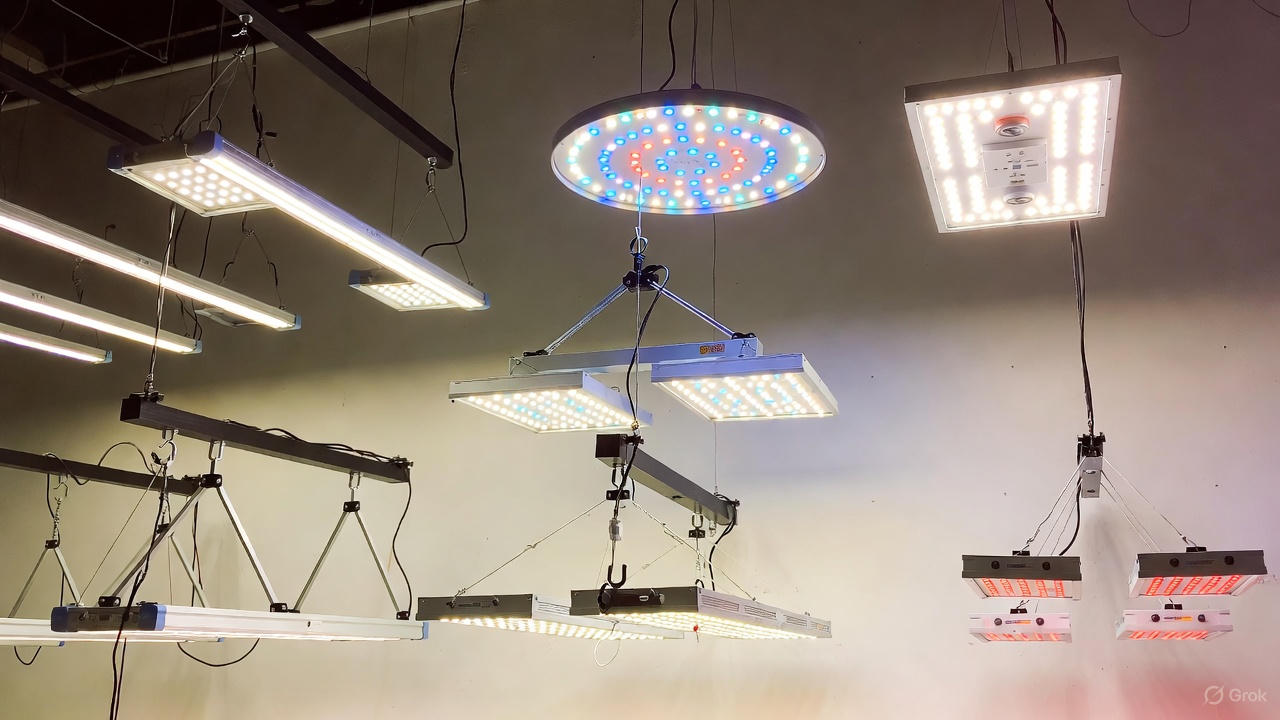
Growing plants indoors has never been easier thanks to modern LED grow lights. These innovative lighting solutions bring the power of natural sunlight directly into your home, helping your plants thrive regardless of the season or weather conditions outside. Full spectrum LED grow lights mimic natural sunlight across all wavelengths, supporting plants through every growth stage from seedling to flowering.
In this article
If you’re searching for the perfect grow light setup, you’ve landed in the right place. This comprehensive guide examines five top-rated full spectrum LED grow lights, breaking down their features, benefits, and potential drawbacks. Whether you’re nurturing a small collection of herbs on your windowsill or maintaining a larger indoor garden, we’ll help you find the ideal lighting solution.
Why Full Spectrum LED Grow Lights Matter
Before diving into specific products, let’s understand why full spectrum lighting makes such a difference. Natural sunlight contains wavelengths ranging from 380nm to 780nm, each playing a vital role in plant development. Blue light (400-500nm) encourages strong root and stem growth while promoting chlorophyll production. Red light (600-750nm) stimulates flowering and fruit development. Full spectrum LED grow lights replicate this complete range of wavelengths, ensuring your plants receive balanced nutrition throughout their lifecycle.
Traditional grow lights often emit only red and blue wavelengths, creating that distinctive purple glow. While these work, they can strain your eyes and make it difficult to spot plant health issues. Full spectrum lights produce white light similar to daylight, making them comfortable for home use while still delivering optimal plant growth.
Top 5 Full Spectrum LED Grow Lights Reviewed
1. LBW Latest 428 LED Dual-Head Standing Plant Light
Rating: 4.5/5 Stars
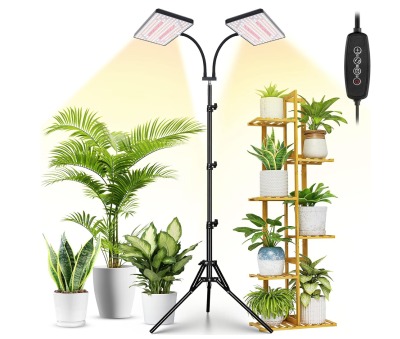
The LBW standing grow light represents a significant upgrade in home plant lighting. With 428 high-efficiency LED chips split across two adjustable heads, this unit delivers impressive coverage and intensity for indoor gardens.
Product Description
This floor-standing grow light features dual lamp heads, each containing 214 LEDs. The LED composition includes 124 cold white, 58 warm white, 24 red, and 8 natural light LEDs. This careful mix produces full spectrum illumination from UV to infrared wavelengths. The light sits atop a sturdy adjustable tripod that extends from 15 inches up to 75 inches, accommodating plants of virtually any height.
The unit incorporates patented mold technology in its lamp head design. The back plate features a textured pattern resistant to scratching, with strategically placed ventilation holes that prevent overheating during extended operation. The lightweight plastic shell combined with aluminum light panels creates a stable structure that won’t tip or wobble.
Key Features
The timer function operates on a 24-hour cycle with three options: 3, 6, or 12 hours. Once programmed, the light automatically turns on and off at the same time each day. This automation proves invaluable when you’re traveling or simply want to maintain consistent lighting without daily intervention.
Six brightness levels ranging from 10% to 100% let you customize light intensity based on your plants’ needs. Three switch modes enable independent control of each lamp head, allowing you to light different areas separately or together.
The PPFD data on this light ranks exceptionally high compared to similar products. High PPFD (Photosynthetic Photon Flux Density) translates to more usable light reaching your plants, which accelerates photosynthesis and promotes robust growth.
Pros
- Exceptionally bright with 428 total LEDs providing superior coverage
- Adjustable tripod extends to 75 inches for tall plants
- Each head operates independently for flexible positioning
- Advanced heat dissipation prevents overheating
- Scientific LED mix mimics natural sunlight closely
- Stable base prevents tipping
- Timer eliminates daily manual operation
Cons
- Higher price point compared to basic models
- Requires assembly (though straightforward)
- Takes up floor space
- No remote control included
Best For: Serious indoor gardeners with multiple plants or taller specimens like fiddle leaf figs, citrus trees, or large houseplants requiring professional-grade lighting.
2. GooingTop LED 6000K Clip Plant Growing Lamp
Rating: 4.3/5 Stars
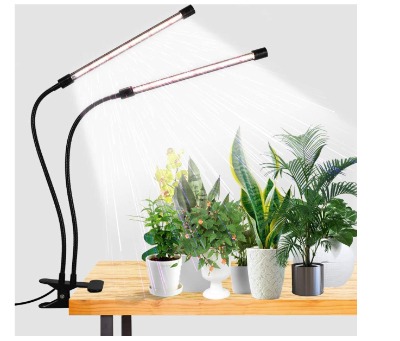
The GooingTop clip-on grow light offers a compact, flexible solution for smaller plant collections. Its dual gooseneck design and strong clamp make it perfect for tight spaces where traditional standing lights won’t fit.
Product Description
This clip-on light features two adjustable gooseneck arms, each equipped with 42 LEDs. The LED combination includes 10 red and 74 white LEDs, producing 6000K white light that closely resembles midday sunlight. The high color rendering index of 95 means the light appears soft and flicker-free, making it suitable even as a reading lamp.
The strong spring clamp grips firmly onto surfaces up to 2 inches thick, from pot edges to shelves to desk edges. Both gooseneck arms rotate 360 degrees, allowing precise positioning to illuminate plants from multiple angles.
Key Features
Five dimmable brightness levels give you control over light intensity. The timer function offers 4, 8, or 12-hour cycles. Once set, the light operates automatically on a 24-hour schedule from the initial activation time.
Power options include USB or AC plug, adding versatility for different setups. The inline controller houses all buttons for easy access without reaching the light fixture itself.
With only 10 watts of power consumption, this light rivals a 50-watt halogen bulb in brightness while keeping your electricity bill minimal. Operating costs run approximately $2 monthly when used 12 hours daily.
Pros
- Compact design saves space
- Strong clamp holds securely
- Flexible goosenecks adjust to any angle
- Very energy efficient at only 10W
- Affordable price point
- Dual power options (USB/AC)
- Eye-friendly white light
- Excellent for reading while plants grow
Cons
- Limited coverage area compared to standing lights
- Manual timer reset required after power loss
- Not suitable for large plant collections
- Some users find button interface confusing initially
Best For: Desktop gardens, small houseplant collections, or anyone needing supplemental light in tight spaces like bookshelves or windowsills.
3. 5 Heads Red Blue White Full Spectrum Plant Light with Tripod Stand
Rating: 4.4/5 Stars
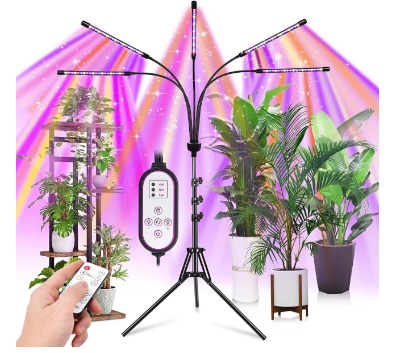
This five-head grow light takes coverage to the next level. With more lamp heads than typical dual or tri-head models, it illuminates wider areas, making it ideal for windowsill gardens or greenhouse shelves.
Product Description
Five individual lamp heads, each equipped with flexible goosenecks, provide maximum positioning flexibility. The light tubes contain a balanced mix of red, blue, and white LEDs covering wavelengths from 380nm to 780nm. This comprehensive spectrum supports photosynthesis effectively across all growth stages.
The tripod stand adjusts from 15 to 60 inches in height. After extensive testing, the manufacturer selected reinforced stand materials that resist tipping even when all five heads face the same direction. The sturdy construction addresses a common complaint with multi-head lights.
Key Features
An RF remote control operates up to 30 meters away, protecting your eyes from direct light exposure during adjustments. The inline controller provides backup manual operation.
Three spectral modes let you switch between pure red and blue (ideal for seedlings), pure white (for general growth), or mixed full spectrum (best for flowering). Ten brightness levels from 10% to 100% offer precise control over light intensity.
The timer function includes 4, 8, and 12-hour settings with automatic on/off cycles. Once programmed, the light maintains its schedule daily without intervention. Each LED head can be controlled independently, allowing customized lighting for different plant types.
Pros
- Five heads cover much wider areas than dual-head models
- Reinforced tripod prevents tipping
- Remote control for convenient operation
- Independent head control
- Three distinct spectral modes
- Ten brightness levels for fine-tuning
- Flexible goosenecks adjust 360 degrees
- Uniform light distribution
Cons
- More expensive than simpler models
- Requires more setup time
- Heavier unit may be harder to move
- Remote requires line of sight or proximity
Best For: Gardeners with expansive plant collections, greenhouse enthusiasts, or anyone maintaining plants across wide windowsills or shelving units.
4. 10 Heads 500 LEDs Full Spectrum Grow Light with Tripod Stand
Rating: 4.6/5 Stars
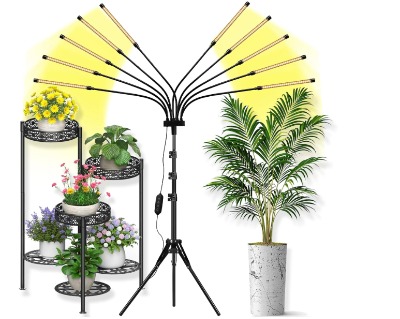
When maximum coverage matters most, this 10-head powerhouse delivers. With 500 total LEDs spread across ten adjustable arms, it represents the most comprehensive lighting solution in this roundup.
Product Description
Ten individual light arms, each containing 50 efficient LEDs, combine to create an impressive 500-LED array. The manufacturer designed this model specifically to address common multi-head light problems: insufficient light strips, small coverage areas, and stability issues.
Each arm measures 8.3 inches long and features a flexible gooseneck for independent positioning. The LED array produces white light that appears natural to human eyes while delivering optimal wavelengths for plant photosynthesis. Blue wavelengths (400-500nm) support chlorophyll absorption and root development. Red wavelengths (600-750nm) promote flowering and fruiting.
The tripod underwent professional reinforcement engineering. Even with all ten arms positioned in the same direction, the base remains stable and won’t topple. High-quality flame-retardant materials used throughout construction ensure durability and safety.
Key Features
The timer operates continuously in automatic mode with 4, 8, or 12-hour cycles. Once powered on and programmed, the light handles daily activation and deactivation without manual intervention.
Each of the ten heads can be adjusted individually for both direction and brightness. This granular control lets you create custom lighting zones within your growing area, accommodating plants with different light requirements.
The full spectrum LEDs emit wavelengths proven most useful for plant growth. This replicates natural sunlight effectively, eliminating the need for specialized “veg” and “bloom” settings found on some competitors.
Pros
- Maximum coverage with 500 total LEDs
- Ten independently adjustable heads
- Professionally reinforced tripod prevents instability
- Natural-appearing white light
- Automatic timer function
- Individual brightness control per head
- Superior light distribution
- High-quality flame-retardant construction
- Excellent for large collections
Cons
- Highest price point in this comparison
- Complex setup process
- Requires significant space
- May provide more light than small collections need
Best For: Serious indoor gardeners, commercial growers, or hobbyists maintaining extensive plant collections who need maximum flexibility and coverage.
5. SANSI 36W Full Spectrum Grow Light Bulb
Rating: 4.7/5 Stars
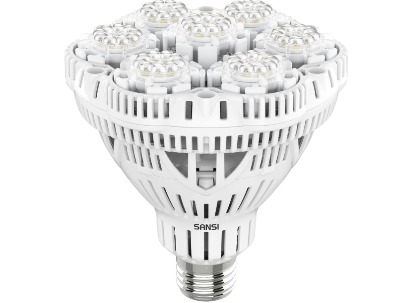
The SANSI bulb takes a different approach entirely. Instead of a dedicated fixture, it screws into any standard E26 lamp socket, transforming existing lamps into effective grow lights.
Product Description
This innovative bulb packs 36 watts of full spectrum illumination into a standard bulb format. SANSI’s patented Chip on Ceramic (COC) technology directly solders LED chips onto a ceramic heat sink rather than traditional aluminum substrates. This breakthrough dramatically improves heat dissipation and extends bulb lifespan to an impressive 25,000 hours.
The bulb covers the complete visible spectrum from 400nm to 780nm with a color rendering index approaching 100. This means the light appears virtually identical to natural sunlight, making it completely unobtrusive in living spaces while providing plants with ideal growing conditions.
A secondary optical lens distributes light scientifically. This lens design improves light utilization by focusing photons where plants need them most, resulting in higher PPFD values compared to unlensed competitors.
Key Features
The optical lens achieves a PPF (Photosynthetic Photon Flux) of 65.6 umol/s and PPFD of 265.58 μmol/s/㎡ at 1 foot distance. These metrics rank 3-5 times higher than comparable wattage bulbs without secondary optics.
At just 36 watts of power consumption, this bulb equals the light output of a 400-watt incandescent. Monthly operating costs hover around $1.56 assuming 12 hours daily use at $0.12/kWh electricity rates.
The ceramic construction achieves a V0 flame retardant rating, the highest safety classification. Low infrared emission means minimal heat radiation, preventing leaf burn even during close exposure. The hollow design promotes air circulation, further enhancing cooling efficiency.
Pros
- Screws into standard lamp sockets
- Extremely high PPFD for a single bulb
- Patented ceramic technology improves reliability
- 25,000-hour lifespan outlasts competitors
- Very energy efficient at only 36W
- Natural white light appearance
- Secondary optical lens maximizes light utilization
- ETL listed with 5-year warranty
- No assembly required
- Most affordable option
Cons
- Requires existing lamp fixture
- Limited coverage compared to multi-head lights
- No built-in timer (depends on fixture or outlet timer)
- Single fixed position
- May need multiple bulbs for larger collections
Best For: Budget-conscious gardeners, renters who can’t install permanent fixtures, or anyone wanting to convert existing lamps into effective grow lights.
Buying Guide: How to Choose the Right Full Spectrum LED Grow Light
Consider Your Space
Measure your growing area carefully before purchasing. Clip-on lights work wonderfully for single plants or small clusters. Standing lights with tripods handle larger collections or tall plants. Multiple small plants spread across wide areas benefit most from multi-head designs with adjustable arms.
Room height matters too. Ensure your ceiling can accommodate adjustable stands at full extension, especially if growing tall plants like fruit trees or large houseplants.
Match Light Intensity to Plant Needs
Different plants require different light intensities. Low-light plants like pothos, snake plants, and peace lilies thrive with 100-200 μmol/s/㎡. Medium-light plants such as most common houseplants need 200-400 μmol/s/㎡. High-light plants including succulents, fruiting plants, and sun-loving tropicals demand 400+ μmol/s/㎡.
Check the PPFD values provided by manufacturers. Higher numbers indicate more intense light, though distance from the light source dramatically affects actual PPFD at plant level.
Evaluate True Spectrum Coverage
Full spectrum means different things to different manufacturers. Look for lights covering 380nm to 780nm wavelengths. Some manufacturers specify their LED mix (like 124 cold white + 58 warm white + 24 red), helping you understand the actual spectrum provided.
Avoid lights claiming “full spectrum” while only offering red and blue LEDs. These can grow plants but lack the complete wavelength range plants use most efficiently.
Factor in Power Consumption
LED efficiency varies widely between models. Check actual wattage draw, not “equivalent” ratings. A light claiming “400W equivalent” might only draw 36 actual watts. Lower power consumption means reduced electricity costs over time.
Calculate approximate monthly costs by multiplying: (Watts × Hours per day × 30 days × Your electricity rate) ÷ 1000. For example: (36W × 12 hours × 30 days × $0.12/kWh) ÷ 1000 = $1.56 monthly.
Timer and Automation Features
Automatic timers eliminate the hassle of daily manual switching. Most plants need consistent light schedules for optimal growth. Lights with built-in timers maintain perfect consistency even when you’re away or busy.
Look for cycle memory functions that maintain settings during power outages. Some require complete reprogramming after power loss, while others remember previous settings.
Build Quality and Durability
Heat management directly impacts lifespan. LED lights with aluminum heat sinks, ventilation holes, or ceramic construction run cooler and last longer. Avoid lights that get extremely hot during operation, as excessive heat shortens LED life and can damage nearby plants.
Check warranties and return policies. Quality manufacturers confident in their products offer multi-year warranties. SANSI provides five years, indicating exceptional confidence in their ceramic technology.
Installation and Flexibility
Consider how you’ll mount or position the light. Clip-on models need sturdy edges to grip. Standing lights require floor space but offer maximum portability. Bulb-style options need compatible fixtures but integrate seamlessly into existing decor.
Adjustable features matter tremendously. Gooseneck arms, rotating lamp heads, and extendable tripods let you customize light positioning as plants grow and your collection changes.
Common Questions About Full Spectrum LED Grow Lights
How many hours should I run my grow lights?
Most plants need 12-16 hours of light daily. Seedlings and vegetative growth respond well to 14-16 hours. Flowering plants often prefer 12 hours to trigger blooming. Use timers to maintain consistency, as irregular schedules stress plants.
Can I use grow lights as regular room lighting?
Full spectrum grow lights producing white light (like the SANSI bulb or GooingTop clip light) double as functional room lighting. Their high color rendering makes them comfortable for reading and general tasks. Purple or reddish lights, however, aren’t suitable for typical room lighting.
How close should grow lights be to plants?
Distance depends on light intensity and plant type. General guidelines: 12-24 inches for high-intensity lights on mature plants, 18-36 inches for seedlings or low-light plants. Watch for signs: pale or yellowing top leaves indicate too much light (move light higher), while leggy stretching indicates insufficient light (move closer).
Will grow lights increase my electricity bill significantly?
Modern LEDs are remarkably efficient. A 36W bulb running 12 hours daily costs roughly $1.56 monthly. Even larger units with 100+ watts typically add only $5-10 monthly. Traditional HID or fluorescent grow lights cost substantially more to operate.
Do I still need to rotate plants under grow lights?
Rotation depends on your setup. Single-source lights (like bulbs in fixed lamps) require regular plant rotation for even growth on all sides. Multi-head adjustable lights positioned around plants reduce or eliminate rotation needs. Watch your plants – if growth becomes lopsided, rotate them.
Final Recommendations
After thorough evaluation, here’s how we’d match these lights to specific situations:
Best Overall Value: The LBW 428 LED Dual-Head light offers the ideal balance of features, coverage, and price. Its professional-grade performance suits most indoor gardens perfectly.
Best Budget Choice: The SANSI 36W bulb delivers exceptional results at the lowest price point. Simply screw it into an existing lamp and watch your plants thrive.
Best for Small Spaces: The GooingTop clip-on light excels in tight quarters. Its compact design and flexible goosenecks work wonders on desks, shelves, or windowsills.
Best for Serious Gardeners: The 10-head 500 LED system provides unmatched coverage and control. Serious collectors will appreciate its professional capabilities.
Best for Wide Coverage: The 5-head system strikes an excellent balance between coverage and manageability, perfect for windowsill gardens or greenhouse shelves.
Wrapping Up
Full spectrum LED grow lights have revolutionized indoor gardening. These five options represent the best currently available, each excelling in different scenarios. The LBW dual-head system delivers professional results for most users. The SANSI bulb offers unbeatable simplicity and value. The GooingTop clip-on saves space brilliantly. The multi-head systems provide maximum coverage for expansive collections.
Success with indoor plants depends on matching the right light to your specific situation. Consider your space, plant types, and budget carefully. All five lights reviewed here will help your plants flourish when used appropriately.
The most important factor? Consistency. Whatever light you choose, maintain regular schedules and monitor your plants’ responses. Watch for signs of too much or too little light, and adjust accordingly. With proper lighting, your indoor garden can thrive through every season, bringing nature’s beauty into your home regardless of weather conditions outside.
Start with one quality grow light and expand your setup as your plant collection grows. Your green friends will thank you with vigorous growth, lush foliage, and abundant blooms.

Hi, I’m Mary, the founder of GardenCure.com. I’m passionate about creating healthy, beautiful gardens and well-kept lawns. I share practical experience and trusted advice on garden and lawn gear that truly works. With the support of my dedicated research team, our writers produce honest, in-depth reviews using reliable, authentic sources—helping you choose the right tools with confidence for your outdoor space.