How Often to Water Indoor Tropical Plants?
If you own even a few houseplants, you probably know the feeling. You stand there with a watering can in your hand, staring at the soil, and you just don’t know if it’s time to water or not. You don’t want to drown your plant, but you also don’t want it to shrivel up and die from thirst. It’s a real problem, and honestly, it’s the number one reason indoor tropical plants struggle or die.
In this article
The good news is that watering isn’t as tricky as it seems once you understand a few simple ideas. In this guide, we’ll walk through everything you need to know about watering your indoor tropical plants the right way, so you can stop guessing and start growing healthy, happy greenery.
Why Watering Trips Up So Many Plant Owners
Tropical plants come from places like rainforests, jungles, and warm, humid regions. In their natural home, they get rain often, but the soil around them still drains fast because of loose, rich ground and warm air that dries things out quickly. So these plants are used to soil that gets wet, then dries a bit, then gets wet again.
The trouble starts when we bring these plants indoors and try to care for them like they’re all the same. Every plant is different. A snake plant needs way less water than a peace lily. A fern wants to stay moist almost all the time, but a pothos is happy to dry out between drinks. That’s why there’s no single answer to the question “how often should I water?” It depends on a bunch of things we’ll cover below.
There’s No Fixed Schedule That Works for Everyone
Here’s the biggest myth people believe about watering plants: that you should water on a strict schedule, like every Sunday or every seven days. This sounds simple, but it actually causes more harm than good.
Your plant doesn’t care what day it is. It cares about how much water is left in its soil, how much light it’s getting, how warm the room is, and how fast it’s using up moisture through its leaves. All of these things change with the seasons, the weather outside, and even where you place the pot in your home.
Instead of following a strict calendar, the smartest thing you can do is check your plant regularly and water based on what it actually needs at that moment. This one shift in thinking will save more plants than any watering chart ever could.
The Finger Test: Your Best Tool
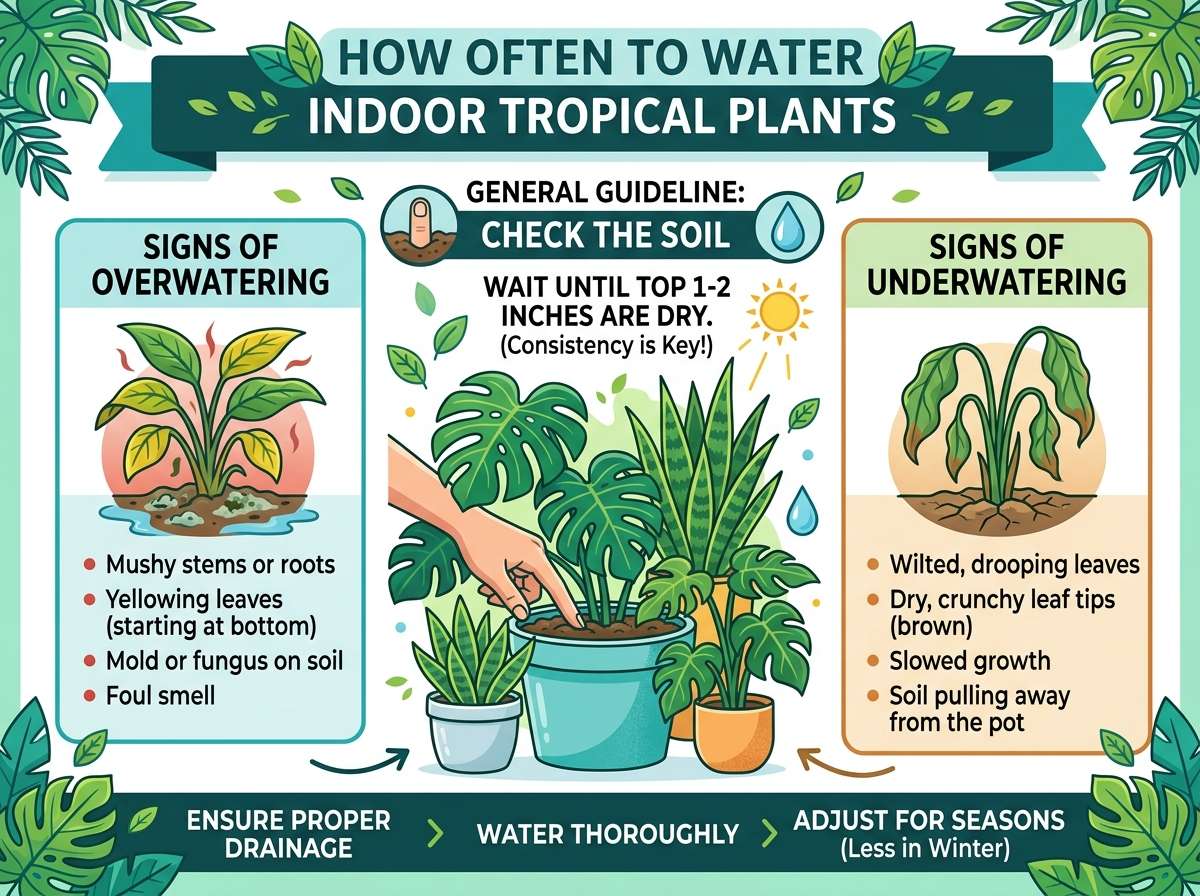
Before you buy any fancy gadgets, try this simple trick. Stick your finger into the soil, about one to two inches deep. If the soil feels dry at that depth, it’s probably time to water. If it still feels damp or cool, wait a little longer and check again in a day or two.
This method works because it tells you what’s actually happening below the surface, not just on top. The top layer of soil can look bone dry while the roots underneath are still sitting in plenty of moisture. Checking deeper gives you a much more accurate picture.
For plants in bigger pots, you might need something longer than your finger, like a wooden skewer or a chopstick. Push it into the soil, pull it out, and look at how much soil sticks to it. Damp soil will cling to the stick, while dry soil won’t leave much behind.
Signs Your Plant Needs Water
Aside from checking the soil, your plant will often tell you when it’s thirsty. Here are some common signs to watch for:
- Leaves start to droop or look limp, even though they’re still green
- Soil pulls away from the edges of the pot
- The pot feels much lighter than usual when you pick it up
- Leaf tips or edges turn brown and crispy
- Growth slows down or new leaves come out smaller than normal
If you catch these signs early, your plant will bounce back quickly after a good drink. Tropical plants are pretty forgiving as long as you don’t let them stay dry for too long.
Signs You’re Watering Too Much
Overwatering is actually more common than underwatering, and it’s often more dangerous because it can lead to root rot, which is much harder to fix than dry soil. Watch out for these warning signs:
- Yellow leaves, especially lower ones, that feel soft or mushy
- Soil that stays wet for many days in a row
- A musty or sour smell coming from the pot
- Mold or fungus gnats hanging around the surface of the soil
- Leaves that turn brown but feel soft instead of crispy
If you notice these problems, stop watering right away and let the soil dry out fully before giving it more moisture. In bad cases, you may need to take the plant out of its pot, trim off any mushy black roots, and repot it in fresh, dry soil.
What Affects How Often You Should Water
Since there’s no one-size-fits-all schedule, let’s break down the main factors that change how thirsty your plant will be.
Light Levels
Plants sitting in bright, indirect light use water faster because they’re actively growing and photosynthesizing more. A plant tucked in a dim corner will barely use any water at all, since it’s not doing much growing. So a fiddle leaf fig near a sunny window will need water far more often than the same plant sitting in a shady hallway.
Pot Size and Material
Small pots dry out fast because there’s less soil to hold moisture. Big pots hold water longer, so they need less frequent watering. The pot material matters too. Terracotta pots are porous and let moisture escape through the sides, so plants in these pots dry out quicker than plants in plastic or ceramic pots, which trap moisture inside.
Soil Type
Chunky, well-draining soil mixed with things like bark, perlite, or coco coir dries out faster and lets air reach the roots. Dense, heavy soil holds water for much longer and can stay soggy if you’re not careful. Most tropical plants like a soil mix that drains well but still holds a bit of moisture, kind of like a wrung-out sponge.
Humidity and Room Temperature
Warm rooms with dry air cause soil to dry out faster, since water evaporates more quickly. Cooler rooms with higher humidity keep soil moist for longer stretches. This is why plants often need more frequent watering during hot, dry stretches and less during cool, humid ones.
Plant Type
Some tropical plants naturally like more water than others. Plants with big, thin leaves such as calatheas, ferns, and peace lilies lose moisture fast through their leaves and like consistently moist soil. Plants with thick, waxy leaves like ZZ plants, snake plants, and pothos store water inside their leaves and stems, so they can go longer between waterings without any trouble.
Growth Stage
During active growing periods, when your plant is pushing out new leaves and stretching taller, it uses more water and needs more frequent drinks. During slower, resting periods, growth slows way down and the plant needs much less water, so cutting back is the right move.
General Watering Guidelines by Plant Type
While every home is different, here’s a rough starting point you can use as a guide. Always check the soil first rather than relying only on these numbers.
Thirsty tropical plants (like peace lilies, calatheas, ferns, and prayer plants) usually like their soil to stay lightly moist most of the time. Check them every few days and water as soon as the top inch feels dry.
Medium water lovers (like philodendrons, monsteras, and pothos) prefer to dry out a bit between waterings. Let the top one to two inches of soil go dry before watering again.
Low water needs (like snake plants, ZZ plants, and succulent-like tropicals) can handle long dry spells. Let most of the pot dry out completely before you water, which might mean waiting several weeks between drinks.
How to Water the Right Way
Knowing when to water is only half the story. How you water matters just as much.
Water Thoroughly, Not Just a Little Splash
A common mistake is giving plants a tiny sip of water on the surface, which only wets the top layer and leaves the roots below dry. Instead, pour water slowly until it runs out of the drainage holes at the bottom of the pot. This makes sure water reaches all the roots, not just the ones near the top.
Let Excess Water Drain Away
After watering, let any extra water drain out completely and don’t let your plant sit in a full saucer of standing water. Sitting in water for too long is one of the fastest ways to cause root rot, since roots need air as well as water to stay healthy.
Use Room Temperature Water
Cold water straight from the tap can shock tropical roots since these plants are used to warm climates. Let your water sit out for a bit before using it, or use lukewarm water instead.
Water in the Morning
Watering earlier in the day gives your plant time to absorb moisture and dry out a little before nighttime, when cooler temperatures and less air movement can lead to problems like fungus or root rot if the soil stays too wet for too long.
Tools That Can Help Beginners
If you find it hard to judge soil moisture just by touch, a few simple tools can take the guesswork out completely.
A moisture meter is a cheap gadget you stick into the soil, and it gives you a reading on a scale that tells you if the soil is dry, moist, or wet. These are super helpful for beginners who aren’t confident with the finger test yet.
Self-watering pots are another option worth trying, especially for busy plant owners or vacation periods. These pots have a water reservoir at the bottom, and the plant pulls up moisture as it needs it, which takes a lot of the guesswork out of the process.
Common Watering Mistakes to Avoid
Let’s go over a few habits that trip up a lot of new plant parents.
Watering on a fixed schedule without checking the soil first is a mistake, since your plant’s needs change with the seasons and its environment. Using a pot with no drainage holes is another common issue, because water has nowhere to go and just sits at the bottom, causing root rot over time. Some people water the leaves instead of the soil, which does nothing for the roots and can actually invite fungal issues on tropical plants with sensitive leaves. Ignoring signs of stress and continuing your usual routine even when a plant is clearly struggling is another trap to avoid, since your plant is trying to tell you something. And ending up with the same amount of water for every single plant, regardless of size, type, or environment, treats plants as interchangeable when each one has its own personality and needs.
Adjusting Your Routine Over Time
Your watering routine isn’t something you set once and forget. As seasons shift, sunlight changes, indoor heating or cooling kicks in, and your plants grow bigger, their water needs will shift too. A plant that needed water every five days during a warm, bright stretch might only need it every ten days once the light dims and the air cools down.
The best approach is to stay observant. Check your plants regularly, get to know how their soil feels when it’s dry versus moist, and pay attention to how their leaves look and feel. Over time, this becomes second nature, and you’ll find yourself watering almost on instinct, without needing to think too hard about it.
Final Thoughts
Watering indoor tropical plants doesn’t have to be stressful once you stop chasing a strict schedule and start paying attention to what your plant is actually telling you. Use the finger test, watch for signs of thirst or overwatering, and remember that light, pot size, soil type, humidity, and plant type all play a role in how often your green friends need a drink.
Give it time, and you’ll start to notice patterns. You’ll know just by glancing at a leaf or feeling the soil if it’s time to water or if your plant is happy waiting a bit longer. That’s the real secret behind healthy, thriving tropical houseplants: less guessing, more noticing, and a little bit of patience along the way.
Hi, I’m Mary, the founder of GardenCure.com. I’m passionate about creating healthy, beautiful gardens and well-kept lawns. I share practical experience and trusted advice on garden and lawn gear that truly works. With the support of my dedicated research team, our writers produce honest, in-depth reviews using reliable, authentic sources—helping you choose the right tools with confidence for your outdoor space.