How to Use a Plant Mister?
If you own houseplants, you have probably heard that misting can help them grow happy and healthy. But many people just spray water in the air near their plants and hope for the best. That is not how it works. A plant mister is a small tool, but it can make a big difference when you use it the right way.
In this article
This guide walks you through everything you need to know about using a plant mister. We will cover why misting matters, which plants love it, how often to do it, and the small mistakes that can hurt your plants instead of helping them. By the end, you will feel confident every time you pick up that spray bottle.
What Is a Plant Mister and Why Does It Matter
A plant mister is basically a small spray bottle filled with water. You squeeze the handle, and it releases a fine mist onto your plant’s leaves. Simple, right? But this tiny action does something important: it raises the humidity around your plant for a short time.
Many popular houseplants, like ferns, calatheas, and orchids, come from tropical rainforests. In their natural home, the air is thick and moist all day long. Inside our homes, especially with heaters or air conditioners running, the air can get dry fast. Misting gives these plants a small taste of the humid air they are used to.
It also helps in other small ways. Misting can:
- Clean dust off the leaves so they can breathe and soak up light better
- Keep leaf edges from turning brown and crispy
- Help new leaves unfurl smoothly
- Give you a chance to check your plant closely for early signs of pests
None of these benefits happen if you just spray water without thinking about it. So let’s break down the steps.
Step 1: Pick the Right Mister
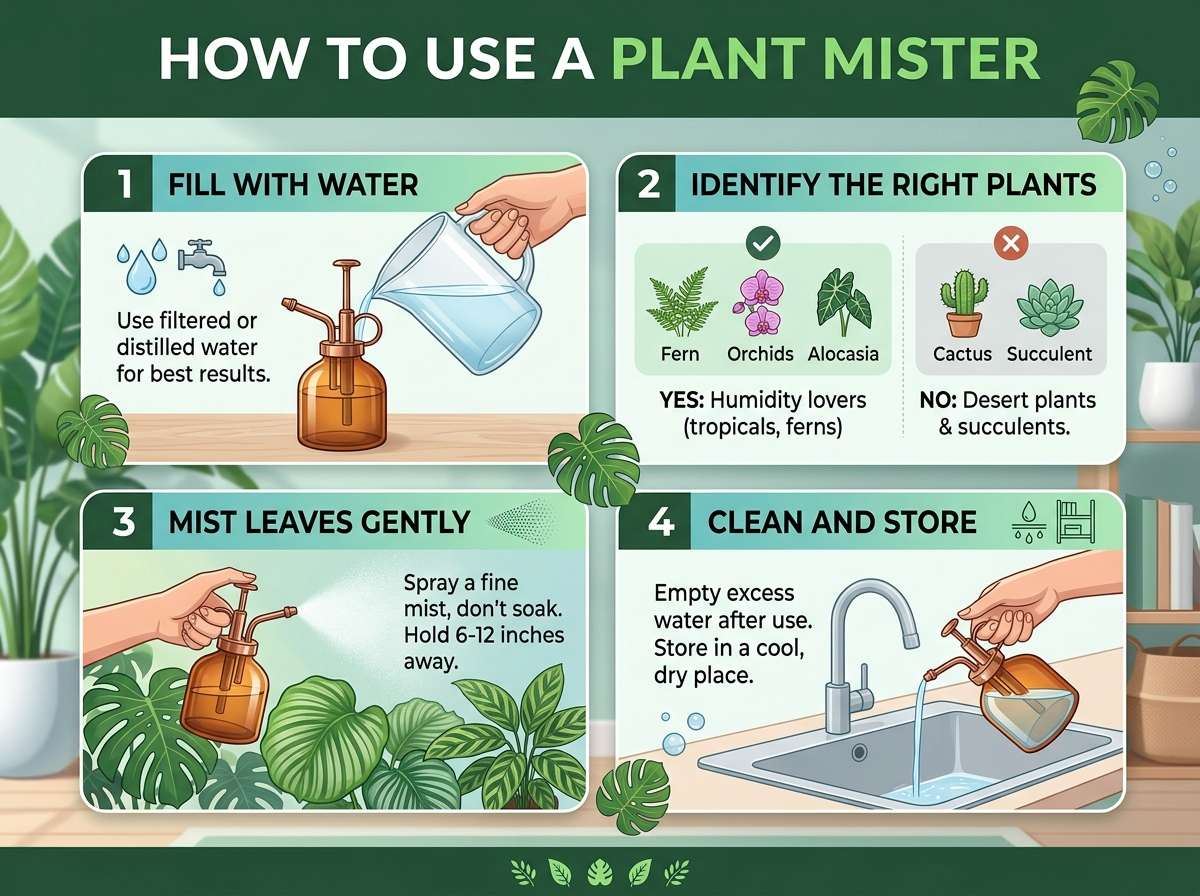
Before you even fill the bottle, look at the mister itself. A good plant mister should produce a fine, soft mist, not a heavy stream of water. Thick droplets can sit on leaves for too long and cause problems like fungal spots.
Look for a mister with an adjustable nozzle. This way, you can switch between a light mist for delicate leaves and a slightly stronger spray for tougher, waxy plants. Glass or sturdy plastic bottles tend to last longer than the flimsy ones that come free with some products.
If your mister starts spraying in an uneven pattern or spitting out big drops, it might be clogged. A quick rinse under warm water usually fixes this.
Step 2: Use the Right Water
This step gets skipped a lot, but it matters more than people think. Tap water often has chlorine, fluoride, and mineral salts. Over time, these can build up on leaves as white or dusty spots. Some plants, like calatheas and prayer plants, are extra sensitive to this.
Here are your best options for mister-friendly water:
- Filtered water: Removes most of the chlorine and minerals
- Distilled water: The safest choice for sensitive plants
- Rainwater: Free and naturally soft, if you can collect it
- Tap water left out overnight: Lets some chlorine evaporate, though it will not remove everything
Room temperature water is best. Cold water can shock the leaves, and this small stress adds up over time.
Step 3: Know When to Mist
Timing plays a bigger role than most beginners realize. The goal is to mist at a time when the water can dry off the leaves fairly quickly, so it does not sit there and invite mold or fungus.
Morning is the best time to mist your plants. The sun rises, temperatures climb a little, and there is enough airflow during the day to dry the leaves before night falls. If you mist late at night, the water can sit on the leaves for hours in the cool, still air, and that creates the perfect setup for fungal problems.
Avoid misting right before you place a plant in strong, direct sunlight too. Water droplets can act like tiny magnifying glasses and sometimes cause leaf burn, especially with plants that have thin, delicate foliage.
Step 4: Mist the Right Way
Now for the actual technique. Hold the mister about six to eight inches away from the plant. This distance lets the mist spread out evenly instead of soaking one small area with a strong burst.
Move the mister slowly around the plant, aiming for the top and underside of the leaves. Pests often hide on the underside, so this also gives you a chance to spot any trouble early. Give each leaf a light coating, not a dripping soak. You want the surface to look slightly damp and shiny, not covered in pooling drops.
Skip the flowers and any soft, fuzzy leaves, like those on African violets. Water sitting on fuzzy leaves can cause spots and rot, so these plants prefer a different method, like sitting on a tray of pebbles and water instead of direct misting.
Step 5: Match Misting to Plant Type
Not every plant benefits from misting in the same way. Some love it, some tolerate it, and a few really do not want it at all.
Plants that enjoy regular misting:
- Ferns (Boston fern, maidenhair fern)
- Calatheas and prayer plants
- Orchids
- Peace lilies
- Tropical philodendrons
- Air plants (tillandsia)
Plants that do fine without much misting:
- Succulents
- Cacti
- Snake plants
- ZZ plants
Succulents and cacti store water in their thick leaves and stems, so they come from dry climates where high humidity is rare. Misting these plants regularly can actually cause more harm than good, since trapped moisture on their surface can lead to rot.
Air plants are a special case. They do not grow in soil at all, and they pull most of their moisture and nutrients right from the air through their leaves. For air plants, misting is not just a nice extra step, it is one of their main sources of hydration.
How Often Should You Mist
There is no single perfect number that works for every home and every plant, since factors like your local climate, indoor heating, and the season all play a part. But here is a simple starting guide:
- Tropical plants in a dry indoor space: two to three times a week
- Ferns and calatheas in most homes: three to four times a week
- Air plants: two to three times a week, with a deeper soak once every couple of weeks
- Succulents and cacti: skip regular misting entirely
Watch your plants closely during the first few weeks. If leaf tips start browning or curling, your air might be too dry, so you can mist a bit more often. If you notice black or moldy spots forming, cut back and improve airflow around the plant instead.
Common Mistakes to Avoid
Even people with good intentions make small errors that limit how much misting actually helps. Here are the ones to watch for.
Misting instead of watering the soil. Misting only affects the leaves and the air right around your plant. It does nothing for the roots. Your plant still needs regular watering at the soil level to survive and grow. Think of misting as a bonus, not a replacement.
Spraying too close. A mister held right up against the leaf can blast out a heavy stream instead of a soft mist. This can bruise delicate foliage over time.
Using cold tap water straight from the fridge. This can shock tropical plants that are used to warmer, humid air.
Misting in a closed, dark room. Without airflow or light, the water sits on the leaves far longer than it should, and that raises the risk of fungal issues.
Ignoring the plant’s natural habitat. A cactus from a desert region will never thank you for regular misting. Always think about where a plant comes from before adding this step to its care routine.
Forgetting to check for pests. Misting time is a great chance to look closely at leaves for tiny bugs, webs, or sticky residue. Catching a pest problem early makes it much easier to treat.
Other Ways to Boost Humidity Beyond Misting
Misting alone will not fix a room with very dry air, since the extra moisture only lasts a short time before it evaporates. If your tropical plants are struggling, pair misting with a few other tricks:
- Group plants together. Plants release moisture through their leaves in a process called transpiration. When grouped closely, they create a small, shared pocket of humid air around each other.
- Use a pebble tray. Fill a shallow tray with small stones and add water just below the top of the stones. Set your pot on top, and as the water evaporates, it raises humidity around the plant without soaking the roots.
- Add a small humidifier. This is the most reliable way to keep humidity steady, especially in rooms with heating or cooling systems that dry out the air.
- Move plants to naturally humid spaces. Bathrooms or kitchens with good natural light often have higher humidity from showers, sinks, or cooking steam.
These methods work well alongside misting, especially for plants like ferns and calatheas that crave constant moisture in the air rather than a quick spritz once in a while.
Signs Your Misting Routine Is Working
After a few weeks of a steady misting habit, watch for these positive signs:
- New leaves unfurl smoothly without getting stuck or torn
- Leaf tips stay green instead of turning brown and crispy
- Foliage looks glossy, clean, and full of color
- Plants show steady new growth during their active growing months
If you notice these changes, your routine is doing its job. If things look the same or worse, it might be time to adjust your water source, your timing, or how close you hold the mister.
Signs You Should Stop or Slow Down Misting
Just as there are good signs, there are warning signs too. Cut back if you notice:
- Black or brown soft spots spreading across leaves
- A musty or moldy smell near the plant
- White fuzzy patches on the leaf surface, which can point to fungal growth
- Gnats or other bugs appearing more often around the soil
These signs usually mean there is too much moisture sitting around without enough airflow or light to dry it out. Give the plant more space, more light, and less frequent misting until things clear up.
Quick Recap
Using a plant mister is a small task, but it comes with a few real rules behind it. Here is the short version:
- Use a mister with a fine, adjustable spray
- Fill it with filtered, distilled, or rested tap water at room temperature
- Mist in the morning so leaves dry during the day
- Hold the bottle a few inches away and spray a light coating
- Match your misting habit to the type of plant you own
- Watch for signs of trouble like mold or soft spots
- Pair misting with other humidity boosters for the best results
Final Thoughts
A plant mister can turn into one of the easiest and most calming parts of your daily plant care routine once you get the hang of it. It only takes a minute or two, but it gives tropical plants a small piece of the humid air they naturally crave. Just remember that misting works best as a helper, not a full replacement for good watering, light, and airflow.
Start slow, watch how your plants respond, and adjust as you go. Every home has different air, different light, and different plants, so your own perfect misting routine might look a little different from someone else’s. With patience and a bit of attention, you will find the rhythm that keeps your leafy friends looking their best all year round.
Hi, I’m Mary, the founder of GardenCure.com. I’m passionate about creating healthy, beautiful gardens and well-kept lawns. I share practical experience and trusted advice on garden and lawn gear that truly works. With the support of my dedicated research team, our writers produce honest, in-depth reviews using reliable, authentic sources—helping you choose the right tools with confidence for your outdoor space.