How Often to Water Succulents?
Succulents are amazing plants. They’re easy to care for. They look beautiful in any space. But there’s one thing that confuses many new plant parents: watering. How much water do they really need? How often should you water them? Let’s break it down together.
In this article
Why Succulents Are Different From Other Plants
Succulents are not like your regular houseplants. They store water in their leaves and stems. This means they don’t need as much water as ferns or flowering plants. Think of them as built-in water tanks. They can survive on very little. This is what makes them perfect for busy people or beginners.
When you water too much, bad things happen. The roots sit in wet soil. They start to rot. Your plant dies. It’s sad. But the good news is that underwatering is almost never the problem with succulents. They love staying dry.
The Basic Rule: Less Is More
Here’s the truth about succulent care. You should water them far less than you think. Most people kill their succulents by being too kind. They water too much. Too often. Too generously.
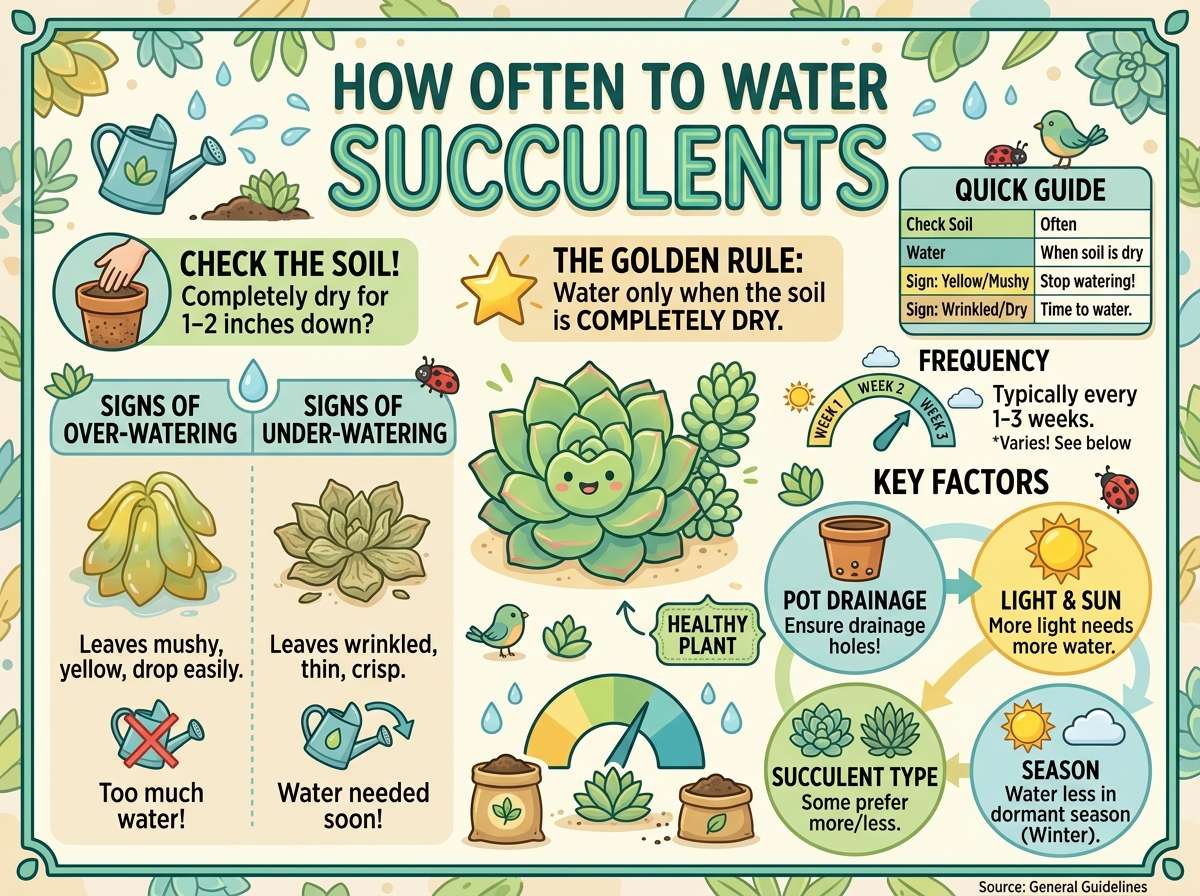
The golden rule is simple: let the soil dry out completely between waterings. I mean really dry. Not just a little damp. Completely bone dry.
For most succulents in normal indoor conditions, you should water them once every 2 to 3 weeks. Some can go longer. Some might need water every 10 days. It depends on many things. The time of year matters. Where you live matters. The type of succulent matters. The size of the pot matters. The soil type matters.
So there’s no single perfect answer for all succulents. But the two-to-three-week rule is a solid starting point.
Factors That Change How Often You Water
Season Changes Everything
Succulents grow at different speeds during different times of the year. Spring and summer are their growing season. The plants are actively growing. They’re using more water. During these warm months, you might water every 10 to 14 days.
Fall and winter are different. Most succulents slow down. They enter a dormant state. Growth stops almost completely. They barely need any water at all. Some people water their succulents just once a month during cold months. Others water even less often.
The temperature where you live makes a huge difference. If you live somewhere warm all year, your succulents need water more often. If you get cold winters, your plants sleep more. They need less water.
Your Local Climate Matters
Do you live in a dry, desert-like area? Your succulents will dry out faster. The air pulls moisture away from the soil. You might need to water more often.
Do you live somewhere humid? The air holds moisture. Your soil stays wet longer. Humidity is the enemy of succulents. In humid areas, you need to water less frequently. Maybe once a month or even less.
Rain is also a factor. If you get lots of rain, it affects the moisture levels in your home. Indoor humidity goes up. Your succulent soil takes longer to dry.
The Type of Pot Matters
The container you use changes everything. A clay pot breathes. Water escapes through the sides. Your soil dries faster. You might water every 7 to 10 days.
A plastic pot doesn’t breathe much. Water stays in the soil longer. You might only water every 3 to 4 weeks.
Ceramic pots fall in between. They dry slower than clay but faster than plastic.
The size of the pot also matters. A tiny pot holds less soil. It dries faster. A large pot holds more soil. It stays wet longer. If your succulent is small but in a huge pot, it might need water only once a month or less.
Always use a pot with drainage holes. This is not optional. Without drainage holes, water sits at the bottom. Roots rot. Game over. Drainage holes are essential.
The Soil Type Is Critical
Regular potting soil holds too much water. Never use it for succulents. It’s a recipe for disaster.
Succulent soil is special. It drains really well. It dries quickly. This is what you need. You can buy it at any garden store. It’s called cactus mix or succulent mix.
You can also make your own. Mix regular potting soil with sand or perlite. Use a ratio of 2 parts potting soil to 1 part sand or perlite. This creates a loose, well-draining mix.
The better your soil drains, the faster it dries. The faster it dries, the sooner you can water again. If your soil doesn’t drain well, wait longer between waterings.
The Size of Your Plant
A small succulent in a small pot dries faster. It needs water more often. Maybe every 7 to 10 days.
A large, mature succulent stores more water in its leaves. It can go longer. Maybe 3 to 4 weeks or more between waterings.
A newly planted succulent also matters. Just after planting, wait about a week before watering. This lets any damaged roots heal. It prevents rot.
How to Tell When Your Succulent Needs Water
The best way to know is to check the soil. Stick your finger into the top inch of soil. Is it dry? Water it. Is it still damp or wet? Wait longer.
You can also use the weight test. Pick up the pot. A dry pot feels light. A wet pot feels heavy. As you get used to your plants, you’ll develop a feel for this.
Look at the plant itself. Healthy succulents look plump and firm. The leaves are thick and full of water. If your plant starts to look wrinkled or shriveled, it needs water. But this should rarely happen if you’re following the basic rules.
Never water on a schedule. Just because it’s been two weeks doesn’t mean water now. Always check first. Every plant is different. Every location is different. Your routine should fit your specific situation.
The Watering Method Matters
When you do water, do it the right way.
Water thoroughly until it comes out of the drainage holes. This ensures the whole root system gets water. It also flushes out any salts that build up in the soil.
Pour the water directly onto the soil. Don’t spray the leaves. Don’t mist. Wet leaves are vulnerable to rot and fungal problems.
Use room-temperature water. Cold water can shock the plant. Hot water can damage roots.
Water in the morning if possible. This gives any excess water time to drain before evening. Plants are less likely to rot when they dry out during daylight hours.
Never let your succulent sit in standing water. After watering, make sure all excess water drains away. If you use a saucer under the pot, empty it after 10 minutes.
Watering Different Types of Succulents
Aloe Plants
Aloe succulents are tough. They like to dry out almost completely. Water once every 3 weeks during the growing season. During winter, water only once a month or less.
When you do water aloe, drench the soil. Then let it dry out for a long time. Aloe hates staying damp.
Jade Plants
Jade plants are succulent shrubs. They’re heavier and larger than many succulents. They need a bit more water than tiny succulents. Water every 10 to 14 days during the growing season. Reduce to once a month in winter.
Jade plants are forgiving. They can handle neglect. But they’ll suffer if you overwater.
Echeveria and Rosette Succulents
These rosette-shaped plants are beautiful. They’re popular. They need water every 2 to 3 weeks in spring and summer. In fall and winter, water just once a month.
These plants are sensitive to overwatering. If the bottom leaves get mushy, you’re watering too much.
String of Pearls
These trailing succulents are delicate. They look like little pearls on a string. They need water about every 2 weeks during the growing season. They can go 3 to 4 weeks in winter.
Because they have thin leaves, they dry out a bit faster than other succulents. But still not fast enough to need frequent watering.
Sedums
Sedums are extremely hardy. Some varieties are almost impossible to kill. They’re perfect for beginners. Most sedums can go 3 to 4 weeks without water. Some can wait even longer.
In winter, water very rarely. Once a month or less is fine.
Recognizing Overwatering Problems
Overwatering is the number one killer of succulents. Learn to spot the signs.
Mushy or Translucent Leaves
The leaves feel soft and mushy. They might look clear or translucent. This means rot is starting. The cells are filled with too much water. They’re breaking down.
If you catch this early, stop watering immediately. Let the soil dry out completely. The plant might recover.
Brown or Black Spots
Dark, wet-looking spots on the leaves or stem mean fungal rot. This often starts from overwatering. It can spread quickly.
Remove the affected leaves. Let the plant dry out. Make sure air circulation is good. Move it away from other plants so the fungus doesn’t spread.
Wilting Despite Wet Soil
This is confusing because wilting usually means too little water. But with succulents, wilting with wet soil means root rot. The roots are dead. They can’t absorb water. The plant is dying from the inside.
This is serious. You might not be able to save it. But you can try. Let it dry out completely. Repot it in fresh, dry soil. Hope for the best.
The Plant Just Looks Bad
Sometimes the whole plant just starts to decline. It looks unhealthy. It might turn pale or lose its color. This is often from overwatering over time.
The fix is simple: water less. Give it time. Many succulents can bounce back.
What to Do If You Overwatered
Don’t panic. Succulents are tough. There are steps you can take.
First, stop watering immediately. Even if the soil feels dry, wait at least a week before watering again.
Second, improve air circulation. Put a fan nearby. Move the plant away from other plants. Good air flow helps the soil dry faster.
Third, check the roots if possible. If the plant is in a small pot, you can carefully remove it. Look at the roots. Are they brown and mushy? That’s root rot. Are they white and firm? That’s good.
If there’s root rot, repot the plant in fresh, dry succulent soil. Remove any mushy roots with a clean knife. Let the plant dry out for several days before the first watering.
Fourth, be patient. Recovery takes time. Don’t expect a quick bounce-back. Give your plant a few weeks to recover.
Seasonal Watering Guide
Spring Watering
Spring is when succulents wake up. Days get longer. Temperatures rise. Your plant starts growing again.
As you move into spring, gradually increase watering. Don’t jump from once a month to twice a week. Do it slowly. Maybe go from once a month to once every 2 to 3 weeks. Then to once every 10 to 14 days.
Watch your plant. Let it guide you. If it looks plump and healthy, you’re doing it right.
Summer Watering
Summer is the peak growing season. Your succulent is probably using the most water now. You might water twice a week in very hot conditions. But for most people, once every 10 to 14 days is still fine.
The heat speeds up drying. Check your soil often. If it’s dry, water. If it’s still moist, wait.
Intense heat can be stressful for some succulents. They might benefit from some afternoon shade. Very harsh sun can scorch the leaves.
Fall Watering
As days get shorter and cooler, your succulent prepares for dormancy. Growth slows down. You should reduce watering.
Move from once every 10 to 14 days to once every 3 to 4 weeks. Watch your plant. If it starts to look shriveled, water. But this should be rare.
Winter Watering
Winter is the rest period. Most succulents barely grow at all. They need very little water.
For most succulents, once a month is plenty. Some need water even less often. Every 6 to 8 weeks is fine for very dormant plants.
Cold temperatures make growth almost stop. Water uptake is minimal. Soil dries very slowly. Overwatering is a huge risk in winter.
If your succulent is indoors in a warm house, it might need slightly more water. If it’s cool where you live, it needs less.
Special Situations
Newly Planted Succulents
Just after planting, wait about a week before the first watering. This lets any wounds on the roots heal. It prevents rot from damaged tissue.
After that first week, water normally. Follow the same rules as established plants.
Succulents Outdoors vs. Indoors
Outdoor succulents dry much faster. Sun, wind, and air circulation speed up evaporation. You might water twice a week in peak summer.
Indoor succulents are in a controlled environment. They dry slower. You might water every 2 to 3 weeks.
Succulents in Terrariums
Glass terrariums are beautiful. But they’re terrible for succulents. Glass traps moisture. It creates a humid environment. This is the opposite of what succulents want.
If your succulent is in a terrarium, water very sparingly. Maybe once a month. Make sure there’s drainage. Crack the glass open to let air in.
Better yet, move succulents out of terrariums. They’ll be much happier in a normal pot with drainage.
Growing Succulents From Leaves
Propagating succulents from leaves is fun. The process is different.
Let a fallen leaf dry for a few days. Place it on dry soil. Don’t water. Wait for roots to form. This takes several days or even weeks.
Once roots appear, mist the soil lightly. Keep it just barely moist, not wet. After the plant establishes, switch to normal watering.
Tools That Help
Moisture Meters
These devices measure soil moisture. Stick the probe in the soil. Get a reading instantly. This removes guesswork.
They’re cheap. They’re helpful for beginners. But they’re not necessary. Your finger works fine.
Self-Watering Pots
These pots have a reservoir of water. The plant pulls water as needed. They reduce overwatering risk.
They work okay for succulents. But traditional pots with drainage holes are still better.
Watering Cans with Narrow Spouts
A regular watering can works fine. But a can with a narrow spout lets you control the water flow. You can pour water directly on the soil without splashing.
Common Mistakes People Make
Watering on a Schedule
“I water my succulents every Sunday.” Bad idea. Every plant is different. Every location is different. Never water by calendar. Always check the soil first.
Using the Wrong Soil
Regular potting soil holds too much water. Your succulents will rot. Always use succulent soil or cactus mix.
Choosing the Wrong Pot
Pots without drainage holes trap water. Roots rot. Buy pots with holes. This is non-negotiable.
Misting the Leaves
Water droplets on the leaves don’t help. They create moisture that promotes fungus and rot. Water the soil, not the plant.
Watering in the Evening
Water in the morning. Evening watering gives excess moisture time to stay on the plant overnight. This increases rot risk.
Forgetting About Dormancy
Succulents slow down in cold months. They need way less water. Don’t water them the same in winter as in summer.
Ignoring Signs of Problems
Mushy leaves mean overwatering. Stop immediately. Don’t wait. Don’t hope it gets better on its own. Take action now.
Watering After Repotting
When you repot a succulent, wait about a week before watering. The fresh soil is usually moist already. Roots might be slightly damaged from repotting. Waiting reduces rot risk.
After a week, water thoroughly once. Then go back to your normal watering schedule based on the season and your conditions.
Creating Your Watering Routine
Here’s how to develop a routine that works for you:
Step 1: Know Your Conditions
Where do you live? Is it humid or dry? Is it warm or cool? How much light does your succulent get? Understand your environment.
Step 2: Start Conservative
Water less than you think you need to. Underwatering is easier to fix than overwatering. You can always water again tomorrow.
Step 3: Check Regularly
Every few days, stick your finger in the soil. Is it dry? Note how long it took to dry out. This tells you your watering cycle.
Step 4: Adjust as Needed
If the plant looks shriveled or wrinkled, water sooner next time. If it looks mushy, wait longer next time.
Step 5: Change With the Seasons
As the weather changes, adjust your watering. More water in spring and summer. Less in fall and winter.
Step 6: Trust Your Plant
Your succulent will tell you what it needs. Learn to read the signs. A healthy plant looks plump and full. Use that as your guide.
The Final Truth About Watering Succulents
Here’s what you really need to know: succulents want to dry out. They thrive on neglect. They love being ignored. Water them less than you think. When in doubt, don’t water. Your succulent will be fine.
The worst thing you can do is overwater. The best thing you can do is wait.
If you remember one thing from this guide, remember this: wait. Let the soil dry completely. Then wait some more. Your succulents will thank you with healthy, beautiful growth.
Quick Reference Chart
Spring and Summer Watering: Every 10 to 14 days
Fall Watering: Every 3 to 4 weeks
Winter Watering: Once a month or less
Soil Check: Stick your finger in the top inch. Water only if completely dry.
Pot Type: Always use drainage holes. Clay dries fastest. Plastic dries slowest.
Soil Type: Use succulent mix or cactus soil. Never use regular potting soil.
Problem Signs: Mushy leaves, brown spots, translucent appearance = stop watering immediately.
Conclusion
Watering succulents is not complicated. It’s simple. Water less. Check the soil first. Use well-draining soil. Use a pot with holes. That’s it.
Most people overthink it. They worry too much. They water too much. That’s why their succulents fail.
Start simple. Follow the basics. Adjust as you learn. Your succulents will grow beautifully. You’ll wonder why you ever thought this was hard.
Remember: succulents are tough. They’re forgiving. They want to survive. Give them dry soil. Give them light. Give them drainage. They’ll do the rest.
Happy growing. Your succulent garden awaits.
Hi, I’m Mary, the founder of GardenCure.com. I’m passionate about creating healthy, beautiful gardens and well-kept lawns. I share practical experience and trusted advice on garden and lawn gear that truly works. With the support of my dedicated research team, our writers produce honest, in-depth reviews using reliable, authentic sources—helping you choose the right tools with confidence for your outdoor space.