5 Best Fertilizer for Shrubs In 2026
Shrubs are the backbone of any good landscape. They add structure, color, and life to your yard. But here’s the thing—healthy shrubs need proper nutrition, just like anything else that grows. That’s where the right fertilizer comes in.
In this article
The problem is that there are so many options out there. Do you go with spikes? Granules? Liquids? Organic or synthetic? It’s enough to make anyone’s head spin. That’s why I’ve put together this detailed guide to help you find the best fertilizer for shrubs.
In this article, I’ll walk you through five top products. Each one has its own strengths and weaknesses. You’ll learn what makes them different, how to use them, and whether they’re worth your money. By the end, you’ll have a clear idea of which one fits your needs.
Let’s dig in.
Why Shrubs Need Fertilizer
Before we talk about specific products, it helps to understand why fertilizer matters in the first place.
Your shrubs pull nutrients from the soil. Over time, that soil gets depleted. Rain washes nutrients away. Plants use them up. Mulch breaks down. The natural cycle means your soil gets weaker and weaker if you don’t replenish it.
Without proper nutrition, shrubs become weak. They grow slowly. Their leaves turn pale or yellow. They don’t flower as much. They become more vulnerable to pests and disease. In short, they just don’t look as good.
A good shrub fertilizer fixes this. It gives your plants the nutrients they need to thrive. Healthy shrubs grow faster, look better, and live longer.
Different shrubs need different things. Evergreens have different needs than flowering shrubs. Acid-loving plants like hydrangeas want something different than general-purpose shrubs. That’s why having options matters.
Miracle-Gro Tree and Shrub Plant Food Spikes
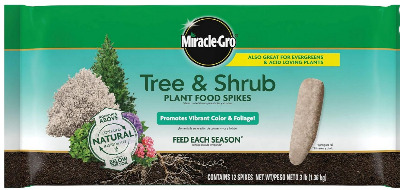
Product Description: The Miracle-Gro spikes come in a pack of 12. The total weight is 3 pounds. You get a convenient stick form that you literally push into the ground. Each spike slowly releases nutrients into the soil over time.
These spikes work for deciduous trees, flowering shrubs, evergreens, hydrangeas, and acid-loving plants. So they’re pretty versatile.
Best Use Cases: Spikes work well if you want something dead simple. No mixing. No measuring. No mess. You just push them into the ground and forget about it. They’re great for people who are busy or don’t want to deal with complicated application methods.
They’re also ideal if you have just a few shrubs. If you’re fertilizing an entire landscape of dozens of plants, spikes get expensive and tedious. But for a small backyard with a handful of shrubs, they’re perfect.
Spikes also work well for shrubs in containers. You can’t stir granules into a pot very easily, but spikes slip right in.
Key Features Explained Simply: The slow-release formula is the main selling point. You push the spike into the ground, and it slowly dissolves as water moves through the soil. This means your shrubs get a steady feeding over weeks and months, not all at once.
The nutrient mix works for many types of shrubs. You’re not buying separate products for different plant types. One product does the job for most of your yard.
The convenient stick form means no tools needed. No spreader. No watering can. Just your hands and the spikes.
Real-Life Usage Insight: Pushing these spikes into the ground is genuinely easy. If your soil is hard or dry, water first. Wet soil gives way more easily. One person can handle a dozen plants in less than 15 minutes.
The spikes don’t cause any burns or damage. They’re gentle. You won’t hurt your plants by using them.
One thing to note: the spikes work best when pushed into the soil near the drip line of the plant. The drip line is the outer edge of the branches where water runs off. That’s where the roots are actively feeding. Shoving a spike right at the trunk doesn’t work as well.
Honest Pros and Cons:
Pros:
- Dead simple to use
- No mixing or measuring
- No mess or waste
- Works for many shrub types
- Consistent, slow release
- Good for small spaces
Cons:
- Expensive per application when you have many plants
- Can be hard to push into very compacted or clay soil
- One-time application per season might not be enough for heavy feeders
- Not ideal for large landscapes
- Some people find them wasteful since each spike is individually packaged
Performance Discussion: Miracle-Gro products have been around for decades. They work because they’re formulated to deliver nutrients that plants actually need. These spikes deliver on the promise.
You’ll see results within a few weeks. Leaves become greener. Growth picks up. Flowering improves.
That said, these are synthetic fertilizers. Some people prefer organic options for environmental reasons. There’s nothing wrong with that preference. Synthetic isn’t bad—it’s just different.
Ease of Use: This product scores a solid 10 out of 10 for ease of use. It doesn’t get simpler than pushing a stick into the ground.
Value for Money: A pack of 12 spikes costs around $8-10. That works out to less than a dollar per plant per application. If you have a few shrubs, that’s reasonable. If you have 50 shrubs, the cost gets steep quickly.
For a small residential yard, the value is good. For large landscapes, consider other options.
BioAdvanced 12 Month Tree and Shrub Protect and Feed
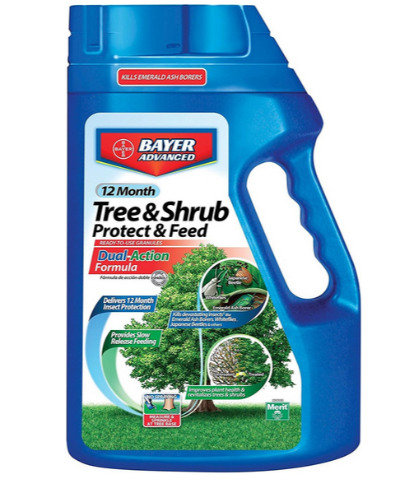
Product Description: This is a granule product that comes in a 4-pound bag. What makes it different is that it does double duty. It feeds your shrubs, but it also includes an insect killer. So you’re fertilizing and protecting in one application.
The formula releases nutrients over 12 months, which is longer than many competitors.
Best Use Cases: This product shines if you want to solve two problems at once. Your shrubs need feeding, and you’re worried about pests. Combining them saves time and money.
It’s great for larger landscapes since granules go further than spikes. You can cover more plants with less cost.
The 12-month release is ideal for people who don’t like to fertilize frequently. Apply once, and you’re covered for a year.
It works well for a mix of tree and shrub plantings. If you have both, one product handles everything.
Key Features Explained Simply: The granule format means you spread it on the ground and water it in. It mixes with the soil and slowly releases nutrients.
The insect protection is built in. It targets common tree and shrub pests. This saves you from buying a separate pesticide.
The 12-month timeline is impressive. Some products last 3-6 months. This goes longer, meaning fewer applications per year.
Real-Life Usage Insight: Spreading granules takes a bit more work than pushing spikes. You need to spread them around the drip line of each plant. A simple spreader works, or you can use your hands if you’re careful.
Water is important. Dry granules sitting on the ground won’t do much. Water them in thoroughly so they contact the soil. Once they’re wet, the slow release process begins.
The insect killer component works on contact and through the soil. Pests that eat treated plants get poisoned. It’s effective, but understand that you’re introducing chemicals if that’s a concern for you.
Honest Pros and Cons:
Pros:
- Long 12-month release cycle
- Two products in one
- Good value for large landscapes
- Works for trees and shrubs together
- Granule format covers more area
- Cost-effective per plant
Cons:
- Contains chemical insecticide (not suitable for organic gardens)
- Requires water to activate properly
- Less convenient than spikes for small numbers of plants
- Initial application needs careful spreading
- 12-month claim assumes consistent moisture
- Not suitable for edible plants near shrubs
Performance Discussion: BioAdvanced has been in the business for years. They know how to formulate products that work. This one delivers consistent results.
The insect protection is real. You’ll see fewer pest problems if you use this regularly. The feeding part works well too—your shrubs look healthier with better growth and color.
The 12-month timeline is somewhat optimistic in very dry climates, but in most regions with normal rainfall, it holds up.
Ease of Use: Spreading granules is pretty straightforward. Maybe a 7 out of 10. It’s easier than making a liquid solution, but requires more effort than spikes.
Value for Money: A 4-pound bag costs around $12-15. That goes a long way if you’re covering multiple plants. You could treat 10-15 shrubs with one bag depending on their size. That’s less than $2 per plant per year, which is excellent value.
Espoma Organic Evergreen-Tone 4-3-4
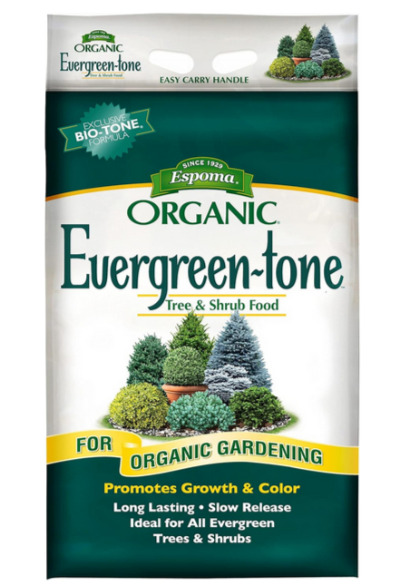
Product Description: Espoma makes organic fertilizers that have been trusted for generations. This product is specifically formulated for evergreen trees and shrubs. The 18-pound bag is the largest option in this roundup, so it’s designed for serious landscaping.
The 4-3-4 ratio (nitrogen, phosphorus, potassium) is balanced for evergreen nutrition. Evergreens have different needs than deciduous or flowering plants.
Best Use Cases: If you have evergreen shrubs—like boxwoods, junipers, arborvitae, or yews—this is your product. It’s built specifically for what they need.
It’s ideal for gardeners who want organic options. No synthetic chemicals. Nothing artificial. Just natural ingredients.
The large 18-pound bag makes sense if you have multiple evergreens or a larger property. It’s also good if you’re willing to share with neighbors or have annual plantings.
Key Features Explained Simply: Organic means it comes from natural sources. This product uses stuff like feather meal, bone meal, and other plant-based ingredients. No synthetic salts that can burn roots.
The 4-3-4 ratio is specifically tuned for evergreens. Evergreens use nutrients differently than deciduous plants. This mix gives them what they actually need.
The product includes beneficial microbes and mycorrhizae. These are living organisms that help plants absorb nutrients more efficiently. It’s like giving your plant a helpful ally in the soil.
Real-Life Usage Insight: Organic fertilizers work a bit differently than synthetic ones. They need to break down in the soil before plants can use them. That means they work more slowly but last longer.
Apply this in spring or early summer. Work it into the top inch of soil around your evergreens, then water well. The microbes and fungi get to work breaking it down, and your plants benefit gradually.
One nice thing about organics: they won’t burn your plants even if you apply too much. The natural breakdown process is gradual and gentle.
The 18-pound bag is heavy. Plan accordingly. You might want to break it into smaller portions if you’re applying to plants spread across your yard.
Honest Pros and Cons:
Pros:
- Fully organic and natural
- Specifically formulated for evergreens
- Includes beneficial microbes
- Won’t burn plants even with heavy application
- Long-lasting results
- Excellent for organic gardeners
- Good for environmental-conscious people
Cons:
- Works more slowly than synthetic options
- 18-pound bag is large and heavy
- More expensive than synthetic alternatives
- Requires soil microbes to be active (slower in cool weather)
- Not suitable if you want quick results
- May smell earthy or unusual to some people
Performance Discussion: Espoma has made organic fertilizers since 1929. They know what they’re doing. This product delivers on the promise of organic nutrition.
Your evergreens will grow well. They’ll maintain their color and vigor. The slow, steady nutrition keeps them healthy year after year.
The microbes make a real difference. Evergreens with regular organic feeding develop more robust root systems and handle stress better.
Ease of Use: Spreading and working in granules gets a 6 out of 10. It’s not hard, but it takes some effort to mix it into the soil properly. Worth the work, though.
Value for Money: An 18-pound bag costs around $25-35. That’s more per pound than synthetic options, but the large bag means you get a lot. For evergreens specifically, the value is good because it’s formulated for their needs.
16oz Tree and Shrub Plant Food Liquid Concentrate
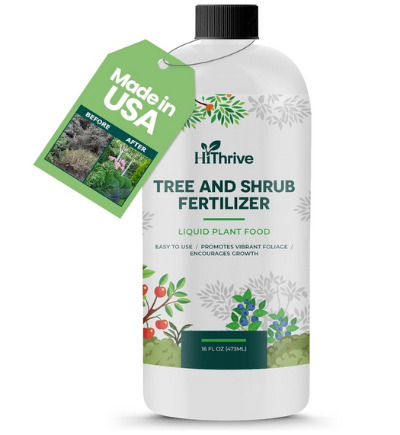
Product Description: This is a liquid concentrate fertilizer. You get 16 ounces that makes 16 gallons of ready-to-use liquid. One bottle goes a very long way.
It’s a general-purpose formula that works on all trees and shrubs. You mix it with water and apply it with a watering can or garden sprayer.
Best Use Cases: Liquid concentrates are perfect for people who want flexibility. You control the water amount, so you can adjust strength. You can treat one plant or a whole yard.
They’re ideal for quick results. Liquid nutrients are absorbed fast. Your plants start looking better in days, not weeks.
They’re great for landscape contractors and professionals. One small bottle treats huge areas when diluted.
Container plants love liquid fertilizers. You water them with it, and every watering feeds them.
Key Features Explained Simply: The concentrate format is economical. You’re buying mostly nutrients with minimal packaging waste. The 16-ounce bottle makes 16 gallons, so the math is simple.
The nutrient ratio is balanced for general shrub needs. It gives you nitrogen for foliage, phosphorus for roots, and potassium for overall plant health.
The quick absorption means plants show results fast. You’ll see greener leaves and stronger growth within a week or two.
Real-Life Usage Insight: Mixing is straightforward. Pour the concentrate into a watering can or sprayer, add water to the specified amount, and apply. No special equipment needed.
You apply it like you would water, which is natural. Spray or pour it around the base of the plants. The roots absorb it directly.
The fast action is real. If a shrub is looking pale and weak, a couple of applications of liquid fertilizer perk it up noticeably.
One thing to remember: liquid fertilizers can burn plants if applied too strong. Follow the dilution directions. More isn’t better—it’s actually worse.
Honest Pros and Cons:
Pros:
- Highly economical (one bottle makes 16 gallons)
- Works very quickly
- Easy to apply
- No measuring or guessing
- Flexible for different plant sizes
- Perfect for container plants
- Works well for quick greening
Cons:
- Results don’t last as long as granules or spikes
- Requires regular reapplication
- Can burn plants if over-applied
- More work than spikes for frequent application
- Not ideal for large landscapes (lots of trips with watering can)
- Organic options not available in this type
Performance Discussion: Liquid fertilizers work because the nutrients are already dissolved. Plants absorb them immediately. There’s no waiting for breakdown like with granules.
The downside is that results fade faster. The plants use up the nutrients, and you need to reapply. But that’s also an advantage if you’re new to fertilizing. You can adjust as you learn what your plants need.
Ease of Use: Mixing and applying gets a 7 out of 10. It’s easy, but you do it more frequently than other methods.
Value for Money: A 16-ounce bottle costs around $8-12. Since it makes 16 gallons, you’re getting incredible value. That’s less than a dollar per gallon of finished fertilizer.
Shrub Fertilizer 8oz Liquid Plant Food
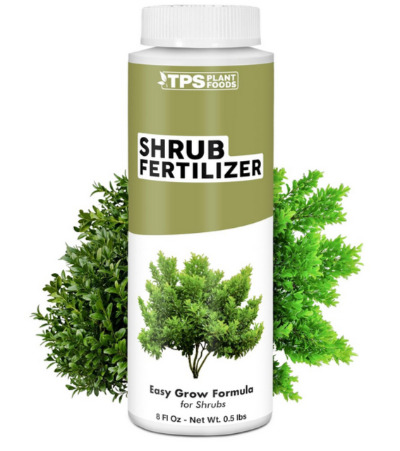
Product Description: This is a smaller concentrated liquid formula. Eight ounces makes a decent amount of usable solution. It’s designed specifically for shrubs and emphasizes full growth, foliage, and root development.
It’s a smaller commitment than the 16-ounce bottle, making it good for people testing out liquid fertilizers.
Best Use Cases: This product works well for smaller homeowners with just a few shrubs. You don’t need a massive bottle.
It’s perfect for people who want to try liquid fertilizers without committing to a gallon-plus of solution.
Container shrubs love this. You can feed container plants regularly with a small bottle lasting a long time.
It’s great for focused feeding. If one shrub looks sickly, you can target it with liquid without treating your whole yard.
Key Features Explained Simply: The concentrated formula means you still get good coverage from a small bottle. Eight ounces might seem small, but it makes several gallons.
The formula emphasizes foliage and root development. So you’re getting balanced nutrition aimed at what shrubs actually need.
The small size is convenient. It takes up minimal storage space. It’s easy to grab and go.
Real-Life Usage Insight: Application is identical to larger liquid concentrates. Mix, dilute, and apply. The small size means it might last you a season or two depending on how many shrubs you have.
This works well for problem-solving. One of your shrubs looking weak? Use this to give it a boost. No need to treat everything.
The 8-ounce size is perfect for apartment dwellers or condo owners with limited outdoor space. You’re not buying way more than you’ll use.
Honest Pros and Cons:
Pros:
- Small, convenient size
- Doesn’t require big storage space
- Good for testing before buying larger sizes
- Works well for problem shrubs
- Fast-acting results
- Easy to apply
- Affordable entry point
Cons:
- More expensive per ounce than larger bottles
- Runs out faster for large landscapes
- Regular reapplication needed
- Best as supplement, not sole fertilizer
- Can’t match the economy of larger concentrate bottles
- May need multiple bottles for serious shrub landscaping
Performance Discussion: This product works just as well as any liquid fertilizer. The nutrient formula is solid. Plants respond to it.
The main question is value. It works great, but you’re paying more per unit than the 16-ounce bottle. That’s fine if you have just a few plants. But as a long-term solution for many shrubs, the economics don’t work as well.
Ease of Use: Same as other liquids—7 out of 10. Very straightforward, but needs regular reapplication.
Value for Money: An 8-ounce bottle costs around $6-9. For small-scale use, it’s reasonable. For ongoing care of multiple shrubs, the 16-ounce concentrate offers better value.
Comparison Insights: Which Product Stands Out?
Now that we’ve looked at each product individually, let’s see how they stack up against each other.
Convenience Winner: Miracle-Gro Spikes If you hate any work at all, spikes win. Push into ground, done. No measuring, mixing, or spreading. They’re the laziest option, and sometimes lazy is smart.
Best for Large Landscapes: BioAdvanced Granules If you’re fertilizing many plants, granules spread the cost around. The 12-month formula means fewer applications. The insect protection is a bonus.
Organic Preference: Espoma Evergreen-Tone If you want natural, chemical-free, and specifically formulated for evergreens, Espoma is your choice. The microbes are a nice touch that really works.
Most Flexible: 16oz Liquid Concentrate Liquid gives you control. You adjust the concentration. You decide where to apply. You see results fast. The value is unbeatable. But you apply it more often.
Best for Testing: 8oz Liquid If you’re not sure what you need, the small bottle lets you experiment without huge investment.
The Real Differences: The biggest difference is between the application methods. Spikes are convenient but expensive. Granules are economical but require spreading. Liquids are flexible and fast but need regular reapplication.
The second difference is the formula. Evergreen-specific formulas help evergreens. All-purpose formulas work for most shrubs but aren’t optimized for specific types.
The third difference is organic vs. synthetic. Organic works slower but is gentler and more sustainable. Synthetic works faster but relies on chemicals.
Buying Guide: How to Choose
Here’s how to think through your shrub fertilizer decision.
First, identify your shrub types: Do you have evergreens, deciduous shrubs, flowering shrubs, hydrangeas, or a mix? This matters because different plants need different nutrition.
Evergreens (boxwoods, junipers, yews, arborvitae, pines) benefit from specialized evergreen formulas like Espoma.
Flowering shrubs (lilacs, rhododendrons, azaleas) want phosphorus and potassium for blooms.
Hydrangeas and other acid-loving plants need formulas that support their pH preferences.
General-purpose shrubs can use any balanced formula.
Second, count your plants: How many shrubs are you fertilizing? A handful? A few dozen? A whole landscape?
For 1-10 shrubs, spikes or small liquid bottles make sense. The convenience outweighs the cost.
For 10-30 shrubs, granules or larger liquid concentrates become smarter.
For 30+ shrubs, concentrate on cost per application. Granules and large liquid bottles win.
Third, consider your time: How much work are you willing to do? If you’re busy, spikes save time. If you don’t mind regular applications, liquids give better control.
Fourth, think about your values: Organic or synthetic? This is a personal choice. Both work. Synthetic is faster. Organic is more sustainable. Neither is “wrong.”
Fifth, consider climate: Very dry areas might see shorter lasting effects from granules and spikes due to lack of water for dissolution. Liquid might be better there.
Very wet areas don’t have that problem.
Seasonal temperature matters too. Cool seasons slow down the microbial activity that breaks down organic fertilizers.
Sixth, check your soil: If you’ve never tested your soil, consider doing it. You might be missing specific nutrients. Knowing what you actually lack helps choose the right fertilizer.
If your soil is heavy clay, you might have trouble pushing spikes in. Granules or liquids would work better.
If your soil is sandy, granules might leach away faster due to high water percolation. Spikes that stay in place or liquids applied regularly might work better.
Who Should Buy These Products
Buy Miracle-Gro Spikes If:
- You have 1-10 shrubs
- You want dead-simple application
- You don’t want to think about it much
- You have container shrubs
- You prefer convenience over cost
Buy BioAdvanced Granules If:
- You have multiple trees and shrubs
- Pests are a concern in your area
- You want one application per year
- You value long-term solutions
- You’re okay with chemical pesticides
Buy Espoma Evergreen-Tone If:
- Most of your shrubs are evergreens
- You want organic solutions
- You care about soil health long-term
- You’re willing to wait for results
- You prefer natural ingredients
Buy 16oz Liquid Concentrate If:
- You have multiple shrubs of various types
- You want flexible, adjustable solutions
- You’re on a budget
- You want fast results
- You apply fertilizer regularly anyway
Buy 8oz Liquid If:
- You have just a few shrubs
- You’re testing liquid fertilizers
- You have container plants mainly
- You want something compact
- You prefer smaller purchases
Common Mistakes to Avoid
Even good products fail when used incorrectly. Here’s what to avoid.
Mistake 1: Over-Fertilizing More isn’t better. It’s actually worse. Too much fertilizer burns roots and damages plants. Follow the directions. If your plants look healthy, you don’t need more.
Mistake 2: Fertilizing at Wrong Times Late summer fertilization can push new growth that freezes in winter. Early spring is usually best. Fall applications after growth slows work for some shrubs.
Mistake 3: Fertilizing Unhealthy Plants If a shrub is sick, struggling, or dying, find out why before fertilizing. Maybe it needs water. Maybe it has a disease. Maybe the site is wrong. Fertilizer won’t fix those problems.
Mistake 4: Not Watering After Application Granules and spikes need water to activate. Dry spikes just sit there. Water thoroughly after application.
Mistake 5: Applying to Completely Dry Soil Dry soil needs water first. Apply water, wait a day, then fertilize. This helps the nutrients move into the soil properly.
Mistake 6: Forgetting to Read Directions Every product has specific instructions. Follow them. Dilution ratios matter. Application rates matter. Timing matters.
Mistake 7: Using Products Wrong for Your Plants Don’t use evergreen formula on deciduous shrubs. Don’t use shrub formula on lawn. Match the product to your plant type.
Mistake 8: Fertilizing in a Drought If the region is in drought, hold off. Let plants adjust first. Fertilizing stressed plants in drought can make things worse.
Mistake 9: Ignoring Existing Soil Problems Some shrubs struggle because of soil issues—pH, drainage, compaction. Fertilizer won’t fix these. Address the root problem first.
Mistake 10: Setting and Forgetting Fertilizing isn’t a one-time thing. Most shrubs need feeding regularly. Once or twice a year minimum. Make it a routine.
The Real Talk: Performance and Expectations
Here’s what you should actually expect from shrub fertilizers.
Visible Results Take Time: Spikes and granules take 2-4 weeks to show real results. Liquids work faster—you’ll see results in 1-2 weeks. This is normal. Be patient.
Results Vary by Climate: In ideal conditions with good moisture and temperature, results are excellent. In tough conditions—heat, drought, stress—results are slower. That’s okay.
No Product is Magic: Fertilizer feeds plants. It doesn’t fix poor site selection, terrible soil, or bad planting practices. Make sure your shrub is in the right place first.
Healthy Shrubs Respond Better: Already-healthy shrubs respond quickly to fertilizer. Sick or stressed shrubs take longer to bounce back. Start feeding when plants are doing okay, not when they’re dying.
Organic Takes Longer But Lasts Longer: Organic fertilizers work slower but keep feeding longer. Synthetic works fast but fades faster. Both are legitimate approaches.
Cost Adds Up Over Time: A single application costs a few dollars. But over a growing season, you’re probably applying 2-4 times, depending on the product. Budget accordingly.
Final Verdict
After looking at all five products, here’s my honest take:
The best choice depends on your situation. There’s no single perfect answer that works for everyone.
For small homeowners with just a few shrubs: Miracle-Gro Spikes win. Yes, they cost more per plant. Yes, you could get better value elsewhere. But the convenience of pushing in a stick and forgetting about it is worth the extra cost for small-scale use. Your time has value.
For larger landscapes with mixed shrub types: The 16oz Liquid Concentrate wins on value. You get flexibility, economy, and control. You’ll spend more time applying it, but you’ll spend much less money. The fast results let you see what’s working and adjust as needed.
For people committed to organic gardening: Espoma Evergreen-Tone (or their other formulas for non-evergreen shrubs) wins. You get natural nutrition, soil health improvement from the microbes, and the satisfaction of growing plants the organic way. Yes, it costs more. Yes, results take longer. But the long-term benefits are real.
For people who want all-in-one solutions: BioAdvanced wins. One application per year, and you’re handling both feeding and pest control. Perfect for people who want set-it-and-forget-it solutions.
For people testing the waters: The 8oz Liquid wins. You can experiment without huge expense. Once you find what you like, upgrade to larger sizes.
My personal recommendation for most homeowners? Start with the 16oz Liquid Concentrate. It’s economical. It works well. It teaches you about regular feeding. You can see results and adjust your approach. Once you understand what your shrubs need, you can experiment with other products.
The truth is that any of these products will improve your shrubs when used correctly. They’re all good options. The differences are about convenience, cost, application method, and philosophy.
Pick one. Use it correctly. Stick with it for a season. If you’re happy, great. If not, try another. Most shrubs are pretty forgiving. They’ll bounce back if you switch approaches.
Your yard deserves healthy, attractive shrubs. The right fertilizer helps make that happen. With the information in this guide, you can choose the best one for your specific situation.
Happy gardening.
Quick Reference Comparison Table
| Feature | Miracle-Gro Spikes | BioAdvanced Granules | Espoma Organic | 16oz Liquid | 8oz Liquid |
|---|---|---|---|---|---|
| Type | Spike | Granule | Granule | Liquid Concentrate | Liquid Concentrate |
| Size | 12 count | 4 lb | 18 lb | 16 oz | 8 oz |
| Duration | 2-3 months | 12 months | Long-lasting | 2-4 weeks | 2-4 weeks |
| Ease of Use | Very Easy | Easy | Moderate | Easy | Easy |
| Cost Per Plant | Higher | Lower | Higher | Lower | Moderate |
| Organic | No | No | Yes | No | No |
| Pest Control | No | Yes | No | No | No |
| Best For | Small yards | Large landscapes | Evergreens | Budget-conscious | Testing |
| Application Frequency | Seasonal | Annual | As needed | Regular | Regular |
| Speed of Results | 2-4 weeks | Moderate | 4+ weeks | 1-2 weeks | 1-2 weeks |
Final Thoughts
Growing healthy shrubs is one of the most rewarding parts of gardening. When you put in the work to feed them properly, they respond. Your yard looks better. Your property value improves. You get the satisfaction of creating something beautiful.
The right fertilizer is just one piece of the puzzle. Water, sunlight, soil, and proper planting all matter. But feeding your shrubs gives them the nutrition they need to handle everything else.
Test different products. Pay attention to what works in your specific yard with your specific plants. Keep notes about what you use and how plants respond. Over time, you’ll develop a feeding routine that works perfectly for your landscape.
These five products are all quality options. Pick the one that fits your needs, budget, and lifestyle. Then get out there and feed those shrubs. They’ll thank you with vibrant growth and beautiful appearance.
Your landscape is about to look its best.

Hi, I’m Mary, the founder of GardenCure.com. I’m passionate about creating healthy, beautiful gardens and well-kept lawns. I share practical experience and trusted advice on garden and lawn gear that truly works. With the support of my dedicated research team, our writers produce honest, in-depth reviews using reliable, authentic sources—helping you choose the right tools with confidence for your outdoor space.