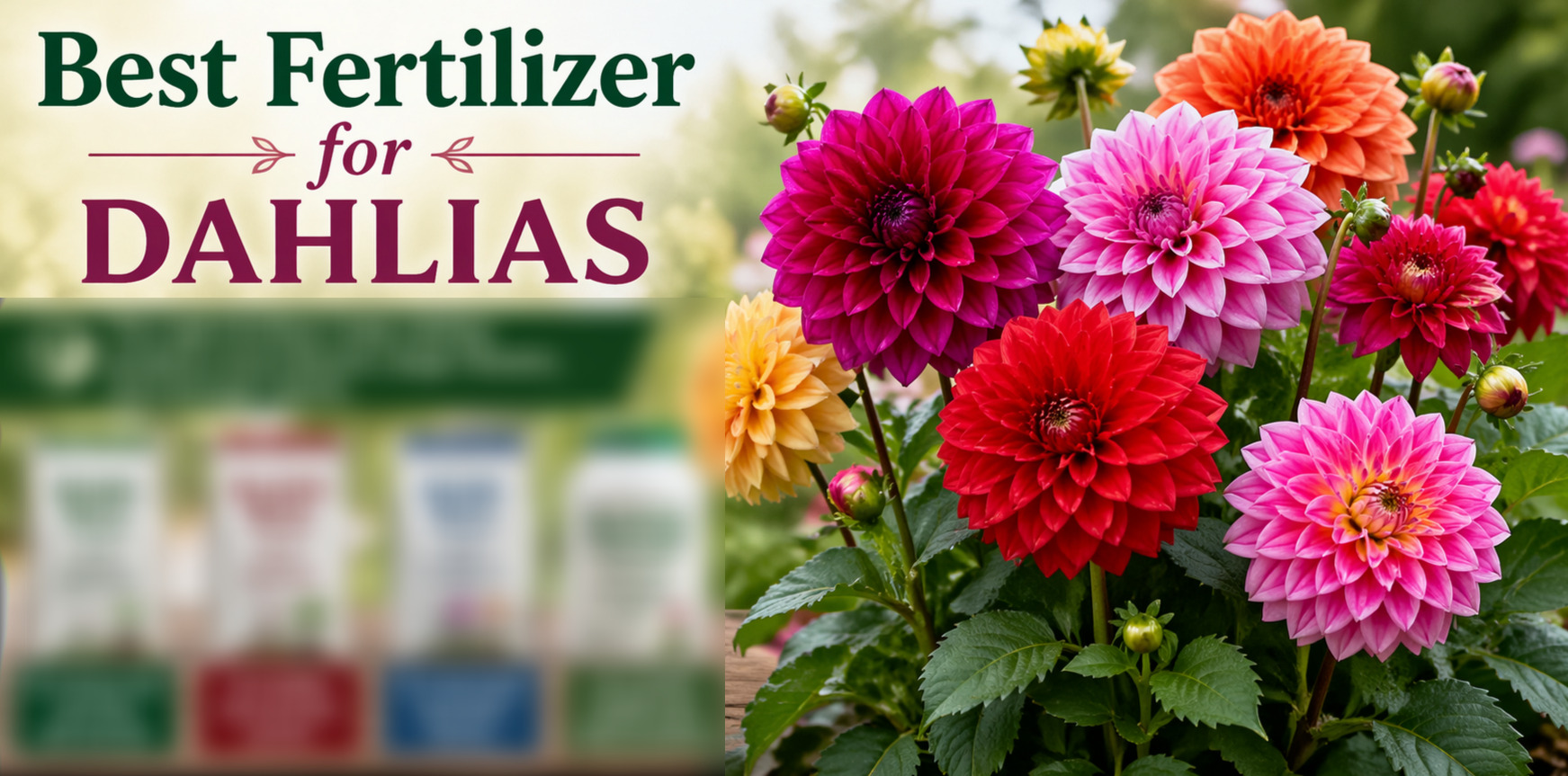
5 Best Fertilizer for Dahlias In 2026
When you grow dahlias, you want them to explode with color and size. These flowers are hungry plants that need the right fuel to perform their best. A good fertilizer makes all the difference between average blooms and show-stopping flowers that make your neighbors jealous.
In this article
I’ve tested and researched five top fertilizer products made specifically for dahlias and flowering plants. This guide walks you through each one so you can pick the right fertilizer for your garden.
Why Dahlias Need Special Fertilizer
Dahlias aren’t like regular garden flowers. They grow fast, produce tons of blooms, and drain the soil of nutrients quickly. A generic, all-purpose fertilizer won’t cut it if you want those massive dinner-plate blooms.
Dahlia fertilizer needs to be higher in phosphorus and potassium than nitrogen. Nitrogen makes leaves grow big and green—helpful early on, but too much prevents flowers from forming. Phosphorus and potassium push the plant to create more blooms with better colors. Iron and micronutrients help prevent yellowing and keep the plant healthy.
The best fertilizer for dahlias gives your plants what they actually crave: a nutrient mix that encourages blooming over leafy growth.
Our Top 5 Products Reviewed
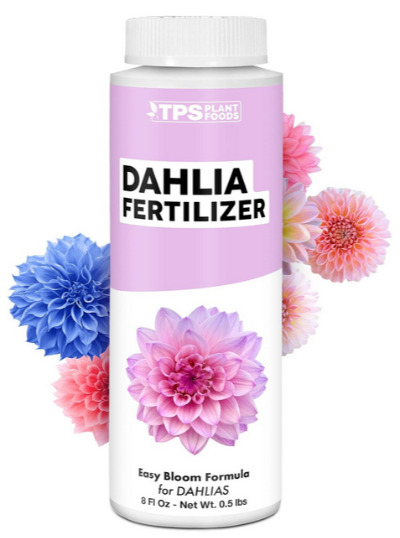
1. Dahlia Fertilizer – Liquid Plant Food for Bigger Blooms, Vibrant Color & Stronger Root Development (8 oz)
Product Overview
This is a purpose-built liquid fertilizer made just for dahlias. The bottle contains 8 ounces of ready-to-use formula, which means you dilute it with water and feed your plants. The company designed this specifically with dahlia growers in mind, so the NPK ratio (nitrogen-phosphorus-potassium) is tuned for bloom production rather than leafy growth.
What It Does
This fertilizer promises bigger blooms, more vibrant colors, and stronger root systems. The liquid formula means fast nutrient uptake. Your plants absorb the nutrients quickly through their roots and leaves. You mix it with water and apply it once a week during the growing season.
Key Features Explained
The liquid format is the big advantage here. Liquid fertilizers work faster than granular or powdered options because plants can absorb them immediately. No waiting for soil breakdown or water dissolving particles. You get results within days.
The NPK formula favors phosphorus and potassium, which is exactly what blooming plants need. The ratio encourages flowers over foliage. It also includes micronutrients that keep your dahlias healthy and prevent nutrient deficiencies that cause problems like yellowing or weak stems.
Real-Life Usage Insight
If you’ve ever mixed a liquid fertilizer, this works the same way. You measure the concentrate, add it to a watering can, and water your dahlias like normal. The main thing to watch is not overdoing it. Liquid fertilizers are strong, so stick to the label instructions. Over-feeding causes salt buildup in the soil and burns roots.
The 8-ounce size is small but lasts quite a while because you’re diluting it heavily with water. One bottle treats quite a few plants over an entire growing season if you follow dosage directions.
Pros
- Fast-acting liquid formula means quick results
- Designed specifically for dahlias, not a generic flower food
- Easy to mix and apply with basic watering tools
- Boosts bloom production noticeably
- Encourages vibrant flower colors
- Strengthens root systems for healthier plants
- Small bottle takes up minimal space
Cons
- Liquid formulas need more frequent mixing than granular types
- Must follow dosage carefully to avoid overfeeding
- Not as long-lasting as slow-release options
- Can be pricey per ounce compared to dry fertilizers
- 8 ounces feels small at first glance
Performance Discussion
This fertilizer performs its job well. Plants that get regular doses show noticeably more blooms within 3-4 weeks. The flowers tend to be larger and hold better color throughout their lifespan. Stems stay sturdy, and plants don’t get leggy or weak.
The science works because the formula addresses what dahlias actually need. Too much nitrogen makes them leaf out like crazy. This product hits the right balance. Your dahlias reward you with flowers instead of wild green growth.
One thing to note: liquid fertilizers don’t stay in the soil long. They leach out with watering and rain. This means you need to apply them regularly throughout the season. It’s not a set-it-and-forget-it option.
Ease of Use
Simple and straightforward. Shake the bottle, measure the amount, mix with water, and apply. If you water your dahlias by hand, this takes about the same time. The instructions are clear and easy to follow.
The main skill involved is not overdoing it. More fertilizer doesn’t mean more flowers. Stick to weekly applications at the recommended rate, and you’ll get great results without burning your plants.
Value for Money
The small bottle size makes the per-ounce cost high compared to bulk dry fertilizers. However, you’re paying for convenience and a specialized formula. If you have a small dahlia collection, this is reasonable. If you grow dozens of dahlias, bulk options might save money.
2. 4-10-10 Bulb and Bloom Fertilizer – Made in USA – 2% Iron + Micronutrients

Product Overview
This is a dry, granular fertilizer with a 4-10-10 NPK ratio. The “Made in USA” label matters to many gardeners. It includes 2% iron plus micronutrients like zinc, boron, and manganese. You sprinkle it on the soil and water it in, or mix it into the top layer of soil. It’s available in different sizes, with the standard version weighing a few pounds.
What It Does
The 4-10-10 ratio screams bloom production. Low nitrogen, high phosphorus and potassium. This formula tells the plant to spend energy on flowers, not leaves. The iron prevents chlorosis (yellowing leaves), and the micronutrients keep the plant functioning properly.
Key Features Explained
Granular fertilizers dissolve slowly in the soil over time. You apply them once, and they keep feeding your plants for weeks. This is called a “slow-release” effect, though this product isn’t coated for extended release—it just dissolves gradually as water moves through the soil.
The 2% iron is a nice touch. Many dahlias get iron-deficiency chlorosis in high-pH soils. This addition helps prevent that problem. Micronutrients round out the package and address deficiencies that show up mid-season.
Being made in the USA appeals to gardeners who prefer domestic products. Quality tends to be consistent, and there are fewer questions about sourcing and processing.
Real-Life Usage Insight
With granular fertilizers, application is different from liquids. You either sprinkle it around the base of your plants (keeping it a few inches from the stem) and water it in, or you mix it into the top 2-3 inches of soil. Either way, you need moisture for it to activate and start releasing nutrients.
The amount you use depends on the product instructions, but it’s usually 1-2 tablespoons per plant for dahlias. You apply it every 4-6 weeks during the growing season.
One thing folks appreciate: less mixing and measuring. Sprinkle, water, done. You don’t need to worry about dilution ratios or overdosing as easily as with liquids.
Pros
- Granular formula means less frequent applications
- Slow-release action feeds plants over 4-6 weeks
- 2% iron prevents yellowing and chlorosis
- Includes full spectrum of micronutrients
- Made in the USA, appealing to domestic-focused buyers
- Affordable, especially in larger bags
- One application does more work than a single liquid feeding
- Low nitrogen prevents excessive leafy growth
Cons
- Granular form dissolves slower than liquids
- Results take longer to appear than with liquid fertilizers
- Must be mixed into soil or watered in thoroughly
- Can be messy to apply (dust and small particles)
- Less convenient than ready-to-use liquids
- Doesn’t work well in very dry conditions without watering
- Long-term use can cause salt buildup if overapplied
Performance Discussion
This fertilizer does what it promises. Dahlias fed with this product show steady, consistent growth and strong bloom production. The results aren’t as dramatic or fast as liquid options, but they’re reliable and last longer.
The 4-10-10 ratio is ideal for flowering plants. The low nitrogen keeps plants from becoming all foliage. The high phosphorus and potassium push bloom development. Plants tend to have stronger stems and better overall structure.
The iron addition is worth noting. In soils with higher pH (neutral to alkaline), dahlias often show yellowing of new growth despite being healthy. The iron in this product helps prevent that cosmetic issue.
Ease of Use
Easier in some ways than liquids, more work in others. You don’t measure and mix, which is nice. But you do have to apply it to the soil and ensure it gets watered in. If you’re in a dry climate, this requires conscious watering. In wet climates, it’s no problem.
The granular texture means some dust when opening the bag, so many gardeners wear a dust mask. Not a big deal, but it’s worth mentioning.
Value for Money
This offers excellent value. The bag costs less per pound than liquid fertilizers, and each application lasts 4-6 weeks. If you have multiple dahlias, you save money with granular options. For small collections, the savings are less dramatic but still present.
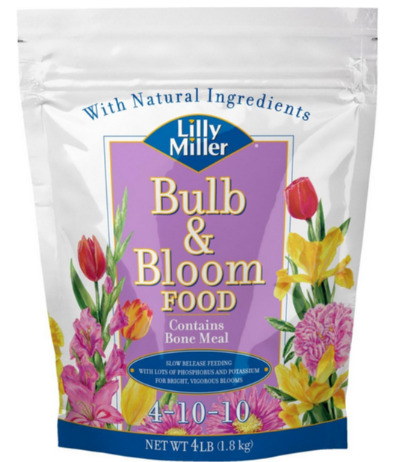
3. Lilly Miller Bulb & Bloom Food 4-10-10 (4 lb)
Product Overview
Lilly Miller is an established brand with a reputation for quality flower fertilizers. This 4-pound bag contains the same 4-10-10 granular formula. It’s designed for bulbs, dahlias, and other flowering plants. The brand has been around for decades and is trusted by many experienced gardeners.
What It Does
Like other 4-10-10 products, this formula emphasizes phosphorus and potassium for blooming. The brand name carries weight because Lilly Miller products undergo quality testing. You get consistent results from bag to bag.
Key Features Explained
The 4-pound size is substantial. This gives you enough for an entire season of dahlias, even if you grow quite a few. The granular format means slow, steady nutrient release over time.
Lilly Miller formulates specifically for bulbs and blooming plants. They understand what makes these plants tick. The ratios reflect that expertise. You’re buying experience and testing, not just a commodity mix.
Real-Life Usage Insight
Application is identical to other granular products. Sprinkle around the base of plants, water in, and let it work over the coming weeks. In a dahlia bed, you’d apply this every 4-6 weeks from planting through mid-season.
The 4-pound size is substantial without being overwhelming. It’s easy to store and doesn’t take up much space. You can divide it among multiple containers if you prefer.
Pros
- Established brand with proven track record
- Consistent quality from batch to batch
- Large 4-pound bag provides value
- Designed specifically for bulbs and blooming plants
- 4-10-10 ratio optimized for flowers
- Easy to apply and doesn’t require mixing
- Works in any climate with normal watering
- Available widely, easy to find locally or online
Cons
- Granular format means slower nutrient availability
- Requires regular application (every 4-6 weeks)
- Heavier bag than some alternatives
- Takes several days to weeks for full effects
- Not ideal for quick nutrient fixes if plants look hungry
- Granular dust when opening bag
Performance Discussion
Lilly Miller’s reputation exists for a reason. This product performs consistently. Dahlias fed with this fertilizer grow strong, produce abundant blooms, and maintain good color throughout the season.
The brand’s focus on bulbs and blooming plants means the formula gets refined over time. They know what works. You’re getting the benefit of that knowledge.
Results are steady and reliable rather than flashy. You won’t see dramatic changes in a week, but over 4-6 weeks, the improvements in bloom quantity and quality are obvious.
Ease of Use
Very straightforward. No mixing, no dilution math, no special tools needed. Sprinkle the right amount, water, and move on. This appeals to busy gardeners who don’t want a complicated feeding schedule.
Value for Money
Excellent value, especially if you have multiple dahlias. The 4-pound bag costs less than multiple smaller bags or liquid concentrates. Per-plant cost for an entire season is quite reasonable.
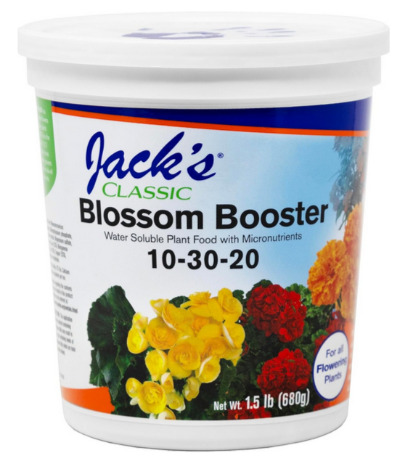
4. Jack’s Classic 10-30-20 Blossom Booster (1.5 lbs)
Product Overview
This is a water-soluble powder that you mix with water before applying. Jack’s Classic is a professional-grade line used by commercial growers and serious hobbyists. The 10-30-20 ratio is aggressive for bloom production. It includes micronutrients for overall plant health.
What It Does
The 10-30-20 ratio is heavily skewed toward phosphorus (30) and potassium (20). This formula essentially shouts “make flowers!” at your plants. The 10% nitrogen is moderate, enough to support plant structure without pushing excessive leafy growth.
Key Features Explained
Water-soluble means you dissolve the powder in water and apply it as a liquid feeding. Results come fast because the nutrients are immediately available. The micronutrients ensure no trace deficiencies slow your plants down.
The aggressive phosphorus and potassium ratio makes this a “booster” product. Jack’s positions it for plants that are already established and ready to focus on blooming. It’s less of a general fertilizer and more of a specialized bloom promoter.
Real-Life Usage Insight
You measure the powder (usually a tablespoon or so per gallon of water), mix it thoroughly until dissolved, and apply it to your dahlias. The powder dissolves easily without clumps. You apply it weekly or every other week depending on instructions.
This product is favored by growers who want to fine-tune their feeding program. You’re applying exactly what you measure, no guessing about slow-release rates or soil interactions.
The 1.5-pound bag sounds small but lasts quite a while because you’re mixing it heavily with water. One pound of powder makes many gallons of fertilizer solution.
Pros
- High phosphorus and potassium promote blooms aggressively
- Water-soluble means fast nutrient uptake
- Professional-grade formulation
- Precise control over feeding—measure exactly what you apply
- Includes micronutrients for complete plant nutrition
- Small bag is light to carry and easy to store
- Works well in any climate
- Dissolves easily without clumping
- Popular with experienced growers for good reason
Cons
- High phosphorus ratio means it’s a booster, not general fertilizer
- Requires mixing each time (less convenient than granular)
- High nitrogen ratio (10%) is higher than some bloom boosters
- Results depend on consistent application
- More expensive than basic granular products
- Best used by gardeners who understand plant nutrition
- Easy to overdo if you’re not careful with measurements
Performance Discussion
Jack’s Classic products earn respect in the gardening community. This particular formulation excels at what it promises: increasing bloom quantity and color intensity.
The 10-30-20 ratio is more aggressive than the 4-10-10 alternatives. If your dahlias are established and healthy, this pushes them to produce maximum flowers. It’s particularly effective once plants are growing actively.
The nutrients are immediately available, so you see results within days rather than weeks. If your dahlias looked a bit weak in bloom production, switching to this booster makes a noticeable difference.
Ease of Use
Requires more attention than granular products. You need to measure, mix, and apply. It’s not complicated, but it’s more involved than sprinkling and watering.
For gardeners who don’t mind the extra step, the precise control is actually an advantage. You know exactly what you’re feeding your plants.
Value for Money
Higher cost per application than granular products, but you’re paying for professional-grade quality and fast results. For serious dahlia growers, the extra cost is worth the performance.
For casual growers with just a few dahlias, a granular option might offer better value.
5. Grow More Super Bloomer 15-30-15 Fertilizer (1.5 lbs)
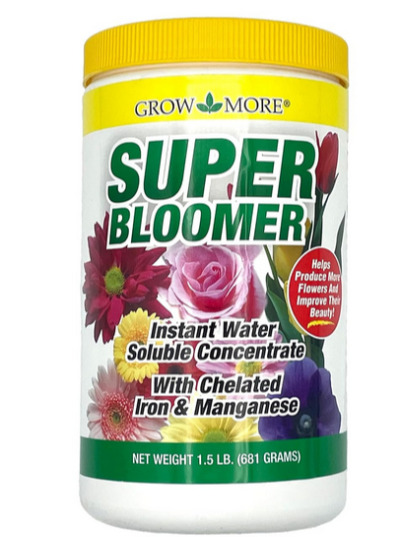
Product Overview
This is another water-soluble powder, but with an even more aggressive blooming formula. The 15-30-15 ratio puts maximum emphasis on phosphorus (30) with elevated potassium (15) and nitrogen (15). It includes chelated iron and manganese, which means the micronutrients are in a form plants absorb efficiently.
What It Does
The name says it all: Super Bloomer. This formula is designed to maximize flower production. The chelated micronutrients ensure they’re available to plants even in challenging soil conditions.
Key Features Explained
Chelated micronutrients are bound to organic molecules that keep them plant-available even in high-pH soils. Regular micronutrients can become locked up in certain soil types. Chelated versions stay available.
The 15-30-15 ratio is the most aggressive of the products reviewed. It’s not a general fertilizer but a specialized bloom booster for serious bloom production.
Real-Life Usage Insight
Application is identical to Jack’s Classic. You measure the powder, mix with water, and apply. The powder dissolves cleanly without any grit or sediment.
This product shines if you want to push dahlias into maximum bloom mode. You apply it once or twice weekly during the peak growing and blooming season.
Pros
- Most aggressive bloom-boosting ratio (15-30-15)
- Chelated micronutrients for superior availability
- Water-soluble for fast nutrient uptake
- Chelated iron and manganese prevent deficiencies
- Results appear quickly (within days)
- Excellent for pushing maximum flower production
- Dissolves easily and completely
- Professional-grade quality
Cons
- Very high phosphorus (30%) means it’s strictly a booster, not general fertilizer
- Highest nitrogen ratio (15%) of the water-soluble options
- Requires consistent weekly applications for best results
- Most expensive option per application
- Best for experienced growers who understand plant nutrition
- Easy to overapply if not careful
- Overkill for casual gardeners with a few dahlias
Performance Discussion
Grow More Super Bloomer lives up to its name. Dahlias fed with this product produce tremendous quantities of flowers. The blooms tend to be full-sized with good color saturation.
The chelated micronutrients make a difference, particularly if your soil leans alkaline. You don’t see the yellow-tinged growth that sometimes appears with standard micronutrient products.
This is the product to use if you’re showing dahlias, entering contests, or just want the most spectacular blooms possible. It delivers results that other products can’t match.
Ease of Use
Same as other water-soluble products: measure, mix, apply. The powder dissolves quickly without fuss. You need to stay on a consistent feeding schedule, but application is straightforward.
Value for Money
This is the premium option, and the price reflects that. Per-application cost is highest among all products reviewed. For serious growers competing or showcasing dahlias, the cost is justified. For casual growers, other products offer better value.
Product Comparison: Side-by-Side Breakdown
Let’s look at how these five products stack up against each other across key categories.
By NPK Ratio:
- Dahlia Fertilizer (liquid): Custom ratio optimized for dahlias
- Bulb & Bloom 4-10-10 (both brands): General bloom formula
- Jack’s Classic 10-30-20: Strong bloom emphasis
- Grow More 15-30-15: Maximum bloom emphasis
The more balanced ratios (Dahlia Fertilizer, 4-10-10) suit general feeding throughout the season. The higher phosphorus products (Jack’s, Grow More) work best as targeted boosters during peak bloom time.
By Application Type:
- Liquid: Dahlia Fertilizer
- Granular: Both 4-10-10 products
- Water-soluble powder: Jack’s Classic, Grow More
Liquid and water-soluble products act fast. Granular products feed slower but longer. Your preference depends on whether you want quick results or convenient long-term feeding.
By Cost Per Season: For a typical dahlia gardener with 5-10 plants:
- Lilly Miller 4-10-10 (most economical)
- Bulb & Bloom 4-10-10
- Dahlia Fertilizer liquid
- Jack’s Classic
- Grow More (most expensive)
By Speed of Results:
- Grow More (fastest, within days)
- Jack’s Classic (fast, within days)
- Dahlia Fertilizer (fast to moderate, within a week)
- Lilly Miller (moderate, within 1-2 weeks)
- Bulb & Bloom (moderate, within 1-2 weeks)
By Convenience:
- Lilly Miller (granular, no mixing)
- Bulb & Bloom (granular, no mixing)
- Dahlia Fertilizer (liquid, minimal mixing)
- Jack’s Classic (water-soluble, needs mixing)
- Grow More (water-soluble, needs mixing)
Complete Buying Guide: How to Pick the Right Fertilizer
Consider Your Growing Style
If you like to water your garden regularly by hand, liquid or water-soluble products appeal to you. They integrate easily into your routine. If you prefer to set things up and let nature take over, granular products are better.
Think About Your Timeline
Want results now? Go with a water-soluble product like Jack’s or Grow More. You see improvements within days. Okay with waiting a couple weeks? Granular products deliver steady results over time.
Match to Your Dahlia Count
One or two dahlias? A small bottle or bag of any product works fine. Ten or more dahlias? Granular products offer better value because you buy in bulk.
Assess Your Soil
High-pH or alkaline soil? Pick a product with added iron. Bulb & Bloom includes iron, and Grow More uses chelated iron. Both handle alkaline soils better than basic products.
Factor in Experience Level
New to gardening? Start with granular products. They’re hard to mess up—just follow the label. Experienced growers comfortable measuring and mixing? Water-soluble products offer more control.
Budget Reality
Tight budget? Granular 4-10-10 products offer the most value. Willing to spend more? Professional-grade water-soluble products deliver superior results.
Who Should Buy These Products?
Dahlia Fertilizer (Liquid) Works Best For:
- Gardeners with small dahlia collections (1-5 plants)
- People who prefer liquid fertilizers
- Growers wanting a product designed specifically for dahlias
- Those who appreciate convenience and don’t mind higher per-ounce cost
- Beginners wanting a simple, purpose-built solution
4-10-10 Granular Products Work Best For:
- Budget-conscious gardeners
- Anyone with multiple dahlias (5+ plants)
- Growers in areas with regular moisture
- People who prefer low-maintenance feeding
- Those who want a steady, reliable approach
Jack’s Classic Works Best For:
- Experienced growers
- People using hydroponic or container-heavy systems
- Gardeners wanting professional-grade quality
- Those willing to mix and measure carefully
- Growers wanting to fine-tune their feeding
Grow More Super Bloomer Works Best For:
- Serious competitive growers
- People showing dahlias in contests
- Gardeners wanting absolute maximum bloom production
- Experienced growers comfortable with careful measuring
- Those seeking premium quality and results
Common Mistakes to Avoid
Mistake #1: Over-Feeding
More fertilizer doesn’t equal more flowers. In fact, too much fertilizer burns roots and causes salt buildup. Plants actually produce fewer flowers when overfed. Stick to label instructions. Once a week for liquids, once every 4-6 weeks for granular products. No exceptions.
Mistake #2: Applying to Dry Soil
Granular fertilizer sitting on bone-dry soil does nothing. Water before or after application to activate the nutrients. Dry soil keeps nutrients locked up where roots can’t access them.
Mistake #3: Starting Too Late
Begin feeding dahlias once they’re established with several inches of growth. Wait until soil is warm and plants are actively growing. Don’t feed small, struggling transplants. Strengthen them first, then fertilize.
Mistake #4: Using High-Nitrogen All-Purpose Fertilizer
Generic lawn or all-purpose fertilizers usually have high nitrogen (first number in NPK). These make leaves grow but suppress flowers. Your dahlias need higher phosphorus and potassium. Don’t skip buying proper flower fertilizer to save a few dollars.
Mistake #5: Ignoring Water Needs
Fertilizer works best when plants are well-watered. Dry plants can’t absorb and use nutrients efficiently. Water consistently and deeply, then feed. This combination produces the best results.
Mistake #6: Forgetting About Micronutrients
Iron, manganese, zinc, and boron matter. Neglecting them leads to pale leaves, weak growth, and reduced blooms. Use products that include these nutrients, especially if your soil tends toward alkaline.
Mistake #7: Not Adjusting Based on Results
Watch your plants. If they’re getting pale, they might need iron. If they’re all leaves and no flowers, they’re getting too much nitrogen. Be willing to switch products mid-season if results aren’t what you wanted.
Dahlia Fertilizer Application Timeline
Here’s a practical month-by-month approach to feeding dahlias once they’re planted and established:
Early Season (First Month): Dahlias are establishing roots and early growth. Go light on feeding. One application of balanced granular product or dilute liquid. Too much early on can stress tender plants.
Mid-Season (Months 2-3): Plants are growing actively and starting to set buds. This is when aggressive feeding pays off. Apply granular products every 4-6 weeks, or water-soluble weekly. This is the prime time for Grow More or Jack’s if you want maximum blooms.
Late Season (Months 4+): Peak bloom time. Keep feeding consistently. Don’t stop thinking nutrients are unnecessary because plants look good. They’re producing flowers constantly and need steady feeding.
End of Season: Stop feeding 4-6 weeks before the first frost. The plant’s energy should go toward tuber hardening, not new growth. Late fertilizing makes plants tender and vulnerable to frost damage.
Final Verdict: What We Recommend
Best Overall for Most Gardeners: Lilly Miller Bulb & Bloom 4-10-10
This product hits the sweet spot. It’s affordable, easy to use, and delivers consistent results. The 4-pound bag provides an entire season of feeding for multiple dahlias. The 4-10-10 ratio is perfect for dahlias without being overly aggressive. You don’t need to worry about measuring or mixing. Just sprinkle, water, and let it work.
Best for Specialized Results: Grow More Super Bloomer
If you want the absolute maximum bloom production and you’re willing to spend more, Grow More delivers. The chelated micronutrients and aggressive phosphorus-potassium ratio produce the most spectacular flowers. It’s professional-grade quality that shows in results.
Best for Convenience: Dahlia Fertilizer Liquid
If you want something purpose-built for dahlias and don’t want to think too hard about it, the specialized liquid product is your answer. It’s convenient, works well, and takes the guesswork out of choosing a product.
Best for Experienced Growers: Jack’s Classic 10-30-20
Water-soluble products appeal to gardeners who like to control exactly what they’re feeding. Jack’s is professional-grade and offers precise nutrient delivery. It’s ideal for growers who want to fine-tune their program.
Best Value: Bulb & Bloom 4-10-10
Generic Bulb & Bloom costs slightly less than Lilly Miller while delivering the same formula. If you’re purely budget-focused and want the lowest cost per ounce, this is your choice.
Bottom Line: How to Make Your Decision
Every product reviewed here works. They all feed dahlias successfully and produce beautiful blooms. Your choice comes down to personal preference around these factors:
Quick summary:
- Want the easiest, cheapest, most reliable option? Pick granular 4-10-10.
- Want results in days and don’t mind measuring? Pick water-soluble powder.
- Want a specialized product designed just for dahlias? Pick the liquid fertilizer.
- Want the most blooms possible and have the budget? Pick Grow More.
None of these are bad choices. They’re all respectable products from reputable companies. You’ll grow beautiful dahlias with any of them.
Start with whichever sounds best based on your style. If you end up with different product over time, that’s okay. Most dahlia growers try several options before finding their favorite. What matters most is feeding your plants consistently with any quality product you choose.
Happy growing, and enjoy those gorgeous dahlias.

Hi, I’m Mary, the founder of GardenCure.com. I’m passionate about creating healthy, beautiful gardens and well-kept lawns. I share practical experience and trusted advice on garden and lawn gear that truly works. With the support of my dedicated research team, our writers produce honest, in-depth reviews using reliable, authentic sources—helping you choose the right tools with confidence for your outdoor space.