5 Best Fertilizer for Bell Peppers In 2026
Bell peppers are one of those vegetables that look easy to grow but can be surprisingly picky about nutrients. You plant them, water them, give them sun — and then watch them sit there, barely growing, producing tiny fruits, or just looking sad. Sound familiar?
In this article
Most of the time, the fix is simple: the right fertilizer.
Bell peppers are heavy feeders. They need a steady supply of nitrogen early on, then a solid dose of phosphorus and potassium once they start flowering and fruiting. Get that balance wrong and you end up with lush green plants that never set fruit — or weak, yellowing plants that can barely hold themselves up.
That’s why this guide exists. We rounded up five of the most talked-about fertilizers for bell peppers, tested their claims, dug into their formulas, and broke down exactly who each one is best for. No fluff. Just honest, practical information you can use in your garden today.
The five products we’re reviewing are:
- Pepper Fertilizer – Liquid Plant Food for Bigger Harvests (8 oz)
- Big A Pepper Fertilizer – 12 oz Premium Organic Fertilizer for Peppers
- Miracle-Gro Water-Soluble Plant Food for Vegetables & Herbs (2 lbs)
- Liquid Power Peppers Fertilizer – Professional Liquid Plant Food (8 oz)
- Farmer’s Secret Fruit & Bloom Booster Fertilizer (32 oz)
Let’s get into it.
Why Bell Peppers Need the Right Fertilizer
Before we get to the reviews, here’s a quick word on why fertilizer matters so much for bell peppers specifically.
Bell peppers are in the nightshade family, right alongside tomatoes and eggplants. Like their cousins, they need a lot of nutrition to reach their potential. But they have some unique quirks.
Early growth stage: Peppers need nitrogen to build strong stems and full, dark green leaves. Without enough nitrogen, plants stay small and pale.
Flowering and fruiting stage: Once you see flowers forming, phosphorus and potassium become far more important. Phosphorus helps flowers set and fruit develop. Potassium strengthens cell walls, improves flavor, and helps the plant fight off stress and disease.
Root health: Bell peppers also do much better when their root system is deep and strong. Many fertilizers include calcium, magnesium, and micronutrients that support root development and help the plant absorb nutrients efficiently.
Get these nutrients in the right amounts at the right time, and you’ll be harvesting full-sized, flavorful bell peppers all season long. Skip the fertilizer (or use the wrong one), and you’ll be left with disappointment.
Now, let’s review each product.
Product Reviews
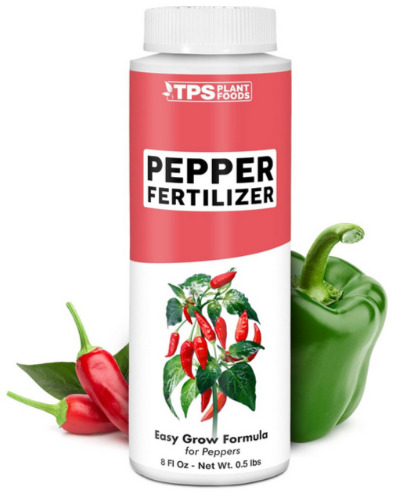
1. Pepper Fertilizer – Liquid Plant Food for Bigger Harvests
What It Is
This is a concentrated liquid fertilizer designed specifically for pepper plants. The formula targets three key areas: bigger harvests, improved flowering, and stronger root development — which are the three things pepper growers struggle with most. It comes in a compact 8 oz bottle, and you dilute it before applying.
Best Use Cases
- Container-grown bell peppers on a patio or balcony
- In-ground pepper plants that need a mid-season boost
- Gardeners who want a pepper-specific product rather than a general vegetable fertilizer
- Anyone whose plants have started flowering and need nutrient support to set fruit
Key Features Explained Simply
This fertilizer leans into a formula that supports both vegetative growth and fruiting. The liquid format means nutrients go directly to the root zone fast. You don’t have to wait days for granules to break down — the plant starts absorbing within hours of application.
The formula includes trace elements that support flower formation, which is a big deal for bell peppers. Lots of gardeners find that their plants bloom beautifully but the flowers drop off before setting fruit. That’s often a nutrient issue, and a fertilizer focused on flowering chemistry can help solve it.
Root development support is another key part of this product. Strong roots mean the plant can pull more water and nutrients from the soil, which directly translates to bigger, more flavorful peppers.
Real-Life Usage Insight
When you apply this as a weekly or biweekly liquid feed, you start to see results within 7–14 days. Leaves get darker and more vibrant. New growth comes in faster. Once plants transition to fruiting, the phosphorus and potassium in the formula help more flowers stay on the plant and develop into peppers.
It works best when applied to moist soil — not dry. Applying to dry soil can cause root burn, especially in hot weather. Early morning or evening applications are ideal.
Pros
- Specifically formulated for pepper plants
- Fast-acting liquid delivery
- Targets the exact growth stages pepper growers care about
- Easy to use — just dilute and water
- Small bottle is great for home gardeners who don’t need bulk quantities
Cons
- 8 oz bottle may run out quickly if you have a large garden
- Liquid fertilizers need more frequent application than slow-release granules
- Cost per application can add up over a full season
Performance Discussion
For a dedicated pepper fertilizer, this one delivers on its core promise. Plants fed with this product regularly show noticeably better fruiting rates and fuller growth. The flowering support is real — you can see the difference when you compare treated plants to unfed ones side by side.
It’s not a miracle worker if your soil is severely depleted, but as part of a balanced feeding routine, it performs very well for bell peppers specifically.
Ease of Use
Very easy. Mix the concentrate with water per the label instructions and apply with a watering can or hose-end sprayer. No measuring confusion, no complicated schedules. Even complete beginners can use it without worry.
Value for Money
The 8 oz bottle is priced at the lower end of the specialty fertilizer range. For a small to medium garden, it offers solid value. For large-scale growing, you’d want to look at a bigger supply or a bulk alternative.
Overall Rating: 4.3/5
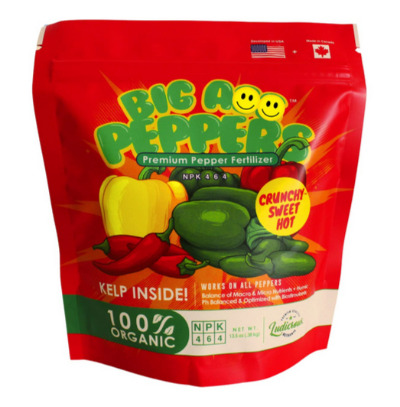
2. Big A Pepper Fertilizer – 12 oz Premium Organic Fertilizer for Peppers
What It Is
Big A Pepper Fertilizer is an organic granular fertilizer made specifically for pepper plants. It’s 12 oz of premium nutrient blend with an emphasis on natural, soil-friendly ingredients. The company markets it as suitable for all types of peppers — bell peppers, hot peppers, sweet peppers — and also for other garden vegetables.
Best Use Cases
- Organic gardeners who want to avoid synthetic chemicals
- Raised bed growers looking for a granule they can work into the soil
- Gardeners who want a product that improves soil health over time
- Anyone growing peppers alongside other veggies who needs something versatile
Key Features Explained Simply
The “organic” label here is doing real work. This fertilizer relies on naturally derived nutrients that feed both the plant and the beneficial microbes in your soil. That’s a key difference from synthetic fertilizers, which deliver nutrients to the plant directly but can degrade soil biology over time.
The granular form is designed to be incorporated into the soil at planting time or top-dressed around established plants. As the granules break down, they release a steady, measured supply of nutrients. No spikes, no crashes — just consistent feeding.
Organic fertilizers like this one also typically contain a broader array of micronutrients than synthetics. You get trace minerals that help peppers develop deep flavor, strong cell structure, and better resistance to heat stress and disease.
Real-Life Usage Insight
Because it’s organic and granular, this fertilizer works on a slower timeline than liquids. You apply it, work it into the soil, water it in, and then let it do its thing over the next several weeks. This is great for busy gardeners who don’t want to fertilize every week.
The trade-off is that you won’t see dramatic changes overnight. Organic feeding is a marathon, not a sprint. But over the course of a season, plants fed with organic matter tend to produce better-tasting fruit and remain healthier longer than those fed synthetically.
This product is also a good choice when you’re first setting up a bed. Work it into the soil before transplanting your pepper seedlings, and they’ll have a strong nutritional foundation from day one.
Pros
- Certified organic — safe for edible gardens
- Granular form is convenient and low-effort
- Improves soil health over time, not just plant health
- Works well as a base fertilizer at planting
- Suitable for multiple vegetable types
Cons
- Slower results than liquid fertilizers — not ideal for urgent nutrient deficiencies
- 12 oz may not go far in a large garden
- Organic fertilizers are often more expensive per pound of actual nutrients compared to synthetics
Performance Discussion
If you’re committed to organic gardening, Big A Pepper Fertilizer is a strong contender. Plants grown with this fertilizer tend to look healthy, produce well, and the fruit has noticeably good flavor — which many organic gardeners consider the ultimate measure of success.
It’s not the fastest option, but what it lacks in speed it makes up for in sustainability and soil-building properties. Over multiple seasons of use, your soil will improve, and your pepper plants will benefit from that.
Ease of Use
Very simple. Sprinkle around the base of plants or work into soil before planting. Water in after application. No mixing required. It’s about as low-tech as fertilizing gets, which is great for newer gardeners.
Value for Money
The 12 oz price point is fair for a premium organic product. You’re paying for quality ingredients and the organic certification. For the home gardener with a few raised beds, it represents good value, especially when you factor in the soil health benefits over time.
Overall Rating: 4.2/5
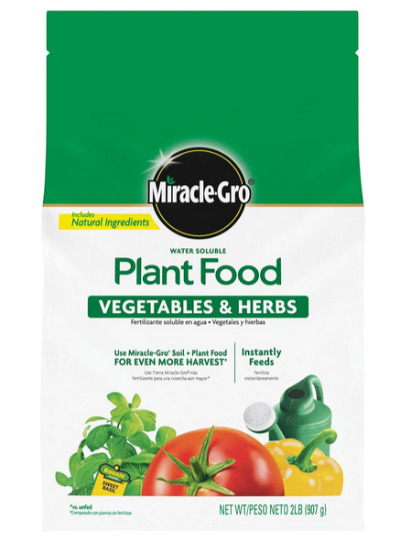
3. Miracle-Gro Water-Soluble Plant Food for Vegetables & Herbs (2 lbs)
What It Is
Miracle-Gro is one of the most recognized names in gardening, and their Water-Soluble Plant Food for Vegetables & Herbs is a staple for home gardeners everywhere. The 2 lb bag covers tomatoes, squash, peppers, cucumbers, and herbs — making it one of the most versatile products on this list.
Best Use Cases
- Gardeners growing a variety of vegetables who want one fertilizer for everything
- Anyone who prefers a well-established, widely trusted brand
- Budget-conscious growers who want good results without breaking the bank
- New gardeners who want something simple that works across multiple plant types
Key Features Explained Simply
Miracle-Gro’s formula is built around a high-nitrogen base, which supports vigorous leaf and stem growth. But for vegetables like bell peppers, the ratio also includes enough phosphorus and potassium to support flowering and fruiting.
The water-soluble powder dissolves completely in water, leaving no residue. You mix it with water in a watering can or use it with a Miracle-Gro garden feeder attached to a hose (sold separately). Either way, the nutrients reach the roots fast.
This product is a synthetic fertilizer. That means it delivers nutrients in immediately available chemical forms. Plants can take them up right away, which gives you faster visible results compared to organic options. The downside is that it doesn’t build soil health over time the way organic fertilizers do.
Real-Life Usage Insight
Miracle-Gro is a reliable performer when used consistently. Mix it at the label rate and apply every 1–2 weeks throughout the growing season. Bell peppers respond well to this feeding schedule, showing strong vegetative growth early and solid fruiting later.
One thing to be careful about: over-application. Miracle-Gro is potent. Following the label rate is important. Too much can burn plants or push excessive leafy growth at the expense of fruit production. Stick to the directions and you’ll be fine.
For the price and quantity (2 lbs covers a lot of applications), it’s hard to beat the bang for your buck here.
Pros
- Trusted brand with decades of proven results
- Very affordable, especially for the 2 lb size
- Water-soluble format is fast-acting
- Works well for multiple vegetable types
- Easy to find at any garden center or online
Cons
- Synthetic formula — not suitable for certified organic growing
- Doesn’t improve soil biology the way organic alternatives do
- Requires consistent reapplication (not slow-release)
- Easy to over-apply if you’re not careful with measurements
Performance Discussion
Miracle-Gro is a workhorse. It does what it says. Bell peppers fed with this product on a regular schedule grow vigorously and produce well. You’re not going to get the maximum flavor depth that organic fertilizers can provide, but you’ll get reliable, consistent harvests.
The 2 lb bag goes a long way, which makes it a cost-effective choice for medium to large gardens. It’s not the most exciting product on this list, but it’s dependable — and that counts for a lot.
Ease of Use
Very user-friendly. Miracle-Gro has been designed from the ground up to be beginner-accessible. The measuring scoop is usually included. Dissolve, apply, done. Can’t get much simpler than that.
Value for Money
Excellent. The 2 lb bag offers more applications per dollar than most specialty fertilizers on this list. For budget-conscious gardeners who need reliable results without spending a lot, this is the top pick.
Overall Rating: 4.4/5
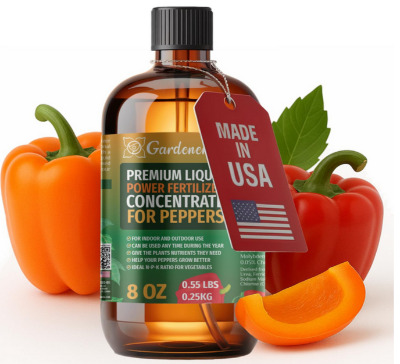
4. Liquid Power Peppers Fertilizer – Professional Liquid Plant Food for Peppers (8 oz)
What It Is
Liquid Power Peppers Fertilizer is a professional-grade concentrated liquid formula designed exclusively for pepper plants. It comes in an 8 oz bottle, works for both indoor and outdoor plants, and focuses on three key outcomes: fast growth, strong roots, and high-yield harvests.
The “professional” label here suggests this product is formulated with more precise nutrient ratios than general-purpose alternatives — targeting the exact nutritional needs of pepper plants at different stages of growth.
Best Use Cases
- Serious home gardeners who want to maximize pepper yields
- Indoor pepper growing setups under grow lights
- Container plants that rely entirely on the grower for nutrition
- Anyone who has struggled with poor fruit set or slow pepper growth
- Gardeners transitioning from general-purpose fertilizers to something more targeted
Key Features Explained Simply
The formula in Liquid Power targets the NPK (nitrogen, phosphorus, potassium) ratio that pepper plants specifically benefit from. Rather than a generic balanced formula, it’s calibrated for the fruiting growth stage that’s most important for pepper production.
As a concentrate, a small amount goes a long way. You dilute it with water before applying — typically just a capful or teaspoon per gallon. This makes the 8 oz bottle more economical than its size suggests.
The indoor and outdoor versatility is genuinely useful. Many gardeners start peppers indoors under lights before the last frost, then move them outside. Having one fertilizer that works in both environments simplifies the routine and ensures continuity in nutrition.
Fast-acting liquid delivery means the plant starts benefiting within hours. This is especially valuable mid-season when you need to course-correct — maybe a plant is yellowing, or you notice flowering has stalled.
Real-Life Usage Insight
Growers who use this as their main feed through the fruiting season often report significantly better fruit set compared to plants fed with general-purpose products. The precise nutrient calibration seems to make a real difference when plants are in active flowering and fruiting mode.
Indoor pepper growers in particular benefit from this product because indoor plants don’t have access to soil microbes and natural decomposition that would supplement their nutrition. They rely entirely on what the grower provides. A targeted liquid fertilizer is ideal for that environment.
Application is typically every 7–14 days. More frequent feeding is fine at a lighter dilution, but the standard schedule works well for most setups.
Pros
- Professionally formulated for peppers specifically
- Works indoors and outdoors — versatile
- Fast-acting liquid formula
- Concentrated — small doses cover a lot of plants
- Focuses specifically on the high-yield fruiting phase
Cons
- 8 oz bottle may feel small for the price point
- Some gardeners may prefer organic options
- Requires consistent application to maintain results
- Not ideal as a standalone season-start fertilizer (better for mid-season use)
Performance Discussion
Liquid Power earns its “professional” branding in terms of the results it can produce when used correctly. Bell peppers treated with this fertilizer during the flowering and fruiting phase show noticeably improved fruit set and fruit size.
It’s at its best as a targeted booster during the mid-to-late season when pepper plants are working hard to produce fruit. Think of it as your pepper plants’ performance nutrition — not something they need every day, but something that makes a real difference when the stakes are high.
Ease of Use
Simple dilution and apply. The concentrate format is easy to work with, and application instructions are clear. Even without prior fertilizing experience, you can use this correctly on the first try.
Value for Money
Moderate. The 8 oz bottle is priced in the mid-tier range for specialty fertilizers. Given the concentration, it covers more applications than you’d expect from the bottle size. For indoor growers or dedicated pepper enthusiasts, the investment is justified.
Overall Rating: 4.3/5
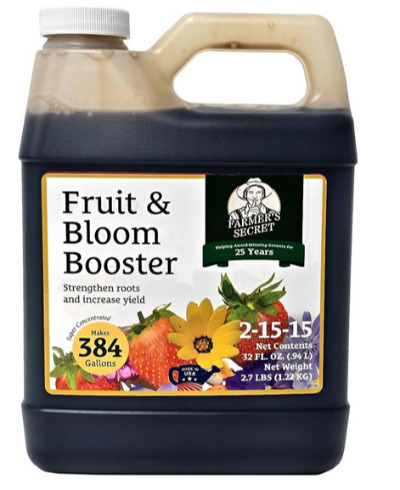
5. Farmer’s Secret Fruit & Bloom Booster Fertilizer (32 oz)
What It Is
Farmer’s Secret Fruit & Bloom Booster is a super-concentrated liquid fertilizer that targets flowering and yield across a wide range of fruits, vegetables, and flowers. The 32 oz bottle is the largest on this list, and the “super concentrated” claim means you get a very high number of applications per bottle.
It’s not pepper-specific, but it’s particularly effective for any fruiting vegetable — and bell peppers absolutely fall into that category.
Best Use Cases
- Gardeners growing multiple crops who want one bloom-boosting fertilizer for everything
- Anyone who has been disappointed by poor flowering or low fruit yield
- Large garden setups where a 32 oz bottle makes more economic sense than smaller options
- Growers who already have a nitrogen-focused feed for early season and want a bloom booster for the fruiting phase
- Farmers and market gardeners who need a reliable, high-output product
Key Features Explained Simply
Bloom boosters typically have a different NPK ratio than general fertilizers. They emphasize phosphorus and potassium over nitrogen. For bell peppers, this is exactly what you want once they start flowering.
High phosphorus supports flower development and fruit set. High potassium strengthens the plant’s immune system, improves fruit quality, and helps regulate water movement within the plant — which is crucial during fruiting when cells are filling with juice and developing flavor.
The “super concentrated” formula means you use very small amounts per application. This is good for your wallet and good for preventing over-application. A little goes a long way, and the 32 oz bottle will last most home gardeners through multiple growing seasons.
The broad-spectrum effectiveness (fruits, vegetables, flowers) means this is a smart buy for mixed gardens. You’re not limited to using it just on peppers.
Real-Life Usage Insight
Farmer’s Secret Bloom Booster works best when introduced to your pepper plants as they transition from the vegetative stage to flowering. That’s typically when you first see flower buds forming.
At that point, backing off nitrogen-heavy feeding and switching to a bloom booster like this one signals the plant to put its energy into flowers and fruit rather than leaves and stems. Gardeners who time this transition well often see dramatically better fruit set and larger, heavier peppers.
Because it’s a liquid concentrate, it can be applied as a soil drench or diluted and used as a foliar spray. Foliar application gets nutrients to the plant even faster — useful when you need a quick response.
Pros
- 32 oz bottle provides excellent value — many, many applications
- Works across multiple plant types, not just peppers
- Super concentrated = economical per application
- Bloom and fruit focus is ideal for bell peppers in the fruiting stage
- Liquid format is fast-acting
- Suitable for both soil drench and foliar spray application
Cons
- Not pepper-specific — NPK ratio is a general bloom formula, not tuned specifically for peppers
- May require pairing with a separate nitrogen source for early-season feeding
- Strong concentration means careful measuring is important to avoid over-application
- Packaging quality has received mixed reviews from some users
Performance Discussion
This is a powerful product when used at the right time. Bell peppers treated with Farmer’s Secret during the bloom phase produce more flowers and set more fruit per plant. The quality of the fruit also tends to be higher — thicker walls, better color, more pronounced flavor.
The broad-spectrum use case is a genuine strength. If you’re growing tomatoes, cucumbers, squash, or flowering ornamentals alongside your bell peppers, one bottle of Farmer’s Secret covers everything. That’s a real convenience for multi-crop gardeners.
The super-concentrated formula also means you’ll use this bottle for a long time. Cost per application is very low, even though the upfront price is higher than the smaller bottles on this list.
Ease of Use
Easy, but precision matters. Because the product is highly concentrated, measure carefully. Follow the label dilution rates. The foliar spray option adds a bit of versatility but may feel unfamiliar to beginners. Overall, it’s manageable for any skill level with a little attention to the instructions.
Value for Money
Excellent over time. The 32 oz bottle paired with the high concentration level gives you far more applications than any other product on this list. For gardeners who commit to using it regularly across multiple plants and crops, the per-application cost is very low.
Overall Rating: 4.5/5
Comparison Insights: How These 5 Fertilizers Stack Up
Now that we’ve reviewed each product individually, let’s put them side by side so you can see the differences clearly.
| Feature | Pepper Fertilizer (8 oz) | Big A Organic (12 oz) | Miracle-Gro (2 lbs) | Liquid Power (8 oz) | Farmer’s Secret (32 oz) |
|---|---|---|---|---|---|
| Type | Liquid concentrate | Organic granule | Water-soluble powder | Liquid concentrate | Liquid concentrate |
| Organic | No | Yes | No | No | No |
| Pepper-Specific | Yes | Yes | No | Yes | No |
| Best For | General pepper feeding | Organic growers | Budget multi-crop | Indoor/outdoor peppers | Bloom & fruit boost |
| Speed | Fast | Slow | Fast | Fast | Fast |
| Ease of Use | Very Easy | Very Easy | Very Easy | Easy | Moderate |
| Value for Size | Moderate | Moderate | Excellent | Moderate | Excellent |
| Soil Health Benefits | Low | High | Low | Low | Low |
Key Takeaway: If you want the best all-around value and broad usability, Miracle-Gro and Farmer’s Secret are your best bets. If you want organic, Big A stands alone. For targeted pepper performance, Liquid Power and the Pepper Fertilizer are the most focused options.
Buying Guide: What to Look For in a Bell Pepper Fertilizer
Not sure what to prioritize? Here’s a quick guide to the most important factors when picking a fertilizer for bell peppers.
NPK Ratio
NPK stands for Nitrogen (N), Phosphorus (P), and Potassium (K). These three numbers on every fertilizer bag or bottle tell you the relative concentration of each nutrient.
For bell peppers:
- Early season (vegetative growth): Look for a higher nitrogen ratio, like 10-5-5 or similar. This supports leaf and stem development.
- Mid to late season (flowering and fruiting): Shift toward a product with higher phosphorus and potassium, like 5-10-10 or a bloom booster formula. This supports flower set and fruit development.
Some fertilizers are designed to be used throughout the whole season. Others are stage-specific. Knowing which stage your plants are in helps you pick the right product.
Organic vs. Synthetic
Organic fertilizers come from natural sources like bone meal, kelp, compost, or animal-based nutrients. They feed soil biology and release nutrients slowly. They’re better for long-term soil health and produce fruit with excellent flavor.
Synthetic fertilizers deliver nutrients in immediately available chemical form. Plants take them up fast, growth response is quick, and they tend to be more affordable. They don’t improve soil biology over time.
Neither is “better” — it depends on your priorities. Organic gardeners should look at Big A. Everyone else has a wider range to pick from.
Liquid vs. Granule vs. Powder
- Liquid concentrates are fast-acting and easy to apply. Great for mid-season corrections and boosting plants that need quick help.
- Granules are slow-release and convenient. Apply once and let them work over weeks. Great for busy gardeners.
- Water-soluble powders dissolve completely in water and deliver nutrients quickly. Combine the speed of liquids with the storage convenience of dry products.
All three types are represented on this list, so you have options depending on your preference.
Garden Size
A small 8 oz bottle works well for a handful of container plants or a small raised bed. For larger gardens, the 2 lb Miracle-Gro bag or the 32 oz Farmer’s Secret bottle makes more economic sense.
Always estimate how many plants you’re feeding and how often before buying — then check how many applications each product provides.
Indoor vs. Outdoor Use
Most fertilizers on this list work for both environments. But if you’re growing bell peppers indoors, liquid fertilizers tend to work better because they don’t require soil biology to break down. Liquid Power specifically calls out indoor/outdoor use, making it a clear choice for indoor growers.
Who Should Buy These Products?
Let’s break this down by gardener type so you can quickly find your match.
The Beginner Gardener
Start with Miracle-Gro Water-Soluble Plant Food. It’s affordable, widely available, very well-known, and nearly impossible to mess up. You’ll get reliable results without a steep learning curve.
The Organic Gardener
Go with Big A Pepper Fertilizer. It’s the only certified organic option on this list, and it supports both your plants and your soil health. Pair it with a good compost mulch and your pepper bed will only get better over time.
The Container Gardener
The Liquid Power Peppers Fertilizer is an excellent fit. Container plants depend 100% on what you feed them — there’s no natural soil ecosystem to fill in the gaps. A targeted, fast-acting liquid concentrate is ideal for that situation.
The Yield-Focused Grower
Try Farmer’s Secret Fruit & Bloom Booster. If your goal is maximum fruit production per plant, this bloom-stage formula is going to have the biggest impact during the period when it matters most.
The Pepper Enthusiast
If peppers are your main crop and you want something designed specifically for them, the dedicated Pepper Fertilizer (8 oz) or the Liquid Power product will serve you best. Both are built around pepper-specific nutritional needs.
The Multi-Crop Gardener
Grab either Miracle-Gro or Farmer’s Secret. Both work across a wide range of vegetables, fruits, and flowers, so you’re not locked into buying separate fertilizers for each crop.
Common Mistakes to Avoid When Fertilizing Bell Peppers
Even the best fertilizer won’t help if you’re applying it wrong. Here are the most frequent mistakes gardeners make — and how to avoid them.
Mistake 1: Fertilizing Too Much
More is not better when it comes to fertilizer. Over-fertilizing causes nutrient burn, which shows up as brown leaf edges and wilting. With synthetic fertilizers especially, stick closely to the recommended rates on the label.
Mistake 2: Using Too Much Nitrogen Late in the Season
Nitrogen drives leafy growth. That’s what you want in spring. But if you keep piling on nitrogen when your plants are trying to flower and fruit, you’ll get beautiful green plants with almost no peppers. Switch to a bloom-focused formula as soon as flowering begins.
Mistake 3: Fertilizing Dry Soil
Never apply liquid fertilizers to dry soil. Always water your plants first, then apply fertilizer to moist soil. This prevents root burn and helps nutrients distribute evenly through the root zone.
Mistake 4: Ignoring Soil pH
No fertilizer works well if your soil pH is wrong. Bell peppers prefer a slightly acidic pH between 6.0 and 6.8. If your soil is too acidic or too alkaline, the plants can’t absorb nutrients even when they’re right there in the soil. Test your soil before the season starts and adjust if needed.
Mistake 5: Skipping Calcium and Magnesium
Many gardeners focus entirely on NPK and forget that bell peppers also need calcium and magnesium. Calcium deficiency causes blossom end rot — those ugly, sunken black spots on the bottom of your peppers. Magnesium deficiency causes yellowing between leaf veins. Supplement with calcium-magnesium products if your soil tests low, or use a fertilizer that already contains these nutrients.
Mistake 6: Inconsistent Feeding
Fertilizing once in spring and then forgetting about it doesn’t work for bell peppers. They need consistent nutrition throughout the season. Set a feeding schedule — weekly, biweekly, or monthly depending on the type of fertilizer — and stick to it.
Mistake 7: Starting Fertilizer Too Late
Wait too long to start feeding and your plants will show it. Begin light feeding as soon as seedlings are transplanted to their final location. Build nutrition gradually so plants have what they need at every stage.
Tips for Getting the Most Out of Any Bell Pepper Fertilizer
Here are a few bonus tips that apply no matter which product you pick.
Mulch your beds. A 2–3 inch layer of straw or wood chip mulch around your pepper plants retains moisture, regulates soil temperature, and reduces the chance of nutrient run-off when you fertilize. It also encourages beneficial soil life that helps break down nutrients.
Water consistently. Bell peppers are not drought-tolerant. Inconsistent watering leads to uneven nutrient uptake, which causes problems even when you’re fertilizing correctly. Aim for consistent moisture — not waterlogged, not bone dry.
Watch your plants. Your bell peppers will tell you a lot. Yellow leaves often signal nitrogen deficiency. Purple-tinged stems can indicate phosphorus deficiency. Slow growth during warm weather often points to a general nutrient shortage. Learn to read the signs and adjust your feeding program accordingly.
Combine organic matter with any fertilizer. Even if you’re using a synthetic fertilizer, adding compost to your beds helps. Compost improves soil structure, feeds beneficial microbes, and adds a slow-release buffer of trace nutrients that synthetic fertilizers don’t provide.
Don’t neglect potted peppers. Container plants need more frequent feeding than in-ground plants. Nutrients wash out every time you water. Every 7–10 days with a diluted liquid fertilizer is a reasonable schedule for container-grown bell peppers.
Final Verdict: Which Fertilizer Is Best for Bell Peppers?
After putting these five products through their paces, here’s the bottom line.
Best Overall: Farmer’s Secret Fruit & Bloom Booster (32 oz)
The combination of super-concentrated formula, excellent value per application, bloom-stage focus, and broad usability makes this the strongest pick for most gardeners. Bell peppers specifically benefit from the high-phosphorus and high-potassium formula during their fruiting phase, and the 32 oz bottle gives you an exceptional number of uses.
Best Budget Pick: Miracle-Gro Water-Soluble Plant Food for Vegetables & Herbs
For gardeners who want reliable results without spending much, Miracle-Gro delivers. It’s affordable, effective, beginner-friendly, and available everywhere. It doesn’t build soil health like organics do, but it grows great peppers consistently.
Best Organic Option: Big A Pepper Fertilizer
If you garden organically or care about long-term soil health, Big A is your best bet on this list. Slower results, yes — but better for the environment, better for your soil, and many organic growers swear by the flavor improvement it brings to homegrown vegetables.
Best for Indoor Pepper Growing: Liquid Power Peppers Fertilizer
The indoor and outdoor versatility, combined with the targeted pepper-specific formula, makes this the go-to for anyone growing peppers inside under lights. Container plants get exactly what they need, fast.
Best Pepper-Specific Pick: Pepper Fertilizer – Liquid Plant Food for Bigger Harvests
If you want a product made specifically for peppers and nothing else, this one has the most targeted formula. Ideal for gardeners who grow mostly peppers and want a dedicated solution from root to harvest.
Quick Recap
| Product | Best For | Rating |
|---|---|---|
| Pepper Fertilizer (8 oz) | Pepper-specific feeding | 4.3/5 |
| Big A Organic (12 oz) | Organic gardeners | 4.2/5 |
| Miracle-Gro (2 lbs) | Budget, beginner-friendly | 4.4/5 |
| Liquid Power (8 oz) | Indoor/outdoor pepper focus | 4.3/5 |
| Farmer’s Secret (32 oz) | Bloom boosting, multi-crop value | 4.5/5 |
Closing Thoughts
Bell peppers are absolutely worth the effort to fertilize properly. When you get the nutrition right, the difference in plant health, yield, and fruit quality is dramatic. You go from scraggly plants with a handful of small peppers to full, productive plants loaded with beautiful, thick-walled fruits.
The five fertilizers on this list cover a wide range of gardening styles, budgets, and goals. No matter where you’re starting from — complete beginner or experienced home grower — there’s something here that fits your situation.
Pick the one that matches your garden setup, follow the directions, be consistent, and your bell peppers will reward you with a harvest worth being proud of.
Happy growing.

Hi, I’m Mary, the founder of GardenCure.com. I’m passionate about creating healthy, beautiful gardens and well-kept lawns. I share practical experience and trusted advice on garden and lawn gear that truly works. With the support of my dedicated research team, our writers produce honest, in-depth reviews using reliable, authentic sources—helping you choose the right tools with confidence for your outdoor space.