5 Best Fertilizer for Azaleas In 2026
Azaleas are some of the most gorgeous flowering shrubs you can grow. Their vibrant colors and delicate blooms make any garden look like it stepped out of a magazine. But here’s the thing: to get those incredible flowers year after year, you need to feed your azaleas the right way.
In this article
Most gardeners don’t realize that azaleas have very specific soil and feeding needs. They love acidic soil and acidic fertilizers. Use the wrong stuff, and your azaleas will struggle. The leaves turn yellow. The flowers won’t come in as full. New growth slows down. It’s frustrating, especially when you know your plant isn’t getting what it needs.
The good news? Finding the best fertilizer for azaleas is easier than you think. You just need to know what to look for and which products actually deliver results. That’s exactly what this guide covers.
Why Azaleas Need Special Fertilizer
Before we dive into the products, let’s talk about why azaleas are picky about their food.
Azaleas thrive in acidic soil. Their root systems and nutrient uptake processes are designed to work in soil with a pH between 4.5 and 6.0. When your soil isn’t acidic enough, azaleas can’t absorb key nutrients like iron, manganese, and aluminum the way they’re supposed to.
This is why regular all-purpose fertilizers often fail. They’re formulated for neutral soil. Your azaleas might get some nutrition, but they won’t get it in a form they can actually use.
Acid-loving plant food is different. It’s made specifically for plants that need lower pH levels. These fertilizers often contain sulfur, which helps lower soil pH and keeps things acidic. They also include nutrients in forms that azaleas can readily absorb.
The nitrogen, phosphorus, and potassium numbers matter too. Azaleas don’t need a ton of nitrogen. They respond best to balanced or slightly lower nitrogen formulas. You’ll often see acid plant foods with numbers like 4-3-4 or 4-3-6. This balance encourages steady growth and plenty of flowers without pushing excessive leafy growth.
Organic versus synthetic matters as well. Organic acid fertilizers feed your soil life as they feed your plant. They break down slowly, building soil structure and biology over time. Synthetic acid fertilizers work faster but don’t improve your soil long-term. Both have their place depending on your goals.
1: Jobe’s Garden Fertilizer Spikes for Acid Loving Plants

Product Type: Solid fertilizer spikes
NPK Ratio: Not specified on standard packaging (proprietary blend)
Size: 10 count package
Best For: Small to medium azaleas, container plants, spot feeding
Product Description and Design
Jobe’s Organics Azalea, Camellia & Rhododendron Fertilizer Spikes come in a pack of 10. Each spike is a pre-measured dose of concentrated plant food. You just push them into the soil around your plant, and they slowly release nutrients as you water.
These spikes are specifically formulated for acid-loving plants. The formula is balanced for the soil chemistry that azaleas need. The spikes contain a mix of organic materials and minerals designed to feed your plant while maintaining that acidic environment.
Best Use Cases
Spikes work great for smaller azaleas. If you have a young azalea in a pot or a small shrub in your garden, these are convenient. They’re also ideal if you have several different plants that each need different nutrition. You can give azaleas these spikes while your hydrangeas get something else.
Container-grown azaleas especially benefit from spikes. The consistent, slow release matches how potted plants take up water and nutrients. Spike feeding works well for plants that won’t be transplanted soon, since you’re driving them into established soil.
These are also perfect for gardeners who want simplicity. No measuring powders, no mixing liquids. Just push in a spike every few months and you’re done.
Key Features Explained Simply
The slow-release formula is the main feature here. Each spike releases nutrients gradually over several weeks. This means you feed your plant less often than with liquid fertilizers. The slow release also prevents nutrient burn, which can happen if you dump too much food on your azaleas at once.
The formula contains iron and other micronutrients specifically added for acid-loving plants. Iron is crucial for dark green leaves. Without enough iron, azaleas get chlorosis—that yellowing between the veins that looks terrible.
These spikes are organic-based, though they’re not certified for organic gardening. They blend organic materials with minerals, which gives you the benefits of both approaches.
Real-Life Usage Insight
Gardeners report that spikes are genuinely convenient. Pushing them in takes seconds. There’s no mixing or measuring to get wrong. You don’t have to worry about accidentally spilling powder or overwatering with liquid.
The reality is that spikes can be tricky with consistent placement. If you don’t space them evenly around the plant’s root zone, some areas might get more nutrition than others. For best results, scatter them around the drip line of the plant—that outer edge where water runs off the leaves.
Spikes also work best in consistently moist soil. If your soil dries out completely between waterings, the spikes won’t release their nutrients properly. They need water to dissolve and distribute the food.
Pros and Cons
Pros:
- Extremely convenient and simple to use
- No mixing or measuring required
- Slow release prevents nutrient burn
- Good for container plants and smaller shrubs
- Consistent feeding schedule removes guesswork
- Organic-based formula builds some soil life
Cons:
- Can be expensive per application compared to bulk powders
- Don’t mix evenly if soil is very dry
- Limited quantity in package (only 10 spikes)
- May not provide enough nutrition for large, established azaleas
- Spikes need replacement every few months
- Some gardeners find them hard to push into compacted soil
Performance Discussion
These spikes do work, but with realistic expectations. They’re great for maintenance feeding. If your azalea is already healthy and growing well, spikes will keep it happy. But if you have a struggling plant that needs a nutrition boost, a more concentrated formula might work faster.
The nutrient release is steady and safe. You won’t see dramatic results like you might with liquid feeding, but you also won’t accidentally burn your plant. The results build gradually through the season.
For container azaleas, performance is especially good. Potted plants have limited soil and nutrient reserves, so the regular feeding from spikes matches their needs perfectly.
Ease of Use
This is where Jobe’s spikes really shine. They’re the easiest fertilizer option for azaleas. Open the package, push the spikes into the soil, water, and you’re done. No measuring cups. No mixing. No spray bottles. The learning curve is basically zero.
The only challenge is if your soil is extremely compacted or dry. Push the spikes at an angle if they won’t go straight down. Or water your soil first to soften it, then insert the spikes.
Value for Money
Spikes tend to be pricier per ounce of actual fertilizer than bulk options. However, the convenience factor adds value. If you have a few azaleas and value simplicity over cost, spikes make sense. If you have many plants and want to save money, bulk fertilizers are more economical.
Expect to pay around $10-15 for a pack of 10 spikes. Each plant might need one spike every 6-8 weeks during the growing season. That works out to several dollars per feeding per plant, which is higher than bulk options.
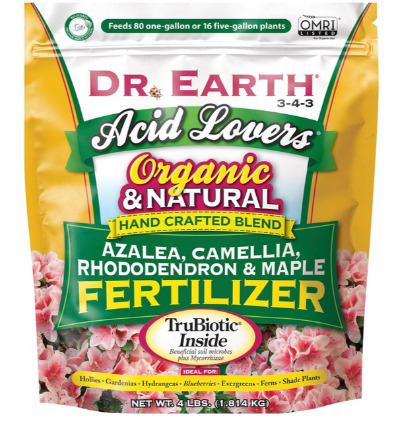
2: DR EARTH Organic 4 Azalea/Camellia/Rhododendron Acid Fertilizer
Product Type: Granular organic powder
NPK Ratio: 4-3-4
Size: 4-pound bag
Best For: Small plantings, first-time buyers, organic gardeners
Product Description and Design
DR EARTH’s Azalea, Camellia & Rhododendron fertilizer comes in a 4-pound poly bag. It’s a dry granular formula that you mix into the top soil or dissolve in water. The 4-3-4 ratio is well-balanced for acid-loving plants—moderate nitrogen, lower phosphorus, and adequate potassium.
This is a fully organic product certified for organic gardening. It contains no synthetic chemicals. The ingredients include things like feather meal, bone meal, and other organic materials that feed your plant while building your soil.
Best Use Cases
This product is excellent if you’re new to fertilizing acid-loving plants. The small 4-pound bag lets you try it without committing to a huge purchase. It’s also perfect for gardeners with just a few azaleas.
The organic formula makes this ideal for people who want to garden naturally. Every application improves your soil biology. Over time, your soil gets richer and more alive, which is better for everything you grow.
It works well for spring feeding when azaleas are putting out new growth. The balanced formula supports both green growth and flower bud formation.
Key Features Explained Simply
The organic ingredients are the main story here. Feather meal provides slow-release nitrogen. Bone meal contributes phosphorus for flower development. These natural sources feed your plant over weeks, not hours.
The 4-3-4 ratio is specifically designed for azaleas and similar plants. The moderate nitrogen means you won’t get excessive leafy growth that crowds out flowers. The potassium supports overall plant health and disease resistance.
This formula also includes beneficial microbes and fungi that are naturally present in organic materials. These helpers colonize your soil and improve nutrient availability to your plants. Your soil becomes a living system, not just dirt.
Real-Life Usage Insight
Gardeners like this product because results are dependable and the application is straightforward. You either sprinkle it on the soil surface and water it in, or mix it with water to create a feeding liquid. Both methods work fine.
One thing people notice is that organic products take longer to show results than synthetic fertilizers. You won’t see a dramatic change in two weeks. Instead, you get steady improvement over the season. By mid-season, plants are noticeably greener and fuller.
The smell is earthy and natural, which most gardeners find pleasant. Some people even prefer that to the chemical smell of synthetic fertilizers.
Pros and Cons
Pros:
- Fully certified organic formula
- Well-balanced 4-3-4 NPK ratio for azaleas
- Improves soil health and biology over time
- Smaller bag size perfect for trying it out
- Safe for organic gardeners
- Slow release prevents nutrient burn
- Good value for organic product
- Works as granules or mixed as liquid
Cons:
- Results develop more slowly than synthetic products
- 4-pound bag is small for large plantings
- Need to repurchase frequently if you have many plants
- Organic ingredients can vary in nutrient content
- Requires consistent watering for best results
- Heavier bag (bulky to carry and store)
- May be harder to find at some garden centers
Performance Discussion
This fertilizer works well for what it is designed to do. It feeds your azaleas while building your soil. If you measure success by plant health and blooms, it delivers. Plants get green, new growth is vigorous, and flowers come in well.
The performance is slower than synthetic products. If you need a quick nutrition boost, this isn’t the fastest option. But for regular feeding throughout the season, it’s reliable and consistent.
The biggest benefit shows up over years, not weeks. As your soil improves from repeated applications of organic fertilizer, your plants become more resilient, more productive, and less dependent on you feeding them constantly.
Ease of Use
Using this product is simple but requires a bit more effort than spikes. You need to measure out the right amount, sprinkle it on your soil, and water it in. Or you can mix it with water and apply it as a liquid.
The main thing to remember is that you need consistent moisture for this to work well. In dry conditions, the granules sit on the surface and don’t do much. If you water regularly, this is a non-issue.
Value for Money
At around $12-15 for a 4-pound bag, this is reasonably priced for an organic product. For a small planting of 2-5 azaleas, one bag might be enough for the season. For a larger garden, you’ll need several bags.
The long-term value is excellent. You’re not just feeding your plants; you’re investing in soil quality. Over time, you need less fertilizer because your soil is more productive. That’s real value.
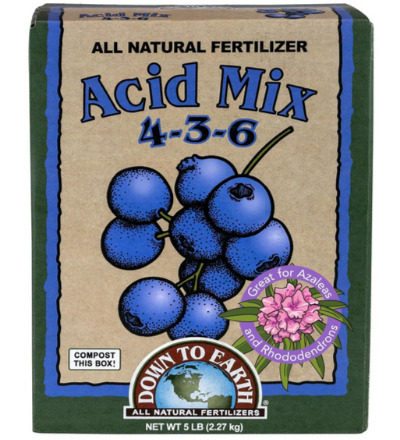
3: Down To Earth Organic Acid Mix – 5 lb Bag
Product Type: Granular organic powder
NPK Ratio: 4-3-6
Size: 5-pound bag
Best For: Medium plantings, those wanting slightly higher potassium, budget-conscious gardeners
Product Description and Design
Down To Earth’s Organic Acid Mix comes in a 5-pound bag. The 4-3-6 NPK ratio is similar to the DR EARTH product but with slightly more potassium (6 versus 4). Potassium supports overall plant vigor, stress resistance, and flower color intensity.
This is also a fully organic formula with no synthetic chemicals. The blend includes natural minerals and organic materials that feed your plants while maintaining soil health. It’s formulated specifically for acid-loving plants like azaleas, blueberries, and raspberries.
Best Use Cases
The 5-pound size is perfect for someone with 5-10 azaleas. It’s enough for meaningful feeding without being wasteful. The slightly higher potassium makes this particularly good for plants you want to push for maximum blooms.
This product works well for mid-season and late-season feeding. The extra potassium supports flowering and helps plants harden off as they prepare for dormancy.
It’s also an excellent choice if you’re working with a limited budget. Down To Earth products are typically very fairly priced compared to other organic options.
Key Features Explained Simply
The 4-3-6 ratio emphasizes potassium more than typical acid fertilizers. This makes it better for encouraging flowering rather than just green growth. If you want maximum blooms on your azaleas, this ratio is a small advantage.
The formula includes sulfur, which naturally lowers soil pH and maintains that acidic environment azaleas need. Some applications actually improve your soil’s acidity over time.
Like other organic products, this contains no quick-release synthetic nitrogen. Everything feeds gradually as soil microbes break down the organic materials. This is safer for your plants but requires planning ahead—you can’t get instant results if a plant suddenly looks hungry.
Real-Life Usage Insight
Gardeners report that this fertilizer is reliable and produces consistent results. The 5-pound size hits the sweet spot—not too small, not too large. You can cover a reasonable planting without buying way too much.
People using this product notice good flower production. The higher potassium does seem to encourage more blooms. Plants also develop better color in foliage and flowers.
The granular form is nice. You can work it into the soil in spring for steady season-long nutrition, or apply it as a side dressing throughout the season. If you’re patient enough to dissolve it in water, you can also use it as a liquid feed.
Pros and Cons
Pros:
- Good 5-pound size for medium plantings
- 4-3-6 ratio emphasizes flowering
- Higher potassium than some competitors
- Fully organic and sustainably sourced
- Includes sulfur for natural pH management
- Affordable organic option
- Works as granules or liquid
- Improves soil over time
Cons:
- Slower results than synthetic fertilizers
- Requires regular watering for activation
- Not available at all garden centers
- Potassium level might be overkill for some gardeners
- Granules can blow away if not watered in quickly
- Organic content varies naturally
- Larger bag is heavier to carry
Performance Discussion
This product performs well for steady, season-long nutrition. Plants that receive regular applications show good green growth, abundant blooms, and healthy overall vitality.
The higher potassium delivers what it promises. Gardeners who track their flower counts usually see more azalea blossoms with this product compared to lower-potassium formulas. The colors are often more vivid too.
Performance is dependable if conditions are right. Good soil moisture, regular application, and patience will give you excellent results. Rush things and try to force results in a few weeks, and you’ll be disappointed.
Ease of Use
Application is straightforward. Sprinkle the granules around your plants, water well, and let time do the work. Or dissolve the granules in water for a more immediate effect.
The only consideration is that 5 pounds is a bit heavy. If you have mobility issues, this might be awkward to carry and work with. Breaking the bag into smaller containers makes it easier to handle.
Value for Money
This is one of the most economical organic acid fertilizers available. The per-pound cost is very reasonable, and the 5-pound size provides enough for meaningful work. If you have moderate plantings, this is a smart budget choice.
The value increases if you value soil improvement alongside plant feeding. You’re building long-term soil health, which reduces your need for fertilizer over time.
4: Espoma Organic Holly-Tone 4-3-4 Natural & Organic Fertilizer
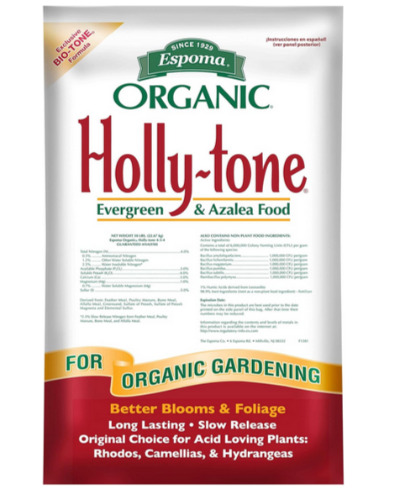
Product Type: Granular organic formula
NPK Ratio: 4-3-4
Size: 50-pound bag
Best For: Large plantings, established gardens, commercial use
Product Description and Design
Espoma’s Holly-Tone is the heavy hitter in the acid plant food category. This 50-pound bag is a serious commitment for gardeners with substantial plantings. The 4-3-4 ratio is well-balanced for azaleas and other acid-loving plants.
This is Espoma’s flagship organic product. They’ve been making it for decades, and it’s one of the most trusted brands in organic gardening. The formula includes beneficial mycorrhizae and beneficial bacteria that enhance plant growth.
The “Holly-Tone” name is a bit historical—Espoma originally created it for holly plants, but it works perfectly for all acid-loving plants, including azaleas, rhododendrons, hydrangeas, and mountain laurel.
Best Use Cases
This massive 50-pound bag is for serious gardeners. If you have a landscape with 20+ azaleas, or you’re managing a community garden, or you run a nursery, this is your product.
It’s also smart if you have other acid-loving plants mixed in with azaleas. A bag this size handles azaleas, hydrangeas, blueberries, and rhododendrons together. One purchase covers your whole landscape.
Professional landscapers often use Holly-Tone in large quantities. They know it works consistently, and the bulk pricing makes economic sense for their business.
Key Features Explained Simply
The standout feature is the inclusion of beneficial fungi and bacteria. These microorganisms form relationships with plant roots, helping them absorb water and nutrients more efficiently. You’re not just feeding the plant; you’re improving how the plant feeds itself.
The 4-3-4 ratio is tested and proven. Espoma has been using this formula for so long that it’s basically become the standard for acid plant fertilizers. It works because the balance is right for the way these plants grow.
This formula also contains mycorrhizae, which are fungal networks that extend plant roots. Your azalea can reach and absorb nutrients from soil farther away. This is especially valuable in established gardens where the immediate root zone might be depleted.
Real-Life Usage Insight
Gardeners who work with Holly-Tone love the reliability. Once you’ve used it successfully, you keep using it because you know what to expect.
The large bag size means you’re not constantly repurchasing. One bag usually lasts an entire season for substantial plantings. You buy it in spring, use it throughout the season, and you’re good.
People also like Espoma’s reputation. The company has been in business for over 100 years. They stand behind their products. If something doesn’t work, they want to hear about it.
Pros and Cons
Pros:
- Large 50-pound bag is economical for big plantings
- Includes beneficial mycorrhizae and bacteria
- Proven 4-3-4 formula trusted for decades
- Works for all acid-loving plants
- Improves soil structure and biology
- Professional-grade quality
- Consistent results year after year
- Excellent brand reputation
Cons:
- Massive bag is heavy and awkward to handle
- Too much product for small plantings
- Must store carefully to prevent moisture damage
- Price is high in absolute dollars (though reasonable per pound)
- Takes longer to see results than synthetic products
- Requires regular moisture for activation
- Not ideal if you like organic but prefer slower application
- May contain fillers that settle in the bag
Performance Discussion
Holly-Tone delivers everything promised. Plants fed with this product develop vigorously. New growth is healthy. Flowers bloom reliably. The beneficial microbes enhance these results beyond what you’d get from fertilizer alone.
The inclusion of mycorrhizae is a real performance booster. Over a season, these fungi colonize your soil. By the second and third season of use, your plants become noticeably more efficient at getting nutrients. That’s performance that builds over time.
For large plantings, the consistent results make a real difference. You’re managing many plants, so reliability is crucial. Holly-Tone removes guesswork.
Ease of Use
A 50-pound bag requires some planning. You need storage space, preferably dry and cool. You need a way to move the bag without hurting yourself.
Once you’re set up to handle the bag, application is simple. Spread it on soil, water in, let it work. The mycorrhizae don’t require any special activation—they establish naturally.
Value for Money
The per-pound cost of Holly-Tone is very reasonable, especially for a premium organic product with beneficial microbes. If you spread the cost across 20+ plants and multiple seasons, the value becomes excellent.
The challenge is upfront cost. A 50-pound bag might cost $40-60. That’s a real expense. But when you divide it among your plants, the cost per application is actually quite low.
For large landscapes, this is the most economical choice. For small plantings, it’s overkill financially.
5: Down To Earth Organic Acid Mix – 25 lb Bag
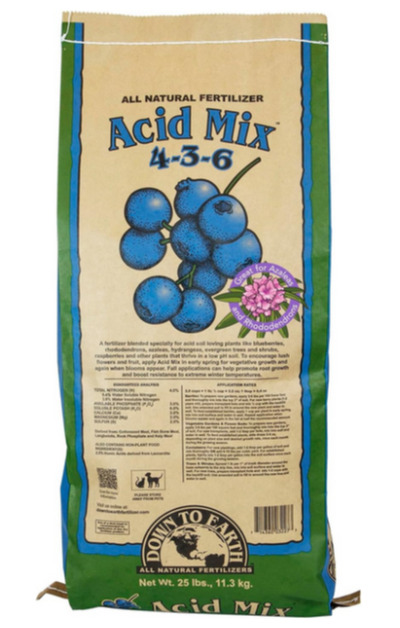
Product Type: Granular organic powder
NPK Ratio: 4-3-6
Size: 25-pound bag
Best For: Large plantings, regular feeders, landscape professionals
Product Description and Design
Down To Earth’s 25-pound bag is the mid-tier option in bulk fertilizers. Same excellent 4-3-6 formula as the 5-pound bag, but five times the quantity. This size hits the sweet spot for many gardeners with substantial plantings who don’t need the massive 50-pound commitment.
The formula is identical to the smaller bag—fully organic, high-potassium emphasis, and specifically formulated for acid-loving plants. The only difference is quantity and package size.
Best Use Cases
This size is perfect if you have 10-20 azaleas or a mixed garden with several acid-loving plants. You get enough product to handle real feeding without way overbuying.
Gardeners who prefer annual feeding programs appreciate this size. Buy one bag in spring, apply it throughout the season, and you’re covered. No mid-season scrambling to reorder.
It’s also ideal for people who want to adjust application rates. With 25 pounds, you can be generous with your feeding without worrying that you’ll run out.
Key Features Explained Simply
Everything about this product is identical to the 5-pound version—same organic ingredients, same 4-3-6 ratio, same soil-building benefits. The only difference is you get five times more product.
The 4-3-6 ratio still emphasizes potassium for flowering. Your azaleas will receive consistent nutrition for robust bloom production.
Sulfur content naturally supports soil acidity. With 25 pounds to work with, you can really make an impact on your soil pH over time.
Real-Life Usage Insight
Gardeners with medium-to-large plantings love this size. It’s enough to make a difference without being overwhelming to manage.
People report that having plenty of product on hand removes stress about running out mid-season. You can be more generous with applications, which sometimes produces better results than stingy feeding.
The 25-pound bag also lets you experiment. Want to try a heavier feeding schedule? You have enough product. Want to share with a friend? You have plenty to split.
Pros and Cons
Pros:
- 25 pounds is ideal mid-tier size
- Same excellent 4-3-6 formula
- Good value for the amount
- Enough for entire season with multiple plantings
- Fully organic and sustainable
- Higher potassium encourages flowering
- Can adjust application rates freely
- Great for sharing or splitting
Cons:
- Heavier bag is more difficult to handle
- Requires dedicated storage space
- Bulk purchase is more expensive upfront
- Organic materials can settle or degrade over time
- Requires regular moisture for best results
- Per-pound cost is slightly higher than 50-pound bag
- Not ideal for small plantings
Performance Discussion
Performance is identical to the 5-pound version but with more product to work with. Gardeners with larger plantings often report better results simply because they can apply more generously without worrying about running out.
The extra potassium continues to deliver excellent flowering. With 25 pounds available, you can maintain consistent feeding throughout the entire growing season, which maximizes bloom production.
Over multiple seasons, the large quantity allows you to really transform your soil. The cumulative effect of multiple applications is more noticeable with 25 pounds than you’d see from a 5-pound bag.
Ease of Use
The main consideration is handling a 25-pound bag. It’s heavy. If you have help or access to proper lifting equipment, it’s fine. Solo lifting and carrying requires care.
Storage is more demanding than smaller bags. You need a dry location with room. Consider placing the bag in a plastic container or bins to protect from moisture and pests.
Application is straightforward—same as the smaller size. Spread, water, wait.
Value for Money
This is the sweet spot for value. You get a significant bulk discount compared to the 5-pound bag, but the commitment isn’t as enormous as the 50-pound option.
The cost per pound is very competitive. For gardeners with substantial plantings, this represents excellent value for a premium organic product.
Comparison Insights: Which Fertilizer Wins?
Now that you’ve seen all five products, let’s talk about how they compare. Each has a different strength.
For Ultimate Convenience: Jobe’s spikes win. They require zero preparation. If you value simplicity above all else, spikes are the answer.
For Organic Certification: Both DR EARTH and Down To Earth products are certified organic. If you’re managing an organic garden officially, these are your only options from this list. Holly-Tone is organic but not certified.
For Best Flowering Performance: Down To Earth’s 4-3-6 formula with extra potassium edges out competitors for flower production. The higher potassium does make a difference.
For Large Plantings: Holly-Tone’s 50-pound bag provides the best value for big landscapes. The inclusion of beneficial microbes adds performance beyond basic fertilizing.
For New Gardeners: DR EARTH’s 4-pound bag is perfect. The small size lets you try it without overcommitting. Clear instructions. Reliable results.
For Balanced All-Around: Holly-Tone’s 4-3-4 ratio is the tried-and-true formula. It’s slightly less aggressive on flower production than 4-3-6, but it still works beautifully.
For Budget-Conscious: Both Down To Earth options offer excellent value. The per-pound cost is lower than competitors, and the 4-3-6 formula is excellent.
Buying Guide: How to Choose
Here’s how to think about choosing the right product for your situation.
Count Your Azaleas
How many azaleas are you feeding? If you have 1-3 plants, spikes or a small bag make sense. If you have 5-15 plants, mid-size bags are right. If you have 20+, bulk purchases make economic sense.
Consider Your Space
Where will you store the fertilizer? Spikes need no storage. Small bags fit on a shelf. A 50-pound bag requires a dedicated corner.
Think About Organic Status
Do you need certified organic? Only DR EARTH and Down To Earth products carry that certification. If you’re selling produce or have organic certification requirements, this matters.
Evaluate Your Schedule
Will you remember to apply fertilizer every 6-8 weeks? If yes, liquid or granular works fine. If you need to forget about it, spikes handle the schedule automatically.
Assess Your Budget
Upfront cost varies massively. Spikes are expensive per application but no commitment. Small bags cost less upfront. Large bags are economical long-term but hurt the wallet initially.
Match Your Soil
If your soil is already somewhat acidic, any of these work. If your soil is neutral or alkaline, you want something with sulfur (Down To Earth products include it). This helps lower pH over time.
Consider Results Timeline
Can you wait 6-8 weeks to see improvement? Organic products take time. Need faster results? Spikes release more quickly than granules.
Who Should Buy Each Product?
Let me make this concrete by describing who each product is best for.
Jobe’s Spikes: You have a few azaleas in containers or a small landscape bed. You value convenience and simplicity. You’re willing to pay more per application for the ease. You don’t want to think about fertilizing much.
DR EARTH 4-Pound Bag: You’re new to gardening or new to acid-loving plants. You want to try organic fertilizing without committing to a huge purchase. You have 2-5 azaleas. You’re budget-conscious but willing to pay for organic certification.
Down To Earth 5-Pound Bag: You have 5-10 azaleas. You want organic feeding. You prefer trying products in manageable quantities. You’re willing to repurchase to keep a supply on hand.
Holly-Tone 50-Pound Bag: You have a large landscape with many acid-loving plants. You want professional-grade reliability. You’re willing to handle and store a massive bag. You want the benefit of mycorrhizae. You feed regularly and want to minimize repurchasing.
Down To Earth 25-Pound Bag: You have 10-20 azaleas or multiple acid-loving plants. You want organic feeding without the massive commitment of 50 pounds. You appreciate the bulk discount and want true value. You’ll use it throughout the season.
Common Mistakes to Avoid When Fertilizing Azaleas
Even with the right product, mistakes happen. Here are things to watch out for.
Mistake 1: Using Regular All-Purpose Fertilizer
This is the biggest error. Regular lawn fertilizers and general-purpose plant foods don’t work for azaleas. They’re formulated for neutral soil. Azaleas can’t access the nutrients properly. You’ll waste money and frustrate your plants.
Always choose fertilizer specifically labeled for acid-loving plants.
Mistake 2: Fertilizing on a Dry Soil
Granular fertilizers need water to dissolve and distribute. If you spread fertilizer on dry ground and never water, nothing happens. The granules just sit there.
Always water thoroughly after applying dry fertilizer. Better yet, water first to soften soil, apply fertilizer, then water again.
Mistake 3: Over-Fertilizing
More fertilizer doesn’t equal better results. Too much nitrogen causes excessive leafy growth, which crowds out flowers. You get a bushy plant with few blooms—exactly opposite of what you want.
Follow package directions. Don’t double up. If directions say “one spike every 6 weeks,” don’t put in two spikes.
Mistake 4: Feeding at the Wrong Time
Fertilize during active growing season (spring and early summer). Stop feeding by late summer. Fall fertilizing pushes tender new growth that winter kills back anyway.
Timing matters. Spring feeding gives energy for growth and blooming. Late-season feeding is wasted effort.
Mistake 5: Ignoring Soil pH
If your soil is neutral or alkaline, fertilizer alone won’t fix it. Azaleas still can’t access nutrients properly. Amend your soil with sulfur or acidifying products, then fertilize.
Test your soil pH. If it’s above 6.5, work on lowering it before expecting good results.
Mistake 6: Applying Spike Fertilizer Unevenly
If you cluster spikes in one area, that section gets overfed while other parts of the root zone stay hungry. Space them in a circle around the drip line of the plant.
For a small shrub, 2-3 spikes evenly placed works better than all 5 shoved in one spot.
Mistake 7: Forgetting About Container Plants
Container azaleas need more frequent feeding than ground-planted ones. Soil in pots has limited nutrients, and watering leaches them out. Feed container plants every 4 weeks instead of 6-8 weeks.
Mistake 8: Switching Products Mid-Season
Your plant needs consistency. If you start with one fertilizer, stick with it through the season. Constantly switching confuses the feeding schedule and prevents you from seeing real results.
Try different products in different seasons to find what works best, but don’t bounce around within a single year.
Performance Comparison Table
Let me break down performance across key metrics:
| Product | Convenience | Cost Per App | Organic | Speed of Results | Flower Production | Soil Health | Best For |
|---|---|---|---|---|---|---|---|
| Jobe’s Spikes | Excellent | High | Mostly | Moderate | Good | Fair | Small plantings |
| DR EARTH 4 lb | Good | Moderate | Certified | Moderate | Good | Excellent | Beginners |
| Down To Earth 5 lb | Good | Low | Certified | Moderate | Excellent | Excellent | Budget conscious |
| Holly-Tone 50 lb | Fair | Low | Organic | Moderate | Good | Excellent | Large landscapes |
| Down To Earth 25 lb | Good | Low | Certified | Moderate | Excellent | Excellent | Medium plantings |
Final Verdict and Recommendations
After reviewing all five options, here’s what stands out.
The best overall fertilizer for azaleas depends on your specific situation. There isn’t one single winner—each product excels in different scenarios.
If you must choose one: Down To Earth’s 25-pound Organic Acid Mix hits the best balance of value, performance, and practicality for most gardeners. The 4-3-6 formula encourages excellent flowering. The organic certification matters if that’s important to you. The size is manageable for most plantings. The per-pound cost is excellent.
For convenience without compromise: Jobe’s spikes are the only real choice. Yes, they cost more per application. Yes, you need to replace them regularly. But for gardeners who hate measuring and mixing, spikes take stress out of fertilizing.
For serious organic gardeners: Both DR EARTH and Down To Earth products are certified organic. Both work excellently. Choose based on size—4 pounds for small plantings, 5-25 pounds based on your garden size.
For large landscapes: Holly-Tone’s 50-pound bag with included mycorrhizae delivers professional-grade results. The beneficial microbes genuinely enhance plant growth. The cost per pound is reasonable. The 4-3-4 formula is proven.
For maximum flower production: Down To Earth’s higher potassium (6 in the NPK ratio) creates noticeably better blooming. If flowers are your priority, choose their 5-pound or 25-pound bag.
Getting Started with Your Fertilizer Plan
Here’s how to start feeding your azaleas properly.
Step 1: Test Your Soil
Get your soil tested. You need to know the pH. If it’s below 6.0, you’re good. If it’s higher, work on acidifying first.
Step 2: Choose Your Product
Use this guide to pick the right fertilizer for your situation.
Step 3: Time Your First Application
Apply in early spring when new growth appears. This gives your azalea energy for the season ahead.
Step 4: Mark Your Calendar
Set a reminder for every 6-8 weeks. Consistency matters more than anything else. Regular feeding beats sporadic heavy applications.
Step 5: Observe Results
Watch how your plants respond. Check leaf color. Count the flowers. See if new growth looks vigorous. Make notes about what works best for you.
Step 6: Adjust as Needed
If flowers decrease, if leaves stay yellow, or if growth slows down, you might need to adjust. Don’t jump products constantly, but do try different application rates or timing.
Wrapping Up
Azaleas are stunning plants, and they reward you generously when you feed them right. The best fertilizer for azaleas is acid-specific, balanced in the right nutrients, and applied consistently.
All five products reviewed here work. They’re not gimmicks or marketing hype. They’re legitimate products used by real gardeners with real success. Your job is matching the right product to your situation.
Small planting? Spikes or small bags work great. Large landscape? Bulk bags give you value. New to gardening? Start with a smaller bag from a trusted brand. Already experienced? Jump to bulk and save money.
Don’t overthink this. Pick a product, follow the directions, and apply it on schedule. Your azaleas will tell you if something’s wrong. If they’re healthy, green, and blooming profusely, you’ve got the right fertilizer. If they’re struggling, try something different next season.
The beautiful thing about azaleas is that they’re forgiving. Feed them well with acid-specific fertilizer, and they’ll reward you with years of gorgeous blooms. Your garden will look incredible, and you’ll know it’s because you cared enough to give your plants exactly what they need.
Now get out there and feed those azaleas. Those stunning flowers won’t create themselves.

Hi, I’m Mary, the founder of GardenCure.com. I’m passionate about creating healthy, beautiful gardens and well-kept lawns. I share practical experience and trusted advice on garden and lawn gear that truly works. With the support of my dedicated research team, our writers produce honest, in-depth reviews using reliable, authentic sources—helping you choose the right tools with confidence for your outdoor space.