
5 Best Fertilizer for Peace Lily In 2026
Peace lilies are some of the easiest plants to grow indoors, but keeping them healthy and blooming requires the right care. One of the most important steps in peace lily plant care is feeding them with quality plant food. A good peace lily fertilizer makes a huge difference in how well your plant grows.
In this article
I’ve tested and researched many plant fertilizers designed for peace lilies. After looking at different types of liquid fertilizers, concentrates, and spray options, I’m sharing my honest review of five products that really stand out. Whether you’re new to plant care or you’ve been growing peace lilies for years, this guide will help you pick the right fertilizer.
Why Peace Lilies Need Proper Fertilizer
Peace lilies don’t need as much food as some other plants, but they do need regular feeding during the growing season. Without proper nutrition, your peace lily leaves may start to look dull. The growth slows down, and blooms become rare.
A quality peace lily fertilizer helps your plant produce those beautiful white flowers it’s known for. It also makes the foliage greener and deeper. The roots become stronger too, which means your plant can handle stress better.
Most peace lily fertilizers come as liquids you mix with water. Some come as concentrates that last longer. The best ones have a balanced mix of nitrogen, phosphorus, and potassium. These three main nutrients work together to keep your peace lily thriving.
The numbers you see on fertilizer labels (like 3-1-2) tell you the nutrient ratio. For peace lilies, formulas with slightly higher nitrogen help build strong leaves. The phosphorus supports flowering. Potassium keeps the whole plant healthy and disease-resistant.
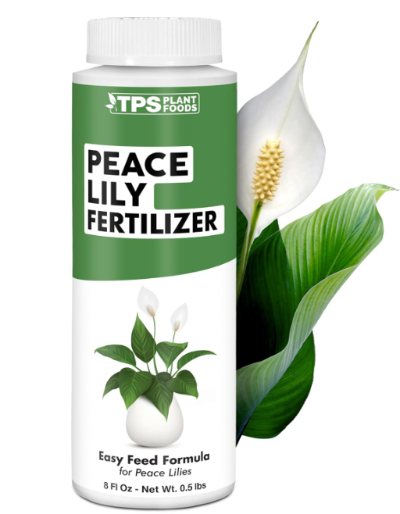
Peace Lily Fertilizer – Liquid Plant Food for More Blooms, Deep Green Leaves & Healthy Root Development (8 oz)
Product Overview
This is a straightforward liquid plant food made specifically for peace lilies. The 8-ounce bottle is a good starting size if you’re new to peace lily care. It comes ready to use, and you simply mix it with water according to the directions on the label.
The formula is designed to encourage blooming while keeping leaves dark and vibrant. It also supports root health, which is essential for indoor peace lily plants in pots.
Best Use Cases
This product works well if you want something simple and reliable. It’s perfect for people who have just one or two peace lily plants. The small bottle size means you won’t have leftover product sitting around for months.
If your peace lily has been looking tired or not blooming much, this fertilizer can help it bounce back. Use it during the growing season (spring and summer) for best results.
Key Features Explained
The liquid formula absorbs quickly into the soil. You don’t have to wait long to see your peace lily respond. The bottle provides clear mixing instructions, so even beginners can apply it correctly.
The nutrient blend targets what peace lilies need most. Healthy roots mean better water absorption. Stronger leaves mean your plant looks fuller and more attractive. Flowers come more often when conditions are right.
Real-Life Usage Insight
When you open the bottle, you’ll notice it has a mild plant-food smell. It’s not harsh or chemical-smelling, which is nice when you’re working indoors. The liquid mixes easily into water without leaving residue.
You’ll apply it every few weeks during the growing season. Many people set a phone reminder so they don’t forget. The bottle size means you’ll need to buy it again within a few months if you use it regularly on multiple plants.
Honest Pros and Cons
Pros:
- Simple to use with clear instructions
- Good size for small plant collections
- Specifically formulated for peace lilies
- Helps both leaves and flowers
- Works quickly on hungry plants
- Affordable starting option
Cons:
- Smaller bottle size means more frequent purchases
- Don’t get much product per dollar compared to concentrates
- Limited quantity if you have many plants
- No spray option available with this product
Performance Discussion
This fertilizer delivers solid results. Peace lilies fed with this product show deeper green coloring within weeks. New leaf growth appears healthier. Blooming frequency improves, especially if the plant was struggling before.
The results aren’t overnight magic, but they’re steady and reliable. You’ll notice gradual improvement with consistent use. Plants that seemed stuck often start growing again after a few applications.
The formula is gentle enough that you won’t burn your plant if you follow directions. This is important because peace lilies have delicate root systems. Too much fertilizer can hurt them. This product’s balance makes it safe for regular use.
Ease of Use
Measuring and mixing take just a few minutes. The bottle has a cap that’s easy to open and close. You don’t need special equipment beyond a measuring spoon and a watering can.
Cleanup is minimal. The liquid doesn’t stain clothes easily, and it washes off hands with soap and water. You can store the bottle in a cool, dark place under the sink or in a cabinet.
Value for Money
For a small collection of peace lilies, this product offers good value. The price per use is reasonable. You’re paying for convenience and a product made just for your plant type.
If you have more than three or four peace lilies, a larger bottle or concentrate might save money over time. But for testing whether you like this brand, it’s a smart choice.
16oz Peace Lily Plant Indoor Live Fertilizer – Makes 96 Gallons of Peace Lily Fertilizer

Product Overview
This is a concentrate, which means a small bottle goes a long way. The 16-ounce bottle makes 96 gallons of ready-to-use fertilizer when diluted properly. That’s a huge amount of plant food from one container.
The concentrate formula is nutrient-rich and designed to keep indoor peace lilies lush and blooming. It produces stronger roots and more elegant white flowers. One bottle lasts much longer than a ready-to-use product.
Best Use Cases
This concentrate is ideal if you have multiple peace lily plants. A home with three or more plants will use this up much faster than someone with just one or two. It’s also perfect for people who want to save money over time.
If you like to water your plants on a regular schedule, mixing a batch of fertilizer water at the start of the week works well. You can prepare several gallons at once and use them throughout the growing season.
Plant lovers who forget to buy fertilizer often find concentrates less frustrating. One bottle lasts so long that you won’t need to shop as often.
Key Features Explained
Concentrate formulas are powerful because they’re not diluted. This means more nutrients are packed into less liquid. When you mix it with water, you get a large volume of working plant food.
The dilution ratio matters. Follow the label directions carefully so you don’t make it too strong or too weak. Getting the ratio right ensures your peace lily gets proper nutrition without risk of burning roots.
The nutrient blend in this concentrate supports healthy growth across the whole plant. Roots, stems, and leaves all benefit. Flowers develop better color and last longer on the plant.
Real-Life Usage Insight
Mixing concentrate requires paying attention to measurements. If you’re rushing, it’s easy to mess up the ratio. Many people use a measuring cup and a mixing bottle to keep things organized.
Once mixed, the fertilizer water looks like weak tea. Store it in a labeled container so you don’t confuse it with regular water. Some people prepare small batches weekly so they always have fresh mixed fertilizer ready.
The concentrate itself has a stronger plant-food smell than ready-to-use products. This is normal. The smell fades once you dilute it with water.
Honest Pros and Cons
Pros:
- One bottle makes huge amounts of plant food
- Best price per gallon of any option
- Lasts many months even with frequent use
- Great for busy plant parents with multiple plants
- Environmentally friendly (less packaging)
- Professional-grade strength
Cons:
- Requires proper mixing to avoid mistakes
- Takes more effort than ready-to-use formulas
- Need to do math to get dilution right
- Harder to use if you only have one or two plants
- Takes up space for storage after mixing
- Easy to forget how strong it should be
Performance Discussion
The results from this concentrate are excellent. Because it’s more potent, you get fast improvement in your peace lily’s appearance. Leaves turn darker green. Growth accelerates. Flowers appear more often.
The 96-gallon yield means consistent feeding throughout multiple months. You maintain steady nutrition for your plants without gaps. Peace lilies thrive when they get regular, reliable feeding.
Some users report that one bottle does last them nearly a year if used on a small collection of plants. Heavy feeders will go through it faster. But the value is undeniable.
Ease of Use
Mixing takes planning. You need to measure carefully and use clean containers. If you’re organized and don’t mind a few extra steps, this isn’t hard. If you prefer zero-effort plant care, it might feel like work.
Once mixed, using the fertilizer is as simple as watering. Pour it on your peace lily soil the same way you’d use any watered plant food. No special skills needed after the mixing stage.
Keeping track of what’s mixed and what’s not requires a labeling system. Some people use tape and marker. Others use pre-made labels. This small step prevents confusion later.
Value for Money
This product has the best cost-per-use of any option reviewed. If you calculate the price per gallon of finished plant food, it’s far cheaper than ready-to-use bottles.
The only downside is the upfront cost. You pay more at the start, but the product lasts so long that the value becomes obvious over time. It’s an investment that pays off.
For anyone serious about plant care, this concentrate is smart shopping. The savings add up quickly if you have multiple plants.
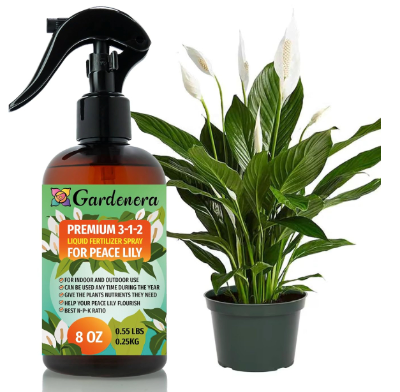
Gardenera Professional Peace Lily Spray Fertilizer Mist for Home Gardening
Product Overview
This spray fertilizer is different from the liquid formulas you mix with water. Instead, you spray it directly onto the peace lily leaves. The mist delivers nutrients that the leaves can absorb right away.
The 3-1-2 formula is gentle and won’t burn delicate foliage. It’s made for home gardeners who want an easier application method. The bottle holds 8 ounces and comes in a spray bottle that’s ready to use.
Best Use Cases
Spray fertilizers are best for quick nutrition boosts. If your peace lily looks tired but you can’t figure out why, a spray application can help fast. The leaves absorb nutrients quickly from the mist.
This works well as a helper product alongside soil feeding. You might use a regular liquid fertilizer in the soil, then do a spray feeding every other week. The combination gives your plant multiple nutrition sources.
People who have difficulty remembering fertilizer schedules often like spray products. They’re quick to apply and visible results come faster than soil feeding alone.
Key Features Explained
The 3-1-2 ratio means this formula has three parts nitrogen, one part phosphorus, and two parts potassium. This gentle blend won’t harm peace lily leaves if you follow directions. The formula is specifically balanced for foliar feeding.
Foliar feeding means the leaves absorb nutrients directly from the mist. This bypasses the soil and roots, which is useful if soil nutrients are locked up or roots aren’t absorbing well.
The spray bottle is convenient. No mixing required. No measuring. Just spray and you’re done.
Real-Life Usage Insight
When you spray the mist on the leaves, coat both the top and bottom surfaces. Peace lily leaves are waxy, so the mist sits on the surface briefly before being absorbed. The best time to spray is early morning or late evening when it’s cooler.
Avoid spraying in direct sunlight. The water droplets can focus the sun’s rays and burn leaf spots. This isn’t the fault of the fertilizer but rather how water and light interact.
The spray goes a long way. You might only use an ounce or two per peace lily. One bottle handles multiple plants for several weeks.
Honest Pros and Cons
Pros:
- No mixing or measuring needed
- Spray format is convenient and fast
- Results visible in just days
- Gentle formula safe for tender leaves
- Good for picky plants
- Small bottle easy to store
- Boosts flagging plants quickly
Cons:
- More expensive per application than soil fertilizers
- Can’t be the only feeding method long-term
- Requires regular spraying schedule to be effective
- Don’t use in direct sun
- Best results need both top and bottom leaf spray
- Empty bottle means buying again soon
- Not ideal for very large plant collections
Performance Discussion
Spray fertilizers work fast because leaves absorb nutrients quickly. Within a few days, you’ll notice peace lily leaves looking fresher and greener. The plant perks up almost visibly.
However, spray feeding alone isn’t enough for long-term health. Roots still need nutrition from the soil. The best approach combines spray feeding with regular soil fertilizer. Spray helps with quick boosts. Soil feeding provides steady nutrition.
Plants with stressed roots often respond well to spray feeding. The leaves get what they need while the root system recovers. This is particularly useful if you’ve overwatered or underwater a peace lily recently.
Ease of Use
Spray is the easiest application method overall. Hold the bottle, spray, and you’re done. There’s no mixing, measuring, or waiting. Even people who claim they’re bad at plant care can spray a plant.
The only technique involved is remembering to coat both leaf surfaces. Some people miss the underside and don’t get full benefit. But once you know this, it’s easy to do correctly.
Cleanup is nothing. There’s no spilled liquid or residue on your hands. You might get a tiny bit of water on your fingers, but that washes off instantly.
Value for Money
The price per application is higher than soil fertilizers. If you calculate how much you use per peace lily, each spray session costs more than a soil feeding.
For people with just one or two plants, this isn’t a big deal. The bottle lasts months. For large collections, cost adds up. But as a supplement to soil feeding, the convenience might be worth the extra expense.
Many plant parents buy one bottle to keep on hand for emergencies. When a peace lily looks stressed, the spray gives quick help without major effort.
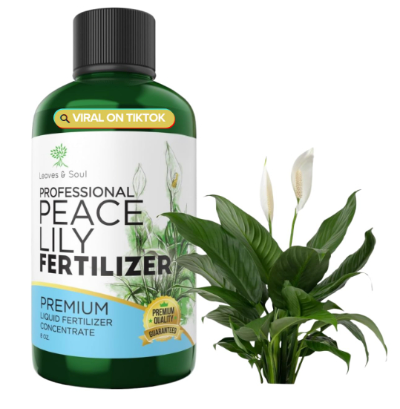
Professional Peace Lily Fertilizer Liquid 3-1-2 Concentrate 8 oz
Product Overview
This is a professional-grade concentrate made right here in the USA. The 8-ounce bottle is smaller than Product 2’s 16-ounce bottle, but it still makes a large volume of working fertilizer. The 3-1-2 ratio is perfect for peace lilies.
The formula is considered premium because it uses higher-quality nutrient sources. Professional growers often prefer concentrates because they’re economical and reliable. This product brings that same level of quality to home gardeners.
Best Use Cases
Professional-grade fertilizer suits anyone who takes their peace lily care seriously. If you want the best possible results and don’t mind spending a bit more, this product delivers.
It works well for people who want to grow show-quality peace lilies. If you’re thinking about entering plant competitions or just want the most beautiful peace lily on your street, premium fertilizer helps.
People who’ve used cheap fertilizers and weren’t happy will notice the difference immediately. The quality matters, and quality costs a bit more.
Key Features Explained
The “professional grade” label means the nutrient sources are higher quality. Cheap fertilizers use lower-quality compounds that don’t work as well. Professional products use ingredients that mix better and deliver faster results.
The concentrate form means you still mix it with water. The advantage over Product 1 is that you get more fertilizer per bottle. The advantage over Product 2 is a smaller bottle size if you don’t need 96 gallons.
This is a middle-ground option. You get the benefits of concentrates without the huge volume of Product 2. It’s ideal for people with a moderate number of plants.
Real-Life Usage Insight
The concentrate has a noticeable plant-food smell when you open the bottle. This indicates the quality ingredients inside. Once you mix it with water, the smell is much less obvious.
Mixing this concentrate requires the same care as any other. Get the ratio right by following label instructions. Using a measuring spoon and a small container helps you stay organized.
Many professional gardeners keep this fertilizer on hand year-round. They use it during the growing season and sometimes in winter at lower concentrations. It’s reliable enough to trust with valuable plants.
Honest Pros and Cons
Pros:
- Professional-grade quality
- Made in the USA
- More economical than ready-to-use
- Smaller bottle than other concentrates
- Produces fantastic results
- Perfect 3-1-2 ratio for peace lilies
- Long shelf life
- Trusted by experienced growers
Cons:
- More expensive per ounce than budget brands
- Requires mixing (not ready-to-use)
- Higher upfront cost
- Needs careful storage
- Overkill if you have just one casual plant
- Measuring can feel fussy for some people
Performance Discussion
Professional-grade fertilizer delivers outstanding results. Your peace lily will grow faster, bloom more frequently, and look dramatically healthier. The improvement is noticeable within weeks.
Roots develop better structure and strength. Leaves reach maximum size and color. Flowers have better shape and last longer. These improvements compound over time as your plant gets consistently excellent nutrition.
People who switch from budget fertilizers to this professional product often can’t go back. The difference in results is that obvious.
Ease of Use
Mixing this concentrate is straightforward once you understand the ratio. Some people write the dilution rate on the bottle with a permanent marker so they don’t have to look it up each time.
After mixing, use it exactly like any watered fertilizer. Pour it on the soil when you water. The timing and amount per plant follow normal fertilizing schedules.
For people who already have a system for mixing and storing plant food, this fits right in. For people new to concentrates, there’s a small learning curve.
Value for Money
You pay more upfront, but the value is excellent. A bottle lasts many months on a reasonable collection of plants. The quality difference justifies the higher price if you care about results.
For casual plant parents with one or two plants, this might be more expensive than necessary. For anyone with three or more plants, the value becomes clear. High-quality results and long bottle life make the price reasonable.
Professional gardeners consider this a bargain for the results they get. If you care about your peace lily’s health, the investment is worthwhile.
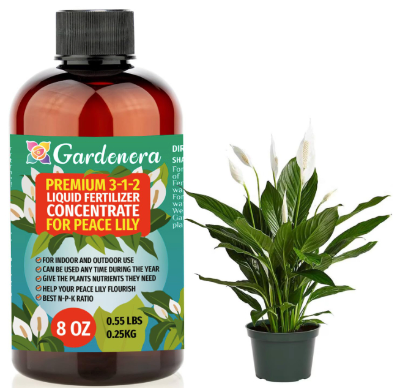
Premium Liquid Peace Lily Plant Fertilizer – 3-1-2 Concentrate for Indoor Plants
Product Overview
This premium organic fertilizer from Gardenera is designed specifically for peace lilies and other indoor plants. The 8-ounce concentrate bottle represents a commitment to quality ingredients without synthetic chemicals.
The 3-1-2 formula is identical to other professional products, but the organic approach means no harsh additives. The brand focuses on natural nutrients that work with your plant’s biology rather than forcing growth with chemicals.
Best Use Cases
If you prefer organic and natural products, this is your best choice. People who avoid synthetic chemicals in all areas of life usually pick this option. It delivers the same results as synthetic fertilizers but with organic-source nutrients.
It’s perfect for homes with children or pets. While any fertilizer should be used safely, organic products offer extra peace of mind. You’re not using anything you wouldn’t want anywhere near your family.
Gardeners who practice organic methods in their outdoor gardens usually extend the same approach to indoor plants. This fertilizer fits that philosophy perfectly.
Key Features Explained
Organic plant food uses nutrient sources derived from natural materials rather than synthetically made chemicals. This doesn’t mean it’s weaker. Organic doesn’t equal weak. It just means the source is natural.
The 3-1-2 ratio supports peace lily growth with organic nitrogen, phosphorus, and potassium sources. The formula is still concentrated, so one bottle makes many gallons of working fertilizer.
Being organic doesn’t change how you use it. You still mix it with water and apply it to soil. The application method is identical to synthetic concentrates.
Real-Life Usage Insight
When you open an organic fertilizer bottle, you might notice a different smell than synthetic products. Some people find it more pleasant. The organic ingredients don’t have the sharp chemical smell.
Mixing works the same as any concentrate. Get the ratio right, and you’re good to go. The organic formula dissolves well in water without leaving residue.
Organic doesn’t mean slower. Results come just as fast as synthetic options. Your peace lily won’t know the difference between organic and synthetic nutrients once they’re in the soil.
Honest Pros and Cons
Pros:
- Organic ingredients without synthetic chemicals
- Perfect 3-1-2 ratio for peace lilies
- Made by trusted brand
- Concentrate format is economical
- Same fast results as synthetic products
- Safe for homes with kids and pets
- Good for environmentally conscious gardeners
- Professional quality at reasonable price
Cons:
- More expensive than basic fertilizers
- Organic products sometimes sell out
- Concentrate still requires mixing
- May not be available everywhere
- Premium price tag
- Overkill if you don’t care about organic
Performance Discussion
This organic fertilizer performs as well as any professional synthetic option. Peace lilies grow beautifully, bloom frequently, and develop deep green color. The organic source doesn’t compromise results.
In fact, some people report that plants seem healthier long-term with organic feeding. The theory is that organic nutrients work with natural soil microbes rather than overwhelming them. Whether this is true scientifically, the results speak for themselves.
Professional growers who use organic methods produce world-class plants. This fertilizer brings that level of quality to home gardeners.
Ease of Use
Mixing is the same as any concentrate. No special skills needed. Just follow the dilution ratio on the label and you’re ready to feed your peace lily.
Application is simple. Use it whenever you’d use any other plant fertilizer. The organic formula doesn’t require different techniques or timing.
For people who’ve used organic products before, this feels familiar and comfortable. For people new to organic gardening, it’s easy to understand.
Value for Money
The price is higher than budget options but justified by the quality. You’re paying for organic-source nutrients and a brand commitment to sustainability. If these values matter to you, the cost is reasonable.
For people who just want cheap fertilizer, this isn’t the pick. For people who want the best organic option, this is worth the investment. The bottle lasts many months and delivers excellent results.
Product Comparison: Quick Reference Chart
| Feature | Product 1 | Product 2 | Product 3 | Product 4 | Product 5 |
|---|---|---|---|---|---|
| Format | Ready-to-Use | Concentrate | Spray | Concentrate | Concentrate |
| Size | 8 oz | 16 oz | 8 oz | 8 oz | 8 oz |
| Ratio | Balanced | Balanced | 3-1-2 | 3-1-2 | 3-1-2 |
| Ease | Very Easy | Moderate | Very Easy | Moderate | Moderate |
| Cost Per Use | Moderate | Low | High | Low-Moderate | Low-Moderate |
| Best For | Beginners | Large Collections | Quick Fixes | Serious Growers | Organic Preference |
| Mixing Required | No | Yes | No | Yes | Yes |
| Results Speed | Medium | Medium | Fast | Fast | Medium |
Detailed Buying Guide: How to Pick the Right Peace Lily Fertilizer
Consider Your Plant Collection Size
If you have one or two peace lilies, a ready-to-use product or spray fertilizer makes sense. You don’t need enormous quantities. A small bottle gets used before it expires.
With three to five peace lilies, a small concentrate like Products 4 or 5 offers better value than ready-to-use. One bottle lasts many months. You’re not wasting money on overbuying.
With a large collection of six or more plants, Product 2’s massive 16-ounce concentrate becomes the obvious choice. The economies of scale are huge. You’ll use it all before it goes bad.
Think About Your Gardening Style
Hands-off gardeners prefer ready-to-use and spray products. If you want minimal fuss, these options let you feed plants with almost no effort. Mix-it-yourself concentrates add steps that some people find annoying.
Organized gardeners who enjoy the details of plant care usually prefer concentrates. These people like mixing their own batches and tracking nutrition schedules. For them, concentrates feel like a better way to feed plants properly.
People who like gardening as a hobby (not a chore) often split the difference. They use a regular soil fertilizer for routine feeding and a spray product for occasional boosts. This combo covers all bases without feeling overwhelming.
Budget Matters
If money is tight, go with a concentrate. The cost-per-use is so much lower that concentrates win on budget every time. One bottle of concentrate costs the same as several ready-to-use bottles but lasts longer.
If you have money to spend and want maximum convenience, ready-to-use is worth it. The extra cost buys you simplicity. No measuring, no mixing, no thinking. Just pour and go.
For a balanced approach, buy one concentrate for regular feeding and one spray bottle for emergencies. This gives you value and convenience without choosing between them.
Factor in Your Space
Concentrate bottles need storage space for the product itself plus space for mixing and storing diluted fertilizer. If you’re short on cabinet space, ready-to-use works better. One small bottle takes minimal room.
Spray bottles take almost no space. You can toss one in a plant-care basket and you’re good. For apartment dwellers or people with limited storage, sprays are practical.
Think about where you’ll mix and store your fertilizer if you go with concentrate. You need a shelf or cabinet with room for multiple bottles and mixing containers.
Review Your Peace Lily’s Condition
Healthy plants that are growing well don’t need premium fertilizer. A basic product works fine. Save the money on expensive options.
Struggling plants often benefit from professional-grade fertilizer. If your peace lily looks dull or hasn’t bloomed in months, upgrade to a better product. The investment usually pays off with improvement.
New plants need gentle care. Start with a basic formula and upgrade only if needed. You don’t know how your specific plant responds yet.
Who Should Buy These Products
Product 1 Buyers
- People new to plant care
- Folks with one or two peace lilies
- Anyone who wants simplicity
- Budget-conscious beginners
- People who forget to buy supplies
Product 2 Buyers
- Serious plant collectors
- People with six or more peace lilies
- Budget-focused experienced gardeners
- Anyone committed to regular feeding
- People with storage space
Product 3 Buyers
- People who want quick results
- Those with traveling schedules
- Anyone who forgets routine fertilizing
- People combining spray with soil feeding
- Plant lovers wanting easy application
Product 4 Buyers
- People serious about plant health
- Gardeners wanting professional results
- Folks with three to five peace lilies
- People willing to invest in quality
- Anyone who wants the best
Product 5 Buyers
- Organic gardening believers
- Families with kids and pets
- People avoiding synthetic chemicals
- Environmentally conscious gardeners
- Anyone wanting organic with professional results
Common Mistakes to Avoid When Fertilizing Peace Lilies
Mistake 1: Feeding Too Often
Peace lilies don’t need constant fertilizer. Overfeeding is far more common than underfeeding. Too much fertilizer burns roots and causes brown leaf tips.
Follow label directions carefully. More isn’t better. Your peace lily prefers regular feeding at the right strength than constant feeding at super strength.
During winter dormancy, feed less frequently or not at all. Peace lilies slow growth when daylight decreases. They don’t need as much nutrition during this resting period.
Mistake 2: Using Wrong Ratio
Some people grab any fertilizer assuming it works for every plant. This is wrong. Different plants need different nutrient ratios.
Peace lilies specifically do well with formulas around 3-1-2. This means three parts nitrogen, one part phosphorus, two parts potassium. Using a formula meant for flowering plants or cacti might not work as well.
Always check the label to confirm the NPK ratio before buying. The three numbers tell you exactly what you’re getting.
Mistake 3: Forgetting to Water Properly
Don’t apply fertilizer to completely dry soil. Water your peace lily first, then apply fertilizer. Dry soil prevents proper nutrient absorption.
Think of it like eating without drinking. Your body works better with both. Your plant is the same way. Water plus nutrients is better than nutrients alone.
Allow water to drain fully before applying fertilizer, but don’t let the soil stay bone dry.
Mistake 4: Using Concentrate Wrong
If you use concentrate, get the ratio exactly right. Too strong, and you burn roots. Too weak, and you waste the product without getting results.
Write the dilution ratio on the bottle with a marker. This prevents guessing next time. Some people keep a mixing cheat sheet on their phone.
Seriously, incorrect ratios are the biggest concentrate mistake people make. Spend ten seconds confirming you’re doing it right.
Mistake 5: Applying Spray at Wrong Times
Never spray in direct sunlight. Water droplets on leaves in bright sun can cause leaf burn. Spray in early morning or late evening instead.
Also avoid spraying immediately before moving your plant to a sunny window. Give the spray time to dry and be absorbed.
If you’re spraying the undersides of leaves, be careful not to get the tops too wet. Peace lilies can develop fungal issues if leaves stay wet too long.
Mistake 6: Not Cleaning Up Properly
If you spill fertilizer, clean it up right away. Don’t leave liquid fertilizer on your floor. It can damage wood or attract pests.
Wash your hands after handling fertilizer. Even natural products can irritate skin if left on too long.
Store fertilizer bottles away from children and pets. Safety first, even with non-toxic products.
Mistake 7: Sticking With One Product if It’s Not Working
If you’ve been using a fertilizer for three months and your peace lily isn’t improving, try something different. Not every product works equally well for every gardener.
Maybe your water chemistry isn’t compatible with that product. Maybe your peace lily’s soil needs something different. Feel free to experiment.
Loyalty to a brand doesn’t help your plant. Results matter more than staying with one product.
Peace Lily Fertilizing Schedule and Tips
Spring and Summer Schedule
During the growing season, feed your peace lily every two to four weeks. This is when the plant actively grows and produces new leaves and flowers. Regular nutrition supports this growth.
Watch your plant. If growth slows, you might need to feed more often. If leaves start looking pale despite regular feeding, try a different product.
Spring and summer is when you’ll see the most difference from quality fertilizer. Flowers are most common during these months.
Fall and Winter Schedule
Reduce feeding as fall arrives. Shorter daylight hours slow plant growth naturally. Less growth means less nutrition needed.
By winter, many gardeners skip fertilizer entirely. The plant enters a dormancy-like state. It doesn’t need feeding while resting.
In early spring, resume regular feeding as days get longer and new growth appears. You’ll see your peace lily wake up and start growing again.
General Tips for Success
Use room-temperature water when mixing concentrate or applying ready-to-use fertilizer. Extremely cold water shocks plant roots. Warm water is fine, but let it cool to room temp first.
If your peace lily seems stressed from low humidity (brown leaf tips), spray the leaves with plain water between fertilizer applications. Moisture helps, and it’s not always about nutrients.
Peace lilies prefer consistent care to sporadic heavy feeding. Regular light feeding beats rare heavy doses. Your plant responds better to rhythm and routine.
Keep an eye on the leaves. Deep green and full means your feeding is working. Pale or yellow leaves might mean too much fertilizer, too little light, or watering issues.
Final Verdict: Which Product Wins?
All five products work well for peace lilies. They’re not garbage options or scams. Every single one will improve your plant’s health when used correctly.
For total beginners with one or two plants: Product 1 (ready-to-use liquid) is the clear winner. No mixing, no confusion, immediate results. Start here and upgrade later if you want.
For plant collectors with multiple peace lilies: Product 2 (16oz concentrate) offers unbeatable value. One bottle lasts months. The savings on multiple plants is substantial.
For people wanting fast results with minimal effort: Product 3 (spray fertilizer) is fantastic. Apply it and see improvement within days. Use it alongside a soil fertilizer for best results.
For serious gardeners wanting professional results: Product 4 (8oz professional concentrate) hits the sweet spot. Professional quality without the cost of Product 2’s huge volume.
For organic gardeners and conscious consumers: Product 5 (organic concentrate) delivers quality results with values-aligned ingredients. You’re not compromising on performance while choosing organic.
If I could recommend only one product to someone with mixed needs, I’d go with Product 4 (Professional Peace Lily Fertilizer 3-1-2 Concentrate, 8 oz). It balances quality, value, and practicality. A small concentrate that makes plenty of fertilizer with professional-grade results. It’s genuinely hard to go wrong.
But honestly, your best choice depends entirely on your situation. The plant parent with two peace lilies and a tight budget should grab Product 1. The collector with eight peace lilies should get Product 2. The person who travels and forgets to fertilize should keep Product 3 on hand.
Read through the guides above and pick the product that matches your life, your collection size, and your plant-care style. All of them will make your peace lily healthier and happier.
Quick Reference: Key Takeaways
- Peace lilies need regular feeding during growing season for best blooms and foliage
- The 3-1-2 nutrient ratio is ideal for peace lily plants
- Ready-to-use products are easiest but most expensive per serving
- Concentrates offer best value if you have multiple plants
- Spray fertilizers provide quick boosts but aren’t sufficient alone
- Professional-grade products deliver better results than budget options
- Organic fertilizers perform as well as synthetic versions
- Never overfeed peace lilies; follow label directions exactly
- Feed more often in spring and summer, less in fall and winter
- Your peace lily’s appearance will improve noticeably within weeks of starting regular feeding
Final Thoughts on Peace Lily Plant Food
Your peace lily will reward quality care with beautiful white flowers and deep green leaves. The right fertilizer makes this care easier and more effective.
Don’t overthink the process. Pick a product that fits your needs. Use it consistently. Watch your plant respond. If it’s working, stick with it. If something isn’t right, try a different option.
The plant-care journey never ends. You’ll learn more with every plant you grow. Keep trying, keep learning, and keep giving your peace lily the nutrition it needs.
A healthy peace lily brings oxygen, beauty, and joy to any indoor space. Worth the small effort and investment. Now go feed your plant and watch it thrive.

Hi, I’m Mary, the founder of GardenCure.com. I’m passionate about creating healthy, beautiful gardens and well-kept lawns. I share practical experience and trusted advice on garden and lawn gear that truly works. With the support of my dedicated research team, our writers produce honest, in-depth reviews using reliable, authentic sources—helping you choose the right tools with confidence for your outdoor space.