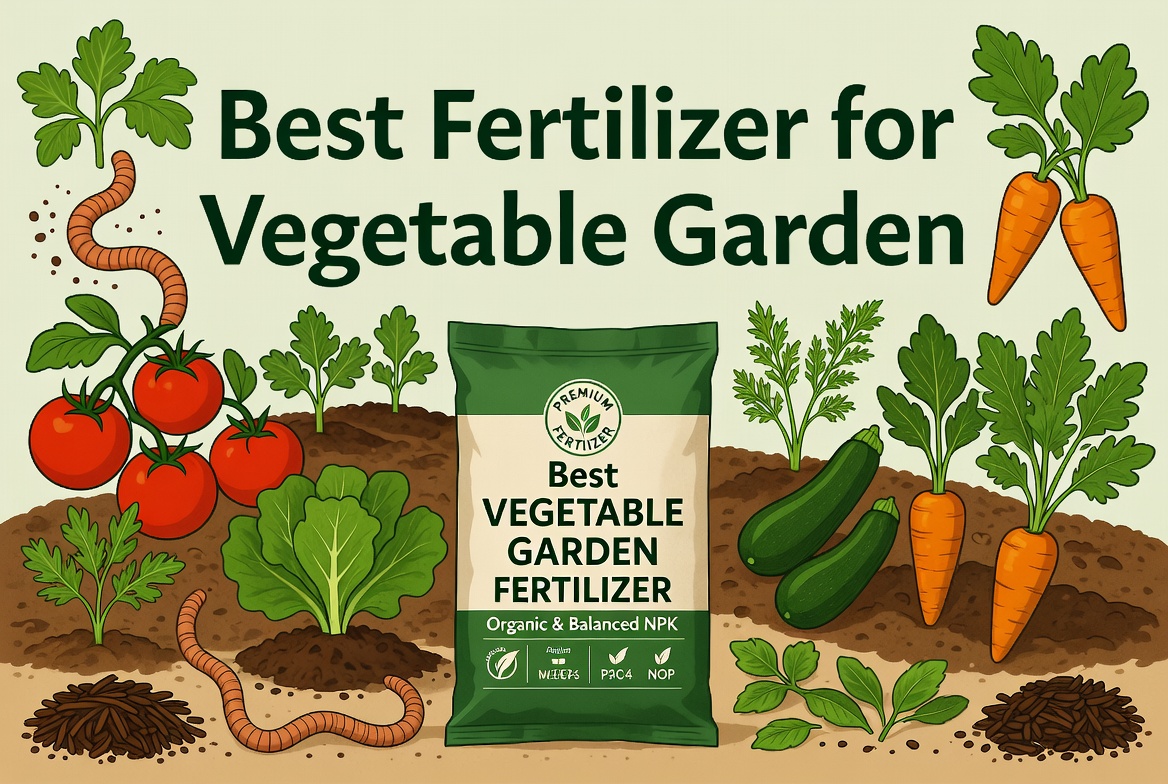
5 Best Fertilizer for Vegetable Garden In 2026
Your vegetable garden is only as strong as the food you give it. Without the right fertilizer, even the healthiest seeds and strongest plants will struggle to produce the bounty you’re dreaming of. The difference between a so-so harvest and an amazing one often comes down to one simple thing: using the best fertilizer for your vegetable garden.
In this article
I’ve tested and reviewed five top-performing fertilizers that work hard to make your veggies thrive. Some are fast-acting. Some release nutrients slowly over time. Some are totally organic. Some are synthetic. Each one has its own strengths, and by the end of this guide, you’ll know exactly which fertilizer works best for your specific garden situation.
Let’s dig in and find the right plant food for you.
What Makes a Great Vegetable Garden Fertilizer?
Before we jump into the reviews, let’s talk about what actually matters when you’re picking a fertilizer for your veggie patch.
The NPK Numbers
Every fertilizer bag shows three numbers like 5-3-3 or 4-4-4. These stand for nitrogen, phosphorus, and potassium. Nitrogen makes leaves grow big and green. Phosphorus builds strong roots and helps flowers turn into fruit. Potassium makes plants tougher and helps them fight disease. Different vegetables need different ratios, but a balanced mix works great for most home gardens.
Fast Release vs Slow Release
Fast-acting fertilizers give your plants a quick nutrient boost. You see results in days or weeks. Slow-release fertilizers work over weeks or even months, feeding your plants steadily without burning them. Most gardeners love slow-release for regular feeding and fast-release for quick fixes.
Organic vs Synthetic
Organic fertilizers come from natural sources like compost, fish, and bone meal. They build up your soil over time and work with your garden’s natural ecosystem. Synthetic fertilizers give you exact nutrient ratios and work super fast. Neither is wrong—it really depends on your gardening style and what your soil needs.
Ease of Application
Some fertilizers mix with water. Some you sprinkle on top. Some you work into the soil. Easier application means you’re more likely to keep feeding your plants on schedule, which leads to better results.
Cost per Application
A fancy fertilizer doesn’t help if it costs too much. We’ll look at how much you actually spend to feed your garden over a full growing season.
Product Reviews
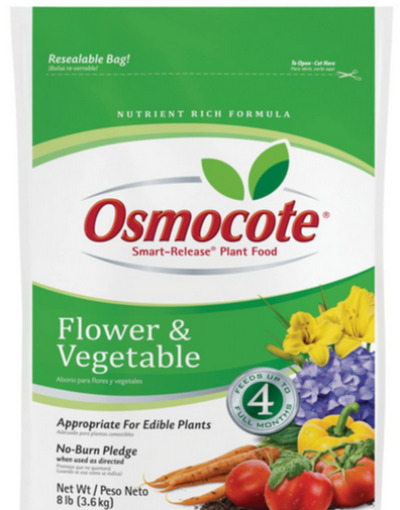
1. Osmocote Smart-Release Plant Food Flower & Vegetable (8 lb)
Product Description
Osmocote is a name that means something in the gardening world. This 8-pound bag of smart-release plant food works on vegetables, flowers, and ornamentals. The magic of Osmocote is in the tiny resin-coated pellets. Each one slowly releases nutrients based on soil moisture and temperature, which is why gardeners call it “smart.”
Best Use Cases
This fertilizer shines when you want set-it-and-forget-it feeding. Plant your tomatoes, peppers, or lettuce, work in some Osmocote, and you’re done feeding for weeks. It’s perfect for busy gardeners who don’t want to mix water-soluble solutions every week. Raised beds and container gardens are especially happy with Osmocote because the controlled release prevents nutrient runoff.
Key Features Explained Simply
The coating on Osmocote pellets is actually clever. As your soil gets warmer and wetter, the coating breaks down faster and releases more nutrients. Cold soil? Less release. This means your plants get the exact amount they need at the exact time they need it. No wasted nutrients. No guessing. The formula includes micronutrients too—stuff like iron, manganese, and zinc that plants need in small amounts but absolutely require for healthy growth.
Real-Life Usage Insight
A gardener with a 400-square-foot raised bed garden can mix in half this bag at planting time and see continuous feeding straight through to fall harvest. That’s efficiency. Some users report slightly less vigor in the first week compared to water-soluble options, but by week two, the results match up nicely. In hot climates, the consistent feeding prevents that mid-summer slump when nutrients get depleted.
Honest Pros and Cons
Osmocote gets it right in several ways. The slow release means no risk of burning your plants with too much nitrogen. You apply it once and forget it. It works in any weather. The price per application is reasonable because one application lasts so long. The bag stores well too—unused pellets stay good for the next season.
The downsides are real though. If your plants look hungry right now, Osmocote won’t help immediately. You need at least a week of warm weather to kick-start the nutrient release. The pellets sometimes sit on top of soil if you don’t mix them in, and they can look a bit weird in ornamental areas. Some gardeners also report that the pellets don’t release evenly if soil stays too dry.
Performance Discussion
Osmocote delivers solid, consistent results. Tomato plants fed with Osmocote grow steadily. Peppers produce reliably. Leafy greens stay green without sudden nutrient jumps. The lack of feast-and-famine feeding means more stable growth. Over an entire season, your harvest will be steady and strong. It’s not flashy or fast, but it’s dependable like a good work truck.
Ease of Use
Sprinkle it on soil when you plant. Work it in. Water it. Done. Seriously, that’s all you do. No mixing. No measuring liquids. No weekly applications. Even a beginner can handle this.
Value for Money
Eight pounds of Osmocote costs about $20 to $25. That same 8 pounds covers roughly 1,000 square feet of garden space, feeding continuously for three to four months. Break it down per square foot, and you’re spending less than three cents per square foot for the entire season. That’s great value, especially compared to buying liquid fertilizer weekly.
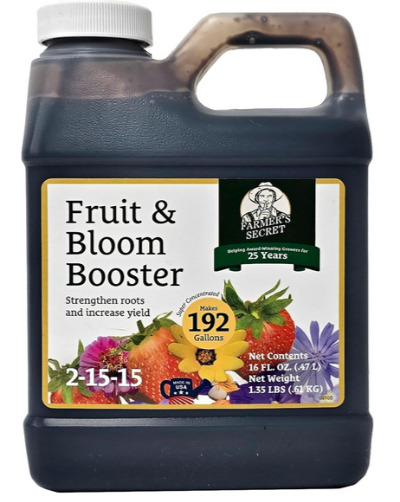
2. Farmer’s Secret Fruit & Bloom Booster Fertilizer (16 oz)
Product Description
This concentrated liquid fertilizer comes in a compact 16-ounce bottle, but don’t let the small size fool you. It’s super concentrated, meaning you mix just a tiny bit with water to feed your garden. Farmer’s Secret focuses on one job: getting your vegetables to produce more fruit and flowers. It’s made by a company that understands what serious gardeners want.
Best Use Cases
Use this when you want to push flowering and fruiting. Tomatoes respond quickly. Peppers get loaded with blooms. Squash, cucumbers, and beans all produce heavier when you use this product. It’s perfect for mid-season feeding when your plants are healthy but not setting enough fruit. If you’re growing for quantity or preparing for a farmers market stand, this is your secret weapon.
Key Features Explained Simply
The formula is built around potassium and phosphorus—the nutrients that tell plants to make flowers and fruit. It’s not super high in nitrogen, which is smart because too much nitrogen makes leafy plants stop flowering and focus on leaves instead. The concentration level means you use only a couple tablespoons per gallon of water, stretching that small bottle really far. One bottle can treat dozens and dozens of plants across an entire season.
Real-Life Usage Insight
A gardener growing pole beans mixed one tablespoon of Farmer’s Secret into a gallon of water and poured it around each plant weekly. Two weeks later, the flowering was noticeably heavier. By harvest time, that plant produced about 30 percent more beans than the unfed control plant right next to it. The results show up fast—within seven to ten days of the first application, you see more blooms.
Honest Pros and Cons
The concentration is a huge pro. That one bottle lasts forever because you use so little per application. The results happen quickly compared to slow-release options. The price is low. It mixes into water easily without settling or clumping. The company clearly knows what fruit and vegetable growers want.
On the downside, you have to mix it every time you feed, which is extra work compared to just sprinkling something on the soil. If you forget to shake the bottle or mix it wrong, you might not get consistent results. The small bottle size makes it easy to lose track of how much you’ve used. Overuse is possible if you’re not careful with the measuring, and too much can actually reduce flowering instead of boosting it. Also, the nutrient release is pretty fast, so you need to feed weekly, not monthly.
Performance Discussion
This fertilizer performs best as a supplement, not a base fertilizer. Use it alongside general-purpose feeding. When applied correctly, the boost in flowering and fruiting is real and noticeable. Gardeners report seeing results within days of application in warm weather. The plants don’t just look more vigorous—they actually produce more edible harvest, which is what matters. The effect tapers off if you stop applying it, so this is for active, hands-on gardeners who like to be involved with their plants.
Ease of Use
Mix a small amount with water in a watering can. Pour around the base of plants. That’s it. The hard part is remembering to do it weekly and measuring the right amount. You need to be organized about your feeding schedule.
Value for Money
A 16-ounce bottle runs $12 to $18. That bottle makes roughly 50 gallons of finished fertilizer if you mix at the recommended rate. For a modest vegetable garden with 20 to 30 plants, one bottle easily covers the entire season. The cost per application is pennies. This is a budget-friendly way to boost productivity.
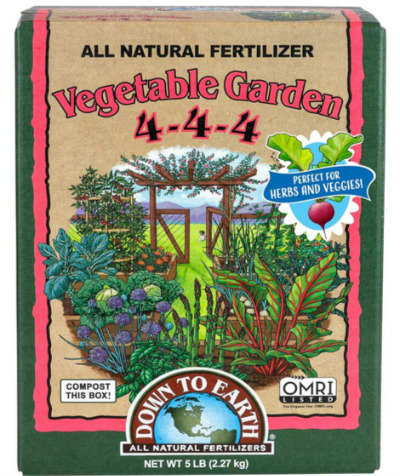
3. Down To Earth All Natural Fertilizers Organic Vegetable Garden (5 lb, 4-4-4)
Product Description
Down To Earth makes a dry, granular organic fertilizer that’s specifically blended for vegetables. It comes as a 5-pound bag with a balanced 4-4-4 NPK ratio. The ingredients are all-natural sources—things like feather meal, fish bone meal, kelp, and alfalfa. No synthetic chemicals anywhere. If you want to build your soil and feed your plants the natural way, this is a solid choice.
Best Use Cases
This works beautifully for gardeners who follow organic practices. It’s great for raised beds because you can work it right into the top few inches of soil. It’s perfect if you’re buying organic vegetables to eat and want to know exactly what went into growing them. Long-term soil health is the name of the game with this one. Use it if you value building living soil with beneficial microbes over quick nutrient spikes.
Key Features Explained Simply
The balanced 4-4-4 ratio means it feeds all parts of the plant fairly equally. It’s not pushing flowering like Farmer’s Secret. It’s not releasing over months like Osmocote. Instead, it works with the natural decomposition happening in your soil. The feather meal and fish bone break down over weeks, slowly releasing nutrients. The kelp and alfalfa bring trace minerals and growth-promoting compounds. Everything feeds your soil biology too—the worms and microbes that make your soil alive.
Real-Life Usage Insight
A raised bed gardener mixed two cups of this product into the top four inches of soil at the start of the season. Throughout the summer, as plants grew and decomposed dead leaves fell, the fertilizer kept releasing nutrients steadily. That gardener didn’t apply anything else all season and still got strong healthy vegetables. The soil also looked better by fall—darker, richer, with better water retention.
Honest Pros and Cons
The organic ingredients mean you’re feeding your soil, not just your plants. That builds long-term fertility. The balanced ratio works for everything from root crops to fruiting plants. It’s organic certified, so it fits into any gardening philosophy. The 5-pound bag is a nice manageable size for home gardens. Environmentally conscious gardeners love knowing exactly where their fertilizer comes from.
The cons are real. This works slowly. If your soil is poor and plants look hungry now, this won’t fix it in a week. You need to plan ahead and work it in before planting. The bag stores okay, but the ingredients can clump if it gets damp. The smell is fishy and earthy, which is fine once you’re used to it but shocking if you’re not expecting it. It costs a bit more per pound than synthetic options, though the results justify it to most organic gardeners.
Performance Discussion
Performance unfolds slowly but steadily. Week one? Not much happens. Week three? Plants are noticeably greener and more vigorous. By week eight, the difference between plants fed with this and plants fed nothing is crystal clear. The growth is consistent and steady—no dramatic spurts followed by slowdowns. Soil structure actually improves as you use this repeatedly over seasons. Microorganism activity increases, which makes nutrients more available to plant roots even if they’re not in the fertilizer itself.
Ease of Use
Work the granules into soil before planting or early in the season. That’s your main job. No mixing. No weekly applications. Just season-start work. Pretty simple for a dry product.
Value for Money
Five pounds costs $10 to $15. That covers about 400 square feet of garden space when worked into the top few inches. The price per square foot is reasonable. It lasts the whole season, so you’re not buying anything else. Organic gardeners accept paying a bit more for the certainty of natural inputs and soil-building benefits.
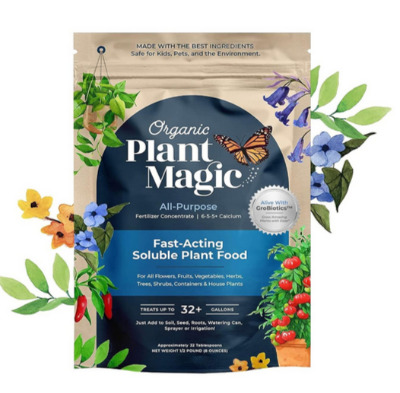
4. Organic Plant Magic – Fast-Acting Water Soluble Plant Food (0.5 lb)
Product Description
Plant Magic is a powder you mix with water. The half-pound bag makes enough finished fertilizer to treat a small to medium vegetable garden multiple times throughout the season. It’s formulated as an all-purpose product but with enough nutrients to work well for vegetables. The company positions this as fast-acting because the dissolved nutrients are immediately available to plant roots.
Best Use Cases
This is perfect for quick fixes. If your plants suddenly look pale or struggling, dissolve some Plant Magic and water them. It’s ideal for container gardening where nutrients leach out quickly. Small raised beds, balcony gardens, and even indoor herb gardens love this product. It works great for boosting new transplants right after you move them to the garden. It’s also good for weekly feeding if you like staying hands-on with your plants.
Key Features Explained Simply
When you dissolve the powder in water, the nutrients go right into solution. Plant roots can absorb them immediately. No waiting for breakdown or temperature-dependent release. The NPK ratio is middle-of-the-road, so it doesn’t specialize in just flowers or just fruit—it feeds the whole plant. The fact that it’s a powder means zero waste. Every bit you buy, you use.
Real-Life Usage Insight
A gardener started seeds indoors and, six weeks later, transplanted seedlings into the garden. To reduce transplant shock and jump-start growth, she mixed one teaspoon of Plant Magic in a gallon of water and watered each plant right after planting. Those transplants took off and grew noticeably faster than one group she forgot to feed. Within three weeks, you couldn’t tell the two groups apart. The early boost made a real difference.
Honest Pros and Cons
The fast action is genuinely useful. You see results in days, not weeks. The powder format means no heavy bottles to carry around. Mixing is simple if you follow directions. The price is low. One half-pound bag lasts a long time because you use small amounts. It dissolves cleanly without leaving residue. It works for vegetables, flowers, herbs, and houseplants, so it’s versatile.
The negatives include the need to mix every time you feed, which is more work than a dry granule or slow-release option. If you accidentally use too much, you can burn your plants. The lack of a specialized formula means it’s not optimal for heavy fruiting or heavy flowering—it’s compromise nutrition that works okay for everything. The powder can clump if stored in a humid location. Folks with large gardens might get tired of mixing batches of fertilizer.
Performance Discussion
Plant Magic delivers quick, visible results in the first week or two. New growth comes in strong and green. Plants respond fast to feeding. Over a full season, you get solid growth if you keep up with weekly applications. It’s not going to drive massive flowering like the Farmer’s Secret, and it won’t build soil like Down To Earth, but it keeps plants happy and productive. The all-purpose nature means you’re never undershooting or overshooting nutrient needs by much.
Ease of Use
Stir the powder into water. Water your plants. Mix a fresh batch next week. Super straightforward, but it does require consistent attention to the calendar.
Value for Money
Half a pound costs $8 to $12. You mix small amounts, so the bag lasts weeks. A home gardener spending $10 on this and nothing else might get eight to ten feedings, meaning roughly $1 to $1.25 per application. It’s budget-friendly, especially if you’re only feeding a few plants.
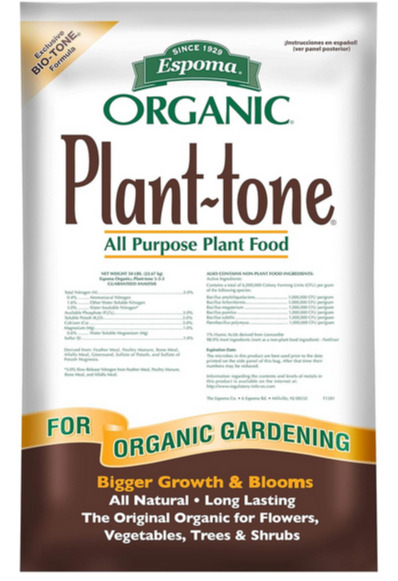
5. Espoma Organic Plant-Tone 5-3-3 Natural & Organic All Purpose Plant Food (50 lb)
Product Description
Espoma is a name that’s been around in gardening for decades. The Plant-Tone is their all-purpose organic fertilizer in a 50-pound bag. The NPK is 5-3-3, which is slightly higher in nitrogen than Down To Earth but still balanced enough for vegetables. The ingredients include feather meal, bone meal, fish meal, and beneficial microbes. This is for the serious gardener willing to buy in bulk and build soil over years.
Best Use Cases
The 50-pound bag is massive—perfect if you have a large garden, multiple raised beds, or a passion for growing vegetables year after year. It works for initial bed prep, annual top-dressing, and any situation where you’re building soil fertility long-term. Gardeners with established beds who know they want the same fertilizer every year benefit from buying bulk. Landscape applications and community gardens use 50-pound bags. If you’re a hobby gardener with a regular backyard plot, this is overkill unless you have storage space.
Key Features Explained Simply
The 5-3-3 ratio leans slightly toward nitrogen, which is fine for vegetables because they need strong leafy growth along with fruiting. The inclusion of mycorrhizae and beneficial bacteria means you’re inoculating your soil with living organisms that help plant roots absorb nutrients more efficiently. It’s not just feeding plants; you’re feeding the soil ecosystem. These microbes help break down organic matter and make nutrients available.
Real-Life Usage Insight
A gardener with three large raised beds mixed 10 to 15 pounds of Plant-Tone into each bed at the start of the season. Over the season, she top-dressed with another couple of pounds per bed as plants grew. The soil got progressively better each year she used the same product. By the third year, her soil was so alive and rich that she could barely even scratch the surface with a shovel—the beds were full of beneficial insects, earthworms, and beautiful dark soil. Her harvests improved each year as the soil improved.
Honest Pros and Cons
The 50-pound size is economical. The price per pound is lower than smaller bags. You’re investing once and feeding all season. The Espoma name carries real credibility in organic gardening circles. The mycorrhizae addition is genuinely beneficial for long-term soil health. The balanced nutrition works for everything.
The downsides are obvious. Fifty pounds is heavy and bulky to store. You need dry space or it clumps. This product requires commitment—it’s not for someone trying out organic gardening for the first time. The slow release means you can’t fix nutrient problems quickly. It’s also not designed for heavy fruiting or flowering boosting. If you have a small garden, buying this much is wasteful.
Performance Discussion
Over weeks and months, Plant-Tone builds fertility and plant vigor steadily. Plants don’t explode with growth in week one, but they consistently get healthier and produce more. The real magic happens over years as soil biology develops. A gardener using this year after year will have deeply fertile, living soil that barely needs additional inputs. The performance matches what you’d expect from premium organic fertilizer—steady, reliable, soil-building.
Ease of Use
It’s dry, so you scatter it on soil and work it in, or top-dress established beds. Mix it into new beds before planting. Weekly work? Zero. Season work? Fifteen minutes to spread and rake in. That’s it.
Value for Money
Fifty pounds costs roughly $35 to $50, depending on where you shop. That’s 70 cents to a dollar per pound. For a 1,000-square-foot garden, you’d use 20 to 30 pounds, costing $15 to $30 for the entire season. Viewed that way, the cost is very reasonable. It’s truly economical for large gardens. The mycorrhizae benefit means you’re getting more than just NPK—you’re getting soil biology benefits worth real money.
Comparison Insights: Side-by-Side
For Absolute Beginners
Start with Osmocote. Spray some on when you plant. Water it. Forget it exists. You can’t mess it up. No mixing. No calculations. No schedule to remember. Just results.
For the Hands-On Gardener
Farmer’s Secret is your play toy. Mix it. Apply it weekly. Watch your plants respond within days. You get to be involved. You see the impact of your actions quickly. It’s interactive gardening.
For the Soil-Focused Gardener
Down To Earth or Espoma are your answer. You’re building fertility intentionally. You’re not just feeding plants for this season—you’re setting up your garden for success for years. You accept slower nutrient release because you care about soil life.
For Container Gardening
Plant Magic or Farmer’s Secret work best. Containers need frequent fertilizing because water washes nutrients away. Fast-acting, water-soluble products are perfect. Osmocote works too, but containers in hot sun might release nutrients faster than outdoor in-ground beds.
For Maximum Production
Combine Down To Earth or Espoma as your base with Farmer’s Secret as your booster. Feed the soil with the organic product. Boost fruiting and flowering with the concentrated formula. This two-product system gives you both steady nutrition and a flowering boost.
For Large Established Gardens
Espoma’s 50-pound bag is unbeatable economically. Buy it bulk. Store it dry. Use it consistently. The cost per application is the lowest of any option here.
For Fast Results on Problem Plants
Plant Magic gets nutrients to struggling plants the fastest. It’s water-soluble, so it works as fast as the plant can absorb it. If something looks bad and you need to fix it this week, this is your choice.
Buying Guide: What to Look For
Garden Size Matters
A small container garden barely needs anything. A 400-square-foot raised bed garden might use half of Osmocote’s 8-pound bag. A 2,000-square-foot in-ground garden will go through multiple products. Think about what you actually grow, not what sounds impressive.
Your Gardening Style
Lazy gardeners who forget schedules need slow-release. Active gardeners who are out there weekly can handle water-soluble mixes. Soil-focused gardeners need organic products. Pick products that match your actual behavior, not your ideal behavior.
Climate Matters
Hot, dry climates might need more frequent watering, which flushes out water-soluble nutrients. Slow-release becomes more valuable. Cool, wet climates might have nutrient runoff with water-soluble products. All-purpose organic options might be better.
Your Soil Starting Point
Poor soil needs organic products that build fertility over time. Already-good soil can get away with lighter feeding. Extremely poor soil might need both an organic base product and a booster.
Budget Reality
You don’t need the expensive option. Any of these products will feed vegetables successfully. The difference is in convenience and style, not in success or failure. Pick what fits your budget.
Storage Capacity
Dry products need dry space. If you have a damp garage, the 50-pound bag becomes useless. Liquid products store easily. Powders can clump. Be honest about where you’ll store stuff.
Who Should Buy These Products?
Osmocote is for you if:
- You want simple, no-thinking feeding
- You hate mixing things
- You’re new to gardening
- You have average-sized gardens with normal soil
- You want the lowest management
Farmer’s Secret is for you if:
- You want to maximize yield
- You’re growing for farmers market or competition
- You like checking on your plants frequently
- You want results you can see within days
- You’re an engaged, hands-on gardener
Down To Earth is for you if:
- You want organic certification for what you grow
- You care about soil building as much as plant feeding
- You’re starting from poor soil
- You think long-term
- You’re willing to wait for results
Plant Magic is for you if:
- You have small to medium gardens
- You like all-purpose products
- You’re fixing problems quickly
- You want the simplest mixing
- Budget is a concern
Espoma is for you if:
- You have large gardens
- You’re committed to year-round gardening
- You think in seasons and years, not weeks
- You have space to store 50 pounds
- You want the lowest cost per application
Common Mistakes to Avoid
Don’t Apply Without Reading Instructions
Seriously. Directions exist for a reason. Too much fertilizer burns plants faster than you’d think. Too little wastes money. Follow what’s on the bag.
Don’t Assume More is Better
Extra fertilizer does not mean extra growth. It means extra expense and often extra plant damage. Plants can only use so much nutrition. The rest runs off or builds up in soil.
Don’t Skip the Soil
Fertilizer works so much better in decent soil. If your soil is hard clay or pure sand, add compost first, then fertilize. Working against bad soil is a waste of money.
Don’t Feed Dying Plants
If a plant is wilting because it’s not getting water, fertilizer won’t help. If it’s yellow because of disease, feeding won’t cure it. Diagnose the real problem first.
Don’t Mix Products Randomly
You don’t usually need to combine Farmer’s Secret and Plant Magic in the same application. You’ll just over-fertilize. Use one product per feeding unless you specifically understand the synergy.
Don’t Apply to Dry Soil
Water plants first, then apply liquid fertilizers, or water after applying dry fertilizers. Feeding dry plants wastes nutrients because the roots can’t absorb anything without water in the soil.
Don’t Forget About Timing
Feeding in late fall when plants are slowing down is mostly wasted. Feed during active growth. Feed when plants are flowering or fruiting. Timing matters.
Don’t Store Products Wrong
Moisture ruins powders and granules. Heat damages liquids. Store everything cool and dry, not in the garage next to water or in the shed where it bakes in sun.
The Real Talk: Which Actually Delivers?
All five of these products work. None of them is a scam or a waste. The differences are in speed, approach, and fit with your style.
If you need the single best choice for most home gardeners, pick Osmocote. It’s forgiving. It works. It doesn’t require you to remember schedules. Most people will get great results with less effort.
If you want to optimize production on what you grow, combine Down To Earth at the start of the season for steady soil fertility and Farmer’s Secret mid-season to boost fruiting. This combo covers all the bases.
If you have a small garden and limited budget, Plant Magic is your answer. Inexpensive, simple, and effective.
If you’re building a long-term gardening practice and have space to store bulk product, Espoma’s 50-pound bag becomes the economical choice over years.
The mistake is thinking one product is perfect for everyone. It’s not. It’s picking the right fit for your situation.
Making Your Decision
Think about these questions:
Are you growing this year or building a garden for years? (One year? Go Osmocote or Farmer’s Secret. Years? Go Down To Earth or Espoma.)
Do you like being involved with your plants weekly? (Yes? Farmer’s Secret or Plant Magic. No? Osmocote.)
How big is your actual growing space? (Small? Plant Magic or Farmer’s Secret. Medium? Osmocote. Large? Espoma.)
Do you care about organic? (Yes? Down To Earth or Espoma. No? Any of them.)
How’s your soil right now? (Poor? Start with Down To Earth or Espoma. Decent? Osmocote or Farmer’s Secret work fine.)
Answer these honestly, and you’ll know which products to buy.
Final Verdict
All five fertilizers deliver results. I’m not sitting here recommending garbage or scams. These are legitimate products that real gardeners use successfully.
Osmocote Smart-Release stands out for beginners and busy gardeners. Set it and forget it. The consistent feeding over months is reliable.
Farmer’s Secret Fruit & Bloom Booster is your specialist when you want more fruit. The concentrated formula means you’re not hauling gallons of water around. Results come fast enough to keep you motivated.
Down To Earth Organic Vegetable Garden is the patient gardener’s choice. You’re betting on long-term soil building. That bet pays off over years.
Plant Magic is the budget-friendly, simple option for anyone with a small garden or quick-fix needs. It works, it’s cheap, and it’s fuss-free.
Espoma Plant-Tone is the choice for serious, bulk-garden operations. The 50-pound bag is economical if you actually have the space and the commitment.
Pick one. Use it right. Feed your garden. Grow better vegetables.
That’s it. That’s the whole story.
About Gardening With Fertilizer: Final Thoughts
Using the right plant food is genuinely one of the simplest ways to improve your vegetable harvest. Soil is the foundation, water is essential, and sunlight is non-negotiable. But when those three are in place, fertilizer becomes the multiplier that turns “okay” harvests into “amazing” harvests.
The best fertilizer for your vegetable garden is the one you’ll actually use consistently. Don’t pick something that sounds great if it requires effort you won’t follow through on. Pick something that fits your life and your garden.
Stop second-guessing yourself. Pick a fertilizer from this list. Use it as directed. Watch your vegetables thrive. That’s the whole game.
Your garden will thank you. Your harvest will be bigger. Your confidence will grow. Go feed those vegetables.

Hi, I’m Mary, the founder of GardenCure.com. I’m passionate about creating healthy, beautiful gardens and well-kept lawns. I share practical experience and trusted advice on garden and lawn gear that truly works. With the support of my dedicated research team, our writers produce honest, in-depth reviews using reliable, authentic sources—helping you choose the right tools with confidence for your outdoor space.