5 Best Fertilizer for Citrus Trees In 2026
When you’ve got lemon trees, lime trees, or orange trees growing in your yard, you want them to thrive. You want them to produce tons of juicy fruit. You want them to look healthy and vibrant year-round. That’s exactly why fertilizer matters so much.
In this article
Growing great citrus isn’t complicated, but it does require the right nutrients. Your soil can’t always provide everything a citrus tree needs on its own. That’s where the right citrus tree fertilizer comes in. A solid feeding program makes the difference between a mediocre tree and one that produces armfuls of delicious fruit.
In this guide, I’ll walk you through five solid options for feeding your citrus. We’ll look at what makes each one different, how to use them, and which one might work best for your specific situation. Let’s dig in.
Why Your Citrus Trees Need Proper Feeding
Before we talk about specific products, let’s get real about why feeding matters. Citrus trees are heavy feeders. They pull a lot of nutrients from the soil because they’re constantly producing fruit, growing new leaves, and storing energy for the next season.
Think of fertilizer like fuel for your tree. Without it, your tree struggles. The leaves might yellow. Growth slows way down. Your fruit production drops. You might get small, sour fruit instead of plump, sweet ones.
The best fertilizer for citrus trees gives your plants three main nutrients they crave. Nitrogen helps with leaf growth and overall vigor. Phosphorus powers root development and fruit production. Potassium keeps trees strong and healthy overall. Good citrus fertilizer balances these three in a way that works for citrus needs specifically.
But here’s the thing. Not all citrus tree plant food is created equal. Some work better for specific situations. Some are easier to use. Some cost less money. That’s why we’re going to look at actual products that real people use.
Farmer’s Secret Citrus Tree Booster Fertilizer (32oz)
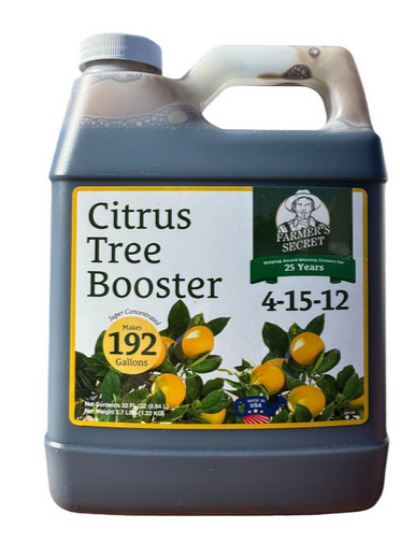
Best For: People who want a super concentrated formula they can mix and use flexibly
What You’re Getting
The Farmer’s Secret Citrus Tree Booster Fertilizer comes in a 32-ounce bottle that’s labeled as super concentrated. This isn’t a ready-to-use product. You mix it with water before applying it to your trees. One bottle can treat a lot of trees depending on how you dilute it, which is why it offers good bang for your buck.
The formula works for all types of citrus. Lemon trees, lime trees, orange trees, grapefruit trees—it’s designed to feed them all. You can use it on trees growing outside in the ground or in containers inside your home. That flexibility is valuable if you’ve got citrus growing in different places.
Key Features That Matter
The concentration is the big deal here. Because it’s so concentrated, a little goes a long way. You don’t haul around gallons of heavy liquid. You store a small bottle in your garage. When feeding time comes, you grab the bottle, mix up what you need, and get to work.
The formula includes micronutrients beyond the basic three. Citrus trees like other minor nutrients too—things like iron, magnesium, and zinc. When leaves start showing those pale colors or weird patterns, sometimes it’s because micronutrients are missing. This formula tries to cover all the bases.
It’s labeled as safe for both outdoor and container trees. That matters because container trees sometimes need different care than ground-planted trees. Container trees stay in pots, which changes how nutrients move through the soil. This product accounts for both situations.
Real-Life Usage Insights
People who use this product tend to appreciate the concentration factor. You don’t need to store tons of liquid. You mix it fresh when needed. Some users report mixing it at different strengths depending on what their trees need at different times. During heavy growth, they use more. During slow seasons, they dial it back.
The mixing means you have flexibility. You can treat multiple trees or just one. You can do frequent light feedings or heavier occasional ones. Some folks like having that control.
One thing to note: Because it’s concentrated, you need to follow mixing instructions carefully. If you add too much, your trees might get burned. If you add too little, you don’t get good results. Get the ratio right and you’re golden.
Honest Pros and Cons
Pros:
- Super concentrated means small package, light to carry
- Works on all citrus varieties
- Works on ground trees and container trees
- You control the strength based on your tree’s needs
- Micronutrients included
- Storage footprint is small
Cons:
- Requires mixing, which adds a step
- You have to measure carefully to avoid feeding problems
- Not a set-it-and-forget-it solution
- If you make a mixing mistake, your trees might suffer
Performance Talk
When you mix and apply this correctly, citrus trees respond well. You see new growth come in. Fruit quality improves. Trees look greener and more vigorous. The concentrated formula means you’re not wasting money on water—you’re paying for the active nutrients.
The results show up faster than some slower-release options. You can often see changes in your trees within a couple of weeks of starting a feeding program with this product.
Ease of Use
This isn’t the easiest option if you like simple solutions. You need to measure, mix, and apply. If you’ve got lots of trees, mixing might become tedious. But if you’ve got just a few trees or if you like having control over your feeding program, the process isn’t that complicated.
Most people can master the mixing in one or two applications. Write down what you mixed and how your trees responded. After that, you’ll know what works for your situation.
Value for Money
The price per ounce is genuinely good once you figure out how far one bottle stretches. A 32-ounce bottle can treat a huge number of trees depending on dilution. If you’ve got three to five citrus trees, one bottle might last you most of a growing season.
32oz Citrus Fertilizer – 2-in-1 Formula (4-3-6 NPK)
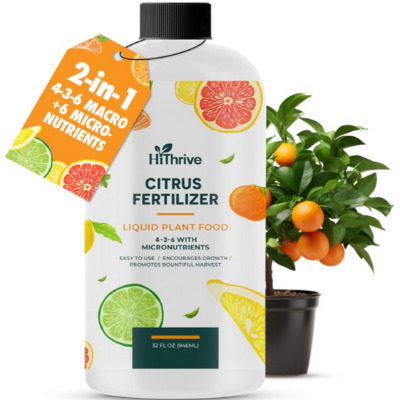
Best For: People who want a multipurpose liquid formula that makes a lot of finished product
What You’re Getting
This citrus fertilizer is also sold in 32-ounce bottles and it’s also concentrated, but here’s the key difference: it makes 32 gallons of finished fertilizer when mixed correctly. That’s massive. One bottle becomes enough to treat a lot of trees for a whole season.
The NPK ratio is 4-3-6, which means it has four parts nitrogen, three parts phosphorus, and six parts potassium. That higher potassium number is intentional. Citrus trees benefit from extra potassium, especially when they’re flowering and fruiting. This ratio emphasizes that.
It’s called a 2-in-1 formula, which means it handles two jobs at once. It feeds your trees the nutrients they need and it also supports the biological life in your soil. Healthy soil with good microbes is where healthy trees start.
The product includes macronutrients and micronutrients, so you’re covering the big nutrients and the little ones that citrus needs.
Key Features That Matter
Making 32 gallons from one bottle is huge for anyone who’s got multiple trees or who lives where watering is part of life. You’re buying concentrate and stretching it as far as it’ll go. That affects your cost per application significantly.
The 4-3-6 ratio is specifically chosen for citrus. That higher potassium works when your trees are making flowers and fruit. It also helps trees handle stress better. Stressed trees make poor fruit.
The 2-in-1 approach means you’re not just feeding your tree. You’re also improving the soil that your tree lives in. Better soil means better nutrient availability. It’s a complete approach, not just a one-note feeding.
Real-Life Usage Insights
People using this product report liking the abundance of finished product they get. One application day, you mix up a big batch. You feed all your trees. You’re done for a while.
The ratio has fans too. People say they notice fruit quality improves when using this. The higher potassium seems to translate into better-tasting fruit. Some folks specifically choose this product because of that ratio.
Users mention that the product mixes easily. You don’t struggle to get it to dissolve. You pour it in water, stir, and you’re ready to go.
One thing to verify: the mixing instructions matter. Get them right and you’ve got 32 gallons of perfect fertilizer. Get them wrong and you might have something less effective.
Honest Pros and Cons
Pros:
- One bottle makes 32 gallons of finished product
- NPK ratio specifically targets citrus needs
- Includes both macronutrients and micronutrients
- Improves soil quality as you feed
- Mixes easily
- Good cost efficiency for multiple trees
Cons:
- Still requires mixing
- You need 32 gallons of water or a way to store mixed product
- Potassium-heavy ratio might not work if your soil is already high in potassium
- The high yield means you need to have space to store liquid
Performance Talk
When you use this consistently, citrus trees show real improvement. Leaf color gets deeper. Growth becomes more robust. When fruiting season comes, trees produce more fruit and that fruit tastes good.
The performance is notable because it’s designed around what citrus actually needs. This isn’t a generic fertilizer that happens to work on citrus. It’s built for citrus from the ground up.
Results typically show up over several weeks. This isn’t an instant fix, but it’s reliable. Your trees respond to the feeding program by looking better and producing more.
Ease of Use
The ease depends on your scale and your storage situation. If you’ve got two or three trees and you can use 32 gallons before it goes bad, this is easy. Mix once, feed multiple times.
If you’ve got one tree or limited water space, the huge yield might actually be a problem. You’d make more product than you can use before it degrades.
Value for Money
For anyone with multiple citrus trees, the value is outstanding. The cost per gallon of finished product is very low. The cost per tree per feeding is tiny. Over a whole season, this becomes the most economical choice for people with several trees.
Fertilizer Spikes for Citrus & Fruit Trees (72 Spikes – 18.0 Lbs)

Best For: People who want zero mixing and prefer a set-it-and-forget-it approach
What You’re Getting
Fertilizer spikes look like thick wooden stakes or dowels. They’re solid, not liquid. You push them into the soil around your tree and they slowly release nutrients over time as soil moisture activates them. No mixing. No measuring. No guesswork.
One package contains 72 spikes totaling 18 pounds. Each spike delivers nutrients gradually, so you push a few into the soil and let them do their job. You don’t have to worry about them for weeks or months depending on how they’re designed.
These spikes work on citrus trees and other fruit trees. They work on trees in the ground. They also work on container trees because you just push them into the container soil.
Key Features That Matter
The biggest feature is the lack of complexity. You open the package. You count out the right number of spikes for your tree size. You push them into the soil circling the tree. You leave them alone. That’s it.
No mixing means no mistakes from wrong ratios. No spills. No storing liquid. No trips back to the garden to apply more liquid. You set it once and the tree gets slow, steady feeding.
The slow-release nature means nutrients reach the tree gradually. This mimics what happens naturally as organic matter breaks down. Trees prefer this slow feeding to sudden nutrient floods.
You get 72 spikes in one package. Depending on your tree size and how many trees you own, that’s significant quantity. You’re not constantly reordering.
Real-Life Usage Insights
People love the simplicity of spikes. You push them in and forget about them. Gardeners with busy lives often prefer this because you don’t have to remember to mix and apply liquid fertilizer every few weeks. You do the spikes twice a year and you’re good.
The slow release appeals to people who worry about fertilizer burn. You can’t accidentally apply too much at once. The soil controls the release rate based on moisture.
Users report good results when they use the right number of spikes for their tree size. Smaller trees get fewer spikes. Bigger established trees get more. Get that balance right and your tree thrives.
One thing folks mention: the spikes work best when the soil stays consistently moist. In very dry climates or during droughts, the release slows down because there’s not enough moisture. In these situations, you might need to water more carefully to keep spikes working.
Honest Pros and Cons
Pros:
- Zero mixing required
- No measuring or guessing
- Set-it-and-forget-it approach
- No risk of accidental overapplication
- 72 spikes give you lots of applications
- Works on ground trees and container trees
- No spills or mess
- Slow release reduces fertilizer burn risk
Cons:
- Slow release means results take longer
- You can’t adjust strength based on what your tree needs
- Works best with consistent moisture
- Not ideal for very dry climates without irrigation
- You’re locked into whatever the formula contains
- Less flexibility overall
Performance Talk
Spikes deliver results, but they’re the slowest of the options we’re looking at. You won’t see dramatic changes in two weeks. Instead, over 4-6 weeks, your tree gets greener. Growth accelerates. When fruiting time comes, your tree produces well.
The gradual feeding means less stress on your tree overall. Your citrus tree gets consistent nutrition rather than feast-or-famine cycles. That stability is good for long-term tree health.
Performance holds steady through the season as long as soil moisture stays reasonable. In that context, these spikes are reliable performers.
Ease of Use
Spikes win the ease-of-use award hands down. You can’t get easier than pushing a stake in the ground. Even a first-time gardener can do this successfully.
Value for Money
The value is excellent if you use all 72 spikes across multiple trees or multiple seasons. The cost per application is low once you break down the math.
If you only have one tree and don’t use many spikes, the value per spike goes up. The package price might be high for what you actually use.
Lemon Tree Fertilizer – Liquid Plant Food (8 oz)
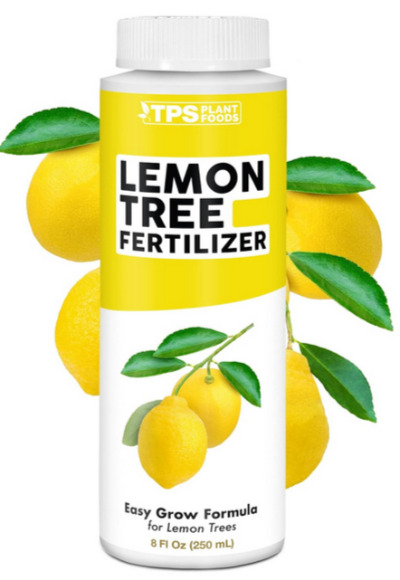
Best For: People with just one or two trees who want premium results
What You’re Getting
This is a specialized liquid plant food made specifically for lemon trees, though it works on other citrus too. The 8-ounce bottle is small, which makes sense because this is potent stuff. You don’t need much to get results.
The formula emphasizes fruit production and flowering. If you want more lemons from your lemon tree or better quality fruit, this product targets exactly that goal. It also promotes stronger root development, which means a healthier tree overall.
The fact that it’s made specifically for lemon trees is important. It’s not a generic fertilizer that happens to work on citrus. The formula is tuned to what lemon trees actually need.
Key Features That Matter
The focus on fruit production and flowering is the core feature. Regular fertilizer balances all nutrients. This one emphasizes what creates fruit and flowers. If fruit production is your main goal, that’s a smart approach.
Stronger root development gets mentioned because healthy roots are the foundation. Better roots mean better overall tree health and better drought tolerance.
The small size means you’re not storing huge volumes. Eight ounces takes minimal space. You’ll use it in reasonable timeframes before any degradation.
Real-Life Usage Insights
People using this product report impressive results quickly. They see more flowers. They see better fruit set. They get larger lemons. The focused formula seems to work when your goal is maximizing fruit.
Users mention liking the small size for a couple of reasons. It’s easy to apply without wasting. It fits in small spaces. It’s not a long-term storage commitment.
The concentrated nature means a little goes a long way. You don’t need huge amounts. A small amount in water feeds your tree properly.
Honest Pros and Cons
Pros:
- Specifically formulated for lemon tree needs
- Emphasizes fruit production and flowering
- Promotes strong root development
- Small size, easy to store and use
- Gets results quickly
- No guessing about what your tree needs
Cons:
- Small bottle means you’ll reorder regularly if you have multiple trees
- Specialty formula is great if you have lemon trees, less ideal for mixed citrus varieties
- Requires mixing and application
- Cost per bottle might add up if you have many trees
Performance Talk
When you use this product specifically on lemon trees, results are notable. More flowers equals more potential fruit. Better fruit quality means lemons that are actually worth the effort of growing.
The root development component means your tree gets stronger year-over-year. Year one, your tree produces some lemons. Year two and beyond, it produces better lemons from a stronger foundation.
Performance is visible within 3-4 weeks of starting a feeding program with this product.
Ease of Use
Application is straightforward. You mix with water, apply to your tree. The small size means you don’t waste effort or product.
Value for Money
The value depends on your tree count. If you have one or two lemon trees and you’re serious about maximizing your harvest, this is worthwhile. The cost is reasonable for the focused results you get.
If you have multiple trees of different citrus types, this becomes less efficient because you’re buying specialty products for each type.
Espoma Organic Citrus-Tone (5-2-6 NPK, 4 lb Bag)
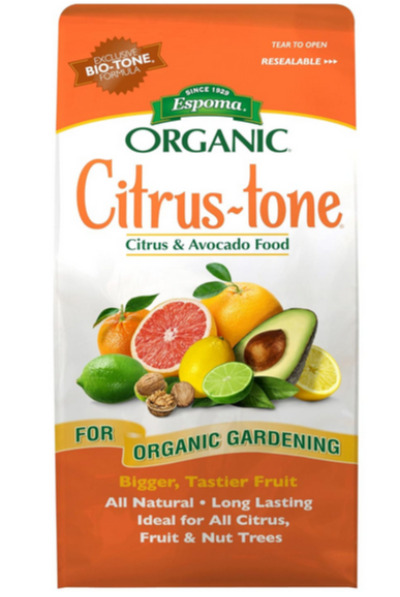
Best For: Organic gardeners and people who prefer a dry, granular product
What You’re Getting
Espoma Organic Citrus-Tone is a granular, dry fertilizer in a four-pound bag. It’s organic, meaning all the nutrients come from natural sources, not synthetic chemicals. For people concerned about chemicals in their gardens, this matters a lot.
The 5-2-6 NPK ratio is close to the specialized liquid we looked at but with a slightly lower potassium number. The formula is designed to feed citrus trees while building soil health over time.
You don’t mix this with water. You sprinkle it around your tree and water it in. That’s the process. It dissolves slowly as soil microbes work on it, releasing nutrients gradually to your tree.
Key Features That Matter
Organic credentials are the headline feature. Every nutrient comes from plants, animals, or minerals. No synthetic chemicals. If you’re an organic gardener or you want organic food, this works into that philosophy.
Slow release is built in through the natural fermentation and breakdown process. You don’t get a nutrition spike. You get steady feeding over weeks and months.
The formula includes beneficial soil microbes. Mycorrhizal fungi and beneficial bacteria are included in the package. These little critters help your tree access nutrients better and improve overall soil health.
The four-pound bag is a practical size. It’s not so much that you can’t use it, but it’s enough to treat multiple trees through a season.
Real-Life Usage Insights
Organic gardeners love this product. They like that it fits their organic philosophy. They like that they’re building soil while they feed their trees.
People report that it’s very easy to use. Sprinkle and water. No mixing, no measuring complicated ratios. It’s almost as simple as spikes but it’s a dry product instead of solid spikes.
Results are good but they’re slower than synthetic fertilizers. That’s normal. Organic products feed through soil biology, which takes time. Over weeks, your tree responds. The results stick around longer too because you’re building soil health, not just delivering a quick nutrient jolt.
Users with established trees report year-over-year improvements. The first year, results are okay. The second year is better because the soil is richer. By year three, the tree is genuinely thriving.
Honest Pros and Cons
Pros:
- Certified organic
- Includes beneficial soil organisms
- Easy application—just sprinkle and water
- Builds soil health long-term
- No mixing required
- Good for environmental conscious gardeners
- Four pounds covers multiple trees
- Results improve year over year
Cons:
- Results are slower than synthetic options
- NPK numbers are more modest than some other products
- Organic products cost more than synthetic equivalents
- Effectiveness depends on soil microbes doing their job
- Slower results might frustrate impatient gardeners
Performance Talk
Espoma doesn’t blow your mind with instant results like a concentrated liquid might. Instead, it delivers steady, sustainable improvement. Month one, your tree looks a bit greener. Month two, growth picks up. Month three and beyond, your tree is genuinely thriving and producing good fruit.
The soil health component means you’re not just feeding this year’s fruit. You’re investing in your tree’s future. The soil gets richer. The tree’s foundation gets stronger. Next year, you start from a better place.
Ease of Use
The ease-of-use score is high. Sprinkle the granules around your tree. Water them in. You’re done. That’s it. No mixing, no measuring, no complexity.
Value for Money
Organic products cost more than synthetic equivalents, and this is no exception. However, the value extends beyond just this season. You’re building soil health. That’s an investment that pays off for years.
For a gardener committed to organic practices, the value is solid. For someone who just wants the cheapest way to feed their trees, this isn’t it.
Comparing Your Options: What’s Different?
Now that you know about each product, let’s compare them head-to-head on the factors that matter most.
Concentration and Yield: The liquid concentrates (products one and two) offer the most yield per package. The Farmer’s Secret gives you flexibility. The 2-in-1 formula gives you 32 gallons from one bottle, which is the highest yield option. Spikes give you 72 applications. The liquid plant food is premium but small. Espoma gives you granules you work with over time.
Mixing Complexity: The liquids require mixing. Spikes require zero mixing. Espoma requires zero mixing. The liquid plant food requires mixing but it’s a small amount. If you hate measuring and mixing, spikes and Espoma are your friends.
Adjustment Flexibility: Liquids let you adjust strength and frequency. Spikes and Espoma lock you into their formula. If your tree needs something specific, liquids give you more control.
Speed of Results: Concentrated liquids show results fastest, usually within 2-3 weeks. The liquid plant food shows results in 3-4 weeks. Spikes and Espoma take 4-6 weeks because they release slowly.
Cost Efficiency: For multiple trees, the 2-in-1 formula wins for raw cost per application. For people with just one or two trees, cost per tree varies. Spikes are efficient if you use all 72. Espoma is efficient if you’re committed to organic and don’t mind paying a bit more.
Tree Count Flexibility: Liquids work great if you have many trees of different sizes. Spikes work great for any number of trees. Espoma works great for any tree count. The specialty liquid plant food is best for people with lemon trees specifically.
Soil Building: Espoma and the 2-in-1 formula both build soil. Liquids feed quickly but don’t necessarily improve soil long-term. Spikes just feed. The specialty liquid focuses on the tree, not the soil.
Buying Guide: How to Pick the Right Option for Your Situation
Not every product is best for every person. Let’s talk about which one makes sense for different situations.
You Have Multiple Citrus Trees (3+): The 2-in-1 formula (Product 2) is your best bet. The 32-gallon yield means you feed all your trees from one bottle. The cost per tree is lowest. The NPK ratio supports good fruit production. Done.
You Have One or Two Citrus Trees: The Farmer’s Secret (Product 1) is perfect. You control dilution. You don’t waste product. One bottle lasts a long time for just a couple of trees. You get flexibility.
You’re Busy and Don’t Want to Think About Feeding: Spikes (Product 3) are your answer. Push them in twice a year. Forget about them. Your trees get fed whether you remember or not.
You Have Lemon Trees and Fruit is Your Goal: The specialized lemon tree liquid (Product 4) is made for exactly this situation. It emphasizes fruit and flowering. Your lemon harvest will thank you.
You’re an Organic Gardener: Espoma Organic Citrus-Tone (Product 5) is obvious. It fits your values. It builds soil. It works. It’s organic.
You’re On a Tight Budget: The 2-in-1 formula (Product 2) offers the best cost per application if you have multiple trees. Spikes offer good value across any tree count. Espoma costs more but lasts longer and builds soil.
You Live in a Dry Climate: Spikes and Espoma need moisture to work well. The concentrated liquids might be better because you apply them with your water. You control the moisture situation.
You Like Control and Customization: Concentrated liquids are your thing. You adjust strength. You adjust frequency. You match feeding to your tree’s actual needs.
Who Should Buy Each Product
Farmer’s Secret Citrus Tree Booster:
- People with 1-4 citrus trees
- People who like flexibility
- People who want a small storage footprint
- People willing to mix product
2-in-1 Citrus Fertilizer (4-3-6 NPK):
- People with 3+ citrus trees
- People who value cost efficiency
- People who want soil improvement
- People who can store or use liquid quickly
Fertilizer Spikes:
- Busy gardeners
- People who forget to apply fertilizer
- Anyone growing citrus (works for all)
- People who hate mixing
- People in climates with consistent moisture
Lemon Tree Liquid Plant Food:
- People with lemon trees specifically
- Growers focused on fruit production
- People with just one or two trees
- People who want fastest results
Espoma Organic Citrus-Tone:
- Organic gardeners
- People who value soil health
- Gardeners willing to invest a bit more
- Anyone wanting slow, steady results
- People who aren’t in a hurry for results
Common Mistakes People Make with Citrus Fertilizer
Learning from others’ mistakes helps you succeed faster. Here are real problems people run into.
Applying Too Much Too Often: More fertilizer doesn’t mean better trees. It means burned trees. Salt buildup happens. Leaves get brown tips. Roots get damaged. Follow the label. Your trees don’t need constant feeding. Feed during the growing season. Less feeding during rest. That’s the rhythm.
Ignoring Soil Type: Sandy soil drains fast. Nutrients wash away. You need lighter, more frequent feedings. Clay soil holds nutrients. Heavy feeding burns trees. You need lighter applications. Loamy soil is forgiving but still needs attention. Know your soil type. Adjust accordingly.
Forgetting About Micronutrients: Iron deficiency is common in alkaline soils. Magnesium deficiency shows up as yellowing between veins. Zinc deficiency causes weird patterns. Good citrus fertilizer addresses these. Some people skip them. Your trees notice.
Not Reading Instructions: Every product is different. The concentrated liquids have different mixing ratios. Spikes have different counts per tree. Granules have different application rates. Read the label. Follow it. That’s where success lives.
Feeding Non-Growing Trees: Trees don’t grow in winter. Feeding dormant trees wastes money and can damage them. Feed during growth season. Stop during rest. That simple pattern saves money and helps trees.
Neglecting Container Tree Needs: Container trees can’t extend roots seeking nutrients. They depend on what you give them. Feed more often but lighter. More frequent light feeding works better than infrequent heavy feeding for containers.
Assuming All Citrus Are the Same: Lemons have different needs than oranges. Limes differ from grapefruits. The differences are small, but they exist. A formula made for lemon trees works better on lemon trees than a generic citrus formula. That’s why specialty products exist.
Performance Expectations: What Real Results Look Like
Before you buy and apply any fertilizer, let’s talk about what real improvement looks like. This matters because people often expect miracle results and fertilizer isn’t magic.
Leaf Color: Trees that are under-fertilized have pale or yellowish leaves. Good feeding makes leaves deeper green. This usually takes 3-4 weeks. Don’t expect instant dark green the day after you feed.
Growth Rate: Under-fertilized trees grow slowly. Good feeding speeds growth noticeably. You see new shoots appearing. Existing branches get longer. This takes about 4-6 weeks to become obvious.
Flower Production: Some products emphasize flowering. When it works, you get more flower buds in the next season. This is a delayed effect. You feed in spring. Fall and winter, you see more flowers. Spring, fruit sets.
Fruit Size and Quality: This is what matters most to home growers. Good feeding means bigger fruit. Better tasting fruit. More juice. Less bitterness. Results show up when fruit actually matures, usually 2-3 months after you get good feeding started.
Overall Tree Vigor: A well-fed tree looks healthy. It resists pests better. It handles stress better. Drought tolerance improves. You see this playing out over months and seasons, not weeks.
Fruit Production Volume: Year one with fertilizer, you might not see a huge change if the tree was already mature. Year two, you notice more fruit. Year three, your production is noticeably higher than it was before you started a feeding program.
The key here is patience. Fertilizer works. But it’s not instant magic. You’re feeding plants, not flipping a switch.
Final Verdict: Best Fertilizer for Citrus Trees
If I had to pick one winner across all situations, the 2-in-1 Citrus Fertilizer (4-3-6 NPK) takes it. Here’s why:
The value is unbeatable. One 32-ounce bottle becomes 32 gallons of finished fertilizer. The cost per application is the lowest of all options. The NPK ratio is specifically designed for citrus. The inclusion of beneficial soil organisms means you’re building long-term soil health while you feed. For anyone with multiple citrus trees—and most people have more than one—this product is the clear winner.
But honestly, there’s no single best option for every person. The real best fertilizer is the one that matches your situation.
If you’re busy, spikes are best. If you’re organic, Espoma is best. If you have one lemon tree and want maximum fruit, the lemon-specific liquid is best. If you love control and customization, the concentrated liquid from Farmer’s Secret is best.
The good news is that any of these five products works well. You won’t make a mistake choosing any of them. The mistakes come from over-feeding, poor mixing, or not feeding at all.
Getting Started with Your Citrus Feeding Program
Here’s how to start winning with your citrus trees:
Step One: Pick Your Product Use the guide above to decide which option fits your needs. Don’t agonize. Any choice is good.
Step Two: Read the Label I know I said this before. I’m saying it again. Read the label completely. Follow the instructions exactly. That’s half of success.
Step Three: Start Feeding Begin during the active growing season. Spring and summer are ideal. Don’t feed during winter when growth slows.
Step Four: Be Consistent Fertilizer works because you use it repeatedly, not because you use it once. Develop a routine. Every three weeks for liquids. Twice a year for spikes. Monthly or so for granules. Consistency matters.
Step Five: Watch Your Trees After 3-4 weeks, notice how your trees respond. Leaf color. Growth rate. Overall vigor. If things look good, keep doing what you’re doing. If something seems off, adjust.
Step Six: Expect Improvement, Not Perfection Your trees will improve. Fruit will be better. Production will increase. Growth will be stronger. It won’t be instant and it won’t be magic. But it will be real.
Wrapping Up
Growing great citrus trees comes down to consistent care, and fertilizer is a huge part of that care. The five products in this guide all work. The differences are in convenience, cost, and customization.
Pick the one that fits your life. Use it consistently. Follow the instructions. Watch your trees respond. That’s it. That’s how you grow healthy, productive citrus trees.
Your lemons, limes, and oranges will thank you.

Hi, I’m Mary, the founder of GardenCure.com. I’m passionate about creating healthy, beautiful gardens and well-kept lawns. I share practical experience and trusted advice on garden and lawn gear that truly works. With the support of my dedicated research team, our writers produce honest, in-depth reviews using reliable, authentic sources—helping you choose the right tools with confidence for your outdoor space.