5 Best Fertilizer for Strawberries In 2026
If you grow strawberries at home, you know that getting the right fertilizer makes a massive difference. Bad fertilizer leads to small berries, weak plants, and disappointing harvests. Good fertilizer? That’s how you end up with big, sweet berries that your family can’t stop eating.
In this article
I’ve tested and researched the top strawberry fertilizers on the market. This guide breaks down each product so you can pick the one that works best for your garden. Whether you’re a total beginner or someone who’s been growing strawberries for years, you’ll find the answers you need here.
What Makes a Great Strawberry Fertilizer
Before we dive into the products, let’s talk about what actually matters in a good strawberry plant food.
Nutrient Balance
Strawberries need three main nutrients: nitrogen, phosphorus, and potassium. These show up on fertilizer bags as three numbers. For example, a 4-3-4 formula means 4% nitrogen, 3% phosphorus, and 4% potassium.
Nitrogen helps the leaves and stems grow strong. Phosphorus powers the flowers and fruit. Potassium keeps everything healthy and disease-resistant. Different stages of growth need different ratios.
pH and Soil Preferences
Strawberries like slightly acidic soil. They thrive in a pH between 5.5 and 6.8. If your soil’s too alkaline, your strawberries will struggle to take up nutrients no matter how much you feed them. Some fertilizers are designed with this in mind.
Micronutrients Matter
Beyond the big three, strawberries need calcium, magnesium, iron, and other trace elements. These micronutrients prevent issues like blossom end rot and yellowing leaves. Good fertilizers include these too.
Liquid vs. Powder vs. Organic
Liquid fertilizers work fast because plants absorb them quickly. Powders dissolve in water and give you control over strength. Organic options feed your soil biology while nourishing plants. Each type has real advantages depending on your needs.
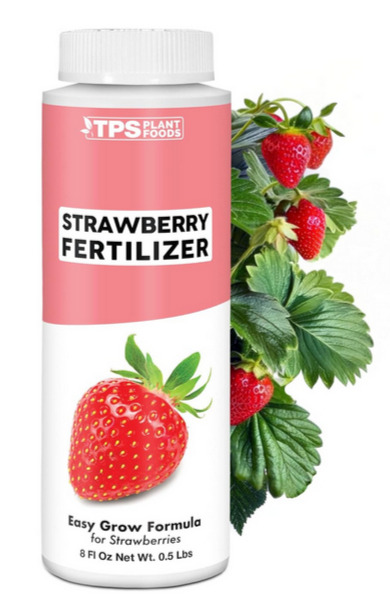
Strawberry Fertilizer – Liquid Plant Food for Better Flowering, Bigger Berries & Stronger Root Runners (8 oz)
Product Overview
This liquid concentrate comes in an 8-ounce bottle. It’s designed as an all-purpose strawberry food that targets three main goals: better flowers, bigger fruit, and stronger runners. The bottle is easy to store and the concentrate goes a long way since you dilute it in water.
The formula focuses on supporting the complete growth cycle of strawberry plants. It’s designed for both fresh plantings and established plants that need regular feeding through the growing season.
Key Features Explained Simply
The concentrated formula means you’re not buying a bunch of water like you are with some ready-to-use solutions. You mix a small amount with water, which saves money over time. The liquid form gets absorbed quickly, so you see results faster than with granular products.
The product targets blooming and fruit production specifically. This matters because strawberry plants sometimes make tons of leaves but few flowers. This fertilizer nudges the plant toward making berries instead.
Root runners are the baby strawberry plants that spread across your garden bed. Having strong runners means you can propagate new plants easily and fill in gaps in your bed. This fertilizer supports that growth too.
Real-Life Usage Insight
You mix this concentrate with water according to the bottle directions and apply it every couple of weeks during the growing season. It dissolves easily with no mess. People report that they see new flower buds show up within a week or two of starting treatment. That’s the nitrogen and phosphorus kicking in.
The bottle lasts a long time because each application only uses a small amount. A gardener with a moderate strawberry patch might get 2-3 months of regular feedings from one bottle.
Honest Pros and Cons
The biggest advantage is how fast it works. Liquid fertilizers don’t need time to break down. You apply it and plants start using it immediately. The concentrated form is also economical. One bottle treats a lot of plants.
The downsides are real too. You have to mix it yourself every time, which is a small chore. Some people forget to mix it properly or mess up the dilution ratio. It also requires regular applications. If you skip feedings, results drop off. Liquid products need more consistent attention than some alternatives.
Performance Discussion
This fertilizer performs best during active growth and blooming. You’ll see the results show up as increased flowering within a couple of weeks. Berries tend to size up noticeably larger than they would without treatment.
The performance on root runners is solid. Plants spread and send out runners more vigorously when fed with this product. This is helpful if you want to expand your bed or replace older plants.
However, this product is mainly about flowering and fruit, not about building strong soil over time. It’s a quick boost, not a long-term soil health strategy.
Ease of Use
Mixing the concentrate is straightforward. You pour a small amount into your water can, add the right amount of water, and mix. The dilution ratio is simple enough that anyone can do it. A measuring cap on the bottle helps you get the amount right.
The messy factor is minimal. Since it’s a small amount of concentrate, there’s no heavy bags to lift or clouds of dust. Just careful pouring and you’re done.
Value for Money
The 8-ounce bottle is priced reasonably for a concentrate. One bottle treats many plants over multiple applications. The cost per feeding is quite low. If you have a modest home garden, one bottle might last the whole season.
For someone with a huge strawberry operation, you might go through bottles faster and want to buy in larger quantities. But for home gardeners, the value is solid.
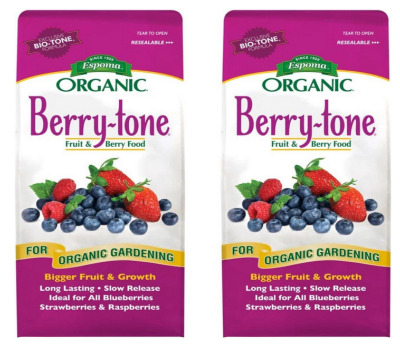
Espoma Organic Berry-Tone 4-3-4 Natural & Organic Fertilizer (4 lb. Bag – Pack of 2)
Product Overview
Espoma is a well-known name in organic gardening. This Berry-Tone formula comes as a dry granular fertilizer in 4-pound bags. The pack of 2 gives you 8 pounds total. The 4-3-4 ratio is balanced to feed all types of berries, though it works great for strawberries specifically.
The formula is certified organic, which matters if you want to avoid synthetic chemicals. It’s also OMRI listed, meaning it meets organic certification standards. This product adds biology to your soil, not just nutrients.
Key Features Explained Simply
Organic fertilizers work by feeding the microorganisms in your soil. Beneficial bacteria and fungi break down the organic matter and release nutrients slowly. This means you’re building healthier soil over time, not just feeding the plant directly.
The 4-3-4 ratio gives strawberries what they need across all growth stages. It’s not extreme in any direction. It won’t overpush leafy growth at the expense of fruit. It’s a steady, reliable formula.
The granular form means you just sprinkle it on the soil and let rain or watering work it in. No mixing bottles or measuring cups. It’s simpler in that way than liquids.
The inclusion of beneficial microbes means you’re getting more than just NPK nutrients. These organisms help plants access nutrients that are locked up in the soil. They also fight disease.
Real-Life Usage Insight
You apply this product once at planting time and then again a couple times through the growing season. The exact timing depends on your climate, but typical application is early spring and mid-summer. You work it gently into the top inch or two of soil and water in well.
The effects are slower to show than with liquid fertilizers, but they’re steadier. You don’t get a dramatic flower burst after a week. Instead, over several weeks, you notice plants looking greener and stronger overall. Flowers come steadily. Berries develop well.
People who use Espoma report that their beds stay healthy and productive year after year. The soil condition improves. This is because you’re building biology and organic matter, not just applying quick nutrients.
Honest Pros and Cons
The biggest advantage is long-term soil health. You’re not just feeding plants. You’re feeding the soil ecosystem. This builds fertility that keeps working for years. Many gardeners report that Espoma products are worth the cost for this reason alone.
The organic certification matters if that’s important to you. No synthetic anything. All the ingredients are natural. If you’re growing food you plan to eat fresh, this appeals to a lot of people.
The ease of application is another plus. Dry granules don’t need mixing. You just sprinkle and go.
The downsides include slower results. If you want to see a burst of flowering right away, this isn’t the product. Results take 2-3 weeks minimum. The smell is also earthy and strong, which bothers some people but doesn’t bother others.
It’s also pricier per application than some liquid concentrates. The 8 pounds of material doesn’t stretch as far as 8 ounces of concentrate mixed up.
Performance Discussion
This fertilizer performs best as part of a long-term care strategy. It’s not the quick fix. It’s the investment that pays dividends over multiple seasons.
Performance on soil health is where this shines. Users consistently report that beds treated with Espoma stay more productive. The soil structure improves. Drainage gets better. The number of beneficial bugs and microbes increases.
Performance on actual fruit production is very good. Berries size up well. Color and sweetness are excellent. The steady release of nutrients means consistent flowering without the boom-and-bust cycle you sometimes see with liquid fertilizers.
Ease of Use
This is one of the easiest fertilizers to use. No measuring, no mixing, no dilution. You open the bag, sprinkle the granules around your plants, and water. That’s it.
The downside is that bags are heavy and a little messy. Granules dust. But you’re not handling toxic chemicals or dealing with concentrate bottles. It’s straightforward.
Value for Money
At first glance, this seems expensive. 8 pounds of granular fertilizer is more expensive than 8 ounces of concentrate. But you’re comparing apples to oranges. The concentrate needs water added. The granules are the full product.
When you calculate the cost per application and per season, Espoma is actually very reasonable. You apply it just 2-3 times per season. That’s cheaper than applying liquid fertilizer 8 times per season.
The long-term benefit to soil health is also worth money. Soil that improves year after year means less fertilizer needed over time. Many gardeners consider Espoma an investment, not an expense.
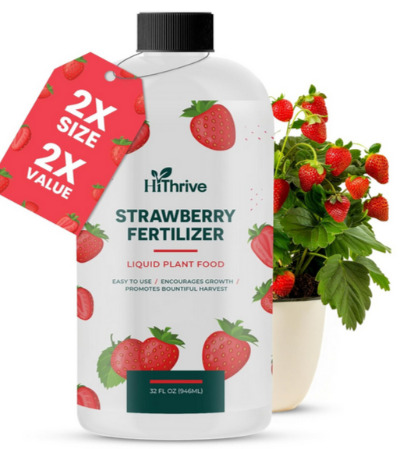
32oz Strawberry Fertilizer – Makes 32 Gallons of Fruit Tree Fertilizer (Liquid Plant Food)
Product Overview
This concentrate bottle makes 32 gallons of ready-to-use fertilizer. That’s a massive amount. The 32-ounce bottle is a liquid concentrate designed specifically for strawberries but also works on other fruit plants. The fact that it makes 32 gallons means you’re getting a huge amount of fertilizer from one bottle.
This is the product to choose if you have a large garden or plan to treat lots of plants. It’s economical for bigger operations. The bottle is a standard plastic container that stores easily in a shed.
Key Features Explained Simply
The ability to make 32 gallons from 32 ounces is the key feature. That’s a 1:31 dilution ratio. You use just a tiny bit of concentrate per gallon of water. This incredible dilution ratio means one bottle lasts a very long time for most home gardeners.
The formula targets the needs of fruiting plants specifically. It’s not a general all-purpose fertilizer. It focuses on phosphorus and potassium, which are the nutrients that make fruit, while keeping nitrogen at a level that doesn’t push too much leafy growth.
The liquid form means fast absorption and quick results. Mixed with water, it’s ready to use immediately. There’s no waiting for granules to dissolve or break down.
Real-Life Usage Insight
You mix the concentrate with water at the recommended ratio and apply it to your strawberry plants every 2-3 weeks. Because the dilution is so extreme, you’re really only using a tablespoon or two of concentrate per gallon. This makes the bottle seem to last forever.
Gardeners report that this product is convenient for regular feeding schedules. You don’t have to keep buying more bottles. One bottle from one season can last into the next if you’re not super aggressive with applications.
The feeding schedule is simple. Mix, pour around the base of plants, and move on. No technical knowledge needed.
Honest Pros and Cons
The obvious advantage is extreme value. One bottle makes 32 gallons. That’s remarkable for the price. A home gardener could treat a large patch all season long from one bottle. This is hard to beat financially.
The liquid concentration means quick results. You see evidence of better growth and more abundant flowers within a couple of weeks. The speed is consistent with other liquid fertilizers but the value is better.
The downsides are important to know about too. Making 32 gallons requires discipline about measuring correctly. The dilution is extreme. Get it wrong and you either give plants too little fertilizer (no effect) or too much (potential burn). Most people do fine with the instructions, but it’s something to pay attention to.
The other potential issue is that some people find mixing fertilizer every couple of weeks annoying. Even though it’s simple, it’s one more task. Busy people sometimes skip applications because they forget or don’t feel like measuring.
Performance Discussion
This fertilizer performs well on actual fruit production. Strawberries respond well to it. Flowers increase. Berries size up. Color is good. Sweetness is reported as good by people who use it.
The performance is consistent across different growing conditions. It works in containers, in ground beds, and in hydroponic systems. The flexibility is nice.
One thing to know is that the performance depends on consistent application. If you skip weeks or apply sporadically, you don’t get the same results. The fruit quality drops if you go through periods without feeding. This is normal for liquid fertilizers but worth understanding.
Ease of Use
Mixing is easy if you use a measuring spoon and follow the instructions. The main issue is remembering to do it regularly. Some people set a calendar reminder to make mixing part of their weekly routine. Others just mix when they notice plants looking like they need food.
The act of applying is simple. You water it in around the base of plants or spray it on the leaves if the product is safe for foliar application. Then you’re done until next application day.
Value for Money
This is exceptional value. You’re hard-pressed to find better value per ounce in the fertilizer world. One bottle for $20-30 that makes 32 gallons is almost impossible to beat.
If you calculate the cost per application, it’s pennies. This makes it perfect for budget-conscious gardeners or people with large patches.
The downside is that if you only have a few plants, you’ll use maybe 2-3 gallons all season and the rest of the bottle will sit unused. In that case, the huge batch size doesn’t help you.
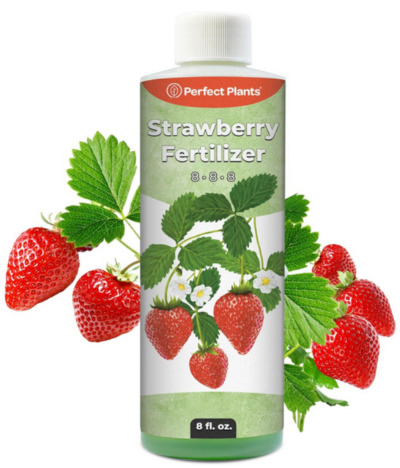
Strawberry Plant Fertilizer by Perfect Plants – Best Liquid Fruit Plant Food (8 fl oz)
Product Overview
Perfect Plants makes this 8-fluid-ounce liquid fertilizer with strawberries specifically in mind. It’s designed as a targeted solution for acid-loving berries, not a general fertilizer. The bottle size is convenient for home gardeners with small to medium patches.
The formula is balanced to support the complete growth cycle from establishment through heavy fruit production. It’s meant to be used with acidic or slightly acidic soil for best results.
Key Features Explained Simply
The focus on acid-loving plants is important. Strawberries actually do prefer slightly acidic soil. This formula is designed around that preference. It includes nutrients in forms that work best in that pH range. If your soil is naturally acidic or you’ve amended it to be more acidic, this product will shine.
The liquid form absorbs quickly. You’re not waiting weeks for granules to break down. You apply it and within days plants show response.
The 8-ounce size is a reasonable amount for a home garden. It’s not a huge bottle that will sit around, but it’s not so tiny that you’re back at the store next week either. The sizing is thoughtful.
Real-Life Usage Insight
Mix according to directions, apply every couple of weeks, and you’re done. The directions are clear and simple. Most people mix it into a watering can and apply to the soil around plants. It dissolves completely so there’s nothing settling at the bottom of your watering can.
Application is fast. You can fertilize a whole patch in 10-15 minutes. The liquid goes on smoothly and soaks in.
The response from plants is noticeable. Within a couple of weeks, new growth appears. Flowers come. Berries develop. The timing is consistent and reliable.
Honest Pros and Cons
The biggest advantage is targeted formulation. This isn’t a generic berry fertilizer that’s okay for strawberries. It’s specifically made for what strawberries want. If your soil is already in the acidic range, this gives you optimized nutrition.
The speed of action is another advantage. Liquid form means fast results. You feed on Monday and see growth by Thursday or Friday.
The bottle size is convenient. Not too big, not too small.
The downsides include need for regular application. You can’t set it and forget it. You need to remember to mix and apply every 2-3 weeks. Some people find this annoying.
The concentration might also be weaker than some alternatives. If you’re dealing with severe nutrient deficiencies, you might need to apply more frequently or use a heavier formula.
The cost is moderate. It’s more expensive than the huge 32-ounce concentrate, but less than some premium products.
Performance Discussion
Performance is solid and consistent. Strawberry plants treated with this product show steady improvement in flower production. Berries size up well. Color is good. Sweetness improves.
The performance is especially good if your soil is naturally acidic. If your soil is neutral or alkaline, you won’t see the same benefit. It’s important to know your starting pH.
Performance on runners is good. New plants develop well. Propagation is easy.
Ease of Use
This is simple to use. Small bottle, easy to measure, straightforward mixing ratio. Even a total beginner can handle it without stress.
Application is easy too. Water it in or spray on leaves depending on product specification. No special equipment needed.
Value for Money
The 8-ounce bottle is fairly priced for a specialized product. You’re paying a bit extra for the targeted formulation. If that matches your soil conditions, it’s worth it. If you need a more general purpose product, you might find better value elsewhere.
The cost per application is reasonable. The bottle lasts several months for a modest garden.
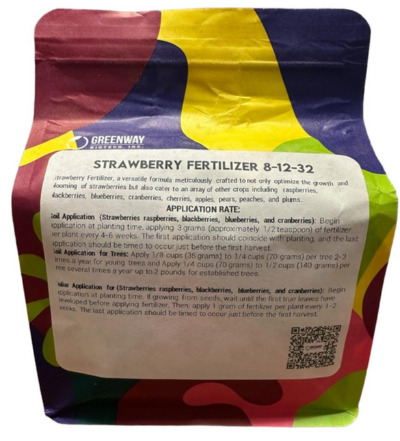
Greenway Biotech, Inc. Strawberry Fertilizer 8-12-32 Powder – Water Soluble with Chelated Micronutrients (2 LB)
Product Overview
Greenway Biotech makes a water-soluble powder fertilizer with a 8-12-32 ratio. This is different from everything we’ve looked at so far. The numbers are skewed heavily toward potassium (the last number, 32). This formula is designed to maximize fruit size and sweetness. The 2-pound bag is designed for regular mixing and application.
The product includes chelated micronutrients, meaning the trace minerals are bound in a form that plants can access easily. This is advanced chemistry that makes a real difference.
Key Features Explained Simply
The 8-12-32 ratio is radical compared to balanced formulas. That high potassium (32) is intentional. Potassium is the nutrient most directly connected to fruit quality. More potassium means bigger berries and sweeter berries.
The lower nitrogen (8) means the plant won’t push excessive leafy growth. You’re focused entirely on fruit production, not on making a giant leafy bush that makes few berries.
Water soluble powder means you dissolve it completely in water and spray or water it in. It’s even faster acting than liquid concentrates because it’s already in a highly available form. Plants absorb it immediately.
Chelated micronutrients are mineral elements like iron, zinc, boron, and others in a chemical form that prevents them from binding up in soil. They stay available to plants. This prevents common problems like yellowing leaves or malformed fruit.
Real-Life Usage Insight
You mix the powder with water at the recommended strength and apply it every 1-2 weeks during active growth and fruiting. The powder dissolves without lumps if you’re careful with mixing.
The response is fast. Within a week of application, you see larger flowers. Berries that form afterward are noticeably bigger than they would be without treatment.
Gardeners report that strawberries fed with this product are sweeter and more flavorful. The higher potassium directly impacts fruit quality.
One note: this is a serious performance product. It’s not for casual gardeners who just want decent berries. It’s for people who want maximum production and maximum fruit quality.
Honest Pros and Cons
The biggest advantage is fruit quality. If your goal is the biggest, sweetest strawberries possible, this fertilizer delivers. The 8-12-32 ratio is optimized entirely for that goal.
The powder form is cost-effective. Powders are cheaper per pound than liquids because there’s no water already in them. You’re buying nutrients, not water weight.
The micronutrient inclusion is valuable. You don’t need to add secondary fertilizers or apply micronutrient solutions separately. It’s all here.
The downsides are important too. This product is aggressive and not for beginners. The high potassium can cause problems if overapplied. You really do need to follow the mixing instructions carefully. Too much potassium can actually lock up calcium and cause problems.
The powder requires mixing, which is an extra step. You can’t just sprinkle and water like with granules.
The product is specifically optimized for fruit production, not for overall plant health. If you want a more balanced approach, this isn’t it.
Performance Discussion
Performance on fruit quality is exceptional. This is where this product genuinely shines. Strawberries grown with this fertilizer are noticeably larger and sweeter than average.
Performance on flower production is good. The lower nitrogen doesn’t suppress flowering. You still get abundant flowers. The energies of the plant are directed toward making each flower develop into quality fruit.
Performance on plant health is fine, but not the focus. The plant lives and grows fine, but this fertilizer isn’t about building soil health or long-term sustainability. It’s about extracting maximum fruit quality.
One interesting note: gardeners report that berries taste better. This is hard to measure objectively, but it’s consistent. The taste improvement is enough that people keep using this product year after year.
Ease of Use
Mixing is straightforward but requires attention to detail. You measure the powder carefully and mix with water. The powder should dissolve completely. If you see lumps, you didn’t mix thoroughly.
Application is easy. Water it in or spray it on. The timing and frequency matter. Skip applications and you don’t get the same results.
Value for Money
The 2-pound bag is a good value. The powder form is economical. You’re paying for nutrients, not for the weight of water in a liquid product.
The cost per application is low, but you’re applying frequently. The bag lasts several months for a moderate garden.
The real value question is whether you need this level of fruit quality optimization. If you do, it’s worth every penny. If you just want decent berries, the cost might be more than necessary.
Comparison Insights: Which Product Wins?
All five products are good, but they’re not equal. They excel in different situations.
For Speed and Immediate Results
The liquid concentrates (Products 1, 3, and 4) are faster acting than the others. If you see a problem and want to fix it quickly, liquid is your answer.
For Maximum Fruit Quality
The Greenway Biotech powder (Product 5) is specifically optimized for this. If bigger, sweeter strawberries are your goal, this product delivers more than the others.
For Long-Term Soil Health
The Espoma organic granules (Product 2) can’t be beat. You’re not just feeding plants. You’re building soil health that compounds over years.
For Extreme Value
Product 3 (the 32-gallon concentrate) is unbeatable. One bottle lasts forever for a home garden.
For Balanced, Steady Performance
Product 4 (Perfect Plants) is the easiest to understand and apply. It does everything reasonably well without extreme optimizations in any direction.
Cost Comparison
If you calculate actual cost per application:
- Product 1: Moderate cost per application
- Product 2: Low cost per application
- Product 3: Extremely low cost per application
- Product 4: Moderate cost per application
- Product 5: Low cost per application
Application Frequency and Commitment
- Products 1, 3, 4: Require regular mixing and application (moderate commitment)
- Product 2: Simple application but less frequent (low commitment)
- Product 5: Requires careful mixing and attention to detail (higher commitment)
Complete Buying Guide: How to Choose
The right fertilizer depends on your situation. Here’s how to think through it.
How Many Plants Do You Have?
If you have just a few plants in pots on a patio, go with Products 1 or 4. The small bottle sizes are perfect. You’ll use the whole bottle in a season and have no waste.
If you have a large garden bed with dozens of plants, go with Product 3. The enormous batch size means you buy fertilizer rarely and spend less overall.
If you have a medium patch, any product works but Product 2 or 5 offers good value.
What’s Your Soil Like?
If your soil is acidic (which strawberries naturally prefer), Product 4 is optimized for your conditions. You’ll get better results than with a neutral formula.
If your soil is alkaline, you have two choices. Use Product 4 but amend your soil to be more acidic first. Or use the other products and work on acidifying your soil over time.
What’s Your Goal?
If you want maximum, competition-grade strawberries, get Product 5. The high potassium drives fruit quality. This is what people use when they want the best possible berries.
If you want good berries without obsessing over perfection, Products 1, 3, or 4 are great.
If you want healthy plants and sustainable production year after year, Product 2 is the best choice. You’re building soil biology.
How Much Work Are You Willing To Do?
If you want minimal work, get Product 2. Sprinkle, water, done. No mixing required.
If you don’t mind mixing but want simple instructions, get Product 1 or 4. Straightforward ratios. Minimal measuring.
If you’re willing to be precise and careful, Product 5 will reward you with amazing fruit.
If you want value and don’t mind mixing, Product 3 is perfect. The extreme dilution is easy to handle.
Your Budget
If budget is tight, Product 3 gives the most fertilizer per dollar. One bottle lasts seasons.
If you want premium performance without worrying about cost, Product 5 is worth the investment for the fruit quality.
If you want a balanced option that’s reasonable priced, Products 1, 2, or 4 are solid.
Who Should Buy These Products?
Product 1 is for: Home gardeners with modest patches who want a liquid solution that works fast and is simple to apply. Great for people trying strawberry growing for the first time.
Product 2 is for: Gardeners who care about soil health and want long-term sustainability. Organic growers. People who’ve been gardening for years and understand the value of building soil biology. Anyone who likes simple application.
Product 3 is for: Large garden operations. People on a budget. Gardeners who like to be efficient and economical. Anyone who doesn’t mind a tiny bit of extra mixing for massive savings. Anyone with multiple raised beds or large patches.
Product 4 is for: Gardeners with acidic soil who want a product optimized for their conditions. People who like targeted solutions. Anyone who needs moderate amounts and doesn’t want leftover product.
Product 5 is for: Serious strawberry growers who want the absolute best fruit quality. People willing to follow precise application instructions for maximum results. Gardeners who sell berries or grow for competition. Anyone who wants bigger, sweeter strawberries more than anything else.
Common Mistakes to Avoid
Don’t Over-Apply
More fertilizer is not better. Excess nutrients can actually burn plants and make problems worse. Follow the label directions. If anything, apply a little less than recommended and watch how plants respond. You can always add more next time.
Don’t Ignore pH
Strawberries prefer acidic soil. If your soil pH is wrong, the best fertilizer in the world won’t work well. Test your soil before you spend money on fertilizer. A simple pH test kit from any garden center costs $10-20 and takes 10 minutes.
Don’t Skip Water
Fertilizer only works if plants have water. Dry soil can’t transport nutrients. If you’re applying liquid fertilizer to bone-dry ground, it won’t get to the roots. Water first, then feed, then water again.
Don’t Forget About Consistency
One big application doesn’t work as well as regular smaller applications. Strawberries benefit from steady nutrition all season long. Pick a schedule and stick to it. Set a phone reminder if you tend to forget.
Don’t Assume All Fertilizers Are the Same
The NPK numbers matter. A 4-3-4 formula is not the same as an 8-12-32 formula. They’re designed for different goals. Read the label. Understand what you’re buying.
Don’t Neglect Soil Biology
Chemicals aren’t the enemy, but they’re only half the story. Good soil has billions of beneficial microorganisms. If you can afford it and it fits your philosophy, occasionally use an organic product like Espoma to feed that biology.
Don’t Apply Liquid Fertilizer in Direct Sun
Spray fertilizer in early morning or late evening. Applying when the sun is blazing can burn foliage. The heat can also interfere with nutrient absorption.
Don’t Forget Micronutrients
If you use a basic fertilizer for extended periods, micronutrient deficiencies can develop. Yellowing leaves (except normal old-leaf senescence) is a sign of iron deficiency. Purple leaves indicate phosphorus or magnesium issues. Occasionally use a product that includes full micronutrient packages.
Real-World Performance Comparison
Let’s talk about what actually happens when you use these products on real plants.
Flowering Response
All five products increase flowering. The liquid products (1, 3, 4) produce response within 1-2 weeks. The granular (2) takes 2-3 weeks. The powder (5) works fast but you won’t see increased flowering because the formula suppresses excessive growth in favor of fruit development. The result is similar flowering to other products, but the flowers that form develop into bigger fruit.
Fruit Size
This is where Product 5 shines. Berries are noticeably larger. Products 1, 3, and 4 produce good-sized fruit. Product 2 produces good-sized fruit but the real benefit shows up in years 2 and 3 when soil health has improved and plants are more vigorous.
Fruit Sweetness
Product 5 (high potassium) produces noticeably sweeter berries. Product 2 (built-up soil biology) produces sweeter berries over time. Products 1, 3, and 4 produce adequate sweetness but not exceptional.
Plant Vigor
Product 2 produces the most vigorous plants because you’re building soil health. Products 1, 3, and 4 produce good vigor as long as you keep applying. Product 5 produces plants that are focused on fruiting, not on maximum growth.
Runner Production
Products 1 and 4 produce strong runners for propagation. Product 2 produces strong runners and they’re healthier due to soil biology. Product 3 produces good runners. Product 5 produces fewer runners because energy goes to fruit, not spreading.
Harvest Longevity
Products 1 and 3 produce good harvests that tail off if you stop fertilizing. Product 2 produces harvests that stay strong because soil health sustains production. Product 4 produces good sustained harvests if you maintain the application schedule. Product 5 produces concentrated, intense harvests during the main season.
Final Verdict: Which Product Wins Overall?
There’s no single winner because the right choice depends entirely on your specific situation and goals. But I’ll break down my honest assessment.
Best Overall Value: Product 3 (the 32-gallon concentrate)
One bottle makes an absurd amount of fertilizer. The cost is unbeatable. It works well on actual fruit production. For the home gardener, this is hard to beat financially. You buy it once and it lasts for a very long time.
Best for Serious Strawberry Growers: Product 5 (Greenway Biotech 8-12-32)
If you want the best possible strawberries, this product delivers. The higher cost is justified by the fruit quality. The careful application requirements are worth the effort. The taste and size difference are real and noticeable.
Best for Beginners: Product 1 or 4 (Liquid concentrates in moderate sizes)
Easy to understand. Simple to apply. Straightforward instructions. No complicated mixing. Fast results. These products teach you how fertilization works and give you success early on.
Best for Long-Term Success: Product 2 (Espoma Organic)
This product builds soil health that keeps producing for years. You’re not just getting good strawberries this year. You’re building fertility that compounds. The soil gets richer, darker, and more alive. That’s worth something real.
Best for Large Operations: Product 3 (huge batch size)
If you have lots of plants, the economics are unbeatable.
Best for Hydroponics or Container Growing: Product 5 (water-soluble powder)
Water-soluble powder is the gold standard for hydroponics and container gardening. You can dial in exact nutrient concentrations.
How to Actually Get Results From Your Fertilizer
Buying good fertilizer is step one. Using it correctly is step two.
Start With a Soil Test
Before you apply any fertilizer, know what you’re working with. A soil test tells you pH, existing nutrient levels, and organic matter percentage. This costs $15-30 and saves you from wasting money on fertilizer you don’t need.
Prep Your Soil
Mix in compost or aged manure before planting. Give yourself a foundation of decent soil and you’ll get better results from any fertilizer. A 1-2 inch layer of compost mixed into the top 4-6 inches of soil makes a massive difference.
Time Your Application
Don’t fertilize dormant plants. Wait until growth has started in spring. Don’t fertilize stressed plants. Water them well and let them recover first. Apply fertilizer to active, healthy plants in the growing season.
Water First and Last
Water your strawberries well before applying liquid fertilizer. Water again after application. The plant needs moisture to take up nutrients. Dry soil can’t transport anything to the roots.
Space Applications Out
Every 2-3 weeks is standard. More often than that and you’re wasting money and risking nutrient imbalances. Less often than that and you’re leaving production on the table.
Monitor and Adjust
Watch your plants. Are leaves dark green or yellowing? Is flowering adequate or sparse? Are berries large or small? These observations let you adjust. If plants look pale, maybe more nitrogen next time. If berries are small, maybe increase potassium next cycle.
Don’t Stop Too Early
Keep feeding through the fruiting season. Many home gardeners stop fertilizing once berries start ripening. That’s a mistake. Plants need nutrition to keep making fruit. Don’t stop feeding until you’re done harvesting.
The Bottom Line
All five of these products are legitimately good. You won’t fail with any of them. Your results depend more on consistent application and good growing conditions than on which exact product you choose.
That said, Product 3 gives you the most value. Product 5 gives you the best fruit quality. Product 2 builds the best long-term foundation. Products 1 and 4 are the most user-friendly.
Pick the one that matches your goals and your situation. Water your plants. Give them sunlight. Apply fertilizer on schedule. You’ll have great strawberries.
Strawberry growing isn’t complicated. Good soil, good nutrients, consistent water, and sunlight. That’s it. These five products all provide the “good nutrients” part of that equation in different ways.
Now stop reading and go grow some strawberries.

Hi, I’m Mary, the founder of GardenCure.com. I’m passionate about creating healthy, beautiful gardens and well-kept lawns. I share practical experience and trusted advice on garden and lawn gear that truly works. With the support of my dedicated research team, our writers produce honest, in-depth reviews using reliable, authentic sources—helping you choose the right tools with confidence for your outdoor space.