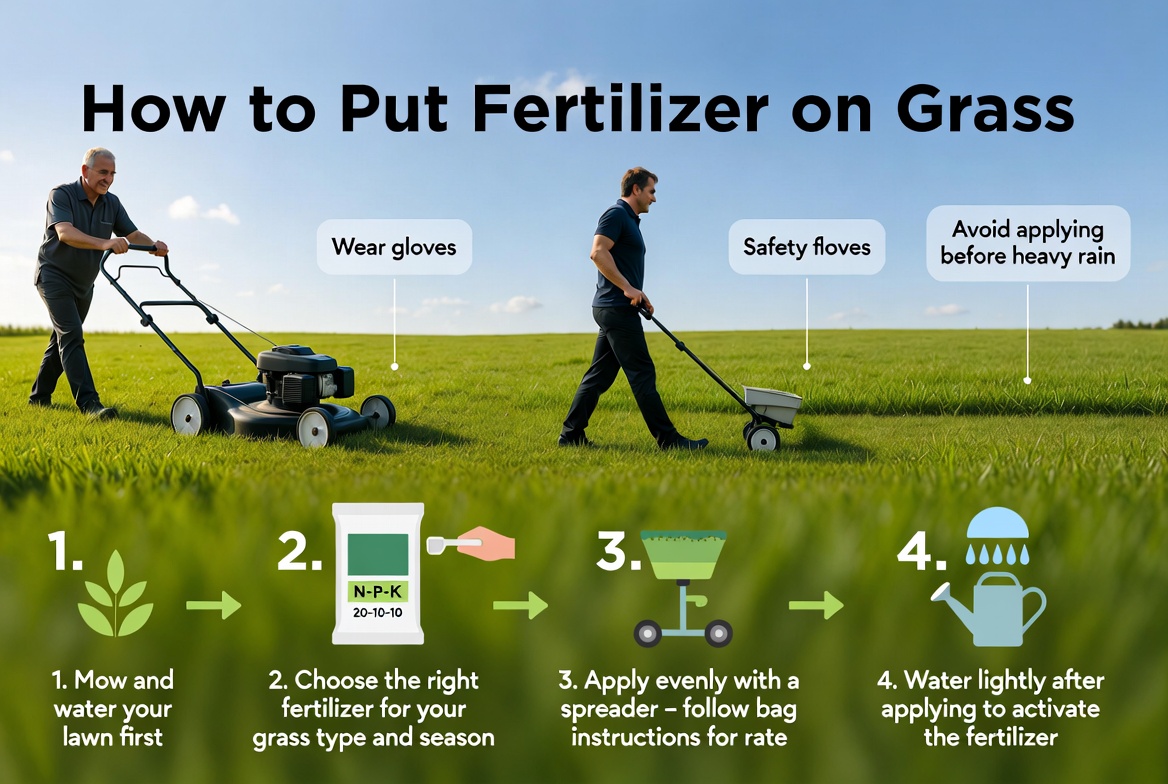
How to Put Fertilizer on Grass?
If you want your lawn to look green, healthy, and thick, fertilizer is your secret weapon. Lots of homeowners feel confused when it comes to feeding their grass, but it’s actually way easier than you think. This guide walks you through everything you need to know to get your lawn looking amazing.
In this article
Why Your Grass Needs Fertilizer
Your grass is a living plant, just like the vegetables in your garden or the flowers in your flowerbeds. These plants need food to grow strong and healthy. When you use lawn fertilizer, you’re giving your grass the nutrients it needs to thrive.
Think of fertilizer as a meal for your lawn. Without proper nutrients, grass grows thin and weak. Weak grass lets weeds move in and take over. Grass that’s hungry also gets damaged more easily by pests, diseases, and dry weather. When you feed your grass with the right nutrients, it becomes thick and dense, which crowds out weeds naturally.
The benefits of using fertilizer go beyond just looks. A healthy, well-fed lawn actually stops weed growth better than any other method. Your grass also bounces back faster from foot traffic, pets, and harsh weather when it’s well fed. Plus, a beautiful lawn makes your whole home look nicer and increases your property value.
Understanding Grass Fertilizer Basics
Before you start spreading fertilizer on your lawn, you need to know what’s actually in that bag. Most grass fertilizers have three main nutrients listed on the package. These numbers look like 10-10-10 or 5-10-5, and they tell you the exact amounts of three essential nutrients.
The first number shows the amount of nitrogen. Nitrogen is what makes grass green and helps it grow fast. If your lawn looks pale or yellow, nitrogen is probably what you need.
The second number tells you about phosphorus. This nutrient helps grass roots grow deep and strong. Deep roots mean your grass can handle drought better and stays healthier overall.
The third number shows potassium. Potassium helps grass fight off diseases, handle stress, and stay tough. It’s like the immune system boost for your lawn.
You’ll also see words like “slow-release” or “quick-release” on fertilizer bags. Quick-release fertilizers work fast, giving your grass a quick boost of green color. Slow-release fertilizers feed your grass over time, usually over weeks or even months. For most homeowners, slow-release fertilizers are the better choice because they last longer and won’t burn your grass.
Types of Grass Fertilizers Available
Different types of fertilizers work in different ways. Liquid fertilizers soak into the soil fast and show results quickly. You mix them with water and spray them on your lawn. Liquid options work great if your grass needs help right now.
Granular fertilizers come as little pellets that you spread on your lawn. As rain falls and waters soak into the soil, the pellets break down and feed your grass. Granular fertilizers last longer than liquid ones, so you don’t have to apply them as often.
Organic fertilizers come from natural sources like compost, bone meal, or fish emulsion. These options work slower than chemical fertilizers, but many people love them because they improve soil quality over time. Organic options also won’t burn your grass if you apply too much.
Synthetic fertilizers are made in factories and release nutrients quickly. They work fast and give you visible results pretty soon. Synthetic options cost less than organic ones, but they don’t help your soil quality the way organic fertilizers do.
Getting Your Lawn Ready for Fertilizer
Before you spread any fertilizer, take a little time to prepare your lawn. The better your preparation, the better your results will be.
First, mow your grass to the right height. For most grass types, keep your lawn between two and three inches tall. Cut it down if it’s longer than this, but never cut it shorter than one and a half inches. Shorter grass sometimes gets stressed and can turn brown.
Next, remove any dead leaves and debris from your lawn. This dead stuff, called thatch, blocks nutrients from reaching the soil. You can rake your lawn or use a dethatcher machine to clean it up. A clean lawn lets fertilizer do its job way better.
Water your lawn the day before you plan to fertilize. Moist soil lets fertilizer spread evenly and sink in properly. If your lawn is bone dry, the fertilizer won’t work as well. But don’t soak it so much that it’s muddy.
Finally, check the weather. Don’t spread fertilizer if rain is coming in the next day or two. You want the fertilizer to stay on your lawn long enough to do its job. Light rain a couple of days after you fertilize is actually perfect because it helps wash the nutrients into the soil.
Tools You’ll Need to Fertilize Your Grass
You don’t need fancy equipment to fertilize your lawn. Just a few basic tools make the job simple.
A spreader is the main tool you’ll use. Two types work great for lawns. A broadcast spreader throws fertilizer pellets in a wide pattern as you walk. This works fast and covers large areas quickly. A drop spreader drops fertilizer straight down as you push it. Drop spreaders give you more control and work better near flower beds and trees where you don’t want to hit other plants.
If you’re using liquid fertilizer, you’ll need a spray bottle or pump sprayer. Make sure whatever you use doesn’t have any chemical residue in it from other products.
You’ll also want work gloves to protect your hands. Even though most fertilizers are safe, it’s smart to keep them off your skin. A pair of sneakers or boots keeps dirt off your feet too.
How to Apply Fertilizer Step by Step
Ready to get started? Here’s exactly how to feed your grass the right way.
Start by reading the label on your fertilizer bag. It tells you how much fertilizer to use for your lawn size. Measure your lawn’s square footage if you don’t know it already. Just multiply the length by the width to get the square footage.
Fill your spreader with the right amount of fertilizer. If you’re using a broadcast spreader, make sure the gate is closed before you fill it. You don’t want fertilizer pouring out while you’re setting up.
Walk a pattern across your lawn with your spreader. Most people walk back and forth in straight lines, like mowing a lawn. This pattern keeps you from missing spots or double-applying fertilizer to the same area.
For edges and borders, you can push your spreader in one direction, then turn around and come back the other way. This overlapping technique makes sure edges get covered without getting too much fertilizer.
If you’re using liquid fertilizer, mix it with water according to the instructions on the bottle. Pour it into your spray bottle or pump sprayer. Spray it evenly across your lawn, using the same back-and-forth walking pattern. Make sure you coat your grass evenly.
After you finish spreading fertilizer, water your lawn lightly. This light watering helps the granules stick to the grass blades and helps the nutrients start soaking into the soil. Don’t soak it, just a light sprinkle works great.
The Best Times to Fertilize Your Lawn
Timing matters when it comes to feeding your grass. Apply fertilizer when your grass is actively growing and can use the nutrients you’re giving it.
For cool-season grasses, the best times are spring and fall. These grasses love cooler weather and grow fastest during spring and fall. Apply your first feeding in early spring when grass starts turning green. Give your lawn another dose in fall to help it stay strong through winter.
For warm-season grasses, fertilize in late spring and summer. These grasses love heat and grow most during warm months. Wait until the soil warms up before applying your first feeding. Give your warm-season grass another feeding in midsummer.
Most lawns benefit from feeding every four to six weeks during the growing season. If you use slow-release fertilizer, you might only need to feed every six to eight weeks. Follow the label instructions on your specific product to be safe.
Avoid fertilizing during the hottest part of summer or the coldest part of winter. Grass doesn’t grow much during these extreme times, so your fertilizer just sits there without helping much.
How Much Fertilizer Should You Use
Using the right amount of fertilizer matters more than you might think. Too little, and your grass won’t get enough nutrients. Too much, and you can actually burn your grass, making it brown and ugly.
Always follow the directions on your fertilizer bag. These directions tell you exactly how much to use based on your lawn’s size. Manufacturers test their products to figure out the perfect amount, so trust their recommendations.
One common mistake is assuming more fertilizer equals better results. This just isn’t true. Extra fertilizer doesn’t make grass greener or thicker. It just wastes money and can harm your lawn and the environment.
If you’re worried about using too much, start with half the recommended amount. See how your lawn responds. You can always apply more next time if needed.
Avoiding Common Fertilizer Mistakes
Even good intentions can lead to mistakes when fertilizing your lawn. Knowing what to avoid saves you time, money, and headaches.
Don’t fertilize right before rain. Heavy rain washes fertilizer away before it can do any good. It also pollutes storm drains and nearby water systems.
Never fertilize if your lawn is stressed from heat or drought. Fertilizer can actually harm stressed grass. Wait until your lawn recovers and starts growing again.
Avoid spreading fertilizer unevenly. Uneven application creates green stripes and patches on your lawn. Use a spreader and follow a pattern to keep things consistent.
Don’t skip watering after you fertilize. Light watering helps nutrients soak into the soil where grass roots can use them.
Never apply fertilizer to weeds you want to kill. You’ll just make them stronger. Pull weeds or use weed killer before you fertilize.
What to Do If You Over-Apply Fertilizer
Accidents happen. If you accidentally put too much fertilizer on your lawn, don’t panic. There are steps you can take to save your grass.
Water your lawn deeply and thoroughly right away. Deep watering dilutes the extra fertilizer and helps flush it away from the grass roots. Water for at least an hour if possible.
Continue watering daily for the next few days. This keeps pushing excess fertilizer down through the soil and away from your grass.
Watch your lawn closely. If grass blades start turning brown or orange, you’ve got a burn situation. Keep watering and give your grass time to recover. Most of the time, grass bounces back within a couple of weeks.
If the burned area is large, you might need to reseed or sod that spot once it recovers. But lots of times, your lawn will heal on its own.
Caring for Your Lawn Between Fertilizer Treatments
Fertilizer is important, but it’s just one piece of lawn care. What you do between treatments matters too.
Water your lawn deeply but not too often. Most lawns need about an inch of water per week, either from rain or your sprinkler. Water deeply in the morning so grass can use it during the day.
Mow regularly to keep your lawn at the right height. Never cut off more than one-third of the blade at once. Cutting too short stresses your grass and makes it vulnerable to problems.
Pull weeds by hand in small areas. For large weed problems, use herbicides made for your grass type. Always read labels carefully and follow directions exactly.
Rake up leaves and debris regularly. Thick thatch blocks sunlight and nutrients from reaching soil.
Check your lawn for signs of disease or pests. Brown patches, spots, or wilting grass needs attention. Ask your local garden center for help identifying problems.
Fertilizer and Your Environment
Responsible fertilizing protects the environment around you. Too much nitrogen runs off into streams and rivers, causing problems for water life. Being smart about how much you use makes a real difference.
Use only the amount recommended on the label. Never apply extra fertilizer thinking it will help faster or more.
Don’t apply fertilizer near storm drains. These drains go straight to local waterways without filtering.
Keep fertilizer away from flower beds, vegetable gardens, and ornamental trees unless they’re also meant for those plants.
Consider using organic or slow-release fertilizers. These options are gentler on the environment and improve your soil over time.
Have your soil tested before fertilizing. A soil test tells you exactly what nutrients your lawn actually needs. You might need less fertilizer than you think.
Getting Professional Help
Sometimes it makes sense to hire a professional lawn care company. They have the knowledge and equipment to do the job right.
Professional lawn care companies test your soil, suggest the right fertilizer products, and apply them correctly. They also have commercial-grade spreaders that distribute fertilizer more evenly than home equipment.
If your lawn has specific problems like thick weeds, disease, or damaged patches, a professional can create a plan to fix them.
Getting a professional treatment once or twice a year and handling basic maintenance yourself can be a smart middle ground. You get expert help when you need it but save money by doing simple work yourself.
Fertilizer Products to Consider
Lots of fertilizer products work well for home lawns. The best choice depends on your grass type, your lawn’s condition, and your budget.
Grass-specific fertilizers are formulated just for lawns. These work better than general-purpose plant fertilizers because they have the right nutrient balance for grass.
Spring fertilizers usually have extra nitrogen for fast green-up and growth. Fall fertilizers have more potassium to help grass handle winter stress.
Weed-and-feed products kill weeds while feeding your grass. These work great if you have both weeds and need to fertilize. Just make sure your lawn is healthy enough for weed killer before using these products.
Organic options like compost, fish emulsion, and bone meal feed your grass while improving soil. They work slower but last longer and help soil life over time.
Quick Troubleshooting Guide
Your lawn sometimes tells you when it needs help. Learn to read these signs.
Pale or yellowish grass usually needs nitrogen. Apply a nitrogen-rich fertilizer and watch for green-up within a couple of weeks.
Thin, weak grass that doesn’t recover from foot traffic might need phosphorus. Phosphorus helps roots grow deeper and stronger.
Grass that gets diseases easily or doesn’t handle stress well might be low in potassium. Potassium boosts your grass’s natural defenses.
Patchy growth or slow recovery from damage suggests your soil needs a full feeding. A balanced fertilizer with all three nutrients usually helps.
Purple or reddish grass sometimes means cold weather stress or lack of phosphorus. Light feeding with a balanced fertilizer can help.
Starting Your Lawn Fertilization Plan
Now that you understand how fertilizer works and how to apply it, create a simple plan for your lawn.
Write down when you’ll fertilize each season. Most lawns do best with two to four applications per year. Spring and fall are usually the main times.
Pick a fertilizer product that matches your grass type and your goals. Talk to your local garden center for specific recommendations.
Mark your lawn’s square footage somewhere you can find it. You’ll need this number every time you fertilize.
Set a reminder on your phone for your fertilizer dates. This helps you remember and keeps you on schedule.
Keep records of what you use and when you use it. Over time, you’ll learn what works best for your specific lawn.
Final Thoughts on Feeding Your Grass
Fertilizing your grass doesn’t have to be complicated or stressful. With the right knowledge and a simple plan, anyone can grow a beautiful, healthy lawn. The key is starting with the basics, following directions carefully, and paying attention to how your lawn responds.
Your lawn is an investment in your home and your enjoyment of outdoor space. A little time and effort spent learning proper fertilization pays off with a thick, green, weed-free lawn that makes your whole property look better.
Start with one application this season. Watch how your lawn responds. Learn from what happens. Before long, you’ll be a lawn fertilization expert, and your grass will reward you with the healthy, beautiful appearance you want.
Take the first step today. Get your spreader ready, pick up some quality fertilizer, and feed your lawn. Your grass will thank you with lush, vibrant green growth that makes your neighbors ask how you got your lawn looking so good.

Hi, I’m Mary, the founder of GardenCure.com. I’m passionate about creating healthy, beautiful gardens and well-kept lawns. I share practical experience and trusted advice on garden and lawn gear that truly works. With the support of my dedicated research team, our writers produce honest, in-depth reviews using reliable, authentic sources—helping you choose the right tools with confidence for your outdoor space.