5 Best Fertilizer for Blueberries In 2026
Growing blueberries at home can feel like a real adventure. These tiny berries pack a huge punch of nutrition and taste, but they’re also pretty particular about what they need to thrive. The biggest secret? It’s all about feeding them the right way.
In this article
Blueberries aren’t like most plants. They love acidic soil and need specific nutrients to produce those plump, juicy berries we all crave. When you give them the proper fertilizer for blueberries, you unlock their full potential. That’s why finding the best fertilizer for blueberries matters so much.
This guide walks you through five top-rated products designed to help your blueberry bushes burst with growth and flavor. We’ve broken down each option in simple terms, so you’ll know exactly what works best for your garden.
What Makes Blueberries Different From Other Plants
Before we jump into product reviews, let’s talk about why blueberries need special attention. Most gardeners don’t realize that blueberries have very different soil requirements than regular vegetables or ornamental plants.
Blueberries demand acidic soil with a pH between 4.5 and 5.5. If your soil is too neutral or alkaline, your plants struggle to absorb key nutrients. This is why a standard all-purpose fertilizer often fails for blueberry growers. You need a fertilizer that not only provides nutrition but also helps maintain that acidic environment blueberries love.
The right fertilizer for blueberries does more than just feed the plant. It helps adjust soil pH, improves root development, and encourages bigger harvests. When you apply the correct product, you’ll notice stronger leaf growth, healthier branches, and most importantly, more berries per bush.
Espoma Organic Berry-Tone 4-3-4 Natural & Organic Fertilizer
Product Overview
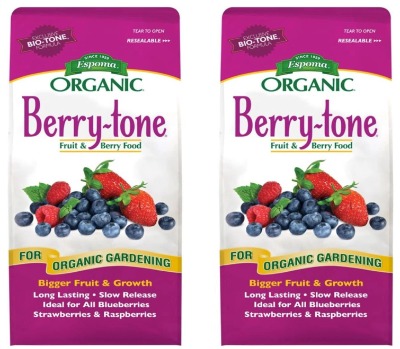
Espoma Organic Berry-Tone stands out as one of the most trusted names in berry fertilization. This organic formula comes in a 4-pound bag, and you get two bags in a pack. The NPK ratio is 4-3-4, which means it has 4% nitrogen, 3% phosphorus, and 4% potassium.
What makes this product special is that it’s 100% organic. No synthetic chemicals, no harsh additives. Everything comes from natural sources like feather meal, bone meal, potash, and beneficial microbes. If you care about what goes into your garden and what ends up on your fruit, Espoma delivers peace of mind.
Best Use Cases
Espoma Organic Berry-Tone works wonderfully for several situations:
- Brand new blueberry plantings that need strong establishment
- Existing bushes that need a seasonal boost
- Gardeners who prefer organic methods
- Anyone growing multiple berry types alongside their blueberries
- Outdoor container blueberries on patios or decks
The product really shines during spring growth season and again in summer when berries are forming. Many growers apply it twice yearly for maximum results.
Key Features Explained Simply
Organic Certification: This fertilizer meets strict OMRI (Organic Materials Review Institute) standards. It’s not just marketed as organic—it’s officially certified. For gardeners with strict organic requirements, this matters.
Complete Nutrient Profile: The 4-3-4 formula covers all the bases. Nitrogen builds healthy leaves and stems. Phosphorus strengthens roots and flower development. Potassium improves fruit quality and disease resistance.
Beneficial Microbes: Inside this bag are living microorganisms that help break down nutrients and improve soil health. These little workers make nutrients more available to your plants over time.
Natural Ingredients: Feather meal provides slow-release nitrogen. Bone meal supplies phosphorus for root growth. Sulfate of potash adds potassium while slightly acidifying the soil. Everything works together naturally.
Slow Release Formula: Unlike quick-acting synthetic fertilizers, this product releases nutrients gradually. Your plants get steady feeding for weeks, not a quick spike.
Real-Life Usage Insight
Gardeners report that Espoma produces noticeable results within 3 to 4 weeks. You’ll see greener leaves first, then stronger branch growth. By mid-growing season, the berry production becomes impressive.
One consistent comment from users is how well their established bushes respond. If you’ve had a blueberry plant for a few years, switching to Espoma often leads to your biggest harvest yet. The organic matter also gradually improves your soil structure, making future seasons even better.
Container growers love this product because the organic ingredients don’t salt up the soil like synthetic fertilizers sometimes do. You can safely apply it season after season without worry.
Honest Pros and Cons
Pros:
- Certified organic with zero synthetic ingredients
- Works beautifully for blueberries and all other berry types
- Contains beneficial soil microbes
- Slow-release means fewer applications needed
- Safe for edible crops with no chemical residue concerns
- Improves soil structure over time
- You get two 4-pound bags, great value
- No burning risk if you apply slightly too much
Cons:
- Slower acting than synthetic options (takes 3-4 weeks for full effect)
- Higher price point than conventional fertilizers
- Granule form means you must work it into soil or scatter around base
- Can attract insects or animals if not worked into soil properly
- Not ideal if you need immediate results
- Heavier to carry compared to liquid products
- Has a strong, earthy smell some people find unpleasant
Performance Discussion
Espoma Organic Berry-Tone delivers solid, reliable performance. You won’t get rapid transformation, but you will get steady, sustainable growth. The plants look healthier, leaves are more vibrant, and berry yield increases noticeably.
The slow-release nature means you’re not feeding your plant so much that it produces excessive foliage at the expense of fruit. Instead, you get balanced growth. This is especially valuable for container blueberries where water drains quickly and nutrients wash away faster.
Real-world results show that gardeners who stick with Espoma see year-over-year improvement. The second season is usually better than the first because the soil has been enriched.
Ease of Use
Application is straightforward. For new plantings, work the granules into the soil at planting time. For established bushes, apply in early spring and again in mid-summer. The typical application rate is about 1/4 to 1/2 cup per mature plant, depending on size.
Simply scatter the granules around the base of your plant, staying a few inches away from the stem. Work it into the top inch or two of soil. Water well after application. That’s it.
The main drawback is that granules require a bit more effort than liquid products. You must get outside and do physical application. But many gardeners prefer this because it keeps you connected to your plants and lets you inspect them closely.
Value for Money
You get two 4-pound bags totaling 8 pounds. For organic, certified fertilizer with beneficial microbes, the price is fair. One pack typically feeds several blueberry bushes for an entire season.
Calculate it this way: if you have 4 blueberry plants and spend $25 for a two-pack, that’s about $3.13 per plant per year. When you consider the quality of organic ingredients and the results you get, it’s a smart investment.
Blueberry Fertilizer – Liquid Plant Food (8 oz Concentrate)
Product Overview
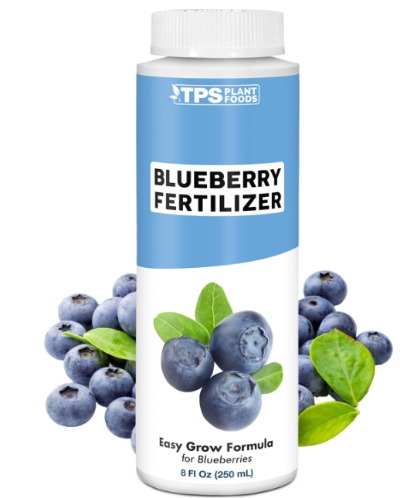
This concentrated liquid fertilizer comes in an 8-ounce bottle and is specifically formulated for blueberries. Being a concentrate means you’ll mix it with water according to directions, which stretches the product much further than the bottle size suggests.
The liquid format makes it fundamentally different from granular products. You apply it through watering, so it reaches roots immediately. For gardeners who want fast results and minimal fuss, this liquid option appeals greatly.
Best Use Cases
This concentrate works best for:
- Blueberries showing signs of nutrient deficiency
- Mid-season feeding when berries are developing
- Container blueberries in pots where watering is routine
- Gardeners with mobility limitations who find granules difficult
- Anyone wanting immediate nutrient uptake
- Blueberries in heavy clay or compacted soil
- Quick boost situations before harvest
The liquid format really excels when you can feed your plants on a consistent schedule, like weekly during growing season.
Key Features Explained Simply
Concentrated Formula: Eight ounces makes 2-4 gallons of ready-to-use fertilizer. You’re not paying to ship water, which makes this efficient and economical.
Designed for Blueberries: This isn’t a generic plant food. It’s engineered with the nutrient ratios and soil acidity needs that blueberries specifically require.
Fast Absorption: Roots absorb liquid nutrients almost immediately. You see plant response much faster than with granular products.
Bigger Berry Development: The formulation emphasizes nutrients that support fruit formation and size. Phosphorus and potassium get priority for maximum berry quality.
Root Development Support: Stronger root systems mean stronger plants. The formula includes elements that encourage extensive root growth, crucial for nutrient and water uptake.
Stronger Plant Foundation: A healthy root system supports everything else. Better roots mean better foliage, more flowers, and bigger berries.
Real-Life Usage Insight
Users consistently report seeing results within one week of application. If your blueberry leaves look pale or your plant seems sluggish, one or two applications of this concentrate often perks things up noticeably.
The convenience of a liquid concentrate appeals to busy gardeners. You’re already watering your plants, so feeding them at the same time requires minimal extra effort. Many people mix the concentrate into their watering can each week during the growing season.
Container growers particularly appreciate the control that liquid feeding provides. You can adjust strength, frequency, and timing precisely. No guessing about granule distribution or worrying about proper incorporation.
Honest Pros and Cons
Pros:
- 8 oz makes up to 4 gallons of fertilizer (huge stretch)
- Fast nutrient absorption and visible results
- Easy application during regular watering
- Precise control over feeding strength and frequency
- Great for correcting deficiency symptoms quickly
- No granules to scatter or work into soil
- Ideal for container blueberries
- Lower equipment requirements (just a watering can)
Cons:
- May require more frequent applications than granular options
- Concentrated liquid could burn plants if mixed too strong
- More expensive per unit volume than some granular products
- Requires consistent attention to mixing and application schedule
- Nutrients wash through soil faster than slow-release granules
- Less improvement to soil structure over time
- Small bottle takes up less shelf space but runs out quickly
- Liquid can evaporate or degrade if stored in heat
Performance Discussion
This liquid concentrate delivers quick action. When you have a blueberry plant struggling with yellowing leaves or slow growth, this product can turn things around rapidly. The nutrient delivery is efficient and reliable.
Performance is best when applied regularly throughout the growing season rather than occasional heavy applications. Think of it as a vitamin supplement—consistent small doses work better than sporadic large ones.
For berry production specifically, gardeners report good results when they start applications just as flowers appear. This timing maximizes the benefit for fruit development without pushing excessive foliage growth.
Ease of Use
This is possibly the easiest-to-use product in this roundup. Mix concentrate with water according to label directions. Pour around the base of your blueberry plant. Done.
No equipment needed beyond a watering can. No work required beyond mixing. No mess or odor. It’s perfectly suited for apartment dwellers growing container blueberries or anyone wanting minimal fuss.
The main requirement is remembering to do it regularly. Missing a week or two won’t harm your plant, but consistent application produces the best results.
Value for Money
Eight ounces making up to four gallons is excellent value. A gallon of mixed fertilizer costs less than a dollar in product cost. If you have 3-4 blueberry plants and feed them weekly during 12-week growing season, you’re talking about $5-8 total for the season.
This makes it one of the most economical options. The downside is that you need to apply it more frequently than granular products, which requires more of your time and attention.
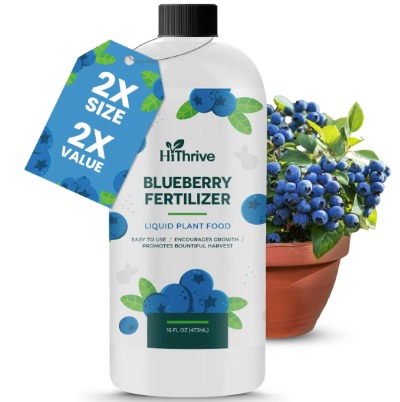
16oz Blueberry Fertilizer – Makes 16 Gallons
Product Overview
This product is another concentrated liquid formula, but in a larger 16-ounce size that makes significantly more finished product. The concentrate creates 16 gallons of ready-to-use fertilizer, making this an exceptionally efficient choice.
Like the 8-ounce option, you mix it with water and apply through watering. The larger size makes it more suitable for gardeners with multiple blueberry plants or those committed to consistent feeding throughout the season.
Best Use Cases
The 16-ounce size works best for:
- Gardeners with 5 or more blueberry plants
- Anyone planning to feed consistently all season
- Community gardens with shared blueberry plantings
- Serious home gardeners and small commercial growers
- Those wanting the lowest cost-per-application
- Regular feeding schedules during long growing seasons
- Anyone who had success with the 8-ounce and wants to buy in bulk
The main appeal here is pure value. When you’re buying a larger size, the per-gallon cost drops significantly.
Key Features Explained Simply
Huge Concentrate Ratio: Making 16 gallons from 16 ounces means the formula is packed with nutrition. This efficiency keeps costs down while delivering results.
Liquid Plant Food Benefits: Fast absorption, easy application, precise control—all the advantages of liquid feeding apply here.
Sweet, Plump Berries: The formula specifically targets berry size and flavor development. This isn’t just about plant growth; it’s about harvest quality.
Instant Results: “Instant plant food” in the description means rapid nutrient availability. Your blueberries respond quickly.
Abundant Harvests: The emphasis on fruit production over foliage growth means more berries per plant.
Promotes Growth: Strong stems, healthy leaves, and vigorous root development all receive support from this balanced formula.
Real-Life Usage Insight
Gardeners report that this larger concentrate size encourages consistent feeding. Because the cost per application is so low, people are more willing to follow the recommended feeding schedule without worrying about expense.
Results mirror the 8-ounce product but feel more economical over time. If you apply it weekly for 12 weeks, you’re investing just pennies per application.
The 16-gallon capacity means you can feed all your blueberries plus have leftovers for other acid-loving plants. Rhododendrons and hydrangeas appreciate the same fertilizer, so you’re really getting good value if you have other plants that benefit from acidic soil treatment.
Honest Pros and Cons
Pros:
- Exceptional value: makes 16 gallons from 16 ounces
- Cost per application is minimal
- Fast-acting liquid format
- Easy weekly application routine
- Enough product for entire season with room to spare
- Works on other acid-loving plants too
- No storage space issues with liquid concentrate
- Encourages consistent feeding approach
Cons:
- Requires good organization to remember weekly applications
- Concentrate is quite potent and needs accurate mixing
- Over-concentration could potentially burn tender new growth
- More applications needed per season than granular options
- Larger bottles take more shelf space than 8-ounce version
- Less soil structure improvement than granular products
- Requires discipline to stick to feeding schedule
- May need additional applications if heavy rain flushes nutrients
Performance Discussion
Performance is excellent when people apply it consistently. The weekly feeding rhythm produces steady, strong growth and impressive berry yields. Results are visible within 2-3 weeks of starting a regular feeding program.
The 16-gallon capacity encourages people to stick with it. There’s no hesitation about applying it again this week because you’ve got plenty on hand. This consistency translates into better plant performance than sporadic feeding.
For blueberries, consistent light feeding outperforms occasional heavy feeding. This product structure promotes the better approach.
Ease of Use
Simple. Mix with water. Apply weekly to soil around plants. No special equipment, no complicated math, just straightforward gardening.
The main consideration is setting up a routine. Success comes from remembering to mix and apply each week. Setting a phone reminder helps many gardeners stay consistent.
Value for Money
This is where the 16-ounce bottle really shines. Making 16 gallons of fertilizer means the cost per gallon is incredibly low. If the product costs $20-25, you’re paying about $1.25-1.50 per gallon of finished fertilizer.
For season-long feeding of 5-6 plants, you’re looking at annual fertilizer costs under $10. That’s exceptional value.
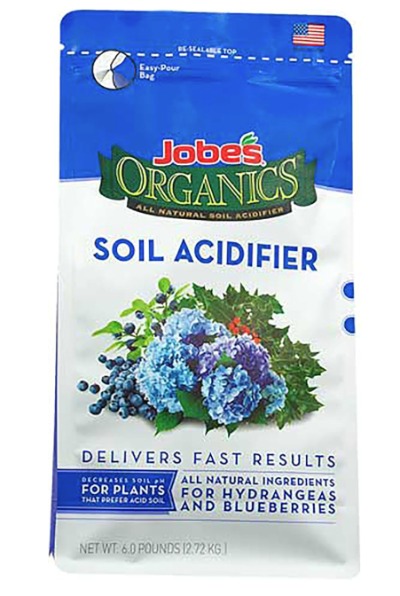
Jobe’s Organics Granular Soil Amendment – Organic Soil Acidifier
Product Overview
This product represents a different approach than the previous three options. Rather than being primarily a plant food, it’s a soil amendment and acidifier. The 6-pound bag contains organic material designed to lower soil pH and improve soil structure.
Jobe’s is a well-respected brand known for quality organic products. This soil acidifier is specifically formulated for blueberries, rhododendrons, hydrangeas, and other acid-loving plants.
Best Use Cases
This soil amendment works best for:
- Blueberries planted in neutral or alkaline soil
- Situations where soil pH is 6.0 or higher
- Long-term soil improvement projects
- Organic gardens avoiding chemical amendments
- New blueberry beds requiring pH adjustment
- Established plantings showing signs of iron deficiency
- Anyone wanting to build better soil over time
- Gardeners combining with liquid or granular fertilizers
Think of this as a foundation product. Use it first to get your soil right, then add plant food for nutrients.
Key Features Explained Simply
Organic Soil Acidifier: The formula contains naturally acidifying ingredients. Sulfur is the primary component, but it’s sourced from organic-approved sources.
Granular Format: Easy to apply by scattering around plants and working into the top few inches of soil.
Complete Soil Amendment: Beyond acidification, it adds organic matter and improves soil structure. Better soil means healthier roots.
For Acid-Loving Plants: Blueberries, hydrangeas, rhododendrons, mountain laurel, and azaleas all thrive with this product applied regularly.
Promotes Strong Root Development: By creating ideal soil conditions, the plant’s roots expand more vigorously.
Pairs With Other Nutrients: This amendment works alongside fertilizers. Use this to create the right soil environment, then add nutrient-rich products for plant food.
Real-Life Usage Insight
Gardeners who have struggled to grow blueberries in naturally alkaline soil often find this product transformative. Once they acidify the soil properly with this amendment, combined with a good blueberry fertilizer, suddenly their plants thrive.
The results aren’t immediate like with liquid fertilizers. Soil pH changes gradually over weeks and months. But the transformation is profound. Plants that were struggling suddenly start producing, leaves become more vibrant, and growth accelerates.
One common experience is that gardeners don’t realize their soil pH is the problem until they try this amendment. When yellowing leaves suddenly turn green and stunted plants suddenly grow vigorously, they understand—soil pH matters enormously.
Honest Pros and Cons
Pros:
- Directly addresses soil pH if it’s too alkaline
- Certified organic for purist gardeners
- Granular format is easy to apply
- Improves soil structure and organic matter content
- Works year-round, not just growing season
- Helps other acid-loving plants simultaneously
- One bag lasts a full season for several plants
- No burning risk even if overapplied slightly
Cons:
- Doesn’t provide plant food nutrients directly
- Slow acting—takes weeks for full pH effect
- Requires knowledge of your current soil pH
- May need repeated applications if soil is very alkaline
- Granules require working into soil for best effect
- Doesn’t address nutrient deficiencies
- Heavier product to handle and transport
- Results depend partly on your starting soil conditions
Performance Discussion
This product does exactly what it claims: lowers soil pH and improves soil structure. For blueberries growing in naturally alkaline regions, it can be literally transformative.
The key to good results is understanding that this is a foundation product. Acidify your soil with this, then feed with a proper blueberry fertilizer. Together, they create ideal conditions. Using this alone won’t produce great blueberries if they still need nutrient feeding.
Performance is best when applied in early spring and again in fall, creating a routine that gradually adjusts soil pH toward the 4.5-5.5 range blueberries love.
Ease of Use
Apply it like any granular fertilizer. Scatter around the base of your plants, work into the top inch of soil, and water. Reapply according to package directions, typically twice yearly.
The process is straightforward, but you’ll get better results if you know your soil pH. A simple soil test kit costs just a few dollars and tells you whether you need this product and how much benefit you’ll see.
Value for Money
A 6-pound bag costs $15-20. One bag treats several blueberry plants and other acid-loving plants for the entire season. If you have 5-6 acid-loving plants and need soil acidification, the per-plant cost is minimal.
The value increases if you need to acidify naturally alkaline soil. In that situation, this product is essential and well worth the investment.
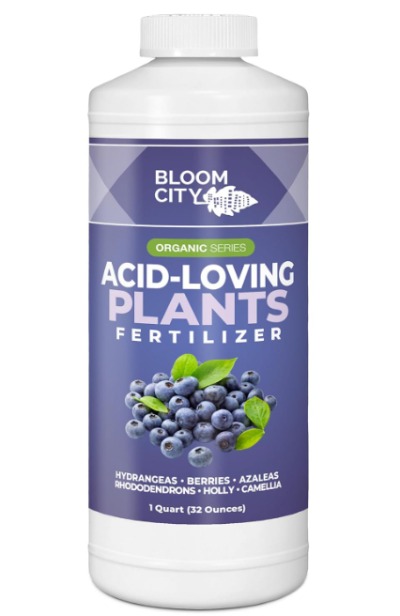
Bloom City Acid-Loving Plant Fertilizer – Liquid Soil Acidifier & Nutrient Formula
Product Overview
This 32-ounce liquid fertilizer represents a hybrid approach, combining plant food nutrients with soil acidifying properties. It’s specifically created for acid-loving plants including blueberries, hydrangeas, and rhododendrons.
The larger 32-ounce size suggests it’s designed for regular use throughout the season. Unlike pure plant foods, it works to maintain acidic soil conditions while feeding your plants.
Best Use Cases
Bloom City works best for:
- Maintaining soil pH in naturally acidic regions
- Blueberries needing both nutrients and pH management
- Container blueberries where soil pH drifts upward
- Gardeners wanting one product instead of multiple applications
- Liquid feeding schedules with pH adjustment built in
- Regular season-long feeding programs
- Anyone wanting fast results with soil pH benefit
- Combination needs of nutrients and acidification
This is an all-in-one solution for blueberry gardeners who want to feed and manage pH simultaneously.
Key Features Explained Simply
Liquid Soil Acidifier: The acidifying components are dissolved in liquid, so they work immediately while still providing that pH-lowering benefit.
Nutrient Formula: It’s not just pH adjustment; it’s a complete fertilizer with nitrogen, phosphorus, and potassium for plant nutrition.
Acid-Loving Plant Focus: Formulated specifically for plants that thrive in acidic conditions, blueberries included.
32 oz Bottle: A substantial size meant for season-long use with multiple applications.
Nutrient-Rich: While maintaining pH, it also feeds your plants with essential nutrients.
Maintains Growing Conditions: Beyond one-time soil acidification, it helps maintain acidic conditions throughout the season.
Real-Life Usage Insight
Gardeners using this product report appreciating the convenience of one bottle handling two critical needs: nutrition and pH management. You don’t have to apply a separate acidifier, then a separate fertilizer. It’s all in one application.
Results are particularly impressive for container blueberries. Pots tend to become more alkaline over time as tap water minerals accumulate. Regular applications of this acidifying fertilizer counteract that tendency while feeding the plant.
Users notice that blueberries treated with this product maintain better leaf color and produce better fruit than plants fed only a standard fertilizer. The dual-action approach creates better overall results.
Honest Pros and Cons
Pros:
- Combines two products into one application
- Liquid format means fast nutrient absorption
- Addresses both nutrition and pH maintenance
- 32 oz provides weeks of regular feeding
- Convenient for busy gardeners
- Particularly good for container blueberries
- Easy application during regular watering
- Results visible within 2-3 weeks
Cons:
- More expensive than single-function products
- Doesn’t acidify soil as aggressively as granular acidifiers
- Liquid means more frequent applications needed
- May over-acidify if used with other acidifiers
- Requires mixing to proper concentration
- Less improvement to soil structure than granular amendments
- Not ideal for heavily alkaline soils needing serious pH shift
- Concentrated so mixing accuracy matters
Performance Discussion
Performance is solid and well-rounded. You get the nutrient benefits of a plant food with the pH management of an acidifier. For most blueberry situations—especially container growing and plants in slightly alkaline soil—this product covers your needs.
Results are visible but not dramatic. You’re not getting the quick transformation of pure nutrient fertilizer, nor the aggressive pH shift of a dedicated acidifier. Instead, you’re getting steady improvement across both categories.
For maintenance feeding of healthy plants, this works wonderfully. For correcting serious problems—severe nutrient deficiency or heavily alkaline soil—you might need additional specialized products.
Ease of Use
Mix according to directions and apply during watering. Could hardly be simpler. The 32-ounce bottle means you have product on hand for multiple applications without frequent repurchasing.
Setting a regular schedule—perhaps weekly or bi-weekly during growing season—ensures consistent results.
Value for Money
The 32-ounce bottle typically costs $20-30. That’s reasonable for a dual-function product. If you calculate it against buying a separate fertilizer and separate acidifier, you’re potentially saving money while gaining convenience.
For season-long blueberry care, this represents fair value if you use it regularly.
Quick Comparison: How These Products Stack Up
Let’s look at these five options side-by-side to help you decide which fits your situation best.
Espoma Organic Berry-Tone excels for organic gardeners who want certified ingredients and don’t mind slower results. Best for long-term soil improvement.
8 oz Liquid Concentrate is perfect for small operations or trying something new. Most economical for few plants.
16 oz Liquid Concentrate scales the benefits up for larger gardens. Best value per application.
Jobe’s Soil Acidifier is essential if soil pH is your main problem. Pairs well with any fertilizer for complete solution.
Bloom City Hybrid offers convenience and covers two needs. Ideal for container growing and maintenance feeding.
Each product excels in different situations. Your best choice depends on your specific needs.
The Buying Guide: How to Choose What You Need
Assess Your Soil First
Before buying anything, understand your soil. If you don’t know your soil pH, a simple test kit reveals it. Soil pH determines what you need more than anything else.
- pH 4.5-5.5: Your soil is already ideal. Just add fertilizer.
- pH 5.5-6.5: Slightly high but manageable. Either Jobe’s acidifier or Bloom City works.
- pH above 6.5: Significantly alkaline. Jobe’s acidifier is essential, plus add fertilizer.
Knowing this changes which product becomes your priority.
Consider Your Growing Method
Container blueberries have different needs than in-ground plants.
- Container growing: Liquid products work best because regular watering makes application easy.
- In-ground growing in beds: Either granular or liquid works; granular offers slow release.
- Mixed garden setting: Liquid products fit into existing watering routines.
Your growing method influences whether granular or liquid suits you best.
Think About Time and Attention
- Busy gardeners: Liquid products fit into regular watering routines.
- Detail-oriented gardeners: Granular products allow close inspection during application.
- Seasonal attention: Granular products need fewer applications across the year.
Honest self-assessment helps here. Picking a product requiring more attention than you’ll realistically give wastes money.
Evaluate Your Values
- Organic preference: Espoma Organic Berry-Tone or Jobe’s Organics are your answers.
- Maximum value: 16 oz liquid concentrate offers lowest cost per application.
- Convenience: Bloom City hybrid handles multiple needs in one bottle.
- Specific problems: Jobe’s for pH, liquids for quick nutrition boost.
Your values should guide which product you choose.
Common Mistakes to Avoid When Fertilizing Blueberries
Mistake 1: Using Regular Fertilizer Instead of Blueberry Fertilizer
Many gardeners make this error. They assume blueberry plants are like other plants and apply generic fertilizer. Wrong. Generic fertilizers often lack the specific nutrient ratios and acidifying properties blueberries need.
Result: Poor growth, weak production, and frustrated gardeners. Always use a product specifically designed for acid-loving plants or blueberries specifically.
Mistake 2: Ignoring Soil pH
This is surprisingly common. Gardeners feed their blueberries great fertilizer but ignore soil pH. If soil pH is 7 or higher, the plant can’t absorb nutrients properly no matter how much you feed it.
Result: Yellowing leaves, stunted growth, and wasted fertilizer. Test your soil. If pH is wrong, fix it before applying other products.
Mistake 3: Over-Fertilizing
Too much fertilizer creates excessive foliage at the expense of fruit production. The plant grows bushy but doesn’t produce many berries.
Result: Lots of green leaves, minimal harvest. Follow label directions. More isn’t better.
Mistake 4: Sporadic Feeding
Irregular applications don’t provide the steady nutrient supply blueberries need. Plants respond best to consistent, regular feeding.
Result: Inconsistent growth and variable berry production. Stick to a schedule—either weekly for liquids or twice yearly for granulars.
Mistake 5: Applying Fertilizer to Dry Soil
Dry soil prevents proper nutrient uptake. Always water before applying granular fertilizers or ensure soil is moist before liquid application.
Result: Nutrient lock-up where the plant can’t access what you’re providing. Always feed to moist soil.
Mistake 6: Fertilizing Stressed or Newly Planted Blueberries
New plants need time to establish. Heavy feeding stresses them further. Wait until they’ve put on several weeks of growth before starting regular feeding.
Result: Burned roots and struggling plants. Be patient with new plantings.
Mistake 7: Using High-Nitrogen Fertilizers
Excessive nitrogen creates foliage but inhibits flowering and fruiting. Blueberries need balanced or slightly higher phosphorus and potassium.
Result: Beautiful green bushes with few berries. Use fertilizers balanced for fruit production, not leafy vegetable growth.
Mistake 8: Forgetting That Blueberries Need Acidic Soil
This can’t be overstated. Blueberries are not forgiving about soil pH. Neutral or alkaline soil limits success no matter what fertilizer you use.
Result: Perpetual struggle with plant health and production. Address soil pH as the foundation, then add fertilizer.
Who Should Buy Each Product
Buy Espoma Organic Berry-Tone If You:
- Value certified organic ingredients
- Have multiple berry types you want to feed with one product
- Don’t mind slightly slower results
- Want to improve soil structure long-term
- Have several blueberry bushes to fertilize
- Prefer granular application
- Are building a long-term fertilizer program
Buy 8 oz Liquid Concentrate If You:
- Have just 1-3 blueberry plants
- Want to try a liquid product before committing larger investment
- Have limited storage space
- Like flexibility in feeding frequency
- Want fast results for a specific problem
- Are starting a new garden experiment
- Prefer minimal upfront cost
Buy 16 oz Liquid Concentrate If You:
- Have 5+ blueberry plants
- Plan consistent weekly feeding through the season
- Want the lowest cost per application
- Have other acid-loving plants to feed
- Are committed to a regular feeding schedule
- Want to stock up and avoid frequent repurchasing
- Value long-term economy over upfront cost
Buy Jobe’s Soil Acidifier If You:
- Know your soil pH is above 6.0
- Live in naturally alkaline regions
- Are establishing a new blueberry bed
- Want organic soil amendments
- Have other acid-loving plants
- Are willing to invest in foundation soil improvement
- Will pair it with a liquid fertilizer for complete solution
Buy Bloom City Hybrid If You:
- Want to simplify your fertilizer routine
- Grow blueberries in containers
- Need both nutrient feeding and pH maintenance
- Value convenience over specialized products
- Have limited time for multiple applications
- Want a single bottle handling two important needs
- Are looking for a middle-ground solution
The Real Talk: Setting Realistic Expectations
Let’s be honest about what fertilizer can and cannot do.
Fertilizer enhances your existing plants. It doesn’t fix fundamental problems. If your blueberry is dying, fertilizer alone won’t save it. If your soil pH is completely wrong, fertilizer won’t compensate.
Good blueberry growing depends on:
- Soil pH (most important)
- Adequate sunlight (minimum 6 hours daily)
- Proper watering (consistent moisture, not waterlogged)
- Appropriate fertilizing (the topic of this article)
Get the first three right, and fertilizer makes a huge difference. Neglect those, and even the best fertilizer won’t help much.
Realistic timeline: Healthy blueberry plants show visible response to good fertilizing within 3-4 weeks. Major improvements in berry production take a full season. Year-over-year improvements become obvious after 2-3 consistent seasons.
Final Verdict: The Best Fertilizer for Blueberries
There is no single “best” fertilizer because your situation is unique. However, we can identify the best product for each situation.
Best Overall Product: Espoma Organic Berry-Tone wins for most home gardeners. It’s organic, effective, well-tested, and provides two bags. Combined with knowledge of your soil pH, it delivers consistent results season after season.
Best for Quick Results: 16 oz Liquid Concentrate acts fastest and costs least per application. If you want rapid improvement and have several blueberry plants, this is the winner.
Best for Convenience: Bloom City Hybrid combines nutrition and pH management in one bottle. For container gardeners and those wanting simplicity, this removes decision-making.
Best for Soil Issues: Jobe’s Organic Acidifier is essential if soil pH is wrong. Use this as your foundation, then add any other fertilizer for complete success.
Best for Small Operations: 8 oz Liquid Concentrate offers low initial cost and flexibility for gardeners with just a few plants.
Taking Action: Your Next Steps
Ready to improve your blueberry harvests? Here’s what to do:
- Test your soil pH. A kit costs $3-5 and reveals whether you need acidification.
- Choose your product based on your situation and the guide above.
- Read the label carefully. Every product has specific application rates and timing.
- Create a feeding schedule. Mark your calendar so you remember applications.
- Apply consistently. Results come from regular feeding, not sporadic applications.
- Observe your plants. Healthy blueberries should show greener leaves, stronger growth, and increasing berry production within a season.
- Adjust as needed. If you’re not seeing results, consider whether soil pH might be the limiting factor.
Conclusion: Growing Better Blueberries Starts With Feeding Them Right
Blueberries are rewarding plants when you understand their needs. They’re particular about soil pH and specific about nutrients, but once you meet those requirements, they reward you with abundant, delicious fruit.
The five products reviewed here represent the best options available for home gardeners. Each excels in particular situations. Your job is matching the right product to your specific needs.
Remember: fertilizer is just one piece of the puzzle. Combine it with proper soil pH, adequate sunlight, and consistent watering, and you’ll be harvesting buckets of sweet blueberries from your garden.
The investment in good blueberry fertilizer is small compared to the satisfaction of eating homegrown berries and the money you save buying fresh blueberries at the store. Start with any of these products, follow the simple application directions, and watch your blueberry harvests transform.
Your future self—enjoying a bowl of homegrown blueberries fresh from the garden—will thank you for taking these steps today.
Additional Resources for Blueberry Growers
Blueberry Growing Tips
Blueberries thrive in similar conditions across different growing regions. Generally, they prefer:
- Acidic soil (pH 4.5-5.5)
- Full sun (6-8 hours daily)
- Consistent moisture without waterlogging
- Well-draining soil with organic matter
- Protection from strong wind
- Cross-pollination from different blueberry varieties
Growing blueberries in containers gives you maximum control over soil conditions, which is particularly valuable if your natural soil is alkaline.
Seasonal Feeding Schedule
Spring: Apply fertilizer as new growth emerges. Use granular products early in the season.
Early Summer: Feed again as flowers appear and berries develop. Liquid products work well here.
Late Summer: Optional third application if you’re pushing for maximum production, though most plants need just two annual feedings.
Fall and Winter: No feeding needed. Plants are dormant.
Companion Plants for Blueberries
Other acid-loving plants enjoy similar growing conditions and benefit from the same fertilizer products:
- Rhododendrons
- Azaleas
- Hydrangeas
- Mountain laurel
- Wintergreen
- Lingonberries
Creating a bed of acid-loving plants together is efficient and creates a cohesive garden look.
Recognizing Nutrient Deficiencies
Knowing what to look for helps you apply fertilizer when your plants really need it.
Nitrogen deficiency: Pale yellow leaves, slow growth
Phosphorus deficiency: Purple or reddish leaf color, poor root development
Potassium deficiency: Yellowing leaf edges, weak growth
Iron deficiency (chlorosis): Yellowing between green leaf veins, often from high soil pH
Magnesium deficiency: Yellowing lower leaves while veins stay green
The Bottom Line
Growing blueberries rewards your efforts with nutritious, delicious fruit for years. Using the right fertilizer is the easiest way to improve your results dramatically.
Start with soil pH assessment. Choose a product matching your situation. Apply consistently. Watch your harvest grow.
That’s the real magic of good blueberry fertilizing.

Hi, I’m Mary, the founder of GardenCure.com. I’m passionate about creating healthy, beautiful gardens and well-kept lawns. I share practical experience and trusted advice on garden and lawn gear that truly works. With the support of my dedicated research team, our writers produce honest, in-depth reviews using reliable, authentic sources—helping you choose the right tools with confidence for your outdoor space.