
5 Best Fertilizer for Succulents In 2026
Succulents are some of the most forgiving plants you can grow. They do well with a little neglect. But if you want them to truly thrive — with plump leaves, vibrant color, and strong roots — the right fertilizer makes a real difference.
In this article
The problem? Walk into any garden center and you’ll see dozens of options. Some are made for vegetables. Some are for lawns. A few are labeled for succulents and cacti, but they still look confusing with all those numbers and instructions.
That’s why this guide exists.
We’ve put together a roundup of five of the most popular succulent fertilizers on the market right now. We break down each one in plain language. No confusing jargon. No fluff. Just honest, practical information so you can pick the right plant food for your succulents — fast.
Let’s get into it.
Quick Look: 5 Best Fertilizers for Succulents
| Product | Type | Size | Best For |
|---|---|---|---|
| The Grow Co Succulents & Cactus Plant Food | Slow Release Granules | 5 oz | Low-maintenance growers |
| Miracle-Gro Indoor Plant Food (Cactus & Succulent) | Liquid | 8 fl oz x2 | Indoor potted plants |
| Miracle-Gro Succulent Plant Food | Liquid | 8 fl oz x2 | Bi-weekly feeding routine |
| 16oz Succulent Fertilizer (Makes 32 Gallons) | Liquid Concentrate | 16 oz | Budget-conscious growers |
| Succulent Fertilizer – Liquid Plant Food | Liquid | 8 oz | Color and root focus |
Why Succulents Need Fertilizer at All
Succulents store water in their leaves and stems. They can survive dry conditions better than almost any other houseplant. But that toughness sometimes tricks people into thinking these plants need nothing at all.
Here’s the truth: succulents grown in pots are limited by the soil they sit in. Over time, the nutrients in that soil get used up. Rain doesn’t wash in fresh minerals from the ground the way it would in nature. The plants just keep pulling from the same small amount of soil, and eventually that soil runs out of good stuff.
That’s where fertilizer comes in.
A good succulent plant food gives your plants the nutrients they need for healthy growth. It supports root development. It helps produce those thick, juicy leaves. It can even bring out better color in many varieties.
The key is using the right fertilizer at the right time. Succulents need far less feeding than most plants. Too much fertilizer can actually burn the roots or make the plant stretch out in an unnatural way — a problem called etiolation. But the right amount, used correctly, makes a visible difference.
Now let’s look at the five best options available.
Product Reviews
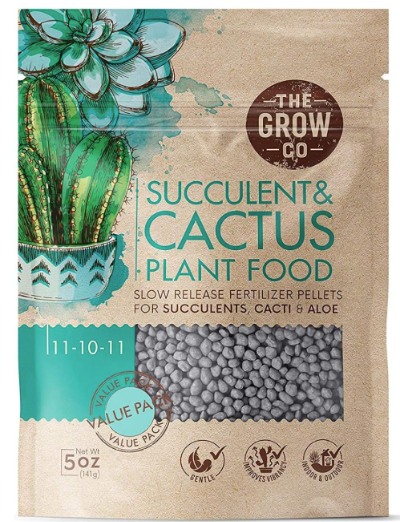
1. The Grow Co Succulents & Cactus Plant Food — Slow Release Fertilizer (5 oz)
Best for: Busy plant parents who want a set-it-and-forget-it feeding option
What It Is
The Grow Co takes a different approach from the liquid fertilizers on this list. Instead of something you mix into water or squeeze directly onto soil, this is a slow-release granule formula. You sprinkle it into or on top of the soil, and it gradually breaks down over time — releasing nutrients little by little with each watering.
The 5 oz container doesn’t sound like much, but granule fertilizers go a long way. A small amount per pot covers weeks of feeding.
This product is made specifically for succulents, cacti, aloe vera, and other drought-tolerant plants. It’s not a generic plant food — it’s formulated to match what these specific types of plants actually need.
Key Features
Slow-release formula: The granules don’t dump nutrients all at once. They break down gradually, which means there’s a much lower risk of over-fertilizing. This is a huge deal for succulents, which are very sensitive to nutrient overload.
Works as a liquid alternative: Not a fan of mixing liquid solutions? This product is designed for people who prefer not to deal with measuring spoons and water ratios.
Long-lasting results: One application can last for several weeks, sometimes longer depending on how often you water and the size of your pot.
Works for multiple plant types: It covers succulents, cacti, aloe vera, and other potted plants that need lean, well-draining care.
Real-Life Usage Insight
Imagine you have a row of small succulent pots on a windowsill. Every few weeks, you give each one a pinch of these granules and work it lightly into the top of the soil. Then you water normally and go about your day. The fertilizer does its job quietly in the background. No mixing. No measuring out liquid doses. Just occasional feeding that takes about two minutes total.
This approach works especially well if you tend to forget scheduled tasks. Since the granules keep releasing nutrients over time, missing a week doesn’t spell disaster.
Pros
- Very easy to apply — no mixing required
- Low risk of over-feeding thanks to slow release
- Great for people with multiple plants to manage
- Long-lasting per application
- Specifically formulated for succulents and cacti
Cons
- Not ideal if you want to see quick results (slow release means slow delivery)
- Harder to adjust dosage once applied to soil
- 5 oz may not last as long for growers with many plants
Performance
For steady, consistent plant health, this fertilizer performs reliably. Plants fed with this type of granule formula tend to show gradual improvements in leaf firmness and color over several weeks. It won’t produce a dramatic overnight transformation, but that’s actually a good thing for succulents. Steady feeding beats sudden nutrient spikes every time.
Ease of Use
Extremely beginner-friendly. If you’ve never fertilized plants before, this is one of the easiest starting points you’ll find. There’s no risk of accidentally mixing a too-strong solution.
Value for Money
Solid value. The 5 oz container might seem small, but because you use such a small amount per pot, it stretches further than you’d expect. Good pick for small to medium collections.
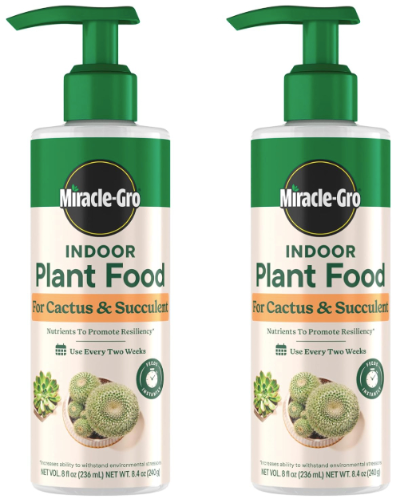
2. Miracle-Gro Indoor Plant Food for Cactus and Succulent — Liquid (8 fl oz, 2-Pack)
Best for: Indoor succulent growers who want a trusted brand with a simple liquid formula
What It Is
Miracle-Gro is one of the most recognized names in home gardening. Their Indoor Plant Food for Cactus and Succulent is a liquid formula designed for potted succulents kept inside the home.
This listing comes as a 2-pack, giving you two 8 fl oz bottles. That’s 16 fluid ounces total — enough to last a long time when used at the recommended rate for small to medium plants.
The liquid form makes it easy to control exactly how much your plant gets. You mix it into water or apply it directly, depending on the specific instructions for this version.
Key Features
Liquid formula for fast uptake: Liquid fertilizers are absorbed more quickly than granules. The nutrients reach the roots faster, which can show results within a couple of weeks.
Made for indoor use: This specific product is formulated for indoor plants. That matters because indoor succulents have different growing conditions than outdoor ones — less direct sunlight, different watering patterns, and lower soil turnover.
2-pack value: Getting two bottles at once means fewer reorders. For a household with a few succulents and cacti, this supply can last many months.
Miracle-Gro formula trust: The brand has decades of use behind it. Gardeners around the world have used Miracle-Gro products with consistent results, which provides some peace of mind.
Real-Life Usage Insight
Say you have a collection of about six to eight small succulents sitting on a bright windowsill. You water them about once a week or every ten days. Each time you water during the growing season, you add the recommended amount of this liquid food to the watering can. The plants get a consistent, gentle dose of nutrients with every drink.
The liquid format also makes it easy to mix a larger batch for a group of plants, which saves time if you’re caring for multiple pots at once.
Pros
- Trusted brand with proven track record
- Liquid form allows for quick nutrient delivery
- 2-pack provides good supply value
- Easy to control dosing
- Designed specifically for indoor potted plants
Cons
- Requires mixing or measuring for each use
- Not ideal for outdoor or garden bed succulents
- Some users report needing to read instructions carefully to avoid over-application
Performance
Miracle-Gro products tend to deliver reliable, consistent plant health improvements. For indoor succulents, users typically report healthier-looking leaves and more active growth during feeding periods compared to unfed plants. The formula is well-balanced for the lean nutritional needs of succulents and cacti.
Ease of Use
Moderate. It’s a liquid, so you do need to follow the dilution or application instructions. But the process is simple enough that any beginner can figure it out within a minute of reading the label.
Value for Money
Very good, especially as a 2-pack. The cost per ounce is reasonable, and the supply is generous for most home growers. A solid buy for anyone who already trusts the Miracle-Gro brand.
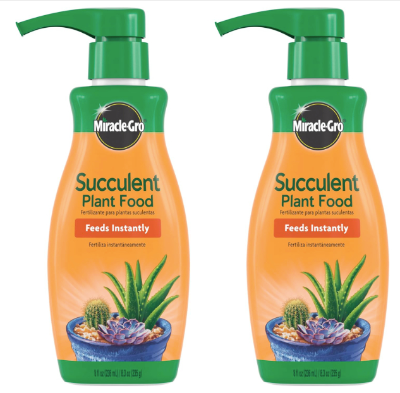
3. Miracle-Gro Succulent Plant Food — Liquid Fertilizer (8 fl oz, 2-Pack)
Best for: Growers who want a bi-weekly feeding routine with a simple liquid application
What It Is
This is another Miracle-Gro product, but it’s slightly different from the one above. The Miracle-Gro Succulent Plant Food is designed for a regular feeding schedule — specifically, applying it every two weeks during the active growing season.
It also comes in an 8 fl oz two-pack and is a liquid formula. The key difference from the previous entry is the application design: this version is built for a consistent every-other-week routine, which makes it a great fit for people who like having a clear schedule for plant care.
It covers a wide range of succulent types, including jade plants and aloe vera — two of the most common houseplants in this family.
Key Features
Every-two-weeks feeding schedule: Having a set schedule removes guesswork. You know exactly when to feed and when to hold off.
Covers jade and aloe: These are two of the most popular succulent types, and they’re specifically called out on this product. That’s a good sign for growers who have these plants in their collection.
Liquid delivery: Like all liquid fertilizers, this one delivers nutrients directly to the root zone when watered in correctly.
Same trusted brand: Miracle-Gro backs this with their reputation and formula research.
Real-Life Usage Insight
Think of this as the “calendar-based” fertilizer option. You pick a day — say, the first and fifteenth of each month — and that’s when the succulents get fed. You apply the liquid as directed and move on. The routine becomes second nature after a few cycles.
This works particularly well for people who like structure in their plant care habits. It takes the stress out of wondering “did I feed them already this week?”
It also works great for new plant parents who are just building their care routines from scratch. A clear schedule makes the whole thing feel less intimidating.
Pros
- Clear, predictable feeding schedule (every two weeks)
- Great for jade plants and aloe vera
- Liquid form delivers nutrients quickly
- 2-pack offers solid supply for the price
- Simple to follow for beginners
Cons
- Requires remembering or scheduling the feeding days
- Like most liquids, you need to measure and mix
- May need to scale back during winter when plants are dormant
Performance
Plants fed on a consistent bi-weekly schedule during active growth periods tend to do very well. The regular, small doses of nutrients keep the plants well-supplied without overwhelming them. Results are steady and reliable rather than dramatic, which is exactly what succulent plants need.
Ease of Use
Easy. The every-two-weeks instruction is clear and removes most of the guesswork. New plant owners especially appreciate having a specific timeline rather than vague “feed occasionally” advice.
Value for Money
Great value in a 2-pack. Very similar to the other Miracle-Gro option above in terms of cost, but the slightly different focus on scheduled feeding makes it a distinct product. Highly recommended for anyone who likes routine-based plant care.
4. 16oz Succulent Fertilizer — Makes 32 Gallons of Plant Food
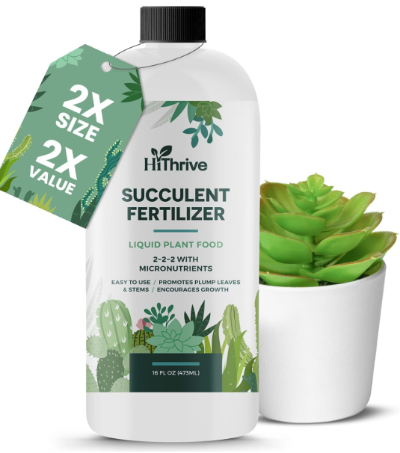
Best for: Growers with large succulent collections or anyone who wants the best value per dollar
What It Is
This is a concentrated liquid fertilizer that comes in a 16-ounce bottle. The standout feature here is the dilution ratio: one bottle makes up to 32 gallons of ready-to-use plant food.
That’s an extraordinary amount of plant food from a single purchase. For anyone with a large collection of succulents, a greenhouse, or just a desire to spend less money on fertilizer over time, this is one of the most economical choices available.
The formula is designed to promote vibrant leaves, resilient roots, and plump growth — the three things succulent lovers care about most when feeding their plants.
Key Features
Extremely high yield: 16 oz making 32 gallons means you get a massive amount of plant food per dollar spent. This is by far the most cost-effective option on this list if you have many plants.
Targeted growth benefits: The formula specifically calls out vibrant leaves, resilient roots, and plump growth as its goals. These align perfectly with what healthy succulents are supposed to look like.
Liquid concentrate format: Concentrates give you more control. You can mix smaller or larger batches depending on how many plants you need to feed at any given time.
Versatile use: Works for succulents, cacti, and similar drought-loving plants in pots, trays, or garden beds.
Real-Life Usage Insight
Imagine you have 30 or 40 succulents spread across different pots, trays, or a small greenhouse. With a standard liquid fertilizer, you’d be buying bottle after bottle throughout the growing season. With a concentrate like this, one bottle carries you through an enormous number of feeding sessions.
The key is getting comfortable with the dilution process. You measure out a small amount of concentrate, add it to water in the right ratio, and you’re ready to go. Once you do it a few times, it becomes quick and effortless.
This is also a smart pick for plant resellers, hobbyists who propagate succulents, or anyone who gifts plants to friends and wants to include a bottle of food with them.
Pros
- Outstanding value — 16 oz makes 32 gallons
- Perfect for large collections or frequent growers
- Promotes plump, vibrant, healthy plant growth
- Versatile across multiple succulent and cactus types
- Reduces how often you need to reorder
Cons
- Concentrate requires accurate mixing — too strong can harm plants
- More measuring involved than pre-mixed options
- May be more than a casual grower with two or three plants needs
Performance
When mixed correctly, concentrated fertilizers deliver excellent results. Plants show improved leaf plumpness, healthier root systems, and better color. The key word there is “correctly” — getting the dilution ratio right matters more with a concentrate than with pre-mixed products. But when you nail it, results are very good.
Ease of Use
Moderate. The mixing step adds a bit of complexity compared to ready-to-use formulas. That said, it’s still very manageable for anyone willing to spend thirty seconds measuring. Not recommended if precision isn’t your strong suit, but great for patient and careful growers.
Value for Money
Exceptional. This is the winner when it comes to cost-per-use. If you have many plants and fertilize regularly, this product will save you a noticeable amount over time compared to single-use or small-bottle options.
5. Succulent Fertilizer — Liquid Plant Food for Compact Growth, Vibrant Color & Stronger Root Development (8 oz)
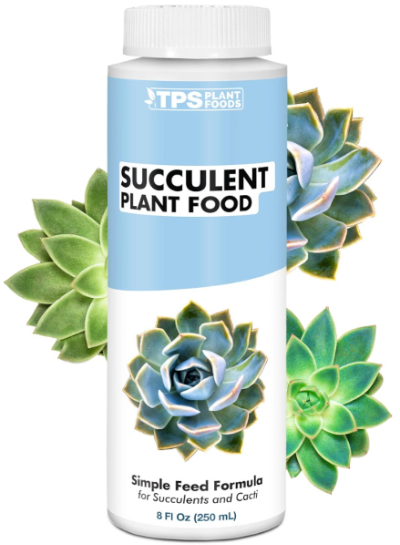
Best for: Growers focused on compact, well-shaped succulents with rich color
What It Is
This 8-ounce liquid fertilizer is all about three specific outcomes: compact growth, vibrant color, and stronger root development. That focus makes it stand out from the more general-purpose options on this list.
Succulents that grow in ideal conditions stay compact and tight. Ones that get too much nitrogen or not enough light tend to stretch out and lose their attractive rosette shape. This fertilizer’s formula is designed with that in mind — feeding plants in a way that promotes healthy, structured growth rather than leggy or stretched stems.
The vibrant color benefit is another highlight. Many succulent varieties produce beautiful reds, purples, oranges, and greens when stressed correctly and fed properly. A formula that supports pigmentation is something color-focused growers will appreciate.
Key Features
Compact growth focus: The NPK ratio and formula balance are designed to keep succulents tight and well-formed rather than stretched or leggy.
Color enhancement: Supports the natural pigmentation of colorful succulent varieties. Great for mixed-color arrangements and display plants.
Root development support: Strong roots mean more resilient plants. This formula gives attention to below-the-soil health, not just the visible top.
Ready-to-use liquid: 8 oz in a straightforward liquid format — no heavy dilution math required.
Real-Life Usage Insight
Say you’ve got a beautifully arranged succulent bowl with several colorful varieties — echeverias, sedums, and a few haworthias. You want them to stay compact and keep their vibrant colors throughout the growing season. Feeding with this fertilizer supports exactly that goal.
Display-focused growers — people who make succulent arrangements for centerpieces, gifts, or home décor — will find this formula particularly useful. It feeds the plants without pushing them toward uncontrolled growth that would mess up the arrangement.
Also great for anyone who entered the succulent hobby because of the visual appeal of the plants. If color and form matter to you, this is a smart pick.
Pros
- Specifically targets compact growth (ideal for display plants)
- Supports vibrant coloration in color-changing varieties
- Liquid format is straightforward to apply
- Attention to root health alongside leaf health
- Good for decorative or gift succulent arrangements
Cons
- 8 oz is a smaller supply than some other options
- May not deliver dramatically different results versus general succulent fertilizers on basic varieties
- Not specifically designed for cacti
Performance
For growers who care about the visual quality of their succulents, this fertilizer delivers well. Plants tend to stay more compact, and color varieties often show richer pigmentation when fed consistently during the growing season. Root health improvements are harder to observe directly but tend to show up as more resilient plants overall.
Ease of Use
Easy. Liquid format, straightforward instructions, and a focused purpose make this one of the simpler choices to work with. Great for anyone who doesn’t want to overthink their fertilizer routine.
Value for Money
Decent. At 8 oz it’s a moderate buy — not the best value per ounce compared to the concentrate option, but a reasonable price for the specific benefits it targets. Good for hobbyists with small to medium collections.
Comparison Insights: How These 5 Stack Up Against Each Other
Now that you’ve seen each product individually, let’s look at how they compare side by side on the key things that matter most.
Ease of Application
The Grow Co granule formula wins here. You sprinkle and done. No water mixing, no measuring liquid, no squeezing bottles. For beginners or busy growers, that simplicity is a genuine advantage.
Among the liquid options, the Miracle-Gro bi-weekly formula (Product 3) stands out for ease because the every-two-weeks schedule removes guesswork. You just follow the calendar.
Best Value
The 16 oz concentrate that makes 32 gallons (Product 4) is the clear winner for cost-per-use. No other option on this list comes close on a per-gallon basis. If you have a large collection and plan to fertilize consistently, this is where your money goes furthest.
Best for Beginners
The Grow Co slow-release granules (Product 1) and the Miracle-Gro 2-pack options (Products 2 and 3) are the most beginner-friendly. They’re hard to mess up. The slow-release formula especially removes the risk of over-feeding, which is one of the most common mistakes new plant owners make.
Best for Display or Decorative Plants
The Succulent Fertilizer focused on compact growth and vibrant color (Product 5) wins this category. It’s purpose-built for the kind of visual outcomes that decorative growers want.
Best for Large Collections
Product 4 (16 oz concentrate) again takes the top spot. If you have more than 15 to 20 plants, buying small bottles repeatedly gets expensive and wasteful. The concentrate is built for scale.
Buying Guide: What to Look for in a Succulent Fertilizer
Not sure how to evaluate fertilizers beyond what’s on this list? Here are the main things to look for.
NPK Ratio
Fertilizer bags and bottles always show three numbers like “2-7-7” or “3-1-2.” These stand for nitrogen (N), phosphorus (P), and potassium (K).
For succulents, you generally want a low-nitrogen formula. Too much nitrogen pushes fast, weak, stretched growth. A ratio where nitrogen is equal to or lower than the other two numbers tends to work well for most succulent varieties.
Phosphorus supports root development and flowering. Potassium helps with overall plant health and stress resistance. A balanced or phosphorus-forward formula is usually a safe bet.
Slow Release vs. Liquid
Slow-release granules are more forgiving and lower maintenance. Liquids give you more control and faster results but require more attention to dosing.
Neither is universally better. It comes down to your habits and how many plants you’re managing.
Dilution Requirements
Some fertilizers come ready to use. Others need to be diluted. Concentrated formulas offer better value but require you to measure accurately. If precision isn’t your strong suit, start with a pre-diluted or ready-to-use product.
Organic vs. Synthetic
Organic fertilizers (derived from natural sources like fish emulsion, worm castings, or kelp) release nutrients more slowly and improve soil health over time. Synthetic fertilizers deliver nutrients more predictably and quickly. Both work well for succulents. Organic options are gentler and lower-risk; synthetic options are more consistent in concentration.
Container Size
Think about how many plants you have. A small 5 oz or 8 oz bottle is fine for a few plants. If you have dozens, a larger supply or concentrate makes far more sense economically.
Indoor vs. Outdoor Use
Some fertilizers are formulated specifically for indoor plants. Others work for both. If your succulents live outside, make sure the product you choose is suitable for outdoor conditions as well.
Who Should Buy These Products?
The Grow Co Slow Release (Product 1): Perfect for first-time plant owners, people with busy schedules, anyone who tends to forget feeding schedules, or growers who want a low-fuss approach to plant care.
Miracle-Gro Indoor Plant Food (Product 2): Great for indoor succulent collectors who trust established brands and want a reliable liquid option for their windowsill or shelf plants.
Miracle-Gro Bi-Weekly Formula (Product 3): Ideal for growers who want a clear schedule, especially those who are building a consistent plant care routine for the first time. Also great for jade and aloe owners.
16 oz Concentrate (Product 4): Best for experienced growers with large collections, succulent propagators, plant sellers, or anyone who wants maximum value from their fertilizer budget.
Compact Growth Liquid (Product 5): Tailored for display-focused growers, people who make succulent arrangements, and anyone who cares about keeping their plants compact and colorful.
Common Mistakes to Avoid When Fertilizing Succulents
Even with the best fertilizer in hand, there are a few pitfalls that trip up a lot of growers. Here’s what to watch out for.
Fertilizing in Winter
Succulents slow down dramatically during the cooler, darker months. Their growth slows or stops completely. Feeding them during this period is largely wasted — and can actually build up salts in the soil that harm the roots. Stick to the growing season (typically spring through early fall) for regular fertilizing.
Using Too Much
More is not better with succulents. Over-fertilizing causes a range of problems: root burn, excessive soft growth, increased vulnerability to pests, and poor overall plant shape. Always start with less than the recommended dose if you’re unsure, and never exceed the label’s instructions.
Fertilizing Dry Soil
Always water your succulents before fertilizing or apply liquid fertilizer to moist soil. Feeding dry soil can concentrate nutrients too quickly in the root zone and cause burning. A quick watering session first helps distribute the nutrients more evenly.
Using the Wrong Type of Fertilizer
A lawn fertilizer or a tomato food may be high in nitrogen and completely wrong for succulents. Use a product specifically formulated for succulents, cacti, or drought-tolerant plants. General-purpose plant foods are sometimes acceptable in diluted form, but specialized formulas are always the safer, smarter choice.
Ignoring the Plant’s Response
Plants give feedback. If your succulents start to look mushy, stretch out unusually fast, or show yellowing after fertilizing, something is off. Adjust the dose or frequency. Good plant care involves observation, not just routine.
Skipping Fertilizer Entirely
Some growers go to the opposite extreme and never feed their plants at all, assuming succulents don’t need nutrients. This leads to slow growth, pale color, weak leaves, and poor root systems — especially in potted plants that can’t access nutrients from the ground.
How and When to Apply Succulent Fertilizer
Here’s a simple overview of the best practices:
When to start: Begin fertilizing in spring when you notice new growth appearing or when days start getting longer and warmer.
How often: Liquid fertilizers are usually applied every two to four weeks during the active growing season. Slow-release granules are applied once every month or two, depending on the product.
Time of day: Early morning or early evening is ideal for outdoor plants. For indoor succulents, the time of day matters less.
Method for liquids: Mix into water as directed and water the plant at the base, not on the leaves. Liquid on leaves can cause spotting or, in bright sunlight, minor burns.
Method for granules: Sprinkle lightly on top of the soil or work into the top inch. Water after applying to begin the release process.
During winter: Stop or significantly reduce fertilizing. Let the plant rest.
Understanding the Growing Season for Succulents
Succulents have a natural rhythm. Most species are most active in spring and summer. Some — particularly cacti — have a slightly different cycle. But as a general rule:
- Spring and summer: Active growth. This is feeding season.
- Fall: Growth slows. Taper off fertilizing.
- Winter: Dormant period for many varieties. Hold off on feeding.
Matching your fertilizing schedule to this rhythm makes a big difference in plant health. Plants that get nutrients when they’re actively growing use them efficiently. Plants that get fed while dormant often struggle with nutrient buildup and root stress.
Signs Your Succulents Need Fertilizer
Not sure if your plants would benefit from feeding? Look for these signs:
- Pale or washed-out color: Healthy succulents are vibrant. Pale leaves can signal nutrient deficiency.
- Slow growth during growing season: If your plant barely changes during spring and summer, a nutrient boost may help.
- Thin or flat leaves: Succulents should be plump. Flat or deflated leaves (when the plant has been watered properly) can suggest nutritional gaps.
- Weak roots or poor soil binding: When repotting, if roots look sparse or shallow, root-supporting nutrients may be lacking.
- Long gaps since last soil change: If the plant has been in the same pot with the same soil for more than a year or two, the soil is likely depleted. Fertilizer helps bridge the gap until you repot.
Final Verdict
Finding the best fertilizer for succulents comes down to your situation — how many plants you have, how much time you want to spend, and what matters most to you as a grower.
Here’s a quick wrap-up based on the five products reviewed:
Best overall for beginners: The Grow Co Succulents & Cactus Plant Food (Product 1). It’s the most forgiving and the easiest to apply correctly. Beginners can’t go wrong with slow-release granules that do the work gradually and naturally.
Best liquid option for indoor plants: Miracle-Gro Indoor Plant Food for Cactus and Succulent (Product 2). Trusted brand, solid formula, good supply in the 2-pack. A reliable everyday choice.
Best for routine-based growers: Miracle-Gro Succulent Plant Food on a bi-weekly schedule (Product 3). The clear feeding timeline makes this the best pick for anyone building consistent plant care habits.
Best value for large collections: The 16 oz Concentrate (Product 4). No other product on this list comes close to the cost-per-use value. For serious growers, this is the smart economic choice.
Best for decorative and display succulents: Succulent Fertilizer for Compact Growth and Vibrant Color (Product 5). If you grow succulents for their looks — and let’s be honest, most of us do — this formula keeps plants tight, colorful, and beautiful.
There’s no single “best fertilizer for succulents” that works perfectly for every situation. But all five products on this list are legitimate, well-regarded options that will help your plants grow healthier, look better, and last longer with proper use.
Start with the one that fits your lifestyle and collection size best. Give it a full growing season. Watch how your plants respond. Adjust as needed. That’s the real secret to great succulent care — patience, observation, and a little bit of the right plant food at the right time.
Frequently Asked Questions
Can I use regular plant fertilizer on succulents?
You can, but it’s not ideal. Regular plant fertilizers are often high in nitrogen, which encourages soft, fast growth. Succulents need lean, slow growth. If you use a general-purpose fertilizer, dilute it to at least half strength to reduce the risk of over-feeding.
How often should I fertilize my succulents?
During the growing season, once every two to four weeks with a liquid fertilizer is typical. With a slow-release granule, once every four to eight weeks is usually enough. In winter, stop fertilizing or reduce to once at the very start of the season.
Can I fertilize a newly potted succulent?
Wait at least two to four weeks after repotting before fertilizing. Fresh potting mix often contains starter nutrients, and adding more immediately after repotting can stress the plant. Let it settle in first.
Is liquid or granule fertilizer better for succulents?
Both work well. Liquids give faster results and more control over dosing. Granules are more hands-off and have a lower risk of over-feeding. The best choice depends on your preferences and routine.
What happens if I fertilize too much?
Over-fertilizing can cause root burn, yellowing leaves, soft mushy growth, and increased pest susceptibility. If you suspect over-fertilizing, flush the soil with plain water a couple of times to dilute the nutrient buildup, and stop feeding for several weeks.
Do outdoor succulents need more fertilizer than indoor ones?
Outdoor succulents often have access to some naturally occurring nutrients and may be watered by rain more frequently. However, potted outdoor plants still benefit from occasional feeding during the growing season. In-ground outdoor succulents in nutrient-rich soil may need little to no supplemental fertilizer.
Ready to give your succulents the boost they deserve? Any of the five products reviewed above is a solid starting point. Pick the one that matches your situation, follow the instructions carefully, and enjoy watching your plants thrive.

Hi, I’m Mary, the founder of GardenCure.com. I’m passionate about creating healthy, beautiful gardens and well-kept lawns. I share practical experience and trusted advice on garden and lawn gear that truly works. With the support of my dedicated research team, our writers produce honest, in-depth reviews using reliable, authentic sources—helping you choose the right tools with confidence for your outdoor space.