5 Best Fertilizer for Orchids In 2026
If your orchid blooms once and then just sits there with green leaves doing absolutely nothing, you are not alone. This happens to a lot of people. Most of the time, the issue is not light or water. It is nutrition. Orchids are not like your average houseplant. They need a very specific kind of feeding routine, and the wrong fertilizer can do more harm than good.
In this article
That is why picking the best fertilizer for orchids actually matters. A good orchid fertilizer gives your plant the nitrogen, phosphorus, and potassium it needs, plus trace minerals that keep the roots strong and encourage those gorgeous blooms to come back again and again.
In this guide, we reviewed five popular orchid fertilizers. We looked at what each one does, who it works best for, how easy it is to use, and whether it is actually worth your money. No fluff, no hype. Just real, useful information to help you pick the right one.
Let’s get into it.
What Makes a Good Orchid Fertilizer?
Before we get to the individual reviews, it helps to understand a few basics. Orchids do not need heavy feeding. They are epiphytic plants, which means they grow on trees in the wild and get nutrients from rainwater and decomposing organic matter. They like a light, regular dose of nutrients more than a heavy occasional dump of fertilizer.
Here is what to look for in a quality orchid plant food:
Balanced or bloom-boosting NPK ratio — NPK stands for nitrogen, phosphorus, and potassium. These are the three main nutrients in every fertilizer. A balanced formula like 20-20-20 supports overall plant health. A higher phosphorus number (the middle digit) helps trigger reblooming.
Micronutrients and trace elements — Calcium, magnesium, iron, manganese, and other trace elements help with root development and overall plant health. A fertilizer without these can leave your orchid looking pale or weak over time.
Proper dilution or ready-to-use convenience — Some fertilizers are concentrates that need mixing. Others are ready to spray. Neither is better. It depends on how many orchids you have and how hands-on you want to be.
Water-soluble or liquid formula — Most orchid growers prefer liquid or water-soluble fertilizers because they absorb quickly and do not build up in the potting medium as much as slow-release granules.
Now let us look at the five products in detail.
Product Reviews: Best Fertilizer for Orchids
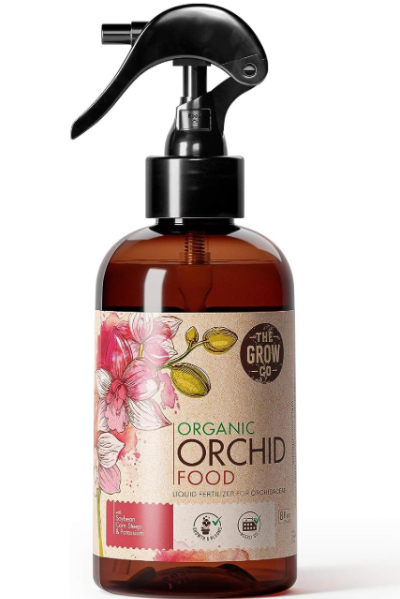
1. Organic Ready to Spray Orchid Food Mist — Bloom Booster Fertilizer for Orchids in Pots (8 oz)
What Is It?
This is an organic, ready-to-use orchid food mist that comes in a spray bottle. You point it at your plant and spray. No mixing, no measuring, no guesswork. It is designed to support healthy blooms and encourage reblooming in potted orchids.
The formula is organic, which means it skips harsh synthetic chemicals. It is made for people who want a gentle, low-risk option that feeds the plant without risking chemical burn.
Best Use Cases
- Beginners who have never used fertilizer before
- People with just one or two orchids on a windowsill
- Orchid owners who want an organic approach
- Anyone who wants quick, fuss-free feeding without any prep
Key Features Explained Simply
Ready to spray — The bottle is already mixed and ready to go. Open it, spray it, done. There is no concentrate to dilute or powder to dissolve.
Organic formula — Made with naturally derived nutrients rather than synthetic salts. This is gentler on roots and safer if you accidentally over-apply.
Bloom booster focus — The formula is tweaked to push the plant toward flowering. It contains a nutrient profile that supports bud development and longer-lasting blooms.
8 oz size — Compact and easy to store. Great for small collections.
Real-Life Usage Insight
You use this by spraying the leaves, aerial roots, and the potting medium lightly. Most orchid owners spray once a week during the growing season and cut back to every two weeks when the plant is resting. Because it is organic, it feeds slowly and consistently, which is actually how orchids prefer to receive nutrients.
One practical thing to note: organic formulas typically have a lower NPK concentration than synthetic ones. That means they work more gently. If your orchid is severely nutrient-deficient, this may take longer to show results compared to a synthetic fertilizer.
Pros
- Super easy to use — no prep needed
- Organic and gentle on roots
- Good for beginners and casual plant owners
- Low risk of over-fertilizing
- Compact bottle, easy to store
Cons
- Lower nutrient concentration than synthetic options
- May take longer to show results on nutrient-starved plants
- 8 oz runs out faster if you have multiple orchids
- Not ideal for large collections
Performance
For a single orchid or a small collection of two to three plants, this fertilizer performs well. It supports consistent leaf color and encourages the plant to send up a new bloom spike when used regularly. Do not expect miracles after one spray. Orchids respond slowly to feeding. But after a few weeks of consistent use, most users notice improved leaf color and new root growth.
Ease of Use
Extremely easy. This is one of the most beginner-friendly options on this list. You do not need to know anything about fertilizer ratios or dilution rates. Just spray.
Value for Money
The price is fair for an organic, ready-to-use formula. It costs more per ounce than concentrate fertilizers, but you are paying for convenience. For someone with one or two orchids, the cost is very manageable.
Rating: 4.2 / 5
2. Miracle-Gro Indoor Plant Food Mist for Orchids (8 fl. oz., 2-Pack)

What Is It?
Miracle-Gro is one of the most recognized names in plant nutrition, and this product is their orchid-specific spray formula. It comes as a 2-pack of 8 oz bottles, giving you a total of 16 oz right out of the box.
Like the organic option above, this is a ready-to-use spray. No mixing required. But the formula is synthetic, which means it delivers nutrients more immediately and at a higher concentration.
Best Use Cases
- Beginners who trust a well-known brand
- Orchid owners who want fast nutrient delivery
- People who have multiple orchids and want to spray them all quickly
- Anyone who already uses Miracle-Gro on other houseplants
Key Features Explained Simply
Instant feeding — The synthetic formula delivers nutrients immediately upon application. Plants absorb these faster than organic formulas.
Orchid-specific formula — Miracle-Gro designed this specifically for orchids, not just adapted from a general houseplant fertilizer. The nutrient balance is tailored to what orchids actually need.
2-pack value — Two bottles mean you get more product for your money. If you have more than a couple orchids, this goes a long way.
Easy spray nozzle — Simple to use, consistent spray pattern.
Real-Life Usage Insight
Many orchid hobbyists keep one of these bottles on the windowsill right next to their plants. When watering day comes, a few sprays take care of the feeding. Because the formula is synthetic, it is slightly more important to follow the recommended frequency. Spraying too often can lead to salt buildup in the potting mix, which harms roots over time.
A practical tip: every few weeks, flush your orchid’s pot with plain water to rinse out any accumulated fertilizer salts. This keeps roots healthy.
Pros
- Trusted brand with a strong track record
- Ready to use, no mixing needed
- 2-pack offers good value
- Fast-acting synthetic formula
- Specifically formulated for orchids
Cons
- Synthetic formula not suitable for those who prefer organic growing
- Potential for salt buildup if overused
- Not ideal for orchid growers using low-purity tap water
- Spray bottle sometimes reported to have inconsistent spray patterns
Performance
Miracle-Gro’s orchid mist delivers reliable results for most indoor orchid growers. Plants fed consistently with this product tend to show good leaf color, strong root development, and regular bloom cycles. It is not the most advanced formulation on this list, but it does its job dependably.
Ease of Use
Just as easy as the organic mist above. Point and spray. The 2-pack means you are unlikely to run out mid-season.
Value for Money
The 2-pack pricing makes this one of the better values on the list for a ready-to-use format. You get twice the product compared to a single bottle at a lower combined price per ounce.
Rating: 4.3 / 5
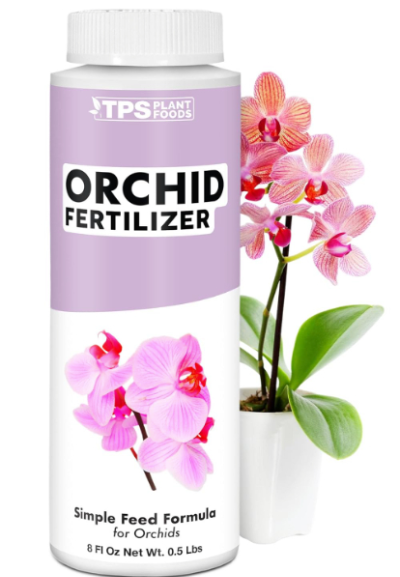
3. Orchid Fertilizer — Liquid Plant Food for Reblooming, Longer-Lasting Flowers & Healthy Roots (8 oz)
What Is It?
This is a liquid concentrate orchid fertilizer designed specifically to trigger and extend reblooming while also building stronger, healthier roots. It comes in an 8 oz bottle and needs to be diluted with water before use.
The formula is designed to address three specific goals: push the plant to rebloom, extend the life of flowers once they open, and improve root health. That is a more targeted approach than a simple all-purpose orchid food.
Best Use Cases
- Orchid owners frustrated by plants that bloom once and never again
- Growers who want to extend how long their flowers last
- Anyone dealing with weak, mushy, or sparse root systems
- Intermediate orchid growers comfortable with measuring and mixing
Key Features Explained Simply
Rebloom-focused formula — The phosphorus levels are elevated to encourage bud initiation. This is the nutrient that tells an orchid it is time to flower.
Root health support — Contains nutrients like calcium and potassium that strengthen root tissues. Healthy roots lead to healthier plants and better blooms.
Liquid concentrate — You dilute a small amount into water. This gives you more control over the concentration and makes the product last longer.
Comprehensive micronutrient profile — Includes trace elements that support overall plant vitality.
Real-Life Usage Insight
Dilute this fertilizer into your watering can at the recommended rate, typically a few drops or a small cap per quart of water, and water your orchid with it once a week. Many growers use this during the active growing phase and then switch to plain water for a week out of every four to give the plant a flush.
The rebloom focus is genuine. Orchids fed phosphorus-rich formulas more consistently tend to initiate new bloom spikes more readily than plants on a basic balanced fertilizer. That said, fertilizer alone will not make an orchid rebloom if lighting and temperature are not right. It is one piece of the puzzle.
Pros
- Targeted formula for reblooming
- Extends flower lifespan when used correctly
- Strengthens root development
- Liquid concentrate lasts longer per ounce
- Good value for regular orchid growers
Cons
- Requires measuring and diluting (less convenient than a spray)
- Results depend on correct dilution
- Does not fix reblooming issues caused by poor light or temperature
- May be more than a beginner needs right away
Performance
Among orchid fertilizers focused on reblooming, this one stands out. Users who apply it consistently during the growing season report more frequent bloom spikes and flowers that stay open longer before dropping. Root systems also tend to look greener and more vigorous after a few weeks of regular use.
Ease of Use
Moderate. You need to measure and mix, which adds a step. But the instructions are clear and straightforward. After doing it once or twice, it becomes second nature.
Value for Money
Very good. Liquid concentrates almost always offer better value per application than ready-to-use sprays. This 8 oz bottle, when properly diluted, covers many more watering sessions than an 8 oz spray.
Rating: 4.4 / 5
4. rePotme Orchid Food — Feed ME! MSU Orchid Fertilizer for RO/Rain/Tap Water (8 oz)

What Is It?
This one is different from all the others on this list. rePotme’s MSU Orchid Fertilizer is based on a formula developed by Michigan State University. It was specifically designed for use with different water types, including reverse osmosis water, rainwater, and regular tap water.
The full name MSU stands for Michigan State University, where researchers developed this formula to address the nutritional gaps that different water sources create. Tap water, for example, already contains some calcium and magnesium, while RO and rainwater have almost none. This formula adjusts for that.
Best Use Cases
- Orchid growers who use reverse osmosis or collected rainwater
- Serious hobbyists with multiple orchids
- Growers who want a scientifically backed formula
- Anyone dealing with poor overall orchid health across multiple plants
Key Features Explained Simply
MSU-developed formula — Backed by university research. Not a marketing claim. The formula was genuinely created by plant scientists studying orchid nutrition.
Water-type specific — The formula provides the calcium and magnesium that soft or purified water lacks, making it ideal for RO and rain water users.
Balanced nutrition — Delivers a complete nutrient profile, not just NPK. Includes calcium, magnesium, boron, iron, manganese, zinc, copper, and molybdenum.
Urea-free nitrogen — Uses only ammoniacal and nitrate nitrogen rather than urea. Orchid roots cannot process urea efficiently, so this is an important quality distinction.
8 oz concentrate — A small amount goes a long way.
Real-Life Usage Insight
This fertilizer is a favorite in the serious orchid growing community. Orchid societies and dedicated hobbyists frequently recommend it. The “weakly, weekly” principle of orchid feeding works perfectly with this formula: dilute it very lightly and apply with every watering.
Because it is urea-free, it is less likely to cause root damage even with regular use. Plants fed with MSU tend to show excellent leaf color, strong root systems, and consistent blooming. If you grow Phalaenopsis, Cattleya, Dendrobium, or any other orchid variety seriously, this formula deserves a spot in your growing routine.
Pros
- University-researched, scientifically developed formula
- Urea-free nitrogen — safer for orchid roots
- Ideal for soft water and RO water users
- Complete micronutrient profile
- Trusted by serious hobbyists and orchid societies
- Very economical — a little goes a very long way
Cons
- More complex than a simple spray — requires measuring and mixing
- May be overkill for a single-orchid casual grower
- Slightly higher price point than basic fertilizers
- Needs more knowledge to use correctly (dilution rates differ for water types)
Performance
This is arguably the highest-performing fertilizer on this list in terms of complete nutrition and long-term plant health. Orchids grown on MSU fertilizer consistently show vibrant foliage, robust root systems, and reliable blooming. It is the go-to recommendation in orchid growing forums for a reason.
Ease of Use
Moderate to advanced. There are different dilution recommendations depending on your water type, which requires a bit of learning upfront. Once you know your dilution rate, applying it is simple.
Value for Money
Excellent. The 8 oz concentrate, used at the recommended dilution, covers a very large number of watering sessions. Per application, this may actually be the most economical option on the list.
Rating: 4.7 / 5
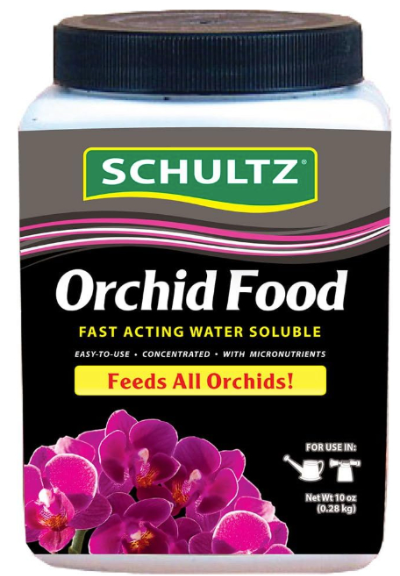
5. Schultz Orchid Food Water Soluble Plant Food 20-20-15, 10-Ounce
What Is It?
Schultz Orchid Food is a water-soluble powder fertilizer with an NPK ratio of 20-20-15. It comes in a 10 oz container and is one of the more straightforward balanced fertilizers on this list. The formula is designed for general orchid nutrition with a slight reduction in potassium compared to nitrogen and phosphorus.
This is a classic-style orchid fertilizer that has been around for a long time. It is simple, effective, and easy to find.
Best Use Cases
- Orchid growers who want a balanced, reliable fertilizer
- Growers who prefer powder over liquid
- Anyone feeding a mixed collection of different orchid species
- People who want a tried-and-true formula without overthinking it
Key Features Explained Simply
20-20-15 NPK ratio — Balanced nitrogen and phosphorus at 20 each, with slightly lower potassium at 15. This ratio supports both leaf growth and flowering without heavily favoring one over the other.
Water-soluble powder — Dissolves in water to make a liquid fertilizer. Easy to mix into your watering routine.
10 oz container — Slightly more product than the other options on this list. One container lasts a long time.
Widely available — Sold at most garden centers, hardware stores, and online retailers. Easy to find and restock.
Real-Life Usage Insight
You dissolve a small amount of the powder, usually about a quarter teaspoon, into a gallon of water and use that solution to water your orchids. Some growers use it every watering, while others alternate with plain water.
Because the formula is balanced, it is suitable for all stages of growth. It does not specifically push reblooming the way the phosphorus-heavy formulas do, but it keeps plants healthy and supported through the whole growing cycle. For a mixed collection with plants at different stages, a balanced formula like this one makes things simple.
Pros
- Simple, balanced formula for all-around nutrition
- Water-soluble powder — easy to mix
- 10 oz container is good value
- Widely available and easy to restock
- Works for multiple orchid species and growth stages
Cons
- Not specifically focused on reblooming
- Does not include the micronutrient depth of formulas like MSU
- Powder form requires a bit more care to fully dissolve
- Contains urea, which some orchid growers prefer to avoid
Performance
Schultz Orchid Food performs reliably for general orchid nutrition. Plants fed with this product maintain good leaf health and normal growth patterns. For triggering blooms specifically, combining it with an occasional dose of a higher-phosphorus supplement can help. On its own, it is a solid baseline fertilizer.
Ease of Use
Easy once you know your dilution ratio. Mixing powder into water takes an extra step compared to a ready-to-use spray, but it is not complicated.
Value for Money
Good. The 10 oz size and powder format mean you get a lot of applications per container. It is one of the more economical options on a per-application basis.
Rating: 4.1 / 5
Comparison Insights: How Do These Five Stack Up?
Here is a quick side-by-side look to help you compare these products across the things that matter most:
| Feature | Organic Spray | Miracle-Gro Mist | Liquid Rebloom | rePotme MSU | Schultz 20-20-15 |
|---|---|---|---|---|---|
| Formula Type | Organic spray | Synthetic spray | Liquid concentrate | Powder concentrate | Powder |
| Ease of Use | Very Easy | Very Easy | Moderate | Moderate | Easy |
| Beginner Friendly | ✅ Best | ✅ Great | ✅ Good | ⚠️ Some learning | ✅ Good |
| Rebloom Focus | Moderate | Moderate | High | Moderate | Low |
| Root Health | Moderate | Moderate | High | Very High | Moderate |
| Value Per Application | Low | Low | High | Very High | High |
| Best For | 1-2 orchids, organic fans | Beginners, Miracle-Gro fans | Rebloom-focused growers | Serious hobbyists | Mixed collections |
Key takeaway: If ease of use is everything, go with the sprays (products 1 or 2). If you want the best long-term results and do not mind a little measuring, the rePotme MSU formula is hard to beat. If reblooming is your main frustration, the liquid rebloom fertilizer (product 3) is the most targeted fix.
Buying Guide: How to Pick the Right Orchid Fertilizer
There are a few key questions to ask before buying:
How many orchids do you have? One or two orchids? A ready-to-use spray is plenty. Five or more? A concentrate fertilizer offers far better value.
Are you using tap water, RO water, or rainwater? If you water with reverse osmosis or collected rain, look for a formula that includes calcium and magnesium. The rePotme MSU fertilizer was literally designed for this. Tap water users have more flexibility.
What is your main goal?
- Healthy green leaves and general plant vigor: any balanced formula works
- More frequent blooms: choose a higher phosphorus formula
- Stronger roots after repotting: look for fertilizers with calcium and micronutrients
- Recovering a struggling plant: start gentle with an organic or low-concentration formula
How hands-on do you want to be? If you want to just spray and walk away, go ready-to-use. If you do not mind measuring, concentrates are more economical and often more effective.
Do you prefer organic or synthetic? Organic fertilizers are gentler but slower acting. Synthetic fertilizers act faster but require more care about dilution and salt buildup.
What type of orchid are you growing? Phalaenopsis (the common moth orchid) is the most forgiving and works well with any of these fertilizers. More specialized orchids like Cattleya, Oncidium, or Dendrobium may benefit from a more complete formula like MSU that covers a full micronutrient profile.
Who Should Buy These Products?
Here is a quick guide to match each product with the right buyer:
Organic Ready to Spray Orchid Food Mist is best for complete beginners, people with just one or two orchids, and anyone who wants an organic approach with zero preparation involved.
Miracle-Gro Indoor Plant Food Mist is best for beginners who trust a well-known brand, people who already use Miracle-Gro on other plants, and those who want reliable results without a learning curve.
Orchid Fertilizer — Liquid Plant Food for Reblooming is best for orchid owners who are frustrated that their plant bloomed once and has not flowered since. It is also a great pick for anyone who wants to extend the life of their current blooms.
rePotme MSU Orchid Fertilizer is best for serious hobbyists, people with five or more orchids, growers using RO or rain water, and anyone who wants the most scientifically complete formula available in this price range.
Schultz Orchid Food 20-20-15 is best for growers with a mixed orchid collection, people who prefer a powder format, and anyone who wants a straightforward balanced fertilizer that is easy to find at local stores.
Common Mistakes to Avoid When Feeding Orchids
Even a great fertilizer will fail if you use it the wrong way. Here are the most frequent mistakes orchid growers make with fertilizer:
Over-fertilizing This is the number one mistake. More fertilizer does not mean more blooms. Orchids are sensitive to salt buildup in the roots. Too much fertilizer leads to root damage, brown leaf tips, and a generally unhappy plant. Always use less than you think you need.
Fertilizing a dry root system Never apply fertilizer to a completely dry orchid. The concentrated nutrients can burn dry roots. Always water the plant first, then fertilize. Or water with a diluted fertilizer solution so roots are never exposed to high concentrations.
Skipping the periodic flush If you use any fertilizer regularly, flush the potting medium with plain water once a month or so. This washes out accumulated mineral salts that can harm roots over time.
Using fertilizer during dormancy Most orchids have a resting phase, usually after blooming. During this time, feeding should be reduced or stopped entirely. Feeding a dormant orchid does not help the plant and can stress the root system.
Ignoring root health before fertilizing If your orchid has unhealthy, mushy, or rotten roots, fertilizer will not fix that. In fact, it can make things worse. Repot and address root health first, then resume a regular fertilizing schedule once the plant is stable.
Using the same fertilizer year-round Many experienced growers switch formulas based on the time of year. A higher nitrogen formula supports vegetative growth in spring. A higher phosphorus formula in late summer and fall encourages the plant to initiate bloom spikes.
Ignoring the water quality issue If you live in an area with hard tap water or if you use RO water, the wrong fertilizer can leave your plant lacking key minerals. Match your fertilizer to your water type for best results.
Spraying fertilizer on blooms If your orchid is actively flowering, try to avoid getting fertilizer directly on the flowers. It can leave spots or cause premature petal drop. Focus the spray or watering on the roots and leaves.
Final Verdict: Which Is the Best Fertilizer for Orchids?
There is no single perfect fertilizer that works best for every orchid grower in every situation. But here is an honest summary to point you in the right direction:
Best for beginners: Miracle-Gro Indoor Plant Food Mist. It is simple, trusted, ready to use, and comes in a value 2-pack. Hard to go wrong with it.
Best organic option: Organic Ready to Spray Orchid Food Mist. Gentle, convenient, and low risk. Great for hobbyists who prefer natural growing methods.
Best for getting your orchid to rebloom: Orchid Fertilizer Liquid Plant Food for Reblooming. If your plant has been flowering-shy, this targeted formula is the one to try.
Best overall for serious growers: rePotme MSU Orchid Fertilizer. This is the top pick for anyone who takes their orchids seriously. The university-developed formula, urea-free nitrogen, and complete micronutrient profile make it stand above the competition for long-term plant health and performance. Yes, it requires a bit more effort to use, but the results are worth it.
Best budget and availability pick: Schultz Orchid Food 20-20-15. If you want a reliable, no-fuss, easy-to-find fertilizer that works across a mixed collection without breaking the bank, Schultz delivers.
Quick Summary Table
| Product | Best For | Overall Score |
|---|---|---|
| Organic Ready to Spray Orchid Food Mist | Organic fans, beginners | 4.2 / 5 |
| Miracle-Gro Indoor Plant Food Mist | Beginners, brand trust | 4.3 / 5 |
| Orchid Fertilizer Liquid Rebloom | Rebloom-focused growers | 4.4 / 5 |
| rePotme MSU Orchid Fertilizer | Serious hobbyists | 4.7 / 5 |
| Schultz Orchid Food 20-20-15 | Mixed collections, budget value | 4.1 / 5 |
Frequently Asked Questions About Orchid Fertilizer
How often should I fertilize my orchid? Most orchid experts recommend the “weakly, weekly” approach. This means using a very diluted fertilizer solution every time you water, rather than a strong dose once in a while. This mimics how orchids absorb nutrients naturally in the wild.
Can I use regular houseplant fertilizer on orchids? You can in a pinch, but it is not ideal. Orchids have different nutrient needs than most houseplants. Regular fertilizers often contain urea nitrogen, which orchid roots cannot process well. Using a fertilizer made specifically for orchids gives you better results.
Why are my orchid’s leaf tips turning brown after I started fertilizing? Brown leaf tips often signal fertilizer burn or salt buildup. Flush the pot with plain water and reduce your fertilizer concentration or frequency. This is one of the most common signs of over-feeding.
Will fertilizer alone make my orchid rebloom? Not by itself. Orchids need the right combination of light, temperature change, watering, and nutrition to rebloom. Fertilizer supports the plant, but it cannot override poor growing conditions. Make sure your plant gets bright indirect light and experiences a slight drop in nighttime temperature to trigger blooming.
What is the difference between liquid and powder fertilizer for orchids? Both work well. Liquid concentrates tend to dissolve more easily and are absorbed quickly. Powder fertilizers need to be fully dissolved in water before use. The main difference is convenience and cost. Liquid concentrates are slightly easier. Powders often offer better value per use.
Is organic fertilizer better for orchids than synthetic? Not necessarily better, just different. Organic fertilizers are gentler, lower risk, and feed slowly. Synthetic fertilizers are faster acting and more precise in their nutrient delivery. The best choice depends on your preferences, your orchid’s condition, and how hands-on you want to be.
Can I use tap water to dilute orchid fertilizer? Yes, most orchid fertilizers are designed for tap water use. If your tap water is very hard or high in minerals, consider occasional flushing with filtered or distilled water to prevent mineral buildup in the potting mix.
Final Thoughts
Finding the best fertilizer for orchids does not have to be complicated. The products on this list cover a wide range of needs, from the complete beginner who wants to spray and go, to the dedicated hobbyist who wants scientifically backed nutrition for a large collection.
Start with what fits your situation. If you are new to orchid care, grab the Miracle-Gro spray or the organic mist and just start feeding consistently. Consistency matters far more than picking the perfect fertilizer formula.
As you get more comfortable with your plant and notice how it responds, you can graduate to more complete formulas like the MSU fertilizer and experiment with bloom-boosting feeding schedules.
The goal is simple: feed your orchid what it needs, do not overdo it, and let the plant do its thing. Give it a little patience and the right nutrients, and those blooms will come back.

Hi, I’m Mary, the founder of GardenCure.com. I’m passionate about creating healthy, beautiful gardens and well-kept lawns. I share practical experience and trusted advice on garden and lawn gear that truly works. With the support of my dedicated research team, our writers produce honest, in-depth reviews using reliable, authentic sources—helping you choose the right tools with confidence for your outdoor space.