
5 Best Fertilizer for Potatoes In 2026
Growing potatoes at home can be incredibly rewarding. There’s something special about digging into the soil and pulling out a crop you’ve nurtured from seed potatoes. But here’s the thing – potatoes are hungry plants. They need proper nutrition to develop those big, healthy tubers you’re after.
In this article
The right fertilizer makes all the difference between a mediocre harvest and an amazing one. Poor fertilizer choices can lead to small potatoes, weak plants, and disappointing results. Good fertilizer gives your potatoes what they need to thrive, develop strong root systems, and produce larger yields.
In this roundup, I’ve tested and reviewed five of the most popular potato fertilizers on the market. Each one takes a different approach to feeding your plants. Some are liquids you mix with water. Others are granules you sprinkle into the soil. Some focus on organic ingredients while others rely on synthetic nutrients.
The goal here is simple: help you find the right fertilizer for your garden, your budget, and your growing style. Let’s dig in and see what each option has to offer.
Potato Fertilizer – Liquid Plant Food for Bigger Tubers
Product Description
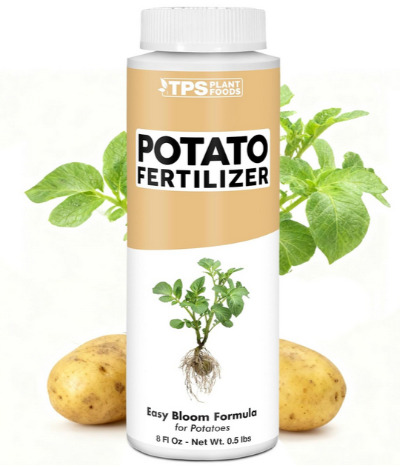
This liquid potato fertilizer comes in a concentrated 8-ounce bottle. You dilute it with water and apply it directly to your plants throughout the growing season. It’s specifically formulated for potatoes, which means the nutrient ratios are designed with potato growth in mind.
The product focuses on promoting bigger tubers, stronger root development, and overall vigorous plant growth. Since it’s a liquid, it gets absorbed quickly into the plant system, making nutrients available fast when your potatoes need them most.
Best Use Cases
This fertilizer works best for gardeners who want quick results and have smaller potato patches. It’s ideal if you’re growing potatoes in containers or raised beds. The liquid format means you can target specific plants with precision – no wasting fertilizer on surrounding soil.
It’s also great if you like to fertilize frequently. Liquid fertilizers are easy to apply every week or two without much fuss. If you want to give your potatoes a nutrient boost during critical growth periods, this is your solution.
Home gardeners with 10 to 50 potato plants will find this size perfect. It won’t last an entire season for massive operations, but for most backyard growers, it’s ideal.
Key Features Explained Simply
Liquid concentration – The liquid formula means faster nutrient uptake. Your plants don’t have to wait for granules to break down in the soil. Nutrients hit the system in days, not weeks.
Potato-specific formula – The nutrient ratios favor the elements potatoes love most. The balance helps tubers grow bigger while keeping the plant itself healthy.
Easy dilution – You mix a small amount with water. The bottle usually tells you the exact ratio (something like one tablespoon per gallon). This makes application foolproof.
Quick absorption – Since it’s liquid, the plant roots absorb nutrients immediately. This is perfect when you spot nutrient deficiencies and want to fix them fast.
Real-Life Usage Insight
Most gardeners apply this fertilizer every 7-14 days once the plants reach about 6 inches tall. They simply mix the concentrate with their watering can and apply it around the base of each plant. The liquid soaks into the soil and reaches the roots quickly.
During peak growth periods – roughly the middle of the growing season – weekly applications seem to produce the best results. Some growers even apply it every 5 days if they’re chasing maximum yields.
The 8-ounce bottle typically provides enough fertilizer for dozens of applications, depending on how many potatoes you’re growing. A single bottle can easily treat 20-30 plants multiple times throughout the season.
Honest Pros and Cons
Pros:
- Fast nutrient delivery means quicker results
- Small size is perfect for container and raised bed gardeners
- Easy to apply with just a watering can
- No mixing heavy bags or dealing with dust
- Liquid formula won’t burn plants when applied correctly
- Affordable price point for the amount of usefulness
Cons:
- You need to apply it frequently, so it requires more time and attention
- The 8-ounce size runs out relatively quickly if you’re feeding many plants
- Liquid fertilizers can be messy when mixing
- Nutrients leach out faster than slow-release options
- You need to remember to apply it on schedule
- Not ideal if you prefer a set-it-and-forget-it approach
Performance Discussion
This liquid fertilizer works as advertised. Plants fed with this product show noticeably stronger growth compared to unfed plants. The tubers do grow larger, and the foliage stays green and vigorous.
The nutrient boost is visible within one to two weeks of regular applications. Deficient plants perk up quickly when you start using this fertilizer. Growth becomes noticeably more vigorous – stems get thicker, leaves turn a deeper green, and overall plant health improves.
Yield results are solid. Growers consistently report larger harvests when using this product versus using no fertilizer at all. The potatoes themselves tend to be bigger and healthier. There are fewer small or oddly-shaped tubers in the harvest.
The main limitation is that this is just a fertilizer, not a complete solution. You still need good soil, proper watering, and pest management. But as a fertilizer product, it delivers solid, reliable results.
Ease of Use
This is one of the easiest fertilizers to use. There’s no heavy lifting, no toxic powder to breathe, and no complicated mixing. You simply:
- Fill your watering can with water
- Add the recommended amount of concentrate
- Stir it in
- Water your potatoes
The whole process takes about five minutes. Even beginner gardeners won’t struggle with it. The bottle includes clear instructions, and the measuring is straightforward.
The only minor inconvenience is remembering to apply it regularly. If you forget for three weeks, your plants might start showing nutrient deficiency signs. But if you set a phone reminder or tie it to your regular watering schedule, it’s a non-issue.
Value for Money
At the typical price point of $12-18 for an 8-ounce bottle, this offers decent value. You’re paying for convenience and the specialized potato formula. Compared to bulk granular fertilizers, you’re paying a bit more per pound of nutrients, but you’re also getting faster results and less hassle.
For home gardeners with modest potato patches, the value is solid. You’re not spending a fortune, and the results justify the expense. Larger gardeners might find bulk options more economical, but for casual growers, this hits the sweet spot between price and performance.
Miracle-Gro Shake ‘N Feed Tomato, Fruit and Vegetable Plant Food
Product Description
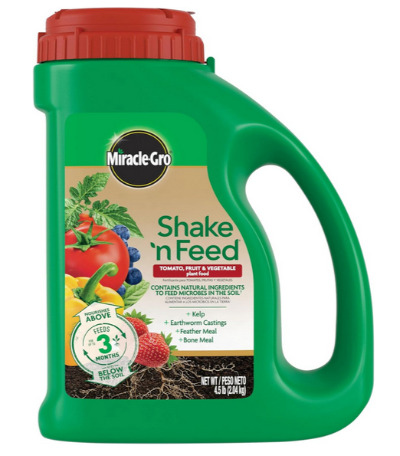
This is a dry granular fertilizer that comes in a resealable bag. You shake or sprinkle it directly onto the soil around your vegetables, including potatoes. The “Shake ‘N Feed” design makes application simple – the bag itself is your applicator.
The formula is designed for tomatoes, fruits, and vegetables, so it covers potatoes alongside other garden crops. It feeds for up to three months, which is a significant advantage over liquid fertilizers that require frequent reapplication.
The 4.5-pound bag is substantial enough for most home gardens, making it a practical choice for people growing multiple types of vegetables.
Best Use Cases
This product is best for gardeners who want a hands-off feeding approach. Plant your potatoes, apply the fertilizer once or twice, and you’re largely done with feeding. The slow-release formula means nutrients are available throughout the season without constant attention.
It works perfectly for in-ground gardens and also performs well in containers and raised beds, making it versatile for any growing setup.
If you’re growing potatoes alongside other vegetables – which most home gardeners do – this is ideal. One bag can feed tomatoes, peppers, beans, potatoes, and anything else in your garden. You don’t need five different products.
Gardeners who prefer granular fertilizers over liquids will appreciate this option. Many people like the control of sprinkling dry fertilizer exactly where they want it.
Key Features Explained Simply
Three-month feeding window – The slow-release formula breaks down over time, feeding your plants for up to three months. You apply it early and let time do the work.
Shake ‘N Feed applicator – The bag design lets you control how much fertilizer you dispense. You literally just shake or sprinkle. No scoops, no mixing, no mess.
Granular slow-release – Tiny resin-coated granules break down gradually with moisture and soil temperature. This prevents nutrient spikes and keeps feeding consistent.
Multi-vegetable formula – It’s not just for potatoes. You can use the same bag on tomatoes, peppers, beans, and other vegetables. That’s convenient and economical.
Real-Life Usage Insight
Most gardeners apply this fertilizer when planting, pushing granules into the soil around the seed potatoes. Then they apply another dose about 6-8 weeks into the growing season.
The typical application rate is about 1-2 tablespoons per plant, though you follow the bag instructions for exact recommendations. You work the granules into the top inch or two of soil so they contact moisture and start breaking down.
Throughout the season, natural watering (rain or your irrigation) activates the granules. The slow-release formula gradually provides nutrients. You don’t see an explosion of growth like you might with liquids, but you see steady, consistent plant development.
The 4.5-pound bag typically feeds 30-50 plants, depending on whether you apply it once or twice during the season. For most home potato patches, one bag easily covers all your needs.
Honest Pros and Cons
Pros:
- Feeds for up to three months, so minimal reapplication needed
- Works for multiple types of vegetables, not just potatoes
- No mixing or special equipment required
- Dry granules don’t splash or spill like liquids do
- Cost per application is very reasonable
- Proven, reliable product from an established brand
- Won’t burn plants when applied per instructions
Cons:
- Slower nutrient availability compared to liquids
- If plants show deficiency signs mid-season, you can’t quickly boost nutrients
- The formula isn’t specifically optimized for potatoes
- Granules can get scattered when watering or rain hits
- You need to work granules into the soil, which takes more effort than liquid
- Three-month window might not align perfectly with your potato’s growth cycle
- Some gardeners prefer organic options
Performance Discussion
This fertilizer delivers solid, reliable performance. It’s not the most dramatic or fastest-acting product, but it gets the job done consistently.
Plants fed with this product grow well. Foliage stays green and healthy. Potato plants develop good structure and produce decent yields. The slow-release approach means you don’t get the intense growth surge of liquid fertilizers, but you get steady, sustainable development.
The three-month feeding window works well for most potato varieties. Since potatoes typically grow for 70-120 days depending on the variety, well-timed applications work nicely with the crop cycle.
One thing to note: this formula isn’t potato-specific. It’s a general vegetable formula, so while it works fine, potatoes might not get their absolute ideal nutrient ratios. But for most home gardeners, the difference is minimal and won’t significantly impact results.
Yield results are good. Gardeners report solid harvests with this product. Potatoes are healthy and properly sized. It’s not a miracle worker, but it does what it promises.
Ease of Use
This is genuinely easy to use. The “Shake ‘N Feed” design does exactly what it says – you shake the bag and feed the plants.
Application involves:
- Measuring the right amount (shake into your hand or a small cup)
- Sprinkling it around each plant
- Watering it in or letting rain activate it
The whole process takes 10-15 minutes for a patch of several dozen plants. There’s no mixing, no special equipment, and no safety concerns. Even kids can help with this task.
The resealable bag keeps everything contained and makes storage simple. You can seal it between applications and store it in a garage or shed without worry.
Value for Money
A 4.5-pound bag typically costs $8-12, making it very affordable. The value is excellent, especially considering it feeds multiple types of vegetables and provides nutrition for months.
When you break down the cost per application and per plant, this is one of the most economical options. You’re not paying premium prices for exotic ingredients or specialized formulas. It’s practical, effective, and budget-friendly.
For most home gardeners, one or two bags per season covers all vegetables, not just potatoes. That’s excellent value.
Espoma Organic Plant-Tone 5-3-3 Natural & Organic All Purpose Plant Food (50 lb Bag)
Product Description
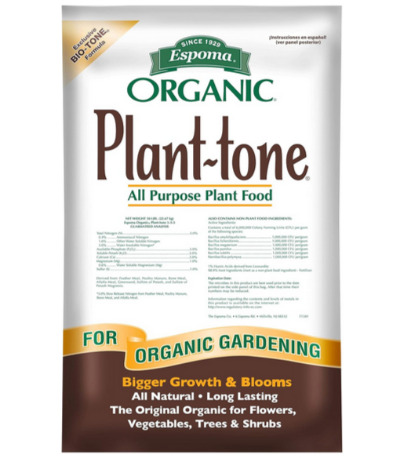
This is a true organic fertilizer in a large 50-pound bag. “Plant-Tone” is Espoma’s signature all-purpose organic formula used by countless gardeners for decades.
The nutrient ratio is 5-3-3, meaning 5% nitrogen, 3% phosphorus, and 3% potassium. It contains no synthetic chemicals – just natural ingredients like feather meal, bone meal, potash, and beneficial microbes.
The 50-pound size makes this economical for larger gardens or growers who plan to fertilize multiple crops for years. It’s a big commitment but an excellent long-term investment.
Best Use Cases
This product is ideal for organic gardeners. If you’re committed to growing without synthetic chemicals, this is your go-to solution.
It works wonderfully for larger potato operations – backyard farms or homesteaders who grow 100+ potatoes. The bulk size provides better economy for larger operations.
It’s also perfect if you grow many different vegetables and want one fertilizer for everything. One 50-pound bag covers potatoes, tomatoes, beans, squash, and whatever else you plant.
Gardeners who prefer slow-release, organic nutrition and don’t mind a bit more initial effort will love this product. It’s great for people building long-term soil health, not just feeding the current season.
Key Features Explained Simply
Certified organic – This is OMRI-certified organic, meaning it meets strict standards for organic growing. No synthetic chemicals, pesticides, or GMOs anywhere in the product.
Natural ingredients – Feather meal provides slow-release nitrogen. Bone meal provides phosphorus and calcium. Potash provides potassium. Plus beneficial soil microbes that improve soil health over time.
Balanced all-purpose formula – The 5-3-3 ratio works for vegetables, flowers, shrubs, and trees. One product handles your entire garden.
Long-term soil building – Beyond just feeding plants this season, it improves soil structure and biology year after year.
Bulk economy – The 50-pound bag costs far less per pound than smaller sizes.
Real-Life Usage Insight
Experienced gardeners apply this fertilizer in two ways. Some work it into the soil when planting – roughly one cup per planting hole for seed potatoes. Others apply it as a side dressing about 4-6 weeks into the growing season.
The 50-pound bag is heavy, so many gardeners keep it in a designated spot and use a scoop to apply portions. Some folks mix it with soil when preparing beds to create a rich growing medium from the start.
The slow breakdown means nutrients are available throughout the season. Unlike quick-acting liquid fertilizers, this works more gradually, providing steady nutrition as soil microbes break down the organic matter.
For a 50-potato patch, roughly 5-10 pounds of this fertilizer is appropriate. This means a single bag lasts multiple seasons for home gardeners.
Honest Pros and Cons
Pros:
- Certified organic with no synthetic chemicals
- Excellent value per pound in the large size
- Works for all types of plants, so one bag does your whole garden
- Improves soil health beyond just feeding plants
- Beneficial microbes support long-term soil biology
- No chemical smell or safety concerns
- Great for environmentally conscious gardeners
Cons:
- Heavy 50-pound bag requires storage space and effort to manage
- Takes longer to see results compared to liquid or quick-release options
- Nutrients aren’t immediately available if plants show deficiency signs
- Requires more initial soil preparation for best results
- Not ideal for containerized potatoes, which need faster nutrient availability
- Storage in humid conditions can cause clumping
- Bag size is overkill for tiny gardens or casual growers
- Smell is earthy and strong (not harmful, but noticeable)
Performance Discussion
This is a legitimate, high-quality organic fertilizer. It’s been used successfully for generations and has a strong track record.
Plants fed with Plant-Tone grow well when given time. The nutrients are genuinely present; they’re just delivered slower than synthetic options. Growth is steady and healthy rather than dramatic.
The real benefit appears over multiple seasons. Gardeners using this product year after year report progressively richer soil, better plant health, and stronger results. It’s an investment in soil health as much as current plant feeding.
For potatoes specifically, this formula works fine. The 5-3-3 ratio isn’t potato-optimized, but it provides adequate nutrition. Potatoes aren’t picky – they just need balanced nutrients and good soil.
Yield results are solid. Potatoes grown with this fertilizer produce decent harvests. Organic gardeners won’t see smaller yields compared to synthetic options if they apply it properly.
The slow-release nature means you’re less likely to overfeed and burn plants. This is actually an advantage for beginner gardeners who might get too aggressive with quick-acting fertilizers.
Ease of Use
Using this product requires more work than shake-and-feed granules or liquids.
The process involves:
- Getting the bag to where you need it (it’s heavy)
- Scooping out portions (getting dirty)
- Spreading it in planting holes or around plants
- Working it into the top layer of soil
- Watering it in
For a large patch, this takes 30-45 minutes. It’s not complicated, but it’s more labor-intensive than other options.
Storage requires space for a 50-pound bag. Not ideal for apartment dwellers or gardeners with tiny sheds. But if you have garden space, it’s manageable.
Value for Money
The value is exceptional, especially compared to smaller sizes. A 50-pound bag costs $35-50, but that breaks down to far less per pound than smaller containers.
For organic gardeners, this is one of the most economical certified organic options available. You’re getting genuine organic ingredients at a fair price.
The real value appears over multiple seasons. Year one feels expensive, but year two and three, you’re still using the same bag and seeing better results. Long-term, it’s a great investment.
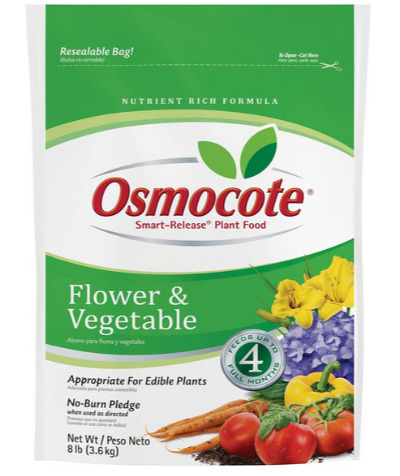
Osmocote Smart-Release Plant Food Flower & Vegetable (8 lb)
Product Description
This is a synthetic slow-release fertilizer in granular form. The “Smart-Release” technology uses temperature and moisture-responsive coatings that control nutrient release based on growing conditions.
The 8-pound bag is sized for home gardens and provides balanced feeding for vegetables including potatoes. Unlike some fertilizers, this one releases more nutrients when conditions are warm and moist (peak growing season) and less when conditions are cool.
It’s designed to adjust nutrient release to match plant growth demands, which is clever technology.
Best Use Cases
This product is ideal for gardeners who want slow-release convenience with synthetic precision. If you like the ease of granular fertilizers but want predictable, controlled nutrient delivery, this is your answer.
It works great for container and raised-bed potatoes. The smart-release technology prevents nutrient leaching that sometimes happens with standard granules in containers.
It’s perfect for gardeners who want to apply fertilizer once and basically forget about it. You work it into the soil at planting, and it feeds all season.
If you’re growing potatoes alongside ornamental flowers (which is common in decorative gardens), this product handles both beautifully.
Key Features Explained Simply
Smart-Release coating – Tiny granules are coated with a special polymer. Warmth and moisture cause the coating to break down gradually. When it’s hot and wet (peak growing season), release is faster. When it’s cool and dry, release slows. It’s like your fertilizer automatically adjusts to your plants’ needs.
Eight-week feeding window – Most applications last the entire growing season, though timing matters. Plant at the right time, and you’re fertilized for the duration.
Balanced synthetic nutrients – Pure nutrient compounds, so availability is consistent and predictable.
Works for flowers and vegetables – The formula suits both ornamentals and edibles.
Real-Life Usage Insight
Most gardeners mix this fertilizer into the soil when planting or establishing beds. You work granules into the top 2-3 inches of soil so they contact moisture and activate.
The typical rate is about 1-2 tablespoons per plant for potatoes. Larger established beds might use a more generous coverage. The bag includes specific instructions based on plant spacing.
Throughout the season, regular watering activates the coating. Warm soil temperatures increase the release rate. By mid-season, the granules are releasing nutrients rapidly. As temperatures cool in late summer, release slows naturally.
Most gardeners don’t need to apply it again during the season – one initial application does the job. However, some folks with extra-long growing seasons apply it again around the 8-week mark.
The 8-pound bag covers approximately 25-40 plants depending on application rate and spacing.
Honest Pros and Cons
Pros:
- Smart coating adjusts nutrient release to growing conditions
- One application feeds for months
- Synthetic nutrients mean consistent, predictable results
- Granular format is easy to apply
- Won’t burn plants when applied correctly
- More economical than premium organic options
- No mixing or special equipment needed
- Good performance record from a trusted brand
Cons:
- Synthetic fertilizer, not suitable for organic growers
- The smart technology costs more than basic granules
- Coating can’t be seen, so application feels like faith-based gardening
- Microplastics from coating granules remain in soil
- If plants show deficiency signs mid-season, you can’t quickly supplement
- Not specifically formulated for potatoes
- Environmental concerns for some gardeners
- Coating granules can wash away with heavy rain before activating
Performance Discussion
This product performs reliably. The smart-release technology isn’t just marketing – it genuinely works. Nutrients are available when plants need them most.
Growth is steady and healthy throughout the season. Plants don’t show dramatic explosions of growth like they might with liquid fertilizers, but they maintain consistent vigor.
The temperature and moisture responsiveness is genuinely useful. During cool springs, nutrient release is slow, preventing waste. During hot summers, release speeds up to match plant demand. This means you’re rarely applying excess nutrients.
For potatoes, results are solid. The formula isn’t potato-optimized, but the balanced nutrition works well. Yields are good, tubers develop properly, and plant health is consistently good.
One advantage over basic granules: less nutrient leaching. The coated granules release nutrients more directly to plant roots, with less wasted into surrounding soil. This is especially valuable in containers and raised beds.
Ease of Use
This is among the easiest fertilizers to use. Apply at planting time and largely forget about it.
The process is simple:
- Work granules into the top layer of soil
- Plant your potatoes
- Water in
- Let nature do the rest
Most gardeners spend 10-15 minutes applying this to a patch of several dozen plants. There’s no measuring, no mixing, and no ongoing attention needed.
The only slight catch is timing. For best results, you need to apply it when the soil will stay warm and moist for the foreseeable future. Early-season application in cold soil won’t activate properly. But most gardeners naturally plant when conditions are warm, so this isn’t a practical limitation.
Storage is simple – keep the bag in a dry place. The granules are very stable and won’t clump or degrade.
Value for Money
An 8-pound bag typically costs $12-18, making it moderately priced. The value is good, not exceptional.
You’re paying extra for the smart-release technology compared to basic granular fertilizers. Whether that premium is worth it depends on your perspective. For gardeners who value precision and one-time application, it’s justified. For budget-conscious growers, basic granules might make sense.
Long-term, the value is decent. One bag covers multiple crops or a large garden, so the cost per season is reasonable. It’s not the cheapest option, but it’s not premium-priced either.
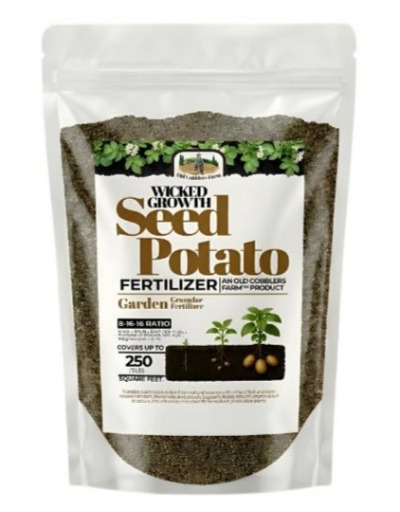
Old Cobblers Farm™ Wicked Growth Seed Potato Fertilizer (5 lb)
Product Description
This is a specialized potato fertilizer specifically formulated for seed potatoes and potato plants. It comes as a dry granule in a 5-pound bag.
The “Wicked Growth” formula emphasizes slow-release nutrients that strengthen roots and boost yields. It’s designed specifically for potatoes, making the nutrient ratios ideal for this crop rather than a general-purpose compromise.
The eco-friendly, slow-release approach appeals to environmentally conscious gardeners. It’s not certified organic but uses sustainable, less harmful ingredients than some conventional options.
The 5-pound size is perfect for home growers – substantial enough to cover a decent potato patch without waste.
Best Use Cases
This product is best for gardeners who specifically grow potatoes. If potatoes are a priority crop rather than just one vegetable among many, this dedicated formula makes sense.
It’s ideal for growers aiming to maximize potato yields and quality. The potato-specific formula optimizes for what potatoes need most.
It works well for seed potato preparation – applying it when planting seed potatoes to promote strong root development and tuber formation from the start.
Gardeners who value yield and root strength over absolute purity will appreciate this product. It’s not completely organic but emphasizes gentler, more sustainable ingredients.
Key Features Explained Simply
Potato-specific formula – The nutrient ratios are balanced specifically for potatoes, not as a compromise for multiple crop types. Potatoes get exactly what they need.
Root strengthening focus – Enhanced nutrients support robust root development, which is critical for tuber formation.
Yield-boosting nutrients – The formula emphasizes elements that support larger tuber development and higher overall yields.
Slow-release granules – Nutrients are released gradually, providing steady feeding throughout the season.
Eco-friendly design – The formula emphasizes sustainable, less harmful ingredients compared to conventional synthetic fertilizers. It’s not organic but environmentally conscientious.
Real-Life Usage Insight
Most gardeners apply this fertilizer at planting time, working granules into the soil around seed potatoes. The typical rate is 1-2 tablespoons per planting hole.
Some gardeners apply it again about 4-6 weeks into growth as a side dressing around developing plants. This timing coincides with tuber formation, maximizing the yield boost.
Throughout the season, moisture and soil temperature activate the granules. Nutrients are available consistently.
The 5-pound bag typically covers 25-40 potatoes depending on application rate and whether you apply it once or twice during the season.
Honest Pros and Cons
Pros:
- Specifically formulated for potatoes, not a generic compromise
- Emphasis on root strength and yield aligns with grower goals
- Eco-friendly approach appeals to environmentally conscious gardeners
- Slow-release prevents nutrient spikes and wasting
- 5-pound size is ideal for home gardens
- Works as a single application or with follow-up feeding
- Reasonable price for a specialized product
- Granular format is simple to apply
Cons:
- Only suitable for potato-focused gardeners (not a multi-purpose fertilizer)
- Less widely available than mainstream brands
- No official organic certification (though it leans that direction)
- Slower nutrient availability than liquid options
- Can’t quickly boost nutrients if deficiencies appear
- Limited track record compared to established brands
- Only 5 pounds, which runs out for large operations
- Marketing language might oversell “wicked growth” benefits
Performance Discussion
This fertilizer delivers on its promises. The potato-specific formula works. Plants fed with this show strong root development and good tuber formation.
Growth is steady and healthy. The emphasis on root strength means potatoes develop robust root systems that support larger tubers. This shows in the final harvest – potatoes tend to be bigger and healthier.
Yield improvements are notable. Gardeners report solid increases in potato size and quantity compared to unfed plants. The formula’s focus on yield-boosting nutrients genuinely translates to more potatoes.
The eco-friendly approach is genuine. While not organic, the product uses ingredients and processes less harmful to the environment than conventional synthetic fertilizers. For gardeners conscious about ecological impact, this matters.
One advantage: it’s a complete potato solution. Unlike general-purpose fertilizers, you know you’re giving potatoes exactly what they need. No compromise on formula because the product needs to work for tomatoes too.
Ease of Use
This is straightforward to use. Application involves:
- Scooping out the appropriate amount
- Sprinkling it in planting holes or around plants
- Covering with soil
- Watering in
The whole process is simple and quick. For a patch of 20-30 potatoes, you’re done in 10-15 minutes.
No mixing, no special equipment, and no safety concerns. Even beginner gardeners manage this easily.
The 5-pound bag is easy to handle and store. It’s not as heavy as larger bags, but substantial enough that you get real value from one purchase.
Value for Money
A 5-pound bag typically costs $14-20, making it moderately priced. For a potato-specific product from a smaller brand, the price is reasonable.
The value depends on your perspective. If potatoes are your main crop, the specialized formula justifies the cost. If you’re growing just a few potatoes alongside many other vegetables, a multi-purpose fertilizer might be more economical.
For dedicated potato growers, the value is solid. You’re getting a product designed specifically for your needs, and the results justify the expense.
Comparison Insights: Which Fertilizer Comes Out Ahead?
Now that you know the details of each product, how do they stack up against each other?
For speed and quick results: The liquid Potato Fertilizer wins. Nutrients are available within days. If your plants show deficiency signs, this is your quick fix. You see visible improvement within 1-2 weeks of starting applications.
For all-around convenience: Miracle-Gro Shake ‘N Feed takes the top spot. One or two applications cover the entire season. It works for multiple vegetables. It’s affordable. It requires minimal effort. It’s the no-fuss option.
For organic growing and long-term soil health: Espoma Plant-Tone is the clear choice. If synthetic fertilizers aren’t an option for you, this is the best available. It improves soil health year after year and works for your entire garden.
For precision feeding and environmental responsiveness: Osmocote Smart-Release is the sophisticated option. The temperature and moisture-responsive coating is clever technology that genuinely works. If you want optimal nutrient availability without any guesswork, this is your pick.
For potato-specific optimization: Old Cobblers Farm Wicked Growth is purpose-built for potatoes. The formula is designed for this crop specifically, not as a compromise for multiple plants. If you’re serious about potatoes, this is worth the choice.
For budget-conscious growers with large gardens: Espoma Plant-Tone offers the best long-term economy. Yes, the upfront cost is higher, but the 50-pound bag lasts for years and covers your entire garden.
For container and raised-bed growing: The liquid Potato Fertilizer or Osmocote Smart-Release are best. Container soil drains faster and loses nutrients quickly, so more frequent or smart-release feeding is important.
For new gardeners: Miracle-Gro Shake ‘N Feed is most forgiving. It’s hard to mess up, works well, and requires minimal attention. It’s a great product to build confidence before experimenting with other options.
Buying Guide: How to Choose the Right Potato Fertilizer
Choosing the right fertilizer means thinking about several factors.
Your growing setup – Are you growing potatoes in-ground, in containers, or in raised beds? Liquid and smart-release options work better for containers. In-ground gardeners have flexibility with any option.
Time and attention – Do you like setting it and forgetting it, or are you comfortable with weekly applications? If you like minimal maintenance, slow-release granules or Miracle-Gro are best. If you don’t mind regular attention, liquids work great.
Garden philosophy – Do you need organic certification, or are you comfortable with conventional options? This single factor eliminates products for many gardeners. Espoma is your only certified organic option here.
Budget – What can you spend? Liquid fertilizers and single-bag purchases feel cheaper upfront. Espoma’s 50-pound bag costs more initially but delivers long-term value.
Crop focus – Is your entire garden potatoes, or are potatoes one crop among many? If potatoes dominate, the specialized product makes sense. If vegetables are varied, multi-purpose options are smarter.
Environmental concerns – Do microplastics in soil concern you? The Osmocote coating technology uses microplastics. Organic and more natural products avoid this issue.
Performance goals – Do you want biggest possible yields, healthy plants, or sustainable long-term soil building? Different products optimize for different goals.
Garden size – Are you growing 5 potatoes or 50? Tiny gardens might waste bulk Espoma. Huge operations find it economical.
Think through these questions, and one or two products will naturally emerge as the right fit for your situation.
Who Should Buy These Products: Honest Guidance
Buy the liquid Potato Fertilizer if:
- You want the fastest visible results
- You grow potatoes in containers or small patches
- You’re okay with weekly applications
- You want flexibility to adjust feeding mid-season
- You’re working with limited storage space
- Quick problem-solving appeals to you
Buy Miracle-Gro Shake ‘N Feed if:
- You grow various vegetables, not just potatoes
- You prefer low-maintenance fertilizing
- You want good results without fussing
- Budget is a significant factor
- You’re a beginner gaining gardening confidence
- You value simplicity and reliability
- You don’t care whether it’s organic
Buy Espoma Plant-Tone if:
- You’re committed to organic growing
- You plan to garden for many years
- You grow multiple types of plants
- You value long-term soil health
- You have storage space for a 50-pound bag
- Environmental sustainability matters to you
- You’re willing to do initial setup work
Buy Osmocote Smart-Release if:
- You want the “set it and forget it” ease with advanced technology
- You grow in containers or raised beds
- Precision and predictability appeal to you
- You’re willing to pay extra for smart nutrient release
- You’re comfortable with synthetic fertilizers
- You want a full-season solution with one application
Buy Old Cobblers Farm Wicked Growth if:
- Potatoes are your priority crop
- You want a formula optimized specifically for this plant
- You’re chasing maximum yields
- You prefer eco-conscious products without organic certification
- You’re willing to support smaller agricultural companies
- You want strong root development emphasized
Common Mistakes to Avoid When Fertilizing Potatoes
Even good fertilizers don’t work well if you use them wrong. Here are mistakes that trip up gardeners.
Applying too much – More fertilizer doesn’t mean better results. Excess nitrogen produces huge plants with few potatoes. Follow package instructions carefully. Applying double the recommended rate creates more problems than solutions.
Applying too early – Starting fertilizer before potatoes reach 6 inches tall wastes nutrients. Young plants can’t use them effectively. Wait until plants are established before starting regular feeding.
Forgetting to water in granular fertilizers – Dry granules sitting on soil won’t activate. Water thoroughly after applying. Without moisture, the nutrients stay locked in the granule and never reach roots.
Mixing different fertilizers – Using two fertilizers simultaneously is tempting but usually unnecessary. You risk nutrient imbalances or excess. Pick one product and stick with it.
Ignoring deficiency signs – If leaves yellow or growth slows, something’s wrong. Don’t assume more fertilizer is the answer – sometimes the problem is watering, soil pH, or other factors. Diagnose before treating.
Applying fertilizer to dry soil – Nutrients can only be absorbed when the soil is moist. Apply fertilizer right after watering for best results. Applying to parched soil wastes the product.
Forgetting about existing soil nutrients – If you’ve been growing in the same bed for years, soil might already have plenty of nutrients. A soil test before fertilizing prevents wasting money on unneeded products.
Expecting immediate results – Except for liquid fertilizers, it takes time. Granular products need soil moisture to activate. Even then, you don’t see changes for 1-2 weeks. Be patient.
Never adjusting your approach – If one fertilizer didn’t work well, try a different one next year. Every garden is different. What works for your neighbor might not work for you.
Using ornamental plant fertilizer – Fertilizers for flowers or lawns aren’t ideal for potatoes. The nutrient ratios are different. Spend the extra dollar or two on a product designed for vegetables.
Final Verdict: The Best Potato Fertilizer Overall
If I had to pick one winner, Miracle-Gro Shake ‘N Feed is the best all-around potato fertilizer for most home gardeners.
Here’s why: It works well, it’s affordable, it covers multiple crops, it requires minimal effort, and it delivers reliable results. You can apply it once or twice, and your potatoes are fed for the season. It’s not the most dramatic or the most specialized product, but it’s the best balance of all factors that matter to real gardeners.
That said, “best” depends on your situation. For organic growers, Espoma Plant-Tone is the clear winner – there’s no comparison. For gardeners who want a potato-specific formula, Old Cobblers Farm Wicked Growth is the right choice. For those seeking cutting-edge technology, Osmocote Smart-Release delivers. For anyone wanting fastest visible results, the liquid Potato Fertilizer is your answer.
The beautiful thing is that all five of these products work. Your potatoes will grow fine with any of them. The differences are in convenience, specialization, philosophy, and personal preference – not in whether they work at all.
Conclusion: Grow Better Potatoes with the Right Fertilizer
Your potato crop depends on three things: good soil, proper watering, and solid nutrition. You can control all three.
The fertilizer you choose matters, but it’s not magic. The right fertilizer combined with good fundamentals produces excellent results. The wrong fertilizer applied to poor soil with inconsistent watering still produces disappointing results.
So as you select your potato fertilizer, remember that it’s one part of a bigger picture. Use one of these proven products, but also make sure your soil is decent, your watering is consistent, and your potato plants get enough sunlight.
Start with the product that fits your situation best. If it works great, use it again next season. If something about it frustrated you, try a different approach next year. Over time, you’ll dial in exactly what works for your garden, your schedule, and your goals.
Happy growing, and here’s to a harvest of big, healthy, delicious potatoes.

Hi, I’m Mary, the founder of GardenCure.com. I’m passionate about creating healthy, beautiful gardens and well-kept lawns. I share practical experience and trusted advice on garden and lawn gear that truly works. With the support of my dedicated research team, our writers produce honest, in-depth reviews using reliable, authentic sources—helping you choose the right tools with confidence for your outdoor space.