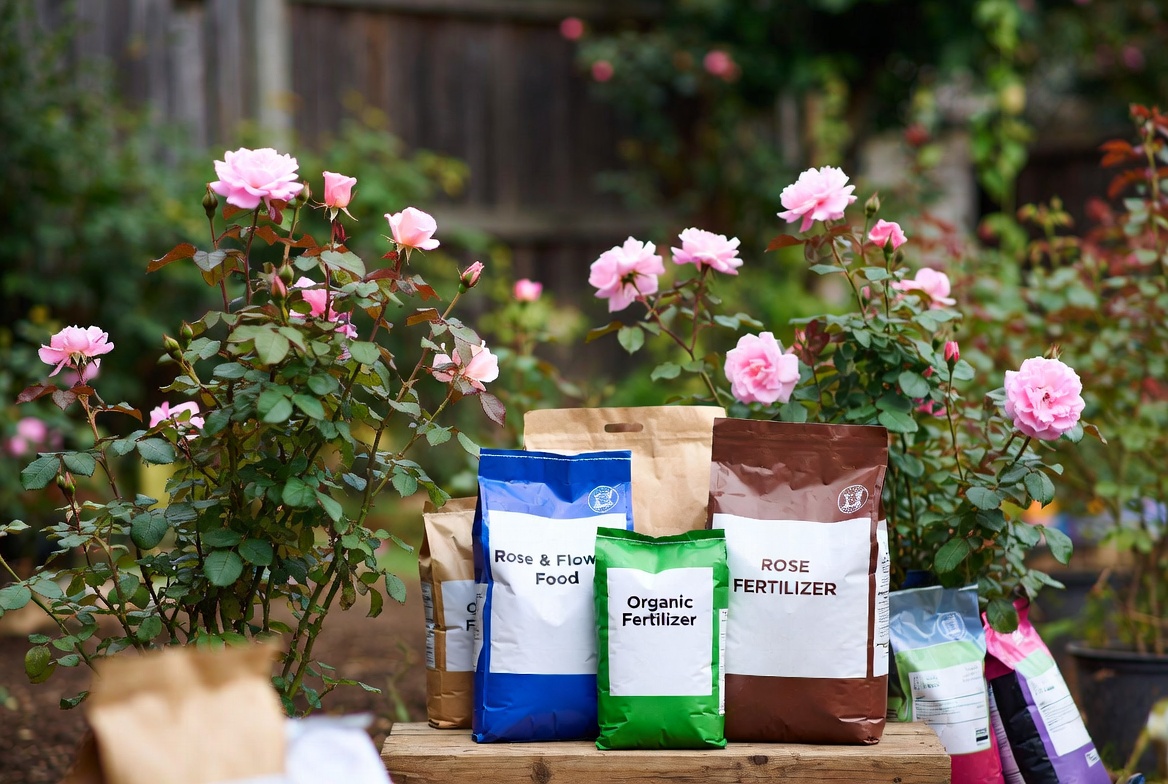
5 Best Fertilizer for Roses In 2026
If you’ve ever tried growing roses and ended up with weak, spindly plants that barely bloom, you know the frustration. The secret? Most people overlook one of the most important factors: using the right rose fertilizer.
In this article
Roses are hungry plants. They need specific nutrients to thrive, bloom like crazy, and show off those stunning flowers you see in gardens everywhere. The problem is that not all fertilizers are created equal. Some products make big promises but deliver disappointing results. Others work great but cost way too much.
I’ve spent time researching and analyzing five of the most popular rose fertilizers on the market. This guide breaks down each product honestly, shows you what really matters, and helps you pick the one that fits your garden and budget. Let’s dig in.
Why Roses Need Special Fertilizer
Before we jump into specific products, let’s talk about why roses can’t just get by with generic plant food.
Roses need a balanced mix of nutrients to perform their best. They’re heavy feeders, which means they consume a lot of nutrients from the soil. When you plant roses, the soil eventually gets depleted. That’s where fertilizer comes in.
The three main nutrients roses need are nitrogen (for leafy green growth), phosphorus (for strong roots and blooms), and potassium (for overall plant health). But roses also benefit from secondary nutrients like calcium, magnesium, and sulfur. Some specialized rose fertilizers even include micronutrients and organic matter to feed the soil itself.
The timing of feeding matters too. During the growing season, roses need consistent nutrition. Too much fertilizer? You get lots of leaves but fewer flowers. Not enough? Your plants struggle and blooms suffer. The best rose food gives you steady, balanced nutrition that promotes both healthy growth and abundant flowering.
Organic versus synthetic also makes a difference. Organic fertilizers release nutrients slowly over time, which means steadier growth and less risk of burning your plants. Synthetic fertilizers work faster but need more careful application. Both have fans, and we’ll explore both types in this roundup.
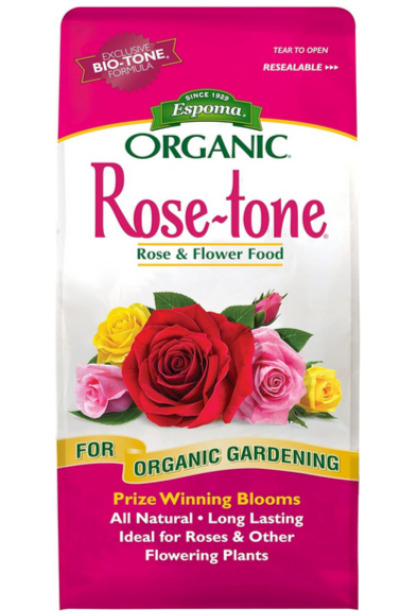
Espoma Organic Rose-Tone 4-3-2 Organic Fertilizer
The Overview
Espoma Organic Rose-Tone is an all-purpose organic fertilizer specifically blended for roses and other flowering plants. It comes in 4 lb bags, and you typically get two bags in a pack. The NPK ratio is 4-3-2, which means it has more nitrogen than phosphorus or potassium.
Product Description
This is a dry, granular fertilizer made from a mix of organic ingredients. You’ll find plant-based ingredients, natural minerals, and what Espoma calls their “Mycro” technology—beneficial microbes that help your plants absorb nutrients more effectively. The granules look like pellets and break down naturally in the soil.
The bag is made from recycled paper, which is nice if you care about the environment. You get 4 pounds per bag, enough for several applications across multiple rose bushes depending on how many you’re feeding.
Best Use Cases
Espoma Rose-Tone shines when you want a reliable organic option that you can use throughout the growing season. It works well if you prefer not to use synthetic chemicals on your garden. The slow-release nature makes it perfect for gardeners who want set-it-and-forget-it nutrition without constant feeding schedules.
This fertilizer works great for established rose gardens where you want steady, consistent results. If you’re building soil health over time, the organic matter in Espoma Rose-Tone helps improve your soil structure, which benefits roses and everything else growing nearby.
Key Features Explained Simply
The 4-3-2 ratio means you get good nitrogen for leafy growth, moderate phosphorus for root development and blooms, and a lower amount of potassium. This balance encourages both healthy foliage and flower production without overstimulating leaf growth at the expense of blooms.
The added microbes are a big deal. These beneficial organisms help break down organic matter and make nutrients available to your plants more efficiently. They also improve soil structure and help the soil hold water better, which keeps your roses happier during dry spells.
Espoma uses ingredients like feather meal, bone meal, kelp extract, and beneficial bacteria. These are all natural, so you’re not using anything synthetic. There’s no smell like some synthetic fertilizers have, and you don’t have to worry about chemical burns on your leaves.
The granular format means you just sprinkle it around the base of your rose bushes. No mixing, no measuring liquids, no spraying. It’s straightforward and hard to mess up.
Real-Life Usage Insight
In practical application, Espoma Rose-Tone works steadily. You apply it every 4-6 weeks during the growing season, which means you’re not constantly fussing with your roses. The slow-release nature means the nutrients don’t wash away quickly after rain or watering.
The application is simple. You measure out the amount recommended on the bag (usually a few ounces per bush, depending on size), sprinkle it around the base while keeping it a few inches away from the main stem, and water it in. The watering helps the granules start breaking down and allows the nutrients to reach the roots.
Most gardeners see steady growth and consistent blooming when they use Espoma Rose-Tone regularly. The organic matter also helps the soil, especially in the first couple of seasons. Over time, your soil gets richer and your roses seem more resilient.
Honest Pros and Cons
Pros:
- Completely organic, so no synthetic chemicals
- Beneficial microbes help improve overall soil health
- Easy to apply—just sprinkle and water
- Good results across different rose varieties
- The package size is reasonable for home gardens
- No smell or risk of leaf burn if applied carefully
- The added ingredients work well for long-term soil improvement
Cons:
- Results take a bit longer than synthetic fertilizers
- You need to apply it multiple times during the season
- The granules break down at different rates, so nutrition isn’t perfectly consistent
- Slightly more expensive per application than some synthetic options
- If you want quick fixes for nutrient-deficient plants, this isn’t the fastest option
- The packaging (paper bag) can deteriorate if stored in humid conditions
Performance Discussion
Espoma Rose-Tone delivers solid, reliable results. Your roses won’t transform overnight, but they’ll steadily improve. Blooms are good, foliage is healthy, and plants develop strong root systems. The long-term soil improvement is a real benefit that keeps paying dividends year after year.
If you compare results after one season, you might not be blown away. But after two or three seasons of consistent use, you’ll notice your roses are more vigorous, more disease-resistant, and bloom more reliably. The investment in soil health really shows up over time.
Ease of Use
This is one of the easiest fertilizers to use. There’s no mixing, no measuring complicated ratios, no spraying equipment needed. You just grab a handful, sprinkle it around your rose bush, and water. Even someone with no gardening experience can get this right. The biggest mistake people make is applying it too close to the stem, but the bag instructions make this clear.
Value for Money
Espoma Rose-Tone offers good value, especially for organic gardeners. You get two 4 lb bags, which gives you enough for multiple applications across several rose bushes. The cost per application is reasonable, and when you factor in the soil improvement benefits, the value goes up even more.
If you’re growing a large collection of roses, the cost adds up over time. But for most home gardens with a handful of roses, this is an affordable option that delivers results.
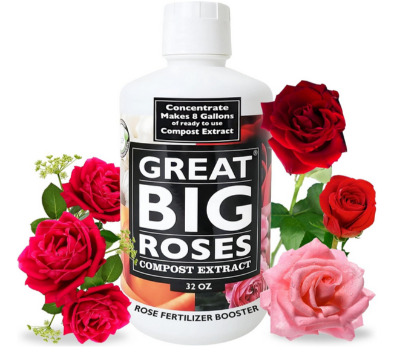
Great Big Roses – Soil and Rose Fertilizer Booster
The Overview
Great Big Roses is a concentrated liquid rose fertilizer that you mix with water to create a solution. One 32-ounce bottle makes up to 8 gallons of fertilizer solution, which stretches your money further. This product is designed specifically to boost rose growth and flower production.
Product Description
This liquid concentrate comes in a 32-ounce bottle. You mix a small amount with water according to the directions, and then use the diluted solution to water your roses. The concentrate is dark and has a distinctive smell—it’s made from seaweed extract, fish emulsion, and other natural ingredients.
One bottle makes a significant amount of usable product, which is why it’s economical for people with multiple rose bushes. You store the concentrate in a cool, dry place and mix fresh batches as needed throughout the season.
Best Use Cases
Great Big Roses works best when you want flexible, on-demand fertilizer application. If you prefer liquid feeding over dry granules, this product shines. It’s ideal for gardeners who want to see quick results or who are trying to rescue struggling rose plants that need a nutrient boost.
The fast-acting nature makes it great for mid-season feeding or when you notice your roses looking a bit lackluster. You can adjust the concentration slightly stronger if plants need extra help, though you should follow the directions to avoid overdoing it.
This product is also convenient for container roses or roses in raised beds, where you want precise control over how much fertilizer each plant gets.
Key Features Explained Simply
The liquid format means nutrients are immediately available to your plants. When you pour the diluted solution on the soil, it gets to the roots quickly. This is faster than waiting for granules to break down.
The recipe includes seaweed, which provides trace minerals and growth hormones that help roses develop strong stems and larger blooms. Fish emulsion contributes nitrogen and other nutrients, plus it has a smell that might seem odd to us but that plants seem to love.
The concentrate saves space and money compared to buying pre-mixed liquid fertilizers. You’re essentially buying a small bottle that makes a large amount of working product.
Real-Life Usage Insight
In practice, you mix and apply Great Big Roses every two to four weeks during the growing season. The process is straightforward: measure the concentrate, add it to water, stir, and pour around your rose bushes.
One thing to note: the smell is strong. Fish emulsion products have a distinctive aroma that some people find off-putting. The good news is that the smell fades after a day or two, and it’s harmless. Many experienced gardeners actually like the smell because it reminds them they’re feeding their plants with natural ingredients.
The results are noticeable fairly quickly. Within a couple of weeks, you typically see greener foliage and more robust growth. Blooming usually improves within a month.
Honest Pros and Cons
Pros:
- Highly concentrated, so one bottle goes a long way
- Fast-acting liquid format means quick results
- Flexible application—you can adjust strength if needed
- Great for rescuing struggling plants
- Natural ingredients from seaweed and fish
- Cost per application is very reasonable
- Good for container roses and raised beds
- Results visible within weeks
Cons:
- The smell is strong and not for everyone
- Requires mixing before each application
- Liquid can splash or spill, making application messier
- You need a way to measure the concentrate accurately
- More frequent application needed compared to granular products
- The strong smell might bother neighbors if applied near property lines
- Mixing adds an extra step compared to dry fertilizers
- Fish and seaweed products can sometimes attract pests
Performance Discussion
Great Big Roses delivers impressive results, especially for people who want to see changes quickly. The fast-acting nutrients mean your roses respond within days or weeks. Plants green up, stems get stronger, and blooming improves noticeably.
The combination of fish and seaweed creates a well-rounded nutrient package. Your roses get nitrogen for growth, plus the trace elements and growth hormones that seaweed provides. This combination often results in larger, more colorful blooms compared to single-ingredient fertilizers.
Over a full season, consistent application produces excellent results. Roses become bushier, more productive, and more beautiful.
Ease of Use
The process is easy but requires more steps than dry granules. You measure the concentrate, add it to water, and pour it on. That extra mixing step isn’t a big deal, but it does mean you need some basic equipment—a measuring cup and a watering can or bucket.
Some people worry about measuring accurately, but the instructions are clear. Once you’ve done it once or twice, it becomes routine.
Value for Money
This is one of the best values in this roundup. One 32-ounce bottle makes 8 gallons of usable fertilizer. That’s a lot of coverage for the price. If you have multiple roses, this product stretches your budget further than most others.
Even accounting for the need to buy a watering can or mixing container (if you don’t already have one), the cost per application is quite low.
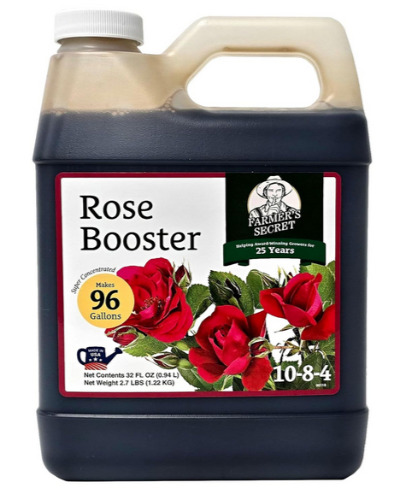
Farmer’s Secret Rose Booster Fertilizer
The Overview
Farmer’s Secret Rose Booster is a concentrated liquid formula packaged in a 32-ounce bottle. Like Great Big Roses, it’s designed to be mixed with water, making one bottle stretch across many applications. This product specifically targets rose health and blooming throughout the entire growing season.
Product Description
This is another concentrated liquid that you dilute before use. The formula includes nutrients specifically balanced for roses. The concentrate is thicker and more viscous than some liquid fertilizers, which some people prefer because it’s easier to pour and measure.
The bottle design has clear measurement markings on the side, which helps you know exactly how much you’re using. This is a nice touch that makes the product easier to work with.
Best Use Cases
Farmer’s Secret works well for gardeners who want a strong, effective rose fertilizer that’s specifically formulated for different stages of rose growth. The product label indicates it works throughout the life cycle of roses, meaning it’s suitable from spring through fall.
This is an excellent choice if you want one product that handles all your rose feeding needs without switching between different formulas. It’s also great for gardeners who like liquid feeding and want an American-made product (Farmer’s Secret is made in the USA).
This fertilizer is particularly good if you have trouble with weak growth or poor blooming, as the “booster” formula is designed to be quite potent.
Key Features Explained Simply
The formula is highly concentrated, which means you need less product per application. A small amount goes a long way. This concentration also makes it easy to pack and ship, keeping costs down.
The nutrient balance is designed to promote both foliage and flower production throughout the season. It’s not just for blooming—it supports overall plant health and vigor.
The measuring marks on the bottle make it fool-proof. You can see exactly how much concentrate you’re using without needing separate measuring cups.
Real-Life Usage Insight
In practice, Farmer’s Secret works like other liquid fertilizers. You dilute it according to the directions and pour it on your roses every two to four weeks. The super-concentrated nature means you’re using a small amount each time, so the bottle lasts a long time.
One advantage is the packaging. The bottle is sturdy, and the measurements on the side mean you can measure directly without hunting for a separate measuring cup. This small convenience factor makes many gardeners prefer this product.
Application results are noticeable within a couple of weeks. Plants respond with improved growth and better blooming.
Honest Pros and Cons
Pros:
- Super concentrated formula means lots of applications per bottle
- Measuring marks on the bottle make application easy
- Formulated specifically for roses across all growth stages
- Made in the USA
- Strong formula means less volume needed per application
- Fast-acting liquid format
- Clear, straightforward directions
- Good results for struggling plants
Cons:
- Concentrated formula requires careful dilution to avoid mistakes
- If you over-dilute, you get weak results
- Requires measuring and mixing before each application
- You need water and a way to apply the diluted mixture
- Strong formula might need adjustment for young or delicate plants
- The bottle can be difficult to open initially
- Smaller initial volume (32 oz) compared to some other concentrates
- You need to store it safely away from kids and pets
Performance Discussion
Farmer’s Secret delivers strong, noticeable results. The concentrated formula is potent, which means your roses respond quickly to feeding. You see improved growth, better leaf color, and more reliable blooming.
The “booster” approach works well for roses that need help. If your plants are struggling, the stronger nutrient concentration can get them back on track faster than milder formulas.
Throughout the season, consistent application keeps roses vigorous and blooming. Many gardeners report that Farmer’s Secret produces particularly colorful, large blooms.
Ease of Use
The measuring marks on the bottle make this easier than some competitors. You don’t need a separate measuring cup, which is a nice convenience. Dilution is simple—you’re just adding the concentrate to water.
The main challenge is remembering to do it regularly. Missing applications means your roses don’t get consistent feeding, which can affect results.
Value for Money
This is good value. One 32-ounce bottle provides many applications, and the concentrated nature means you’re not paying to ship lots of water like you would with pre-diluted products. The cost per application is low, especially for such a strong formula.
Miracle-Gro Water Soluble Rose Plant Food
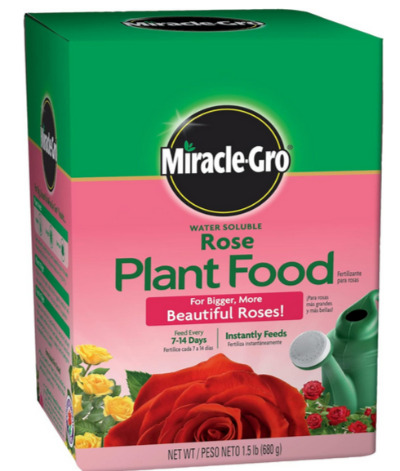
The Overview
Miracle-Gro is one of the most recognized fertilizer brands worldwide, and their rose-specific formula is a water-soluble product. You dissolve it in water to create a liquid feeding solution. This 1.5 lb container makes multiple batches of diluted fertilizer.
Product Description
This is a dry, water-soluble powder that you mix with water. When you stir it in, it dissolves completely, creating a clear or slightly tinted solution. The powder is designed to dissolve quickly without lumps or residue.
The 1.5 lb container is compact and easy to store. You measure out the powder, add it to water, and pour it on your roses. One container makes a significant number of applications.
Best Use Cases
Miracle-Gro Rose Plant Food works well if you like the idea of liquid feeding but find liquid concentrates messy or inconvenient. The water-soluble powder gives you the fast results of liquid feeding without the liquid handling.
This is a great choice for gardeners who want quick results and don’t mind using synthetic products. It’s also ideal if you’re dealing with severe nutrient deficiencies and need to boost plants fast.
The ease of availability makes it convenient—you can find Miracle-Gro at nearly any garden center or home improvement store. If you forget your fertilizer and need to pick some up quickly, you won’t have any trouble finding it.
Key Features Explained Simply
Water-soluble means the product dissolves completely in water, with no settling or particles left behind. You mix it and immediately pour it on your plants. Nutrients are available to roots right away.
The formula is designed to support blooming roses specifically. The nutrient ratio is adjusted to encourage flower production while maintaining plant health.
The powder format is nice because it’s lighter and more compact than liquid concentrates. You’re not shipping water weight, so you save money compared to pre-mixed liquids.
Real-Life Usage Insight
In practice, you mix a measured amount of powder with water to the recommended concentration and feed your roses every one to two weeks during the growing season. The frequent feeding requirement is because synthetic products work fast and don’t build up in the soil like organic options.
The speed of results is really noticeable. Within a few days, you might see greener leaves. Within a week or two, blooming usually picks up noticeably.
The main consideration is remembering to feed regularly. Because results come and go quickly with synthetic fertilizers, skipping applications means your roses lose their vigor more noticeably than with slow-release options.
Honest Pros and Cons
Pros:
- Fast-acting synthetic formula with visible results
- Easy to find at virtually any garden center
- Water-soluble powder is lightweight and compact
- Quick solution if you need to rescue struggling roses
- Clear, easy-to-follow mixing instructions
- Consistent results every time
- Good value for a major brand product
- No smell like fish-based products
Cons:
- Requires more frequent application (every 1-2 weeks)
- Synthetic formula, not organic
- Can cause leaf burn if applied too strong
- Requires measuring, mixing, and application each time
- Results fade quickly if you miss a feeding
- Risk of over-fertilizing if you’re not careful with measurements
- Environmental impact of synthetic chemicals
- Can contribute to salt buildup in soil over time
- Less soil improvement compared to organic products
Performance Discussion
Miracle-Gro delivers fast, reliable results. This is a tried-and-true product that works as advertised. Your roses respond quickly to feeding, and consistent application produces excellent blooming.
The downside is that results are very dependent on consistent application. Miss a couple of feedings, and your roses can look noticeably less vigorous. You need to stay on top of the feeding schedule to maintain results.
Over a season, though, this product consistently produces beautiful, blooming roses. If you like quick results and don’t mind synthetic products, Miracle-Gro delivers.
Ease of Use
This is simple to use—measure the powder, add water, stir, and pour. No special equipment needed beyond a measuring spoon and a watering can. The main thing is remembering to do it regularly.
Value for Money
The value is okay. You get decent results for reasonable money, and it’s easy to find. However, you need to buy it frequently because you’re feeding every week or two, which adds up over time. In the long run, a slow-release product might be more economical.
BioAdvanced All-In-One Rose and Flower Care Granules

The Overview
BioAdvanced All-In-One is a granular product that does triple duty: it fertilizes your roses, controls insects, and prevents diseases. Everything is in one product, which appeals to gardeners who want simplified rose care. The 4 lb bottle contains granules that you apply to the soil.
Product Description
This is a dry granular product with added active ingredients for pest and disease control. The granules contain fertilizer nutrients plus insecticide and fungicide components. You apply it once every six weeks, and it continues to work throughout that period.
The 4 lb container covers a good-sized area of roses. The bottle format is convenient and easy to store, and it protects the product from moisture better than bags.
Best Use Cases
BioAdvanced All-In-One is perfect if you want a simplified approach where one product handles feeding, pest control, and disease prevention all at once. If you hate spraying pesticides or fungicides separately, this is a great alternative.
This product shines if you’ve had problems with rose pests or diseases. The built-in protection handles common issues like aphids, Japanese beetles, powdery mildew, and black spot—all things that commonly affect roses.
It’s also good for busy gardeners who don’t want to manage multiple products. One application every six weeks is simpler than remembering multiple tasks.
Key Features Explained Simply
The fertilizer component provides balanced nutrition for healthy roses. The NPK ratio supports growth and blooming without excessive emphasis on any one nutrient.
The insecticide component kills common rose pests on contact and continues working for up to six weeks. This handles chewing insects like Japanese beetles and sucking insects like aphids.
The fungicide component prevents and controls common rose diseases. This keeps foliage healthy and prevents issues from spreading between plants.
The six-week protection window means fewer applications throughout the season. You apply it about every six weeks, so you’re doing this task only four or five times per growing season instead of weekly or bi-weekly.
Real-Life Usage Insight
In practice, you sprinkle the granules around the base of your rose bushes every six weeks during the growing season. You keep them a few inches away from the main stem and water them in. The watering activates the product and helps it work into the soil.
The pest and disease protection is noticeable. If you had issues with specific pests in the past, you’ll see fewer of them. The preventative approach also means fewer problems develop in the first place.
The fertilizer component provides steady nutrition over the six-week period. It’s not as immediate as liquid fertilizers, but it’s consistent.
Honest Pros and Cons
Pros:
- One product handles fertilizer, pest control, and disease prevention
- Six-week protection per application means fewer treatments
- No mixing or measuring required—just sprinkle and water
- Works well for people wanting simplified rose care
- Prevents common rose problems before they start
- No strong smell like fish-based products
- Good results if you’ve had pest or disease issues
- The 4 lb container is substantial and lasts well
Cons:
- More expensive than fertilizer-only products
- You’re paying for pest and disease control you might not need
- Synthetic pesticide and fungicide components
- Not suitable for organic gardeners
- The active ingredients can harm beneficial insects
- Not the fastest results for nutrient-deficient plants
- If you only want fertilizer, you’re buying extra features
- Six-week cycle might not match your planting schedule perfectly
- May overkill for roses that don’t have pest or disease issues
- Requires 48 hours of rain or watering to activate fully
Performance Discussion
BioAdvanced All-In-One delivers on its promises. The fertilizer component provides decent nutrition, the insecticide works, and the fungicide prevents diseases. For gardeners who’ve struggled with pests or disease, this product is a game-changer.
The main trade-off is that you’re buying pest and disease protection whether you need it or not. If your roses are naturally healthy and you don’t have pest problems, you’re paying for features you won’t use.
For a complete solution, though, this product works well. The convenience of one application handling everything appeals to many gardeners.
Ease of Use
This is probably the easiest product to use. You just sprinkle and water. No mixing, no measuring liquids, no applying sprays. Even complete beginners find this foolproof.
Value for Money
The value depends on whether you actually need pest and disease control. If you do, this is a good value because you’re buying an all-in-one solution. If you don’t have pest or disease issues, you’re overpaying for features you don’t need.
Comparison Chart: How These Products Stack Up
| Feature | Espoma Rose-Tone | Great Big Roses | Farmer’s Secret | Miracle-Gro | BioAdvanced |
|---|---|---|---|---|---|
| Format | Dry granules | Liquid concentrate | Liquid concentrate | Water-soluble powder | Dry granules |
| Organic | Yes | Yes (seaweed/fish) | Yes | No | No |
| Application frequency | Every 4-6 weeks | Every 2-4 weeks | Every 2-4 weeks | Every 1-2 weeks | Every 6 weeks |
| Speed of results | Slow | Fast | Fast | Very fast | Medium |
| Ease of use | Easy | Medium | Medium | Easy | Very easy |
| Pest/disease control | No | No | No | No | Yes |
| Cost per application | Medium | Low | Low | Medium | High |
| Soil improvement | Excellent | Minimal | Minimal | Poor | None |
| Best for | Patient gardeners | Multiple roses | Struggling plants | Quick results | Simplified care |
| Smell | None | Strong | Moderate | None | None |
Buying Guide: How to Choose the Right Rose Fertilizer
Picking the right fertilizer depends on your situation, not just the product quality. Let me walk you through the key questions to ask yourself.
Do you prefer organic or synthetic?
If you prefer natural products with no synthetic chemicals, Espoma Rose-Tone or Great Big Roses are your best bets. Both are completely organic and feed the soil while feeding the plant.
If you don’t mind synthetic products and want fast results, Miracle-Gro delivers reliable performance. The chemical-based approach means faster nutrient availability and quicker plant response.
How many roses do you have?
For small collections (one to three roses), any product works fine. The cost per application barely matters.
For medium gardens (4-10 roses), a concentrated liquid like Great Big Roses or Farmer’s Secret gives you the best economy. One bottle covers many applications.
For large rose gardens (10+ roses), a granular product like Espoma Rose-Tone becomes practical. The economies of scale work in your favor.
How much time do you want to spend?
If you prefer minimal effort, BioAdvanced All-In-One is hard to beat. One application every six weeks and you’re done. Espoma Rose-Tone is also simple, requiring just sprinkling and watering.
If you don’t mind mixing and don’t fertilize often, the liquid concentrates require a bit more effort but deliver excellent results.
Do you have pest or disease problems?
If pests or diseases plague your roses, BioAdvanced All-In-One addresses all three problems at once. This saves money and effort by replacing three separate products.
If your roses are healthy, you don’t need the pest and disease protection, so other products offer better value.
What’s your budget?
For the lowest cost per application over the season, Great Big Roses and Farmer’s Secret are unbeatable. Liquid concentrates simply stretch further.
For upfront simplicity and minimum total effort, the 4 lb bottles of Espoma or BioAdvanced require fewer shopping trips and applications.
What results do you want?
For beautiful blooms with thick foliage, any of these products deliver. But the timeline differs.
For fast results (days to weeks), go with Miracle-Gro or the liquid concentrates. For long-term soil improvement and steady results, choose Espoma Rose-Tone. For intermediate speed with organic ingredients, Great Big Roses or Farmer’s Secret hit the sweet spot.
Who Should Buy These Products: A Direct Guide
Espoma Rose-Tone is for you if:
- You believe in organic gardening and want to avoid synthetics
- You’re willing to be patient for results
- You have multiple roses and plan to feed consistently
- You care about soil health and long-term garden improvement
- You prefer simplicity (no mixing)
- You don’t mind paying slightly more for environmental benefits
Great Big Roses is for you if:
- You have multiple roses and want the best economy
- You don’t mind the smell of fish and seaweed products
- You like liquid feeding and want fast results
- You want to rescue struggling plants quickly
- You prefer natural, organic ingredients
- You have good water for mixing and applying
Farmer’s Secret is for you if:
- You want a strong, effective liquid fertilizer
- You like the convenience of measurement marks on the bottle
- You prefer American-made products
- You want fast results from a specialized formula
- You have multiple roses to feed
- You don’t mind concentrated products requiring careful dilution
Miracle-Gro is for you if:
- You want the fastest possible results
- You don’t mind synthetic products
- You like the convenience and availability of a major brand
- You need to rescue nutrient-deficient plants urgently
- You prefer water-soluble powder to liquid concentrate
- You’re okay with frequent applications
BioAdvanced All-In-One is for you if:
- You want one product that handles everything
- You’ve had problems with rose pests or diseases
- You like the simplicity of one application every six weeks
- You prefer granular application to mixing
- You’re tired of managing multiple products
- You value convenience over the lowest cost
Common Mistakes People Make With Rose Fertilizer
Even with great products, gardeners make mistakes that reduce results. Here are the most common ones and how to avoid them.
Applying too much fertilizer
The biggest mistake is thinking more fertilizer equals better results. Too much actually harms your roses. Excess nitrogen produces leafy growth at the expense of blooms. Overapplying can burn roots, especially with synthetic fertilizers.
Fix: Follow the label instructions exactly. If you’re not sure, use less rather than more. You can always feed again next month.
Starting fertilizer too early
Some gardeners fertilize their roses in early spring before they’ve even leafed out. At that point, the plant isn’t ready to use the nutrients, and they just wash away or accumulate in the soil.
Fix: Wait until your roses have leafed out and new growth is active before starting to fertilize. Usually this is late spring, not early spring.
Stopping fertilizer too late
Others feed all the way into fall, which stimulates tender new growth that gets killed by the first frost. This weak growth weakens the whole plant.
Fix: Stop fertilizing about six weeks before your average first frost date. This allows plants to harden off and prepare for dormancy.
Not watering after application
With granular products, you have to water after application to activate them and move nutrients into the soil. Many people just sprinkle and walk away.
Fix: Always water thoroughly after applying granular fertilizers. The water carries the nutrients down to the roots where they’re useful.
Using the same product year-round
Roses have different needs at different times. Early season they need more nitrogen for leaf development. During bloom season they benefit from different ratios. Late season they need less.
Fix: If you want to be technical, you can switch products based on season. But honestly, a balanced product applied through the season works fine for most home gardeners.
Not testing soil
You might be adding nutrients your soil already has in abundance. This wastes money and can create imbalances.
Fix: Have your soil tested every couple of years. Extension offices often do this cheaply. It tells you what you actually need.
Ignoring the product instructions
Each product has specific instructions about how much to use and how often. Ignoring these leads to problems.
Fix: Read the label before you buy, and follow it exactly once you do. It’s not exciting, but it works.
Comparing prices without accounting for concentration
A 32-ounce bottle that makes 8 gallons is not comparable to a 64-ounce pre-mixed bottle. Calculate cost per application, not just per bottle.
Fix: Do the math. How many applications does each product provide? Divide the price by the number of applications to find true cost per use.
Not adjusting for pot versus ground roses
Roses in containers need more frequent feeding than roses in the ground because water drains nutrients away. Using a ground-rose feeding schedule on container roses leaves them hungry.
Fix: Feed container roses more frequently. If the label says every 4 weeks for ground roses, do every 2-3 weeks for containers.
Assuming all fertilizers are the same
Some people think rose fertilizer is just generic plant food with a different label. While there’s some marketing in packaging, rose-specific fertilizers really are formulated differently than general products.
Fix: Use products labeled for roses. The NPK ratio and added ingredients make a real difference in results.
The Verdict: Which Rose Fertilizer Should You Actually Buy?
After looking at all five products, here’s the honest bottom line for different situations.
Best Overall: Great Big Roses
Great Big Roses balances organic ingredients, fast results, excellent value, and practical application. One bottle makes enough for an entire season for most rose gardeners. The fish and seaweed base provides complete nutrition plus trace minerals. Yes, the smell is strong, but it fades quickly.
The cost per application is the lowest in this roundup. Over a season, you’ll save money compared to other options while getting excellent results.
Best for Organic Gardeners: Espoma Rose-Tone
If you want purely organic, no synthetics, and you’re willing to embrace slow-release feeding, Espoma Rose-Tone is your pick. The added microbes improve soil year after year. Application is dead simple.
The trade-off is patience. Results come slower than synthetic or liquid options. But if you prefer natural gardening and don’t mind waiting, you’ll be happy.
Best for Quick Results: Miracle-Gro
If you need roses to look amazing fast or you’re rescuing severely struggling plants, Miracle-Gro works. Results are visible within days. It’s widely available and proven.
The downside is it requires frequent feeding and doesn’t improve soil. But for getting fast blooms, it delivers.
Best for Simplicity: BioAdvanced All-In-One
If you hate managing multiple products and your roses have pest or disease issues, BioAdvanced handles everything. One application every six weeks is genuinely convenient.
The cost is higher, but you’re replacing three separate products, so total cost might actually be similar.
Best for Concentrated Liquid: Farmer’s Secret
If you like the idea of liquid feeding but want a strong, specialized formula, Farmer’s Secret delivers. The measuring marks on the bottle make application foolproof. American-made is a plus for many people.
Results are fast and reliable. It’s a solid alternative to Great Big Roses.
Final Thoughts on Rose Fertilizers
The best fertilizer for roses isn’t really about picking one magic product. It’s about picking the right product for your situation and using it correctly.
All five products reviewed here actually work. They all produce beautiful roses when used as directed. The differences are in convenience, speed, cost, and philosophy.
A patient organic gardener will be happier with Espoma Rose-Tone. Someone with multiple roses will save money with Great Big Roses. A person who wants roses blooming constantly will go with Miracle-Gro. A busy gardener tired of multiple products picks BioAdvanced.
The real secret to rose success is consistency. Whatever product you choose, feed regularly throughout the growing season. Skip that, and even the best fertilizer won’t save you.
Roses respond to good care. Quality soil, proper watering, sunlight, and consistent feeding create the environment where roses thrive. Add the right fertilizer to that equation, and you get the big, colorful blooms that make everyone stop and admire your garden.
Start with one of these products, follow the label instructions exactly, and feed consistently. You’ll be amazed at the difference it makes in your roses. Good luck, and happy gardening.

Hi, I’m Mary, the founder of GardenCure.com. I’m passionate about creating healthy, beautiful gardens and well-kept lawns. I share practical experience and trusted advice on garden and lawn gear that truly works. With the support of my dedicated research team, our writers produce honest, in-depth reviews using reliable, authentic sources—helping you choose the right tools with confidence for your outdoor space.