5 Best Container for Growing Potatoes In 2025
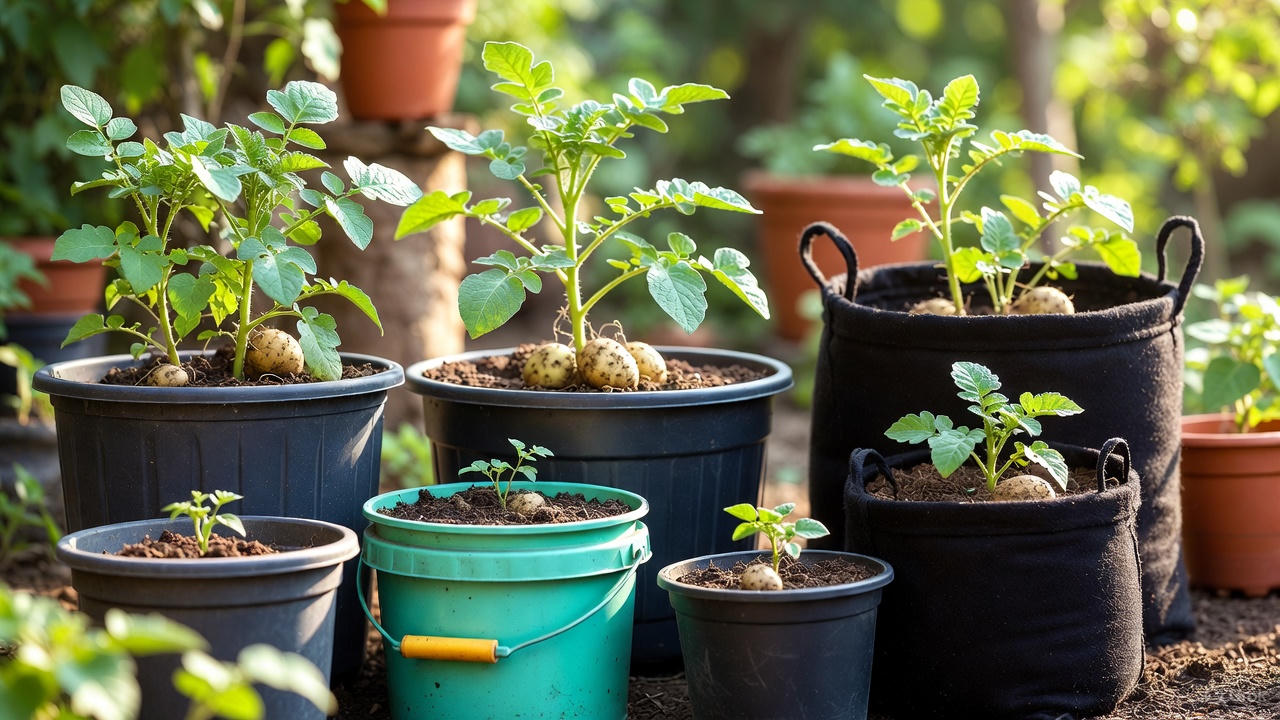
Growing potatoes in containers has become a popular method for home gardeners who want fresh, organic produce without needing a large backyard. Container gardening offers flexibility, better soil control, and easier harvesting compared to traditional ground planting. This comprehensive guide reviews the top potato growing bags available today, helping you make an informed decision for your home garden.
In this article
Why Container Growing Works Perfectly for Potatoes
Potatoes thrive in loose, well-draining soil that allows their tubers to expand freely. Traditional garden beds often have compacted soil that restricts growth and makes harvesting difficult. Grow bags solve these problems by providing excellent drainage, preventing waterlogging, and creating an environment where roots can breathe properly.
The aeration fabric used in quality grow bags promotes healthy root development through a process called air pruning. When roots reach the bag’s edges, they’re naturally pruned by exposure to air, which encourages the plant to develop more fibrous roots. This results in stronger plants and better potato yields.
Temperature regulation is another key benefit. Fabric containers prevent roots from overheating during hot summer days, unlike plastic pots that can cook your plants. The breathable material helps maintain consistent soil temperature, which is crucial for optimal tuber formation.
Top 5 Potato Growing Containers Reviewed
1. Cavisoo 5-Pack 10 Gallon Potato Grow Bags
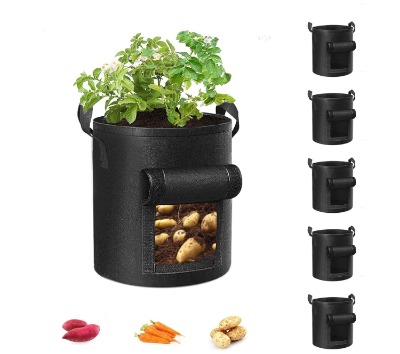
The Cavisoo grow bags offer excellent value for gardeners who want to start multiple potato plants simultaneously. These bags use thickened nonwoven fabric that stands up well to outdoor conditions and multiple growing seasons.
Product Description:
Each bag in this 5-pack holds 10 gallons of soil, providing ample space for 2-3 potato seed pieces. The reinforced handles make moving filled bags easy, even when the soil is wet and heavy. The nonwoven fabric material allows excellent airflow to roots while maintaining structural integrity throughout the growing season.
The bags measure approximately 12 inches in diameter and 14 inches in height, creating the ideal depth for potato plants to develop multiple layers of tubers. The material is UV-resistant, so it won’t break down quickly under constant sun exposure.
Pros:
- Five bags give you the ability to grow different potato varieties
- Reinforced handles support heavy loads without tearing
- Thickened fabric resists punctures and wear
- Affordable price point for a complete set
- Good drainage prevents root rot issues
- Compact size works well on balconies and small spaces
Cons:
- No harvest window makes checking potato readiness more difficult
- Requires completely emptying the bag during harvest
- Handles could be slightly longer for easier carrying
- Black color absorbs more heat in very sunny locations
Best For:
Home gardeners who want to experiment with multiple potato varieties and need a budget-friendly option to start container gardening.
2. OPPOLIFE 4-Pack 10 Gallon Potato Grow Bags with Flap Window
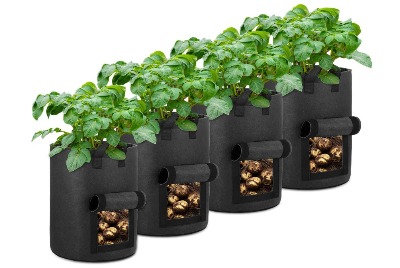
The OPPOLIFE grow bags introduce a game-changing feature: the harvest flap window. This design allows you to check potato development and harvest mature tubers without disturbing the entire plant.
Product Description:
These heavy-duty aeration fabric pots combine durability with functionality. The flap window design uses a velcro closure system that seals securely during growth but opens easily when you want to harvest. Each 10-gallon bag can accommodate 2-3 seed potatoes comfortably.
The double-stitched handles attach at reinforced points, distributing weight evenly across the bag. The fabric uses a tight weave that retains soil while allowing water to drain freely. The bags maintain their shape well, even when filled to capacity.
Pros:
- Harvest window lets you pick mature potatoes without uprooting plants
- Young potatoes can continue growing while you harvest larger ones
- Heavy-duty fabric withstands multiple seasons
- Strong handle construction supports filled bags securely
- Excellent drainage system prevents waterlogged soil
- Easy to fold and store during off-season
Cons:
- Four-pack offers fewer bags than some competitors
- Velcro closure may collect soil and require occasional cleaning
- Slightly higher price point than basic bags
- Window placement works best for larger potatoes near the bottom
Best For:
Gardeners who want the convenience of continuous harvesting and prefer not to disturb their plants during the growing season.
3. PAMAZY 4-Pack 15 Gallon Potato Grow Bags with Dual Windows
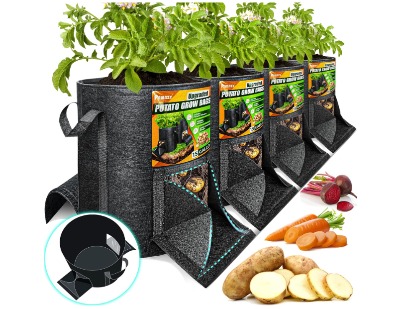
PAMAZY takes the windowed design concept further by including both a harvest window and a visible window. This upgraded approach gives you maximum control over your potato growing experience.
Product Description:
The 15-gallon capacity makes these bags ideal for larger potato plants or growing 3-4 seed pieces per container. The unique dual-window system includes a low harvest window for removing mature potatoes and a transparent visible window that lets you monitor tuber development without opening the bag.
The non-woven fabric uses a premium grade material that balances breathability with durability. Sturdy handles feature reinforced stitching at multiple attachment points. The bags stand upright even when partially filled, making soil addition and plant care easier.
At approximately 14 inches in diameter and 16 inches tall, these containers provide excellent vertical space for hilling potatoes as they grow.
Pros:
- Visible window lets you check growth progress without disturbing roots
- Larger 15-gallon size accommodates more plants or larger varieties
- Dual window design offers maximum harvesting flexibility
- Premium fabric quality resists tears and degradation
- Reinforced handles hold up to heavy, wet soil
- Better yield potential compared to smaller containers
Cons:
- Larger size requires more soil to fill completely
- Heavier when filled, making relocation more challenging
- Higher initial investment compared to basic grow bags
- Visible window may fade over time with sun exposure
Best For:
Serious potato growers who want maximum yield per container and appreciate the ability to monitor plant development visually.
4. VIVOSUN 5-Pack 15 Gallon Plant Grow Bags
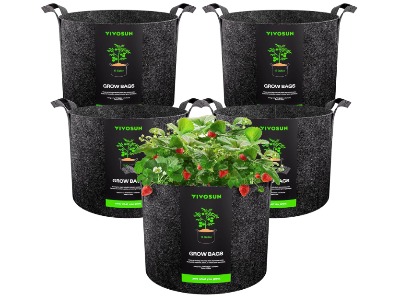
VIVOSUN offers a straightforward, no-frills approach to container gardening with bags that focus on durability and simplicity. These bags work excellently for potatoes and various other vegetables.
Product Description:
The heavy-duty thickened nonwoven fabric in these 15-gallon bags creates a robust growing environment. While they lack harvest windows, the material quality surpasses many competitors. The fabric uses a dense weave that prevents soil spillage while maintaining excellent drainage characteristics.
Double-layered handles wrap around the bag body, distributing weight across a larger surface area. This design prevents the common problem of handles tearing away from bag walls. The bags hold their cylindrical shape well, even in windy conditions.
The 15-gallon capacity gives potato plants plenty of room to develop extensive root systems and multiple tuber layers. Each bag measures roughly 14 inches in diameter and 16 inches in height.
Pros:
- Exceptional fabric thickness ensures long-lasting durability
- Superior handle construction withstands heavy use
- Five-bag pack provides great value at this size
- Works equally well for various vegetables beyond potatoes
- Maintains shape better than thinner fabric alternatives
- Professional-grade quality at consumer-friendly prices
Cons:
- Absence of harvest windows requires complete dumping
- Harvesting disturbs and ends the growing cycle
- Black fabric can heat up significantly in direct sun
- Slightly bulkier to store when empty
Best For:
Gardeners who prioritize durability and plan to harvest entire plants at once, or those growing multiple crop types in similar containers.
5. Visible Potato Grow Bags 10 Gallon with Flap 3-Pack
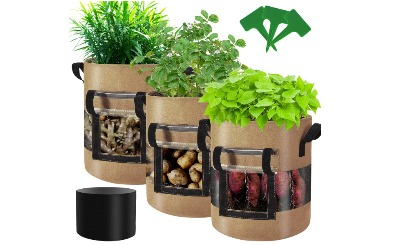
This three-pack combines the convenience of harvest flaps with a visible inspection space, offering a middle-ground option between basic bags and premium designs.
Product Description:
The 10-gallon capacity suits most potato varieties well, providing sufficient depth for good yields without requiring excessive soil volume. The flap window uses a durable velcro system that opens smoothly for harvesting. The visible space feature allows light to reach the inspection area, so you can see potato development through the fabric.
Heavy-duty thickened aeration fabric ensures these bags last through multiple growing seasons. The nonwoven material promotes excellent root health through natural air pruning. Reinforced handles attach at multiple points for secure carrying.
These bags also work beautifully for tomatoes and strawberries, making them versatile additions to any container garden.
Pros:
- Visible space feature provides growth monitoring capability
- Harvest flap enables selective picking of mature potatoes
- Thickened fabric offers durability and root protection
- Versatile design works for multiple crop types
- Reasonable three-bag pack size for small to medium gardens
- Good balance between features and affordability
Cons:
- Three bags may not be enough for larger households
- Visible space effectiveness depends on potato positioning
- 10-gallon size limits maximum yield per container
- Velcro may need occasional maintenance
Best For:
Gardeners who want modern features like harvest windows and growth monitoring without investing in the largest container sizes.
How to Choose the Right Potato Growing Container
Size matters when selecting grow bags. Ten-gallon containers work well for determinate potato varieties that stop growing at a certain height. Fifteen-gallon bags suit indeterminate varieties that continue growing throughout the season, producing potatoes along a taller stem.
Fabric quality directly impacts bag longevity and plant health. Thicker fabrics resist tearing, maintain shape better, and last multiple seasons. Look for bags with fabric weight around 300 GSM (grams per square meter) for optimal durability.
Handle construction deserves careful consideration. Double-stitched handles attached at multiple reinforcement points prevent the frustrating experience of handles tearing when moving filled bags. Test the handles by lifting the bag when empty to assess construction quality.
Harvest windows add tremendous convenience, especially if you want to practice continuous harvesting. This technique involves removing mature potatoes while leaving smaller ones to continue developing. Without harvest windows, you must dump the entire bag, ending the growing cycle.
Color affects temperature management. Black bags absorb heat, which can benefit cool-climate gardeners but may overheat plants in hot regions. Some manufacturers offer lighter colors that reflect more sunlight, keeping roots cooler during peak summer.
Setting Up Your Potato Growing Containers
Soil preparation starts with choosing the right growing medium. A mixture of quality potting soil, compost, and perlite creates ideal conditions. Aim for a ratio of 60% potting soil, 30% compost, and 10% perlite. This combination provides nutrients, organic matter, and excellent drainage.
Never use garden soil directly in grow bags. It compacts too easily and often contains weed seeds, pests, or diseases. Quality potting mix stays fluffy and allows proper root development.
Fill your bag about one-third full initially. Place 2-3 seed potatoes on the soil surface, spacing them evenly. Cover with 3-4 inches of soil mix. As shoots emerge and reach 6-8 inches tall, add more soil until only the top leaves remain exposed. This process, called hilling, encourages the plant to develop potatoes along the buried stem.
Continue hilling as the plant grows, eventually filling the bag to within 2-3 inches of the rim. This technique maximizes your potato yield by creating multiple layers of tuber development.
Drainage holes aren’t necessary with fabric grow bags since the permeable material allows water to escape naturally. However, place bags on surfaces where drainage won’t cause problems, like gravel areas or large saucers.
Watering and Feeding Container-Grown Potatoes
Container potatoes need consistent moisture throughout their growing period. The soil should feel like a wrung-out sponge—moist but not soggy. Fabric bags dry out faster than traditional containers, especially during hot weather.
Check moisture levels daily by sticking your finger 2 inches into the soil. Water thoroughly when the top 2 inches feel dry. Deep watering encourages roots to grow downward rather than staying near the surface.
Overwatering causes more problems than underwatering. Soggy soil leads to rot, disease, and poor tuber development. The excellent drainage of fabric grow bags helps prevent these issues, but you must still monitor watering carefully.
Feed container potatoes every two weeks once plants are established. Use a balanced organic fertilizer or one slightly higher in phosphorus to encourage tuber formation. Compost tea makes an excellent liquid feed that provides both nutrients and beneficial microorganisms.
Stop fertilizing when plants begin flowering, as this signals the start of tuber development. Excess nitrogen at this stage promotes leaf growth at the expense of potato formation.
Managing Common Potato Growing Challenges
Pests can affect container potatoes just like garden-grown plants. Colorado potato beetles are the most common culprit. Hand-picking beetles and crushing egg clusters provides effective organic control. Neem oil spray works as a deterrent when applied regularly.
Aphids sometimes infest potato foliage, but a strong water spray usually dislodges them. Introducing beneficial insects like ladybugs provides natural pest control.
Diseases occur less frequently in containers than in ground plantings, especially when you use fresh soil each season. However, blight can still strike during humid conditions. Remove affected leaves immediately and avoid overhead watering to reduce disease spread.
Sunscald happens when tubers near the soil surface get exposed to light. Always maintain adequate soil cover over developing potatoes. Add more soil if you notice any tubers peeking through.
Small yields often result from insufficient hilling, inadequate watering, or poor soil quality. Following proper growing techniques and using quality materials ensures satisfactory harvests.
Harvesting and Storing Your Container Potatoes
Harvest timing depends on whether you want new potatoes or mature storage potatoes. New potatoes can be harvested anytime after plants flower, typically 10-12 weeks after planting. These thin-skinned potatoes taste sweet and tender but don’t store well.
For mature storage potatoes, wait until foliage dies back naturally. This process usually takes 15-20 weeks from planting. The dying foliage signals that tubers have reached full size and developed thick skins suitable for long-term storage.
Bags with harvest windows make checking potato size easy. Simply open the flap and feel around for mature tubers. Remove the largest potatoes while leaving smaller ones to continue growing.
Without harvest windows, you’ll dump the entire bag when ready to harvest. Stop watering for a week before harvest to let soil dry somewhat. This makes dumping easier and allows potato skins to cure slightly.
Cure harvested potatoes by storing them in a dark, well-ventilated area at 50-60°F for two weeks. This process thickens skins and heals any minor cuts or bruises. After curing, store potatoes in a cool, dark place around 40°F with good airflow.
Never wash potatoes before storage. Brush off excess soil and store them with skins dry. Washing removes the protective layer and promotes rot.
Seasonal Container Care and Maintenance
At season’s end, empty used soil from bags and compost it. Don’t reuse potato soil for growing potatoes again, as this increases disease risk. The soil works fine for other vegetables or flowers.
Clean empty bags by shaking out remaining soil and hosing them down. Let bags dry completely before storing. Folded dry bags take up minimal space and will be ready for next season.
Inspect bags for damage before storage. Small tears can be repaired with heavy-duty thread or duct tape. Replace severely damaged bags rather than risking plant loss during the growing season.
Store bags in a dry location protected from rodents. A shed, garage, or basement works well. Proper storage extends bag life significantly, making quality grow bags a worthwhile investment.
In warm climates where soil doesn’t freeze, you can grow potatoes during cooler months. This extends your harvest season and provides fresh potatoes when grocery store prices peak.
Maximizing Yield in Potato Grow Bags
Plant spacing affects yield significantly. Cramming too many seed potatoes into one bag leads to competition for nutrients and water, resulting in smaller harvests. Stick to 2-3 seed potatoes per 10-gallon bag or 3-4 per 15-gallon container.
Seed potato size matters too. Pieces should be roughly egg-sized, each containing at least two eyes. Smaller pieces may not have enough energy to produce strong plants. Larger pieces waste seed potato without increasing yields proportionally.
Variety selection impacts success. Determinate varieties like Yukon Gold work well in 10-gallon bags. Indeterminate varieties like Russet Burbank benefit from 15-gallon containers that accommodate their continued upward growth.
Proper hilling technique is crucial. Each time you add soil around growing stems, you create opportunities for more potatoes to form. Plants can produce multiple layers of tubers if hilled correctly throughout the growing period.
Sunlight requirements can’t be compromised. Potato plants need at least 6-8 hours of direct sun daily for optimal tuber production. Place bags in your sunniest location for best results.
Cost Analysis and Long-Term Value
Quality grow bags represent a smart investment for home gardeners. A basic 5-pack of 10-gallon bags costs less than constructing a raised bed and can be reused for several seasons. The portability adds value that fixed beds can’t match.
Fabric bags typically last 3-5 seasons with proper care. This means your per-season cost drops significantly over time. Compare this to annual expenses for wood treatment or replacement boards in raised beds.
The yield from container potatoes often surprises new growers. A well-maintained 10-gallon bag can produce 5-8 pounds of potatoes. A 15-gallon bag may yield 10-15 pounds. At current grocery prices, your investment pays for itself quickly.
Premium bags with harvest windows cost more initially but save time and effort throughout the growing season. The ability to harvest selectively extends your fresh potato supply rather than dealing with a single large harvest.
Soil costs should factor into your calculations. Each 10-gallon bag requires approximately 1.3 cubic feet of soil mix. Buying bulk soil and compost reduces per-bag costs significantly compared to purchasing small bags at garden centers.
Environmental Benefits of Container Growing
Fabric grow bags offer several environmental advantages over traditional gardening methods. The reusable nature reduces waste compared to disposable plastic pots. Quality bags last multiple seasons, minimizing your gardening footprint.
Water conservation happens naturally with fabric containers. The material prevents overwatering by allowing excess moisture to drain quickly. This efficiency matters increasingly in drought-prone regions.
Soil health improves through crop rotation made easy by movable containers. You can dedicate specific bags to potatoes while using others for different vegetables, preventing soil depletion and reducing disease buildup.
Many grow bags use recycled materials in their construction. Check product descriptions for eco-friendly manufacturing practices if sustainability matters to you.
Container gardening eliminates the need for tilling, which disrupts soil structure and releases stored carbon. Small-scale growing reduces transportation emissions associated with commercial potato production.
Troubleshooting Common Issues
Bags tipping over frustrate many container gardeners. Prevent this by placing bags against walls or fences when possible. You can also set bags inside slightly larger containers or crates for added stability.
Soil settling happens as organic matter decomposes. Top up bags with fresh soil mix as needed throughout the season. This maintains proper depth for tuber development.
Poor drainage usually indicates low-quality bags or compacted soil. Quality fabric bags drain naturally, so problems typically stem from heavy clay-based soil. Switch to proper potting mix rather than garden soil.
Weak plant growth often results from insufficient nutrients. Container soil exhausts nutrients faster than garden beds. Regular feeding with organic fertilizer keeps plants healthy and productive.
Bags drying out too quickly can be addressed by adding more compost to your soil mix. Compost improves water retention while maintaining good drainage. Mulching the soil surface also reduces evaporation.
Comparing Container Types
Fabric grow bags outperform plastic pots in several ways. The breathable material prevents root circling, a common problem in plastic containers where roots grow in circles around the pot edge. Air pruning in fabric bags creates healthier, more productive root systems.
Temperature regulation is superior with fabric. Plastic pots heat up quickly in sun, potentially damaging roots. Fabric maintains more consistent soil temperatures through insulation and evaporative cooling.
Traditional garden beds offer unlimited root space but lack portability. You can’t move beds if a location proves unsuitable. Grow bags let you experiment with different spots to find optimal conditions.
Wood containers look attractive but require maintenance to prevent rot. They’re also heavy and difficult to move when filled. Fabric bags fold flat for storage and move easily, even when planted.
Ceramic pots are beautiful but expensive, heavy, and prone to cracking in freezing temperatures. They also lack the drainage benefits of fabric containers. Use ceramic pots for ornamentals rather than productive vegetable gardening.
Advanced Growing Techniques
Succession planting in containers extends your harvest period. Start new bags every three weeks for a continuous supply of fresh potatoes. This technique works particularly well if you have multiple bags.
Companion planting benefits potatoes even in containers. Basil, marigolds, or nasturtiums planted around bag edges repel pests and attract beneficial insects. Ensure companion plants don’t compete excessively for nutrients and water.
Stacking bags vertically saves space on small balconies or patios. Place heavier, more stable 15-gallon bags on the bottom with lighter 10-gallon bags above. Ensure the arrangement remains stable and easy to water.
Mixing potato varieties in separate bags lets you enjoy different types throughout the season. Early-season varieties mature quickly, while late-season types provide autumn harvests. This diversity protects against total crop failure if one variety struggles.
Experimental growing methods like tower planting work well with certain bag designs. As plants grow, continue adding soil and stacking bags to create vertical growing systems. This technique remains controversial regarding effectiveness but appeals to space-limited gardeners.
Making the Final Decision
Your specific situation determines which potato growing container works best. Small space gardeners benefit from 10-gallon bags that fit on balconies or small patios. Those with more room might prefer 15-gallon bags for maximum yields.
Budget-conscious gardeners should consider basic 5-pack options without harvest windows. These deliver excellent value and perform well for traditional harvest methods. The money saved can go toward quality seed potatoes and soil amendments.
Convenience-focused gardeners appreciate harvest windows despite the higher cost. The ability to check potato development and harvest selectively justifies the premium price for many users.
Serious potato growers benefit from investing in multiple sizes and styles. Use 10-gallon bags for early varieties and 15-gallon containers for storage potatoes. This approach optimizes growing conditions for different potato types.
Climate influences material preferences. Hot regions benefit from lighter-colored bags that reflect heat. Cool areas may prefer black bags that absorb warmth and promote growth in shorter seasons.
Conclusion
Growing potatoes in containers opens up gardening possibilities for everyone, regardless of available space. The products reviewed here represent the best options currently available, each with specific strengths suited to different gardening situations.
The Cavisoo 5-pack offers unbeatable value for beginners wanting to grow multiple plants affordably. OPPOLIFE bags provide the convenience of harvest windows at a reasonable price. PAMAZY takes functionality further with dual-window designs perfect for serious growers. VIVOSUN delivers professional-grade durability in a simple, effective package. The visible potato grow bags strike a nice balance between features and affordability.
Success with container potatoes depends more on proper technique than expensive equipment. Focus on quality soil, consistent watering, adequate sunlight, and proper hilling. Any of these reviewed bags will perform well when you follow proven growing methods.
The joy of pulling fresh potatoes from your own containers beats anything from a grocery store. You control what goes into your soil, eliminating concerns about pesticides or chemical fertilizers. The taste of homegrown potatoes will convert even skeptical family members into container gardening enthusiasts.
Start with a few bags this season to learn what works in your specific conditions. Experiment with different varieties and techniques. Container potato growing rewards attention and care with abundant harvests that justify the initial investment many times over.
Your successful potato harvest begins with selecting the right container for your needs. Consider your space, budget, and preferred harvest method when making your choice. Then get growing and enjoy the satisfaction of producing your own delicious, nutritious potatoes right at home.
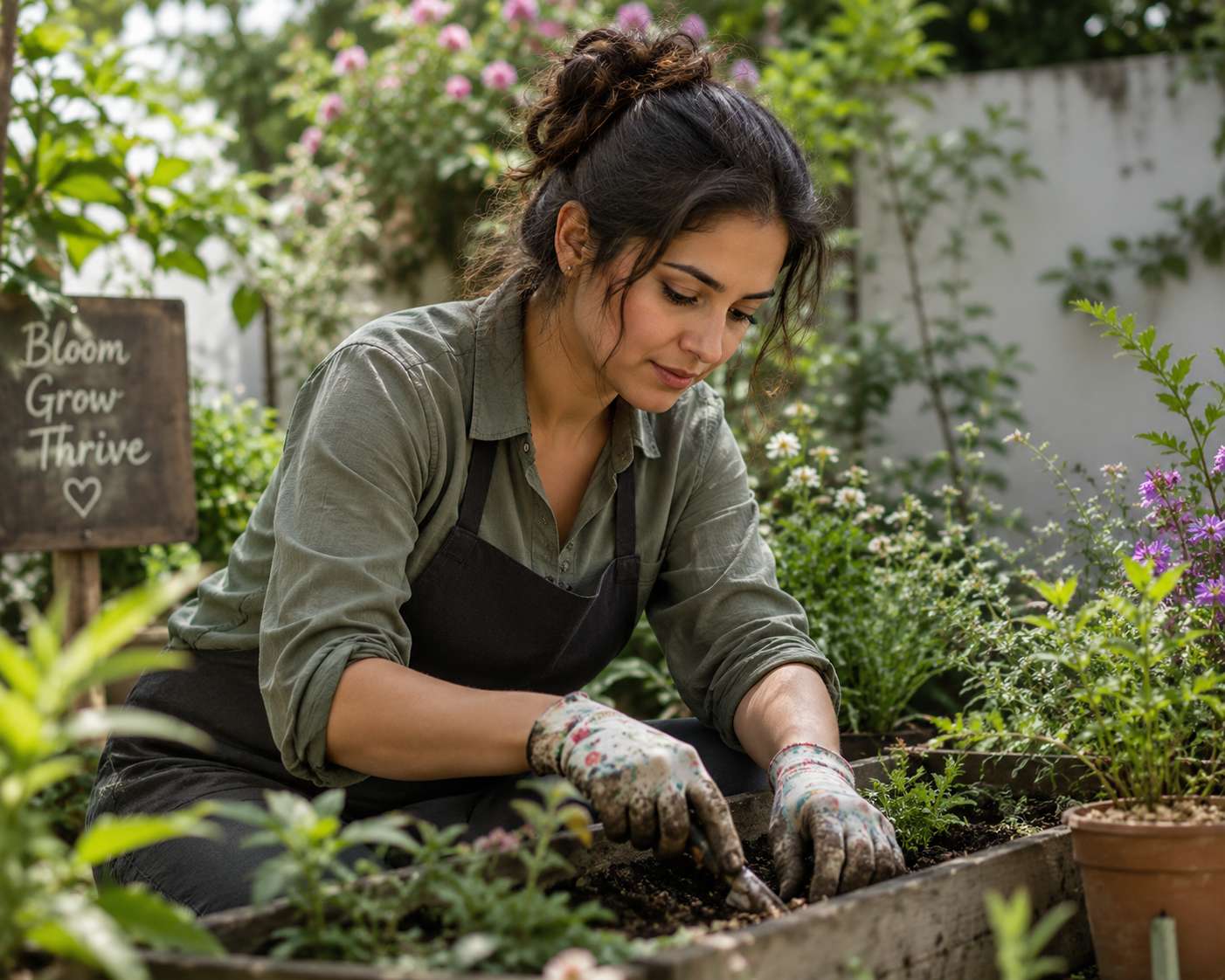
Hi, I’m Mary, the founder of GardenCure.com. I’m passionate about creating healthy, beautiful gardens and well-kept lawns. I share practical experience and trusted advice on garden and lawn gear that truly works. With the support of my dedicated research team, our writers produce honest, in-depth reviews using reliable, authentic sources—helping you choose the right tools with confidence for your outdoor space.