5 Best Organic Fertilizer for Indoor Plants In 2026
Indoor plants have become a huge part of home decoration and wellness. People love bringing greenery into their apartments, offices, and living rooms. But here’s the thing—keeping these plants healthy requires more than just water and sunlight. Your indoor plants need proper nutrition to thrive, and that’s where organic fertilizers come in.
In this article
If you’re new to the world of plant care, you might feel overwhelmed by the fertilizer options out there. Do you need organic or synthetic? Liquid or solid? What even is NPK? Don’t worry. I’ve tested and researched five top-rated organic fertilizers that work great for indoor plants, and I’m breaking down everything you need to know to pick the right one for your setup.
Why Organic Fertilizers Matter for Indoor Plants
Before diving into the actual products, let’s talk about why you might want to go organic with your indoor plant care routine. Organic fertilizers come from natural sources like plants, animals, and minerals. They work differently than chemical fertilizers because they release nutrients slowly over time.
This slow-release approach has real benefits for indoor plants. First, it reduces the risk of fertilizer burn, which happens when too many salts build up in the soil and damage the roots. Second, organic fertilizers often improve your soil health by feeding the good microbes that live in the dirt. Third, they’re safer to use around pets and kids since they don’t contain harsh synthetic chemicals.
Indoor plants have different feeding needs than outdoor plants because they can’t get nutrients from rain or soil organisms the same way. They live in containers with limited soil volume, so they rely on us to give them what they need. A good organic fertilizer becomes part of your regular plant care routine, helping your green friends stay strong and beautiful year after year.
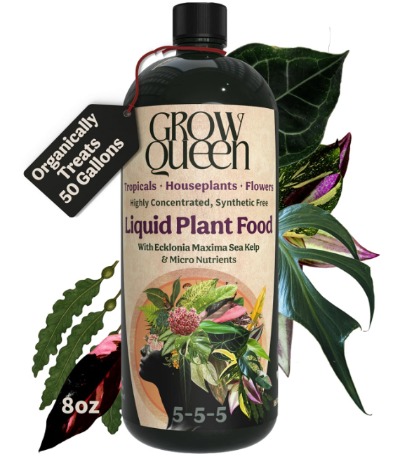
Organic Liquid Indoor Plant Food (5-5-5 with Sea Kelp)
Product Overview
This all-purpose organic fertilizer comes in an 8-ounce bottle that treats up to 50 gallons of water. It’s formulated with a balanced 5-5-5 NPK ratio, which means it contains 5% nitrogen, 5% phosphorus, and 5% potassium. The formula also includes sea kelp, which adds trace minerals and natural growth hormones that help plants bounce back from stress.
The product is certified organic and works for all types of indoor plants, from tropical varieties to standard houseplants. The liquid format makes it easy to mix with water and apply without any mess or guesswork.
Best Use Cases
This fertilizer shines when you have a mixed collection of indoor plants and want one solution that works for everything. It’s perfect for common houseplants like pothos, philodendrons, spider plants, and peace lilies. The balanced nutrient ratio means you’re not over-feeding blooming plants or under-feeding leafy foliage plants.
The sea kelp component makes this especially useful for plants that show signs of stress or slow growth. If you notice your plants looking tired or not growing as fast as you’d like, this formula can help perk them up without causing damage.
Key Features Explained
The 5-5-5 ratio is considered balanced because all three main nutrients are present in equal amounts. This works well for general plant health. The nitrogen supports leaf growth, phosphorus strengthens roots and flower production, and potassium boosts overall plant vigor.
Sea kelp is the real standout ingredient here. It contains natural compounds called cytokinins that encourage cell growth and branching. It also helps plants handle stress from environmental changes like temperature swings or dry air—two things indoor plants deal with constantly.
The liquid format means nutrients are already in a form plants can absorb quickly, but the organic source ensures slow, steady feeding. You get the best of both worlds: fast results without the risk of burning roots.
Real-Life Usage Insight
People using this fertilizer report noticing improvements in plant health within two to three weeks of regular applications. Users say their plants look greener and produce new growth more actively. One common observation is that plants seem to recover faster if they were struggling before feeding started.
The dosing is straightforward—most people dilute it in water and apply once every two weeks during the growing season. The small bottle size means you’ll need to reorder fairly often if you have a lot of plants, but the cost per application stays reasonable.
Honest Pros and Cons
Pros:
- Works for all types of indoor plants with one bottle
- Sea kelp adds extra benefits beyond basic nutrients
- Liquid format is easy to mix and apply
- Treats 50 gallons, so one bottle lasts a decent amount of time
- Organic ingredients feel safe for family and pets
- Clear dosing instructions on the label
Cons:
- The small 8-ounce bottle runs out quickly if you have many plants
- Sea kelp can have a strong smell that some people dislike
- Price per ounce is higher compared to larger containers of other brands
- Not specifically formulated for heavy bloomers or flowering plants
- Requires weekly or bi-weekly applications during growing season
Performance Discussion
This fertilizer delivers solid, reliable results. People see steady growth in their plants without any signs of nutrient deficiency or root burn. The balanced formula means you’re unlikely to create problems by over-feeding one nutrient while starving others.
The sea kelp component really does make a difference, especially for older plants or those recovering from neglect. Plants visibly perk up and produce new leaves more eagerly when this fertilizer is part of their routine.
However, it’s not a miracle worker. If your plant is dying because of poor lighting or watering issues, fertilizer won’t fix those problems. It works best as part of a complete plant care routine where you’re also getting the basics right.
Ease of Use
This is one of the easiest fertilizers to use on this list. Just mix the recommended amount into your watering can and feed your plants during watering time. No special equipment needed. The bottle has a clear label with dosing information, so there’s no guessing.
The small bottle size makes it easy to store in a cabinet or shelf without taking up much space. You can keep it near your plants for quick applications.
Value for Money
At first glance, this might seem pricey since it’s a small bottle. But when you consider that it treats 50 gallons and the concentrated formula means you’re not mostly paying for water, the cost per application is fair. If you have between five and fifteen indoor plants, this bottle will last you one to two months.
For someone just getting started with plant care, this is a good choice because you’re not locked into buying huge bottles if you end up not using it regularly.
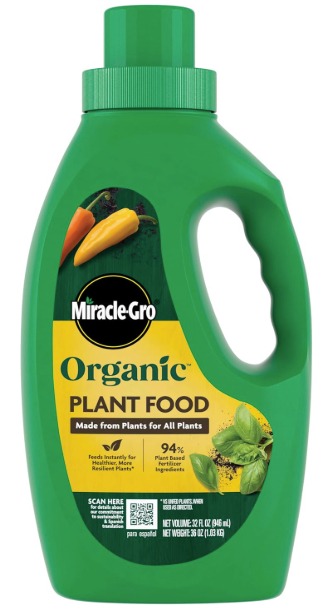
Miracle-Gro Organic Plant Food (32 fl. oz.)
Product Overview
Miracle-Gro’s organic option comes in a convenient 32-ounce bottle, which is four times larger than the previous product. This liquid fertilizer carries OMRI (Organic Materials Review Institute) certification, meaning it meets strict organic standards. It works equally well for indoor and outdoor plants, so if you have both, one product covers everything.
The formula is designed to work with both container gardens and in-ground gardens, though our focus here is on the indoor application. The nutrient ratio isn’t prominently advertised, but the formula focuses on supporting overall plant health and vigor.
Best Use Cases
This fertilizer is ideal for people who have numerous indoor plants and need a cost-effective solution that lasts a long time. The larger bottle size means you can feed many plants throughout several months without running out.
It’s also a smart choice if you have a mix of indoor and outdoor plants and want one fertilizer that handles both situations. You’re not buying multiple products for different environments.
Gardeners who’ve been growing plants for a while appreciate this because it simplifies their plant care routine. One bottle covers all the bases, regardless of plant type or location.
Key Features Explained
This fertilizer breaks down organic materials to release nutrients gradually. The formula supports plant health through multiple feeding cycles without the harsh salts that can build up with synthetic options.
The OMRI certification matters because it means independent testing confirms the ingredients are truly organic and suitable for certified organic gardening. If you care about the integrity of the “organic” label, this certification is important.
The liquid consistency allows for easy mixing, and the larger volume means you’re diluting less and getting more applications per bottle compared to smaller options.
Real-Life Usage Insight
Users report that Miracle-Gro Organic works well for consistent, steady plant growth. The feedback leans toward satisfaction with how long one bottle lasts and how easily it mixes into water. People appreciate not having to constantly replace bottles.
The only consistent feedback concern is that it takes a few weeks to see noticeable changes in plant appearance. This is actually normal for organic fertilizers since they work more gradually than synthetic versions, but it means patience is required.
Honest Pros and Cons
Pros:
- Large 32-ounce bottle offers excellent value
- OMRI certified for legitimate organic status
- Works for both indoor and outdoor plants
- Easy to apply with simple dilution instructions
- Long-lasting supply for moderate plant collections
- Well-established brand with good reputation
Cons:
- Slightly heavier bottle can be awkward to handle
- Results take longer to show than chemical fertilizers
- Less specialized for particular plant types
- Takes up more storage space than smaller bottles
- Generic formula rather than plant-specific options
- Some people report slower growth results than premium brands
Performance Discussion
This fertilizer delivers reliable, steady performance across different plant types. It won’t blow you away with dramatic growth spurts, but it provides consistent nutrition that keeps plants healthy and growing at a normal pace.
The larger volume means you can feed your plants regularly throughout several months without stress about running out. For most indoor plant owners with moderate collections, this translates to an affordable, maintenance-free fertilizer routine.
Ease of Use
Miracle-Gro Organic is exceptionally easy to use. Mix it with water according to the label directions and apply during your regular watering schedule. No special techniques or equipment needed. The simple instructions make it perfect for beginners.
The large bottle means fewer trips to replace empty containers, which is a nice convenience factor.
Value for Money
This is one of the best values on the list. The 32-ounce bottle at a reasonable price point means your cost per application is very low. If you have more than five indoor plants, this offers better economics than smaller bottles.
The dual indoor-outdoor functionality adds value because you’re not buying separate products. One bottle does double duty for your entire plant collection.
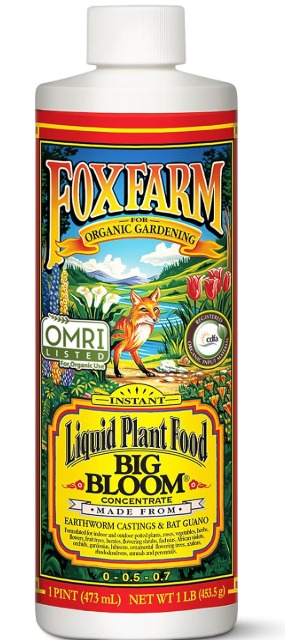
Fox Farm Big Bloom Liquid Plant Food (0-0.5-0.7 NPK)
Product Overview
Fox Farm Big Bloom is a specialized blooming fertilizer that comes in a one-pint bottle. The NPK ratio of 0-0.5-0.7 tells you this formula prioritizes phosphorus and potassium over nitrogen. This nutrient balance is specifically designed to encourage flowering and fruiting in plants.
The formula includes earthworm castings and bat guano, two powerful organic ingredients that provide slow-release nutrients plus beneficial microbes. These ingredients have been used by serious gardeners for generations because they work incredibly well.
This fertilizer takes a different approach than the previous two—it’s not an all-purpose formula but rather a specialized option for plants that you want to bloom.
Best Use Cases
This is the go-to fertilizer if you have indoor flowering plants like African violets, orchids, jasmine, or any houseplants you’re trying to get to bloom. The nutrient ratio specifically supports flower production and development.
It’s also useful for indoor plants that produce fruit or berries, like dwarf citrus or ornamental peppers. If you want your plants to reach their full flowering potential, this formula does that better than generic options.
People who want to push their plants toward blooming rather than just leafy growth should choose this one. It works especially well during the blooming season when plants naturally want to flower.
Key Features Explained
The 0-0.5-0.7 ratio is low in nitrogen because too much nitrogen pushes plants toward leaf growth at the expense of flowers. The higher phosphorus and potassium support bud formation and flower strength.
Earthworm castings are essentially worm poop, which sounds gross but is actually plant gold. Castings contain beneficial microbes, enzymes, and nutrients that become available to plants slowly. They improve soil structure and increase beneficial microbial activity in your containers.
Bat guano is another time-tested ingredient that provides phosphorus, which directly supports flowering. Combined with the earthworm castings, you get a powerful organic duo that encourages blooming while supporting overall plant health.
Real-Life Usage Insight
Plant enthusiasts using Fox Farm Big Bloom report seeing more flower buds appear when they switch to this formula during blooming season. People with orchids and African violets specifically notice improved flowering frequency and bud count.
The downside that users mention is that you really do notice the earthworm castings and bat guano in the smell—it’s earthy and strong. Some people find it off-putting, while others actually like that earthy, natural smell as a sign that the product is genuinely organic.
The results are worth it for people targeting blooming plants, but it’s not a general-purpose fertilizer. You’ll probably want to use something else for plants you’re not trying to get to flower.
Honest Pros and Cons
Pros:
- Specialized for flowering and fruiting plants
- Earthworm castings and bat guano are proven ingredients
- Powerful organic formula encourages more blooms
- One pint provides many applications for blooming plants
- Great for orchids, African violets, and other specialized houseplants
- Builds soil biology in your containers
Cons:
- Strong smell that bothers some people
- Not suitable as an all-purpose fertilizer
- Concentrated formula means small bottle volume
- Overkill if you have mostly foliage plants
- Higher price point than general-purpose options
- Requires knowing when to switch to this fertilizer during blooming season
Performance Discussion
For plants you’re actively trying to get to bloom, this fertilizer simply works better than generic options. The nutrient ratio is specifically calibrated for flower production, and the earthworm castings and bat guano make a real difference in bud count and flower quality.
Users consistently report more abundant and longer-lasting blooms when they use this during the appropriate season. It won’t make a plant bloom if it’s not getting enough light or if the plant isn’t old enough to flower, but it maximizes the blooming potential that the plant already has.
Ease of Use
Using Fox Farm Big Bloom requires a bit more thought than generic fertilizers because timing matters. You’ll want to switch to this formula when your plants enter their blooming season, then potentially switch back to a more balanced formula afterward.
The actual application is straightforward—mix and apply like any other liquid fertilizer. But the strategy of when to use it adds a small layer of planning.
Value for Money
The price is higher than all-purpose options, but for people specifically growing blooming houseplants, the investment pays off in better results. If you have mostly flowering plants, the cost per bloom is actually reasonable when you consider the improved flower production you’ll get.
For someone with mostly foliage plants and just a few bloomers, it’s probably not worth buying both this and an all-purpose fertilizer. Pick whichever matches your plant collection better.
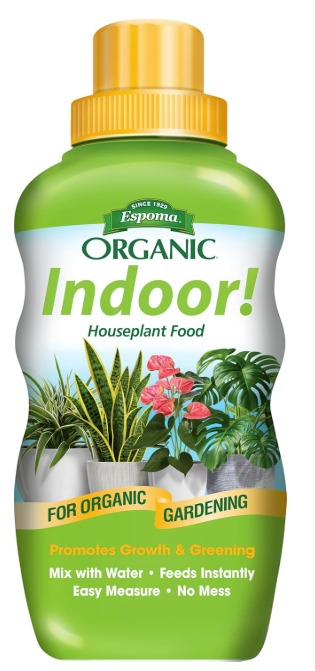
Espoma Organic 8 Ounce Concentrated Indoor Plant Food
Product Overview
Espoma makes a concentrated indoor plant food specifically designed for houseplants. The 8-ounce bottle contains highly concentrated formula, so a little goes a long way. Espoma is known for making quality organic gardening products, and this indoor option lives up to that reputation.
The formula is created to work with common houseplants like pothos, fiddle leaf figs, monsteras, snake plants, and palms. These are some of the most popular indoor plants, so if you’re growing any of these, this fertilizer has your needs in mind.
Best Use Cases
This fertilizer is perfect if you have a moderate collection of common houseplants and want something specifically formulated for that purpose. The formula addresses the needs of the plants that most people keep indoors.
It’s also an excellent choice if you love fiddle leaf figs, monsteras, or pothos and want a product designed specifically around those plants’ nutritional needs. The formula considers how these plants grow and what they need to thrive.
If you prefer concentrates where you dilute less frequently than with other products, this appeals to you because the concentration level means longer shelf life and slower consumption.
Key Features Explained
The concentrated formula means you use smaller amounts per application, which makes one bottle last significantly longer. You’re not buying water—you’re buying the active ingredients, and that matters for your wallet.
The formula is created specifically for the nutritional needs of common houseplants rather than being a generic all-purpose option. This targeted approach means the nutrient ratio and supplement ingredients work exactly with what these popular plants want.
The product supports plants in containers, accounting for the fact that potted plants have limited soil volume and rely entirely on you for nutrition. The formula delivers what potted houseplants need to stay healthy in confined root space.
Real-Life Usage Insight
People using Espoma’s indoor formula report that their common houseplants respond well to it. Monsteras show bigger leaves and faster growth. Pothos develops longer vines and healthier leaf color. Fiddle leaf figs visibly perk up and produce new leaves more frequently.
The concentrated nature means you don’t use much product per application, so one bottle lasts surprisingly long. People appreciate that they’re not constantly buying replacement bottles.
The main feedback consideration is that it works best when combined with good light and proper watering. People with plants in low light or poorly watered won’t see dramatic results, but that’s true of any fertilizer.
Honest Pros and Cons
Pros:
- Concentrated formula makes one bottle last very long
- Specifically designed for popular houseplants
- Targets common indoor plants like monsteras and pothos
- High-quality Espoma brand reputation
- Efficient pricing when you factor in concentration
- Supports healthy growth in container plants
Cons:
- Small bottle can seem expensive at first glance
- Requires careful dilution because it’s concentrated
- Not suitable for blooming plants specifically
- Limited to common houseplants rather than all types
- Need to mix carefully to avoid using too much
- Strong concentration means little margin for error in measuring
Performance Discussion
This fertilizer delivers impressive results for the plants it’s designed for. Monsteras and pothos grow noticeably faster and fuller when fed with this formula. The results suggest the formula is genuinely calibrated for what these plants need.
The concentrated nature means better results per drop than dilute general-purpose formulas. You’re getting more actual nutrients rather than paying for water.
Ease of Use
The concentrated formula requires careful measuring to avoid giving your plants too much. You need to follow the dilution instructions precisely. This isn’t difficult, but it requires a bit more attention than pre-diluted formulas.
Once you understand the dilution ratio, application is simple. Mix, apply to soil, and water. The key is measuring correctly before mixing.
Value for Money
The upfront price looks high compared to larger bottles, but the concentration changes the equation. One bottle treats many more applications than a larger bottle of dilute formula. If you do the math per application, the value is excellent.
For someone with five to fifteen houseplants focused on common varieties, this offers the best cost efficiency on the list.
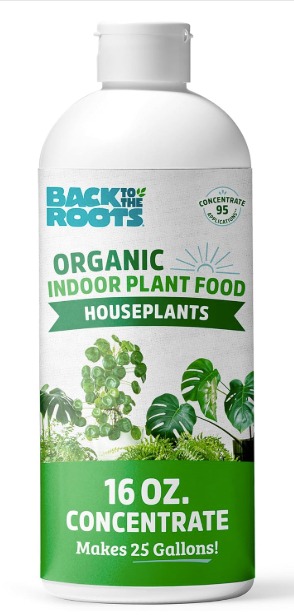
Back to the Roots Natural & Organic Indoor Plant Food (16oz Value Size)
Product Overview
Back to the Roots brings an 16-ounce bottle positioned as a value size with enough nutrients to support approximately 95 feedings. This company focuses on sustainable, natural products, and this fertilizer matches that philosophy. It’s formulated specifically for houseplants and emphasizes being vegan, low-odor, and easy to apply.
The formula works for typical houseplants that people grow indoors. It’s not specialized for blooming or specific plant types but rather aims to be a solid all-purpose option that works with the most common indoor plants.
Best Use Cases
This is ideal if you want a genuinely natural product with minimal smell that you don’t have to think much about. The low-odor aspect matters if you’re applying fertilizer indoors where you’ll be breathing the air.
It works well for people with moderate plant collections who want long-lasting bottles and simple application routines. The 16-ounce size offers a nice middle ground between small concentrated bottles and massive containers.
The value sizing and 95-feeding estimate make this suitable for people who want to know exactly how long a bottle will last with their particular plant collection.
Key Features Explained
The vegan aspect means the formula contains no animal by-products like bone meal or fish emulsion that traditional organic fertilizers often use. If you’re vegan yourself or prefer avoiding animal-based inputs, this appeals to you.
The low-odor formulation is significant because it uses organic ingredients that smell less than traditional options. You can apply this indoors without creating a smell that lingers in your house.
The 95-feeding estimate is helpful because it gives you a concrete idea of how long one bottle lasts. If you have ten plants you feed every two weeks, one bottle lasts roughly nine weeks. This helps with planning your purchase cycle.
Real-Life Usage Insight
People using Back to the Roots report good results with general plant health and growth. The low smell makes it genuinely pleasant to use indoors compared to earthworm castings or bat guano products. You can apply it without worrying about your living space smelling like a garden.
The liquid consistency mixes easily into water, and the easy-to-apply formula means no special techniques needed. People appreciate that they can quickly feed their plants without dealing with complex mixing or measuring.
Users note that results are steady but not dramatic. Plants grow and stay healthy, but you’re not seeing explosive growth spurts. This is appropriate for an all-purpose formula.
Honest Pros and Cons
Pros:
- Large 16-ounce bottle at good price point
- Low-odor formula ideal for indoor use
- Vegan ingredients appeal to some gardeners
- 95-feeding estimate helps with planning
- Easy to apply liquid formula
- Good for general houseplant health
- Sustainable company philosophy
Cons:
- Not specialized for particular plant types
- Results are steady but not dramatic
- Vegan formula might be missing some nutrient density
- Mid-range price doesn’t offer best value per ounce
- Generic approach rather than plant-specific formulation
- Takes several weeks to see visible improvement
Performance Discussion
This fertilizer does exactly what it promises: keeps houseplants healthy and growing at a steady pace. It’s not going to transform your plant collection or create dramatic growth spikes, but it maintains good health and supports normal plant growth cycles.
The nutrient delivery is reliable and won’t cause root burn or other problems. It’s a safe, effective option that works well with the everyday houseplants most people grow.
Ease of Use
This might be the easiest option on this list. Mix the liquid with water according to directions and apply. No complicated ratios, no dilution calculations, no timing considerations. Just straightforward, simple plant feeding.
The low smell means you can apply indoors without concern. Many products require better ventilation because of strong odors, but this one doesn’t.
Value for Money
The 16-ounce bottle at a moderate price point offers decent value, though it’s not the absolute best price per ounce on the list. The 95-feeding estimate helps you evaluate whether the cost fits your budget based on how many plants you have.
For someone who wants simplicity and decent value without needing to buy the smallest or largest options, this hits a sweet spot.
Comparison: Side-by-Side Overview
Let’s break down how these products compare across important dimensions:
Best Overall Value: Miracle-Gro Organic at 32 ounces offers the best cost per application for people with larger plant collections.
Best for Specialized Blooming: Fox Farm Big Bloom stands alone if you’re growing flowering houseplants and want to maximize blooms.
Best for Concentrated Efficiency: Espoma’s concentrated formula means the longest shelf life and smallest storage footprint per application.
Best for Low-Odor Use: Back to the Roots’ specifically low-odor formula is ideal if you apply fertilizer indoors frequently.
Best Balanced Formula: Organic Liquid Indoor Plant Food offers sea kelp benefits and balanced nutrients for general-purpose use.
The differences matter because they align with different plant collections and preferences. Someone with fifty houseplants and limited storage space makes a different choice than someone with five plants who wants specialized blooming support.
Complete Buying Guide for Organic Fertilizers
Step 1: Assess Your Plant Collection
Start by counting how many indoor plants you have and identifying what types they are. Do you mostly have foliage plants like pothos and snake plants? Do you grow flowering houseplants? Are you aiming to get non-blooming plants to flower?
The answers determine which fertilizer makes the most sense. A 50% blooming collection needs different nutrition than 95% foliage plants.
Step 2: Evaluate Your Storage Space
Consider where you’ll keep the fertilizer. Larger bottles like the 32-ounce Miracle-Gro need cabinet or shelf space. Smaller concentrated bottles like Espoma take up minimal room but require careful handling.
If you live in an apartment with limited storage, concentrated formulas win. If you have garage or shed space, larger bottles offer better value.
Step 3: Consider Odor Tolerance
Think honestly about where you’ll apply fertilizer and how much you care about smell. If you apply outdoors or in a well-ventilated space, any product works. If you apply indoors in living spaces, low-odor options like Back to the Roots or the sea kelp product are better choices.
Earthworm castings and bat guano create strong smells that some people love and others find overwhelming. Know yourself before committing.
Step 4: Calculate Feeding Frequency
Determine how often you want to feed your plants. Some people prefer weekly applications of dilute formula. Others prefer bi-weekly or monthly feeding. Concentrated products work differently than pre-diluted ones, affecting how often you apply.
Once you know your preferred schedule, match it with a product’s recommendations to ensure compatibility.
Step 5: Match Price with Needs
Work out your budget for plant fertilizer. Some people spend five dollars monthly; others spend fifteen. Figure your comfort level, then see which products fit that budget based on your plant count and feeding schedule.
Don’t automatically choose the cheapest option. Sometimes higher-priced concentrated formulas cost less per application than cheap dilute products.
Step 6: Check Your Water Quality
Hard water or very soft water affects how fertilizers work. Most products work fine with regular tap water, but if you have unusual water chemistry, certain products might work better than others. The sea kelp product helps with mineral-heavy water situations.
Step 7: Read the Fine Print
Look at the specific recommendations for each product. Some recommend feeding more frequently; others recommend fewer applications. Align the product’s recommendations with your lifestyle and commitment level.
Who Should Buy Each Product
Organic Liquid Indoor Plant Food: Best for people with mixed plant collections who want one all-purpose solution and appreciate sea kelp benefits.
Miracle-Gro Organic: Best for people with large plant collections seeking maximum value and long-lasting bottles.
Fox Farm Big Bloom: Best for people specifically growing flowering houseplants and wanting to maximize blooms.
Espoma Indoor Plant Food: Best for people growing popular houseplants like monsteras and pothos who want concentrated efficiency.
Back to the Roots: Best for people applying fertilizer indoors who want low odor and simple, straightforward feeding routines.
Common Mistakes People Make With Organic Fertilizers
Mistake 1: Over-Feeding Plants
The most common error is applying fertilizer too frequently. Just because organic fertilizers are less likely to burn roots doesn’t mean you should feed constantly. Follow label recommendations and resist the urge to fertilize more often.
Over-feeding can still cause salt buildup over time. More fertilizer doesn’t create faster growth; it creates problems. Stick to recommended schedules.
Mistake 2: Applying to Bone Dry Soil
Never apply fertilizer to completely dry soil. The concentrated nutrients can’t distribute properly and might burn roots. Water your plants first, wait a few hours, then apply fertilizer with more water.
This applies to all fertilizers but matters especially with concentrated formulas. Dilution in adequate soil moisture prevents problems.
Mistake 3: Ignoring Plant Dormancy
Most houseplants grow slower or not at all during winter months. Applying the same feeding schedule year-round wastes product and can cause nutrient accumulation. Reduce or stop feeding during dormant periods.
Check your specific plants’ dormancy patterns and adjust your fertilizer schedule accordingly.
Mistake 4: Using Blooming Fertilizer on Non-Bloomers
Fox Farm Big Bloom is great for orchids but overkill for pothos. Using specialized products on plants they’re not formulated for wastes money. Match your fertilizer to your actual plant needs.
This goes both ways—using all-purpose fertilizer on plants you’re trying to bloom means fewer flowers than you’d get with targeted nutrition.
Mistake 5: Neglecting Other Plant Care Basics
Fertilizer can’t fix poor lighting, inconsistent watering, or humidity issues. Make sure your plants get adequate light and water before assuming they need fertilizer. A nutrient deficiency looks similar to a lighting problem but has completely different solutions.
Feed plants that are already healthy and have their basics handled correctly. Fertilizer supports good plant care; it doesn’t replace it.
Mistake 6: Not Rotating Products
If you use the same fertilizer year after year, you might deplete micronutrients despite proper macronutrient ratios. Consider rotating between products or using specialized fertilizers during different seasons to ensure complete nutrition.
This is a subtle issue that takes years to develop, but it matters for long-term plant health.
Mistake 7: Ignoring Concentration Differences
Using a concentrated product at the dilution rate for a pre-diluted product creates serious problems. Read labels carefully and follow specific instructions for each product. Concentrated formulas require different measurement approaches than regular products.
Mistake 8: Applying Without Reading Instructions
Every product has specific recommendations. Applying organic fertilizer without reading those recommendations means guessing at dilution rates, application frequency, and seasonal adjustments. Spend five minutes reading before you start.
Detailed Performance Comparison
Growth Response Speed
Miracle-Gro Organic and Fox Farm Big Bloom show fastest visible results, typically within two weeks. Espoma concentrated formula shows results within three weeks. The sea kelp product and Back to the Roots take three to four weeks for obvious improvement.
If you want rapid visible improvement, chemical fertilizers beat these, but among organic options, products with earthworm castings and bat guano work fastest.
Long-Term Plant Health
After several months, all five products support healthy plant growth when used properly. There’s no “best” product for long-term health—they all work well. The difference is in how quickly you see results and how much microorganism benefit you get.
Products with earthworm castings or sea kelp build soil biology better than basic formulas, which matters for long-term container plant health.
Root System Development
Products with earthworm castings like Fox Farm Big Bloom and the sea kelp formula support root development more visibly than basic all-purpose options. This doesn’t matter for immediate results but builds stronger, more resilient plants over time.
If you’re growing plants you plan to keep for years, this distinction matters.
Leaf Color and Texture
All products produce healthy-looking leaves. Espoma produces noticeably glossier foliage in monsteras specifically. Fox Farm Big Bloom produces darker green foliage in blooming plants. The sea kelp product creates especially vibrant leaf color.
These differences are subtle but real. The distinction matters if you’re growing plants for aesthetic reasons.
Flower and Fruit Production
Only Fox Farm Big Bloom specifically supports flowering. For people growing African violets, orchids, or other blooming houseplants, this product produces measurably better results than all-purpose options.
For non-blooming plants, this distinction is irrelevant, but for blooming plants, it’s significant.
Seasonal Feeding Strategies
Spring Growth Season
All products work well during spring when most houseplants actively grow. Follow label recommendations for weekly or bi-weekly feeding. This is when you’ll see the fastest growth response.
Summer Growth Continuation
Continue the spring feeding schedule through summer. Plants continue growing quickly in most cases. This is when concentrated formulas show their value because you’re applying frequently.
Fall Transition
Begin reducing feeding frequency in fall as growth slows. Move from weekly to bi-weekly applications. Some plants enter dormancy in early fall, while others continue growing. Observe your specific plants.
Winter Dormancy
Reduce or stop feeding during winter unless your plants are actively growing under grow lights. Most houseplants barely grow or rest completely during winter. Feeding a dormant plant wastes product.
Special Situations
New Plant Acquisition
Don’t fertilize new plants immediately. Wait one to two weeks for them to acclimate to your home. Then begin normal feeding routines. Shocking new plants with fertilizer right away can cause problems.
Recovering Weak Plants
If you’re bringing a struggling plant back to health, start with half-strength applications until you see improvement. Once the plant looks healthier, move to normal feeding rates.
Large Indoor Plant Collections
People with 30+ houseplants benefit from larger bottles like Miracle-Gro Organic. The economies of scale make huge containers cost-effective. For smaller collections, mid-size bottles work better.
Organic Certification Requirement
If organic certification matters for your application, only Fox Farm Big Bloom and Miracle-Gro Organic have reliable certification documentation. The others claim organic but don’t emphasize third-party verification.
Environmental Considerations
Sustainable Packaging
Espoma uses smaller bottles, reducing packaging waste. Miracle-Gro’s large size means less frequent purchases and shipping. Fox Farm Big Bloom’s pint size balances concentrated formula efficiency with waste considerations.
Consider your environmental impact if sustainability matters to you. One large bottle shipped once creates less waste than five small bottles shipped separately.
Organic Certification Standards
OMRI certification like Miracle-Gro Organic carries means independent verification of organic standards. This matters if you’re growing certified organic vegetables or care deeply about organic integrity.
Ingredient Sourcing
Back to the Roots emphasizes sustainable sourcing. Fox Farm Big Bloom uses natural guano and castings from natural sources. Research matters if ingredient sourcing influences your purchase decisions.
Real Results Timeline
Week 1
You apply fertilizer. Nothing visible happens yet. The nutrients begin reaching the root system and moving through the plant.
Week 2-3
Existing leaves might show slightly brighter color. New leaf growth might start looking slightly more vigorous. Growth becomes visible but subtle.
Week 4-6
New leaves appear noticeably bigger and healthier. Growth rate increases visibly. Flowering plants might show more abundant blooms. This is when organic fertilizer benefits really become obvious.
Week 8+
Long-term effects become clear. Plants look fuller and healthier. Growth continues steadily. The plant’s overall vigor increases measurably.
Final Verdict and Recommendations
After reviewing all five products, here’s what matters most: the best organic fertilizer for your indoor plants is the one that matches your collection, lifestyle, and preferences.
For Most People: Miracle-Gro Organic 32-ounce bottle offers the best combination of value, reliability, and ease of use. The large size lasts a long time, the price is reasonable, and the product works well with all indoor plants.
For Blooming Plant Lovers: Fox Farm Big Bloom is the clear choice. If you’re growing orchids, African violets, or other flowering houseplants, this product produces noticeably better results than all-purpose options.
For Apartment Dwellers: Back to the Roots offers low odor and straightforward use for people applying fertilizer indoors. The value size gives you enough applications for moderate plant collections.
For Efficient Gardeners: Espoma’s concentrated formula appeals to people who want efficiency and long shelf life. The targeted formula for popular houseplants means you’re getting exactly what monsteras and pothos need.
For Mixed Collections: Organic Liquid Indoor Plant Food with sea kelp balances general nutrition with extra benefits. The balanced formula handles all plant types, and the sea kelp provides stress relief and improved growth.
Implementation Tips
Start with one product and stick with it for at least two to three months. This gives you time to see results and understand how the product works with your specific plants and care routine.
Don’t jump between products constantly. Each fertilizer has a slightly different nutrient profile, and switching constantly confuses your plant’s nutrition. Commit to one product for a season.
Keep good notes about which fertilizer you used with which plants and how they responded. Over time, you’ll learn which products work best with your specific plant collection.
Test products on your healthiest plants first. If something goes wrong, your healthy plants tolerate it better than already-struggling ones.
Observe your plants carefully during the first month of feeding. If you see browning leaf tips or leaf yellowing, you might be over-applying or using too strong a concentration. Adjust accordingly.
Troubleshooting Common Fertilizer Problems
Browning Leaf Tips: Usually indicates over-feeding. Reduce application frequency or dilution strength.
Yellowing Older Leaves: Can indicate nitrogen deficiency, but organic fertilizers take time to show results. Give it another month before changing products.
Stunted Growth Despite Feeding: Usually indicates a problem other than nutrition—typically inadequate light or watering issues.
Wilting After Fertilizer Application: Indicates over-concentration or application to dry soil. Dilute your application and always water before fertilizing.
Visible Algae or Mold in Soil: Rare with organic fertilizers, but excessive humidity plus fertilizer can encourage this. Improve air circulation and reduce watering frequency.
Conclusion
Choosing an organic fertilizer for your indoor plants doesn’t need to be complicated. All five products reviewed here work well and deliver real results when applied properly. The differences come down to your specific plant collection, how often you want to apply fertilizer, and your personal preferences regarding odor, bottle size, and specialization.
Start with one of these products, follow the label instructions, and observe how your plants respond. Most people find that consistent organic fertilizing produces noticeably healthier, more vigorous indoor plants within two to three months.
Remember that fertilizer is just one piece of the plant care puzzle. Your plants also need appropriate light, consistent watering, proper humidity, and good-draining soil. A great fertilizer combined with good fundamentals creates thriving indoor plants that bring joy and life to your home for years to come.
The best organic fertilizer for your indoor plants is the one you’ll actually use consistently. So pick one, commit to a routine, and watch your plants thrive.

Hi, I’m Mary, the founder of GardenCure.com. I’m passionate about creating healthy, beautiful gardens and well-kept lawns. I share practical experience and trusted advice on garden and lawn gear that truly works. With the support of my dedicated research team, our writers produce honest, in-depth reviews using reliable, authentic sources—helping you choose the right tools with confidence for your outdoor space.