How to Use a Push Mower?
Push mowers are one of the easiest lawn care tools you can own. They’re simple, affordable, and they get the job done without all the fuss of complicated equipment. If you’ve just bought your first push mower or you’re thinking about getting one, this guide will walk you through everything you need to know to use it like a pro.
In this article
What Exactly Is a Push Mower?
A push mower is a machine that cuts grass by using a spinning blade or a set of blades. You’re the engine here—you push it forward, and the blades do the cutting work. There are two main types: reel mowers and rotary mowers. Reel mowers have cylindrical blades that spin and cut grass like scissors. Rotary mowers have a flat blade that spins really fast to chop the grass. Both work great, and both are easy to use once you get the hang of them.
The best part about push mowers is that they don’t need gas or electricity. You supply the power with your own muscle. This makes them super quiet, cheap to run, and perfect for small to medium-sized yards.
Getting Your Push Mower Ready to Use
Before you take your mower out for the first time, you need to do some basic prep work.
Check the Blade
The blade is the most important part of your mower. It needs to be sharp. A dull blade will tear grass instead of cutting it clean, and torn grass looks brown and unhealthy. If your mower came brand new, the blade is probably sharp. But if it’s used, grab a stick or something safe and gently touch the blade to feel it. If it feels dull or flat, you might want to sharpen it before you start. Never touch a blade with your bare hands while the mower is on.
Fill the Hopper if Needed
Some push mowers have a collection bag or hopper that catches the cut grass. If yours does, make sure it’s empty or ready to collect. If it gets too full while you’re mowing, the bag will clog and your mower won’t work right. Empty it out when it looks about three-quarters full.
Look at the Cutting Height
Most push mowers let you adjust how short or long the grass gets cut. Look for a lever or knob on the back or side of your mower. The height settings are usually marked on the frame. For most grass types, you want to cut to a height of two to three inches. Cutting too short stresses the grass, and cutting too long leaves it looking messy.
Make Sure Everything Is Secure
Check that the handle is tight and that all the bolts you can see are snug. A loose handle is annoying and unsafe. Spin the wheels by hand to make sure they turn smoothly. Listen for any rattling or weird sounds that might mean something is loose.
Setting Up Your Mowing Area
Before you start pushing, take a quick look at your yard.
Clear the Lawn
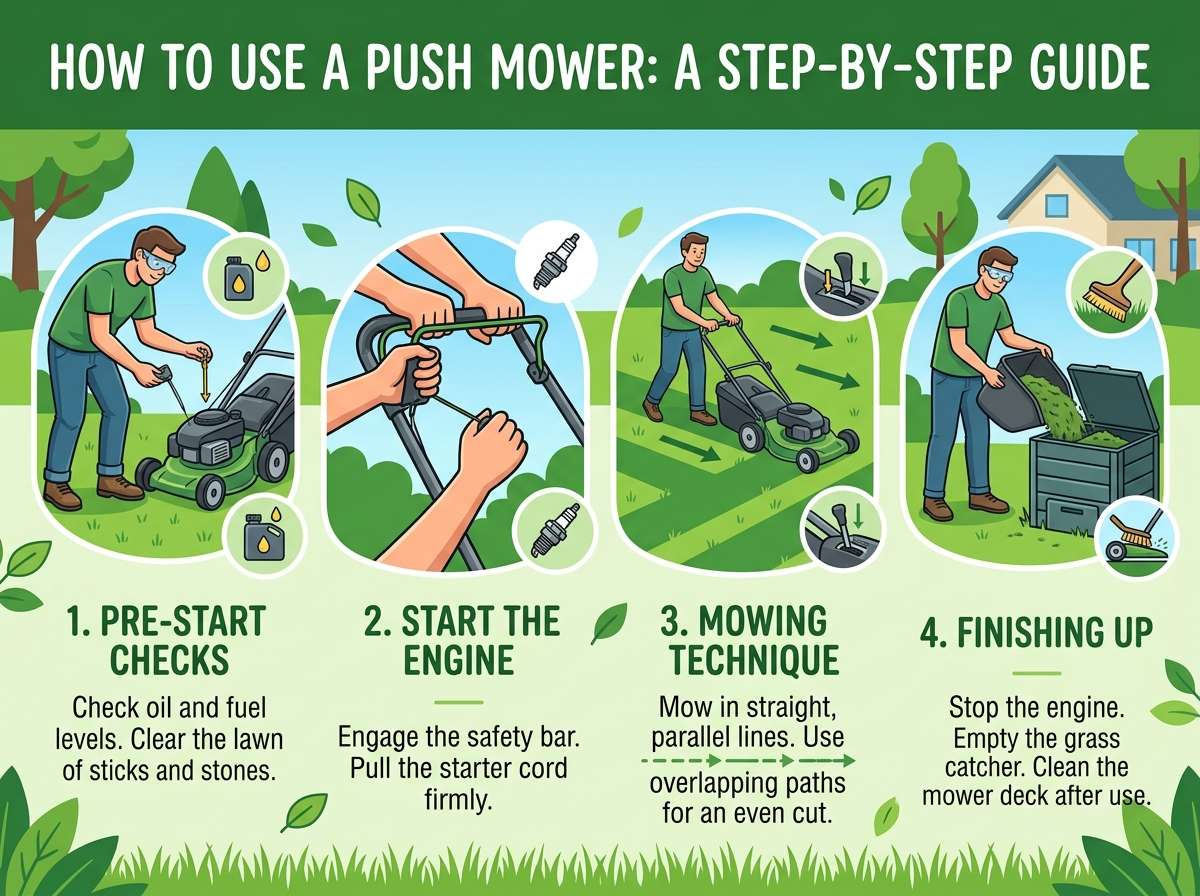
Walk through your yard and pick up any sticks, stones, toys, or trash lying around. These things can get caught in the blade and damage your mower or fly out and hurt someone. Even small twigs can jam up a reel mower, so be thorough.
Look for Bumps and Holes
Push mowers work best on level ground. If you see big dips or mounds, try to mow around them or go slow. A mower that hits a hole hard can tip over or damage the wheels.
Wear the Right Clothes
Wear long pants and closed-toe shoes. Sneakers or work boots are perfect. Avoid loose pants or pant legs that could get caught. Keep your hair tied back if it’s long. Push mowers aren’t as dangerous as riding mowers, but you still want to be safe.
The Right Way to Push a Mower
Now comes the actual mowing. Here’s how to do it right.
Stand in the Right Position
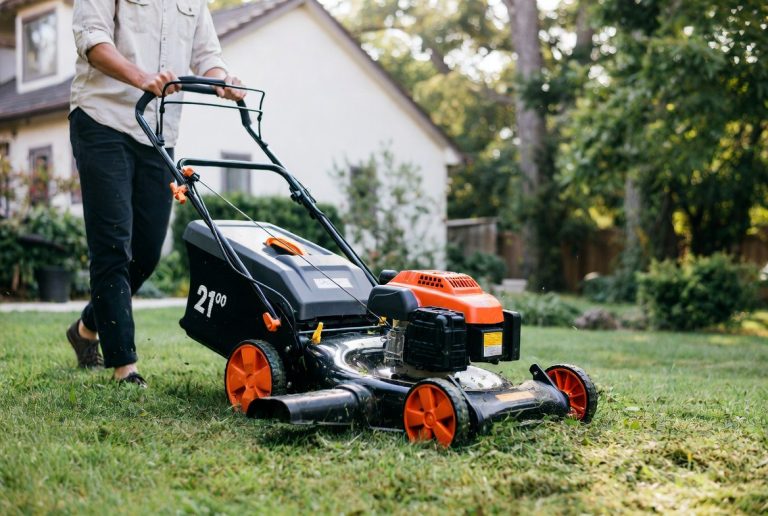
Hold the handle with both hands, one hand near each end. Keep your arms slightly bent and stay behind the mower. Your body should be straight, and you shouldn’t have to lean too far forward or backward. If you feel like you’re straining or working too hard, check the cutting height—it might be set too low.
Push Forward Steadily
Don’t rush. A slow, steady push is better than quick, jerky movements. You want the blade to have time to cut each section of grass cleanly. If you go too fast, you’ll leave some grass uncut or you’ll tear it instead of cutting it.
Keep a Straight Line
Try to push the mower in straight rows, like you’re painting lines on the grass. Straight lines look better, and they also help you know where you’ve already mowed. Some people pick a spot on the other side of the yard and aim for that while they push.
Don’t Dig In
Let the blade and the mower do the work. You’re pushing it forward, not pressing it down into the ground. Pressing down hard won’t make it cut better. It just makes the work harder for you and can wear out your mower faster.
Pull the Mower Back
Most reel mowers work best when you’re pushing forward. The blades are designed to cut as you move forward. You can pull the mower backward, but it won’t cut as well. Some rotary mowers work fine in both directions, but forward is always the best choice.
Mowing Techniques That Work
There are a few different ways to mow your yard. Each has its own benefits.
The Stripe Pattern
Start at one edge of your yard and mow straight across to the other side. Then turn the mower around and mow the next strip right next to the one you just finished. Keep doing this until you’ve covered the whole yard. This creates nice stripes and makes sure you don’t miss any spots.
The Spiral Pattern
Start at the outside edge of your yard and work your way toward the middle in a spiral. This is good if your yard is oddly shaped. It takes a little more focus to keep the pattern going, but it looks neat when you’re done.
The Checkerboard Pattern
If you want to look like a professional, try this. Mow the yard in stripes one way. Then mow it again in stripes at a right angle to the first set. This creates a checkerboard look that’s really impressive.
Around Objects
If you have trees, flower beds, or other things in your yard, mow around them carefully. Go slow and take your time. You can always go back and make a second pass if needed. Never mow over rocks, sticks, or anything hard.
Handling Different Grass Types and Conditions
Not all grass is the same, and not all grass-cutting situations are the same either.
Tall Grass
If your grass has grown pretty tall, you might need to mow it twice. Mow it once at a higher setting to take the top off. Then lower the setting a bit and mow again. Trying to cut really tall grass all at once can jam up your mower and make it hard to push.
Wet Grass
Mow your grass when it’s dry if you can. Wet grass clumps together and can clog your mower. It also slips out from under the blade instead of getting cut cleanly. If you have to mow when it’s damp, mow a little slower and empty your bag more often.
Thick or Dense Grass
If your yard has thick turf, you might need to push a little harder. Take your time and don’t try to cover too much ground too fast. The mower can handle it, but you need to let it work.
Patchy Grass
If some parts of your yard have lots of grass and other parts are thin, just mow the whole thing anyway. The blade won’t hurt bare spots, and it’ll help keep the whole lawn looking even.
Maintenance While You’re Mowing
Taking care of your mower as you use it keeps it running well and makes your job easier.
Empty the Bag Regularly
If your mower has a collection bag, don’t let it get too full. A full bag makes pushing harder and makes the mower work less efficiently. Empty it when it looks about three-quarters full. The clippings are great for composting or using as mulch in flower beds.
Clear Clogs
Sometimes grass gets stuck in the chute or around the blade. Always make sure the mower is stopped before you try to clear anything. Use a stick or a brush to loosen stuck grass. Never put your hands near the blade, even if the mower isn’t running right at that moment.
Check the Blade During Use
If the mower starts to cut unevenly or you notice one side of the grass is shorter than the other, the blade might be dull or uneven. Stop and check it. A dull blade means it’s time to sharpen or replace it.
Keep the Wheels on Track
Make sure both wheels are moving the same direction and speed. If you feel like you’re pulling to one side, the wheels might not be at the same height. Check your wheel settings to make sure they match on both sides.
What to Do After You’re Done Mowing
When your lawn looks great and you’ve finished up, don’t just walk away from your mower.
Empty the Bag Completely
Get all the grass clippings out of the collection bag. Left-behind clippings can get moldy or start to stink if they sit there.
Clean Off Grass Clippings
Wipe off any grass clippings stuck to the frame or blade area. You can use a dry cloth or a soft brush. If grass dries on the mower, it gets harder to remove later.
Let It Cool Down
If you’ve been mowing for a while, the blade might be hot. Give it time to cool before you touch it or store it away.
Store It Properly
Keep your mower in a dry place like a garage or a shed. Don’t leave it outside where the weather can rust the metal. If you’re storing it for a long time, empty the bag completely so nothing rots inside.
Common Problems and How to Fix Them
Even with the best care, you might run into a few issues.
The Mower Is Hard to Push
A few things could cause this. The blade might be too low and hitting the ground. Check your height settings. The blade might be dull, which makes the mower work harder. The tires might not have enough air. For rotary mowers, check that your tire pressure is right. For reel mowers, make sure the wheels spin freely.
The Cut Is Uneven
One side is shorter than the other side. This usually means your wheels aren’t set to the same height. Check both sides and make sure the adjustment is the same. If one side is cutting longer, that wheel might be set a tiny bit higher.
Grass Is Getting Torn, Not Cut
Your blade is dull. A sharp blade cuts grass cleanly. A dull blade squashes and tears it. You need to sharpen the blade. For a reel mower, the blade and the bed knife need to work together perfectly. If they’re not touching right, you’ll get torn grass. This might mean adjusting the blade or having a pro take a look.
Clippings Are Clumping
Your grass is probably wet, or the bag is clogged. Try emptying the bag more often. If the grass is wet, wait for it to dry before you mow.
The Mower Makes a Squeaking Sound
Something needs oil or is rubbing the wrong way. Check where the handle connects to the frame and where the wheels meet the axle. A little machine oil on these spots usually fixes the squeak. Never oil the blade itself.
Tips to Make Mowing Easier
Once you’ve got the basics down, these tricks will make the work go faster and easier.
Mow on a Schedule
Mow your grass once a week during the growing season. It’s easier to push a mower through grass that’s a normal height than to wait until it’s super tall. Regular mowing also keeps your yard looking neat.
Mow in Cool Parts of the Day
Push mowing is work, so do it early in the morning or late in the afternoon when it’s cooler. You’ll feel better and won’t get as tired.
Take Breaks
If you have a big yard, it’s okay to take a break halfway through. Push mowing uses your legs, arms, and core, so it’s normal to feel tired. Drink some water and rest for a few minutes.
Use the Clippings
Grass clippings are not trash—they’re actually good for your lawn. If your mower mulches the clippings into tiny pieces, let them fall back on the grass. They add nutrients back to the soil. If you collect them, use them in a compost pile or as mulch in garden beds.
Keep Your Blade Sharp
A sharp blade makes mowing so much easier. You’ll push less hard, the grass will look better, and your mower will last longer. Sharpen the blade at least a couple of times during the mowing season.
Watch for Obstacles
Every time you mow, do a quick walk through the yard first. Picking up a few sticks and stones takes two minutes and saves you from damaging your mower.
Different Types of Push Mowers Explained
While all push mowers work the same basic way, there are some differences you should know about.
These use a cylinder with blades that spin as you push. They’re quiet, lightweight, and great for small yards. They work best on well-maintained grass that’s not too tall or too thick. They’re also the most affordable option.
Rotary Push Mowers
These have a flat spinning blade underneath. They can handle taller grass and tougher conditions than reel mowers. They’re a bit heavier, but many people find them more versatile. They’re also good at mulching grass clippings.
Electric Push Mowers
Some push mowers have a small electric motor to help you push. These are lighter and easier to use than manual mowers, but they’re more expensive. They’re a good choice if you have a physical limitation that makes pushing hard.
Why Push Mowers Are Worth It
If you’ve been thinking about getting a push mower, here are some great reasons to do it.
A push mower is affordable. You can get a good quality one for less than the cost of a single tank of gas for a powered mower.
Push mowers are quiet. You won’t disturb your neighbors, and you can mow early in the morning or late in the evening.
They need almost no maintenance. No oil changes, no spark plugs, no engines to tune up. Just keep the blade sharp and the mower clean.
Push mowing is good exercise. You’re getting a workout while you take care of your lawn. It’s a low-impact activity that builds strength.
Push mowers are better for the environment. Zero emissions, zero pollution, just you and your lawn.
Final Thoughts
Learning to use a push mower is simple, and once you get comfortable with it, mowing becomes an easy part of your lawn care routine. The key is to keep your blade sharp, your technique steady, and your mower clean. Start with the basics, take your time, and soon you’ll be pushing out a perfect-looking yard every time.
Push mowing might seem old-fashioned in a world of fancy riding mowers and robot lawn mowers, but there’s something satisfying about doing the work yourself and keeping your yard looking great with a simple, reliable tool. You’ve got this.

Hi, I’m Mary, the founder of GardenCure.com. I’m passionate about creating healthy, beautiful gardens and well-kept lawns. I share practical experience and trusted advice on garden and lawn gear that truly works. With the support of my dedicated research team, our writers produce honest, in-depth reviews using reliable, authentic sources—helping you choose the right tools with confidence for your outdoor space.