How to Use Garden Stakes for Tomatoes?
Tomato plants are heavy. As they grow, their stems get loaded down with leaves, flowers, and fruit. Without support, they flop over, touch the soil, and become an easy target for pests and disease. That’s where garden stakes come in. A stake gives your tomato plant a strong backbone to lean on, so it can grow tall, stay healthy, and give you a bigger harvest.
In this article
If you’re new to gardening, staking might sound tricky. It isn’t. In this guide, we’ll walk through everything you need to know, from picking the right stake to tying your plant the correct way. By the end, you’ll feel confident setting up your own tomato patch like a pro.
Why Tomatoes Need Support in the First Place
Tomato plants are not naturally built to stand up on their own once they start fruiting. Their stems are soft and bendy, not woody and stiff like a tree branch. As fruit forms, the extra weight pulls the plant down toward the ground.
When a tomato plant sprawls on the soil, a few bad things happen:
- Leaves and fruit sit in damp soil, which invites rot and fungal disease.
- Slugs, snails, and other bugs get easy access to the fruit.
- Air can’t move freely around the leaves, raising the risk of mildew.
- Fruit that touches the ground often gets scars, soft spots, or bites from critters.
A stake lifts the plant up and off the ground. This one simple step improves airflow, keeps fruit clean, and makes it much easier to spot ripe tomatoes when it’s time to pick them.
Bonus Perks of Staking Your Tomatoes
Beyond just holding the plant up, stakes offer a few side benefits gardeners love:
- Harvesting is faster because fruit is easy to see and reach.
- Watering and feeding the plant is simpler since you’re not digging through a tangled mess of vines.
- Pruning suckers and dead leaves takes less time.
- Your garden bed looks tidy and organized instead of like a jungle.
Types of Garden Stakes You Can Use
Not all stakes are the same, and the type you pick can affect how well your plant grows. Here’s a rundown of the most common options.
Wooden Stakes
Wooden stakes are the classic choice. They’re cheap, easy to find at any garden center, and simple to push into soil. Look for stakes that are at least five to six feet tall, since a good chunk will need to go underground to stay steady.
The downside is that wood can rot over time, especially if it stays wet. Treated or cedar wood lasts longer than plain pine.
Bamboo Stakes
Bamboo is light, strong, and looks nice in a garden bed. It’s a favorite for small to medium tomato varieties. Bamboo stakes are also affordable and can be reused for several growing seasons if you store them properly during the off months.
Metal or Rebar Stakes
Metal stakes, including rebar, are the toughest option. They won’t snap, bend, or rot, making them perfect for larger tomato varieties that produce heavy fruit. They cost a bit more upfront, but since they last for years, they save money in the long run.
Tomato Cages
Cages aren’t technically stakes, but they solve the same problem. A cage surrounds the plant and gives it support on all sides. This works well for bushier tomato types that don’t grow super tall. Cages are easy to set up, though they can tip over in strong wind if not anchored well.
DIY Stakes from Household Items
If you’re on a budget, you can make stakes from things around the house. Old broom handles, sturdy branches, PVC pipes, or leftover fence posts can all work in a pinch. Just make sure whatever you use is strong enough to handle wind and the weight of a full-grown plant.
Choosing the Right Stake for Your Tomato Variety
Not every tomato plant needs the same kind of stake. Tomatoes generally fall into two growth types, and knowing which one you’re growing makes a big difference.
Determinate Tomatoes
These plants stay compact and stop growing once they reach a certain height, usually around three to four feet. They produce fruit in a shorter window and don’t need super tall support. A basic stake or a small cage works fine here.
Indeterminate Tomatoes
These plants keep growing and producing fruit all season long, often reaching six feet or taller. They need sturdy, tall stakes, sometimes six to eight feet, with a good portion buried in the ground for stability. Metal stakes or a strong wooden post are your best bet for these vigorous growers.
When to Stake Your Tomato Plants
Timing matters more than most beginners realize. The best time to add a stake is right when you plant your tomato seedling, or very soon after. Doing this early prevents root damage that can happen when you try to push a stake into the ground next to a mature plant with a spread-out root system.
If you missed the early window and your plant is already growing, don’t worry. You can still stake it, just be extra gentle. Push the stake in slowly and keep it a few inches away from the main stem to avoid slicing through roots.
Step-by-Step: How to Stake a Tomato Plant
Now let’s get into the actual process. Follow these steps and your tomato plant will have solid support in no time.
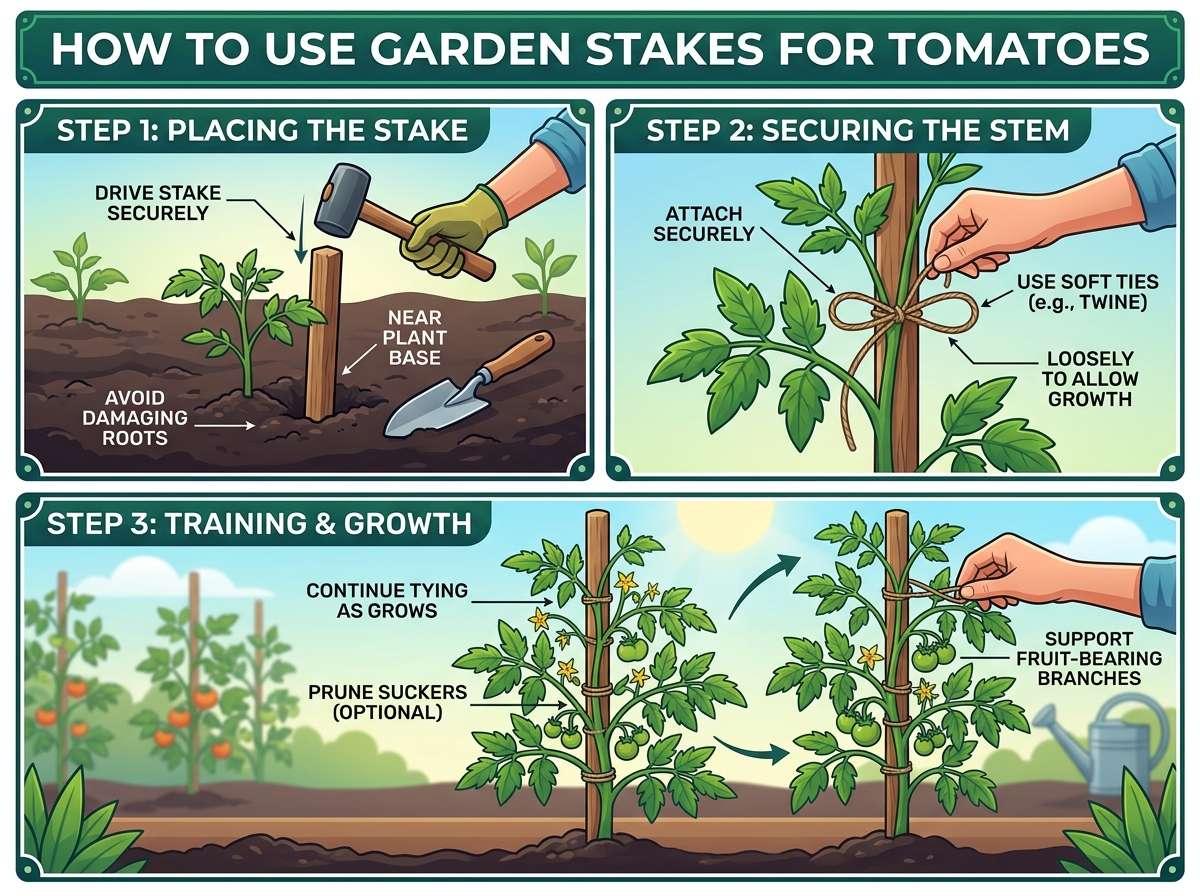
Step 1: Pick the Right Spot for the Stake
Place your stake about two to four inches away from the base of the plant. Putting it too close risks damaging the roots, while placing it too far away makes it hard to tie the stem properly later on.
Step 2: Drive the Stake Into the Ground
Push the stake firmly into the soil, aiming for at least one foot deep. For taller indeterminate varieties, go even deeper, around eighteen inches, so the stake stays steady even during storms or heavy wind. A rubber mallet can help if the soil is hard or compact.
Step 3: Let the Plant Grow a Bit
Young seedlings don’t need tying right away. Give the plant a little time to grow taller, usually to about a foot in height, before you start attaching it to the stake.
Step 4: Tie the Stem to the Stake
Use a soft material like garden twine, strips of cloth, or velcro plant ties. Wrap the tie loosely around the stem in a figure-eight shape, with one loop around the stem and another around the stake. This keeps the stem from rubbing directly against the hard stake, which can cause damage over time.
Never tie the string too tight. The stem needs a little room to move and grow thicker as the season goes on.
Step 5: Keep Adding Ties as the Plant Grows
A single tie at the bottom won’t be enough. As your tomato plant shoots upward, add new ties every eight to twelve inches along the main stem. This spreads the weight evenly and stops the plant from bending or snapping under pressure.
Step 6: Prune Suckers for Better Growth
Suckers are the small shoots that grow in the joint between the main stem and a branch. Pinching these off directs more energy into the main stem and fruit production, and it also keeps the plant narrow enough to stay close to its stake.
Common Mistakes to Avoid When Staking Tomatoes
Even simple tasks can go wrong if you’re not careful. Here are a few slip-ups beginners often make.
Tying Too Tight
A tight tie can cut into the stem as it grows, cutting off nutrient flow and weakening the plant. Always leave a bit of slack.
Using a Stake That’s Too Short
A short stake might work for the first few weeks, but as the plant grows taller, it will outgrow the support and flop over anyway. It’s smarter to start with a tall stake from day one, even if the plant doesn’t need all of it right away.
Placing the Stake Too Late
Waiting until the plant is huge and heavy makes staking harder and riskier for the roots. Early staking saves you trouble down the road.
Forgetting to Check Ties Regularly
Plants grow fast, especially in warm weather. Check your ties every week or so to make sure they aren’t digging into the stem as the plant thickens.
Skipping Deep Enough Placement
A stake that isn’t buried deep enough can tip over in wind or under the weight of a fruit-heavy plant. Always aim for at least a foot underground, more for taller varieties.
Alternative Support Methods Worth Knowing About
Stakes work great, but they’re not the only option. Depending on your garden layout, one of these methods might suit you better.
The Florida Weave
This method uses a row of stakes with twine woven back and forth between plants. It works well if you’re growing several tomato plants in a single row and don’t want to tie each one individually. It’s fast to set up and easy to adjust as the plants grow.
Trellis Support
A trellis, made from wood, wire, or netting, gives tomato vines something to climb. This method is great for small gardens or raised beds where space is tight, since the plant grows upward instead of spreading out sideways.
Cages Combined with Stakes
For extra-heavy fruiting varieties, some gardeners use a stake in the center of a cage for added strength. This combo handles even the biggest, juiciest tomato varieties without buckling.
Caring for Staked Tomato Plants Through the Season
Staking is just one part of growing healthy tomatoes. Here are a few care tips to pair with your staking routine.
Water Consistently
Tomato plants like steady moisture, not feast-or-famine watering. Water deeply a couple of times a week rather than a little bit every day. This helps roots grow strong and deep, which also helps the plant hold steady against its stake.
Feed the Soil
Tomatoes are heavy feeders. Adding compost or a balanced fertilizer every few weeks keeps the plant strong enough to support its own fruit load, even with a stake helping out.
Mulch Around the Base
A layer of mulch keeps soil moisture steady, blocks weeds, and prevents soil from splashing onto lower leaves during watering, which can spread disease.
Watch for Wind Damage
Even well-staked plants can suffer in strong storms. After a big wind event, walk through your garden and check that stakes are still firmly in the ground and ties haven’t loosened or snapped.
Frequently Asked Questions About Tomato Stakes
How tall should a tomato stake be?
For small determinate varieties, a four-foot stake usually works. For tall indeterminate varieties, aim for six to eight feet, with about a foot or more buried underground.
Can I use one stake for multiple tomato plants?
It’s better to give each plant its own stake for stable support, unless you’re using the Florida Weave method, which is designed to support a whole row with shared stakes and twine.
What can I use instead of string to tie tomatoes?
Soft cloth strips, velcro plant tape, and stretchy garden ties all work well. Avoid wire or anything with sharp edges, since it can cut into the stem.
Is it too late to stake my tomato plant if it’s already sprawling?
No, it’s not too late. Gently lift the plant, place the stake nearby, and tie the stem loosely as you go. It may take a little patience, but the plant will adjust.
Do cherry tomatoes need staking too?
Yes, most cherry tomato varieties grow long, sprawling vines that produce tons of small fruit. A stake or trellis keeps the vines organized and the fruit off the ground.
Wrapping Up
Staking your tomato plants is one of the easiest ways to boost your harvest and keep your garden looking neat. With the right stake, good timing, and a bit of regular care, your tomato plants will grow strong, stay healthy, and reward you with juicy fruit all season long. Start early, tie gently, and check in on your plants often, and you’ll be well on your way to a thriving tomato patch.

Hi, I’m Mary, the founder of GardenCure.com. I’m passionate about creating healthy, beautiful gardens and well-kept lawns. I share practical experience and trusted advice on garden and lawn gear that truly works. With the support of my dedicated research team, our writers produce honest, in-depth reviews using reliable, authentic sources—helping you choose the right tools with confidence for your outdoor space.