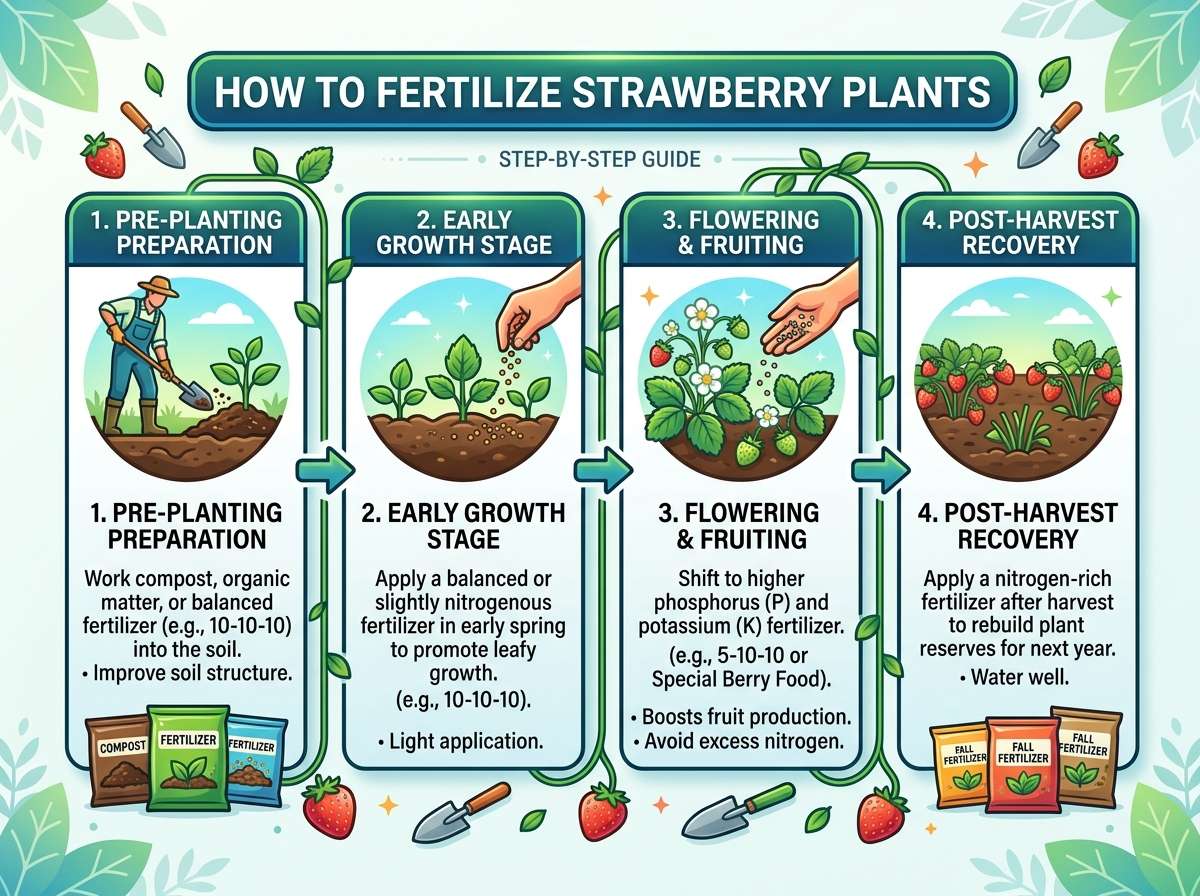
How to Fertilize Strawberry Plants?
Strawberries are one of the easiest fruits to grow in your garden. These bright red berries taste amazing when they’re fresh from your own plants. But here’s the thing: if you want big, sweet strawberries, you need to feed your plants the right way. Good fertilizing habits make all the difference between so-so berries and incredible ones.
In this article
Many new gardeners don’t realize how important fertilizer is for strawberry plants. You might plant your strawberries, water them, and wait for results. But without proper nutrition, your plants will struggle. They’ll give you fewer berries. The ones you do get might taste bland or be smaller than you hoped.
The good news is that fertilizing strawberries isn’t complicated. This guide will walk you through everything you need to know. By the end, you’ll feel confident feeding your plants like a pro.
Why Your Strawberry Plants Need Fertilizer
Think of fertilizer as food for your plants. Just like you need nutrients to stay healthy, strawberries need specific nutrients to thrive. When plants don’t get enough nutrition, they can’t produce lots of fruit.
Strawberry plants pull nutrients from the soil. Over time, the soil gets depleted. That’s where fertilizer comes in. It replenishes what the plants take out of the ground.
Three main nutrients matter most for strawberries: nitrogen, phosphorus, and potassium. You’ll see these written as NPK on fertilizer packages. The numbers show the percentage of each nutrient. For example, a fertilizer labeled 10-10-10 has equal amounts of all three.
Nitrogen helps plants grow leafy stems and green foliage. Your strawberry plants need this for a strong foundation. Phosphorus builds strong roots and helps flowers bloom. Potassium improves fruit quality and makes berries sweeter.
Plants also need smaller amounts of other nutrients. These include calcium, magnesium, and sulfur. Most complete fertilizers include these trace elements. Your strawberry plants will reward you with bigger harvests when they get balanced nutrition.
Best Fertilizer Types for Strawberries
You have several options when it comes to strawberry fertilizers. Let me break down the main types so you can decide what works best for your situation.
Organic Fertilizers
Organic options come from natural sources. They break down slowly in the soil, releasing nutrients over time. This steady feeding approach works really well for strawberries.
Compost is one of the best organic choices. You can make your own or buy bags at the store. Work compost into the soil before planting, and mix it in around your plants during the growing season. Strawberries love the nutrients compost provides.
Aged manure from horses or cows is another great option. It adds nutrients and improves soil structure. Make sure the manure is well-aged or composted. Fresh manure can burn your plants.
Fish emulsion is liquid fertilizer made from fish. It smells strong but works fast. Your plants absorb it quickly, which helps when they need a nutrient boost. You spray it on leaves or pour it around the roots.
Seaweed extract comes from ocean plants. It contains trace minerals your strawberries crave. Many gardeners find that seaweed extract helps berries taste sweeter and last longer after picking.
Bone meal provides phosphorus for flower and fruit development. Blood meal adds nitrogen for green growth. Kelp meal supplies potassium and micronutrients. You can mix these together or use them separately.
Synthetic Fertilizers
Synthetic fertilizers are made in factories. They dissolve quickly in water and work fast. Your plants get nutrients right away.
Granular fertilizers come in dry pellets. You sprinkle them around your plants and water them in. They release nutrients gradually over several weeks.
Water-soluble fertilizers mix into liquid. You apply them as you water your plants. They work quickly but require more frequent applications.
Slow-release fertilizers are coated pellets that break down slowly. You apply them once, and they feed your plants all season long. This option requires less work on your part.
Best Choice for Strawberries
Here’s what works well: combine organic and synthetic approaches. Use compost or aged manure as a base soil amendment. Then use a balanced fertilizer during the growing season.
A fertilizer ratio of 10-10-10 or 5-10-10 works great for strawberries. The higher phosphorus number helps with flowering and fruit production.
When to Fertilize Your Strawberry Plants
Timing matters when you’re feeding strawberries. Apply fertilizer at the right moments, and your plants will produce heavily. Get the timing wrong, and you’ll waste effort.
Early Spring Feeding
As soon as new growth appears in spring, your plants are hungry. They’ve used their stored energy to wake up from dormancy. Now they need fresh nutrients.
Apply your first feeding about four weeks after growth starts. Use a balanced fertilizer like 10-10-10. This feeds the plant and gets it ready for flower production.
If you use slow-release fertilizer, apply it once in early spring. It will feed your plants for the entire season.
During Flowering and Fruit Set
This is a critical time. Your plants are putting energy into making flowers and developing berries. They need steady nutrition now.
Apply fertilizer every two to three weeks during this period. If you’re using liquid fertilizers, follow the instructions on the package for dilution rates.
Some gardeners switch to a higher phosphorus formula now. A 5-10-10 ratio encourages more flowers. More flowers mean more berries at harvest time.
After Harvest
Many gardeners skip fertilizing after harvest. Big mistake. Your plants are tired and need nutrition to recover.
Apply fertilizer after you’ve picked the last berries. Your plants will use these nutrients to regrow foliage. Strong plant growth now means bigger berries next season.
Fall Care
As temperatures cool, reduce fertilizer applications. Your plants are slowing down. Heavy feeding in fall can cause tender new growth that frost will kill.
One light application in early fall helps. This gives your plants nutrients for dormancy. Skip fertilizer after that until spring.
How Much Fertilizer to Use
Too much fertilizer can hurt your plants as much as too little. Finding the right amount is important.
For Granular Fertilizers
Read the package instructions. Most recommend one to two pounds per one hundred square feet of garden bed. This breaks down to about one tablespoon per plant for container-grown berries.
Spread the fertilizer in a ring around each plant. Stay about six inches away from the crown of the plant. Water thoroughly after applying.
For Liquid Fertilizers
Mix according to package directions. Don’t make it stronger than recommended. Stronger isn’t better with liquids.
Most liquid fertilizers suggest one tablespoon to one cup of water. You’ll apply this around the base of each plant or spray it on the leaves.
Apply liquid fertilizers every two to three weeks during growing season. Water your plants the day before applying liquid fertilizer. This prevents root burn.
For Compost and Aged Manure
You can use these more generously. Mix two to four inches into the soil before planting. During the season, add one to two inches around your plants every month.
These organic materials break down slowly. You won’t burn your plants, and the soil gets better with each application.
Signs You’re Using Too Much
If you’re applying too much, your plants will tell you. Leaves might turn dark green and get very large. Too much nitrogen creates lush foliage but fewer berries.
You might notice brown tips on leaves. This can signal too much salt in the soil from over-fertilizing.
Reduced flowering and fruit production is another sign. Your plant is putting all its energy into green growth instead of making berries.
Application Methods That Work
You have different ways to apply fertilizer. Each method has advantages.
Top Dressing
Sprinkle granular fertilizer around your plants. Work it into the top inch of soil. Water thoroughly so it reaches the roots.
This method is simple and works well. Granular fertilizer releases slowly. Top dressing works great for spring applications.
Side Dressing
Place fertilizer about six inches from the plant base. This keeps it away from the crown. Side dressing prevents fertilizer from touching the plant directly.
Work it into the soil lightly. Water in well. Side dressing works for both granular and slow-release fertilizers.
Mixing Into Mulch
If you use straw or wood chip mulch, mix in some compost or aged manure. As you add new mulch throughout the season, the old mulch breaks down and feeds your plants.
This creates a slow, steady source of nutrients. Your soil gets richer as the season progresses.
Foliar Feeding
Spray liquid fertilizer on the leaves. Plants absorb nutrients through their foliage quickly. This method works great for giving plants a quick nutrient boost.
Apply foliar spray in early morning or late evening. Skip midday when heat can cause the spray to evaporate.
Spray until the leaves are wet but not dripping. Focus on the undersides of leaves where plants have more pores.
Drip Irrigation
Set up a drip system that delivers liquid fertilizer slowly over time. This keeps soil moisture even. It delivers nutrients consistently without shocking the roots.
Drip systems work great for strawberry beds. Water and fertilizer reach the roots directly. Less water gets wasted.
Special Situations and Adjustments
Some strawberry growing situations need special consideration.
Container-Grown Strawberries
Containers offer less soil and fewer nutrients. Your plants need more frequent feeding.
Apply diluted liquid fertilizer every week. Or use slow-release fertilizer and apply it twice during the season.
For containers, use a potting mix rich in compost. This gives plants a good nutrient base to start.
Water containers often because water drains quickly and takes nutrients with it.
Sandy Soils
Sandy soil doesn’t hold nutrients well. Water leaches through quickly, carrying nutrients away.
If you have sandy soil, feed more frequently but with smaller amounts. Organic materials like compost help sandy soil hold nutrients longer.
Apply liquid fertilizers every ten to fourteen days instead of every two weeks.
Clay Soils
Clay holds nutrients but drains poorly. Waterlogged soil can cause root rot.
Improve clay soil with compost before planting. This breaks up the clay and improves drainage.
Feed less frequently than you would with sandy soil. The clay holds nutrients longer.
Acidic Soils
Test your soil pH. Strawberries prefer slightly acidic soil between 6.0 and 6.5. If your soil is too acidic, some nutrients become unavailable to plants.
Add lime to raise pH. Add sulfur to lower pH. Make adjustments before planting. Nutrient availability depends on getting pH right.
Alkaline Soils
Alkaline soils lock up iron and magnesium. Your plants can’t access these nutrients even if they’re present.
Add sulfur or iron chelate to correct this. Test the soil before planting so you can adjust properly.
Nutrient Deficiencies and Fixes
Sometimes plants show signs of nutrient problems even with regular fertilizing. Learning to spot these problems helps you fix them fast.
Nitrogen Deficiency
Leaves turn yellow while veins stay green. Growth slows. Berries are small.
Fix this by applying nitrogen quickly. Use liquid fish emulsion or diluted liquid fertilizer with high nitrogen. Results show within days.
Phosphorus Deficiency
Leaves turn purple or dark red. Roots stay shallow. Flower production drops.
Add bone meal or a fertilizer high in phosphorus. Phosphorus moves slowly through soil, so apply it early.
Potassium Deficiency
Leaf edges turn brown and look scorched. Berries lack color. Fruit quality suffers.
Apply potassium fertilizer or wood ash. Potassium improves berry flavor and color quickly.
Iron Deficiency
Young leaves turn yellow while veins stay green. This happens in alkaline soils.
Apply iron chelate as a foliar spray. Results appear within weeks. Also address the soil pH issue.
Magnesium Deficiency
Leaves turn yellow between the veins. Older leaves show this first.
Spray plants with Epsom salt solution. Mix one tablespoon per gallon of water. Spray the foliage weekly until plants recover.
Tools and Supplies You’ll Need
Gather a few simple items before you start fertilizing.
A watering can or hose with spray nozzle lets you water in fertilizer and deliver liquid feeds. Rubber gloves protect your hands. A measuring cup ensures you use the right amounts. A small shovel or spade lets you work granular fertilizer into soil.
For foliar feeding, use a spray bottle that delivers a fine mist. Some gardeners prefer pump sprayers for larger areas.
A soil test kit helps you know what nutrients your soil has. Some gardeners take soil samples to their local extension office for professional testing.
Keep your fertilizer bags in a cool, dry place. Label containers clearly. Store everything away from children and pets.
Common Mistakes to Avoid
Learning from other gardeners’ mistakes saves you time and trouble.
Don’t apply fertilizer to dry soil. It won’t dissolve or reach roots well. Water your plants the day before fertilizing.
Don’t fertilize too late in the season. This encourages tender new growth that frost kills.
Don’t use fresh manure. It can burn plants and introduce pathogens. Use aged manure only.
Don’t assume more fertilizer means more berries. Extra fertilizer creates more leaves but fewer fruits.
Don’t ignore soil pH. All the fertilizer in the world won’t help if your soil pH prevents nutrient availability.
Don’t apply granular fertilizer directly against the plant crown. This can cause rot. Keep it six inches away.
Don’t forget about watering after fertilizing. Nutrients need moisture to move through soil to roots.
Creating Your Fertilizing Schedule
Put together a simple schedule that works for your situation.
Mark your calendar. Write down when you planted your strawberries. Note when you apply fertilizer and how much.
In spring, mark early growth time as feeding time. Add notes every two weeks during flowering and fruiting.
Keep records of what worked and what didn’t. Did your plants get enough nutrients? Did you see nutrient deficiencies? Use this information to adjust next season.
A simple notebook or phone notes app works great. You don’t need anything fancy. Just write down what you did and results you got.
Organic Strawberry Fertilizing Options
If you want to stay completely organic, you have great choices.
Compost is your foundation. Make your own from kitchen scraps and yard waste. Apply it generously.
Fish and seaweed products work beautifully for berries. Both contain trace minerals that improve flavor.
Alfalfa meal boosts nitrogen and adds growth hormones that stimulate plant vigor.
Cottonseed meal provides nitrogen and other nutrients slowly over time.
Worm castings are gentle and complete. They don’t burn plants and improve soil structure.
Combine several organic options. This gives your plants balanced nutrition from different sources.
Quick Reference Feeding Guide
Here’s a simple chart to keep handy.
Early spring: Apply balanced fertilizer like 10-10-10. Flowering season: Apply 5-10-10 formula every two weeks. Summer growth: Continue feeding every two to three weeks. After harvest: One application to help recovery. Fall: Reduce feeding as temperatures cool.
For container plants: Feed weekly with diluted liquid fertilizer.
For organic systems: Use compost plus fish or seaweed emulsion.
Getting Results From Your Work
When you fertilize properly, results follow. Your plants grow vigorously. Flowers form abundantly. Berries size up nicely.
You’ll notice healthier foliage. Plants look vibrant and green. The garden looks productive and thriving.
Berries taste better. You’ll actually taste the difference between well-fed plants and under-fed ones. The flavor improves noticeably.
Production increases. More flowers mean more berries. You’ll harvest more fruit from fewer plants.
Plants stay healthier overall. Well-nourished plants resist pests and diseases better. They bounce back from stress quickly.
Wrapping Up Your Strawberry Feeding Plan
Fertilizing strawberry plants doesn’t require special skills or expensive equipment. It just takes consistent attention and the right approach.
Start with good soil. Add compost before planting. Use a balanced fertilizer to feed your plants regularly.
Water thoroughly after applying fertilizer. Keep a simple schedule. Watch for plant responses.
Adjust your approach based on what you observe. Every garden is different. What works perfectly for one gardener might need tweaking for another.
Stay patient. The first season teaches you what your plants need. By the second season, you’ll be a pro at feeding your strawberries.
Your efforts will pay off in delicious berries. There’s nothing quite like picking sweet, juicy strawberries from plants you’ve nourished all season. You’ll be proud of what you’ve grown.
Start simple. Keep track of what you do. Learn as you go. Before long, you’ll produce strawberry harvests that impress everyone who tastes them.
Happy growing, and enjoy those strawberries!

Hi, I’m Mary, the founder of GardenCure.com. I’m passionate about creating healthy, beautiful gardens and well-kept lawns. I share practical experience and trusted advice on garden and lawn gear that truly works. With the support of my dedicated research team, our writers produce honest, in-depth reviews using reliable, authentic sources—helping you choose the right tools with confidence for your outdoor space.