How to Fertilize Palm Trees?
Palm trees bring that tropical vibe to any yard. They look amazing with their big, leafy fronds swaying in the breeze. But here’s the thing – these beautiful plants need proper care to thrive. One of the most important parts of caring for palm trees is feeding them with the right fertilizer. If you’re new to gardening or just starting to grow palms, don’t worry. This guide will walk you through everything you need to know.
In this article
Why Your Palm Trees Need Fertilizer
Let’s be honest – most people plant a palm tree and hope it just grows on its own. While palm trees are pretty tough plants, they need nutrients to really shine. Think of fertilizer as food for your plants. Just like you need to eat healthy meals to stay strong, palm trees need nutrients to grow tall and healthy.
The soil in your yard might not have all the nutrients that palm trees require. Over time, heavy rain washes nutrients away from the soil. If you have sandy soil, it drains so fast that nutrients don’t stick around long. This is where fertilizer comes in handy. It replaces the missing nutrients and keeps your palms looking vibrant and green.
Palm trees that get fed regularly develop deeper root systems. They grow faster and produce more fronds. Their leaves stay greener and more vibrant. Plants that lack proper nutrition often turn yellow or brown. Their growth slows down. Sometimes they even stop growing altogether. By feeding your palms, you prevent these problems before they start.
The Nutrients Your Palm Trees Crave
Not all nutrients are equal. Your palm trees have specific needs when it comes to what they eat. Understanding these nutrients helps you pick the right fertilizer for your plants.
Nitrogen – The Growth Champion
Nitrogen is like the fuel that powers your palm tree’s growth. It helps the tree produce new leaves and fronds. When you see those beautiful green colors, that’s often thanks to nitrogen. This nutrient pushes your palm to grow taller and fuller. Plants that get enough nitrogen develop thick, healthy stems and lots of foliage.
Phosphorus – The Root Builder
Phosphorus does different work than nitrogen. This nutrient focuses on building strong root systems. Good roots mean your palm can pull more water and nutrients from the soil. Phosphorus also helps your palm handle stress better. It makes plants more resistant to diseases and pests.
Potassium – The Strength Provider
Potassium is all about making your palm tough and strong. It helps plants stay healthy when facing harsh weather. Strong winds won’t damage a palm with plenty of potassium as easily. This nutrient also improves the quality of the fronds and keeps them from getting weak or droopy.
Secondary and Micro Nutrients
Beyond the big three, your palms need other nutrients too. Magnesium, iron, and manganese all play important roles. These nutrients help your palm stay vibrant and healthy. When a palm lacks these nutrients, you’ll often see yellow fronds or stunted growth. Good fertilizers include these trace elements.
Types of Palm Tree Fertilizers Explained
Walk into any garden center and you’ll see dozens of fertilizer options. It’s easy to feel overwhelmed. Let’s break down the main types so you can find what works best for you.
Granular Fertilizers
Granular fertilizers come as small pellets or crystals. You sprinkle them on the soil around your palm tree, and they release nutrients slowly over time. Most granular options last three to four months before needing another application. This makes them great for busy gardeners who don’t want to feed their plants constantly.
Granular fertilizers are usually affordable. They’re easy to spread around the base of your tree. Just follow the directions on the package for how much to use. One downside is that you need to water after applying granular fertilizer to help it break down and get into the soil.
Liquid Fertilizers
Liquid fertilizers come mixed in water. You either spray them directly on the leaves or pour them around the soil. Liquid options work fast because your palm absorbs them quickly. If your tree is struggling and needs a quick boost, liquid fertilizer delivers results fast.
The downside is that liquid fertilizers don’t last as long as granular options. You’ll need to apply them more often. They’re also a bit messier to use, and some people find them pricier than granular versions.
Organic Fertilizers
Organic fertilizers come from natural sources like compost, manure, bone meal, or fish emulsion. These options work more slowly than synthetic fertilizers, but they improve your soil quality over time. Organic fertilizers build up the soil structure and help beneficial microorganisms thrive. If you care about natural gardening methods, organic fertilizers are your best bet.
Synthetic or Chemical Fertilizers
Synthetic fertilizers are made in factories through chemical processes. They work fast and give you exact control over the nutrient ratios. These options are often cheaper than organic choices. Synthetic fertilizers don’t improve soil quality the way organic options do, but they get the job done if you just want to feed your trees quickly.
Palm-Specific Fertilizers
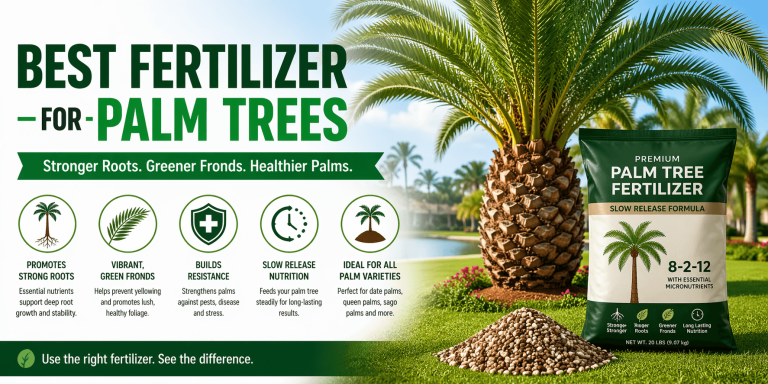
Some companies make fertilizers designed just for palm trees. These blends have the exact nutrient ratios that palms need. The numbers usually look something like 8-2-12 or similar. These fertilizers often include micronutrients that regular lawn fertilizers skip. If you’re serious about palm care, a dedicated palm fertilizer is worth the investment.
Reading Fertilizer Labels Like a Pro
Every fertilizer bag has three big numbers on it. These numbers tell you what you’re buying. Let’s say you see 8-2-12. The first number is nitrogen. The second is phosphorus. The third is potassium. This is called the NPK ratio.
That 8-2-12 fertilizer has 8 percent nitrogen, 2 percent phosphorus, and 12 percent potassium. For palm trees, you generally want more potassium than nitrogen. The NPK ratio of 8-2-12 is pretty good for palms. Numbers like 5-2-6 or 6-2-8 also work well.
Check if the fertilizer lists secondary and micronutrients too. Look for magnesium, iron, manganese, boron, zinc, and copper. These trace elements matter for palm health. Some bags will say “contains micronutrients” right on the front. Others hide this information on the back label. Always read the fine print.
When to Feed Your Palm Trees
Timing matters when it comes to fertilizing palms. Feed them at the right time and they’ll respond beautifully. Feed them wrong and you might waste money or even harm your tree.
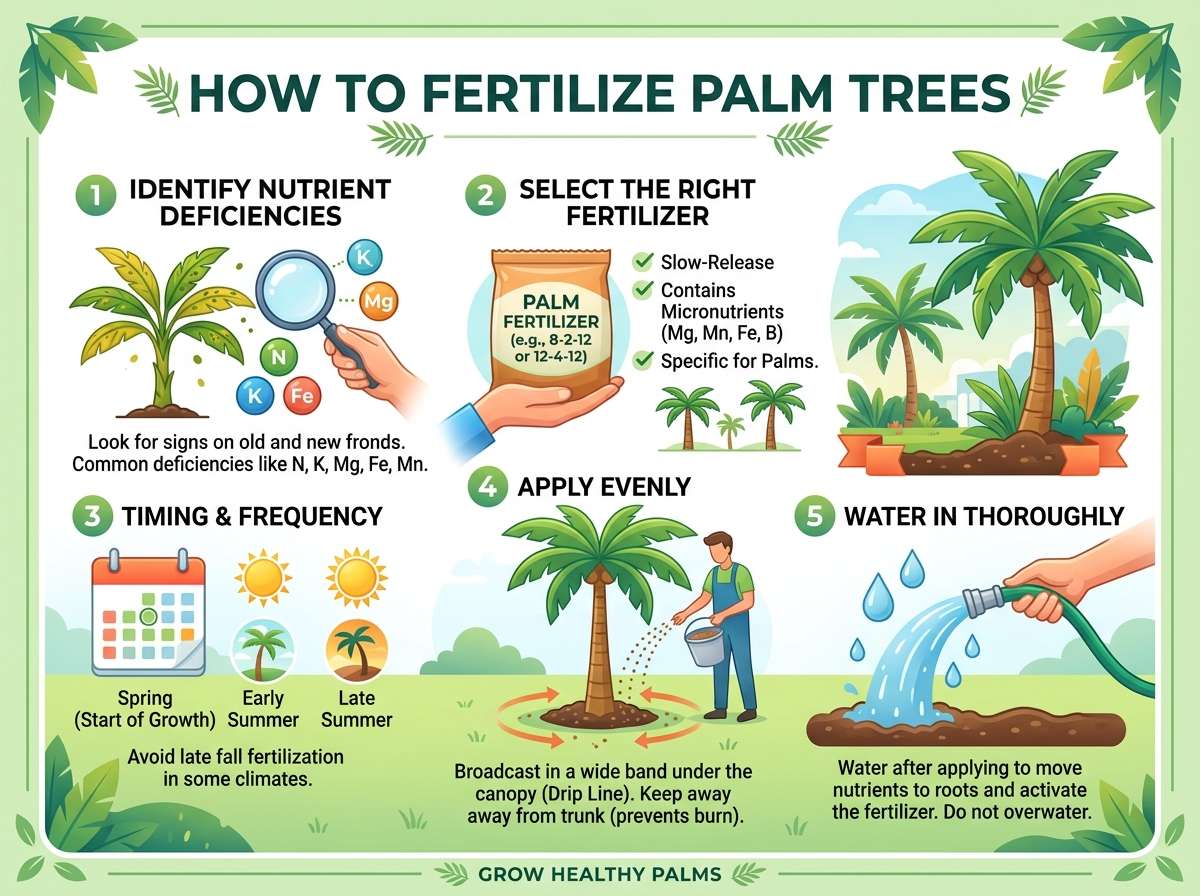
The best time to start feeding palms is in spring when new growth begins. This is when your palm wakes up from its dormant season and starts growing again. Spring feeding gives your tree all the nutrients it needs to produce new fronds and grow strong.
Continue feeding throughout the growing season. For most people, this means spring through early fall. Feed your palms every three to four months if using granular fertilizer. If you use liquid fertilizer, you might need to apply it every month or even more often.
Stop feeding in late fall and winter. This is when palms slow down their growth. Extra nutrients during this time won’t help and might even stress your tree. Let your palm rest during the cooler months and resume feeding when warmth returns.
The Step-by-Step Guide to Fertilizing Your Palms
Ready to feed your palm trees? Here’s exactly how to do it right. Follow these steps and your palms will love you.
Step 1: Water Your Tree First
Always water your palm tree well before applying fertilizer. Water helps the fertilizer move into the soil and reach the roots. Dry soil doesn’t absorb nutrients as well as moist soil. Plus, applying fertilizer to dry soil might burn the roots. Give your tree a good watering and wait a few hours before moving to the next step.
Step 2: Measure Out Your Fertilizer
Check the package directions to see how much fertilizer to use. Most granular fertilizers suggest an amount based on the size of your palm. For example, you might use one pound of fertilizer for every inch of tree diameter. Read the label carefully and measure correctly. Too much fertilizer can damage roots. Too little won’t give your tree the nutrition it needs.
Step 3: Apply the Fertilizer
Spread the fertilizer around the base of your tree. Make a circle starting about six inches from the trunk and extending out to where the branch tips reach. Avoid putting fertilizer right against the trunk because it can burn the bark. Spread it evenly under the whole canopy so the roots can reach it from all directions.
Step 4: Water Again
After spreading the fertilizer, water your tree again. This helps the granules dissolve and move into the soil where roots can absorb them. Water thoroughly until the soil feels moist several inches deep. Good watering is the key to making fertilizer work well.
Step 5: Mark Your Calendar
Write down when you applied fertilizer so you know when to apply the next batch. Most granular fertilizers need application every three to four months. If you use liquid fertilizer, you might need to reapply monthly. Keeping track helps you stay consistent with your feeding schedule.
Special Tips for Different Palm Types
Not all palms are exactly the same. Some types have special needs when it comes to feeding. Let’s look at a few common varieties you might have in your yard.
Coconut Palms
Coconut palms love potassium. If you’re growing coconut palms, use a fertilizer with higher potassium numbers. A ratio like 6-1-12 works great for coconuts. These trees are heavy feeders, so don’t skimp on nutrients. Feed them more often than some other palm types.
Queen Palms
Queen palms do well with balanced fertilizers. They like a mix of all three main nutrients. An 8-4-8 ratio suits queen palms nicely. These trees also appreciate micronutrients, so pick a fertilizer that includes trace elements.
Areca Palms
Areca palms are popular indoor plants. Feed them less frequently than outdoor palms. Once or twice during the growing season is often enough for indoor arekas. Use a diluted liquid fertilizer so you don’t overdo it. Indoor palms don’t need as much feeding as outdoor trees in natural sunlight.
Date Palms
Date palms need consistent feeding to thrive. These trees appreciate a steady supply of nutrients throughout the growing season. Use a high-potassium fertilizer because date palms love it. Feed them every three months during the growing season.
Avoiding Common Fertilizing Mistakes
Even experienced gardeners make mistakes with fertilizer. Learn from others’ errors and avoid these pitfalls in your own yard.
Too Much Fertilizer
This is the number one mistake people make. They think more fertilizer means faster growth. That’s not how it works. Too much fertilizer actually burns roots and damages your palm. Excess nutrients can cause salt buildup in the soil, which hurts your tree. Always follow package directions exactly. Never double up on fertilizer thinking your palm needs more.
Applying Fertilizer in Wrong Seasons
Winter is not the time to feed your palms. These trees don’t need nutrients when they’re dormant. Applying fertilizer in cold months wastes money and stresses your tree. Save your fertilizer applications for the active growing season.
Forgetting to Water
Dry soil doesn’t absorb fertilizer well. Always water before and after applying fertilizer. This is not optional. Skip the watering and your fertilizer won’t work properly. It might even damage roots.
Ignoring Signs of Problems
Sometimes a palm tree turns yellow even after you feed it. This might mean your tree lacks certain micronutrients. It could also mean your soil drains too fast or too slow. If your palm looks sick, dig deeper into the problem before assuming more fertilizer will help.
Using Wrong Fertilizer Type
Using a general lawn fertilizer on your palms is not ideal. Lawn fertilizers have different nutrient ratios designed for grass, not palms. Use palm-specific fertilizer whenever possible. Your trees will respond much better.
Dealing with Nutrient Deficiencies
Sometimes despite your best efforts, your palm tree develops a nutrient deficiency. Knowing the signs helps you fix problems quickly.
Yellow Fronds
Yellow fronds often mean nitrogen deficiency or micronutrient problems. The older fronds on the bottom of the tree turn yellow first when nitrogen is low. Try applying a nitrogen-rich fertilizer and see if new fronds come in greener.
Red or Orange Fronds
These colors usually mean potassium deficiency. Red fronds that look almost burnt indicate your palm needs more potassium. Switch to a high-potassium fertilizer and feed more frequently.
Pale or Washed Out Fronds
Pale fronds suggest magnesium or iron deficiency. These micronutrients are important for chlorophyll production, which gives fronds their green color. Use a fertilizer with these trace elements or apply an iron supplement.
Stunted Growth
If your palm barely grows despite feeding it, something deeper is wrong. Check your soil drainage and pH. Sometimes stunted growth means root problems, not nutrient problems. Make sure your tree isn’t sitting in wet soil. Soggy roots can’t absorb nutrients well.
Organic Alternatives to Chemical Fertilizers
If you prefer natural methods, plenty of organic options exist for feeding palm trees.
Compost
Spread compost around your palm tree and work it into the top inch of soil. Compost feeds your tree slowly while improving soil structure. This is one of the best long-term solutions for palm health.
Fish Emulsion
Fish emulsion smells pretty bad, but palms love it. Mix it with water according to package directions and pour it around your tree. This organic option provides nitrogen and other nutrients. Reapply every few weeks during the growing season.
Bone Meal
Bone meal provides phosphorus and calcium. Work it into the soil around your palm tree in spring. It releases nutrients slowly over several months. Bone meal is great for building strong root systems.
Seaweed Extract
Seaweed extract contains trace elements and growth hormones that boost palm health. Spray it on the fronds or pour it around the base. Your palms will love this organic treat.
Coffee Grounds
Save your used coffee grounds and spread them around your palm tree. They add nitrogen to the soil as they break down. Plus, they improve soil structure over time.
Creating the Perfect Feeding Schedule
Let’s put it all together. Here’s a simple feeding schedule that works for most palm trees in most climates.
In early spring, apply your first dose of balanced palm fertilizer or organic compost. Water well. Mark your calendar for three months later.
In early summer, apply your second fertilizer treatment. If you’re using liquid fertilizer, you might apply it twice during this three-month period. Again, water thoroughly.
In early fall, apply your third treatment. This is the last feeding of the active growing season. After this, your palm will start slowing down growth.
Skip winter entirely. Don’t feed your palms from late fall through early winter.
Repeat this cycle every year. Your palms will develop a rhythm and thrive on consistent nutrition.
Fertilizing Newly Planted Palms
New palms need special care during their first year. They’re stressed from being transplanted and need time to establish roots.
Wait about three months after planting before fertilizing. Let your new palm recover from transplanting stress. After three months, start a gentle feeding schedule with diluted fertilizer or half-strength applications.
Use half the normal amount of fertilizer during the first year. Your new palm doesn’t need full-strength feeding yet. Build up to normal amounts in the second year.
Make sure your new palm gets plenty of water. Young palms need consistent moisture as their roots establish. Water deeply several times per week for the first few months.
Container Palms and Fertilizing
Growing palms in containers is popular, especially for indoor gardeners. Container palms need different feeding schedules than outdoor trees.
Container soil drains faster than ground soil. Nutrients wash away more quickly. Feed container palms more frequently than ground-planted palms. Monthly liquid feeding works well for potted palms during the growing season.
Always use a high-quality potting mix designed for container plants. Regular garden soil compacts in containers and drains poorly. Good potting mix already has some nutrients, so your palm doesn’t need heavy feeding right away.
Every year or two, replace the top few inches of soil in your container. This refreshes the nutrients available to your palm. Or repot your palm into a container one size larger if it’s outgrowing its current home.
Troubleshooting Your Palm Feeding Program
Even with perfect plans, problems sometimes happen. Here’s how to solve common issues.
If your palm isn’t growing even though you feed it, check drainage. Overwatered palms can’t absorb nutrients no matter how much you apply. Let the soil dry out a bit between waterings.
If your palm’s fronds look worse after fertilizing, you probably applied too much. Don’t panic. Water your tree thoroughly to rinse excess fertilizer away from the roots. Skip feeding for two months, then resume with half the normal amount.
If you notice salt buildup on the soil surface, you’re feeding too much. This white crusty material comes from excess fertilizer. Flush the soil by watering deeply and slowly. Let water drain through several times to wash away salt buildup.
If you notice insects on your palm after feeding, the extra nutrients didn’t cause the bugs. Insects are attracted to stressed plants, not healthy ones. Feed your palm regularly to keep it strong enough to resist pests.
Seasonal Adjustments for Your Climate
Where you live affects how often you feed your palms. Warmer climates mean longer growing seasons.
In tropical and subtropical climates, palms grow year-round. You can feed them every three months throughout the year, or even monthly with liquid fertilizer. Warm weather keeps them hungry for nutrients.
In cooler climates, palms have a clear dormant season. Stick to spring through early fall feeding only. Winter feeding is wasted money because growth slows dramatically.
In very cold climates where palms barely survive, feed during the warmest months only. Limit feeding to summer when your palm is actively growing.
Adjust your schedule based on what you observe. If your palm grows year-round in your climate, feed it more often. If it barely grows during winter, stop feeding then.
The Connection Between Soil and Fertilizing
Good soil makes fertilizing much more effective. Before you invest in fertilizer, make sure your soil is healthy.
Test your soil if possible. Many garden centers offer inexpensive soil tests. These tests tell you what nutrients your soil already has. Then you can pick fertilizer that fills the gaps rather than adding nutrients your soil already has plenty of.
Heavy clay soil needs different care than sandy soil. Clay drains slowly, so nutrients stick around longer. You might not need to feed as often. Sandy soil drains fast, so nutrients wash away quickly. Feed sandy-soil palms more frequently.
Add organic matter to your soil every year. Mulch, compost, and aged manure all improve soil health. Better soil means your fertilizer works more effectively.
Budget-Friendly Fertilizing Tips
Feeding palm trees doesn’t have to break the bank. Try these money-saving ideas.
Make your own compost from kitchen scraps and yard waste. This free fertilizer is perfect for palms. Work homemade compost into the soil around your trees.
Collect coffee grounds from your local coffee shop. Most shops give them away for free. Spread these free nutrients around your palms.
Buy fertilizer in bulk if you have multiple trees. Larger bags cost less per pound than small containers.
Share fertilizer costs with neighbors who also grow palms. Buy together and split the cost.
Use organic mulch under your trees. As it breaks down, it feeds your palms naturally. This costs less than buying separate fertilizer.
Final Thoughts on Palm Tree Fertilizing
Feeding your palm trees properly is one of the best things you can do for them. Healthy, well-fed palms grow faster, look better, and stay stronger. They resist pests and diseases more effectively. They produce more beautiful fronds and create that tropical paradise look you’re after.
The good news is that fertilizing palms isn’t complicated. Pick a good palm fertilizer, follow the directions, and stick to a regular schedule. Water before and after applying fertilizer. Watch for signs that your tree needs adjustments. Keep a simple calendar to track your applications.
Start with the schedule we discussed and adjust based on how your palms respond. Some trees need more feeding than others. Pay attention to what your specific trees are telling you. Yellow fronds might mean you need to feed more often. Brown tips might mean you’re feeding too much.
Remember that fertilizer is just part of good palm care. Give your trees plenty of sunlight, good drainage, and consistent water too. The combination of all these factors creates healthy, thriving palms that will give you joy for years to come.
Your palms will reward your care with fast growth and beautiful appearance. New fronds will unfurl regularly. The colors will stay vibrant and green. Your trees will become stronger and more resilient. That’s what good feeding does for palm trees. So get out there, pick up some quality fertilizer, and give your palms the nutrition they deserve.

Hi, I’m Mary, the founder of GardenCure.com. I’m passionate about creating healthy, beautiful gardens and well-kept lawns. I share practical experience and trusted advice on garden and lawn gear that truly works. With the support of my dedicated research team, our writers produce honest, in-depth reviews using reliable, authentic sources—helping you choose the right tools with confidence for your outdoor space.