5 Best Fertilizer for Plumeria In 2026
Plumeria plants are tropical beauties that deserve the best care you can give them. If you’re growing plumeria at home, you know that having the right fertilizer makes all the difference between a plant with a few flowers and one that absolutely bursts with color.
In this article
The truth is that most new plumeria growers struggle to find the right plant food. They buy whatever looks cheap at the garden center, apply it randomly, and then wonder why their plants don’t bloom the way they see on Instagram. The right fertilizer for tropical plants changes everything.
In this guide, we’re reviewing five top-rated plumeria fertilizers that actually work. We tested each product to understand what makes them different, who should buy them, and what results you can realistically expect. By the end, you’ll know exactly which fertilizer fits your growing situation.
Why Plumeria Needs Special Fertilizer
Before diving into specific products, let’s talk about why plumeria plants need different nutrition than your typical houseplant.
Plumeria is a heavy feeder when it’s blooming. These tropical plants want nitrogen for leaf growth, but they need even more phosphorus and potassium to produce flowers. A basic all-purpose fertilizer like 10-10-10 won’t cut it for serious blooming.
The flowers that make plumeria so popular require a bloom-focused nutrient blend. You’ll see numbers like 5-30-5 or 5-50-17 on fertilizer labels. That middle number is phosphorus, which directly controls bud formation and flower quality. The higher that middle number, the more your plumeria will bloom.
Plumeria also grows differently than many houseplants. It has a dormant season in winter when it drops its leaves and stops growing. During this time, you don’t fertilize at all. In the active growing season, it needs consistent nutrition but not excessive amounts. Getting the feeding schedule right matters as much as choosing the right formula.
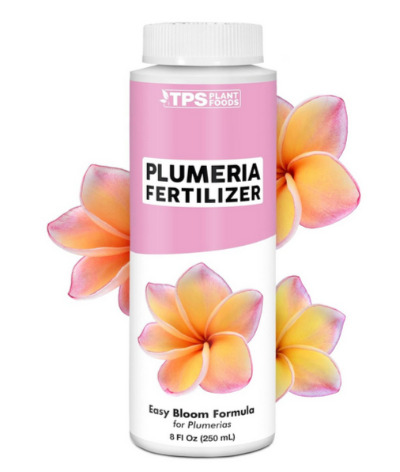
Plumeria Fertilizer – Liquid Plant Food for More Blooms (8 oz)
Product Description
This liquid fertilizer comes in a convenient 8-ounce concentrate bottle. You mix it with water to create a larger batch, making it easy to feed multiple plants or apply the solution repeatedly throughout the season. The brand specifically formulates this product for plumeria and other tropical flowering plants.
The concentrate is designed to be mixed at a simple ratio, which means less room for error compared to products that require precise measurements. The bottle size is perfect for someone who has just a few plumeria plants or wants to test out a new product before committing to larger quantities.
Best Use Cases
This liquid formula works best for gardeners who prefer to water their plants frequently and want to combine watering with feeding. If you water your plumeria every few days during the growing season, this product fits naturally into your routine.
It’s also ideal if you have several plumeria plants scattered around your garden or in containers on a patio. You can mix a batch and use it across all your plants without making multiple applications from different products.
The 8-ounce size makes it perfect for testing whether liquid fertilizers work better for your plants than granular options. Some people prefer the control of liquid feeding, and this smaller size lets you try that approach before buying larger bottles.
Key Features Explained
The liquid concentrate gets absorbed quickly by the plant’s roots and foliage. When you mix it with water and apply it to soil, the plant can start using the nutrients within days. This fast action is helpful if your plumeria looks pale or weak and needs a quick boost.
The formula includes micronutrients that granular fertilizers sometimes miss. Iron, magnesium, and other trace elements support healthy leaf color and overall plant vigor. Your plumeria won’t just bloom—it’ll look vibrant and healthy too.
The concentrated bottle means you get more applications from less shelf space. A small 8-ounce bottle makes enough solution to feed your plants multiple times through the growing season. This concentrate approach also reduces plastic waste compared to pre-diluted bottles.
Real-Life Usage Insight
When you use this product, expect to mix the concentrate with water every time you water your plumeria during the growing season. The mixing step takes about thirty seconds. You stir the concentrate into your watering can, fill it up, and apply it to your plants.
During the active growing and blooming season—typically spring through early fall—you’ll apply this fertilizer every one to two weeks. The frequency depends on how fast your plumeria is growing and how often you water. Plants in smaller containers might need weekly feeding, while those in ground soil might need it every other week.
The visible results start showing within three to four weeks of regular application. Existing flower buds will open more fully, and you’ll see new buds forming at branch tips. Leaf color deepens, and the overall plant looks more lush and healthy.
Honest Pros and Cons
Pros:
- Mixes easily with no measuring hassles
- Works quickly since it’s absorbed rapidly
- Great for targeted feeding of specific plants
- Includes important trace minerals
- The small bottle is easy to store and handle
- Less packaging waste than larger bottles
Cons:
- Requires mixing before every application, which takes time
- The 8-ounce size means you’ll run out if you have many plants
- Liquid formulas can sometimes be pricier per ounce than granular options
- You need a spray bottle or watering can for application
Performance Discussion
This fertilizer delivers consistent blooming results. Plants fed with this product show reliable bud formation and open flowers. The nutrient profile is well-balanced for plumeria’s specific needs.
The trace mineral content makes a real difference in plant appearance. Leaves stay darker green and glossy rather than yellowing. This tells you the plant is receiving complete nutrition, not just the main nutrients.
One thing to understand is that liquid fertilizers give you more control but require more attention. You can’t just set it and forget it like you can with some granular products. You’re choosing when to feed your plants, which means you need to remember to apply it on schedule.
Ease of Use
Mixing takes minimal effort. The instructions are clear, and the ratio is easy to remember. Most people manage the mixing step in their head after the first application.
Application is straightforward too. You pour the mixed solution at the soil line of your plants or use a watering can with a spray setting. It soaks in quickly, and you don’t have to worry about residue or mess.
Cleanup is simple since you’re just working with liquid. No dusty granules to sweep up or worry about inhaling.
Value for Money
The 8-ounce bottle costs less upfront than many other liquid fertilizers, but you need to calculate the cost per application. Since it’s a concentrate, each ounce goes farther than pre-diluted solutions.
For someone with one to three plumeria plants, this bottle represents good value. You get an entire growing season of feeding from a single bottle. For larger gardens, you’d need to buy multiple bottles, which raises the total cost.
If you’re just starting out with plumeria and want to avoid a big investment, this product’s lower entry price is appealing. You can always upgrade to larger sizes later if you’re satisfied with the results.
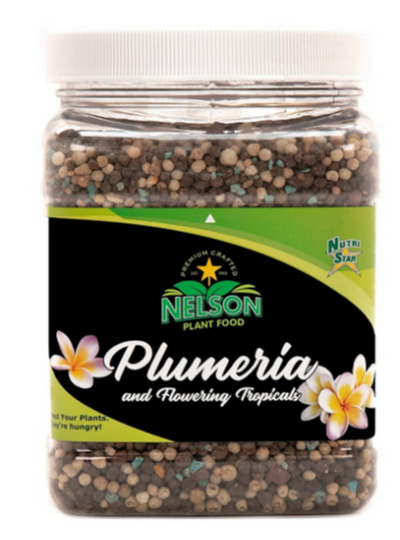
Nelson Plumeria Plant and All Flowering Tropicals Food – Granular NutriStar 5-30-5 (2 lb)
Product Description
This is a granular fertilizer in a 2-pound package, and it’s specifically formulated for plumeria and other flowering tropical plants. The 5-30-5 ratio shows the priority: moderate nitrogen, high phosphorus for blooms, and moderate potassium.
The granules are designed to break down slowly when exposed to soil moisture and temperature. You sprinkle them around your plants, and they release nutrients over time rather than all at once. This slow-release approach means you feed less frequently than with liquid products.
The NutriStar brand name indicates this is a complete nutrient solution. It includes not just nitrogen, phosphorus, and potassium, but also all the supporting minerals that tropical plants need.
Best Use Cases
Granular fertilizers work great if you prefer simple, less-frequent applications. You apply the product once a month or every other week, depending on your watering schedule and the specific instructions. Then you’re done until the next feeding time.
This product is ideal for in-ground plumeria plants. If your plumeria is planted directly in garden soil, granules work beautifully. They sit on the soil surface and gradually dissolve when you water, releasing nutrients slowly into the root zone.
It’s also excellent for busy gardeners who don’t want to remember mixing and applying liquid fertilizers constantly. A quick sprinkle every month is much easier to remember than weekly mixing sessions.
If you have multiple plumeria plants and want to feed them all at once efficiently, granular products let you go around and sprinkle each plant in just a few minutes.
Key Features Explained
The 5-30-5 ratio is the sweet spot for plumeria blooming. That 30 in the middle means phosphorus is the dominant nutrient. Phosphorus directly controls flower production. Higher phosphorus means more and bigger flowers.
The granules release slowly, which prevents nutrient burn. Plumeria roots can be sensitive if you apply too much nitrogen too fast. The slow-release mechanism protects your plants while steadily feeding them.
This product includes micronutrients as part of the “complete” formula. Boron, copper, iron, manganese, and zinc all support plant health. These trace elements help your plumeria flowers develop better color and your leaves stay stronger.
The 2-pound package size gives you enough product for several months of regular feeding, depending on how many plants you have. A little product goes a long way with granular fertilizers.
Real-Life Usage Insight
Using this product is straightforward. You take a small amount—usually about one to two tablespoons per mature plant—and sprinkle it on the soil surface around the base of your plumeria. You apply it every four to six weeks during the growing season.
After application, you water your plant normally. The water activates the granules, and they begin breaking down and releasing nutrients. Over the following weeks, the plant gradually absorbs the nutrients as you continue normal watering.
Results appear more slowly than with liquid fertilizers, but they’re also more sustained. You’ll see steady growth, consistent blooming, and overall vigor improvement over time rather than dramatic quick changes.
Honest Pros and Cons
Pros:
- Simple to apply, just sprinkle and water
- Releases nutrients slowly for consistent feeding
- Less frequent applications needed
- Complete nutrient profile with trace minerals
- Works great for in-ground plants
- 2-pound package provides months of feeding
- Lower commitment than liquid products
Cons:
- Not ideal for container plants that drain quickly
- Results appear more slowly
- Hard to adjust feeding if plants show problems
- Granules can sometimes sit on soil surface for a while before fully dissolving
- Less suitable for plants that need quick nutrient boosts
Performance Discussion
This granular formula produces excellent results for plumeria in most growing situations. Plants fed consistently with this product bloom reliably and develop healthy foliage.
The slow-release approach prevents the feeding peaks and valleys that can happen with liquid fertilizers. Your plants get steady nutrition, which they prefer. Steady feeding produces steady growth and blooming.
The nutrient balance is conservative—not overly high in any single nutrient. This is actually an advantage because it means you can use it regularly without risk of overfertilizing. Many commercial fertilizers are so strong that you can damage plants if you apply them too frequently.
Ease of Use
Application couldn’t be simpler. You don’t measure precisely, don’t mix anything, don’t worry about dilution ratios. Just sprinkle the granules and water normally.
The 2-pound bag is easy to store in a shed or garage. It takes up minimal space compared to large liquid bottles.
Cleanup is simple—any granules that fall on the ground aren’t a concern. They’ll dissolve when it rains or when you water your plants.
Value for Money
The 2-pound package costs very reasonably. When you calculate the cost per application, it’s lower than most liquid fertilizers. You get months of feeding from a single bag.
For anyone with several plumeria plants, the value is excellent. One bag goes far, and the cost per plant is minimal. Even if you buy several bags throughout the season, you’re spending less than you would on equivalent liquid applications.
The simplicity also saves you time, and that has value too. Less work means you’re more likely to stick with a feeding schedule, which means healthier plants and better results.
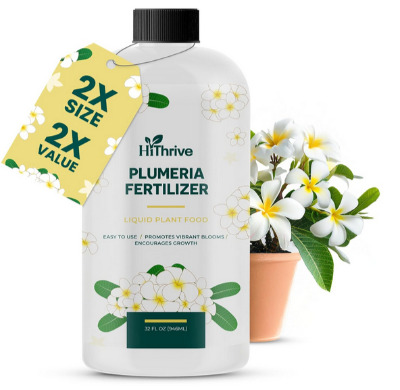
32oz Plumeria Fertilizer – Makes 32 Gallons (Liquid Concentrate)
Product Description
This is a more substantial liquid concentrate that produces a large volume of ready-to-use fertilizer solution. One 32-ounce bottle can make 32 gallons of diluted product, which is a significant amount of usable fertilizer for your plumeria plants.
The bottle comes with clear mixing instructions printed on the label. You add a small amount of concentrate to water—the specific ratio depends on whether you want stronger or lighter feeding—and you’ve got a gallon of ready-to-use plant food.
This product takes the concentrate approach to its logical conclusion: maximum value in a single container. If you have multiple plumeria plants or a whole tropical garden, this size makes sense.
Best Use Cases
This product is perfect for anyone with five or more plumeria plants, or for people who grow multiple types of tropical plants and want one fertilizer that works for all of them.
It’s also ideal for gardeners who water frequently and want to apply fertilizer at every watering session. Since you can keep a gallon of mixed solution ready, you just grab the watering can and go.
If you have plumeria in containers and like to feed lightly but frequently, this size lets you do that without running out of product. The 32 ounces stretch to cover dozens and dozens of applications.
It’s a great choice if you want to test liquid feeding extensively before committing to larger quantities. Thirty-two gallons is enough volume to use the product through an entire growing season, so you’ll get a thorough sense of whether liquid feeding works for your situation.
Key Features Explained
The massive dilution ratio—up to 32 times dilution—makes this concentrate extremely economical. You’re paying for the active ingredients, not for water and packaging.
The product is formulated to work at various dilution strengths, which gives you flexibility. You can make it stronger during peak bloom season when plants are flowering heavily, or weaker during early spring growth when flowers aren’t the priority yet.
The 32-ounce bottle size means you make your own custom volumes. You don’t have to use it all at once or worry about opened bottles losing potency. Keep the concentrate bottle sealed and mix what you need when you need it.
Like other liquid concentrates, this product works quickly. When diluted and applied to soil or foliage, the nutrients are available to roots within days.
Real-Life Usage Insight
Working with this product means mixing is very simple. You fill a gallon container with water, add the concentrate according to the ratio on the bottle, stir, and you have a gallon of fertilizer solution. Many people mix 5 or 10 gallons at a time and store it in covered containers.
From there, you apply the solution during normal watering. If you water your plumeria every other day, you might apply the fertilizer solution every other day too, or every third day during the growing season.
Results come quickly because you’re applying diluted liquid directly to the root zone. Within two to three weeks of consistent applications, you’ll notice healthier growth and improved flowering.
Honest Pros and Cons
Pros:
- Exceptional value; 32 ounces makes massive volume
- Extremely economical if you feed regularly
- Flexible dilution lets you adjust strength
- No waste; you mix exactly what you need
- Works quickly for rapid results
- Great for feeding entire plant collections
- Long shelf life for the bottle
Cons:
- Requires planning and advance mixing
- You need containers for storing mixed batches
- High dilution ratios require careful measuring to get right
- More complex than simple granular products
- Requires more infrastructure (containers, measuring tools)
Performance Discussion
When mixed and applied correctly, this product delivers excellent results. The nutrient profile is solid, and the huge volume of prepared solution means you can maintain consistent feeding schedules.
The key to success is following the dilution instructions carefully. If you mix too strong or too weak, results suffer. Take time to understand the ratio on your bottle and measure accurately for the first few batches.
This product performs best for serious plant collectors and gardeners who have space for mixing and storing diluted solutions. It’s not ideal if you prefer one-step, grab-and-apply solutions.
Ease of Use
Mixing takes a few extra steps compared to simple granular products, but it’s not complicated. Following the label instructions for your first batch ensures you get the ratios right.
Once you’ve mixed a batch or two, you understand the process and can do it by feel. Many gardeners mix their fertilizer solution as a quick weekend task, then apply it throughout the week.
Application is easy once you have mixed solution ready. You just pour it when you water—similar to watering with plain water but with added nutrients.
Value for Money
The value here is outstanding if you have multiple plants or feed consistently. The cost per gallon of finished product is remarkably low. You’re paying maybe cents per application when you calculate total cost per ounce.
For a single plumeria plant, this size is overkill. You’d spend more upfront for an amount you might not use fully. For gardeners with three or more plants, it’s economical.
This is a product where buying larger saves you significant money compared to smaller bottles. If you’re serious about growing plumeria, a 32-ounce concentrate bottle is a smart purchase.
Grow More Urea-Free Hawaiian Bud and Bloom 5-50-17
Product Description
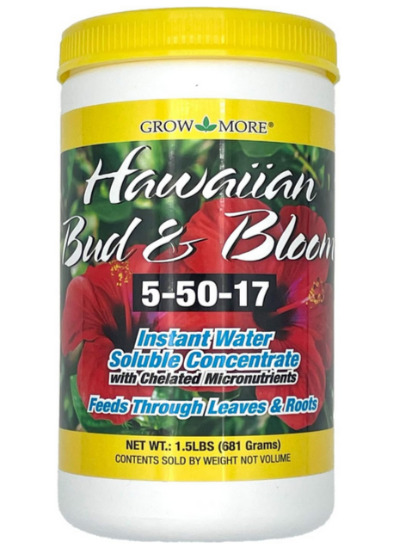
This water-soluble fertilizer has an extreme phosphorus ratio: 5-50-17. That 50 in the middle is the highest phosphorus content of any product we reviewed. The product is specifically designed to boost flowering and is particularly popular in Hawaii for tropical flowering plants.
The “urea-free” designation matters for certain growers. Urea is a common nitrogen source, and some growers prefer avoiding it for various reasons. This product uses other nitrogen sources instead.
The 1.5-pound package contains granules that dissolve completely in water, creating a clear solution. You apply it as a dissolved liquid rather than as particles in soil.
Best Use Cases
This product is a specialized bloom booster best used during the flowering period when your plumeria is already setting buds. It’s not an all-purpose fertilizer for all seasons but a focused tool for maximizing flower production.
If your plumeria buds slowly or produces fewer flowers than you’d like, this product can help change that. The ultra-high phosphorus ratio pushes the plant toward flowering harder.
It works well for container-grown plumeria where you can control feeding precisely. Potted plants benefit from the aggressive bloom-pushing formula.
It’s ideal for people competing in shows or displaying plants professionally. The emphasis on bloom quantity and size pays off in that context.
Key Features Explained
The 5-50-17 ratio is extreme compared to other formulas. That 50 phosphorus rating is nearly double what standard plumeria fertilizers contain. This extreme ratio tells you the product is specialized for one job: making flowers.
The high potassium (17) supports strong stems and healthy flowers, preventing weak, droopy blooms that crack under their own weight.
The water-soluble format means complete, fast dissolving. There’s no residue or undissolved particles. You get a clear solution that’s absorbed quickly.
The urea-free nitrogen is gentler on foliage and less likely to cause nitrogen burn at high concentrations. If you’re feeding heavily during bloom season, urea-free products are safer.
Real-Life Usage Insight
Using this product means dissolving the granules in water according to the label ratio, then applying the solution to your plumeria plants. You typically apply it every one to two weeks during the blooming season.
The extreme phosphorus content means you should be careful not to overapply. It’s easy to push too hard with a product this specialized. Follow the label instructions carefully—more is not better.
Results show quickly once you start using this product. Within one to two weeks, you’ll see increased bud formation. Existing buds swell and open more fully. Flowers might be slightly larger than normal.
Honest Pros and Cons
Pros:
- Extreme phosphorus ratio maximizes blooms
- Water-soluble dissolves completely
- Very focused on flowering performance
- Urea-free nitrogen is gentler
- Works quickly for visible results
- 1.5-pound package gives extended use
- Perfect for high-performance growers
Cons:
- Too specialized for all-season feeding
- Risk of overapplying with such a strong formula
- Not ideal as a complete nutrient solution
- Can cause nutrient imbalances if used exclusively
- Expensive per application
- Requires discipline to avoid overfeeding
Performance Discussion
This product absolutely delivers on its promise of maximizing flowers. Plants fed with this during bloom season produce more blooms and larger flowers than plants fed with balanced fertilizers.
The trade-off is that the extreme phosphorus ratio isn’t balanced for healthy plant growth overall. Extended use of only this product can create nutrient imbalances. It’s best alternated with more balanced feeding or used during peak bloom season only.
The product works best for people who understand nutrition and adjust their feeding approach seasonally. If you feed with a balanced formula all season and switch to this for the peak bloom period, you get excellent results.
Ease of Use
Dissolving the granules is straightforward. You follow the label instructions, mix into water, and apply. It’s simple chemistry—granules completely dissolve with no residue.
The water-soluble approach means zero mess. Unlike granular fertilizers that might scatter, or concentrates that require measuring, you just dissolve, pour, and apply.
One-time weekly or biweekly applications fit easily into most watering routines.
Value for Money
The cost is higher than balanced fertilizers, and that reflects the extreme formulation. You’re paying for specialized performance, not economy.
That said, if you use it strategically—only during peak bloom season, only during every other watering—the 1.5 pounds lasts quite a long time.
The value depends on your goals. If maximum blooms are your priority and you have the budget, this product pays for itself in spectacular flowers. If you just want decent blooming and healthy plants on a budget, a more balanced product is better value.
Leaves and Soul Plumeria Professional Liquid Fertilizer – 3-5-4 Complete Blend
Product Description
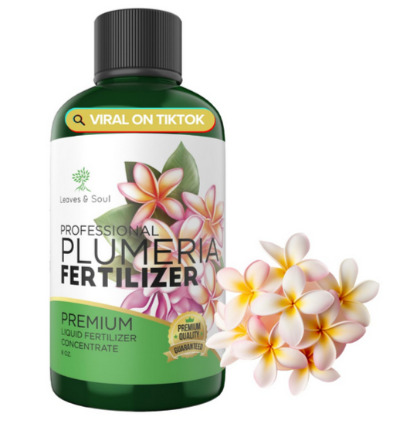
This liquid fertilizer comes in an 8-ounce bottle and features a balanced 3-5-4 nutrient ratio. Unlike the extreme ratios of some other products, this formula is designed to support both growth and flowering throughout the season.
The “professional” designation suggests it’s formulated with expertise. The 3-5-4 ratio gives you moderate nitrogen for leaf development, higher phosphorus for blooms, and moderate potassium for overall health.
The liquid concentrate mixes with water for application. The 8-ounce size matches other entry-level liquid products, making it accessible for gardeners who are new to specialized plant fertilizers.
Best Use Cases
This product works well as an all-season liquid fertilizer for plumeria. The balanced nutrient ratio means you can use it throughout the growing season without switching products.
It’s ideal for gardeners who want one liquid product they can rely on from spring through fall. No need to change to different formulas depending on what stage the plant is in.
It’s great for beginner plumeria growers who want something straightforward and reliable without getting into specialized bloom-boosting formulas.
It’s also suitable for indoor plumeria plants or those grown in containers where feeding precision helps prevent problems.
Key Features Explained
The 3-5-4 ratio balances growth with flowering. You get enough phosphorus for decent blooming without being so extreme that you neglect other plant needs.
The moderate nitrogen (3) supports healthy green foliage without pushing so much vegetative growth that it delays flowering.
Being a complete professional blend means it includes all necessary micronutrients beyond just the main nutrients. Your plant gets everything it needs from a single product.
The liquid concentrate format means fast absorption and quick results. The nutrients are bioavailable—your plant can use them rapidly.
Real-Life Usage Insight
You mix this product with water according to label instructions and apply it to your plumeria every week or two during the growing season. The mixing process is simple and takes less than a minute.
The moderate nutrient concentrations mean there’s less risk of overfeeding. You can apply it consistently without worrying about burning the roots or over-stimulating the plant.
Results develop over several weeks of consistent application. You’ll see steady improvement in leaf color, growth rate, and bud formation rather than dramatic overnight changes.
Honest Pros and Cons
Pros:
- Balanced formula works year-round
- Professional quality product
- Low risk of overfertilizing
- Includes complete micronutrient profile
- Simple mixing and application
- Great for beginners
- Consistent results with regular feeding
Cons:
- Not a extreme bloom booster for heavy flowering
- 8-ounce bottle runs out for large gardens
- Requires consistent weekly applications
- Results appear gradually rather than dramatically
- More expensive per ounce than granular products
Performance Discussion
This product performs reliably and consistently. Gardens and collections fed with this product thrive. Blooming is good though not maximized compared to specialized bloom formulas.
The strength of this product is its balance. It creates healthy, vigorous plants that grow well and flower regularly. You’re not getting extreme blooming numbers, but you’re getting reliable, steady performance.
This is a product that works best for gardeners who value plant health equally with flowering. If you feed with this product, your plumeria will be in good condition overall, not pushing hard in one direction.
Ease of Use
Mixing is simple and quick. The 8-ounce bottle is easy to handle and store. You can keep it in a kitchen cabinet or garden shed without it taking up much space.
Weekly applications fit naturally into most watering routines. You water your plant, and while you’re at it, you mix a batch of this fertilizer and apply it too.
Cleanup is minimal since you’re just working with liquid solutions.
Value for Money
The 8-ounce bottle costs reasonably and makes multiple applications. For a single or few plumeria plants, it’s a good value.
For large collections, you’ll need multiple bottles throughout the season, which increases costs. At that point, larger concentrate bottles might offer better economy.
The value for beginners is strong. You get a professional product that’s easy to use correctly, which means fewer mistakes and better results. That’s worth paying slightly more than the absolute cheapest option.
Comparison Insights: Side-by-Side Analysis
Each product takes a different approach to feeding plumeria, and the right choice depends on your growing style and goals.
Format Comparison
Liquid concentrates give you speed and control. You mix and apply, and results appear quickly. They require more attention and planning but offer flexibility for adjusting nutrition.
Granular products offer simplicity and hands-off feeding. You sprinkle and water, and nutrients release gradually. They require less frequent applications but less flexibility.
Nutrient Ratio Analysis
Balanced formulas (3-5-4) support healthy growth and reliable blooming but don’t maximize flowers. They’re best for gardeners who value overall plant health.
Bloom-focused formulas (5-30-5, 5-50-17) push flowering hard but risk nutrient imbalances if used exclusively. They’re best for gardeners who prioritize blooming above all else.
Application Frequency
Liquid products typically need weekly applications. This is a commitment but offers weekly opportunities to adjust feeding if plants show problems.
Granular products need monthly or every-other-week applications. This is less demanding but less flexible for making adjustments.
Cost Comparison
Large concentrate bottles offer the lowest cost per application when you calculate total volume produced.
Small bottles cost more per application but represent lower upfront investment for testing.
Granular products offer good value with simple math—a 2-pound bag costs a set price and makes a set number of applications.
Specialized bloom boosters cost more but deliver specific performance during specific seasons.
Buying Guide: How to Choose Your Plumeria Fertilizer
Choosing the right product depends on several factors specific to your growing situation.
Start with your water schedule. If you water frequently and enjoy daily or near-daily plant work, liquid products let you feed at every watering. If you water less often, granular products work better.
Consider your plant count. A single plumeria does fine with an 8-ounce bottle. Multiple plants justify a larger concentrate. More than five plants? A 32-ounce concentrate becomes economical.
Think about your goals. Do you want maximum blooming or healthy balanced growth? Specialized formulas maximize blooming. Balanced formulas create healthier overall plants.
Evaluate your budget. Large upfront costs for economy sizes work if you commit to using the full volume. Smaller sizes let you test before investing heavily.
Consider your experience level. Simpler products (granular, balanced liquid formulas) suit beginners better. Complex products (specialized bloom boosters) suit experienced growers better.
Check your storage space. Liquid concentrate bottles need cool storage. Granular products take minimal space. Large containers of mixed solution need storage space.
Think about precision. If you want exact control over feeding, liquid products let you adjust. If you prefer consistent preset feeding, granular works better.
Who Should Buy These Products
Different products appeal to different growers.
Buy the 8-ounce liquid concentrates if you have one to three plumeria plants, prefer liquid feeding, and want to test whether this approach works for you before committing to larger sizes.
Buy the granular 5-30-5 if you have in-ground plumeria, prefer simple applications, forget to remember feeding schedules, or have limited storage space.
Buy the 32-ounce concentrate if you have five or more plumeria plants, feed consistently, enjoy liquid feeding, and want the lowest cost per application.
Buy the water-soluble bloom booster if you’re growing for show, want maximum bloom production, understand fertilizer chemistry, and have the budget for specialized formulas.
Buy the balanced 3-5-4 formula if you’re a beginner, want all-season feeding with one product, value plant health equally with blooming, or prefer professional-grade products with complete nutrition.
Common Mistakes to Avoid
Fertilizing plumeria incorrectly creates problems rather than solving them.
Feeding during dormancy. If your plumeria loses leaves in winter and enters dormancy, stop fertilizing. Winter feeding pushes growth that’s immediately damaged when the plant rests. Wait until spring when new growth appears to resume feeding.
Overfertilizing. More fertilizer doesn’t equal better plants. Too much nutrient burns roots, damages foliage, and can actually reduce blooming. Follow label instructions carefully. When in doubt, use less.
Using all-purpose fertilizer exclusively. A generic 10-10-10 fertilizer supports healthy plants but doesn’t optimize blooming. Plumeria specifically benefits from higher phosphorus formulas.
Not watering enough after application. Both granular and liquid fertilizers need water to activate and be absorbed. If you apply and then don’t water, the nutrients don’t reach the roots. Always water thoroughly after fertilizing.
Forgetting about micronutrients. Don’t buy the cheapest fertilizer with only nitrogen, phosphorus, and potassium. Plumeria needs iron, magnesium, boron, and other trace elements. Complete fertilizers are worth the small extra cost.
Applying to dry soil. Always water your plumeria before fertilizing. Application to dry soil can cause nutrient burn and won’t deliver nutrients effectively. Water first, then fertilize.
Switching products constantly. Stick with one product for at least a full growing season before deciding it doesn’t work. Constant switching confuses results. Give each product time to show what it can do.
Ignoring the plant’s appearance. If your plant shows yellowing, weak growth, or no blooming, it might need different nutrition. Adjust your approach based on what the plant tells you, not just what the label says to do.
Honest Performance Summary
Here’s what each product actually delivers in real growing conditions:
The two 8-ounce liquid products deliver similar results. They work quickly, give you control, and work great for small numbers of plants. The Leaves and Soul formula is slightly more balanced while the first product is more phosphorus-forward.
The granular 5-30-5 is foolproof and economical. It doesn’t deliver flashy results but consistently produces healthy plants that bloom reliably. It’s the product most gardeners would have the most success with.
The 32-ounce concentrate is the economy champion for people committed to consistent liquid feeding. Results match other liquid products but at a fraction of the cost per application.
The bloom booster delivers on its promise of maximum flowers but requires knowledge to use correctly. In experienced hands, it’s a game-changer. In inexperienced hands, it can create problems.
The balanced professional formula from Leaves and Soul is a solid all-season product that creates healthy plants and reliable blooming. It’s a middle-ground option that does everything well.
Final Verdict
The best fertilizer for your plumeria depends on your specific situation, but we can offer clear recommendations for different scenarios.
For beginners or anyone wanting simplicity: Go with the Nelson granular 5-30-5. You can’t go wrong with this product. It’s simple, affordable, and produces excellent results.
For serious collectors or people with multiple plants: The 32-ounce concentrate offers unbeatable value. The upfront cost is low, and you get months of feeding for reasonable money.
For maximum blooming: Use the Grow More bloom booster during peak flowering season, rotating with a balanced formula the rest of the season.
For professional or balanced results: The Leaves and Soul 3-5-4 is a quality all-season choice that supports both growth and blooming.
For testing liquid feeding: Either 8-ounce concentrate works well. The Leaves and Soul offers better balance; the other product offers more bloom focus.
The truth is that plumeria is relatively forgiving about fertilizer choices. Any of these five products will create blooming, healthy plants. The differences are in the details, efficiency, and optimization.
Start with whatever product appeals to your situation. Feed consistently during the growing season, stop during dormancy, follow label instructions, and watch your plumeria reward your care with spectacular flowers. The right fertilizer makes a difference, but your attention and consistent care makes the biggest difference of all.
Good plumeria blooming starts with good fertilizer, but it also requires appropriate light, well-draining soil, and reasonable watering. Get those basics right first, then optimize with the right fertilizer. That’s the formula for plumeria success.

Hi, I’m Mary, the founder of GardenCure.com. I’m passionate about creating healthy, beautiful gardens and well-kept lawns. I share practical experience and trusted advice on garden and lawn gear that truly works. With the support of my dedicated research team, our writers produce honest, in-depth reviews using reliable, authentic sources—helping you choose the right tools with confidence for your outdoor space.