How to Get Rid of Clover in Lawn?
If you’re looking out your window at your grass right now and seeing patches of those pesky three-leaf plants spreading across your yard, you’re not alone. Clover is one of the most common lawn weeds that homeowners struggle with. The good news? You can get rid of it.
In this article
This guide walks you through everything you need to know about removing clover from your lawn. We’ll cover why it shows up in the first place, what methods actually work, and how to keep it from coming back.
What Is Clover and Why Does It Grow in Grass?
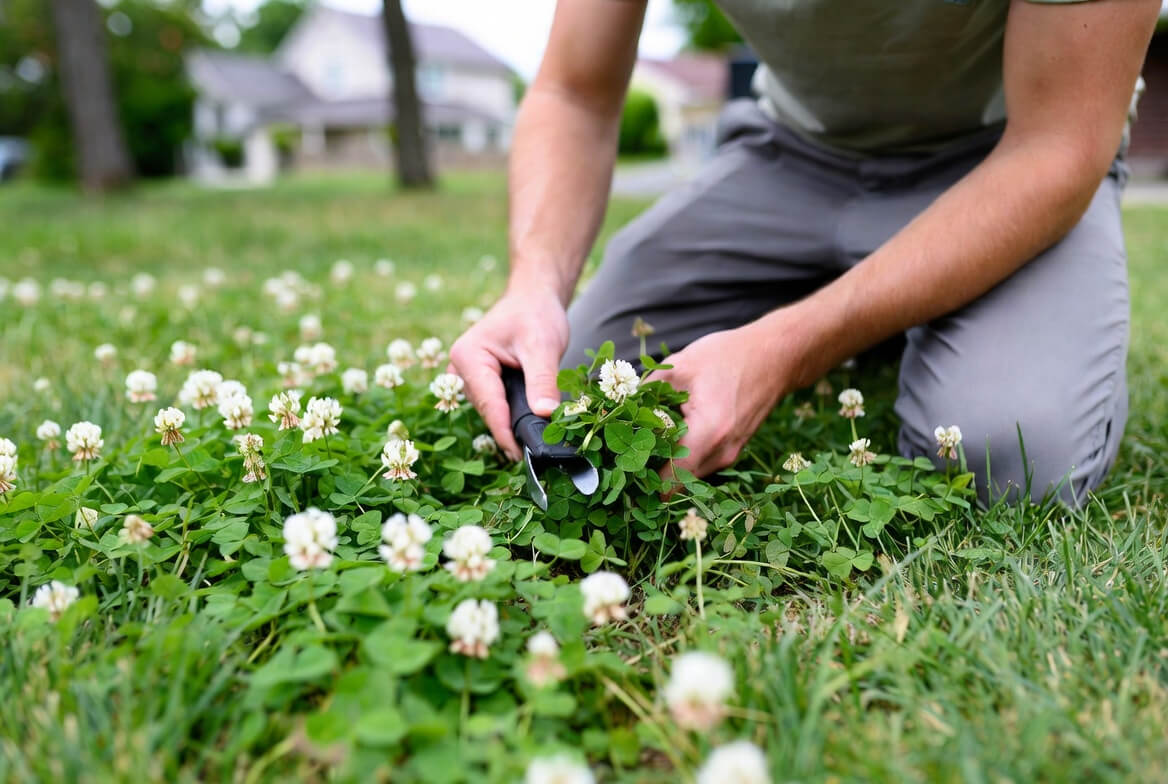
Clover is a low-growing plant with three rounded leaves. It spreads through tiny seeds and runners that creep across the soil. You’ll find white clover, red clover, and hop clover as the most common types in home yards.
Here’s the thing about clover: it doesn’t just pop up for no reason. Your lawn invites it in. Clover loves thin grass, compacted soil, and lawns that lack enough nitrogen. When your grass is weak or has bare patches, clover seeds blow in and take root.
The plant is actually pretty smart from a survival standpoint. It fixes nitrogen from the air and stores it in the soil. This is why clover can thrive where regular grass struggles. It’s tough and doesn’t need much to survive.
Why You Might Want to Remove It
Before we jump into removal methods, let’s talk about why you’d want clover gone in the first place.
Some people actually like clover. It’s not harmful to your yard. It doesn’t kill grass. It even attracts bees, which is great for your garden and the environment. Clover is totally green and makes your yard look fuller.
But if you want a uniform grass lawn, clover ruins that look. It sticks out with its lighter green color and different leaf shape. It spreads fast once it gets a foothold. For people who like neat, clean lawns, clover is a weed that needs to go.
The choice is yours. Just know that getting rid of it takes work and effort, but it’s totally doable.
Method 1: Pull It Out by Hand
This is the cheapest method and works great for small clover patches. If you have just a few clumps, hand pulling is your best bet.
Here’s how to do it:
Water your lawn first. Wet soil makes pulling easier. Give the grass a good drink and wait a few hours.
Get down on your knees. Use a hand weeding tool or your hands to grab the clover close to the soil. Wrap your fingers around the base of the plant.
Pull steadily and firmly. Don’t jerk or yank. Instead, pull with steady pressure while twisting slightly. This helps you get the entire root system out. Clover roots don’t go very deep, but you need to get as much as possible.
Keep at it. One pull doesn’t always get the whole plant. If the top breaks off, keep digging for the roots. Remove as much of the root system as you can find.
Fill in the bare spot. Once you pull out the clover, you’ll have a hole. Loosen the soil and scatter grass seed. Keep the spot moist until new grass grows. This stops new clover seeds from landing there.
This method takes time and patience. If your yard has a lot of clover, hand pulling alone won’t cut it. But for small problems, it’s effective and costs nothing.
Method 2: Use Vinegar Spray
Vinegar kills many lawn weeds, and clover is no exception. The acetic acid in vinegar dries out plant cells and destroys the leaves.
Get the right vinegar. Regular household vinegar has 5% acetic acid. This works but slowly. For faster results, use horticultural vinegar with 20% acetic acid. It works quicker but be careful—it burns grass too.
Mix your spray. For household vinegar, mix it straight or with a little water. For horticultural vinegar, follow the label’s directions because it’s strong stuff.
Spray on a sunny day. Pick a day with no rain in the forecast. Spray the vinegar directly on the clover leaves until they’re wet. Sunny weather helps the vinegar work faster.
Repeat as needed. You might need two or three applications to kill the clover completely. Spray again after a week if you still see green patches.
Watch your grass. Vinegar kills any plant it touches, not just clover. Be careful not to spray nearby grass. Apply vinegar only to the clover leaves.
Vinegar is cheap and natural. It won’t harm your family or pets. But it only kills what you spray, so new clover can grow back from roots or seeds.
Method 3: Apply Herbicide
Herbicides are the heavy hitters of weed control. They’re chemicals made to kill plants, and many work great on clover.
Pick the right product. You have two main options: selective herbicides and non-selective herbicides.
Selective herbicides kill broadleaf weeds like clover but leave grass alone. These are perfect for clover in your lawn because they target the problem without hurting your grass.
Non-selective herbicides kill everything they touch. They’re useful for clover in walkways or garden beds, but don’t use them on your lawn unless you want to kill the grass too.
Read the label. Always check what the herbicide kills and what the safe application rate is. Some products work on clover. Others don’t. The label tells you exactly what you’re getting.
Apply at the right time. Spring and fall are ideal. Clover grows slower in these seasons, and cooler temperatures help herbicides work better. Avoid applying on hot summer days.
Spray properly. Follow the product’s instructions exactly. Usually, you mix it with water in a sprayer. Cover all the clover leaves thoroughly. Don’t spray on windy days—the wind carries the spray where you don’t want it.
Be patient. Herbicides don’t work overnight. Give them at least a few days to a week to show results. Most kill clover within two weeks.
Reapply if needed. Sometimes one application doesn’t get everything. The label tells you how long to wait before reapplying. Usually, it’s two to four weeks.
Herbicides are effective and fast. The downside? They use chemicals, and some people don’t like that. Also, they can be pricey, and you have to follow the label instructions carefully.
Method 4: Smother It Out
Smothering kills clover by blocking sunlight. No light means no photosynthesis, and the plant dies.
Lay down cardboard or landscape fabric. Cover the clover patch completely. Make sure there are no gaps where light sneaks through. Use heavy-duty material that won’t tear easily.
Weigh it down. Use rocks, bricks, or soil to hold the material down. If wind lifts it, the clover gets light again.
Wait several weeks. Clover doesn’t die right away. Give it four to six weeks. You want to make sure the entire plant is dead, roots and all.
Remove the material. After several weeks, pull back the cardboard or fabric. The clover should be gone. The soil underneath will be dark and rich.
Plant new grass. Spread grass seed and water it in. The fresh seed will grow into your lawn without clover competition.
This method takes patience but works. It’s free if you have cardboard at home. The downside? Your lawn looks weird during the process, and you have to wait several weeks.
Method 5: Overseed Your Lawn
This is more of a long-term fix than a direct attack on clover. The idea is simple: thick grass crowds out clover.
Test your soil first. Clover loves thin grass, which means your lawn probably has problems. Get a soil test done. It shows what nutrients are missing.
Fix soil issues. Add lime if your soil is too acidic. Add sulfur if it’s too alkaline. Mix in compost to improve soil structure. Most clover problems come from poor soil.
Seed your lawn. Pick quality grass seed that does well in your climate. Overseed bare spots and thin areas heavily.
Fertilize regularly. Grass needs nitrogen to grow thick and dark green. Clover can’t compete with healthy, thick grass. Apply nitrogen-rich fertilizer in spring and fall.
Mow correctly. Keep your grass at the right height for your grass type. Usually, that’s two to three inches. Longer grass shades the soil and stops weed seeds from landing.
Water deeply. Water less frequently but deeper. This grows deep roots in your grass, making it stronger and more competitive.
This method takes time. You won’t see results right away. But over weeks and months, your lawn thickens up. The clover can’t compete with healthy grass and gets pushed out naturally.
Method 6: Boiling Water
This is simple, cheap, and works in a pinch.
Heat the water. Boil water on your stove. You need hot water—the hotter the better.
Pour it on the clover. Carefully pour the boiling water directly on the clover plant. The heat kills the plant cells instantly.
Watch out for safety. Boiling water is dangerous. Be careful not to splash yourself or others. Wear boots and long pants to protect your skin.
Repeat if needed. One pour might not get all the roots. If you see clover regrowing in the same spot, pour more hot water.
This method works great for clover in cracks in sidewalks, between pavers, or in garden beds. It’s safe for pets and kids once it cools down. The catch? It only works on the plants you pour water on, and it’s tedious if you have a big clover problem.
Method 7: Use a Propane Torch
Flame weeding burns the clover to death. It works fast and is surprisingly safe when done right.
Get a propane torch. These attach to propane canisters and shoot a flame. You can buy them at garden centers.
Read the manual. Seriously. Propane torches are powerful and need respect. Know the safety rules before you start.
Target the clover. Hold the flame over the clover plant for a few seconds. You want to see the leaves wilt and turn brown. You don’t need to burn the whole plant—just enough damage to kill it.
Do it on a calm day. Wind spreads the flame unpredictably. Wait for still weather.
Be careful near structures. Don’t use a propane torch near wooden decks, fences, or houses. The flame spreads easily.
This method works fast and you see results right away. The downside? Propane torches are dangerous if you’re not careful. They also cost money to buy or rent. And they kill the grass around the clover too, so you have to reseed.
Common Mistakes People Make
Mistake 1: Killing only the top. Clover grows back from roots. If you only kill the leaves, it comes right back. You have to hit the roots.
Mistake 2: Not maintaining afterward. Once you kill the clover, you think you’re done. Wrong. New seeds blow in and grow. You have to keep your grass thick and healthy to stop new clover.
Mistake 3: Using the wrong herbicide. Some herbicides don’t kill clover well. Read the label and make sure your product targets clover specifically.
Mistake 4: Ignoring the soil. Clover grows because something is wrong with your soil or grass. If you don’t fix the root problem, clover comes back.
Mistake 5: Giving up too fast. Many clover removal methods take time. If you only try for a week and then stop, clover survives. Stick with it.
Preventing Clover from Coming Back
Getting rid of clover is half the battle. Keeping it gone takes ongoing work.
Keep your grass thick. Dense grass chokes out new clover seeds. Overseed bare patches right away. Spread seed in spring and fall.
Fertilize with nitrogen. Clover thrives in nitrogen-poor soil. Grass loves nitrogen. Feed your grass regularly with a balanced fertilizer. This tips the competition in grass’s favor.
Mow high. Taller grass shades more soil and keeps weeds from taking hold. Never cut more than one-third of the grass blade. Mow so the grass stays two to three inches tall.
Water properly. Deep, infrequent watering grows deep roots in grass. Shallow, frequent watering helps weeds. Let the soil dry between waterings.
Fix your soil. Get a soil test. Most lawns need lime or sulfur. Adding compost helps too. Good soil grows good grass and stops weeds.
Kill weeds fast. As soon as you spot clover, deal with it. Don’t wait. Small patches take minutes. Big problems take hours.
Don’t use broadleaf herbicide everywhere. Some people spray broadleaf herbicide every season as prevention. This kills clover but weakens your grass over time. Use prevention methods instead.
Should You Even Remove Clover?
Before you spend weeks fighting clover, think about this: do you actually want to?
Clover has benefits. It fixes nitrogen in the soil, which helps your grass grow better once you stop fighting it. It’s tougher than grass and requires less water. It doesn’t get diseases like grass does. Bees love it. Clover helps your lawn be more resilient and eco-friendly.
Some lawn experts now say a little clover in your lawn is actually good. It fills space, looks green, and reduces how much work you need to do. Your lawn stays healthier with less effort.
If you’re okay with a mixed lawn of grass and clover, just let it be. Mow it regular. Water it. The clover and grass will coexist just fine.
But if you want a pure grass lawn, you need to fight clover. There’s no magic solution. You need to pick a method, stick with it, and follow up with maintenance.
Quick Reference: Which Method to Use When
For small patches: Hand pull or vinegar spray. It’s cheap and quick.
For medium patches: Herbicide spray. It’s fast and effective.
For large areas: Overseed and strengthen grass. This takes time but fixes the problem long-term.
For problem areas: Flame weeding or boiling water. These are fast and don’t add chemicals.
For permanent solutions: Fix your soil and grass health. This stops clover from coming back.
Wrapping It Up
Clover is a persistent weed, but you can get rid of it. Pick a method that fits your situation. For small patches, hand pull or use vinegar. For larger areas, herbicide or smothering work better. For long-term success, focus on making your grass thicker and healthier.
The truth is, the best weed control is thick, healthy grass. When your lawn grows dense and dark green, clover can’t compete. Focus on soil health, proper mowing, regular feeding, and good watering. This approach stops clover before it starts.
Most importantly, don’t give up. Clover didn’t grow overnight, and it won’t disappear overnight either. Consistent effort over weeks and months pays off. Your lawn will be clover-free soon.
Now get out there and reclaim your yard. Your grass is ready to win this fight, and you’ve got all the tools you need to make it happen.
Frequently Asked Questions About Clover Removal
Q: Is clover bad for my lawn?
A: Clover isn’t toxic or harmful to grass. Both can grow together. It’s purely a personal preference. If you like how it looks, leave it. If you want a pure grass lawn, remove it.
Q: Will clover kill my grass?
A: No. Clover spreads, but it doesn’t kill grass. It competes for space and nutrients, but grass and clover can coexist.
Q: Can I just ignore the clover?
A: Yes. Clover won’t hurt anything. It might spread, but you can mow it like any other grass. Some people think yards with clover look fine.
Q: How long does it take to kill clover?
A: It depends on the method. Vinegar and boiling water show results in days. Herbicide takes one to two weeks. Smothering takes four to six weeks. Soil improvement takes weeks to months.
Q: Will clover come back after I kill it?
A: Yes, unless you address the conditions that let it grow. Keep your grass thick and feed it nitrogen. Don’t let bare patches develop. This stops new clover from growing.
Q: Is herbicide safe for kids and pets?
A: Most broadleaf herbicides are safe once they dry. Read the label for safety information. Keep kids and pets off the lawn until it’s dry. If you’re nervous about chemicals, use organic methods like vinegar, hand pulling, or smothering.
Q: When is the best time to remove clover?
A: Spring and fall are ideal. Clover is actively growing, and cooler weather helps chemicals work better. Summer heat makes some removal methods less effective.
Q: Can I use clover for anything?
A: Yes. Clover is edible. You can add it to salads. It’s nutritious and tastes fine. Bees make honey from clover flowers. Some farmers plant clover as a cover crop to improve soil.
Q: Why does clover keep coming back?
A: Because the soil or grass conditions are still favorable. Thin grass, poor soil, or compacted earth invite clover. Fix these problems and clover stops coming back.
Q: Do I need professional help?
A: Not usually. Clover removal is something you can handle yourself. But if your whole yard is clover or your grass is dying, a lawn care professional can help diagnose soil problems.
Getting rid of clover takes work, but it’s doable. Pick your method, stay consistent, and your lawn will be clover-free before you know it. The key is not just killing the clover you see now, but making your lawn hostile to new clover growth in the future. Strong grass, good soil, and proper care beat clover every time.

Hi, I’m Mary, the founder of GardenCure.com. I’m passionate about creating healthy, beautiful gardens and well-kept lawns. I share practical experience and trusted advice on garden and lawn gear that truly works. With the support of my dedicated research team, our writers produce honest, in-depth reviews using reliable, authentic sources—helping you choose the right tools with confidence for your outdoor space.