

5 Best Broadleaf Herbicide for Lawns In 2026
Maintaining a lush, green lawn requires constant vigilance against broadleaf weeds that threaten to overtake your turf. These unwanted plants compete with grass for nutrients, water, and sunlight, creating unsightly patches across your yard. Finding the right herbicide makes all the difference between a pristine lawn and one riddled with dandelions, clover, and spurge.
In this article
This comprehensive review examines five top-performing broadleaf herbicides that deliver professional results. Each product has been evaluated based on effectiveness, ease of application, turf safety, and overall value. From budget-friendly options to premium solutions, you’ll discover which herbicide best fits your lawn care needs.
Understanding Broadleaf Weed Control
Broadleaf weeds present unique challenges compared to grassy invaders. Their wide leaves and spreading growth patterns make them highly visible in turf. Common culprits include dandelions, clover, plantain, chickweed, and spurge. These weeds establish deep root systems that make removal difficult without chemical intervention.
Post-emergent herbicides target actively growing weeds, working through leaf absorption and systemic movement throughout the plant. The chemicals disrupt growth hormones, causing stems to twist and leaves to curl before the weed dies. Pre-emergent herbicides prevent seed germination, creating a barrier against future infestations.
Temperature plays a crucial role in herbicide effectiveness. Most products work best when applied during active growth periods with daytime temperatures between 50°F and 85°F. Soil moisture also impacts results—adequate moisture helps herbicides translocate through plants efficiently.
Top 5 Broadleaf Herbicides Reviewed
1. Southern Ag Amine 2,4-D WEED KILLER, 32oz – Quart
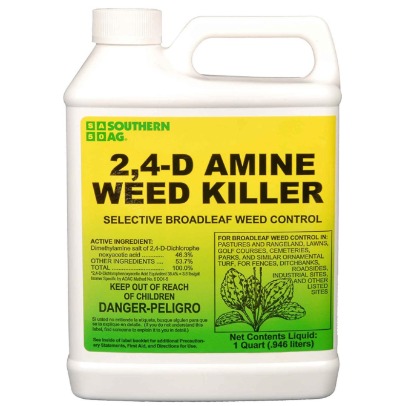
This concentrated liquid herbicide delivers economical broadleaf weed control for homeowners and professionals. The amine formulation provides low volatility, reducing drift concerns during application.
Product Description:
Southern Ag Amine 2,4-D contains 3.8 pounds per gallon of 2,4-D acid equivalent in a low volatile amine form. The concentrated formula requires mixing before application, typically using 2-3 tablespoons per 1,000 square feet when mixed in 3-5 gallons of water. The 32-ounce bottle treats large areas at minimal cost, making it extremely economical per application.
The herbicide works through post-emergent contact and systemic action. After absorption through leaves, the active ingredient moves throughout the plant, disrupting growth hormones. This causes abnormal cell development, leading to death within 7-14 days of application.
Pros:
- Extremely cost-effective—low use rate of 1 to 4 pints per acre
- Controls numerous broadleaf weeds and woody plants
- Versatile application sites including lawns, pastures, rangeland, and non-crop areas
- Low volatile amine form reduces drift and odor concerns
- Compatible with various spray equipment
- Can be used as both pre-emergent and post-emergent herbicide
- Effective on established weeds including thistles
- Safe for many grass types when used according to directions
- Long shelf life when stored properly
Cons:
- Requires careful mixing and measurement for proper dilution
- May cause injury to sensitive grass types including Bentgrass, St. Augustinegrass, Carpetgrass, and Centipedegrass
- Cannot be used where desirable clovers are present
- Requires protective equipment during mixing and application
- Must avoid drift to susceptible plants and ornamentals
- Not suitable for all lawn types without risk assessment
- Coarse spray application required to prevent overlap issues
Best For:
Homeowners and professionals seeking maximum value for large-area applications. Ideal for treating expansive lawns, pastures, and non-crop sites where budget considerations are important. Works excellently for established fescue, ryegrass, and bluegrass lawns.
2. BASF Drive XLR8 Crabgrass Killer, 64 Ounce
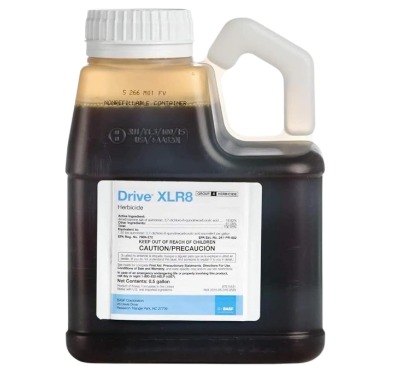
Drive XLR8 represents the latest technology in post-emergent weed control, targeting both grassy and broadleaf weeds with exceptional speed and residual activity.
Product Description:
BASF Drive XLR8 features a proprietary water-based formulation containing quinclorac as the active ingredient. The 64-ounce concentrate treats one acre at full application rate, making it suitable for medium to large properties. Mix 3 tablespoons per gallon of water with 1.5 tablespoons methylated seed oil for 1,000 square feet coverage.
This herbicide stands out for dual-action control. It eliminates crabgrass, foxtail, kikuyugrass, signalgrass, and torpedograss while simultaneously controlling key broadleaf weeds like bindweed, clover, dandelion, black medic, and horseweed. The water-based formula allows rapid absorption through leaves and roots, with translocation throughout the plant.
Pros:
- Broad-spectrum control of 30+ grassy and broadleaf weeds
- Up to 30-45 days residual weed prevention with single application
- Rainfast within 1 hour of application
- Effective on mature crabgrass (4+ tillers)
- Labeled for warm-season and cool-season turf types
- Faster uptake than previous quinclorac formulations
- Tank-mixable with other pre- and post-emergent herbicides
- Works well on residential lawns, golf courses, athletic fields
- Visible weed injury within 7-28 days
- More complete coverage than ester formulations
Cons:
- Higher price point compared to basic 2,4-D products
- Cannot be used on Bahiagrass, Carpetgrass, Centipedegrass, or St. Augustinegrass
- Requires surfactant (methylated seed oil) for optimal results
- Must avoid mowing 2 days before and after application
- Temperature sensitive—not recommended above 80-85°F
- Biotypes of crabgrass in California may show resistance
- Not suitable for golf course greens
- Requires separate purchase of surfactant
Best For:
Property owners facing combined challenges of crabgrass and broadleaf weeds. Excellent choice for professionals managing golf courses, athletic fields, and large residential properties. Best suited for established cool-season turfs like fescue, bluegrass, and ryegrass.
3. PBI Gordon SpeedZone EW Broadleaf Herbicide, 128oz
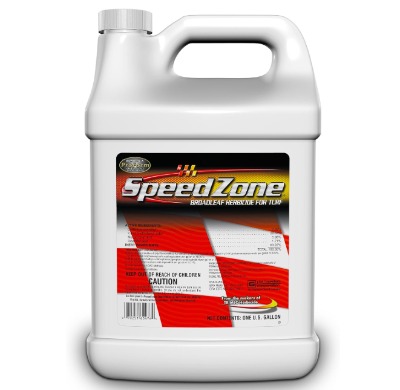
SpeedZone EW delivers rapid visible results through an advanced emulsion-in-water formulation that provides superior leaf coverage and fast weed control.
Product Description:
SpeedZone EW contains four active ingredients working synergistically for broad-spectrum control. The emulsion-in-water formulation improves leaf surface coverage compared to traditional formulations. Mix 1.5 fluid ounces per gallon for warm-season turf or 1.8 fluid ounces for cool-season turf, treating 1,000 square feet per gallon.
The herbicide controls more than 90 broadleaf weeds plus goosegrass and nimblewill—grassy weeds typically resistant to standard broadleaf herbicides. Visible injury appears within hours of application, with complete weed death occurring within 7-14 days.
Pros:
- Visible weed injury within 24 hours of application
- Controls 90+ broadleaf weeds plus select grassy weeds
- Rainfast in just 3 hours
- Advanced EW formulation improves coverage and absorption
- Allows reseeding in only 1 week after application
- Lower odor profile than traditional formulations
- Works effectively in cooler temperatures (above 50°F)
- Tank-mixable with fertilizers and iron supplements
- Suitable for residential, commercial, and golf course use
- No surfactant required for most applications
Cons:
- Premium pricing reflects advanced formulation
- Not labeled for St. Augustinegrass, Bahiagrass, or Centipedegrass
- Cannot be applied to Bentgrass mowed under 1/4 inch
- Must avoid application to lawns with desirable clover
- Requires adequate soil moisture for best results
- May cause temporary turf stress if applied during drought
- Not suitable for all ornamental turf situations
- Carfentrazone sensitivity requires careful application
Best For:
Lawn care professionals and homeowners seeking fast visible results. Ideal for cool-season lawns with severe broadleaf weed pressure. Excellent for properties requiring quick turnaround before events or showings. Works particularly well for Kentucky bluegrass, perennial ryegrass, and tall fescue lawns.
4. Tenacity Turf Herbicide, 8 Ounces
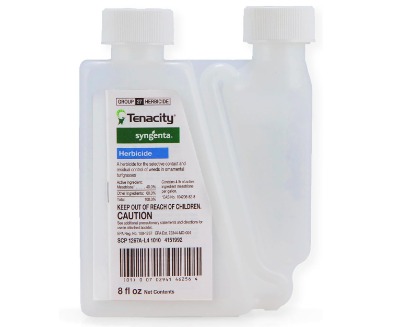
Tenacity offers unique flexibility as both a pre-emergent and post-emergent herbicide, with the remarkable ability to be applied during seeding operations.
Product Description:
Tenacity contains mesotrione at 40% concentration, a selective systemic herbicide classified as a Group 27 HPPD inhibitor. Mix 1/2 teaspoon per gallon of water for spot treatments covering 1,000 square feet, or apply 4-8 fluid ounces per acre for broadcast applications. The 8-ounce bottle provides enough concentrate for multiple applications on average residential lawns.
This herbicide works by inhibiting photosynthesis, preventing carotenoid formation in susceptible plants. Treated weeds turn white as chlorophyll breaks down, followed by necrosis and death within 2-3 weeks. The unique chemistry allows safe application to newly seeded turfgrass—a capability most herbicides lack.
Pros:
- Dual pre-emergent and post-emergent activity
- Controls 46+ broadleaf weeds and grassy weeds including crabgrass
- Can be applied during seeding and overseeding operations
- Safe for Kentucky bluegrass, perennial ryegrass, tall fescue, fine fescue
- Systemic absorption through leaves, roots, and shoots
- Effective against difficult weeds like yellow nutsedge and bentgrass
- Tank-mixable with fertilizers and other herbicides
- EPA reduced-risk pesticide designation
- Long-lasting residual control when applied pre-emergently
- Unique mode of action reduces resistance concerns
Cons:
- Causes temporary whitening (bleaching) of turfgrass foliage
- Higher cost per application than traditional herbicides
- Not recommended for Bermudagrass during active growth
- Requires surfactant for post-emergent applications
- Repeat applications often necessary 2-3 weeks apart
- Sensitive grass types may show injury (Bentgrass, Poa annua)
- Slower visible results compared to traditional herbicides
- St. Augustinegrass use limited to sod production only
- Whitening symptoms last several weeks
Best For:
Homeowners establishing new lawns or overseeding existing turf. Perfect for lawn renovations where weed control during establishment is critical. Excellent choice for managing bentgrass contamination in fairways and roughs. Ideal for properties with crabgrass and yellow nutsedge problems.
5. Trimec 992 Broadleaf Herbicide, 2.5 Gallons
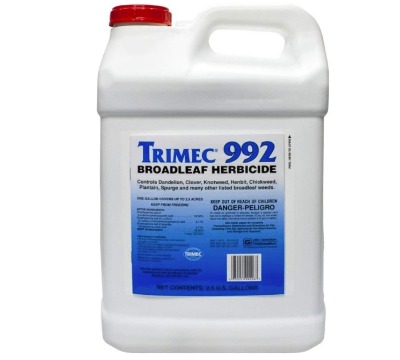
Trimec 992 provides professional-grade broadleaf control formulated specifically for lawn care operators seeking economical, reliable results.
Product Description:
Trimec 992 combines three active ingredients—2,4-D, dicamba, and mecoprop-p—in a single formulation for rapid broadleaf weed control. Apply 1.5 fluid ounces per gallon of water per 1,000 square feet for general applications, or use 3.0-4.0 pints per acre for broadcast treatments. The 2.5-gallon container provides excellent value for professionals managing multiple properties.
The three-way formulation attacks weeds through multiple modes of action, preventing resistance development while ensuring complete control. Weeds begin showing injury within hours as the herbicide disrupts growth hormones, causing characteristic stem twisting and leaf cupping.
Pros:
- Rapid visible results—some weeds show injury within hours
- Controls more than 90 broadleaf weed species
- Rainfast in as little as 8 hours
- Three-way formulation prevents resistance development
- Economical cost per application for large areas
- Reseeding possible after just 3 weeks
- Compatible with virtually all spray equipment
- Tank-mixable with iron, PGRs, and fertilizers
- Suitable for warm-season and cool-season turfgrass
- Professional-grade formulation at accessible pricing
Cons:
- Strong odor during and after application
- Corrosive formula requires protective equipment
- Cannot be used on Floratam St. Augustinegrass
- Not suitable for bentgrass without risk of injury
- High spray volumes needed for uniform coverage on some turf types
- Restricted to professional and landscape use in some states
- May cause temporary turf yellowing on St. Augustinegrass
- Must avoid application during turf stress periods
- Requires 8-hour rain-free period after application
Best For:
Professional lawn care operators and experienced homeowners managing large properties. Best suited for established lawns with heavy broadleaf weed pressure. Excellent for fescue, bluegrass, ryegrass, Bermudagrass, Zoysiagrass, and Buffalograss. Ideal for cost-conscious buyers needing professional results.
Comparison Guide
Speed of Results
SpeedZone EW provides the fastest visible results, with weed injury appearing within 24 hours. Trimec 992 follows closely, showing symptoms within hours of application. Southern Ag 2,4-D and Drive XLR8 typically demonstrate results within 7-28 days. Tenacity works slowest, requiring 2-3 weeks for complete weed death, though disruption occurs immediately.
Coverage Spectrum
Drive XLR8 offers the broadest spectrum, controlling both grassy weeds (crabgrass, foxtail) and broadleaf species. Tenacity also provides dual control capabilities with pre-emergent activity. SpeedZone EW controls 90+ broadleaf weeds plus goosegrass and nimblewill. Trimec 992 and Southern Ag focus primarily on broadleaf species.
Cost Effectiveness
Southern Ag provides the best value per treated area due to its concentrated formulation and low use rate. Trimec 992 offers professional-grade results at accessible pricing, especially in larger containers. Drive XLR8 and SpeedZone EW command premium prices but deliver faster results and broader control. Tenacity has the highest per-application cost but unique seeding-time capabilities.
Turf Safety
All products demonstrate excellent safety on labeled turf species when used according to directions. Tenacity stands out for seeding-time applications. Southern Ag and Trimec 992 have the most restrictions on sensitive grass types. Drive XLR8 and SpeedZone EW exclude warm-season grasses like St. Augustinegrass but work well on most cool-season varieties.
Environmental Considerations
Tenacity carries EPA reduced-risk status, indicating lower environmental impact. Water-based formulations like Drive XLR8 reduce volatile organic compounds. Low-volatile amine formulations like Southern Ag minimize drift concerns. All products become rainfast within 1-8 hours, reducing runoff potential.
Application Best Practices
Timing Your Applications
Apply herbicides when weeds are young and actively growing for optimal control. Spring and fall provide ideal conditions, with moderate temperatures and adequate soil moisture. Avoid applications during heat stress, drought conditions, or when temperatures exceed 85°F. Early morning applications when dew has dried but before peak heat reduce stress on desirable turf.
Fall applications control emerged winter annuals while preventing spring germination. Pre-emergent applications should occur before soil temperatures reach germination thresholds. Post-emergent treatments work best on small, actively growing weeds before flowering.
Proper Mixing and Application
Always read product labels thoroughly before mixing or applying herbicides. Measure accurately using calibrated equipment to prevent overdosing or underdosing. Fill spray tanks half full with water, add herbicide concentrate, then complete filling while agitating. Add surfactants last if required.
Calibrate spray equipment to deliver proper coverage without runoff. Use flat fan or flood nozzles for uniform distribution. Maintain consistent walking speed and overlap patterns. Mark treated areas to prevent double applications. Clean equipment thoroughly after use to prevent cross-contamination.
Safety Precautions
Wear appropriate personal protective equipment including chemical-resistant gloves, long sleeves, long pants, and eye protection. Apply during calm conditions to minimize drift. Keep children and pets away during application and until sprayed areas dry completely. Store herbicides in original containers away from food and feed.
Avoid contaminating water sources, ornamental beds, and vegetable gardens. Shield desirable plants during spot treatments. Follow label directions for reentry intervals and grazing restrictions. Dispose of containers according to local regulations.
Maximizing Herbicide Performance
Environmental Factors
Temperature significantly impacts herbicide effectiveness. Most products perform best between 60-75°F. High temperatures increase volatility and phytotoxicity risks. Cold temperatures slow weed metabolism, reducing herbicide uptake and translocation.
Humidity affects absorption rates. Moderate humidity improves leaf uptake through extended drying times. Extremely low humidity causes rapid drying, reducing absorption. Wind speeds above 10 mph increase drift hazards and reduce target coverage.
Soil moisture influences systemic herbicides. Adequate moisture ensures robust plant metabolism for herbicide translocation. Drought-stressed weeds have reduced metabolic activity, limiting herbicide effectiveness. Light irrigation 24 hours before application optimizes results.
Cultural Practices
Healthy, dense turf competes effectively against weeds, reducing herbicide dependence. Maintain proper mowing height for grass species—taller grass shades soil, preventing weed seed germination. Mow regularly but avoid removing more than one-third of grass height at once.
Fertilize appropriately to promote vigorous turf growth without encouraging excessive top growth. Conduct soil tests to determine nutrient needs. Core aerate compacted soils to improve root development and water infiltration. Overseed thin areas to increase turf density.
Water deeply but infrequently to encourage deep root systems. Shallow, frequent watering promotes shallow roots and weed germination. Apply 1-1.5 inches of water weekly, including rainfall. Water early in the day to reduce disease pressure.
Resistance Management
Rotate herbicides with different modes of action to prevent resistance development. Don’t rely exclusively on a single active ingredient. Use mechanical control methods like hand-pulling for small infestations. Combine pre-emergent and post-emergent strategies for comprehensive control.
Apply herbicides at full label rates—underdosing accelerates resistance development. Tank-mix compatible herbicides with different modes of action. Monitor treated areas for surviving weeds indicating potential resistance. Adjust strategies promptly if control declines.
Frequently Asked Questions
How long after application can children and pets enter treated areas?
Wait until treated areas dry completely, typically 2-4 hours depending on conditions. Product labels provide specific reentry intervals. Some products recommend 24-hour exclusion for added safety. Always err on the side of caution, especially with small children and pets.
Can I apply herbicides before rain?
Check specific product rainfast times. Most products require 1-8 hours without rainfall for adequate absorption. Light rain several hours after application may actually improve results by washing herbicide into the soil for pre-emergent activity or stimulating plant metabolism for post-emergent action. Heavy rain immediately after application reduces effectiveness.
Will herbicides harm my grass?
When used according to label directions, selective herbicides control weeds without harming labeled turf species. Temporary discoloration may occur, especially with Tenacity. Avoid applying to stressed turf during heat, drought, or disease pressure. Use appropriate rates for specific grass types. St. Augustinegrass, Bentgrass, and Centipedegrass show sensitivity to many herbicides.
How often should I apply broadleaf herbicides?
Most labels allow 2-4 applications per growing season with minimum intervals between treatments. Single applications often provide adequate control. Severe infestations may require follow-up treatments 2-3 weeks after initial application. Avoid exceeding maximum annual application rates specified on labels.
Can I mix different herbicides together?
Many herbicides tank-mix safely for broader spectrum control. Always conduct small-scale compatibility tests before mixing full tanks. Some combinations enhance effectiveness while others cause antagonism or phytotoxicity. Follow label instructions regarding approved tank-mix partners. Add products in proper sequence—herbicides, then surfactants, then adjuvants.
Why do weeds keep returning after treatment?
New weed seeds constantly germinate from soil seed banks. Single post-emergent applications don’t prevent future germination. Combine pre-emergent herbicides to prevent seed germination with post-emergent products for emerged weeds. Perennial weeds with extensive root systems may require multiple applications for complete control. Improve cultural practices to reduce weed pressure long-term.
Final Recommendations
The best broadleaf herbicide for your lawn depends on specific circumstances, weed pressures, and grass types.
For budget-conscious homeowners with established lawns, Southern Ag Amine 2,4-D provides excellent value and proven effectiveness. Its economical application rate stretches your dollar while delivering reliable broadleaf weed control.
Professional lawn care operators managing large properties benefit most from Trimec 992, which balances cost, effectiveness, and speed. The three-way formulation provides comprehensive control with rapid visible results.
Properties battling combined crabgrass and broadleaf weed problems need BASF Drive XLR8. The unique dual-action formula eliminates both weed types while providing residual protection.
Homeowners seeking fastest visible results should choose PBI Gordon SpeedZone EW. The advanced formulation delivers injury symptoms within hours, making it ideal for time-sensitive situations.
For lawn establishment, renovation, or overseeding projects, Tenacity stands alone. No other herbicide safely controls weeds during seeding while protecting emerging turfgrass.
Consider your specific needs, grass type, weed problems, and budget when selecting a herbicide. Many successful lawn care programs incorporate multiple products throughout the season, using each where it performs best. Combine chemical control with proper cultural practices for comprehensive, long-term weed management. Your investment in quality herbicides pays dividends through beautiful, weed-free turf that enhances property value and curb appeal.

Hi, I’m Mary, the founder of GardenCure.com. I’m passionate about creating healthy, beautiful gardens and well-kept lawns. I share practical experience and trusted advice on garden and lawn gear that truly works. With the support of my dedicated research team, our writers produce honest, in-depth reviews using reliable, authentic sources—helping you choose the right tools with confidence for your outdoor space.



One Comment