5 Best Herbicide for Crabgrass In 2026
Crabgrass is one of the biggest headaches for lawn owners everywhere. It spreads fast, looks terrible, and makes your yard look neglected even when you’re trying your best to keep it clean. If you’ve noticed those ugly clumps of weedy grass taking over your lawn, you’re not alone. Millions of people deal with this problem every single season.
In this article
The good news? You can kill it. Better yet, you can stop it from showing up in the first place.
The market is packed with different herbicide options, and sorting through them all can feel overwhelming. Do you need a pre-emergent that stops crabgrass before it grows? Or a post-emergent killer that gets rid of crabgrass that’s already sprouted? What about products that feed your lawn while fighting weeds at the same time?
In this guide, we’re breaking down the top crabgrass killers on the market right now. We’ve looked at five products that really stand out. Each one takes a different approach to fighting crabgrass, and we’re going to explain exactly how they work, when to use them, who should buy them, and whether they’re worth your money.
By the end of this article, you’ll know exactly which herbicide makes sense for your lawn, your budget, and your timeline. Let’s jump in.
List of Best Herbicide for Crabgrass
What You Need to Know About Crabgrass Before Buying
Before we talk about specific products, let’s cover some basics about crabgrass itself. Understanding the enemy helps you pick the right weapon.
Crabgrass is a warm-season annual weed. That means it dies when cold weather hits, but it comes back from seeds every single year. The seeds stay dormant in your soil throughout winter. When the ground temperature reaches around 55-60 degrees for several days in a row, those seeds wake up and start growing.
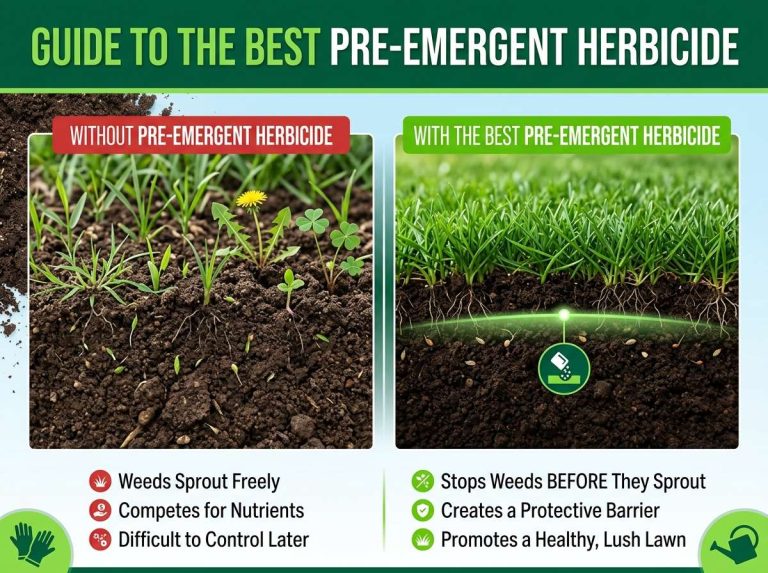
This is the key difference between pre-emergent and post-emergent herbicides. Pre-emergent products work before the seeds sprout. They create a barrier in your soil that stops the seeds from germinating in the first place. Post-emergent herbicides kill the plant after it’s already growing above ground.
Most lawn experts will tell you that pre-emergent is the better approach if you can plan ahead. It’s usually cheaper, easier to use, and more effective. But if you didn’t apply pre-emergent in time, or if crabgrass has already taken over, a post-emergent is your solution.
There’s also the question of granular versus liquid herbicides. Granular products are easier to spread evenly and often feed your lawn at the same time. Liquid or spray herbicides give you more precision and often work faster. Both can work well—it just depends on your situation.
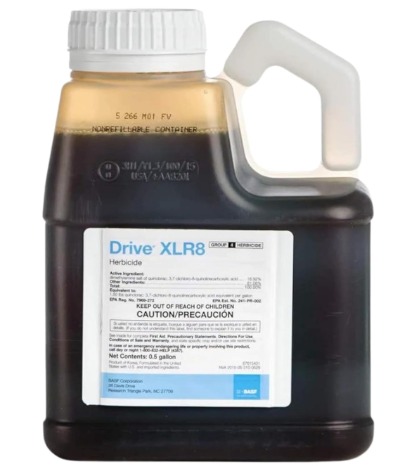
1. BASF Drive XLR8 Crabgrass Killer: The Post-Emergent Powerhouse
What Is It?
BASF Drive XLR8 is a post-emergent herbicide concentrate that you mix with water and spray directly on crabgrass that’s already growing. The active ingredient is quinclorac, which is one of the most effective chemicals for killing grassy weeds like crabgrass. This product comes in a 64-ounce concentrate bottle, and one bottle can treat a massive area depending on how diluted you make it.
Best Use Cases
This herbicide is your answer if crabgrass is already visible in your lawn. It’s the tool you turn to in late spring when you realize you missed the pre-emergent window. It’s also great if you have a small problem area that needs targeted treatment rather than treating your whole yard.
Drive XLR8 works on both crabgrass and other grassy weeds. It’ll also handle some broadleaf weeds, making it a bit more versatile than pure crabgrass-specific products. If you’ve got a mix of different weeds invading your lawn, this can handle several at once.
Key Features Explained Simply
Quinclorac Active Ingredient: This is the muscle behind this product. Quinclorac works by disrupting the plant’s internal processes, essentially making it impossible for the crabgrass to survive. It’s been used in lawn care for years because it works so well on grassy weeds.
Concentrate Formula: Unlike ready-to-spray products, you mix this yourself. That means you control how strong you make it. A little concentrate goes a long way, which is why one bottle covers such a huge area.
30-Day Residual: The product keeps working for about 30 days after you apply it. That means even weeds you missed or that are just starting to sprout get killed off during that window.
Liquid Spray Application: You’ll need a pump sprayer or tank sprayer to apply this. That gives you more control over where the product goes compared to granular options.
Real-Life Usage Insight
People who use Drive XLR8 consistently report good results when they follow directions carefully. The most common story goes like this: someone spots crabgrass, mixes up a batch, sprays it on, and within a few days the crabgrass starts turning brown and dying. Some folks see results in as little as 3-5 days, though it usually takes 7-10 days for full death.
The key to success is applying it to actively growing crabgrass, not dormant or stressed plants. If it’s super hot and dry, the crabgrass might be stressed and not absorb the herbicide as well. Early morning or late afternoon on a mild day tends to work best. Also, you shouldn’t mow for a couple of days before spraying—you want the crabgrass leaves to be there to absorb the product.
Pros
- Highly effective against grassy weeds
- Concentrate means one bottle treats a large area
- Works on crabgrass that’s already established
- Also kills some broadleaf weeds and other grassy weeds
- 30-day residual keeps working after application
- Professional-grade product used by landscapers
- Affordable per square foot treated
Cons
- You need a sprayer to apply it (additional equipment)
- Requires mixing, which takes time and attention to detail
- Can only be applied to actively growing plants
- Not ideal if you’re in a tight timeline
- Liquid concentrate takes up storage space
- Weather-dependent—wind, rain, or extreme heat can affect performance
- Some people hesitate about chemical herbicides near pets or gardens
Performance Discussion
BASF Drive XLR8 has a strong track record. It’s the kind of product that professional lawn care companies use because they know it delivers results. In testing and real-world use, it consistently kills 80-90% of crabgrass when applied correctly. Some users see even better results.
The real-world results depend heavily on application technique. People who get frustrated usually either didn’t mix it correctly, applied it to stressed plants, or used a poor sprayer that didn’t coat the plants evenly. When everything lines up, this product works.
Ease of Use
If you’ve never mixed herbicide concentrate before, there’s a slight learning curve. You need to read the label carefully to figure out the right ratio. Mix too strong and you might damage desirable grass. Mix too weak and it won’t work. That said, once you understand the mixing process, it’s straightforward.
You’ll need a decent sprayer. A cheap $10 hand pump sprayer works, but a 2-gallon pump sprayer or a backpack sprayer makes the job much easier, especially for larger lawns. The spraying itself is simple—just coat the crabgrass plants thoroughly.
Storage is easy as long as you keep it in a cool, dry place away from kids and pets. The concentrate lasts for years if stored properly.
Value for Money
At typical prices, a bottle of Drive XLR8 costs $25-40. Since the concentrate goes a long way, your per-square-foot cost is quite low. If you’re treating a 5,000 square foot lawn, you might spend $30-40 total, which is excellent value.
For comparison, if you bought pre-made liquid herbicides, you’d spend much more. The downside is the upfront equipment cost if you don’t already own a sprayer.
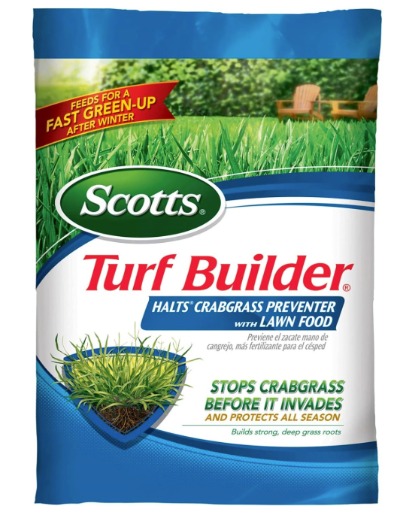
2. Scotts Turf Builder Halts Crabgrass Preventer with Lawn Food: The Convenient All-in-One
What Is It?
Scotts Turf Builder Halts is a granular pre-emergent that combines herbicide with lawn fertilizer. Instead of making two separate applications in spring, you make one. The product comes in bags that cover 5,000 square feet of lawn, and it’s ready to use right out of the bag—no mixing, no spraying equipment needed.
Best Use Cases
This is the product you want if you’re thinking ahead. Apply it in early spring, right around the time the ground temperature hits that 55-60 degree mark. It’ll stop crabgrass seeds from sprouting throughout the season.
It’s also perfect if you want to feed your lawn at the same time you’re preventing weeds. Killing two birds with one stone always appeals to homeowners.
Halts works best on lawns where you want to prevent crabgrass entirely. It’s not ideal if crabgrass is already growing—it won’t kill established plants. And it works best if you apply it before the seeds germinate.
Key Features Explained Simply
Pre-Emergent Formula: This stops crabgrass seeds before they can sprout. The product forms a barrier in your soil that prevents seed germination. No seed germination means no crabgrass growing.
Lawn Fertilizer Included: The product contains nitrogen and other nutrients that feed your grass. So while you’re preventing weeds, you’re also giving your lawn food it needs to be healthy and thick.
Granular Application: You spread these little pellets across your lawn using a regular lawn spreader. No mixing, no spraying. If you know how to fertilize your lawn, you already know how to apply this.
5,000 Square Foot Coverage: One bag does exactly that amount. Easy to calculate how many bags you need.
Real-Life Usage Insight
The typical story with Halts goes like this: someone remembers to apply it in early spring, spreads it according to directions, and then doesn’t see crabgrass that season while their neighbor’s lawn gets overrun. It’s like insurance against crabgrass—you pay a small premium upfront to avoid a big problem later.
Water is important after application. The product works best when it gets watered into the soil, either by you watering after spreading or by rain. Some people water it in immediately. Others wait a day or two, which is fine as long as rain isn’t far off.
The results are very consistent. Pre-emergent herbicides either work (you don’t get crabgrass) or you notice you missed some spots. Results are usually obvious by late spring—either you see thriving crabgrass in other yards while yours stays clean, or you realize you missed some areas in your lawn.
Pros
- Incredibly easy to apply—no mixing or spraying
- Feeds your lawn at the same time
- One application covers the whole season
- Granular formula applies easily with a standard spreader
- Great for prevention-minded homeowners
- Works reliably when applied at the right time
- No equipment needed beyond a spreader you probably own
- Very affordable for a complete spring treatment
Cons
- Only works before crabgrass sprouts (pre-emergent only)
- Won’t kill existing crabgrass
- You must apply it at the right time—too early or too late and it doesn’t work well
- Requires rain or watering to activate
- Doesn’t work on broadleaf weeds
- Some people dislike the fertilizer aspect if they prefer separate products
- Results depend on timing, so you need to plan ahead
Performance Discussion
Scotts Halts has excellent performance when applied correctly. The key word is “correctly.” Users who apply it in the right season and water it in get outstanding results—often zero crabgrass all season. Users who apply it too late or in the wrong season get mediocre results.
Field data shows this product prevents about 85% of crabgrass growth when applied at the optimal time. The performance drops if you apply it weeks before or after that window. Success really does depend on understanding when to apply it.
Ease of Use
This is probably the easiest application method of any herbicide. If you can use a lawn spreader, you can apply Halts. No mixing, no special equipment, no spraying. Just set your spreader to the recommended setting, load it with Halts, and walk your lawn.
The hardest part is remembering to do it at the right time. Setting a calendar reminder when you order it helps.
Value for Money
A bag of Scotts Halts costs around $20-35 depending on where you buy it. For a 5,000 square foot lawn, that’s your complete spring prevention for less than you’d spend on a nice lunch. The fertilizer is included, so you’re getting dual value.
The cost per square foot is excellent, especially compared to buying a separate pre-emergent and separate fertilizer. If you have a 10,000 square foot lawn, you need two bags, so around $40-70 for the entire season’s crabgrass prevention plus fertilizer.
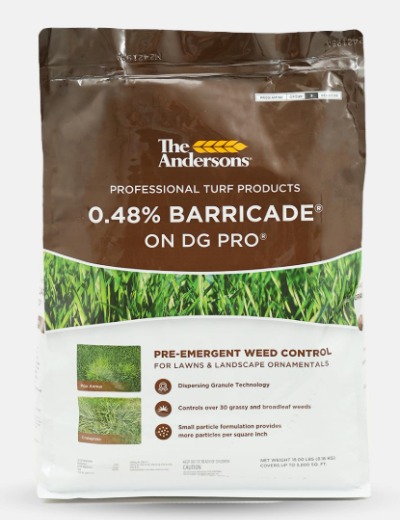
3. The Andersons Barricade Professional-Grade Granular Pre-Emergent Weed Control: The Serious Competitor’s Choice
What Is It?
Barricade is a granular pre-emergent herbicide made by The Andersons, a company that specializes in professional turf products. This is the kind of product that professional landscapers and serious lawn enthusiasts use. It contains pendimethalin as the active ingredient, which is one of the most respected pre-emergent chemicals in the industry.
The product comes in an 18-pound bag that covers up to 5,800 square feet. Unlike Scotts Halts, this product is pre-emergent only—it doesn’t include fertilizer. It’s pure weed prevention.
Best Use Cases
Barricade is for people who want a high-performance pre-emergent and who either don’t need extra fertilizer or prefer to handle fertilizer separately. It’s ideal if you’re someone who plans ahead and wants the best possible crabgrass prevention.
It’s also great if you use a lawn care company that sells professional products. Many independent lawn care operators stock Barricade instead of consumer brands because they trust the performance.
This product shines if you have a serious crabgrass problem from previous seasons and you want to make absolutely sure it doesn’t come back. The professional-grade formulation is more concentrated and often performs better than lighter consumer formulations.
Key Features Explained Simply
Pendimethalin Active Ingredient: This is a proven pre-emergent chemical that creates a barrier in the soil, preventing seeds from sprouting. It’s widely used in professional applications because of its reliable performance and longevity.
5,800 Square Foot Coverage: This is slightly more coverage than Scotts Halts, which covers 5,000 square feet. So you get a bit more product in a similarly-sized bag.
Granular Only: Barricade is only available as granules. No liquid version. You apply it with a spreader just like fertilizer.
No Fertilizer: This is pure herbicide. If you also want to feed your lawn, you’ll need a separate fertilizer application. Some people see this as an advantage—you control exactly what you feed your lawn.
Professional Grade: While anyone can buy this product, it’s formulated to professional standards. That usually means more consistent results and better performance.
Real-Life Usage Insight
People who use Barricade tend to be lawn enthusiasts who care about details. They like that it’s professional grade. They don’t mind making a separate fertilizer application. And they almost always get excellent results.
The product requires the same watering-in as Scotts Halts. Spread it and water it in. From there, it forms a barrier that lasts all season.
One interesting thing people notice is that Barricade seems to perform consistently well even in less-than-ideal timing. While late applications of consumer-grade pre-emergents sometimes fail, Barricade continues working reasonably well. This is likely due to the more concentrated formulation.
Pros
- Professional-grade performance
- Slightly more coverage than Scotts Halts (5,800 vs 5,000 sq ft)
- Excellent reliability and reputation
- Used by professional landscapers
- Granular application is simple
- No fertilizer means you control your lawn feeding separately
- Consistent performance even with slightly late application
- Good value for a professional product
Cons
- Doesn’t include fertilizer—you need a separate application
- Typically costs more than consumer brands
- May not be as easy to find as Scotts products
- Requires watering to activate
- Pre-emergent only, won’t kill existing crabgrass
- You need to plan ahead for proper timing
- Larger bags require storage space
Performance Discussion
Barricade has excellent real-world performance. Independent testing and user reports consistently show this product preventing 85-95% of crabgrass when applied correctly. It often outperforms consumer-grade alternatives.
The performance advantage comes from the higher concentration of active ingredient and the professional formulation. It’s not magic—it still requires proper timing and watering—but when everything lines up, the results are excellent.
Ease of Use
Application is simple—spread with a spreader just like fertilizer. The challenge is the same as any pre-emergent: you have to remember to do it at the right time. Set a calendar reminder for early spring when soil temperatures hit the right range.
Storage is straightforward. The 18-pound bag takes up a bit more space than smaller packages, but most garages can handle it.
Value for Money
Barricade typically costs $35-50 per bag. That’s more than Scotts Halts, but you’re paying for professional-grade formulation and performance. Spread over 5,800 square feet, you’re spending around 0.60-0.85 cents per square foot for pure herbicide.
The real question is whether the performance jump justifies the extra cost. For someone with a history of crabgrass problems, many people think it does. For someone just trying to prevent a minor problem, Scotts might offer better value.
4. Ortho GroundClear Weed & Grass Killer: The Broadest Solution
What Is It?
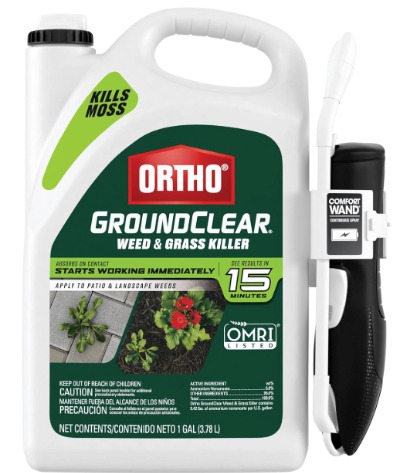
Ortho GroundClear is a ready-to-use spray herbicide that comes in a 1-gallon jug with an attached spray wand. Unlike the previous products that are specifically formulated for lawns, GroundClear is designed to kill virtually any weed, grass, or unwanted plant. It’ll kill crabgrass, sure, but it’ll also kill dandelions, clover, chickweed, moss, and about two dozen other common lawn weeds.
The active ingredient is a mix of diquat and glyphosate, which are non-selective herbicides. That means they kill almost everything they touch, so you need to be very careful about where you spray.
Best Use Cases
This product is your answer if you have multiple types of weeds throughout your lawn. If you’ve got crabgrass in one spot, dandelions in another, clover taking over a patch, and moss in a corner, GroundClear handles them all.
It’s also great for problem areas like driveways, sidewalk cracks, fence lines, and garden edges. Places where you want to kill everything and don’t mind if grass dies too.
It’s particularly useful if you’re dealing with a mix of weeds rather than a pure crabgrass invasion. And because it’s a post-emergent, it works on weeds that are already growing.
Key Features Explained Simply
Ready-to-Use Spray: No mixing. Attach the wand, pump it a few times, and start spraying. Takes 30 seconds to be ready to go.
Comfort Wand Included: The spray wand has an ergonomic grip and adjustable nozzle. It’s actually designed to be comfortable to use, which matters when you’re spraying a large area.
Non-Selective Herbicide: This kills almost everything green. Grass, weeds, desirable plants—it doesn’t discriminate. That’s why you have to be careful about where you spray.
Kills Crabgrass and Many Other Weeds: Crabgrass is just one of the things it kills. The list includes dandelions, chickweed, clover, moss, plantain, and many other common lawn weeds.
OMRI Listed: This means it meets standards for organic gardening, if that matters to you. Some organic gardeners use this product.
Real-Life Usage Insight
People use GroundClear in a few different ways. Some use it to kill everything in a specific problem area, then reseed that area with fresh grass. Others use it on individual weeds, carefully aiming the spray at the target. Some use it on driveways and sidewalks where killing everything is actually the goal.
The most common approach for crabgrass in a lawn is to spray individual plants carefully. You need a steady hand because the spray is non-selective. Get it on your desirable grass and that grass dies too.
Results are fast. Most people see visible results within 24-48 hours. Complete death usually takes 3-7 days. It’s much faster than quinclorac-based products.
Pros
- Ready-to-use, no mixing required
- Fast-acting, visible results in 1-2 days
- Kills crabgrass and a huge range of other weeds
- Great for multiple weed problems
- Perfect for non-lawn uses like driveway cleanup
- Comfortable spray wand
- No special equipment needed
- Works quickly
Cons
- Non-selective, kills desirable grass too if you’re not careful
- Requires careful, precise application in a lawn setting
- One gallon doesn’t cover very large areas
- Not ideal for widespread crabgrass in your lawn
- More expensive per square foot than some alternatives
- Requires care around desirable plants
- Not suitable for pre-emergent crabgrass prevention
- Can be messy if you have a shaky hand
Performance Discussion
GroundClear works well on what it targets. The performance depends entirely on your ability to aim it. Spray it directly on a crabgrass plant and that plant dies. Spray the air near your target grass and nothing happens.
The real-world results reflect user precision more than product effectiveness. Careful users get excellent results. Careless users end up with brown spots in their lawn.
Ease of Use
This is probably the easiest product to get going—just attach the wand and spray. The challenge is using it precisely without hurting your lawn. It requires focus and a careful hand.
Storage is simple. Keep it in a cool place. The gallon jug takes up reasonable space.
Value for Money
A 1-gallon jug typically costs $12-18. That’s inexpensive upfront, but the coverage is limited. For a large lawn with isolated weed problems, one jug might be enough. For widespread issues, you might need multiple jugs, and the cost adds up.
For treating a few problem areas or an entire small lawn, it’s good value. For comprehensive crabgrass prevention, you’d need multiple applications or bottles, making it less cost-effective than pre-emergent options.
5. Tenacity Turf Herbicide: The Specialty Player
What Is It?
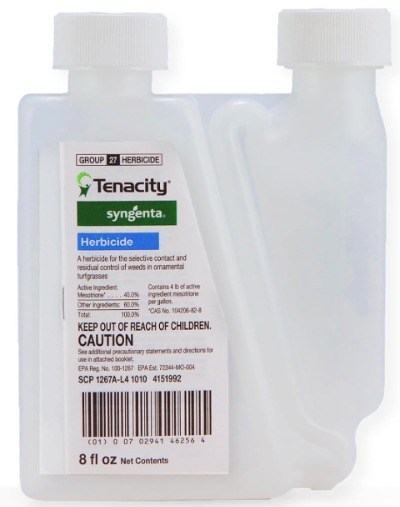
Tenacity is a liquid post-emergent herbicide with a unique active ingredient called mesotrione. It’s in a league of its own because it’s the only herbicide on this list that can be used on new grass seedlings. That makes it unusual and valuable in specific situations.
The product comes in an 8-ounce bottle that you mix with water and spray. The concentrate is quite strong, so a small bottle treats a large area.
Best Use Cases
Tenacity is for people in specific situations. First, if you’re overseeding or reseeding a lawn and you’re worried about crabgrass competition, Tenacity lets you kill the crabgrass without killing your new grass seeds. That’s something no other herbicide on this list can do.
Second, it’s useful if you want to prevent crabgrass on newly seeded lawns. Most herbicides kill grass seeds. Tenacity doesn’t.
Third, it works on both grassy and broadleaf weeds, so like Ortho GroundClear, it handles multiple weed types.
If you’re reseeding a problem lawn or dealing with crabgrass on a young lawn, Tenacity is your answer. For other situations, another product usually works better.
Key Features Explained Simply
Mesotrione Active Ingredient: This is a unique chemistry that kills weeds differently than quinclorac or glyphosate. It works on a broad range of weeds while being safe for young grass seedlings. This is why it’s valuable in specific situations.
Safe on Grass Seedlings: This is the big differentiator. Most herbicides kill young grass. Tenacity doesn’t. You can apply it while your new grass is germinating or in early growth stages.
Works on Grassy and Broadleaf Weeds: It’s not as broad-spectrum as some products, but it handles both grassy weeds and broadleaf weeds.
Liquid Concentrate: Like Drive XLR8, you mix this with water. One small 8-ounce bottle treats a large area.
Fast Acting: Visible results appear within 3-7 days of application.
Real-Life Usage Insight
The people who use Tenacity tend to be dealing with specific situations: overseeding a lawn, seeding a new lawn from scratch, or trying to renovate a lawn. They appreciate being able to fight weeds without harming their young grass.
Results depend on the weed type. It works well on most common lawn weeds including crabgrass. Some users notice that it takes slightly longer to show results than quinclorac-based products, but it still works well.
The challenge for many homeowners is that it’s not widely available everywhere. You might need to order it online from specialty lawn care suppliers. It’s not something you’ll find at every garden center.
Pros
- Only herbicide that’s safe on grass seedlings
- Works on multiple weed types
- Fast-acting
- Concentrate means small bottle covers large area
- Unique niche that solves specific problems
- Works on crabgrass and other common weeds
- Professional-grade product
- Long shelf life
Cons
- Not widely available in stores
- Requires mixing and spraying equipment
- More expensive than some alternatives
- Specialty use—not ideal for general crabgrass treatment
- Requires careful application like other post-emergents
- May require multiple applications for some weeds
- Best for specific situations, not general use
- Less well-known, so less user experience sharing
Performance Discussion
Tenacity performs well in its intended applications. If you’re treating weeds while seeding a lawn, the performance is outstanding. If you’re using it for general crabgrass treatment on an established lawn, it works fine but isn’t uniquely better than quinclorac options.
The real performance difference shows up when you’re seeding. No other product in this roundup lets you fight weeds while your grass is germinating.
Ease of Use
Mixing and application are similar to Drive XLR8. You need a sprayer. The learning curve is minimal if you’ve used any concentrate herbicide before.
The key challenge is availability and finding it. Once you have it, using it is straightforward.
Value for Money
An 8-ounce bottle typically costs $25-35. That’s higher than Drive XLR8 per bottle, but you’re paying for a specialty product designed for a specific niche. If that niche is exactly your situation, it’s worth it. If you just need general crabgrass control, another product offers better value.
Product Comparison at a Glance
Pre-Emergent vs Post-Emergent
Pre-Emergent Products (stop crabgrass before it grows):
- Scotts Turf Builder Halts
- The Andersons Barricade
Post-Emergent Products (kill crabgrass that’s already growing):
- BASF Drive XLR8
- Ortho GroundClear
- Tenacity Turf Herbicide
Application Method
Granular (spread like fertilizer):
- Scotts Turf Builder Halts
- The Andersons Barricade
Liquid Spray (mix and spray):
- BASF Drive XLR8
- Ortho GroundClear (ready-to-use)
- Tenacity Turf Herbicide
Coverage and Cost Per Bag
| Product | Coverage | Typical Price | Cost Per Sq Ft |
|---|---|---|---|
| Scotts Halts | 5,000 sq ft | $25-35 | $0.005-0.007 |
| Barricade | 5,800 sq ft | $40-50 | $0.007-0.009 |
| Drive XLR8 | 6,000-30,000 sq ft (depends on mix) | $25-40 | $0.001-0.007 |
| GroundClear | 100-500 sq ft per gallon | $12-18/gallon | $0.02-0.18 |
| Tenacity | 8,000-40,000 sq ft (depends on mix) | $25-35 | $0.001-0.004 |
Best Performance on Crabgrass Specifically
- BASF Drive XLR8 – Quinclorac is the most proven crabgrass killer
- The Andersons Barricade – Professional formulation prevents extremely well
- Scotts Halts – Reliable prevention when timing is right
- Tenacity – Works well, but better for mixed weed situations
- Ortho GroundClear – Works but less specialized for crabgrass
Ease of Application
- Scotts Halts – Just spread like fertilizer
- Barricade – Just spread like fertilizer
- Ortho GroundClear – Ready-to-use, just attach wand and spray
- Drive XLR8 – Mix concentrate, need sprayer
- Tenacity – Mix concentrate, need sprayer
Buying Guide: How to Choose Your Crabgrass Herbicide
Step 1: Is Your Crabgrass Problem Prevention or Treatment?
Ask yourself: Is crabgrass already growing in my lawn right now?
If Yes → You need a post-emergent product (Drive XLR8, Ortho GroundClear, or Tenacity)
If No → You need a pre-emergent product (Scotts Halts or Barricade)
This is the most important decision. You can’t prevent crabgrass that’s already there with a pre-emergent. And a post-emergent won’t work on seeds that haven’t sprouted yet.
Step 2: How Much of Your Lawn Needs Treatment?
Small Problem Areas Only → Ortho GroundClear works well. You can target individual weeds.
Whole Lawn → Use a granular pre-emergent (Scotts or Barricade) or a concentrate that covers large areas (Drive XLR8 or Tenacity).
Specialized Situation (reseeding, new lawn) → Tenacity is your best choice.
Step 3: Do You Have the Right Equipment?
Own a Lawn Spreader → You can use granular options easily.
Don’t Own a Sprayer → Ortho GroundClear is ready-to-use and needs no equipment. Granular options also need no special equipment.
Have a Sprayer or Plan to Buy One → You can use any liquid concentrate option.
Don’t overlook the equipment cost. A decent sprayer costs $20-50. A spreader costs $30-100. Factor these into your total cost.
Step 4: What’s Your Timeline?
Planning Ahead for Spring → Pre-emergent is your best bet. Apply Scotts or Barricade in early spring before soil reaches 55-60 degrees.
Crabgrass Already Growing → Post-emergent is your only option. Apply Drive XLR8, Ortho GroundClear, or Tenacity.
Unsure When to Apply → Scotts Halts is most forgiving. Barricade is second. Post-emergents work whenever crabgrass is growing.
Step 5: What’s Your Budget?
Under $25 Total → Ortho GroundClear for small areas.
$25-50 → Any single application of the others. This is enough for most home lawns.
$50-100 → Professional approach. You can afford premium products like Barricade plus a good spreader or sprayer.
$100+ → You can tackle any situation with combinations of products or equipment investment.
Step 6: Do You Have Other Weed Problems Too?
Just Crabgrass → Drive XLR8, Scotts Halts, or Barricade are your best bets. They’re specialized for crabgrass.
Crabgrass Plus Dandelions, Clover, Chickweed, Etc. → Ortho GroundClear is your best post-emergent option. It handles multiple weed types in one application.
For Prevention with Mixed Weeds → Scotts Halts actually helps prevent some broadleaf weeds too because of the coverage. But it’s primarily for crabgrass.
Who Should Buy Each Product?
Buy Scotts Turf Builder Halts If:
- You’re planning ahead and want prevention
- You want the easiest application (just spread it)
- You also want to feed your lawn at the same time
- You prefer consumer brands widely available everywhere
- You have a smaller budget
- You like one-step solutions
- You’re a typical homeowner with a normal lawn situation
Buy The Andersons Barricade If:
- You had serious crabgrass problems in the past
- You want the best possible prevention performance
- You don’t mind paying a bit more for professional quality
- You want to control your lawn fertilizer separately
- You’re willing to seek out specialty products
- You’re a lawn enthusiast who cares about details
- You want performance you can count on
Buy BASF Drive XLR8 If:
- Crabgrass is already growing in your lawn
- You need a powerful post-emergent killer
- You’re comfortable mixing chemical concentrates
- You have a sprayer or are willing to buy one
- You want the most proven crabgrass-specific killer
- You want excellent cost-per-square-foot value
- You appreciate professional-grade products
- You have a large lawn to treat
Buy Ortho GroundClear If:
- You have multiple types of weeds, not just crabgrass
- You want the simplest ready-to-use option
- You’re treating small areas or problem spots
- You don’t want to mix anything
- You want fast results
- You’re using it on driveways, sidewalks, or garden edges
- You want no equipment beyond the spray wand
- You prefer immediate results
Buy Tenacity Turf Herbicide If:
- You’re overseeding or reseeding your lawn
- You’re establishing a new lawn from seed
- You need to fight weeds without harming young grass
- You’re comfortable with specialty products
- You have mixed weed problems on a young lawn
- You’re willing to order online
- You want a unique solution to a specific problem
- You appreciate professional-grade products
Common Mistakes to Avoid
Mistake 1: Using Pre-Emergent When Crabgrass Is Already Growing
This is the biggest mistake. Pre-emergent won’t kill existing crabgrass. It only stops seeds from sprouting. If you see crabgrass growing, reach for a post-emergent. If you’re planning for next season, reach for pre-emergent.
Mistake 2: Applying Pre-Emergent Too Late
If you wait until late spring to apply a pre-emergent, the crabgrass seeds might already be sprouting. Soil temperature is the key. Apply when soil consistently hits 55-60 degrees. In most places, that’s early spring. Set a calendar reminder.
Mistake 3: Not Watering In Granular Pre-Emergents
Scotts Halts and Barricade need water to work. Spread them and then water them in. If you spread them and rain doesn’t come for a week, you might want to water yourself. Dry weather right after application reduces effectiveness.
Mistake 4: Applying Post-Emergent in Wrong Conditions
Don’t apply liquid herbicides right before rain. Rain washes them off before they work. Don’t apply when crabgrass is stressed or dormant from heat. Apply when the plant is actively growing in mild conditions. Early morning or late afternoon on a mild day works best.
Mistake 5: Under-Spraying or Spraying Wrong Spots
With post-emergent spray herbicides, you need to coat the plant thoroughly. A light misting doesn’t work. Spray until the plant is visibly wet but not dripping. And make sure you’re spraying crabgrass, not your desirable grass.
Mistake 6: Mixing Concentrate Wrong
If you’re mixing a concentrate, read the label carefully. Too strong and you might damage desirable grass. Too weak and it won’t work. Use a measuring cup or syringe. Don’t guess.
Mistake 7: Not Waiting Long Enough
Herbicides take time to work. Crabgrass doesn’t die instantly. Most post-emergents take 7-14 days to fully kill the plant. Pre-emergents work over the whole season. Don’t assume something didn’t work just because you don’t see instant results.
Mistake 8: Applying Post-Emergent Too Soon After Mowing
Mow first, wait 2-3 days, then spray. You want the crabgrass leaves to be there to absorb the herbicide. If you just mowed it off, there’s nothing to spray.
Mistake 9: Ignoring Weather Forecasts
Check the weather before spraying. Wind carries the spray where you don’t want it. Rain washes it off. Extreme heat can stress plants so they don’t absorb the herbicide well. Mild, calm conditions right before mild weather are ideal.
Mistake 10: Expecting One Application to Be a Complete Solution
Herbicides are tools, not miracles. Pre-emergent stops most crabgrass but not all. Post-emergent kills most plants but some might survive. Sometimes you need a second application a few weeks later. Have realistic expectations.
Final Verdict: Which Product Wins?
There’s no single “best” product because the best choice depends on your specific situation. But we can identify winners for different scenarios.
Best Overall for Most Homeowners: Scotts Turf Builder Halts
If you just want a simple solution that works well for a fair price, Scotts Halts is your answer. It’s easy to apply, feeds your lawn, prevents well when timed correctly, and costs under $30 for a full season of crabgrass prevention on most lawns.
The requirement is that you have to plan ahead. Apply it in early spring before crabgrass germinates. If you can do that, you’ll likely spend this season crabgrass-free.
Best for Problem Lawns: The Andersons Barricade
If you’ve battled crabgrass for years and you’re tired of losing, Barricade is worth the extra money. The professional formulation performs exceptionally well. Yes, it costs more, but you’re investing in getting your lawn clean and keeping it that way.
Best for Immediate Results: BASF Drive XLR8
Crabgrass is already taking over and you need it gone now? Drive XLR8 is your tool. It’s the most proven crabgrass killer, it’s professional grade, and it costs less than you’d think when you calculate coverage. Within two weeks, visible crabgrass in your lawn should be gone.
Best for Multiple Weed Problems: Ortho GroundClear
If you’ve got dandelions, clover, chickweed, and crabgrass all mixed together, this is simpler than applying different products. Spray each weed type and move on. You’ll be done faster than with more specialized products.
Best for Reseeding: Tenacity Turf Herbicide
If you’re fixing a damaged lawn with overseeding or you’re establishing a new lawn, Tenacity is your only choice among these products. No other herbicide lets you fight weeds while grass is germinating.
Wrap-Up
Crabgrass doesn’t have to win. You have good tools to fight it.
The key is matching the tool to your situation. If you’re thinking ahead, pre-emergent in early spring wins. If crabgrass is already growing, post-emergent is your answer. If you’ve got a complex weed mix, choose the broadest-acting herbicide. If you’re reseeding, pick the one that won’t harm your new grass.
All five products in this roundup work. They’ve been chosen because they deliver real results for homeowners. You won’t waste money with any of them. You’ll just get better results by picking the one that matches your specific lawn situation.
Start with an honest assessment of your crabgrass problem today. Is it prevention or treatment? Do you have other weed issues? What equipment do you have? What’s your budget? Answer those questions, and you’ll know exactly which product makes sense for you.
Your lawn will be greener and free of crabgrass before you know it.

Hi, I’m Mary, the founder of GardenCure.com. I’m passionate about creating healthy, beautiful gardens and well-kept lawns. I share practical experience and trusted advice on garden and lawn gear that truly works. With the support of my dedicated research team, our writers produce honest, in-depth reviews using reliable, authentic sources—helping you choose the right tools with confidence for your outdoor space.