How To Grow Avocado From Pit
Many people save an avocado pit after eating a ripe fruit and wonder if it can become a plant. It can. Growing one from a pit is a simple project that teaches patience and basic plant care.
In this article
This guide explains what makes a pit suitable, what supplies you need, and how to sprout and pot the seed. It also covers daily care, common problems, and if a seed-grown tree will bear fruit.
Key Takeaways
- A fresh, unbroken pit from a ripe fruit is the best starting point.
- Water sprouting and soil planting both work, and each takes patience.
- Good drainage and careful watering prevent most early problems, such as root rot.
- Seed-grown trees often take several years to fruit and may not match the parent fruit.
What Is an Avocado Pit and Why Grow One?
The avocado pit is the large seed inside the fruit. It holds an embryo that can grow into a new tree. Growing one is a low-cost way to watch a plant develop from a single seed.
Many people grow seedlings as decorative houseplants, while others plant them outdoors in warm climates. The main goal is usually the plant itself, not fruit.
What Makes an Avocado Pit a Good Seed to Sprout
A good pit is firm, plump, and fully intact. It should not be cracked, dried out, or moldy. Pits from fresh, ripe fruit sprout more reliably than old or stored ones.
Keep the pit moist until you start, since drying out can stop sprouting. Clean off any flesh so it does not rot.
Why Growing From a Seed Differs From Buying a Tree
A seed grows into a new plant that is not an exact copy of the parent fruit. Its fruit, if any, may taste or look different. Nursery trees are often grafted, which keeps the known fruit type.
Seed-grown trees also take much longer to mature. Buying a young grafted tree is faster but costs more.
What You Need Before You Start
You need only a few basic items, most of which are common in a home kitchen or garden shed. Gathering them first makes the process smoother.
Tools and Supplies for Sprouting an Avocado Seed
For the water method, you need a clean glass or jar, three or four toothpicks, and water. A sharp knife can help remove the thin brown skin, but avoid cutting the seed itself.
Picking the Right Container and Soil Mix
Pick a pot with drainage holes so extra water can escape. A pot a few inches wider than the seed is a sensible size to start with.
Use a light, well-draining potting mix. Adding perlite or coarse sand improves airflow. Heavy garden soil holds too much water for a young avocado.
How to Sprout an Avocado Pit in Water
The water method is the most common way beginners start, and it lets you watch roots and a stem form. The process takes patience, so plan for several weeks.
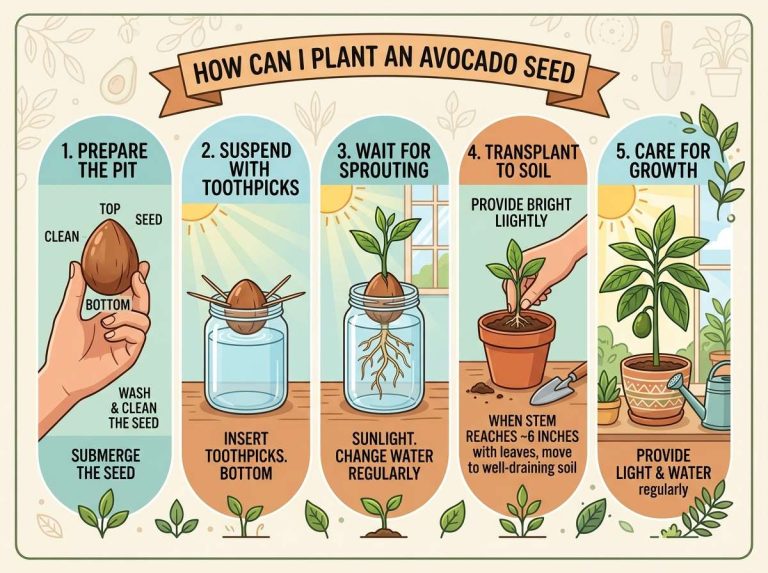
Preparing and Cleaning the Pit
Wash the pit under running water to remove all flesh. Peel off the thin brown skin if it comes away easily, and leave the seed whole.
Identify the wider end, which is the base where roots will grow. The narrower, pointed end is the top where the stem will emerge.
Using Toothpicks and a Glass to Suspend the Pit
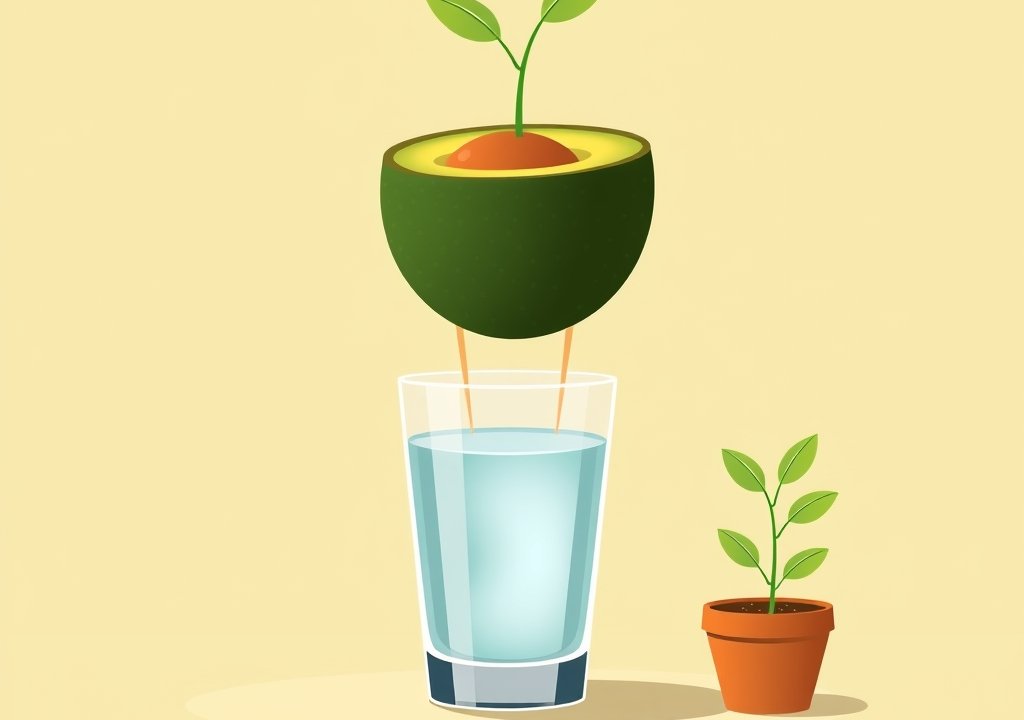
Push three or four toothpicks into the sides of the pit around its middle. Rest them on the rim of a glass so only the bottom third of the seed touches the water.
Check the water level every few days and refill as needed. Change the water about once a week to help keep mold away.
How Long Roots and Stem Take to Appear
Roots often appear within a few weeks, but timing varies. Some pits take longer, and a few may not sprout at all.
Once roots are several inches long and a stem begins to form, the seedling is ready for soil. Look for both healthy roots and a sprouting top before moving on.
How to Plant an Avocado Seedling in Soil
Moving the seedling to soil gives its roots room to grow. Handle it gently, since young roots break easily.
Potting the Sprouted Seed Step by Step
Fill a pot with moist potting mix and make a hole deep enough to hold the roots fully. Place the seed so the base is covered but the top stays exposed above the soil line.
Firm the soil gently around the roots and water lightly so it settles without becoming waterlogged. Keep the pot in a bright spot while the plant adjusts.
Planting Method for Direct Soil Sowing
Some people skip the water step and plant the whole pit directly in soil. Push it into the mix with the pointed end up and the wider base down, leaving about half the seed exposed.
Direct sowing can work, but it takes longer to show growth. Keep the soil lightly moist and avoid overwatering.
Caring for Your Young Avocado Plant
Good everyday care helps a seedling grow strong. Most problems come from too much water or too little light.
Light, Temperature and Where to Place the Plant
Avocado seedlings prefer bright, indirect light, such as a spot near a window. Harsh direct sun can scorch young leaves, so filter strong rays when needed.
Avocados like warm conditions and dislike cold drafts. Keep the plant away from cold windows and heating vents.
Watering Habits That Prevent Root Rot
Water when the top layer of soil feels dry. Pour water until some drains out the bottom, then empty any saucer so roots do not sit in standing water.
Root rot is a common problem caused by soggy soil, which leaves roots without air. Good drainage and careful watering are the best prevention.
Feeding and Repotting as the Plant Grows
Young seedlings usually need little fertilizer for the first few months. Once new leaves appear steadily, a mild balanced plant food can support growth. Follow the label and use less rather than more.
Repot the plant into a slightly larger container when roots fill the pot. Repotting too early can slow growth, so check the roots each season.
Common Problems and How to Fix Them
Most issues are easy to fix when caught early. Watch the pit, stem, and leaves closely during the first months.
Why the Pit Molds or Rots
Mold often appears when the seed stays too wet or the water is not changed. Clean the pit and replace the water if fuzz forms. Remove any seed that turns soft and dark.
A clean, airy setup lowers the chance of rot.
Leaves Turning Brown or Yellow
Brown leaf tips can come from dry air, too much sun, or uneven watering. Yellow leaves often signal overwatering or poor drainage. Check soil moisture and light levels first.
Slow Growth and Stunted Seedlings
Slow growth is normal for a young avocado, especially in its first year. Insufficient light, cool temperatures, or cramped roots can also hold a plant back. Adjust one factor at a time so you can see what helps.
Can an Avocado Grown From a Pit Bear Fruit?
An avocado grown from a pit can bear fruit, but it usually takes many years. The fruit may not match the parent. Results vary widely from tree to tree.
Why Seed-Grown Avocados Often Take Years to Fruit
Seedlings must grow a large, mature framework before they flower. This can take several years, and growing conditions affect timing.
Grafting as a Way to Get Fruit Faster
Grafting joins a cutting from a fruiting variety onto a seedling rootstock. This keeps the known fruit type and can shorten the wait. Beginners often leave this advanced technique to experienced growers or nurseries.
Common Mistakes Beginners Make
Many early setbacks come from a few familiar errors. Overwatering is the most frequent, and pots without drainage holes cause trouble too.
Rushing also hurts. Moving a seedling too soon or repotting too often stresses the plant. Patience usually leads to stronger results.
Frequently Asked Questions
How long does it take an avocado pit to sprout?
Sprouting time varies, but roots often appear within a few weeks. Some pits take longer, and a few may not sprout at all. Fresh water and a clean pit help.
Can I grow an avocado from a store-bought fruit pit?
Yes, a pit from a fresh, ripe store-bought avocado can sprout. Pick one that is firm and undamaged, and keep it moist and clean until you start.
Does an avocado tree grown from a pit need cross-pollination?
Avocado flowers need pollination, and many varieties benefit from a compatible partner tree. A single seed-grown tree may set little fruit. Results depend on the variety and conditions.
Can an avocado plant grow indoors all year?
Yes, many people keep avocado seedlings indoors as houseplants. Bright, indirect light and steady warmth help them thrive. Avoid drafts and cold windows.
Why do the leaves of my avocado seedling turn brown at the tips?
Brown tips often come from dry air, strong direct sun, or uneven watering. Check soil moisture and light, and adjust one factor at a time to find the cause.
Conclusion
Growing an avocado from a pit is a rewarding way to watch a plant develop. Start with a fresh, intact pit, sprout it carefully, and pot it in well-draining soil. Water with care, give bright indirect light, and expect patience. Fruit from a seed-grown tree takes years and is not guaranteed, but the process teaches useful basic plant care.

Hi, I’m Mary, the founder of GardenCure.com. I’m passionate about creating healthy, beautiful gardens and well-kept lawns. I share practical experience and trusted advice on garden and lawn gear that truly works. With the support of my dedicated research team, our writers produce honest, in-depth reviews using reliable, authentic sources—helping you choose the right tools with confidence for your outdoor space.