
How To Cultivate Aloe Vera
Key Takeaways
- Aloe vera grows best in bright light, warm temperatures and fast-draining soil.
- Water deeply but infrequently, and let the soil dry out fully between waterings.
- A pot with drainage holes is one of the most important choices you can make.
- Offsets, often called pups, are the easiest way to multiply your plant.
- Most aloe problems come from too much water, so watch the leaves and soil closely.
Growing aloe vera is simpler than many beginners expect. This succulent stores water in its thick leaves, so it handles dry spells better than most houseplants. With the right light, soil and watering habits, it can thrive for years indoors or outdoors in a warm climate.
This guide covers growing conditions, pots, planting, watering, seasonal care, propagation and common problems. It also explains safe harvesting and answers frequently asked questions at the end.
What Is Aloe Vera and Why Grow It?
Aloe vera is a succulent with fleshy, pointed leaves that grow in a rosette shape. Each leaf holds a clear gel inside its outer layer. People have grown it for its ornamental look and easy care.
Aloe asks for little attention and produces offsets, small baby plants that form around the base. This makes it rewarding to watch a collection grow over time.
Aloe Vera Basics for Beginners
Aloe comes from dry regions, so it stores water and tolerates drought. Overwatering is the most common mistake, because its roots need air and dry soil between drinks.
Think of aloe as a plant that prefers to be slightly underwatered rather than soggy. Once you grasp that idea, most other care steps become easier.
Common Uses of Aloe Plants at Home
Many households keep aloe as a decorative houseplant on a sunny windowsill. Some people also harvest the gel for simple home remedies and skin products.
If you plan to use the gel, cut only mature outer leaves and handle them carefully. Test any gel on a small patch of skin first, since some people react to it.
Ideal Growing Conditions for Aloe Vera
Aloe vera grows best when four basic needs are met: bright light, warm air, gentle humidity and soil that drains quickly. Getting these right prevents most early problems.
The plant is adaptable, but it grows faster and looks fuller when conditions suit it. Small changes in placement can make a noticeable difference over time.
Light Requirements for Healthy Aloe
Aloe needs plenty of bright light to keep its leaves firm and compact. A south- or west-facing window often works well. Outdoors, a spot with bright, filtered sun is ideal.
In low light, the plant stretches toward the source and its leaves can turn thin and floppy. If you see this, move the plant gradually into brighter light to avoid sunburn.
Temperature and Humidity Needs
Aloe prefers warm temperatures, generally between 13 and 27 degrees Celsius. It does not tolerate long periods of cold. Normal indoor air suits it well, and it does not need misting.
High humidity can encourage rot, so good air movement helps. A room with a gentle breeze from a window or fan is a good environment.
Soil Type and Drainage Essentials
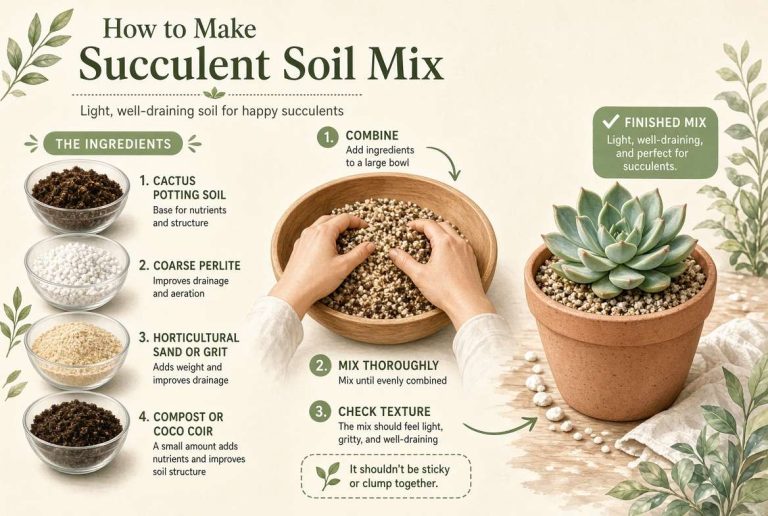
Aloe needs light, gritty soil that drains quickly and holds only a little moisture. Regular potting soil alone often stays wet too long. Many gardeners mix it with coarse sand, perlite or small bark pieces.
A cactus or succulent mix from a garden center is a simple starting point. Check the label for drainage. If the soil feels heavy or clumps when wet, add more grit before planting.
Picking the Right Pot and Container
The pot matters as much as the soil. A good container keeps roots dry, gives them room to grow and helps you judge when the plant needs water.
Pick a pot only slightly wider than the root ball. A pot that is too large holds extra wet soil, which can cause root rot.
Why Drainage Holes Matter
Drainage holes let excess water escape. Without them, water collects at the bottom and the roots sit in it. This is one of the most common reasons aloe plants fail.
If you love a decorative pot without holes, keep the plant in a plastic nursery pot with holes and place it inside. Empty the saucer after watering.
Clay Versus Plastic Pots
Clay pots are porous, so moisture evaporates through their walls. This helps soil dry faster, which suits aloe well. Their weight also makes them feel stable.
Plastic pots hold moisture longer and are lighter. For beginners who water often, a clay pot offers a helpful margin of safety.
How to Plant Aloe Vera Step by Step
Planting is simple once you have the right soil and container. Work slowly and handle the roots gently.
Plant during the warm part of the year, when the plant can settle in quickly. Avoid planting in very cold weather.
Preparing the Potting Mix
Fill the pot with gritty succulent mix, leaving a small gap below the rim. Press the soil lightly so it holds the roots without packing down.
Let the soil stay slightly dry before planting. Wet soil clumps and can damage delicate roots.
Planting Pups and Offsets
Offsets, or pups, are small plants that grow from the base of the parent. Once a pup has its own small roots, gently remove it and set it at the same depth it grew before.
Firm the soil lightly around the pup. Wait a few days before watering so any small cuts can heal.
Transplanting a Mature Aloe Plant
Transplant a mature plant when it outgrows its pot or the roots fill the container. Tip the pot on its side and ease the plant out. Check the roots for dark, soft sections.
Trim damaged roots with clean scissors. Set the plant in fresh mix, then wait several days before watering.
Watering and Feeding Your Aloe Plant
Watering is where most beginners go wrong. Water thoroughly, then wait. Aloe prefers a long dry period over frequent small drinks.
Feeding is optional. The plant grows slowly and needs little extra food.
How Often to Water Aloe Vera
Water deeply once the soil has dried out completely. In warm seasons this may be every two to three weeks, and much less often in cooler months. Check the soil rather than following a fixed calendar.
Pour water slowly until it runs out the drainage holes. Empty any water left in the saucer after a few minutes.
Signs of Overwatering and Underwatering
Overwatering often shows as soft, mushy or translucent leaves, especially near the base. The soil may smell sour or stay damp for days.
Underwatering makes leaves look thin, wrinkled or shriveled. Check the plant often, since early signs are easier to fix.
If Aloe Vera Needs Fertilizer
Aloe needs little fertilizer. A light feeding in the warm growing season is enough if the plant looks pale or slow. Use a diluted, balanced liquid fertilizer made for succulents or cacti.
Too much fertilizer can burn roots and leaves. Skip feeding during cooler months, when the plant rests.
Caring for Aloe Vera Through the Seasons
Aloe changes its needs as the year moves on. Warm months call for more light and occasional water. Cooler months need less of both.
Indoor Versus Outdoor Growing
Indoor aloe does best in the brightest window you have. Outdoor aloe can enjoy sun in warm climates. Move outdoor plants into shade first, then slowly into more sun to prevent leaf burn.
Protecting Aloe From Cold and Frost
Aloe is sensitive to frost and cold damage. Move the plant indoors or into a sheltered spot, and keep watering minimal, since wet soil in cold conditions raises the risk of root damage.
Propagating Aloe Vera From Offsets and Leaves
Propagation means creating new plants from an existing one. Offsets are the simplest and most reliable method for beginners. Leaf cuttings are possible but much less dependable.
Separating Offsets From the Parent Plant
Wait until an offset is at least a few centimeters tall and has started forming roots. Gently loosen the soil around it and cut or pull it away with a clean tool. Plant it in its own pot and keep it in bright, indirect light until it settles.
Why Leaf Cuttings Often Struggle
Leaf cuttings can root, but they often rot before they form roots. The cut end must dry and callous over before planting. For most home growers, offsets are the better choice.
Common Aloe Vera Problems and Fixes
Most aloe problems have clear causes. Check the leaves, roots and soil to find the source, and act quickly to prevent serious damage.
Pests That Affect Aloe Plants
Mealybugs and scale insects sometimes appear on aloe. They look like small white fluffy spots or hard bumps. Wipe them off with a cloth dipped in rubbing alcohol, then check the plant often. Fungus gnats usually appear when soil stays wet, and letting it dry more fully removes them.
Diseases Linked to Too Much Moisture
Root rot and leaf rot are the most common diseases. They develop when soil stays wet for long periods. Affected leaves turn soft and dark, and roots may smell bad. Remove rotting parts with clean tools, repot into dry, gritty mix, and water less until the plant recovers.
Reading Leaf Color and Shape Changes
Reddish or brownish leaves often mean strong light or mild stress. Thin, curled leaves may signal low light or thirst, while soft, collapsing leaves usually point to overwatering. Look at the whole plant, since patterns across several leaves reveal the real cause.
Harvesting Aloe Vera Gel and Leaves Safely
Harvest only from mature plants with plenty of leaves. Cutting too often can weaken the plant, so take just a few outer leaves at a time.
When a Leaf Is Ready to Cut
Pick thick, healthy outer leaves that are at least a few months old. Leave young inner leaves alone so the plant can keep growing. Cut each leaf close to the base with a clean, sharp knife.
Handling Aloe Sap and Gel Safely
The yellow sap that drains from a cut leaf can irritate skin, so let it drain away first. Wash your hands after handling the plant. Keep harvested gel away from children and pets, and do not swallow it unless a qualified professional advises it.
Frequently Asked Questions
How long does it take for aloe vera to grow from a pup?
A pup usually needs several months to establish roots and begin steady growth. Full size can take a few years, depending on light, warmth and care. Consistent conditions make the biggest difference.
Can aloe vera grow well in a low-light room?
Aloe struggles in low light and tends to stretch and weaken. It does best near a bright window. If light is limited, move the plant to the brightest spot you have.
Why are the leaves of my aloe plant turning brown or soft?
Soft leaves often point to overwatering or root rot. Brown tips or patches can come from sunburn or cold damage. Check the soil and roots first, then adjust watering and placement.
How often should I repot an aloe vera plant?
Repot every two to three years, or when roots fill the pot or the plant becomes top-heavy. Repotting in the warm season helps the plant recover faster. Use fresh, gritty mix and a pot with drainage holes.
Is aloe vera safe to keep around pets?
Aloe vera can be harmful to cats, dogs and some other animals if swallowed. It may cause vomiting, diarrhea and lethargy. Keep the plant out of reach, and contact a veterinarian if a pet eats any part of it.
Conclusion
Growing aloe vera is straightforward when you provide bright light, warmth and fast-draining soil. Water deeply, then let the soil dry out fully. A pot with drainage holes protects the roots from rot.
Watch the leaves and soil for early signs of trouble, and adjust care with the seasons. With patience, you can enjoy a healthy plant and new pups for years.

Hi, I’m Mary, the founder of GardenCure.com. I’m passionate about creating healthy, beautiful gardens and well-kept lawns. I share practical experience and trusted advice on garden and lawn gear that truly works. With the support of my dedicated research team, our writers produce honest, in-depth reviews using reliable, authentic sources—helping you choose the right tools with confidence for your outdoor space.
One Comment