
How to Harvest Lavender?
Lavender is one of the easiest plants to grow. It smells amazing. It looks beautiful in gardens. Best of all? You can harvest it at home. Once you know how to pick lavender properly, you’ll have fresh flowers all season long.
In this article
This guide will teach you everything you need to know about harvesting lavender like a pro. You’ll learn when to pick it. You’ll discover the best tools to use. You’ll find out how to dry it and store it. By the end, you’ll be ready to fill your home with this wonderful purple flower.
Why Harvest Lavender?
People harvest lavender for many reasons. The main reason is simple: it smells incredible. Fresh lavender makes your home smell like a spa. It brings peace and calm to any room.
You can use harvested lavender in lots of ways. Make a dried flower arrangement. Create homemade sachets. Fill pillows with dried blooms. Make tea from the buds. Some people even use it for cooking. Lavender butter is a real thing, and it tastes great.
Growing your own lavender means you can harvest as much as you want. You don’t need to buy expensive dried flowers online. You don’t need to shop at fancy stores. Your garden gives you all the lavender you’ll ever need.
When to Harvest Lavender
Timing is everything when you harvest lavender. Pick it too early and the blooms won’t have full flavor. Wait too long and you’ll lose the sweet smell that makes lavender special.
The Best Time to Harvest
The ideal time to harvest lavender is right before the flowers fully open. Look at your lavender plants closely. You’ll see buds that are starting to show color. These buds are plump with oil. This is when you should pick them.
Don’t wait for all the flowers to open. The oils that make lavender smell so good are strongest in these tight buds. Once flowers fully open and start to fade, those precious oils start to leave.
Time of Day Matters
The time of day you harvest makes a real difference. The best time to cut lavender is early morning. The dew has dried but the air is still cool. Harvest between eight and ten in the morning if you can.
Why does morning matter? The plant has rested all night. Oils are concentrated in the flowers. They haven’t had hours of sunshine to break them down. This means fresher, more fragrant lavender for you.
Never harvest lavender on hot afternoons. The heat stresses the plant. The flowers may be droopy. The smell won’t be as strong. Wait until the next morning instead.
Frequency of Harvesting
You can harvest lavender many times during the growing season. Don’t be afraid to cut your plants. Harvesting actually makes lavender bushes fuller and healthier.
If you harvest regularly, cut your lavender every few weeks once blooming starts. This keeps new buds coming. Your plant will get bushier. You’ll have more flowers to pick overall.
Some people harvest just once a season. This is fine too. They wait for peak bloom. They cut a large amount at one time. Store it all carefully. This method works if you have a big garden and lots of lavender plants.
Tools You Need for Harvesting
You don’t need fancy equipment. You probably have what you need at home already.
Pruning Shears
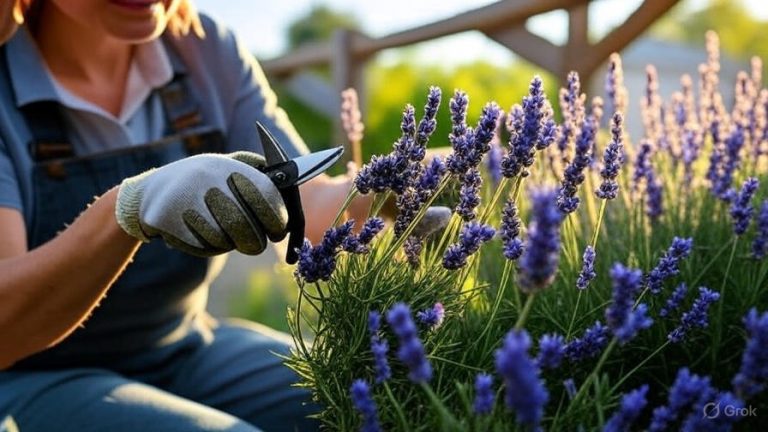
Good pruning shears make the job easy. Look for sharp, clean blades. Dull shears will crush the stems. This damages the plant and makes drying harder.
Bypass pruners work best for lavender. These have two blades that slide past each other like scissors. They make clean cuts. Anvil pruners also work. These have one blade that cuts down onto a flat surface.
Keep your shears sharp. Clean them with a cloth before you start. This stops disease from spreading between plants.
Gloves
Wear light gloves while harvesting. Cotton or nitrile gloves work great. Your hands will smell amazing afterward. Gloves protect your hands if the stems are prickly.
Basket or Bucket
Use something to collect your harvested stems. A small basket looks nice. A bucket works fine too. Avoid plastic bags. They trap moisture. Your lavender needs air circulation while you’re picking.
Twine or Rubber Bands
You’ll need something to bundle your stems after harvesting. Twine looks lovely. Rubber bands work perfectly. You’ll use these bundles for drying.
How to Cut Lavender Stems
The way you cut matters. Use the right technique and your lavender will dry beautifully.
Where to Cut
Look at each lavender stem. You’ll see leaves at the bottom. You’ll see the flower head at the top. Cut about one-third of the way down the stem from the flower.
This gives you a long stem to work with. Long stems are easier to bundle. They look better in arrangements. They dry more evenly.
Never cut all the way down to bare wood. Leave some green leaves on the plant. These leaves help the plant recover quickly. New stems will grow from these remaining leaves.
The Cutting Motion
Make a single, smooth cut. Don’t saw back and forth. Press your shears firmly. Cut right through the stem in one motion.
A clean cut is important. Crushed or bruised stems won’t dry as well. They may start to rot before drying completes. One smooth cut prevents these problems.
How Much to Cut
Don’t harvest more than one-third of the plant at once. This sounds strict but it’s important. Your lavender needs leaves to make food. Leaves power new growth.
If you cut too much at once, your plant may not recover well. It might not grow back as full and bushy. Be gentle with your plants. They’ll reward you with more flowers.
Harvesting Different Lavender Varieties
Not all lavender is the same. Different types mature at different times.
English Lavender
English lavender is the most common type. It blooms once per season. The flowers sit at the top of tall stems. Harvest English lavender when the bottom flowers are showing color but still closed.
You can get two harvests from English lavender if you’re quick. After the first harvest, new buds will form. If you deadhead spent flowers right away, this encourages more blooms.
French Lavender
French lavender looks different. The flowers are more clustered. The blooms have a funny hat-like shape on top. Harvest French lavender when these colorful bracts are visible but flowers haven’t fully opened.
French lavender blooms for a longer season than English types. You can harvest it multiple times through spring and summer.
Spanish Lavender
Spanish lavender has tall spikes with colorful bracts. The actual flowers are tiny. Harvest Spanish lavender at the same stage as French types. The colorful bracts are what you’re after. They dry beautifully.
Drying Your Harvested Lavender
Fresh lavender is lovely but dried lavender lasts for months. Drying is simple. You don’t need special equipment.
Bundle Your Stems
After harvesting, gather your stems into small bundles. Five to ten stems per bundle works well. Not too tight. You want air to flow around each stem.
Tie your bundle with twine or a rubber band. Tie it around the stems just below the flower head. Make it snug but not crushing. You’ll tighten the bundle as it dries and stems shrink.
Find the Right Drying Location
Your drying spot matters. You need a place that is:
Dark – Light fades the purple color. A dark closet is perfect. A dimly lit room works too. Direct sunlight will bleach your flowers.
Dry – Moisture is the enemy of drying flowers. Choose a spot with low humidity. Avoid kitchens and bathrooms. Basements can work if they’re not damp. Attics are excellent choices.
Warm – Heat speeds up drying. A room temperature between sixty and seventy degrees is ideal. Don’t use heat lamps. Too much direct heat can damage the scent.
Airy – Good air flow prevents mold. A room with a window you can crack open is perfect. A fan on low speed helps. Just don’t point it directly at your lavender.
Hang Your Bundles
Turn your bundles upside down. Hang them from a hook, clothesline, or nail. The flower heads point down. The stems point up.
Why hang them upside down? The oils move down into the flower heads. This concentrates the scent where you want it. It also helps stems dry straight. They look better in arrangements.
Space your bundles a few inches apart. They shouldn’t touch each other. Air needs to flow all around them.
Watch for Complete Dryness
Drying takes time. Be patient. It typically takes one to three weeks. The time depends on humidity and temperature.
Your lavender is dry when the stems snap easily. Bend one stem. If it breaks with a snap, you’re done. If it bends without breaking, wait longer.
Feel the flower heads. They should crunch slightly when you squeeze them. They should feel papery and light. Any soft spots mean they’re not fully dry.
Humidity Warning Signs
If your flowers start to feel damp again, move them. This means the room humidity is too high. Choose a drier location. You can add a small fan to improve air circulation.
Mold is the biggest threat to drying flowers. Watch for white fuzzy growth. If you see mold, throw out that bundle. It won’t recover.
Storage Tips for Dried Lavender
Once your lavender is completely dry, store it properly. Good storage keeps it fresh and fragrant for months.
Choose Proper Containers
Glass jars with tight lids work perfectly. Mason jars are ideal. Plastic containers with snap-on lids also work. Skip plastic bags. They don’t seal as well.
Make sure containers are clean and dry. Any moisture inside will ruin your lavender.
Keep It Dark and Cool
Store your dried lavender in a cool, dark place. A closet is perfect. Under the sink works. A pantry shelf is fine.
Heat and light fade the color and degrade the scent. Room temperature storage is ideal. Don’t store near heaters or sunny windows.
Protect from Moisture
Add a small packet of food-grade silica gel to your jar if your area is humid. This absorbs excess moisture. You can find silica gel packets online. They’re inexpensive.
Keep the lids sealed tightly. Every time you open a jar, moisture can get in. Take out what you need and close the lid quickly.
How Long Does It Last?
Properly stored dried lavender stays fragrant for about one year. After that, the scent fades. It’s still pretty but smells less strong.
Mark your jar with the harvest date. Use old batches first. Start fresh next season.
What to Do With Your Harvested Lavender
Now comes the fun part. Time to use your lavender.
Make Sachets
Fill small fabric pouches with dried lavender buds. Close them with twine or ribbon. Toss sachets into drawers. Stuff them in closets. Your clothes will smell amazing.
Making sachets is simple. You can buy small cloth bags online. Or make your own from leftover fabric. A five-inch square folded and sewn takes five minutes.
Create Dried Arrangements
Put dried lavender in a vase. Mix it with other dried flowers. Add dried grasses or branches. Create beautiful decorations for your home.
The best part? Dried arrangements last forever. No water needed. No maintenance required. They just sit there looking gorgeous.
Make Lavender Tea
Brew dried lavender buds into tea. This takes just a few buds and hot water. Steep for five to ten minutes. The tea tastes floral and slightly sweet. Many people find it calming.
Only use lavender you grew yourself for tea. Make sure no pesticides were used. Some lavender varieties are better for tea than others. English lavender is the best choice.
Fill Pillows and Sleep Sachets
Sew small pillows and fill them with dried lavender. Place these under your regular pillow. The scent may help you sleep better. Many people swear by lavender for rest and relaxation.
Make Lavender Sugar
Mix dried lavender buds with sugar in a jar. Let it sit for a few weeks. Use the lavender sugar to bake cookies. Sprinkle it on desserts. It adds a fancy touch to any treat.
Cook With Lavender
Brave cooks use lavender in savory dishes too. Add a few buds to shortbread. Mix some into honey. Create lavender butter for bread. Use it on grilled chicken. The options are endless.
Start with just a little. Lavender has a strong flavor. A tiny amount goes a long way.
Common Mistakes to Avoid
Learn from others’ mistakes. Avoid these errors and you’ll have great success.
Harvesting Too Late
The biggest mistake is waiting too long to cut. Once flowers fully open and fade, the oils are gone. Your lavender won’t smell as good. Always harvest when buds are about to open.
Cutting Too Low
Cutting all the way to the bare wood damages the plant. It may not grow back well. Always leave some green leafy growth. Your plant will thank you.
Drying in Too Much Light
Sunlight bleaches purple flowers to gray or brown. Dry your lavender in a dark place. Save the pretty color. Save the scent too.
Storing in Humid Conditions
Moisture destroys dried flowers. Store lavender in cool, dry places. Use sealed containers. Add silica packets if needed. Your lavender will stay fresh and fragrant longer.
Not Harvesting Enough
Some people are scared to cut their plants. Don’t be. Harvesting encourages new growth. Your plants will get bushier and produce more flowers. More harvesting means more lavender. It’s a wonderful cycle.
Bundles Too Tight
Tight bundles prevent air circulation. The centers may stay damp. Mold can develop inside. Use loose bundles. Air flow is your friend.
Bundles Too Large
Huge bundles dry slowly. The centers stay damp longest. Keep bundles small. Ten stems or fewer is perfect. They dry faster and more evenly.
Extending Your Harvest Season
Want lavender all season long? Use these tricks to spread out your harvests.
Plant Different Varieties
Different lavender types bloom at different times. Plant English, French, and Spanish varieties. You’ll have blooms from spring through fall.
Deadhead Spent Flowers
Cut off flowers after they fade. This tells the plant to make more blooms. It’s not true harvesting but it encourages flowering.
Plant New Plants Every Few Years
Lavender plants age. Older plants produce fewer flowers. Plant new lavender every few years. You’ll always have productive plants.
Create Multiple Harvest Dates
Don’t cut everything at once. Harvest some plants early. Wait on others. This spreads out your harvest over several weeks.
Troubleshooting Harvesting Problems
Having issues? Here’s how to fix them.
Stems Are Droopy or Wilted
Cut your lavender in early morning before heat stresses the plant. Put freshly cut stems in water right away. Keep them cool. Process them quickly for drying.
Flowers Won’t Dry
Check your drying location. It may be too humid. Move to a drier spot. Use a fan to improve air circulation. Add silica packets to absorb moisture.
Dried Lavender Smells Weak
You may have harvested too late. Wait for next season. Harvest buds just before they open. Store properly in sealed containers.
Dried Lavender Is Moldy
Throw it out. Mold spreads quickly. Your drying location is too humid. Choose a drier place next time. Improve air circulation.
Plants Won’t Recover After Harvesting
You cut too much too soon. Don’t harvest more than one-third of the plant. Wait longer between harvests. Your plants will fill back in.
Best Lavender Varieties for Harvesting
Some lavender varieties dry better than others. Some smell stronger. Some are more productive.
English Lavender
English lavender is the classic choice. It smells strong and fresh. It dries beautifully. Plants are hardy and reliable. This is your best choice for harvesting.
Grosso Lavender
Grosso is a large-flowered English type. It produces huge blooms packed with scent. It’s excellent for drying. It’s perfect if you want maximum flowers from each plant.
Phenomenal Lavender
Phenomenal blooms from spring to fall. That’s longer than most varieties. You can harvest many times per season. It’s a productivity champion.
Hidcote Lavender
Hidcote has deep purple flowers and stays compact. It’s excellent for small gardens. It still produces plenty of flowers to harvest.
Lavandula Angustifolia
This is the full name for English lavender. Several cultivars exist. All are excellent for harvesting. All dry beautifully.
Harvesting for Different Purposes
Different uses need different harvesting techniques.
For Dried Arrangements
Harvest lavender with longer stems. Six to twelve inches is ideal. Cut just one-third down from the flower. Longer stems are easier to arrange.
For Sachets and Sachets
You only need the flower buds. Cut stems shorter. Three to six inches works fine. You’ll remove most of the stem anyway before stuffing sachets.
For Tea
Harvest individual buds if you can. Or use dried flowers that have naturally fallen from stems. You want just the flowers, not stems.
For Cooking
Harvest when flowers are fully open but still colorful. The flavor is strongest then. Dry completely before using. Store in sealed jars away from light.
Harvesting Lavender Year After Year
Building a successful harvesting routine takes time. Be patient.
Year One
Plant new lavender. Let it grow through the first season. Don’t harvest heavily. You want strong root development. The plant needs energy to establish itself.
Year Two and Beyond
Now you can harvest regularly. Your plants are established. They’re strong. Harvest freely. Enjoy your lavender.
Each year your plants will get bigger and fuller. You’ll harvest more. Your dried lavender supply will grow. Sharing extras with friends is one of the best parts.
Final Thoughts on Harvesting Lavender
Harvesting lavender is one of gardening’s true pleasures. It’s easy. It’s rewarding. Even total beginners can succeed.
Start with just one plant if you’re nervous. Learn how to harvest and dry it. Build your skills. Soon you’ll have multiple plants. You’ll harvest lavender all season.
The smell. The beauty. The many uses. These are why people love growing lavender. Once you start harvesting, you’ll understand the attraction.
Go ahead. Plant some lavender. Wait for blooms. Cut a bunch. Dry it. Enjoy it. You’ve got this. Your home is about to smell absolutely amazing.
Hi, I’m Mary, the founder of GardenCure.com. I’m passionate about creating healthy, beautiful gardens and well-kept lawns. I share practical experience and trusted advice on garden and lawn gear that truly works. With the support of my dedicated research team, our writers produce honest, in-depth reviews using reliable, authentic sources—helping you choose the right tools with confidence for your outdoor space.