How to Plant a Sunflower Seedling?
Sunflowers are one of the happiest plants you can grow. They shoot up tall, follow the sun across the sky, and bring bees to your yard. Best of all, they are easy. Even if you have never grown anything before, you can plant a sunflower seedling and watch it bloom. This guide walks you through every step, from the small plant in your hand to the golden flower at the top.
In this article
What Is a Sunflower Seedling?
A sunflower seedling is a young sunflower plant that has already sprouted from a seed. It usually has a short stem and two or four leaves. Some people buy seedlings from a garden center. Others start their own seedlings indoors using seeds. Either way, the seedling is the stage where the plant is ready to move from a small pot into the ground.
Sunflowers belong to the species Helianthus annuus. This means they grow, flower, make seeds, and die all in one season. Once you plant them, they do most of the hard work on their own. Your job is to give them good soil, plenty of sun, and steady water.
Why Plant Sunflower Seedlings Instead of Seeds?
You can plant sunflower seeds directly in the ground, and that works well too. But seedlings give you a head start. A seedling already has roots and leaves, so it can handle pests, weeds, and bad weather a little better than a seed can. It also gives you more control. You can space your plants evenly and skip the wait for germination.
Seedlings are a good pick if you live in a place with a short growing season. They let you enjoy blooms weeks sooner than you would with seeds sown outside. Just remember that seedlings can get stressed when you move them, so you need to handle them with care.
What You Need Before You Start
Before you dig a single hole, gather a few supplies. You do not need much. Here is a short list of things that will make planting easier:
- A healthy sunflower seedling with strong green leaves and no yellow spots
- A trowel or small garden shovel
- Compost or aged manure
- A watering can or garden hose
- A bit of mulch, such as straw or shredded leaves
- Gloves, if you do not like dirt under your nails
You also need a good spot in your yard. This matters more than anything else on the list.
Find the Right Spot
Sunflowers love sunshine. They need at least six to eight hours of direct sun each day. A spot that gets full sun in the morning and early afternoon works very well. If your yard has lots of shade from trees or buildings, your sunflowers will grow tall and thin, and they may not bloom well.
Next, check the soil. Sunflowers grow best in loose, well-drained soil. Soil that stays soggy after rain can rot the roots. Push your finger into the ground. If it feels easy to push through and drains quickly after watering, you are in good shape. If the soil is hard clay or sandy and dry, you can still grow sunflowers. Just add some compost to improve it.
Give your plants room to spread out, too. Tall varieties can reach ten feet or more, and they need space for their wide leaves. Most gardeners leave about 18 to 24 inches between plants. Dwarf varieties can sit closer together, around 12 inches apart.
Pick the Best Time to Plant
Timing is important. Sunflower seedlings do not like frost. A hard freeze can kill them quickly. Wait until the danger of frost has passed in your area. Your local garden center or extension office can tell you the average last frost date.
The soil should also be warm, ideally around 60 degrees Fahrenheit or higher. Cold soil slows down root growth, and the seedling may sit still for days. A simple way to check is to use a soil thermometer. If you do not have one, wait until the air feels comfortably warm and the ground no longer feels chilly to the touch.
Early morning or a cloudy afternoon is the best time to plant. The sun is gentler, and the seedling has time to settle before the heat of the day hits.
Step 1: Harden Off Your Seedling
If you started your seedling indoors, do not skip this step. Hardening off means slowly getting your plant used to outdoor conditions. Indoor plants live in calm air, steady temperatures, and soft light. Outside, they face wind, bright sun, and cool nights.
Start about a week before you plant. On the first day, set the seedling outside in a shady, sheltered spot for an hour or two. Each day, add more time and move it into a little more sun. By the end of the week, your seedling can stay outside all day. Bring it inside at night if the temperature drops below 50 degrees.
This simple routine prevents sunburn, leaf damage, and shock. Seedlings that skip hardening off often wilt and struggle after planting.
Step 2: Dig the Planting Hole
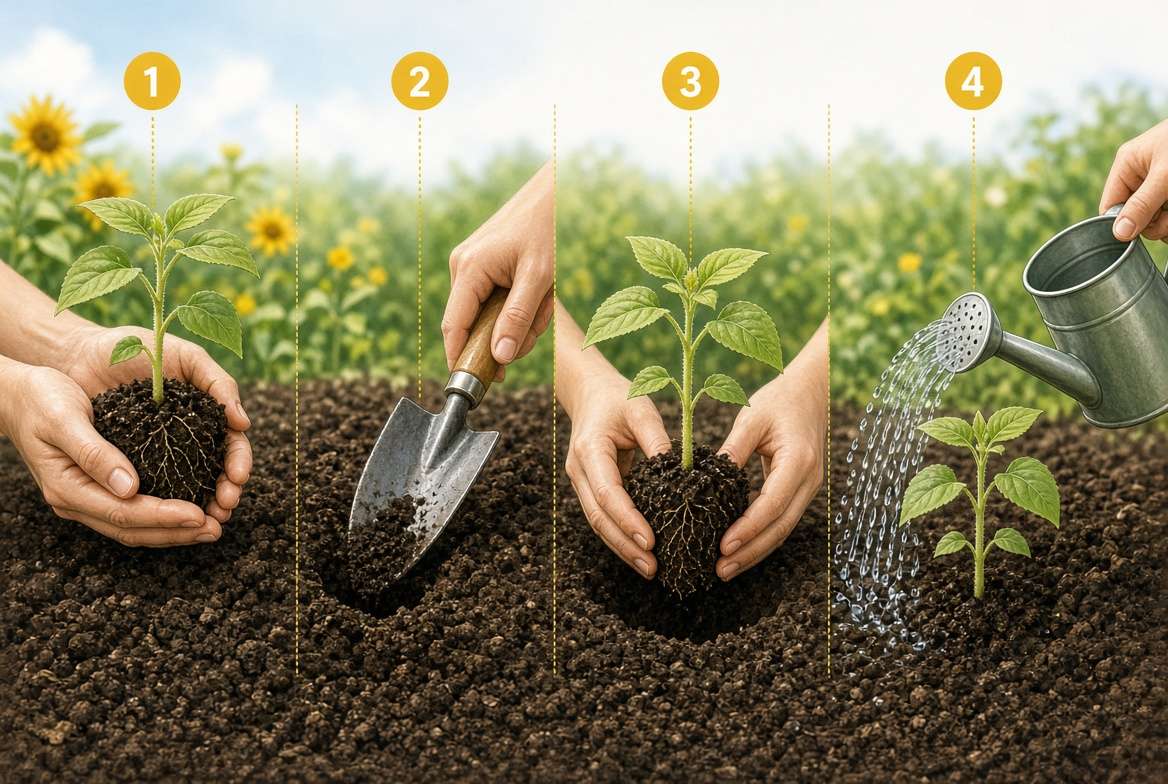
Now you are ready to plant. Dig a hole about twice as wide as the seedling’s root ball and just as deep. Wide holes give the roots room to spread into loose soil, which helps the plant grow strong.
Mix a small handful of compost into the soil you removed. This gives your seedling a gentle boost of nutrients. Do not add fresh manure directly to the hole, because it can burn young roots. Aged manure or compost works much better.
If you have many seedlings, dig each hole as you go. Holes left open for too long can dry out or fill with rain and debris.
Step 3: Remove the Seedling From Its Pot
Water the seedling a few hours before you plant it. Moist soil holds together better and makes the root ball easier to lift. Then gently turn the pot upside down, with one hand over the soil and the stem between your fingers. Tap the bottom of the pot until the seedling slides out.
Never pull the plant by its stem or leaves. Stems bruise easily, and a damaged stem can cause the whole plant to die. If the roots are tightly wound in a circle, loosen them a little with your fingers. This encourages them to grow outward once they hit the soil.
Step 4: Place the Seedling in the Hole
Set the seedling in the middle of the hole. The top of the root ball should sit level with the surrounding ground. Planting too deep can cause the stem to rot, and planting too high can dry out the roots.
Fill the hole with the soil you dug up, pressing it down gently as you go. Firm the soil around the base of the stem, but do not stomp on it. You want the soil snug, not packed like concrete. Air pockets around the roots can cause problems, so the goal is a firm, even fit.
Step 5: Water Deeply
Right after planting, give your seedling a good drink. Pour water slowly at the base of the plant so it soaks deep into the soil. A gentle, steady flow works better than a strong spray that washes soil away.
Water about one to two inches per week after that. Check the soil before you water again. If the top inch feels dry, it is time to water. If it still feels damp, wait another day. Overwatering can cause the roots to rot, which is one of the most common mistakes new gardeners make.
Step 6: Add Mulch
Spread a layer of mulch around the base of the seedling, but keep it a few inches away from the stem. Mulch helps the soil hold moisture, keeps weeds down, and stops the ground from getting too hot. Straw, shredded leaves, and wood chips all work well.
Mulch also protects the soil from sudden temperature swings. This keeps the roots happy and steady, especially during hot afternoons.
Caring for Your Sunflower Seedling
Once your seedling is in the ground, it needs regular care to grow tall and strong. The good news is that sunflowers are tough. A little attention goes a long way.
Watering
Young sunflowers need steady moisture. As they grow, their roots reach deeper, and they can handle dry spells better. Try to water at the base of the plant in the morning. Wet leaves at night can invite fungal disease, so avoid soaking the foliage when you can.
During hot, dry weather, your sunflowers may need water every day or two. During cool, rainy weather, they may need very little. Let the soil be your guide.
Feeding
Sunflowers do not need heavy feeding, especially if you added compost at planting time. Once the plant reaches about knee height, you can add a light layer of compost or a balanced fertilizer around the base. Follow the label directions, and do not overdo it. Too much fertilizer can produce lots of leaves but few flowers.
Staking Tall Varieties
Giant sunflowers can grow very tall, and strong winds may snap their stems. If you grow a tall variety, push a sturdy stake into the ground beside the plant when it is still small. Tie the stem loosely to the stake with soft cloth or garden tape. Leave a little room so the stem can move and grow thicker.
Weeding
Weeds compete with sunflowers for water and nutrients. Pull weeds by hand when they are small, and try not to disturb the sunflower’s shallow roots. Mulch helps a lot here, because it blocks light from reaching weed seeds.
Protecting Your Sunflowers From Pests
Sunflowers attract a few unwelcome visitors. Watch for these common pests:
- Aphids cluster on young leaves and stems. You can spray them off with a strong stream of water or use insecticidal soap.
- Cutworms chew through young stems near the soil. Place a small cardboard collar around the seedling to block them.
- Birds love sunflower seeds, especially when the flower heads start to ripen. Cover the heads with mesh bags or netting once the seeds begin to form.
- Squirrels and rabbits may nibble on young plants. A little fencing can keep them out.
Healthy plants resist pests better, so good soil, proper watering, and enough sunshine are your first line of defense.
When Will Your Sunflower Bloom?
Most sunflowers bloom about 70 to 100 days after planting, depending on the variety. You will notice the flower bud forming at the top of the stem first. It looks like a green ball with small tips. Over time, the bud grows bigger and the petals start to show.
Bees and other pollinators visit the flowers once they open. Their work helps the plant produce seeds. Many gardeners enjoy watching bees crawl across the flower heads on warm, sunny days. If you want even more pollinators in your garden, plant other flowers nearby, such as zinnias or cosmos.
Harvesting Sunflower Seeds
When the back of the flower head turns yellowish-brown and the petals start to dry, the seeds are ready. Cut the head off the stem, leaving a few inches of stalk attached. Hang it upside down in a dry, airy spot. Once it dries fully, rub the seeds off with your fingers. You can eat them raw, roast them, or save them to plant next season.
Common Mistakes to Avoid
Even experienced gardeners make a few mistakes. Here are some to watch out for:
- Planting too early, before the frost has fully passed
- Giving too little sun, which leads to tall, floppy plants
- Overwatering, which can rot the roots
- Planting too deep or too shallow
- Forgetting to harden off indoor seedlings
- Crowding plants too close together, which invites disease
If something goes wrong, do not panic. Sunflowers are forgiving plants. Adjust your watering, move a plant to a sunnier spot, or add some compost, and most sunflowers bounce back.
Final Thoughts
Planting a sunflower seedling is one of the simplest and most rewarding garden projects you can try. All it takes is a sunny spot, loose soil, a gentle hand, and a little patience. Follow the steps in this guide, and you will soon have a tall, cheerful plant that brightens your yard and feeds the bees.
So grab your trowel and a healthy seedling. Dig that hole, plant with care, and give your sunflower a good drink of water. Before long, you will see that big golden face turning toward the sun. Happy planting!
Hi, I’m Mary, the founder of GardenCure.com. I’m passionate about creating healthy, beautiful gardens and well-kept lawns. I share practical experience and trusted advice on garden and lawn gear that truly works. With the support of my dedicated research team, our writers produce honest, in-depth reviews using reliable, authentic sources—helping you choose the right tools with confidence for your outdoor space.