5 Best Vermicompost Bin In 2026
As an Amazon Associate we earn from qualifying purchases.
In this article
Finding the best vermicompost bin can turn your daily kitchen food scraps into rich fertilizer for your garden. This buying guide helps beginners navigate the options, keeping in mind your plans to compost indoors or outdoors. The systems compared here all rely on natural worm activity and structured tray stacking or direct burial to recycle organic waste. This comparison rests entirely on the listed features and typical use cases of each model, rather than on personal hands-on testing. You can easily set these systems up in a garage, on a balcony, or beneath a kitchen counter to process fruit peels, coffee grounds, and crushed eggshells.


1. The Original VermiHut® Plus 5-Tray Worm: best for compact indoor and outdoor use
Overview of this black vermicompost system
The Original VermiHut Plus 5-Tray Worm Composter is a flexible bin built for both indoor and outdoor vermicomposting. As a moderate seller on Amazon, it appeals to gardeners who want to recycle food waste in a small footprint. The black design fits neatly into tight spaces while offering a multi-layer stacking setup that expands as your household waste volume grows. You can start with just two trays active and add higher trays as your red wigglers consume the lower layers of organic material.
High-efficiency footprint and odor control
This model features a compact, high-efficiency footprint designed to maximize composting capacity while minimizing floor space. Composting worms consume food scraps quickly, which helps reduce unwanted odors in living areas when managed correctly. An improved lid design includes a built-in V-Board and coconut mat to support steady airflow and moisture balance across all active layers. These added materials help regulate internal humidity so the environment remains dark and damp for the worms.
Moisture management and worm protection
The V-Board helps retain moisture and maintain a comfortable environment for worms, supporting consistent composting performance. Inside the unit, a worm saver tray prevents worms and compost material from falling into the liquid collection area at the bottom. This tray also improves overall airflow throughout the stacking system by keeping ventilation paths open. It stops active workers from getting trapped in the leachate tea tray below.
Daily use and base features
In practice, managing a multi-layer tray system involves adding food scraps to the active top layer and letting worms migrate upward as food runs out. For outdoor setups, the unit includes protective base feet known as shoes. You can add a little water to these feet to prevent ants from entering the worm bin and disturbing the colony. This simple liquid moat blocks crawling insects effectively during warm weather.
Pros
- Compact footprint fits easily in small spaces.
- Worm saver tray keeps worms out of the liquid collection area.
- Protective base feet help keep ants away with water barriers.
Cons
- Tray management requires regular monitoring as worms migrate.
- Plastic components need careful handling during assembly.
- Limited color choices available for this specific black finish.
2. The Original VermiHut® Plus 5-Tray Worm Compost: best for integrated liquid collection
Introduction to the dark green vermicompost bin
The Original VermiHut Plus 5-Tray Worm Compost Bin offers a continuous flow food waste recycler for organic composting and gardening. Finished in dark green, this model serves as a moderate seller on Amazon for users who prefer outdoor placement or earthy tones indoors. It shares the core efficiency footprint of the brand while adding a unified base design. This stackable design lets you start with a few trays and add more as your household waste volume grows. For example, a small household can begin with two active trays and stack the remaining three trays as kitchen scrap output increases.
A streamlined base structure
The liquid collection tray and base are molded as one piece on this specific model. This unified construction eliminates extra assembly steps for the user right out of the box. It also allows easy collection of excess liquid, often called worm tea, from the bottom spigot or basin. Having the base and collection tray fused together prevents leaks that can occasionally happen where separate parts join in multi-part units. Users can slide a small watering can directly under the spigot to catch liquid fertilizer for garden plants.
Airflow and moisture components
An improved lid design with a built-in V-Board and coconut mat supports proper airflow and moisture balance. Composting worms consume food scraps quickly, which naturally helps reduce odors during normal operation. The V-Board helps retain moisture and maintain a comfortable habitat for the worms. The coconut mat acts as a natural cover that keeps bright light out and holds humidity right above the top bedding layer. This combination keeps the bedding damp without turning the bin into a swampy environment.
Performance and daily operation
The worm saver tray prevents worms and compost material from falling into the liquid collection area while improving airflow throughout the system. Protective base feet or shoes allow you to add water to prevent ants from going into the worm bin. These features combine to make routine food waste management predictable and clean. You can easily feed scraps to the top active tray while lower trays finish processing into rich organic fertilizer. Gardeners can then harvest the dark castings from the bottom trays without disturbing the active feeding zone at the top.
Pros
- Molded one-piece base simplifies initial assembly.
- Integrated liquid collection tray makes harvesting worm tea easy.
- V-Board and coconut mat support healthy moisture levels.
Cons
- Dark green color might not match every indoor decor style.
- Multi-tier stacking requires lifting heavy trays when full.
- Base water moat needs regular refilling to deter ants effectively.
3. Underground Worm Farm: best for direct garden burial
About this miniature garden composter
The Underground Worm Farm by Bumaeu is a garden mini vermicomposting bin designed for outdoor gardening use. As a moderate seller on Amazon, it offers a budget-friendly option at a lower price point than multi-tray stacking towers. It measures 10.2 by 4.3 by 4.3 inches and sits directly in the soil. This slim profile makes it easy to place right next to vegetable plants, flower beds, or shrubs without taking up valuable walking space. Gardeners often use multiple units across different growing zones to deliver targeted nutrition right where crops need it most.
How underground composting works
This system converts organic waste into nutrient-rich garden materials through a fine composting system. It optimizes horticultural practices and promotes environmental protection right where your plants grow. Users simply dig a hole in the garden, bury the unit underground, and add organic waste. Earthworms and other beneficial soil microbes travel in and out of the unit holes to break down the kitchen scraps directly in place. Plant roots can grow right up against the perforated walls to absorb the freshly released nitrogen and phosphorus.
Airflow and weather protection
The lid features a breathable valve and multiple 360-degree inlets to increase airflow and heat dissipation. This design maintains a hygienic, odor-free environment and improves composting efficiency. A safety lock cover effectively discharges gas while preventing rainwater from entering the unit. This keeps the internal moisture levels balanced even during heavy garden watering or rainstorms. Proper ventilation stops the contents from turning anaerobic and smelling sour beneath the soil surface.
Space efficiency and garden impact
This small, compact compost bin does not require much surface space in your yard. It takes up very little area yet effectively improves soil quality within a radius of about three feet. Nature takes its course as soil dwelling organisms process the scraps inside the buried tube. The resulting nutrients seep straight into the surrounding earth to feed nearby plant root systems. This direct delivery method avoids the heavy lifting associated with moving finished compost across a large yard.
Pros
- Extremely affordable price point for beginner gardeners.
- Compact size takes up minimal garden surface area.
- Directly enriches soil around plant roots underground.
Cons
- Small volume limits the amount of kitchen scraps processed at once.
- Requires digging a hole in the garden for installation.
- Harvesting finished compost requires lifting or emptying the buried unit.
4. The Original VermiHut® Classic Model 5-Tray Worm: best for traditional stackable composting
Overview of the classic dark green model
The Original VermiHut Classic Model 5-Tray Worm Composter Bin is an indoor and outdoor vermicomposting system built for organic composting. As a moderate seller on Amazon, it represents the foundational design of the VermiHut lineup. The dark green color blends well into garden sheds, balconies, or utility rooms. It stands as a reliable option for home gardeners who want to recycle kitchen scraps into rich fertilizer. Households produce a steady stream of vegetable peels, coffee grounds, and fruit cores that fit neatly into this multi-tier setup.
Core design and efficiency
This classic model focuses on better airflow control and high compost efficiency. The small footprint allows users to maximize composting capacity without taking up valuable floor space in tight living quarters. Multiple stacked trays enable continuous flow processing as worms move upward through the system. Vermiculture enthusiasts appreciate how this vertical setup makes efficient use of standard composting red wigglers. The stacked design encourages worms to leave finished lower trays and migrate upward into fresh food layers.
Liquid harvesting and daily use
The system includes a dedicated collection area for worm tea. Users can tap into this liquid fertilizer to nourish potted plants or garden beds. The stacked tray arrangement allows beginners to add fresh scraps to the top layer while finished compost develops below. Emptying kitchen scraps simply means lifting the lid, parting the bedding slightly, and covering the food with shredded paper. Regular maintenance takes only a few minutes each week, making it simple to manage household organic waste without mess.
Managing the classic tower
Routine use involves adding chopped food scraps in moderation and maintaining damp bedding. The airflow design helps prevent the bin from becoming too dense or sour. When upper trays fill up, lower trays empty out as finished material is harvested. Proper moisture levels ensure that the red wigglers stay active and process organic matter efficiently without generating unpleasant smells. Keeping the bedding moist like a wrung-out sponge helps worms breathe and digest food quickly.
Pros
- Proven five-tier stackable design for continuous flow composting.
- Small footprint fits well in utility areas or patios.
- Built-in collection system captures nutrient-rich worm tea.
Cons
- Classic model lacks some of the newer molded-base refinements.
- Tray rotation and lifting require basic physical effort.
- Exposed outdoor placement in freezing weather can harm worms.
5. TOP XIAN 5-Tray Worm Composter: best for large-capacity households
[[B:ASIN: B0D2X3Q4GG]]
Introduction to this high-capacity bin
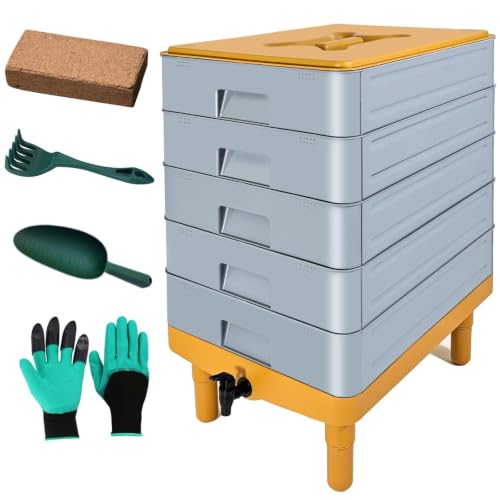
The TOP XIAN 5-Tray Worm Composter offers a large-capacity system with a total capacity of up to 100 liters across five reusable worm trays. Made of high-quality black PP plastic, it functions as an indoor and outdoor worm farm composting bin. It operates as a moderate seller on Amazon for households with higher volumes of food waste. Large families or cooking enthusiasts find this spacious configuration useful for handling everyday vegetable peels and fruit scraps. Managing big batches of kitchen trimmings becomes much simpler when you have multiple working levels at your disposal.
Efficient decomposition and faucet drainage
This large-sized worm bin accelerates the conversion of organic waste into nutrient-rich compost faster than traditional methods. It comes equipped with a built-in faucet that can be directly opened to let liquid fertilizer flow out. The closed design prevents odors from overflowing while maintaining proper internal ventilation. Liquid extraction becomes a simple task when turning the spigot to drain excess moisture into a standard watering can. Gardeners can collect this nutrient-dense liquid to feed potted plants and outdoor flower beds directly.
Ease of assembly and starter kit extras
The five-layer composting bins can be easily stacked to add earthworms and waste. Each tray can also be easily removed for harvesting, which enhances the overall composting journey. The set includes helpful extras such as gloves, coconut bricks, a shovel, and a silicone scraper. These included tools give beginners an immediate head start on setting up bedding and managing daily maintenance tasks. You simply hydrate the coconut bricks to create the initial bedding material before introducing the red wigglers.
Odor reduction and space management
Proper ventilation allows oxygen to enter and speeds up decomposition within the stack. The odorless design makes this worm farm a practical solution for managing waste in small spaces despite its large total volume. Users can easily manage daily scraps by distributing them across the wide tray surface area. Spreading food across multiple tiers prevents overloading any single section and keeps the vermicomposting ecosystem balanced. Worms migrate upward through the perforated tray bottoms as they finish processing the food below.
Pros
- Generous total capacity of up to 100 liters for active households.
- Includes a convenient faucet for draining liquid fertilizer.
- Comes bundled with useful accessories like gloves and coconut bricks.
Cons
- Larger overall physical presence requires more space than mini bins.
- Heavy filled trays demand care during lifting and rotation.
- Plastic spigot requires careful cleaning to prevent clogs.
Comparison Insights
When comparing these five vermicompost options, differences in performance, ease of use, and value become clear. Tower-style systems, such as the VermiHut and TOP XIAN models, excel at processing moderate to large amounts of kitchen scraps using a continuous flow method. They use vertical space efficiently in kitchens, garages, or balconies while separating liquid fertilizer from solid compost. On the other hand, the buried garden model takes a completely different approach by integrating waste processing directly into the soil. Performance varies largely based on capacity and ventilation. The TOP XIAN model offers the largest total volume at up to 100 liters, making it suitable for households that generate substantial food waste from daily cooking.
The VermiHut variants provide refined moisture management through V-Boards and coconut mats, which help maintain stable living conditions for red wigglers. The Bumaeu underground unit relies on surrounding garden earth to regulate temperature and moisture naturally, though its total capacity is much smaller than vertical towers. Ease of use depends on how you prefer to harvest your compost and manage daily scraps. Multi-tier stackable bins require lifting heavy trays and guiding worm migration upward, which takes a little practice for beginners.
Models with integrated liquid bases or built-in faucets simplify draining worm tea, while the underground unit requires no drainage management at all because liquids filter directly into the surrounding soil. Value for money reflects these structural differences. Simple underground tubes cost very little and offer a direct garden benefit, whereas large multi-tray plastic towers require a higher initial investment in exchange for massive capacity and liquid collection features.
Buying Guide for Beginners
Finding the right system starts with evaluating your household waste volume and available space. Indoor setups need reliable odor control and a small footprint to fit neatly in pantries or laundry rooms, while outdoor setups require weather-resistant materials and secure lids to keep pests away. Multi-tray composting towers allow you to harvest solid compost layer by layer, whereas buried units process waste quietly beneath the soil surface without taking up floor space.
Capacity is another core factor to weigh carefully before making a purchase. Small households or single gardeners might only need a compact buried tube or a modest tray tower to handle coffee grounds and fruit peels. Larger families or avid gardeners who generate significant vegetable scraps will benefit from high-capacity multi-tier bins that hold up to 100 liters of material. Moisture and airflow are vital for keeping composting worms healthy and active. Look for designs that include breathable lids, ventilation holes, or moisture-retaining mats to prevent the bedding from becoming too wet or dry. Proper oxygen flow stops anaerobic conditions from forming, which keeps unpleasant smells away from your living or garden space and protects your worm population.
Liquid management also deserves your attention. Worm bins naturally produce liquid fertilizer as food breaks down and moisture releases from fresh kitchen scraps. Systems featuring built-in spigots, faucets, or dedicated collection bases make it simple to drain and dilute this nutrient-rich liquid for your potted plants and garden beds. Units without spigots rely on evaporation or direct soil absorption, which changes how you handle the end products.
Who Should Buy These Products
Home gardeners with limited yard space who want a tidy, multi-layered countertop or balcony setup will find the VermiHut Plus or Classic 5-tray towers to be a strong fit. These units keep waste contained while producing both solid compost and liquid fertilizer. They suit users who enjoy the routine of managing stackable trays and watching worms migrate upward. A small balcony or apartment kitchen provides ample room for these vertical footprints, making it easy to process scraps without taking up floor space in a garage. Active households generating large amounts of daily kitchen scraps need a high-capacity solution. The TOP XIAN 5-Tray Worm Composter fits this group best, offering a large total volume and a convenient drainage faucet. It handles heavy organic waste streams without demanding constant container changes.
Families that cook from scratch every day will appreciate the extra capacity for vegetable peels, coffee grounds, and fruit cores generated during meal prep. Outdoor gardeners looking for a low-maintenance, low-cost way to enrich soil directly around plant roots should consider the Underground Worm Farm. This buried mini bin requires minimal surface space and lets nature handle the decomposition process underground. It appeals to beginners who want to skip tray stacking and liquid draining entirely. You simply sink the perforated cylinder into a garden bed and let soil-dwelling organisms assist the composting process right next to your vegetables.
Final Verdict
Vermicomposting offers a sustainable method for turning kitchen scraps into valuable garden nutrients. The products reviewed here cover a wide spectrum of styles, from stackable indoor towers to buried garden cylinders. Your ideal model depends on where you plan to place the bin, how much food waste you produce, and how much hands-on management you prefer. Tower systems like those from VermiHut and TOP XIAN provide structured, continuous composting with convenient liquid collection. The Bumaeu underground unit provides a simple, direct-to-soil approach for outdoor beds. By matching your daily habits to the right physical design, you can set up a smooth composting routine that benefits your plants for seasons to come. Regular monitoring of moisture levels ensures your system stays healthy and productive.
Frequently Asked Questions
Do vermicompost bins produce bad odors indoors?
A healthy vermicompost bin does not smell bad. When managed correctly with proper airflow and balanced food scraps, it smells like fresh earth. Unpleasant odors usually indicate that the bin is too wet or overloaded with food. Adding dry shredded paper helps restore proper moisture balance and absorbs excess liquid.
What kind of worms belong in a worm composter?
Red wigglers are the standard choice for vermicomposting bins. They thrive in organic waste, tolerate crowded conditions, and process food scraps quickly near the surface of the bedding. Regular garden earthworms are not suited for shallow compost bins because they prefer to burrow deep underground and often die in shallow artificial containers.
How do you harvest the finished compost from a tray system?
In multi-tray towers, you stop feeding the top tray and start adding food scraps to a new tray placed above it. The worms naturally migrate upward to the fresh food, leaving the lower tray full of finished compost that you can easily empty out. This passive separation method saves you from picking worms out by hand and ensures the castings are ready for direct garden use.
Can you put citrus peels and onion scraps in a worm bin?
It is best to avoid large amounts of citrus peels, onions, and garlic. These items can make the bin too acidic and create unpleasant odors that deter composting worms. Stick mostly to vegetable trimmings, fruit scraps, coffee grounds, and crushed eggshells for a stable environment that supports rapid population growth.
What is worm tea and how do you use it?
Worm tea is the nutrient-rich liquid that collects at the bottom of many vermicompost bins from moisture in food waste. You can drain this liquid using a spigot or base basin, dilute it with water, and use it to feed houseplants or garden beds. Always dilute the dark liquid heavily with water before watering plants to prevent nutrient burn from high mineral concentrations.

Hi, I’m Mary, the founder of GardenCure.com. I’m passionate about creating healthy, beautiful gardens and well-kept lawns. I share practical experience and trusted advice on garden and lawn gear that truly works. With the support of my dedicated research team, our writers produce honest, in-depth reviews using reliable, authentic sources—helping you choose the right tools with confidence for your outdoor space.