5 Best Garden Hose Timer In 2026
Keeping your lawn green and garden thriving shouldn’t mean standing outside with a hose every morning. Garden hose timers have revolutionized outdoor watering by automating the entire process. These handy devices attach directly to your outdoor faucet and control when water flows through your hose or irrigation system.
In this article
The beauty of automated watering lies in its simplicity. You set your schedule once, and the timer handles everything else. Your plants get consistent moisture even when you’re away on vacation or caught up with work. No more rushing home to water the tomatoes or waking up early to turn on the sprinklers.
This guide examines five popular garden hose timers that can transform your watering routine. Each option brings something different to the table, from basic mechanical simplicity to advanced dual-zone programming. We’ve tested and researched these products to help you find the perfect match for your yard.
Why Your Garden Needs an Automated Watering System
Manual watering wastes time and often wastes water too. Running a hose for “just a few minutes” usually turns into either too little water or too much. Plants suffer from inconsistent moisture levels, and your water bill reflects the inefficiency.
Automated timers solve these problems by delivering precise amounts of water on a reliable schedule. Your grass gets the same amount of moisture every time, which promotes healthier root development. Deep, infrequent watering beats shallow daily sprinkling for most plants.
These devices also save money over time. By eliminating overwatering and forgotten hoses left running, timers can reduce outdoor water consumption by up to 30%. The initial investment pays for itself through lower utility bills and healthier plants that require less replacement.
Environmental benefits matter too. Water conservation has become critical in many regions facing drought conditions. Automated timers help you be a responsible steward of natural resources while maintaining a beautiful landscape.
RAINPOINT Programmable Sprinkler Timer: The Smart Choice for Tech-Savvy Gardeners
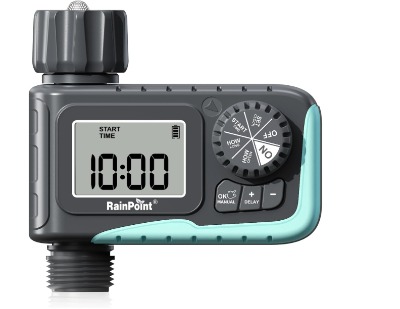
The RAINPOINT single-outlet timer represents modern irrigation technology at an affordable price point. This digital controller offers impressive flexibility through its LCD screen interface and multiple programming modes.
Product Features and Specifications
This timer connects to any standard garden hose thread and operates on two AA batteries. The large digital display shows your current settings clearly, even in bright sunlight. The unit features a rain delay function that postpones watering when nature provides moisture naturally.
Programming options include daily schedules, odd/even day watering, and interval-based cycles. You can set watering duration anywhere from one minute to 300 minutes per session. The manual override button lets you start watering instantly without disrupting your programmed schedule.
The weatherproof construction uses durable ABS plastic that withstands sun exposure and temperature fluctuations. A built-in filter prevents debris from clogging the valve mechanism. The battery life extends for several months under normal use.
Performance in Real-World Conditions
Setting up the RAINPOINT timer takes about five minutes. The menu system feels intuitive after you work through it once or twice. The buttons respond reliably, and the screen remains readable from several feet away.
Water flow starts and stops precisely on schedule. The valve opens and closes smoothly without the hammer effect that damages some plumbing systems. Flow rate remains consistent throughout the watering cycle, ensuring even coverage across your irrigation zone.
The rain delay feature works as advertised. After a storm, you can push two buttons to skip the next scheduled watering. This prevents oversaturation and saves water when your plants don’t need it.
Battery consumption stays reasonable. Users report getting four to six months from a fresh set of batteries when running daily watering cycles. The low-battery indicator gives plenty of warning before the unit stops functioning.
Advantages and Limitations
Pros:
- Straightforward programming with clear display
- Rain delay function prevents unnecessary watering
- Manual mode allows instant watering without schedule changes
- Affordable price point for digital features
- Reliable valve mechanism with consistent performance
- Battery life exceeds expectations
Cons:
- Single outlet limits coverage to one zone
- Buttons can be stiff when the unit is new
- Some users find the menu structure takes practice
- No wireless connectivity or app control
Best Uses for This Timer
This RAINPOINT model works perfectly for homeowners with compact gardens or single irrigation zones. If you have a soaker hose running through your vegetable garden or a drip system feeding your flower beds, this timer handles the job beautifully.
Small to medium lawns benefit from this timer paired with a quality sprinkler. The programmable intervals let you water deeply and infrequently, which encourages strong grass roots. Container gardens on patios or decks stay properly hydrated without daily attention.
Vacation watering becomes stress-free with this device installed. Your plants receive consistent care even when you’re away for weeks. The reliable valve and long battery life mean you won’t return home to dead plants or a flooded yard.
Orbit 62061Z Digital Timer: Proven Reliability from a Trusted Brand
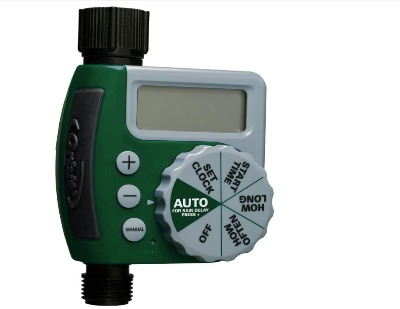
Orbit has built irrigation products for decades, and the 62061Z reflects that experience. This digital timer balances user-friendly features with dependable performance at a competitive price.
Design and Build Quality
The Orbit timer uses a familiar control layout that many gardeners recognize. The interface centers around a large dial for mode selection and simple buttons for setting adjustments. The display shows essential information without overwhelming you with data.
Construction quality feels solid. The plastic housing uses UV-resistant materials that won’t become brittle after seasons in the sun. The battery compartment seals tightly against moisture. Connection threads match standard hose fittings precisely.
The unit runs on a single 9-volt battery. Power consumption stays low enough that most users replace the battery once per season. An indicator alerts you when battery voltage drops below operating levels.
Programming Capabilities
This Orbit model offers three watering modes: Auto, Manual, and Off. Auto mode supports daily schedules or interval-based cycles. You select start times and duration for each watering session.
Duration settings range from one minute to 240 minutes. This flexibility covers everything from quick misting cycles to long soaking sessions. The interval mode lets you water every two, three, four, or six days rather than daily.
Manual mode provides on-demand watering without affecting your programmed schedule. You simply turn the dial to Manual, and water flows until you switch back to Auto or Off. This feature helps when you need to water new plantings or test your irrigation setup.
The rain delay function pauses automatic watering for up to 72 hours. This prevents your system from running during or after rainfall, conserving water and preventing oversaturation.
Real-World Performance
The Orbit 62061Z delivers consistent results season after season. The valve mechanism operates smoothly with minimal noise. Water pressure remains steady throughout each cycle, ensuring uniform coverage.
Programming takes just a few minutes once you understand the dial-and-button system. The interface feels more intuitive than some competitors that use menu-driven designs. Making quick adjustments to your schedule happens easily.
The timer maintains your settings even during battery changes. This memory feature saves frustration when routine maintenance is needed. Battery life meets manufacturer claims, typically lasting an entire growing season.
Weather resistance proves excellent. The unit functions properly through rain, heat, and humidity. The seal around the battery compartment keeps moisture out even during heavy storms.
Strengths and Weaknesses
Pros:
- Simple interface requires minimal learning curve
- Reliable valve operation with consistent flow
- Memory retains settings during battery replacement
- Weather-resistant construction handles outdoor conditions
- Reasonable price for brand reliability
- Battery lasts entire season for most users
Cons:
- Limited to one irrigation zone
- Maximum duration of 240 minutes restricts some applications
- No LED backlight for nighttime adjustments
- Display can be hard to read at certain angles
Ideal Applications
The Orbit 62061Z excels in standard residential watering applications. If you have a lawn sprinkler, garden drip system, or foundation plantings to maintain, this timer handles those tasks effortlessly.
Homeowners who value simplicity over advanced features will appreciate this model. The straightforward controls mean anyone in the household can adjust the watering schedule when needed. No complicated menu systems to navigate or confusing button combinations to remember.
This timer also works well for rental properties or vacation homes. The reliable operation and simple interface make it easy for property managers or caretakers to maintain outdoor spaces. The durable construction ensures years of service with minimal maintenance.
Orbit 62034 Mechanical Timer: Old-School Simplicity That Just Works
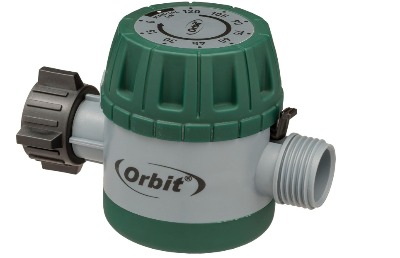
Sometimes the best solution is the simplest one. The Orbit 62034 mechanical timer strips away digital complexity and uses tried-and-true mechanical components. This no-frills approach delivers reliability without batteries or programming.
How Mechanical Timers Function
This device uses a clockwork mechanism similar to kitchen timers. You manually turn a dial to set the watering duration, up to 120 minutes. The internal spring slowly unwinds, controlling how long water flows through the valve.
No batteries mean no power failures. The mechanical action requires no electricity at all. You simply twist the dial, and water starts flowing. When the timer reaches zero, the valve closes automatically.
The construction uses heavy-duty materials built to withstand outdoor exposure. Metal components resist corrosion better than their plastic counterparts. The large dial turns easily even with wet or gloved hands.
Operation and Setup
Using the Orbit 62034 couldn’t be simpler. Screw it onto your outdoor faucet, attach your hose, and turn the dial to your desired watering time. The water starts immediately and stops when the dial reaches zero.
This timer requires you to manually start each watering session. It won’t turn on automatically according to a schedule. You must be present to twist the dial each time you want to water.
The manual operation works perfectly for many situations. If you’re home daily and prefer hands-on control of your watering, the mechanical timer provides exactly what you need. No programming to forget and no schedules to worry about.
Durability and Longevity
Mechanical timers often outlast their digital counterparts. With fewer components to fail, these simple devices continue working season after season. Many users report the same mechanical timer functioning perfectly after five or more growing periods.
The all-weather construction handles temperature extremes without issues. The metal components don’t become brittle in cold weather or soft in summer heat. Rain and humidity don’t affect the clockwork mechanism.
Maintenance requirements are minimal. An occasional cleaning of the filter screen keeps debris from affecting valve operation. No battery replacements or circuit board failures to worry about.
Benefits and Drawbacks
Pros:
- No batteries required ever
- Extremely simple operation with no learning curve
- Durable metal construction lasts for many seasons
- Works during power outages or dead batteries
- Affordable price point
- Minimal maintenance requirements
Cons:
- No automatic scheduling capability
- Must manually start each watering session
- Maximum 120-minute duration may be insufficient
- No rain delay or smart features
- Requires you to be present for operation
Perfect Scenarios for Mechanical Timers
The Orbit 62034 serves gardeners who want control without automation. If you enjoy being involved in your garden care and you’re home regularly, this timer prevents overwatering without removing you from the process.
This model also works beautifully as a backup device. Keep it on hand for situations where your primary digital timer fails or needs maintenance. The mechanical reliability ensures your plants stay watered regardless of technical problems.
Hand-watering enthusiasts appreciate these timers too. If you like directing the hose yourself but tend to lose track of time, the mechanical timer prevents you from overwatering individual areas. Set it for 15 or 20 minutes and move the sprinkler knowing it will shut off automatically.
Container gardens and small raised beds benefit from this timer’s precision. You can give different areas exactly the amount of water they need without worrying about programming multiple zones or schedules.
Generic Water Timer with Rain Delay: Budget-Friendly Automation
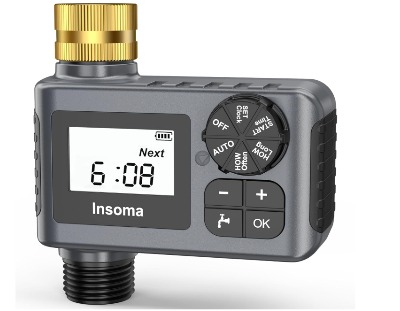
Several manufacturers produce similar digital timers under various brand names. These generic models offer core automation features at prices that won’t strain your budget. While they lack the name recognition of major brands, many deliver solid performance.
Standard Features Across Generic Models
Most generic timers include basic programming capabilities. You can typically set watering frequency (daily or interval-based) and duration (usually one to 300 minutes). A digital display shows current settings and remaining time.
Rain delay functions appear on nearly all models. This feature lets you postpone scheduled watering for 24 to 72 hours after rainfall. Manual override buttons allow on-demand watering without affecting your programmed schedule.
Battery operation using AA cells has become standard. Most generic timers claim battery life of several months. Weatherproof housings protect internal components from moisture and UV damage.
Connection threads follow standard garden hose dimensions. These timers attach to any typical outdoor faucet and accept standard hose fittings on the outlet side. Installation requires no tools or special adapters.
Performance Expectations
Generic timers generally perform their basic functions adequately. The valves open and close on schedule, and water flows at consistent pressure. Programming works as described, though menu systems vary in user-friendliness.
Build quality tends toward functional rather than premium. The plastic housings do the job but may not feel as substantial as name-brand alternatives. Buttons sometimes require firm presses to register inputs.
Longevity varies significantly among generic brands. Some users report years of reliable service while others experience failures within a single season. This inconsistency reflects the varying quality control standards among different manufacturers.
Customer support ranges from minimal to nonexistent. If you encounter problems, replacement often makes more sense than repair attempts. The low purchase price makes this approach economically reasonable.
Value Proposition
Pros:
- Low purchase price makes automation accessible
- Core features match more expensive models
- Rain delay prevents waste after storms
- Manual mode provides watering flexibility
- Standard connections fit existing setups
Cons:
- Quality control varies among brands
- Customer support often lacking
- Durability questions compared to name brands
- Instruction manuals sometimes poorly translated
- Less reliable over multiple seasons
When Generic Makes Sense
Budget-conscious gardeners can start with automated watering using generic timers. If you want to test automation before investing in premium equipment, these devices let you experience the benefits without major expense.
Rental properties or seasonal homes benefit from inexpensive timers. If there’s risk of theft or if the equipment might not be needed long-term, the low cost makes sense. You’re not leaving expensive equipment vulnerable or making unnecessary investments.
These timers also work well for simple applications with modest expectations. If you have a small garden or limited watering needs, generic options handle basic tasks competently. Save your money for premium timers in critical applications like vegetable gardens or expensive landscaping.
RAINPOINT Two-Zone Timer: Professional-Grade Control for Complex Landscapes
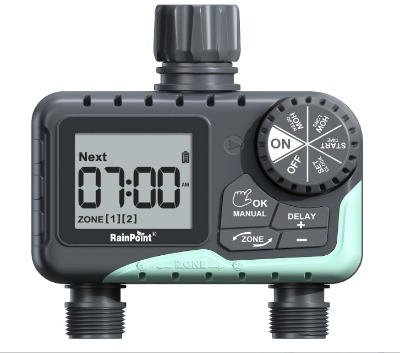
The RAINPOINT dual-outlet timer elevates home irrigation to a professional level. This advanced controller manages two separate watering zones independently, perfect for properties with diverse landscaping needs.
Dual-Zone Capabilities
Two independent outlets operate on separate schedules. Each zone can have completely different watering frequencies and durations. This separation lets you properly maintain areas with varying water requirements.
Programming each zone works identically to single-outlet timers. You set start times and durations independently. The timer handles both zones simultaneously or staggers them to manage water pressure.
The dual-zone design eliminates the need for two separate timers. You save money, reduce equipment clutter, and simplify your watering system. One device manages your entire outdoor irrigation.
Each outlet features its own valve mechanism. If one valve experiences problems, the other continues operating normally. This redundancy provides peace of mind for gardeners with valuable plantings.
Advanced Programming Options
This RAINPOINT model offers sophisticated scheduling beyond basic daily cycles. You can program different watering days for each zone, accommodating plants with varying moisture needs. Some areas might water daily while others receive moisture every three days.
Duration settings for each zone range from one minute to 300 minutes. This flexibility allows quick misting cycles for new seedlings in one zone while established plants receive deep soaking in another zone.
The rain delay affects both zones simultaneously or individually, depending on your settings. This intelligent feature recognizes that some areas dry faster than others after rain. Your sunny lawn might need watering sooner than your shaded garden beds.
Manual mode lets you run either zone independently without disrupting programmed schedules. Test your sprinkler coverage or give extra water to stressed plants without reprogramming everything.
Construction and Durability
The RAINPOINT two-zone timer uses heavy-duty materials designed for years of outdoor use. The housing resists UV degradation and temperature extremes. Connection threads machined to precise tolerances prevent leaks.
The dual valve system operates smoothly and quietly. Water flow starts and stops cleanly without pressure spikes. The valves seal completely when closed, preventing drips and waste.
Battery life remains reasonable despite operating two zones. Users report four to six months from fresh batteries under normal conditions. The low-battery warning provides ample notice for replacement.
The LCD screen displays information for both zones clearly. You can check settings and status at a glance. Button controls feel responsive and durable enough for frequent adjustments.
Pros and Cons Analysis
Pros:
- Two independent zones from single device
- Separate scheduling for diverse plant needs
- Saves money versus buying two timers
- Professional-grade control for home use
- Reliable valve operation on both outlets
- Comprehensive programming options
Cons:
- Higher price than single-outlet models
- More complex programming requires learning
- Battery consumption higher with dual operation
- Overkill for simple single-zone applications
Optimal Use Cases
Properties with distinct landscaping areas benefit most from dual-zone control. If you have both a lawn and a vegetable garden, each area gets the specific watering schedule it needs. Your grass receives frequent light watering while vegetables get deep, infrequent soaking.
Homeowners with separate front and back yards find dual zones convenient. Different sun exposures and plant types in each area often require different watering approaches. One timer manages both spaces efficiently.
This RAINPOINT model serves gardeners who take their landscaping seriously. If you’ve invested time and money into diverse plantings, the precise control protects your investment. Each zone receives optimal care without compromise.
Water conservation becomes easier with zone control. You can reduce watering frequency in established areas while maintaining higher frequency for new plantings. This targeted approach minimizes waste while keeping everything healthy.
Choosing the Right Timer for Your Garden
Several factors determine which timer best fits your situation. Understanding your specific needs helps narrow the options and ensures satisfaction with your purchase.
Assess Your Watering Zones
Count how many separate areas need watering. A single front lawn requires just one zone. A property with front lawn, back lawn, vegetable garden, and flower beds might need multiple zones or strategic planning.
Single-zone timers work perfectly when you can connect all irrigation with one hose or manifold. You run soaker hoses or sprinkler systems from one faucet and control everything together.
Multiple zones become necessary when areas have vastly different watering needs or when you can’t physically connect everything to one water source. The dual-zone RAINPOINT timer handles two areas while more complex properties might need multiple single-zone timers at different faucets.
Consider Your Technical Comfort Level
Digital timers offer more features but require more setup. If you enjoy technology and don’t mind reading instructions, programmable models provide excellent value. The investment in learning pays off through precise control.
Mechanical timers suit gardeners who prefer simplicity. If buttons and menus frustrate you, the twist-and-go operation of mechanical models eliminates stress. You sacrifice automation but gain peace of mind.
Your existing comfort with technology matters. Someone who programs their thermostat and uses smartphone apps will master digital timers quickly. Those who prefer analog approaches should stick with mechanical options.
Evaluate Water Pressure and Flow Rate
Check your outdoor faucet’s water pressure before purchasing. Most timers operate properly within typical residential pressure ranges. Extremely high or low pressure might affect performance.
Flow rate determines how many sprinklers or drip lines you can operate simultaneously. Timers don’t boost pressure or flow. Your existing system capacity remains the limiting factor.
Test your setup before installing a timer. Run your sprinklers or irrigation lines manually and verify coverage. The timer will replicate this performance automatically, so ensure everything works properly first.
Budget Considerations
Prices range from basic mechanical models under twenty dollars to sophisticated multi-zone systems over seventy dollars. Determine what features you actually need versus what seems nice to have.
The cheapest option isn’t always the best value. Spending a bit more for reliable brands often saves money long-term through better durability. However, you shouldn’t overpay for features you won’t use.
Remember that water savings can offset the purchase price. If a timer reduces your outdoor water consumption by 20%, the savings accumulate over time. Factor this ongoing benefit into your budget calculations.
Installation and Setup Best Practices
Proper installation ensures reliable operation and long service life. These steps work for most garden hose timers regardless of brand or model.
Physical Installation Steps
Start with a clean outdoor faucet. Remove any old washers or debris from the threads. Check that the faucet operates smoothly before attaching the timer.
Wrap the faucet threads with plumber’s tape if needed. This prevents leaks at the connection point. Two or three wraps usually suffice for standard hose threads.
Hand-tighten the timer onto the faucet firmly. Most connections don’t require tools. Over-tightening with pliers can crack the plastic housing or strip threads.
Attach your hose to the timer outlet. Again, hand-tight works for standard connections. Ensure washers are present in both ends of the hose to prevent leaks.
Turn on the faucet fully. The timer valve controls water flow, so the faucet should remain open. Test for leaks at both connections and tighten slightly if needed.
Programming Your Schedule
Insert fresh batteries before programming digital models. Old batteries might die mid-programming and erase your settings. Start with quality alkaline cells for best results.
Set the current time first. Most timers use 24-hour or 12-hour formats. Accurate time settings ensure watering happens when scheduled rather than at random times.
Program your first watering cycle conservatively. Start with shorter durations and increase if needed. It’s easier to add time than to fix overwatering damage.
Test your schedule immediately after programming. Run a complete cycle while you observe. Verify that start times, durations, and shut-off all function correctly.
Make notes of your settings. Write down your schedule and keep it near the timer. This reference helps when you need to adjust settings or reprogram after battery changes.
Maintenance and Seasonal Care
Clean the filter screen regularly. Most timers include a small screen that prevents debris from entering the valve. Remove and rinse this screen monthly during active use.
Check for leaks periodically. Tighten connections if you notice drips. Small leaks waste water and can damage the timer housing over time.
Replace batteries before they die completely. The low-battery indicator gives warning, so swap in fresh cells when notified. Don’t wait until the timer stops working.
Winterize timers in cold climates. Remove the unit and store it indoors before freezing temperatures arrive. Disconnect and drain all hoses. Water left inside can freeze and crack the valve body.
Troubleshooting Common Problems
Even reliable timers occasionally develop issues. Most problems have simple solutions you can handle without professional help.
Timer Won’t Turn On
Check batteries first. Even new batteries sometimes arrive defective. Try a different set before assuming timer failure.
Verify correct battery installation. Reversed polarity prevents operation. Match the plus and minus symbols in the battery compartment.
Clean battery contacts if they look corroded. Moisture sometimes causes oxidation. Gently scrub contacts with fine sandpaper and wipe clean.
Water Doesn’t Flow
Confirm the faucet is fully open. Timers control flow, but the faucet must be on. This simple oversight causes many false alarms.
Check for kinked hoses restricting flow. Straighten hoses and ensure no furniture or equipment crushes them.
Clean the filter screen. Debris accumulation restricts water passage. Remove, rinse, and reinstall the screen.
Verify the timer is in the correct mode. Manual or Auto mode should be selected, not Off. The display should indicate active operation.
Timer Runs Continuously
The valve might be stuck open. Dirt or debris sometimes prevents complete closure. Remove the timer, clean thoroughly, and reinstall.
Programming errors can cause this issue. Double-check your duration settings. An accidental 300-minute program runs for five hours straight.
Battery power might be insufficient. Weak batteries can prevent proper valve closure. Replace with fresh batteries and test again.
Inconsistent Watering Times
Calendar drift affects timers without real-time clocks. Reprogram the current time if watering happens at wrong times. Some basic models lose time accuracy over weeks.
Temperature extremes can affect battery performance. Very hot or cold weather temporarily reduces battery voltage. This usually resolves when temperatures moderate.
Verify your schedule settings. Accidental button presses might have altered your program. Review all settings and correct any changes.
Water Conservation Tips with Automated Timers
Automated watering saves water when used intelligently. These practices maximize efficiency and minimize waste.
Optimal Watering Times
Early morning provides the best watering window. Temperatures stay cool, reducing evaporation. Plants have all day to absorb moisture before evening.
Late evening watering works second best. Cooler temperatures again minimize evaporation loss. However, foliage staying wet overnight can encourage fungal diseases.
Avoid midday watering whenever possible. Hot sun and wind evaporate much of the water before it reaches plant roots. You waste money and stress your plants.
Proper Duration Settings
Deep, infrequent watering beats shallow, frequent cycles. Set your timer for longer durations less often. This encourages deep root growth and drought tolerance.
Most lawns need one to one-and-a-half inches of water weekly. Measure sprinkler output by placing containers in the coverage area. Time how long it takes to collect one inch, then program accordingly.
Adjust for season and weather. Plants need less water during cool, cloudy periods. Reduce frequency or duration when natural rainfall supplements your irrigation.
Zone-Specific Strategies
Match watering to sun exposure. Shady areas need less water than sunny locations. If your timer lacks zones, consider separate timers for dramatically different areas.
Adjust for plant maturity. Established plants tolerate drier conditions than new plantings. Reduce watering frequency as your landscape matures.
Recognize soil differences. Clay soils hold moisture longer than sandy soils. Program longer intervals between waterings for heavy soils and shorter intervals for fast-draining areas.
Final Recommendations
Each timer reviewed here serves specific situations well. Your choice depends on property size, technical preferences, and budget constraints.
The RAINPOINT single-outlet timer delivers the best balance of features and value for most homeowners. The programming flexibility handles diverse needs while remaining affordable. If you have a single watering zone and want reliable automation, this model rarely disappoints.
The Orbit 62061Z offers proven reliability from a respected brand. The simple interface and durable construction make it perfect for gardeners who value straightforward operation. Those willing to pay slightly more for brand reputation find this model worth the investment.
The Orbit 62034 mechanical timer serves specific situations beautifully. If you’re home daily and prefer hands-on control, the battery-free operation and simple twist mechanism work perfectly. This model also makes an excellent backup device.
Generic timers with rain delay provide entry-level automation. Budget-conscious gardeners can start with these models while learning what features matter most. Just understand the quality trade-offs that come with rock-bottom prices.
The RAINPOINT two-zone timer stands alone for complex properties. If you need independent control over multiple areas, the dual-outlet design eliminates compromise. Serious gardeners with diverse landscaping find the investment worthwhile.
Your garden deserves consistent care, and these timers deliver that reliability. Select the model that matches your needs, install it properly, and enjoy the freedom of automated watering. Your plants will thrive, your water bill will drop, and you’ll wonder how you ever managed without this simple technology.

Hi, I’m Mary, the founder of GardenCure.com. I’m passionate about creating healthy, beautiful gardens and well-kept lawns. I share practical experience and trusted advice on garden and lawn gear that truly works. With the support of my dedicated research team, our writers produce honest, in-depth reviews using reliable, authentic sources—helping you choose the right tools with confidence for your outdoor space.