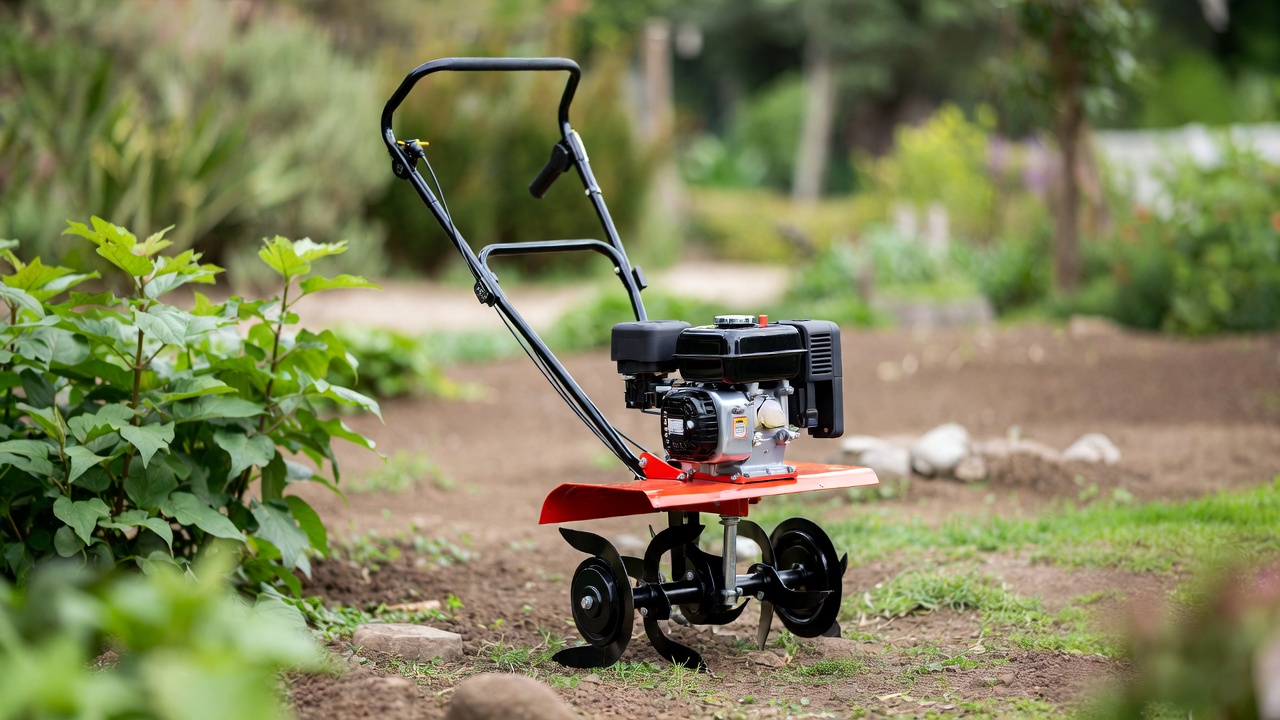
5 Best Garden Tiller for Small Gardens In 2026
Transforming a compact outdoor space into a thriving garden starts with proper soil preparation. A quality tiller makes this task significantly easier, breaking up hard-packed earth and mixing in nutrients without the backbreaking labor of manual digging.
In this article
Small gardens present unique challenges. You need equipment powerful enough to handle tough soil but compact enough to maneuver in tight spaces. The wrong tool can damage plants, struggle with confined areas, or simply sit unused because it’s too cumbersome.
This comprehensive review examines five top-performing tillers designed specifically for smaller gardening spaces. Each option offers distinct advantages depending on your soil type, garden layout, and physical capabilities.
Understanding Your Small Garden Tilling Needs
Before diving into specific models, let’s clarify what makes a tiller suitable for compact spaces.
Size and Maneuverability
Small gardens require machines that can navigate between raised beds, around established plants, and through narrow pathways. Bulky equipment becomes a hindrance rather than a help. Look for tillers with working widths between 9-16 inches – narrow enough for precision work yet wide enough to cover ground efficiently.
Power Source Considerations
Cordless battery-powered tillers offer unmatched freedom of movement. No extension cords mean you can work anywhere in your garden without tripping hazards or range limitations. Corded electric models provide consistent power for longer sessions but require access to outlets.
Tilling Depth Requirements
Most vegetable gardens and flower beds need cultivation depths of 6-8 inches. This depth allows proper root development while mixing amendments throughout the soil profile. Deeper isn’t always better – excessive depth can bring weed seeds to the surface or disturb beneficial soil layers.
Soil Cultivation Basics
Different soil types demand different approaches. Clay soil needs aggressive tines and multiple passes. Sandy soil tills easily but requires careful technique to avoid over-working. Rocky ground calls for sturdy construction and protected components.
Top 5 Garden Tillers for Small Spaces
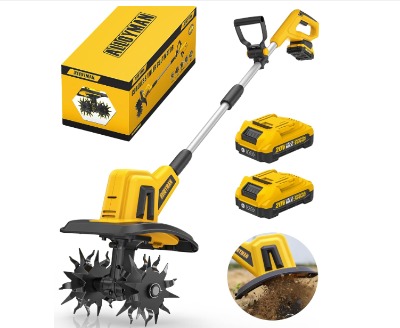
1. Alloyman 20V Cordless Tiller Cultivator with 2.0Ah Batteries
Product Description
This lightweight cordless cultivator brings battery-powered convenience to compact gardens. The 20-volt system delivers 360 RPM through adjustable tines that work soil up to 6.6 inches deep and 9 inches wide. Two 2.0Ah batteries come included with a charger, providing flexibility for extended work sessions.
The design emphasizes ease of use. Weighing just enough to provide control without causing fatigue, this tiller handles routine garden maintenance with minimal physical strain. The adjustable working width accommodates different tasks – use the full 9-inch width for open areas or reduce it for work between established plants.
Key Features
The 360 RPM motor speed balances power with battery efficiency. Four steel tines bite into compacted soil effectively while remaining gentle enough for seasonal cultivation. The depth adjustment mechanism lets you customize penetration based on your specific needs.
Battery management becomes simple with the included dual-battery system. While one battery powers your work, the other charges. The 2.0Ah capacity handles typical small garden sessions on a single charge, with the backup ensuring you can complete larger projects without interruption.
Safety features include a trigger lock system and protective guards around the tines. The ergonomic handle design reduces wrist strain during extended use.
Pros
- Excellent portability with cordless design
- Quick battery charging minimizes downtime
- Lightweight construction reduces user fatigue
- Adjustable tilling width suits various garden tasks
- Quiet operation won’t disturb neighbors
- Easy assembly requires minimal tools
- Compact storage footprint
Cons
- 2.0Ah batteries provide shorter runtime than higher capacity options
- May struggle with heavily compacted clay soil
- Tine configuration limits depth in rocky conditions
- Battery replacement costs add to long-term ownership expenses
Best For
This tiller excels in established gardens with moderately loose soil. It’s ideal for seasonal preparation, mixing amendments, and maintaining vegetable beds. Gardeners who value ease of use over raw power will appreciate its balanced approach.
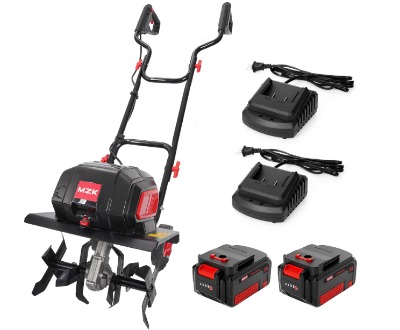
2. MZK 40V 12-inch Cordless Garden Tiller TC12D02
Product Description
The MZK tiller steps up in both power and capacity. A 40-volt brushless motor drives 12-inch wide tines to a maximum depth of 8.6 inches. This model includes two 4.0Ah batteries and a charger, providing substantial runtime for larger small-garden projects.
The brushless motor technology delivers several advantages over traditional designs. It runs cooler, lasts longer, and converts battery power more efficiently. This translates to more soil worked per charge and reduced maintenance requirements over the tiller’s lifespan.
Construction quality shows attention to durability. Heavy-duty tines withstand contact with roots and rocks. The reinforced housing protects internal components from debris. The adjustable handle accommodates users of different heights comfortably.
Key Features
Six hardened steel tines arranged in a staggered pattern provide thorough soil mixing. The depth adjustment offers precise control from surface cultivation to deep preparation. A folding design simplifies storage and transportation.
The 40-volt system represents a significant power upgrade. This voltage handles tougher soil conditions and cuts through root systems more effectively than lower-voltage competitors. The brushless motor maintains consistent performance as batteries discharge, unlike brushed motors that slow gradually.
Both included batteries feature LED charge indicators. You always know remaining capacity and charging status at a glance. The rapid charger fully replenishes a depleted battery in approximately one hour.
Pros
- Powerful 40V system tackles challenging soil
- Extended runtime with dual 4.0Ah batteries
- Brushless motor requires minimal maintenance
- 12-inch width covers ground quickly
- 8.6-inch depth handles deep cultivation
- Foldable design saves storage space
- LED battery indicators prevent surprise shutdowns
- Suitable for breaking new ground
Cons
- Higher initial investment than lower-voltage models
- Increased weight may challenge some users
- Larger size reduces maneuverability in very tight spaces
- Batteries and charger add significant weight for transport
Best For
This tiller suits gardeners tackling tougher soil conditions or larger small-garden spaces. It works well for establishing new beds, breaking compacted earth, and deep seasonal preparation. The power and runtime support more ambitious projects without constant recharging.
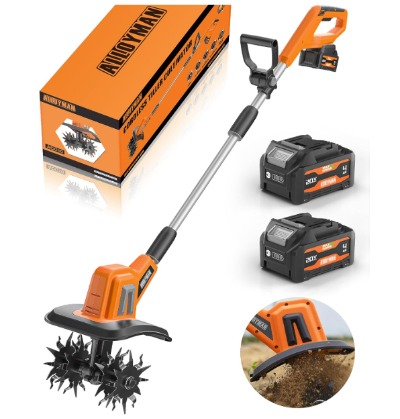
3. Alloyman 20V Cordless Tiller Cultivator with 4.0Ah Batteries
Product Description
This model shares the same 20V platform and basic design as the first Alloyman option but upgrades the battery capacity to 4.0Ah. The enhanced energy storage extends runtime significantly while maintaining the compact, maneuverable form factor.
All mechanical specifications remain identical – 360 RPM motor speed, 9-inch maximum width, 6.6-inch depth capability, and four steel tines. The control layout, safety features, and adjustment mechanisms mirror the 2.0Ah version exactly.
The primary distinction lies in operational duration. These higher-capacity batteries power longer work sessions before requiring recharge. For gardeners with more ground to cover or tougher soil conditions, the extra runtime justifies the modest price increase.
Key Features
The 4.0Ah batteries double the energy storage of standard 2.0Ah packs. In practical terms, expect to till approximately twice as much area per charge. This proves particularly valuable when working with clay or heavily rooted soil that demands more power per square foot.
Battery longevity extends beyond single-session runtime. Higher-capacity cells typically endure more charge cycles before showing performance degradation. This translates to years of reliable service before battery replacement becomes necessary.
Charging time increases proportionally with capacity, but the included charger still completes a full recharge in reasonable time. The dual-battery system continues to offer swap-out convenience during larger projects.
Pros
- Double the runtime of 2.0Ah version
- Same lightweight, maneuverable design
- Longer battery lifespan over years of use
- Handles extended work sessions comfortably
- Quiet, neighbor-friendly operation
- Adjustable width suits various tasks
- Batteries compatible with other Alloyman 20V tools
Cons
- Higher upfront cost than 2.0Ah model
- Slightly heavier batteries affect overall weight
- Same power limitations as smaller battery version
- May still require multiple charges for very large areas
Best For
This represents the sweet spot for many small-garden owners. You gain substantially more runtime without sacrificing portability or ease of use. It’s perfect for gardeners who found the 2.0Ah version appealing but wanted longer operation between charges.
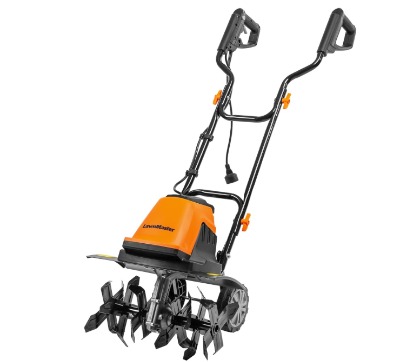
4. LawnMaster TE1216M Electric Tiller 12-Amp, 16-Inch
Product Description
Shifting to corded electric power, the LawnMaster delivers consistent performance through a 12-amp motor. The 16-inch tilling width covers maximum ground with each pass, while six steel tines cultivate to adjustable depths.
Corded operation eliminates battery concerns entirely. You never face mid-project power loss or degraded performance from partially charged batteries. The continuous power supply maintains full torque regardless of session length.
The design prioritizes stability and control. Rear wheels support the unit during operation, reducing the physical effort required to guide the tiller. Foldable handles enable compact storage despite the relatively wide working width.
Key Features
The 12-amp motor produces substantial torque for its class. This power handles compacted soil, cuts through moderate root systems, and maintains speed even in challenging conditions. Six forward-rotating tines ensure thorough soil pulverization.
An adjustable depth stake controls cultivation depth through multiple positions. Set it shallow for mixing amendments into existing beds or deep for seasonal preparation. The instant-start electric motor eliminates pull-cord frustrations and warm-up delays.
Safety features include a dual-switch activation system. Both switches must engage simultaneously to operate the tines, preventing accidental starts. A safety guard shields the operator from debris thrown by the spinning tines.
Pros
- Consistent power throughout operation
- 16-inch width maximizes coverage efficiency
- No batteries to purchase, charge, or replace
- 12-amp motor handles tough soil conditions
- Lower long-term operating costs
- Instant starting in any weather
- Rear wheels reduce physical strain
- Reliable performance regardless of runtime
Cons
- Requires proximity to electrical outlets
- Extension cord limits range and adds tripping hazard
- Cord management complicates maneuvering
- Less portable than cordless alternatives
- Cannot use during power outages
- Cord vulnerable to tine damage if not careful
Best For
This tiller serves gardens with convenient electrical access and relatively open layouts. It excels when consistent power matters more than complete mobility. Budget-conscious gardeners appreciate the elimination of battery replacement costs over time.
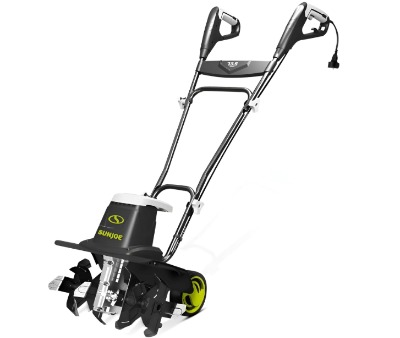
5. Sun Joe TJ604E Corded Electric Garden Tiller & Cultivator
Product Description
The Sun Joe brings heavy-duty capability to the corded electric category. A robust 13.5-amp motor drives six steel tines across a 16-inch path. The aggressive design tackles everything from routine cultivation to establishing new garden beds.
Build quality emphasizes durability. Reinforced tine construction withstands impacts with rocks and roots. The housing protects internal components from soil intrusion and debris damage. The unit weighs enough to provide excellent soil penetration without becoming unwieldy.
Three-position wheel adjustment accommodates different soil conditions and tilling depths. The versatile configuration system lets you optimize performance for your specific garden environment and tasks.
Key Features
The 13.5-amp motor represents the most powerful option in this comparison. This substantial electrical draw translates to impressive torque and tine speed. The motor maintains consistent RPM even when encountering resistance from compacted earth or dense root systems.
Six angled tines measure 8 inches in diameter. The size and configuration pulverize soil effectively, breaking large clods into fine, plantable texture. Depth adjustment ranges from shallow cultivation to full 8-inch penetration.
An instant-start push-button system provides immediate operation. No priming, choking, or pull-cord struggles. The safety switch prevents unintended activation during transport or storage.
Pros
- Most powerful motor in comparison group
- Robust construction handles demanding conditions
- 16-inch width covers ground efficiently
- Excellent soil penetration and pulverization
- Three-position wheel adjustment optimizes performance
- Strong tine construction resists damage
- Suitable for breaking new ground
- Lower noise levels than gas-powered alternatives
Cons
- Heavier weight than cordless models
- Extension cord required limits mobility
- Power cord presents management challenges
- May be overpowered for delicate garden work
- Bulkier storage requirements
- Higher electricity consumption during operation
Best For
Serious small-garden owners who demand maximum performance will appreciate this tiller. It handles tough soil conditions, prepares new beds, and powers through challenging projects. The corded design suits gardeners with accessible outlets who prioritize capability over portability.
Cordless vs. Corded: Making the Right Choice
Your power source decision significantly impacts your gardening experience.
Battery-Powered Advantages
Cordless tillers offer unmatched convenience. You can work anywhere in your garden without extension cord limitations. The absence of cables reduces tripping hazards and simplifies maneuvering around obstacles. Modern lithium-ion batteries provide surprising power and reasonable runtime.
Quiet operation makes battery tillers neighborhood-friendly. Early morning or evening gardening won’t disturb others. The reduced noise also proves less fatiguing during extended work sessions.
Environmental considerations favor battery power in some contexts. No direct emissions during operation and the potential to charge from renewable sources appeal to eco-conscious gardeners.
Corded Electric Benefits
Unlimited runtime eliminates power anxiety. You never wonder whether remaining battery charge will complete your current project. The consistent power delivery maintains full performance from start to finish.
Operating costs stay lower over time. Electricity costs pennies per session compared to eventual battery replacement expenses. Initial purchase prices often run less than comparable battery-powered models.
Maintenance requirements decrease without battery management concerns. No cells to condition, no capacity degradation over time, no temperature-related storage issues.
Matching Power Source to Your Situation
Consider your garden layout first. Scattered beds, distant areas, or obstacles between sections favor cordless operation. Gardens close to outlets with clear access paths work well with corded models.
Evaluate your typical session length. Quick cultivation tasks suit battery power perfectly. Marathon spring preparation sessions benefit from corded consistency.
Think about your physical capabilities. Lighter cordless models reduce strain, while heavier corded units use weight to aid penetration.
Tilling Width and Depth Considerations
These specifications directly affect efficiency and versatility.
Width Impact on Efficiency
Wider tilling paths complete large areas faster. Each pass covers more ground, reducing overall time investment. However, increased width compromises maneuverability in tight spaces.
Nine-inch widths navigate between plants and through narrow pathways easily. Twelve-inch paths balance coverage with flexibility. Sixteen-inch models maximize efficiency in open areas but struggle with precision work.
Most small gardens benefit from widths in the 10-14 inch range. This provides adequate coverage without sacrificing too much maneuverability.
Depth Requirements for Different Tasks
Surface cultivation for weed control needs just 2-3 inches of penetration. This shallow approach disturbs established plant roots minimally while eliminating competing vegetation.
Seasonal preparation typically requires 6-8 inches of depth. This range accommodates most vegetable and flower root systems while allowing thorough amendment mixing.
Deep cultivation reaching 8-10 inches suits new bed establishment or addressing severe compaction. Use this depth sparingly, as it can bring buried weed seeds to the surface.
Adjustability Matters
Fixed-depth tillers limit versatility. Adjustable models adapt to different tasks throughout the season. Look for easy adjustment mechanisms you can modify without tools.
Some tillers adjust depth via wheel position. Others use depth stakes or skids. Each system offers distinct advantages in terms of adjustment range and ease of modification.
Soil Type Compatibility
Your earth’s composition should influence equipment selection.
Clay Soil Challenges
Heavy clay resists penetration and clumps stubbornly. It demands aggressive tines, substantial power, and patient technique. Multiple passes often prove necessary to achieve acceptable tilth.
Higher-power models like the MZK 40V and Sun Joe TJ604E handle clay more effectively. Their robust motors maintain speed when meeting resistance. Strong tine construction withstands the stress of breaking compacted earth.
Wait for optimal moisture conditions when tilling clay. Too wet and soil forms impossible clods. Too dry and penetration becomes extremely difficult. Aim for slightly moist conditions that allow soil to crumble when squeezed.
Sandy Soil Considerations
Sandy soil tills easily but requires different technique. Excessive cultivation damages structure and accelerates nutrient leaching. Light passes with modest depth work better than aggressive deep tilling.
Any model in this comparison handles sandy soil competently. You might prefer lighter cordless options since power demands stay minimal. The reduced weight makes frequent cultivation less tiring.
Focus on gentle amendment incorporation rather than aggressive mixing. Sandy soil benefits from organic matter additions but over-working destroys beneficial aggregates.
Loamy Soil Performance
Balanced loam represents ideal tilling conditions. Most tillers perform well in this forgiving medium. You can prioritize other factors like portability, battery life, or width since soil composition won’t limit options significantly.
Even entry-level models cultivate loam effectively. The Alloyman 20V tillers work beautifully in gardens blessed with good soil. Save money on the tiller and invest in maintaining that excellent soil quality.
Rocky Ground Reality
Rocks challenge every tiller. Stones damage tines, jam mechanisms, and create safety hazards. No consumer-grade tiller truly excels in rocky conditions, but some handle occasional stones better than others.
Heavier models with reinforced tines suffer less damage from rock impacts. The Sun Joe TJ604E and MZK 40V offer more robust construction. Still, expect to remove large stones manually before tilling.
Consider raised beds with imported soil if your site has extensive rock content. This bypasses the rocky ground entirely and provides superior growing conditions.
Assembly and Maintenance Requirements
Ease of setup and ongoing care affect long-term satisfaction.
Initial Assembly Process
Most modern tillers arrive partially assembled. Typical setup involves attaching handles, installing guards, and mounting wheels. Basic tools usually suffice – often just wrenches and screwdrivers.
Corded electric models generally require less assembly than cordless versions. Battery-powered units need battery charging before first use, adding setup time. Always charge batteries fully before initial operation to maximize lifespan.
Instruction manuals vary in quality. Some manufacturers provide clear, illustrated guides. Others offer minimal documentation. Online videos often supplement written instructions helpfully.
Routine Maintenance Tasks
Regular cleaning extends tiller life substantially. Remove soil buildup from tines and housing after each use. Dried mud accelerates wear and creates unnecessary weight. A simple brush and garden hose handle most cleaning needs.
Tine inspection catches problems early. Look for bent, cracked, or excessively worn tines. Sharp tines cut through soil more efficiently than dull ones. Some models allow tine sharpening; others require replacement.
Battery care matters for cordless models. Store batteries at moderate temperatures – extreme heat or cold degrades capacity. Avoid complete discharge when possible. Most modern lithium-ion batteries prefer partial discharge cycles.
Electric motors need minimal service but deserve basic attention. Keep air vents clear of debris to prevent overheating. Check electrical connections periodically for corrosion or damage.
Seasonal Storage Practices
Clean thoroughly before storage. Remove all soil and plant material. Debris left on the machine attracts moisture and accelerates corrosion.
Store in dry locations protected from weather. Garages, sheds, or basements work well. Avoid areas with temperature extremes if storing batteries.
Consider protective covers for long-term storage. Even indoor storage accumulates dust and cobwebs. Simple covers keep components cleaner and reduce preparation time when gardening season returns.
Battery storage requires special consideration. Remove batteries from the tool during extended storage periods. Store them separately in moderate temperatures with partial charge – around 40-60% capacity proves optimal for long-term health.
Safety Features and Considerations
Proper safety practices prevent injuries and equipment damage.
Essential Safety Equipment
Eye protection ranks as the most critical safety gear. Spinning tines throw rocks, dirt, and debris. Safety glasses with side shields block projectiles effectively. Regular eyeglasses provide insufficient protection.
Closed-toe shoes with good tread prevent foot injuries and improve traction. Garden clogs or sandals expose feet to tine contact and debris strikes. Work boots or athletic shoes offer appropriate protection.
Gloves protect hands from blisters during extended use. They also shield against abrasions from handles and controls. Choose gloves that maintain good grip on controls without excess bulk.
Hearing protection becomes necessary during extended sessions with louder models. While electric tillers run quieter than gas engines, prolonged exposure still warrants ear protection.
Built-in Safety Features
Dual-switch systems prevent accidental starting. Both controls must engage simultaneously to activate tines. This design reduces the risk of unintended operation during transport or adjustment.
Tine guards shield operators from rotating components and thrown debris. Never remove guards even if they seem to interfere with visibility. The protection they provide far outweighs any convenience sacrifices.
Instant-stop switches allow immediate shutdown in emergencies. Familiarize yourself with the location and operation of safety switches before beginning work. Practice emergency stops in safe conditions.
Wheel designs affect stability and control. Larger wheels provide better support and easier maneuvering. Adjustable wheels let you optimize stability for different soil conditions.
Safe Operating Practices
Inspect the work area before starting. Remove rocks, sticks, and debris that could become dangerous projectiles. Mark sprinkler heads, buried cables, and other hidden hazards.
Maintain firm footing throughout operation. Wet grass, mud, or slopes increase slipping risks. Work on level, dry ground when possible. If you must till slopes, work across them rather than up and down.
Keep bystanders at safe distances. Rotating tines throw debris significant distances. Establish a safety perimeter and ensure others respect it, especially children and pets.
Never defeat safety features or modify guards. Manufacturers design these protections based on extensive testing. Removing or altering them creates genuine hazards.
Allow motors and tines to stop completely before performing any adjustments or maintenance. Residual rotation can cause severe injuries during what seems like routine tasks.
Environmental Impact and Efficiency
Modern electric tillers offer environmental advantages over gas-powered alternatives.
Emission-Free Operation
Electric motors produce zero direct emissions during use. This eliminates carbon monoxide, hydrocarbons, and other pollutants associated with gas engines. Your garden air quality remains pristine while you work.
The absence of fuel storage eliminates spill risks and vapor emissions. No mixing ratios to calculate, no stabilizers to add, no stale fuel disposal concerns. The simplified fuel-free operation reduces environmental contamination potential.
Noise pollution drops dramatically compared to gas tillers. Electric models allow early morning or late evening work without disturbing neighbors. The quieter operation also proves less stressful for wildlife and pets.
Energy Efficiency Considerations
Electric motors convert energy more efficiently than small gas engines. More input energy translates to useful work rather than being lost as heat and vibration. This efficiency reduces overall environmental impact per tilling session.
Battery technology continues improving. Modern lithium-ion cells offer better energy density and longer lifespans than earlier battery chemistries. The trend toward more efficient batteries reduces the resources required per operational hour.
Renewable energy charging presents opportunities for truly zero-emission operation. Solar panels or wind power can provide the electricity for charging batteries. This closes the loop on environmental impact from garden cultivation.
Resource Considerations
Manufacturing any equipment carries environmental costs. However, electric tillers generally require fewer rare materials than gas engines. No complex carburetors, fuel systems, or emission controls to manufacture.
Battery disposal deserves attention. Lithium-ion batteries contain materials requiring proper recycling. Many retailers and municipalities offer battery recycling programs. Never dispose of batteries in regular trash.
Longevity affects overall environmental impact. A well-maintained electric tiller serves for many years. The absence of engine wear issues often extends electric model lifespans beyond comparable gas alternatives.
Cost Analysis and Value Assessment
Understanding total ownership costs guides smart purchasing decisions.
Initial Investment Comparison
Entry-level cordless models like the Alloyman 20V with 2.0Ah batteries represent the lowest initial cost among quality options. These provide adequate performance for basic small-garden needs without significant investment.
Mid-range choices balance capability and cost. The Alloyman 20V with 4.0Ah batteries and the LawnMaster corded tiller occupy this space. They deliver enhanced performance without premium pricing.
Top-tier options like the MZK 40V and Sun Joe TJ604E command higher prices but deliver superior power and durability. The increased investment proves worthwhile for demanding applications or difficult soil conditions.
Long-term Operating Costs
Corded electric tillers maintain the lowest ongoing expenses. Electricity costs pennies per session. No batteries to replace. Minimal consumables beyond occasional tine replacement.
Battery-powered models face inevitable replacement costs. Lithium-ion batteries degrade over time regardless of use. Expect battery replacement every 3-5 years for models receiving regular use. Budget accordingly when calculating total ownership costs.
All electric tillers share low maintenance requirements compared to gas engines. No oil changes, spark plugs, air filters, or fuel system servicing. The simplified maintenance reduces both cost and time investment over the tiller’s lifespan.
Value Beyond Price
Consider how equipment enables garden success. A tiller that sits unused due to difficulty starting or excessive weight provides no value regardless of price. One that encourages regular garden care through ease of use returns value far exceeding its cost.
Health benefits from reduced physical strain have real value. Lower-effort gardening supports longer, more enjoyable garden sessions. The ability to maintain your garden later in life stems partly from having appropriate tools.
Time savings compound over seasons. Efficient soil preparation allows more time for planting, tending, and harvesting. The hours saved across a tiller’s lifespan justify premium investments in quality equipment.
Making Your Final Decision
Selecting the right tiller requires matching features to your specific situation.
For Established Gardens with Good Soil
The Alloyman 20V cordless tiller with 2.0Ah batteries handles routine cultivation perfectly. Its lightweight design and adequate power suit seasonal preparation and amendment mixing in already-improved soil. The modest investment leaves budget for other garden needs.
For Challenging Soil or Larger Small Gardens
Step up to the MZK 40V cordless tiller when facing compacted earth or covering more ground. The extra power tackles tough conditions, while extended battery life supports longer sessions. The investment pays dividends through expanded capabilities.
For Maximum Power and Runtime
Choose the Sun Joe TJ604E corded tiller when soil conditions demand serious capability. The robust 13.5-amp motor powers through difficult ground without battery limitations. Accept cord management challenges in exchange for unlimited runtime and consistent performance.
For Extended Battery Operation
The Alloyman 20V with 4.0Ah batteries splits the difference between economy and capability. You gain double the runtime of the base model while maintaining lightweight portability. This proves ideal for gardeners who need more endurance than the 2.0Ah version provides but don’t require 40V power.
For Balanced Corded Performance
The LawnMaster TE1216M delivers solid capability at a reasonable price point. The 12-amp motor handles most small-garden tasks competently. The 16-inch width completes jobs efficiently. This represents excellent value for gardens with convenient electrical access.
Conclusion
The right garden tiller transforms soil preparation from exhausting labor to manageable routine. Small gardens benefit from compact, maneuverable equipment sized appropriately for confined spaces and precision work.
Cordless models offer unmatched convenience and portability. The freedom from extension cords simplifies maneuvering and expands your working range. Modern battery technology provides surprising power and reasonable runtime for most small-garden applications.
Corded electric tillers deliver consistent, unlimited power. They eliminate battery concerns while maintaining the environmental and maintenance advantages of electric operation. The continuous power supply suits larger projects and tougher soil conditions.
Each option reviewed offers distinct advantages. The Alloyman 20V models provide lightweight, affordable entry into battery-powered cultivation. The MZK 40V steps up capability for demanding conditions. The LawnMaster and Sun Joe corded models deliver reliable, unlimited-runtime performance at attractive price points.
Success comes from matching equipment to your specific needs. Consider your soil type, garden layout, physical capabilities, and budget. The perfect tiller enables you to maintain your garden effortlessly throughout the growing season, yielding better results with less struggle.
Start your next gardening season properly equipped. Quality soil preparation sets the foundation for abundant harvests and beautiful blooms. With the right tiller supporting your efforts, you’ll spend less time fighting the earth and more time enjoying the fruits of your garden.

Hi, I’m Mary, the founder of GardenCure.com. I’m passionate about creating healthy, beautiful gardens and well-kept lawns. I share practical experience and trusted advice on garden and lawn gear that truly works. With the support of my dedicated research team, our writers produce honest, in-depth reviews using reliable, authentic sources—helping you choose the right tools with confidence for your outdoor space.