How to Fix a Retractable Hose Reel?
Your retractable hose reel is one of those tools that makes yard work so much easier. That is, until something goes wrong. A broken hose reel can turn a simple watering task into a frustrating experience. The good news? Most hose reel problems are totally fixable at home without calling a professional or spending a fortune on replacements.
In this article
This guide walks you through the most common issues with retractable hose reels and shows you exactly how to fix them. Whether your hose reel won’t retract, keeps tangling, or has spring problems, we have got you covered. Let’s get your hose reel working like new again.
Why Retractable Hose Reels Break Down
Before we talk about fixes, it helps to know why these things fail in the first place. Retractable hose reels see a lot of action. You pull them out, use them hard, and retract them over and over again. That constant movement puts stress on the internal spring mechanism and the locking system.
The main culprits behind hose reel failures are rust, spring fatigue, broken latches, and tangled hoses. Some people leave their reels in harsh weather all year long without protection. Others wind the hose incorrectly, which causes kinks and damage over time. Even normal wear and tear can cause problems after enough use.
The good news is that most of these issues respond well to basic maintenance and simple repairs. You don’t need special tools or technical knowledge to bring your hose reel back to life.
Problem 1: Your Hose Reel Won’t Retract Properly
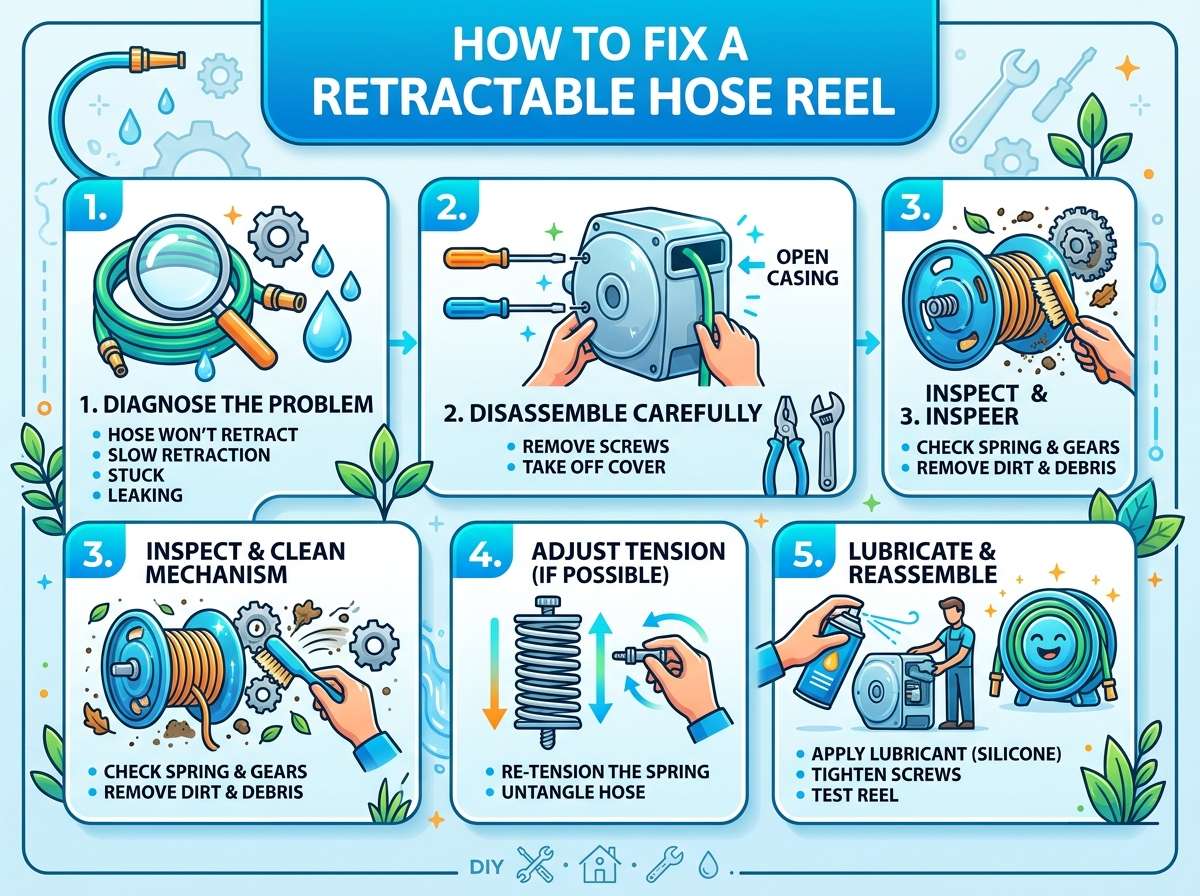
This is probably the most common complaint about retractable hose reels. You pull the hose out, use it, and then it either won’t retract at all or retracts very slowly. This problem usually comes from a weak or broken spring.
Check the Spring First
The spring is the heart of any retractable hose reel system. It sits inside the reel housing and provides the tension that pulls the hose back in. When this spring weakens or breaks, your hose reel loses its power.
Start by listening carefully as you try to retract the hose. Do you hear a faint creaking sound? That often means the spring is still working but has lost some tension. If you hear nothing and the hose just sits there, the spring has probably broken entirely.
To access the spring, you will need to open up the reel housing. Most retractable hose reels have either bolts or screws holding the case together. Grab your screwdriver or wrench and carefully remove these fasteners. Take a photo with your phone before you disassemble anything so you remember how it all fits together.
Once you have the housing open, look at the spring carefully. A broken spring will have visible cracks or will be separated completely. A weak spring might look fine on the surface but just lacks the power you need.
Replace a Broken Spring
If the spring is broken, you have two choices. You can buy a replacement spring kit designed for your hose reel model, or you can purchase a completely new reel. Spring kits are much cheaper and only take an hour to install.
Search online for the brand and model of your reel combined with the words “replacement spring.” You will find several options. When you get the new spring, follow the installation instructions carefully. The spring usually wraps around a central spool or hub, and getting it positioned correctly matters a lot.
Take your time with this step. The spring creates tension, and improperly installed springs won’t work right. Some springs are pre-tensioned, which means they are already wound up tight. Others require you to wind them before installation. Read the instructions that come with your replacement spring.
Tighten a Loose Spring
Sometimes a hose reel won’t retract because the spring has come loose from its mounting point, not because it is broken. This is an easier fix than replacing the spring entirely.
Look for the point where the spring connects to the reel drum or housing. If you see that it has slipped off, you can usually reattach it. The spring will have a hook or loop at the end that fits into a slot or hole. Make sure this connection is tight and secure before you reassemble the housing.
Problem 2: The Hose Reel Won’t Stop Retracting
On the flip side, some people experience the opposite problem. Their hose reel retracts too much and seems unstoppable. This happens when the latch or stop mechanism breaks.
A retractable hose reel needs a way to lock in place when you pull the hose out. Without this locking mechanism, the spring just keeps trying to pull the hose all the way in. The latch or pawl usually sits somewhere in the internal mechanism and catches on a gear or drum to hold the hose in place.
Inspect the Latch System
Look for the trigger, button, or release mechanism on the outside of your hose reel. This is what you pull to lock the hose in place when you need it. Press it firmly to make sure it is working smoothly. If it feels sticky or sticks in one position, dirt or rust might be the culprit.
Clean around this mechanism with a cloth and some water. If you have access to a bit of white vinegar, soak a cloth in it and wipe down all the moving parts. Vinegar cuts through rust really well. Let it dry completely before testing again.
Fix a Sticking Pawl
The pawl is a small piece inside the reel that catches against the drum to hold the hose. If your hose retracts too far or won’t stop, the pawl might be stuck in the wrong position.
Again, open up the housing carefully. Locate the pawl or catch mechanism. It usually looks like a small hook or arm made of metal or plastic. Spray this area lightly with penetrating oil like WD-40. Let it sit for ten minutes, then gently move the pawl back and forth by hand to get it working freely again.
Do not force it. If the pawl is stuck because of rust, the oil needs time to work. Give it a few minutes and try again. Repeat this process until the pawl moves smoothly without resistance.
Problem 3: Tangled and Kinked Hoses
A tangled hose is frustrating, but it is also one of the easiest retractable hose reel problems to fix. Most tangling happens because people wind the hose incorrectly or store the reel in an awkward position.
Wind Your Hose the Right Way
The key to preventing tangles is winding the hose in an organized pattern as it retracts. As the hose comes in, it should lay flat against the drum in neat, even circles. If these coils overlap or cross over each other, you get tangles.
Here is what to do: As you retract the hose, guide it gently with your hands so it winds in a straight line across the drum. Make sure each coil sits flat next to the previous one without riding up on top of it. This takes just a little practice, and it makes a huge difference.
If your hose is already tangled, you will need to pull it all the way out and rewind it carefully. Yes, this takes time, but it is worth it. A well-wound hose prevents future problems and makes your reel last longer.
Check for Kinks
Kinks happen when the hose gets bent too sharply or stays bent while sitting in storage. Once a hose gets a kink, water flow reduces and the hose is more likely to fail or get damaged.
Run the entire length of your hose through your hands, feeling for stiff sections or bends. If you find a kink, lay the hose out straight in the sun for an hour or two. The heat helps the rubber soften and return to its original shape. In cooler weather, you might need to leave it out longer.
Stubborn kinks sometimes require more aggressive treatment. Fill your bathtub with hot water and soak the kinked section for fifteen minutes. The heat from the water helps the rubber relax. Then straighten the hose and lay it out flat to cool.
Problem 4: Hose Reel Leaks at the Connection
Water leaking from your hose reel system usually happens where the hose connects to the reel mechanism. This joint is always under pressure and can wear out over time.
Tighten the Connection
The first thing to try is simply tightening the connection. Locate where the hose threads into the reel housing. This is usually a threaded fitting that screws in. Use a wrench to turn this fitting clockwise. Do not overtighten, as this can crack plastic connectors.
Turn the fitting a quarter or half turn at a time, then run water through the hose to test for leaks. If tightening works, you are done. If leaks continue, you need to replace the seal.
Replace the Washer or Seal
Inside that threaded connection sits a rubber washer or seal. This small piece prevents water from leaking past the connection. Over time, rubber gets brittle and cracks, and that is when leaks start.
Turn off the water and pull the hose all the way out of the reel. Use a wrench to unscrew the hose connector from the reel housing. Once it is off, look inside the fitting for the rubber seal. You will see either a flat washer or a rubber ring, depending on your reel model.
Pop this old seal out and replace it with a new one. These seals cost just a dollar or two and are available at any hardware store. Wrap the threaded connection with plumber’s tape (also called teflon tape) before screwing the hose connector back on. This tape fills tiny gaps and prevents leaks.
Problem 5: Stuck or Broken Hose Reel Handle
The handle on a retractable hose reel takes a lot of abuse. People grab it hard, wrench on it, and leave it outside exposed to sun and rain. Eventually, handles break or get stuck.
Free Up a Stuck Handle
If your handle is stiff and hard to turn, clean it first. Dirt and dried grass can get stuck around the handle mechanism. Scrub it with a stiff brush and some water. If it is still stuck, apply some penetrating oil and let it sit for ten minutes.
Move the handle back and forth gently to work the oil into the joint. Do not force it, as you might break it further. After the oil has done its work, the handle should move more freely.
Fix a Broken Handle
A truly broken handle might be cracked, bent, or have stripped threads. If it is just bent, you might be able to straighten it carefully with a rubber mallet. Tap gently along the bend to restore its shape.
If the handle is cracked or the threads are stripped, you need a replacement. Search online for your reel model combined with “replacement handle.” These usually cost between five and fifteen dollars and snap or bolt into place. Installation typically takes just a few minutes.
Problem 6: The Reel is Rusted or Corroded
Rust is the enemy of any outdoor tool, and hose reels are especially vulnerable. Metal parts rust when exposed to moisture and air, and a hose reel sits outside getting splashed with water constantly.
Remove Surface Rust
Surface rust looks ugly but is usually easy to remove. Use a wire brush or steel wool to scrub away the rust. For stubborn rust, soak the affected area with white vinegar for an hour, then scrub again.
Once the rust is gone, dry the area completely. Apply a light coat of oil or spray it with a rust preventative like WD-40. This creates a barrier between the metal and moisture, slowing down future rust formation.
Treat Deep Rust
If rust has eaten deep into the metal, you might not be able to fix it. However, if the rust is only surface deep but very thick, keep scrubbing. Wire wheels on a power drill make this job much easier, but always wear safety glasses when using power tools.
After removing deep rust, apply a rust converter product. This chemical changes rust into a stable compound that stops the rust from spreading. Follow the product instructions carefully.
Problem 7: Water Pressure is Too Low
Sometimes a retractable hose reel works fine mechanically, but the water pressure feels weak. There are several reasons this happens, and most are easy to fix.
Check for Kinks or Damage
The most common cause of low pressure is a kinked or partially blocked hose. Even a small kink reduces water flow significantly. Run your hand along the entire hose and straighten any bends.
Look for cracks or holes in the hose material. Small holes might not gush water, but they reduce pressure. If you find damage, you can either patch the hose or replace it. Hose patch kits cost just a few dollars and work well for small holes.
Clean the Filter
Many retractable hose reel systems have a small filter or screen that keeps debris out of your watering can or sprinkler. Over time, this filter gets clogged with sediment and dirt.
Find the filter screen, which is usually at the end of the reel where water comes out. Unscrew or unclip this piece and rinse it under running water. If it is really dirty, soak it in water for a few minutes to loosen the buildup. Scrub gently with a soft brush to remove stubborn particles.
Check Your Water Source
If multiple tools and sources are using water at the same time, your hose reel might not get enough pressure. Try shutting off other water sources and testing the reel again. If pressure increases, you simply have too many things running at once.
Problem 8: The Reel Won’t Lock in Place
When you pull out the hose and need it to stay put, the locking mechanism should hold firm. If the hose keeps slowly creeping back into the reel or won’t lock at all, something is wrong with the latch system.
Test the Latch Release
First, make sure you are using the latch correctly. Some reels have a button you push to lock, while others have a lever or trigger. Look at your manual or test different actions to find the right lock mechanism. Sometimes people think their reel is broken when they simply have not found the correct locking button.
Once you have located the correct lock mechanism, press or engage it firmly. It should require some deliberate action to engage, not just a light touch.
Adjust or Replace the Latch
If the lock is engaged but the hose still moves, the latch might be worn out or out of adjustment. Look for any screws or bolts that might adjust the latch tension. Some reels have a small screw that controls how tightly the latch holds.
Try turning this adjustment screw slightly clockwise to increase holding tension. Test after each small adjustment. Be patient and go slowly, as over-tightening can break the latch mechanism.
If the latch is broken beyond adjustment, order a replacement latch assembly. These cost between ten and thirty dollars depending on your reel brand and model.
Maintenance Tips to Prevent Future Problems
The best fix is preventing problems from happening in the first place. Good maintenance keeps your hose reel working smoothly for years.
Store Your Reel Properly
When you are done using your hose reel for the day, drain any remaining water from the hose. Coiled water inside the hose can freeze in cold weather and cause damage. Store your reel in a shaded spot if possible, as direct sunlight can degrade rubber and plastic over time.
During winter months or extended storage, consider bringing your reel indoors or covering it with a hose reel cover. These covers protect against UV damage, frost, and extreme weather.
Clean Regularly
Every couple of weeks, wipe down your reel with a cloth to remove dust and debris. Pay special attention to moving parts and connection points. Dirt buildup causes stickiness and corrosion.
Once a month, spray the moving parts lightly with penetrating oil. This keeps everything lubricated and prevents rust from forming. Just use a little bit, as excess oil can attract dirt.
Coil Correctly Every Time
Every time you retract your hose, take a moment to guide it so it coils neatly. Sloppy coiling is the number one cause of tangled hoses and shortened reel lifespan. Neat coils also make your reel look better and last longer.
Inspect Before Storage
Before putting your reel away for an extended period, inspect it carefully. Look for leaks, cracks, rust, or any obvious damage. Fix small problems now rather than waiting until you need to use the reel again.
When to Replace Instead of Repair
Most hose reel problems are worth fixing. That said, sometimes replacement makes more sense than repair. If your reel is very old and needs multiple repairs, the total cost might exceed the price of a new one.
Also, if the reel housing is cracked or the drum is severely damaged, repair might not be possible. In these cases, buying a new reel is your best option.
Modern retractable hose reels have improved a lot over the years. Newer models often have better springs, more durable seals, and stronger locking mechanisms. If you have had your current reel for many years, upgrading might give you better performance and fewer headaches.
Choosing the Right Replacement Parts
When you buy replacement parts for your hose reel, make sure they are designed for your specific brand and model. Parts from one brand usually do not fit reels from another brand.
Check your reel for a model number, often found on a label or sticker. Use this number when searching for replacement parts online. Reading reviews from other customers helps you make sure the part you are buying will actually work and last.
Conclusion: Your Reel Can Work Again
A broken retractable hose reel does not have to stay broken. Most common problems respond well to simple fixes and basic maintenance. Whether you need to replace a spring, fix a leak, or simply clean out rust, you have the knowledge to handle it.
Start by identifying exactly what is wrong with your reel. Is it not retracting? Is it leaking? Is the hose tangled? Once you know the problem, follow the steps above for your specific issue.
Take your time and work carefully. Do not force anything, as forcing stuck parts can make them worse. If you get stuck at any point, look for videos online that show your specific reel model being repaired.
With a little effort and patience, your hose reel will be back in action. You will save money by fixing it yourself, and you will have the satisfaction of knowing you solved the problem without professional help. Now get out there and get your yard work done with a properly working hose reel system.

Hi, I’m Mary, the founder of GardenCure.com. I’m passionate about creating healthy, beautiful gardens and well-kept lawns. I share practical experience and trusted advice on garden and lawn gear that truly works. With the support of my dedicated research team, our writers produce honest, in-depth reviews using reliable, authentic sources—helping you choose the right tools with confidence for your outdoor space.