5 Best Bonsai Tool Kit In 2026
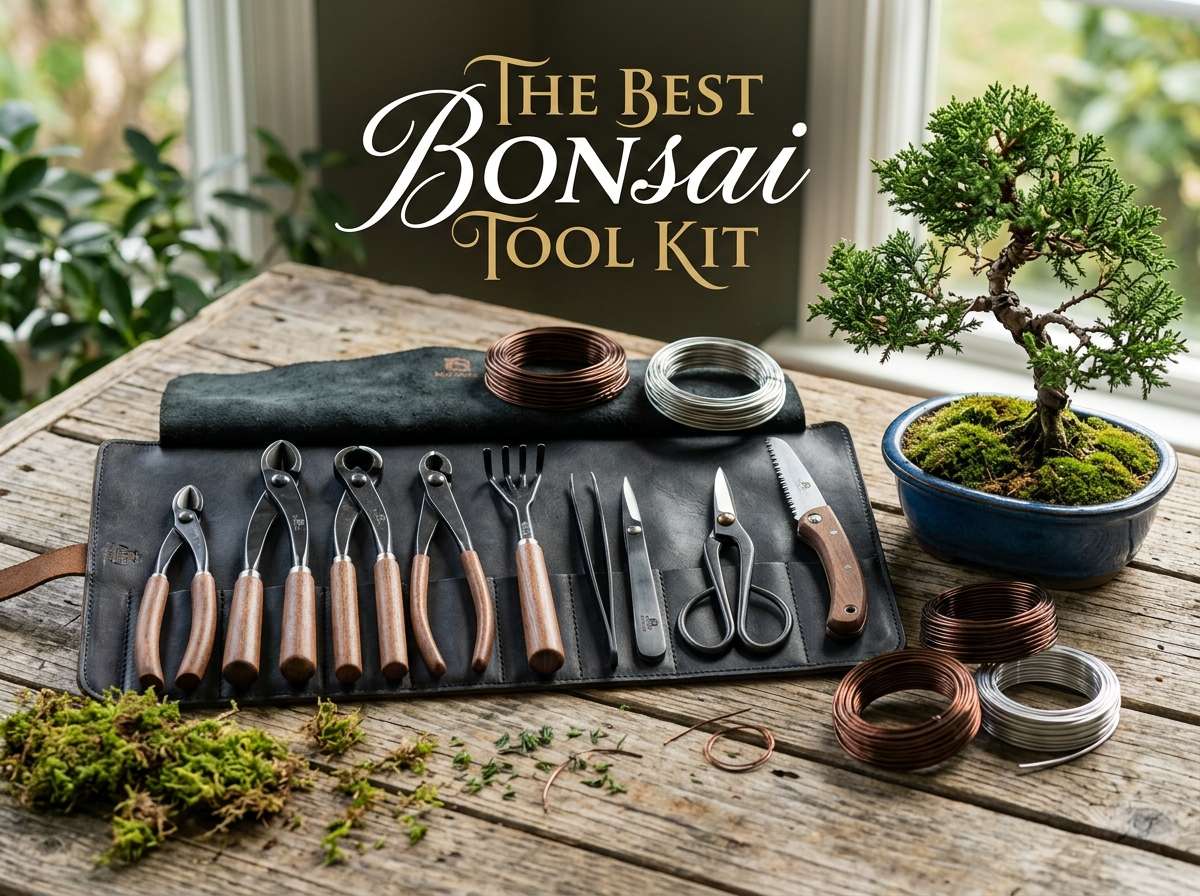
Bonsai looks calm and simple from the outside. A small tree, a shallow pot, a bit of green on a windowsill. But once you start trimming, wiring, and shaping your own tree, you quickly learn that the right tools make all the difference between a clean cut and a torn branch. A good bonsai tool kit is not just a nice extra, it is the thing that keeps your tree healthy while you learn the craft.
In this article
This roundup looks at five bonsai tool kits that show up again and again in searches for the best bonsai tool kit. Each one comes with a different mix of tools, price point, and build quality. Some are built for someone who just picked up their first juniper from a nursery. Others lean toward a grower who already has a few trees and wants sharper, sturdier gear.
Below, you will find a full breakdown of each kit, including what is in the box, how it performs, who it fits best, and where it falls short. After that, there is a comparison section, a short buying guide, a list of common mistakes new growers make with their tools, and a final verdict to help you land on the right pick for your own bench.
Quick Comparison Table
| Product | Piece Count | Best For | Storage | Wire Included | Price Range |
|---|---|---|---|---|---|
| Taschyas 20 Pcs Bonsai Tool Set | 20 | Absolute beginners, gift buying | Leather roll bag | Yes, 262 feet | Budget to mid |
| VOUIU 5-Piece Bonsai Tool Set | 5 | Growers who want fewer, sturdier tools | Basic pouch | No | Mid range |
| SOLIGT 12-Piece Bonsai Tools Set | 12 | Growers who want a balance of care and shaping tools | Wood box | Yes, 5 rolls | Mid to higher |
| Zieyeen 20-Piece Bonsai Tools Set | 20 | Beginners who want a full starter kit with a mat | Roll-up pouch | Yes | Budget to mid |
| PEEORNT 22 PCs Bonsai Tools Set | 22 | Beginners who want the widest tool variety | Carry case or roll bag | Yes | Budget to mid |
How These Kits Were Evaluated
Every kit here was looked at through a few simple lenses that actually matter to a home grower: the steel quality of the blades, how comfortable the handles feel during longer trimming sessions, if the wire gauge is actually usable on small to medium branches, and how well the whole set stays organized in storage. Price was weighed against what you actually get, not just the piece count printed on the box. A 20-piece set is not automatically better than a 5-piece set if half those pieces are filler.
Now let’s get into each kit one by one.
1. Taschyas 20 Pcs Bonsai Tools Set
Product Description
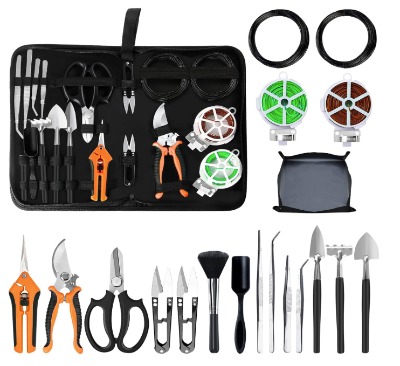
This kit from Taschyas packs 20 items into one leather roll bag, and it leans hard into the beginner and gift market. Inside you get a good length of bonsai wire (262 feet total across a few gauges), a repotting mat sized at 29.5 by 29.5 inches, a pair of bonsai scissors, pruning shears, and a handful of smaller shaping tools. The leather bag rolls up and ties shut, so nothing rattles around loose in a drawer.
Best Use Cases
This kit fits someone who just started growing bonsai from a nursery starter tree or a kit seed. It also works well as a gift, since the packaging and leather bag look put together right out of the box. If you are repotting small to medium trees on a table or counter, the included mat saves your surface from soil and root mess.
Key Features Explained Simply
The wire is the standout here. At 262 feet split across gauges, you get enough material to wire several branches on more than one tree without running out halfway through a project. The repotting mat is a nice touch too, since most starter kits skip this and leave you using an old towel instead. The scissors and shears are sized for thin to medium branches, not thick trunk wood, which is exactly right for a young tree.
Real-Life Usage Insight
For someone working on a small ficus or juniper, this kit covers the basics without overwhelming the user with tools they do not yet know how to use. The leather bag also doubles as a soft mat under the tools themselves, so you are not setting sharp blades directly on a wood table.
Pros and Cons
Pros:
- Generous wire length covers multiple projects
- Repotting mat is a genuinely useful extra
- Leather bag keeps tools organized and looks nice as a gift
- Handle grips are comfortable for shorter trimming sessions
Cons:
- Blades are not forged for thick, woody trunk cuts
- A few of the 20 pieces are basic filler rather than true bonsai-specific tools
- Long-term sharpness may fade faster than higher carbon steel options
Performance Discussion
On thin and medium branches, the scissors and shears cut clean without crushing the bark. Once you move to older, thicker wood, the blades start to struggle and you may need a separate concave cutter or knob cutter down the line. For a beginner tree that is still young, this is rarely an issue.
Ease of Use
Everything here is light and easy to grip, even for someone who has never held bonsai-specific tools before. The wire is pre-coiled, so it unrolls without kinking, which matters more than people expect when you are trying to wrap a branch smoothly.
Value for Money
Given the wire length, the mat, and the bag, this kit offers strong value for a first-time buyer, especially at a price point aimed at beginners rather than serious collectors.
2. VOUIU 5-Piece Bonsai Tool Set
Product Description
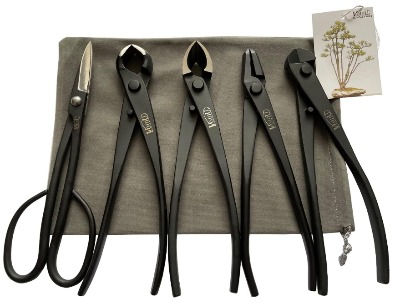
VOUIU takes the opposite approach from the Taschyas kit. Instead of 20 items, you get five: a knob cutter, a concave cutter, a wire cutter, jin pliers, and bonsai scissors. No wire, no mat, no bag full of extras. Just five tools built for actual shaping and pruning work.
Best Use Cases
This kit fits a grower who already has one or two trees going and wants tools that handle real structural work, not just light trims. The knob cutter and concave cutter in particular are tools that beginner kits often skip, but they matter once your tree starts developing thicker branches that need to be removed cleanly.
Key Features Explained Simply
A concave cutter leaves a dished cut instead of a flat one, which heals over smoother and leaves less of a scar on the trunk. A knob cutter is built to remove larger branch stubs close to the trunk without tearing bark. Jin pliers are used to peel and shape deadwood on the trunk or branches, which is a more advanced styling technique. Having these three tools alone puts this kit a step above basic beginner sets in terms of what it lets you actually do to a tree.
Real-Life Usage Insight
Someone who has been growing a juniper or pine for a while and wants to start shaping deadwood features, or needs to remove a branch cleanly near the trunk, will get more direct use out of this set than out of a 20-piece starter kit loaded with wire and mats they may not need yet.
Pros and Cons
Pros:
- Includes specialty tools like knob cutter and jin pliers that most starter kits skip
- Fewer tools means less clutter and easier cleaning and storage
- Steel quality tends to hold an edge well through repeated use
- Great pick for someone past the total-beginner stage
Cons:
- No wire included, so you will need to buy that separately
- No mat or bag for repotting mess
- Not the most beginner-friendly if you do not already know what each tool does
- Smaller piece count may feel light for gift-giving purposes
Performance Discussion
The concave and knob cutters perform noticeably better on medium to thick branches compared to basic scissors from all-in-one kits. Cuts heal cleaner, and the tool holds up without the blades slipping or bending under pressure.
Ease of Use
This kit assumes some prior knowledge. A total newcomer might not know when to reach for a knob cutter versus a concave cutter, so there is a small learning curve attached to getting full value from this set.
Value for Money
For the specific tools included, the price reflects the higher build quality and specialty function of each piece. It is not the cheapest option, but each tool earns its place rather than padding out a piece count.
3. SOLIGT 12-Piece Bonsai Tools Set With Wood Box
Product Description
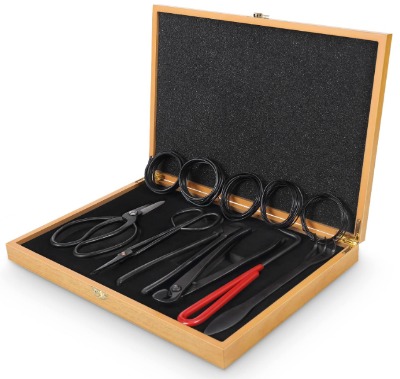
SOLIGT lands in the middle ground with a 12-piece set that includes a heavy duty pruning shear, a butterfly shear, a concave cutter, a wire cutter, and five rolls of training wire, all packed into a wood storage box.
Best Use Cases
This kit suits a grower who wants both care tools and shaping tools in one purchase, without going all the way up to a full specialty set like the VOUIU kit. The wood box also makes this a strong pick for anyone who wants their tools displayed on a shelf or bench rather than tucked away in a bag.
Key Features Explained Simply
The butterfly shear is a nice addition here since it gives you a wider, more stable grip for general trimming work across leaves and thin twigs, while the heavy duty pruning shear handles thicker cuts. Five separate wire rolls means you likely get a spread of gauges, which is handy since thin branches need thinner wire and thicker branches need heavier wire to actually hold their shape.
Real-Life Usage Insight
For someone tending a couple of trees at different growth stages, having both a concave cutter for structural cuts and a butterfly shear for regular leaf and twig maintenance means fewer gaps in the tool lineup. The wood box also keeps tools from getting lost or misplaced, which happens more often than people expect with loose bonsai tools.
Pros and Cons
Pros:
- Good balance between shaping tools and everyday trimming tools
- Wood box adds a clean, organized storage option
- Multiple wire gauges cover branches of different thickness
- Butterfly shear grip is comfortable for longer sessions
Cons:
- Wood box adds bulk if you need to travel with your tools
- Not as many specialty tools as a dedicated shaping-focused kit
- Some buyers may find the box takes up more shelf space than a soft bag would
Performance Discussion
Cutting performance across leaves, twigs, and thin to medium branches is consistent, and the concave cutter handles moderate branch removal without much struggle. It is not quite as heavy duty as a dedicated shaping kit, but for general maintenance and light structural work, it holds up well.
Ease of Use
Because the wood box separates tools into a fixed layout, it is easy to see at a glance what is missing after a trimming session, which helps you avoid losing small pieces like the wire cutter.
Value for Money
Given the wood box, the wire rolls, and the mix of care and shaping tools, this kit sits at a fair price for what you get, especially if display and organization matter to you as much as function.
4. Zieyeen 20-Piece Bonsai Tools Set
Product Description
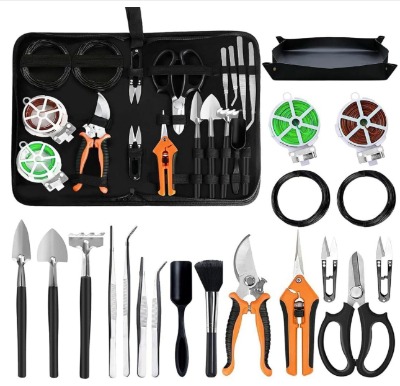
Zieyeen offers another 20-piece starter kit, this one built around a waterproof repotting mat, pruning shears, scissors, and training wire, aimed squarely at beginners, gift buyers, and anyone setting up their first indoor bonsai station.
Best Use Cases
This kit is a strong fit for anyone repotting indoors, since the waterproof mat protects tables, desks, or counters from soil and water runoff. It also works well as a starter set for someone who has one or two young trees and wants a complete setup without piecing tools together one at a time.
Key Features Explained Simply
The waterproof mat stands out here more than in similar kits, since it holds up better against water from watering cans or hose sprays during repotting. The pruning shears and scissors handle general trimming, while the training wire lets you begin shaping young, flexible branches early on, which is when wiring tends to work best anyway.
Real-Life Usage Insight
Someone repotting a small tree on a kitchen table or apartment desk will likely appreciate the waterproof mat more than a basic cloth one, since spills and soil wipe off rather than soak in.
Pros and Cons
Pros:
- Waterproof mat handles indoor repotting cleanly
- Full starter lineup covers trimming, shaping, and repotting in one purchase
- Reasonable pricing for a 20-piece set
- Good gift option for someone starting their first tree
Cons:
- Blade steel is built for young, thinner branches rather than thick trunk work
- Some included pieces overlap in function rather than adding new capability
- Not built for a grower who already has more advanced shaping needs
Performance Discussion
For young trees with thin, flexible branches, the shears, scissors, and wire perform well and give clean results. As with most beginner-tier kits, thicker, older wood pushes past what these blades are designed to handle comfortably.
Ease of Use
The kit is laid out simply, and the mat rolls up along with the tools for storage, which keeps setup and cleanup fast, especially useful for someone squeezing bonsai care into a busy schedule.
Value for Money
For the price, getting a waterproof mat along with a full set of starter tools and wire makes this one of the more practical all-in-one options for someone building their first bonsai station from scratch.
5. PEEORNT 22 PCs Bonsai Tree Tools Kit
Product Description
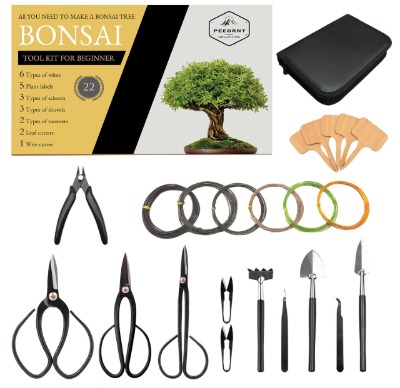
PEEORNT rounds out this list with the largest piece count here at 22, built around high carbon steel tools including pruning shears, cutters, training wires, and leaf cutting scissors, all aimed at beginner growers who want a wide spread of tool options in one box.
Best Use Cases
This kit fits someone who wants variety above all else, either because they are tending several small trees at once or because they simply prefer having a dedicated tool for each small task rather than making one tool do double duty.
Key Features Explained Simply
High carbon steel holds an edge longer than basic stainless blades, which means less frequent sharpening even with regular use. The leaf cutting scissors are worth pointing out specifically, since dedicated leaf scissors trim foliage without bruising leaf edges the way a general all-purpose scissor sometimes does. Training wire rounds out the set for shaping young branches.
Real-Life Usage Insight
A grower managing several small trees, maybe a mix of junipers, ficus, and a jade plant, will likely use the wider tool spread here more fully than someone with just a single tree, since different plants often call for slightly different trimming approaches.
Pros and Cons
Pros:
- High carbon steel blades hold an edge well over time
- Dedicated leaf cutting scissors protect foliage during trims
- Wide variety covers most beginner and early intermediate needs
- Reasonable price given the piece count and steel quality
Cons:
- With more pieces comes more to keep track of and store properly
- Not every tool included will get regular use for someone with just one tree
- Case or bag quality may not match the quality of the blades themselves
Performance Discussion
The high carbon steel is a genuine step up in terms of edge retention, noticeable if you compare it side by side with a basic stainless steel scissor after a few months of regular trimming. Cuts across leaves and thin to medium branches stay clean without much resistance.
Ease of Use
With this many pieces, there is a short adjustment period figuring out which tool suits which task, but the labeling and organization within the case make it manageable even for someone newer to the hobby.
Value for Money
Given the carbon steel construction and the number of dedicated tools included, this kit offers strong value for a grower who wants room to grow into more advanced trimming and shaping work without needing to buy new tools right away.
Comparison Insights
Looking at these five kits side by side, a clear pattern shows up. The 20 and 22-piece kits from Taschyas, Zieyeen, and PEEORNT are built for someone starting out, with wire, mats, and general trimming tools bundled together at a friendly price. The VOUIU 5-piece set stands apart by skipping the extras entirely and focusing on specialty shaping tools like the knob cutter and jin pliers, tools that a beginner set usually will not include at all. SOLIGT sits in the middle, offering a smaller but well-rounded set with a wood box that leans toward both function and display.
If wire quantity matters most to you, Taschyas leads with 262 feet. If steel quality and edge retention matter more, PEEORNT’s high carbon steel and VOUIU’s specialty blades stand out. If you want a repotting mat included, Taschyas and Zieyeen both cover that, with Zieyeen’s waterproof mat holding a slight edge for indoor use around water. And if storage and display matter, SOLIGT’s wood box is the standout choice over the soft bags and pouches in the other kits.
Buying Guide: What to Look for in a Bonsai Tool Kit
Steel Quality
Carbon steel tools generally hold an edge longer than basic stainless steel, though stainless resists rust a bit better if you live somewhere humid or tend to store tools without drying them fully first. For regular use, carbon steel is usually worth the small extra care it needs.
Piece Count Versus Actual Usefulness
A higher piece count looks appealing, but check what is actually included. Two kits might both say “20 pieces,” yet one could be padded with basic filler items while another gives you real variety across cutting, wiring, and shaping tasks. Read the included item list closely rather than judging by the number alone.
Wire Gauge and Length
If a kit includes wire, check if it covers more than one gauge. Thin branches need thin wire, and thick branches need heavier wire to actually hold shape without snapping or slipping. A kit with only one gauge limits what you can wire effectively.
Handle Comfort
Trimming and wiring sessions can run long, especially once you have more than one tree to care for. Handles with a bit of grip texture and a shape that fits your hand reduce fatigue and give you better control over precise cuts.
Storage and Portability
A leather roll bag or fabric pouch is lighter and easier to carry if you move your tools between trees or take them outside. A wood box looks nicer sitting on a shelf but adds bulk if you need to travel with your gear.
Specialty Tools
Concave cutters, knob cutters, and jin pliers are not always included in beginner kits, but they matter once your tree grows past the seedling stage and starts developing thicker branches or deadwood features. If you plan to grow with the hobby rather than stick to light trims, look for a kit that includes at least a concave cutter.
Who Should Buy These Products
New bonsai owners with their first tree from a nursery or starter kit will get the most out of a full beginner set like Taschyas, Zieyeen, or PEEORNT, since these bundle wire, mats, and general trimming tools together at a friendly price.
Gift buyers shopping for someone just getting into bonsai should lean toward kits with a nice presentation, such as the leather bag from Taschyas or the wood box from SOLIGT, since packaging matters more for a gift than it does for daily use.
Growers with a tree or two already established and looking to start shaping deadwood, remove thicker branches cleanly, or work on more advanced styling should look at the VOUIU 5-piece set, since it skips the beginner extras and focuses entirely on specialty tools.
Anyone managing multiple small trees or plants at once, including succulents alongside bonsai, will likely get the most mileage out of a wider set like PEEORNT’s 22-piece kit, since having dedicated tools for different tasks saves time switching back and forth.
Common Mistakes to Avoid When Buying and Using Bonsai Tools
Buying based on piece count alone. A 22-piece kit is not automatically better than a 12-piece kit if half the extra pieces go unused. Look at what each tool actually does before comparing numbers.
Using scissors meant for thin branches on thick, woody trunk cuts. This tends to bend or dull blades fast and can crush the bark instead of cutting cleanly. Save thick cuts for a concave or knob cutter built for that job.
Storing tools wet after use. Even carbon steel with good edge retention will start to rust if it sits damp in a bag or box. A quick wipe down after use goes a long way toward keeping blades sharp longer.
Using the wrong wire gauge on a branch. Wire that is too thin will not hold a branch in place, while wire that is too thick can be hard to wrap smoothly and may damage thinner growth. Match the gauge to the branch thickness.
Skipping a repotting mat and using a bare table or counter. Soil, water, and root trimmings make more mess than expected, and a mat saves cleanup time and protects your surface at the same time.
Ignoring handle comfort in favor of price alone. A tool that hurts your hand after ten minutes gets used less often, which slows down your progress with the hobby overall. Comfortable handles are worth a small price bump if it means you actually reach for the tools regularly.
Frequently Asked Questions
Do I need a full 20-piece kit, or can I get by with fewer tools? A smaller, well-built kit like the VOUIU 5-piece set can cover more ground than people expect, especially once you know what each tool does. A larger kit is more about convenience and covering every possible task in one purchase, not a strict requirement for healthy trimming and shaping.
Is high carbon steel really worth the extra care it needs? For most home growers, yes. Carbon steel holds a sharp edge longer between sharpenings, and a quick wipe-down after each session is enough to keep rust away. If you tend to forget tool care entirely, a stainless option might suit your habits better, even if it dulls a bit sooner.
Can I use garden scissors instead of bonsai-specific scissors? You can in a pinch, but bonsai scissors are shaped and weighted for finer, more controlled cuts on small branches and foliage. Standard garden scissors tend to crush thin stems rather than cut them cleanly, which can slow healing and leave a rougher scar.
How thick can these included wires actually wrap? Most kits list multiple gauges, and thinner gauges suit young, flexible growth while thicker gauges hold heavier branches in place. Check the gauge range listed for each kit rather than assuming all included wire works the same way across every branch size.
Do I need a concave cutter right away as a beginner? Not immediately. A concave cutter becomes useful once your tree develops thicker branches that need removing close to the trunk. For a young tree with mostly thin growth, basic pruning shears and scissors handle most early trimming needs just fine.
How often should bonsai tools be sharpened? This depends on how often you use them and what steel they are made from, but a light touch-up sharpening every few months of regular use keeps most blades performing well. Carbon steel tools tend to hold their edge a bit longer between sharpenings compared to basic stainless options.
Is a wood box better than a soft bag for storing tools? Neither is strictly better, it comes down to your setup. A wood box looks tidy on a shelf and keeps tools in a fixed layout, while a soft roll bag is lighter and easier to carry if you move your tools between trees or take them outdoors during work.
A Few Extra Notes Before You Buy
It helps to think about where your bonsai hobby is actually headed before locking in a purchase. A single small tree on a windowsill has very different tool needs compared to a small bench with three or four trees at different growth stages. If you are still deciding how deep into the hobby you want to go, a beginner-friendly starter kit gives you room to test the waters without overspending on specialty tools you may not touch for a while.
On the other hand, if you already know you enjoy the shaping and styling side of bonsai more than the general care side, it makes sense to put your budget toward sharper, more specialized blades rather than a bundle padded with extras. Either path is fine, since the right kit really just depends on your own habits, how many trees you are caring for, and how much storage space you have on hand for your tools.
One more thing worth mentioning is that tool quality tends to matter more the longer you stick with the hobby. A budget-friendly starter set is a smart way to begin, since it lets you learn the basics of pruning, wiring, and repotting without a big upfront cost. Once you get a feel for which tasks you do most often, upgrading a single tool, like swapping in a sharper concave cutter or a sturdier wire cutter, often makes more sense than replacing an entire kit at once.
Final Verdict
For someone picking up their first tree and wanting a complete, friendly starting point, the Taschyas 20 Pcs Bonsai Tools Set stands out for its wire length, included mat, and gift-ready presentation. If your priority is a beginner set with a strong indoor repotting focus, the Zieyeen 20-Piece Bonsai Tools Set and its waterproof mat make a solid case for itself as well.
If you already have some experience and want tools built specifically for shaping and structural work, the VOUIU 5-Piece Bonsai Tool Set delivers specialty tools that basic starter kits skip entirely. For a balance of display, organization, and function, the SOLIGT 12-Piece Bonsai Tools Set with its wood box earns a strong recommendation, and for growers who want the widest tool variety with strong steel quality, the PEEORNT 22 PCs Bonsai Tree Tools Kit rounds out the list as a well-built option that can grow with your skill level.
There is no single best bonsai tool kit for everyone, since so much depends on how many trees you are working with, how far along you are in the hobby, and what kind of storage fits your space. Match the kit to where you actually are right now, not where you hope to be a year from now, and you will get far more value out of your first set of bonsai tools.

Hi, I’m Mary, the founder of GardenCure.com. I’m passionate about creating healthy, beautiful gardens and well-kept lawns. I share practical experience and trusted advice on garden and lawn gear that truly works. With the support of my dedicated research team, our writers produce honest, in-depth reviews using reliable, authentic sources—helping you choose the right tools with confidence for your outdoor space.