How to Drain Gas From a Lawn Mower?
Old gas sitting in your mower can cause a lot of trouble. It clogs the carburetor, gums up the fuel line, and makes the engine hard to start. If you plan to store your mower for a long time, or if you just poured in the wrong fuel by mistake, draining the gas tank is the safest fix.
In this article
The good news is that this job is simple. You don’t need to be a mechanic, and you don’t need fancy tools. In this guide, we walk through every method step by step, so even a total beginner can do it safely and without any mess.
Why You Might Need to Drain the Gas
There are a few common reasons people need to empty a mower’s fuel tank:
- Old or stale gas. Gasoline breaks down over a few weeks, especially if it has ethanol in it. Stale fuel turns sticky and can clog the small parts inside the carburetor.
- Storing the mower for winter. Leaving gas in the tank for months invites rust, varnish buildup, and starting problems.
- Wrong fuel type. If someone accidentally added diesel, oil, or old contaminated gas, you need to remove it right away before starting the engine.
- Repair work. Some repairs, like fixing the carburetor or the fuel line, require an empty tank so you don’t spill gas everywhere.
- Selling or moving the mower. Many people drain the tank before transporting a mower in a car or shipping it, since gas fumes and spills are a real fire risk.
Knowing the reason helps you pick the best draining method, since some ways work better for full tanks and others work better for just a little leftover fuel.
Safety Tips Before You Start
Gasoline is flammable, so a little care goes a long way here.
- Work outside or in a space with plenty of airflow. Never do this in a closed garage.
- Keep the mower away from any flame, spark, pilot light, or lit cigarette.
- Turn off the engine and let it cool down completely before touching the fuel tank.
- Wear gloves and eye protection if you have them, since gas fumes and splashes can irritate skin and eyes.
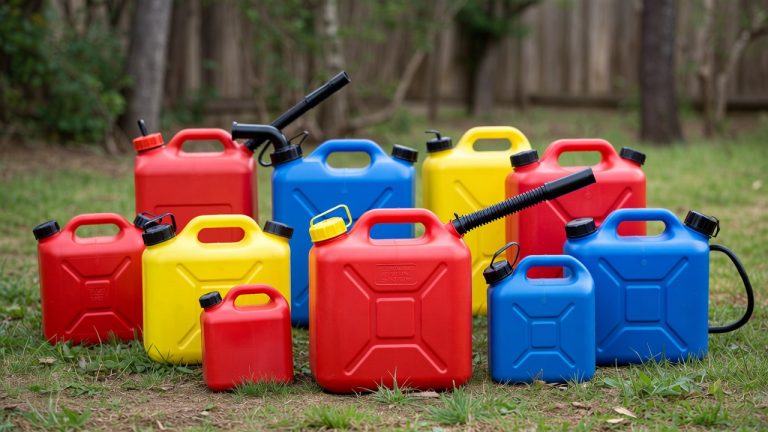
- Have an approved gas container ready before you begin, so you’re not scrambling for one mid-task.
- Keep a rag nearby for any drips or spills.
- Never siphon gas by mouth. This old trick is dangerous and can make you seriously sick.
Once you have a safe spot and the right container, you’re ready to start.
Tools and Supplies You’ll Need
Depending on the method you pick, gather a few of these items:
- An approved gas can or fuel container
- A siphon pump (a cheap hand pump works fine)
- A turkey baster or large syringe (for small amounts of leftover gas)
- A funnel
- Rags or paper towels
- Gloves
- A wrench (only needed for the fuel line method)
- A flat, stable surface to work on
You don’t need every item on this list. Pick the method that matches the job, and only grab what that method calls for.
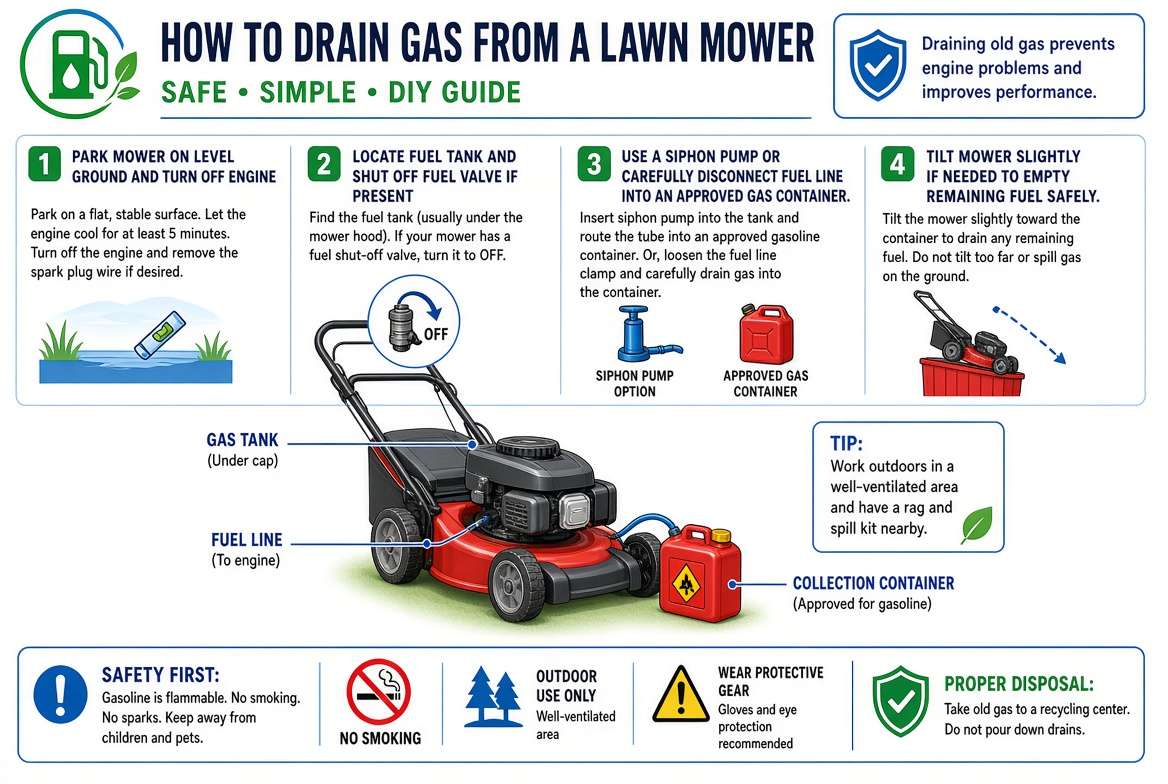
Method 1: Use a Siphon Pump (Best for Full Tanks)
This is the most common and safest way to drain a full or nearly full tank. A siphon pump uses simple hand pressure to pull fuel out through a tube, so there’s no need to tip the mower or disconnect any parts.
Steps:
- Place your gas can on the ground, lower than the mower’s fuel tank. Gravity does most of the work here.
- Open the fuel cap on the mower.
- Insert the long end of the siphon tube into the gas tank until it reaches near the bottom.
- Put the short end of the tube into your gas can.
- Squeeze the hand pump bulb a few times to start the flow. Most pumps need just a couple of pumps before gas starts moving on its own.
- Let gravity pull the fuel through the tube into the can. This can take a few minutes for a full tank.
- Once the flow slows down and stops, lift the tube out and let any last drops fall into the can.
- Wipe up any spills right away with a rag.
Siphon pumps cost very little and are reusable, so it’s smart to keep one in your garage for future mower maintenance or even for draining gas from other small engines like trimmers or generators.
Method 2: Turkey Baster or Large Syringe (Best for Small Amounts)
If your tank only has a little gas left, a turkey baster works surprisingly well. This method skips the pump entirely.
Steps:
- Open the fuel cap.
- Dip the baster into the tank and squeeze the bulb to draw fuel up.
- Move the baster over your gas can and release the fuel into it.
- Repeat until the tank is empty.
This method takes more repetitions than a siphon pump, but it’s handy if you don’t own a pump and only need to clear out a small leftover amount. Keep a dedicated baster for this job only, and never use it for food again afterward.
Method 3: Run the Engine Until It Stops (Good for Small Leftover Fuel)
Sometimes the easiest way to get rid of the last bit of gas is to simply let the engine burn through it.
Steps:
- Start the mower like normal and let it run in an open, well-ventilated area.
- Let the engine keep running until it slows down and shuts off on its own from lack of fuel.
- Once it dies, check the tank. If a tiny bit remains that the engine can’t pull, use a turkey baster to clear the rest.
This method is simple, but keep in mind it doesn’t work for a full tank since that would take a long time and waste fuel. It works best as a final cleanup step after most of the gas is already gone.
Method 4: Disconnect the Fuel Line (For Mechanics and DIYers Comfortable With Tools)
This method lets gravity drain the tank directly through the fuel line. It gives you full access for cleaning but takes a bit more hands-on work.
Steps:
- Locate the fuel line running from the tank to the carburetor.
- Place your gas can right under the connection point.
- Use pliers to loosen the clamp holding the line in place.
- Carefully pull the line off the fitting. Gas will start flowing out right away, so make sure your can is positioned correctly first.
- Let the tank drain fully into the can.
- Reattach the fuel line securely and tighten the clamp back in place once you’re done.
This approach is often used alongside carburetor cleaning or fuel line replacement, since you’re already working in that area. If you’re not familiar with small engine parts, one of the earlier methods is a safer and quicker option.
Method 5: Remove the Tank Entirely (For Riding Mowers or Stubborn Tanks)
On some riding mowers, the tank sits in a spot that’s hard to reach with a siphon tube. In that case, removing the tank gives you full control.
Steps:
- Check your mower’s manual for the exact bolts or screws holding the tank in place.
- Disconnect the fuel line from the tank first.
- Unscrew or unclip the tank from its mount.
- Carefully lift the tank out and pour the remaining fuel into your gas can through a funnel.
- Set the empty tank back in place and reconnect the fuel line.
This takes more time than the other methods, but it’s the most thorough way to get every last drop out, especially useful before deep cleaning or long-term storage.
What to Do With the Old Gas
Never pour old gasoline down a drain, onto the ground, or into regular trash. It’s harmful to soil, water, and the environment. Instead:
- Pour it into a sealed, approved gas container.
- Take it to a local household hazardous waste center or an auto shop that accepts used fuel.
- Some recycling centers and gas stations also take old fuel for proper disposal.
- Never mix old gas with new gas unless you know it’s still in good condition, since stale fuel can ruin a fresh batch too.
A quick search for “hazardous waste disposal near me” will point you toward the closest drop-off spot in most areas.
How Often Should You Drain the Gas?
You don’t need to drain gas every time you finish mowing. For everyday use, gas that gets used up within a few weeks is generally fine. Draining becomes important in these situations:
- Before long-term storage, like putting the mower away for an extended period without use
- When switching from summer fuel blends to a fresh tank
- If the mower sat unused for a long stretch and the fuel smells sour or looks darker than normal
- Before shipping or transporting the mower a long distance
If you’d rather skip draining altogether, adding a fuel stabilizer to a full tank is a solid alternative. It keeps gas fresh for a much longer stretch, so the mower stays ready to start without any extra work.
Common Mistakes to Avoid
- Siphoning by mouth. This old-school trick can cause gas to enter your lungs or stomach, and it’s simply not worth the risk.
- Working near an open flame or in a closed space. Gas fumes build up fast and can ignite easily.
- Forgetting to position the gas can first. Fuel starts flowing quickly once you open a line or start pumping, so always set your container in place before you begin.
- Pouring old gas into a fresh tank later without checking it. Stale fuel can spoil an otherwise good batch.
- Skipping the fuel line reconnection. If you disconnect the line for draining, always double-check the clamp is tight before running the mower again, or you’ll end up with a leak.
- Using a rusty or unsealed container. Rust particles can travel into your fresh gas and cause the same clogging issues you were trying to avoid.
Tips for Easier Gas Draining Next Time
- Keep a small siphon pump stored with your other mower tools, so you’re never caught without one.
- Label your gas can clearly if you use more than one, so you don’t mix up fuel types by accident.
- Try to use up most of the fuel naturally before long storage periods, so there’s less to drain later.
- Add a fuel stabilizer at the start of a storage period if you decide not to drain the tank completely.
- Check your mower’s manual, since some brands have a drain plug built right into the bottom of the tank, which skips the siphon step entirely.
Final Thoughts
Draining gas from a lawn mower isn’t complicated once you know which method fits your situation. A siphon pump handles a full tank with ease, a turkey baster clears out the last bit of leftover fuel, and running the engine dry works as a quick final step. For deeper repairs, disconnecting the fuel line or removing the tank gives full access.
Whatever method you pick, stay safe by working outdoors, avoiding open flames, and disposing of old gas the right way. With these steps, your mower will start up smoothly next time, without any of the clogging or starting trouble that stale fuel tends to cause.

Hi, I’m Mary, the founder of GardenCure.com. I’m passionate about creating healthy, beautiful gardens and well-kept lawns. I share practical experience and trusted advice on garden and lawn gear that truly works. With the support of my dedicated research team, our writers produce honest, in-depth reviews using reliable, authentic sources—helping you choose the right tools with confidence for your outdoor space.